Leasehold Depreciation in Bali: How Remaining Term Affects Resale Value — and What Offsets It
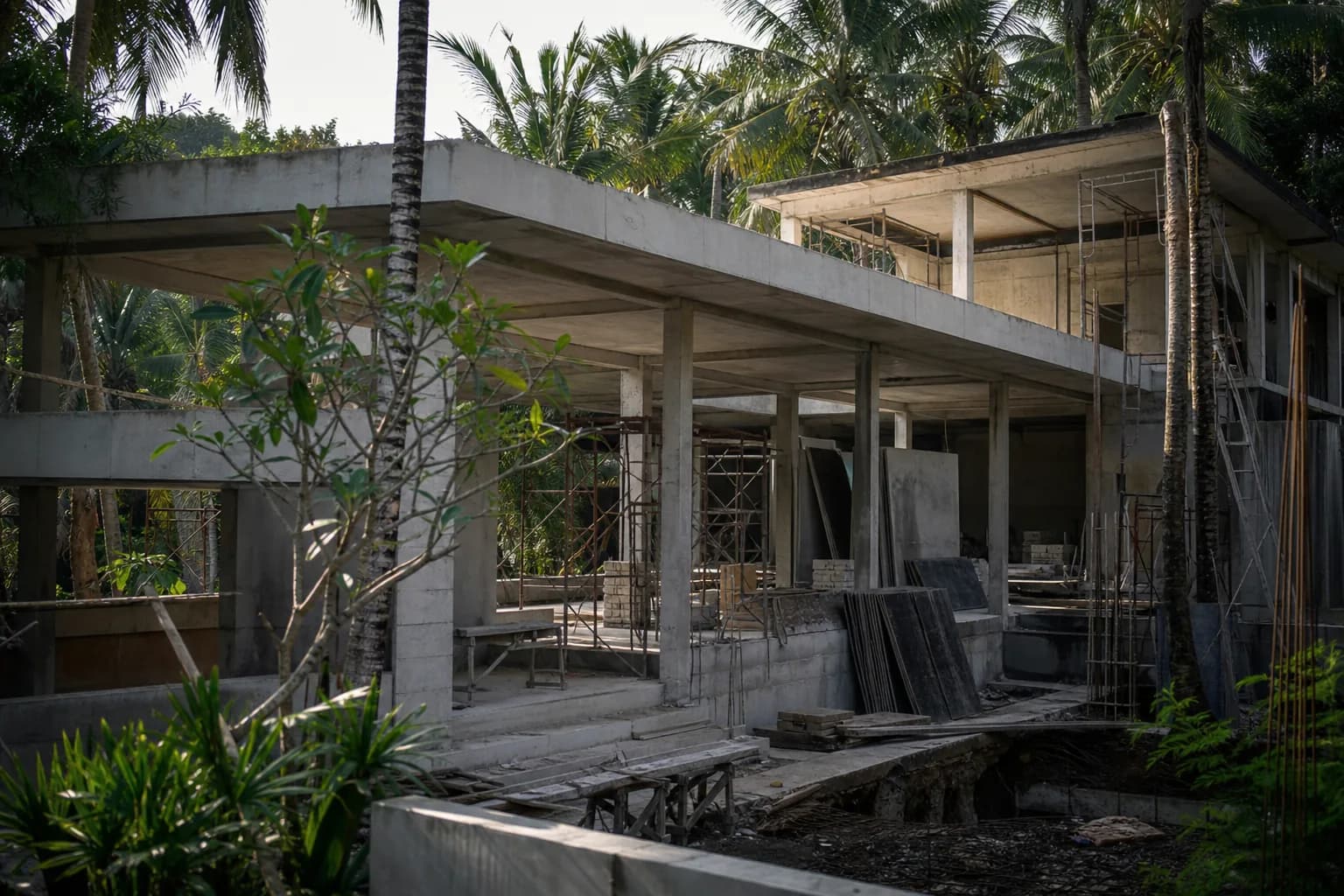
Every Bali leasehold has a clock built into it. You buy 25 or 30 years of rights, and each year that passes, the next buyer gets one year less — so Bali leasehold resale value behaves fundamentally differently from freehold in your home country. This is the single most misunderstood dynamic in the Bali market: buyers either panic about it (and miss good deals) or ignore it (and discover at resale that their asking price has no takers). The truth sits in between. Depreciation is real, it is not linear, and — critically — it can be substantially offset by decisions you make on the day you buy, not the day you sell. Here is how the mechanics actually work in 2026.
Why a leasehold loses value as the term runs down
A leasehold (hak sewa) is a right to use land for a fixed period. Its market value is, at its core, the value of the remaining years of use. A villa on a lease with 28 years left offers a buyer nearly three decades of living or rental income; the same villa with 12 years left offers less than half that — and, just as importantly, a much harder onward resale, because whoever buys from that buyer inherits a single-digit tail. Value therefore compounds downward: short terms are worth less both for their own sake and because they poison the next exit.
Two other forces stack on top of the ticking term. The building itself ages — a tropical climate is unforgiving, and a poorly maintained villa can lose value faster than its lease does. And the market context moves: land prices in Bali's growth corridors have historically risen strongly, which can mask or even outweigh lease depreciation for years at a time. Owners sometimes mistake that land-price tailwind for their leasehold holding value on its own. It is not; it is two curves moving in opposite directions, and the tailwind is not guaranteed to continue in every area.
The depreciation curve: not a straight line
Market behaviour in Bali suggests leasehold value decay follows an S-curve rather than a straight line:
- Years 1–10 of ownership (term still 20+ years): slow decline. A lease with 20–28 years remaining still clears the threshold most buyers and their advisers apply, and appreciation of the underlying location often dominates.
- The middle slope (roughly 12–20 years remaining): depreciation accelerates. The pool of buyers thins — many will not underwrite below about 18–20 years — and those who remain price aggressively.
- The final stretch (under ~10–15 years remaining): value compresses sharply. Below roughly 15 years, resale becomes genuinely difficult without an extension in hand; in the last few years of a lease, an unextended property's transfer value trends toward zero, whatever the villa cost to build.
The practical rule of thumb that follows: around 25 years remaining is the informal underwriting default for foreign buyers in Bali. If you plan to hold for 7–10 years and then sell, you want to be selling with 18–20+ years still on the clock — which means starting from 27–30, or from less with a locked-in extension. This is also why the strongest exit window for a 30-year lease is commonly in the first decade of ownership, while the remaining term is still comfortably above the threshold.
What offsets leasehold depreciation
1. A real extension clause — negotiated at purchase
Nothing protects resale value like a credible path to more years. The word extendable in a listing is worth nothing by itself. A clause that actually holds value is written into the notarised lease deed and specifies, at minimum:
- The extension period you are entitled to (e.g. a further 20 or 25 years);
- The price, or an objective pricing formula (a fixed sum, indexation, or a defined independent-appraisal mechanism — not price to be agreed);
- When and how you exercise it (the trigger window and notice procedure);
- What happens if the landowner refuses or cannot be found.
A lease with 18 years remaining plus an enforceable, priced extension option can be worth dramatically more than the same lease without one — because the buyer is really buying the combined term. Extension pricing agreed today is also, historically, far cheaper than extension pricing negotiated later against risen land values, when the landowner holds all the leverage. Teville's leasehold plots — the 100+ legally vetted listings — typically run 25–30 years with extension terms addressed up front, precisely because of this dynamic.
2. Build quality and documented maintenance
On a 20-year horizon, the villa is most of what the next buyer is inspecting. A structurally sound, well-waterproofed, well-maintained villa with complete permits (PBG and SLF) sells; a tired one discounts the lease further. Keep a maintenance log, keep the permit file complete, and build well in the first place — buyers of second-hand leaseholds in Bali have learned to price construction quality hard. This is where building with a contractor who offers a lifetime structural guarantee, as Teville does, converts directly into resale credibility years later; see the standard our portfolio is built to.
3. Income track record
A rental villa with two or three years of documented occupancy and net income sells on numbers, not vibes. For an investor buyer, a leasehold is a cash-flow instrument: verifiable revenue shortens the negotiation and supports the price even as the term shortens, because the buyer can compute payback within the remaining years.
4. Location on a rising curve
Depreciation of the term and appreciation of the location run simultaneously. Owners in areas that matured over their holding period — the pattern seen in Canggu and then Pererenan — often resold at prices well above entry despite ten fewer years on the lease. That is a market observation, not a promise: buying into the path of infrastructure and demand growth is the offset you control at purchase time, and it is a core filter in how we select land.
Pricing a resale: how buyers will actually value your villa
Expect a sophisticated buyer (or their consultant) to price your leasehold roughly like this:
| Factor | Question asked | Effect on price |
|---|---|---|
| Remaining term | How many years left, and is 20+ still on the clock? | Primary driver; steep discounts below ~15–18 years |
| Extension rights | Enforceable, priced clause in the deed? | Can offset a short term almost entirely |
| Permits | PBG, SLF, correct zoning, rental licence if operated? | Missing papers = discount or dead deal |
| Building condition | Structure, roof, damp, systems, maintenance log | Second-largest driver on older villas |
| Income evidence | Documented occupancy and net yield | Supports price for investor buyers |
| Landowner relationship | Cooperative, identifiable, succession clear? | Quiet but real factor in buyer confidence |
Notice how many rows are set at purchase and during construction, not at sale. A resale in Bali is largely won or lost years before listing. If you are modelling the full cycle — build cost in, holding costs through, resale out — start with the villa cost calculator for the entry side and our guides for the tax and cost lines on exit.
Practical playbook for protecting resale value
- Buy 25–30 years, not the bare minimum — the extra years are cheapest at the start.
- Negotiate the extension clause before signing, with period, price mechanism, trigger and refusal consequence in the deed.
- Keep the paper perfect: lease deed, permits, tax receipts, maintenance records, rental accounts.
- Maintain relentlessly; tropical deferred maintenance is a resale discount you pay with interest.
- Plan the exit window in advance — selling with 20 years on the clock is a different market from selling with 12.
- If your term is drifting toward the danger zone, negotiate the extension before listing, not during a buyer's due diligence.
How Teville fits in
Teville sources leasehold land with the resale decade in mind — 25–30 year terms, extension terms negotiated up front, full due diligence on every plot — and builds villas whose condition still argues for the price when it is time to sell. If you want your entry structured so your exit works, talk to us.
If you are weighing the numbers, our villa cost calculator gives an instant range based on real 2026 build rates, the land catalog lists legally vetted leasehold plots, and the villa concepts show what different budgets actually buy. More practical guides live in the Bali construction library.
FAQ: Bali leasehold resale value
How many years should be left on a lease when I sell?
Aim to sell with at least 18–20 years remaining — around 25 is the informal comfort threshold for foreign buyers and their advisers. Below roughly 15 years the buyer pool thins sharply and prices compress, unless you can transfer an enforceable, priced extension alongside the lease. Plan your exit window from the day you buy.
Does a Bali leasehold always lose money at resale?
No. The term depreciates, but location appreciation, build quality, and a documented income stream push the other way, and many owners in maturing areas have resold above entry despite a shorter term. Historically well-run Bali villas have also netted around 7–12% annually during the hold — context that changes the total-return picture, though never a guarantee.
Is it cheaper to extend a lease now or later?
Almost always now. An extension priced at purchase is negotiated while you have leverage and before land values rise; an extension sought years later is negotiated against the market price of the land at that time, with a motivated buyer visible behind you. Fix the period, price mechanism and trigger window in the notarised deed at the start.
What documents matter most for a leasehold resale?
The notarised lease deed with any extension clause, the building permit (PBG) and function certificate (SLF), proof of tax payments, the rental licence and accounts if operated, and a maintenance record. Buyers in 2026 conduct real due diligence; complete paperwork protects your price, and gaps become discounts.
Essential Bali build & buy guides
- Bali villa construction cost per m² in 2026
- How much will your villa cost? Calculator
- Building a villa in Bali: the complete guide
- Buying land in Bali: step-by-step for foreigners
- Bali villa investment: yields, risks, returns
- Leasehold vs freehold: what foreigners can own
- Construction defect liability & 10-year warranty
- Bali building codes and construction standards
Related guides
Annual Holding Costs of a Bali Villa: A Realistic Owner's Budget
The purchase price is only the entry ticket. Here is what a Bali villa actually costs to hold each year — staff, utilities, pool, maintenance, insurance, taxes and management — with realistic 2026 numbers and a sample budget.
7 min read
Transferring Money to Indonesia for a Property Purchase: Banking, Documentation and Safe Practice
Moving six figures across borders is the least glamorous part of buying in Bali, and the part most buyers under-prepare for. This guide covers the rupiah rule, notary escrow, transfer documentation, and the paper trail that protects a future exit.
8 min read
Milestone Payment Schedules in Bali Construction: How Staged Payments Protect You
Milestone-based payment schedules are a Bali builder's best client protection: what a healthy 6-stage structure looks like, how to verify progress remotely, and which payment terms to refuse.
7 min read