Leasehold vs Freehold in Bali: What Foreigners Can Actually Own in 2026
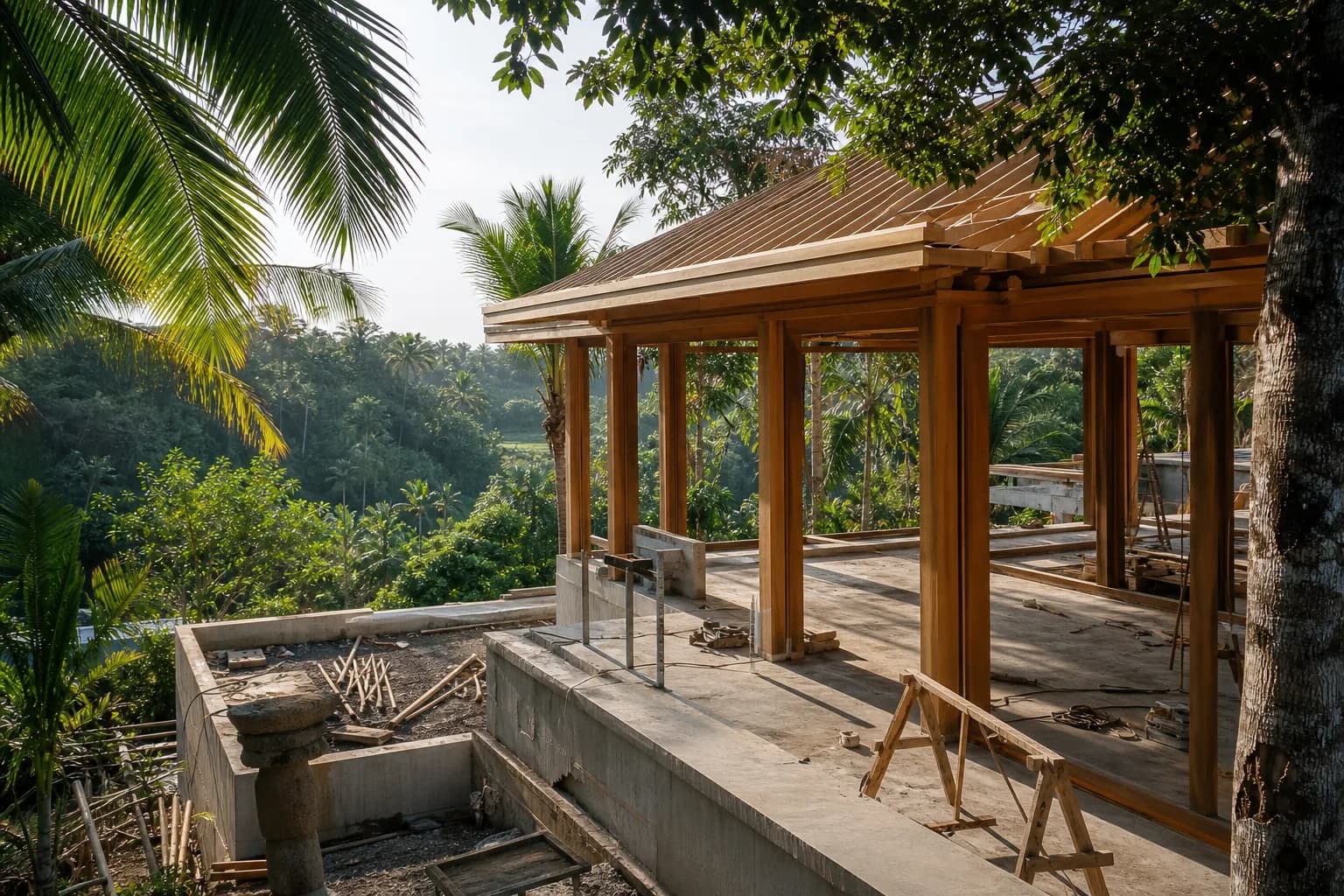
If you are comparing leasehold vs freehold in Bali, here is the honest starting point: as a foreign individual, you cannot own freehold. Indonesian law reserves freehold title (Hak Milik) exclusively for Indonesian citizens, and no visa, marriage certificate, or clever contract changes that. What foreigners can hold in 2026 is a well-structured leasehold, a Hak Pakai (right to use) title, or land rights through a foreign-owned company. Understanding the leasehold vs freehold Bali question properly — what each title actually is, what it costs, and where the risks sit — is the single most important piece of homework before you commit money to the island.
The short answer: foreigners cannot own freehold in Bali
Indonesia's Basic Agrarian Law of 1960 is the foundation of all land rights in the country, and it is unambiguous: freehold ownership belongs to Indonesian citizens only. Any arrangement designed to put freehold land under effective foreign control — most famously the "nominee" setup, where a local citizen holds the certificate on a foreigner's behalf — is void from the start. Courts have repeatedly sided with the registered Indonesian owner when these deals collapse, and the foreign buyer's money is treated as gone.
In 2026 the environment has hardened further. Bali's provincial government has moved beyond civil voidability and introduced criminal sanctions for nominee land arrangements, targeting both parties and the facilitators who set them up. The practical conclusion for a foreign buyer is simple: the freehold route does not exist for you, and anyone selling you a workaround is selling you a liability.
What freehold (Hak Milik) actually is
Hak Milik is the strongest title in Indonesian law: perpetual, inheritable, sellable, mortgageable, with no expiry date. It is what Indonesian families hold and what local sellers usually have behind the land you are looking at. When an agent advertises a "freehold villa" to a foreign audience, what they really mean is one of three things: the land can be leased from a Hak Milik owner, the title can be converted to a right a foreign-owned company can hold, or — the bad case — they are proposing a nominee structure. Always ask which one, in writing.
Freehold matters to you as a buyer mainly as the starting material. A clean Hak Milik certificate with a clear ownership chain is exactly what you want to see behind a leasehold offer, because your lease is only as good as the title of the person granting it.
How leasehold (Hak Sewa) works in Bali
Leasehold is the route most foreign buyers and builders actually use, and for good reason: it is legal in your own name, requires no company and no residency permit, and ties up far less capital than the alternatives. A Bali leasehold is a notarised long-term lease agreement between you and the landowner. Typical initial terms run 25–30 years, and well-drafted contracts include extension rights negotiated upfront — often taking realistic total control to 50 years or more.
During the lease you control the land, can build on it (with the landowner's consent written into the agreement and proper building permits), operate the villa, and sell the remaining lease term to another buyer. What you own outright is the building and the contractual right; the land itself stays with the Indonesian owner and reverts at expiry unless you extend.
The quality of a leasehold lives entirely in its paperwork. The certificate behind it, the zoning, the ownership chain, the extension clause, the pricing mechanism for renewal — these determine whether you hold a solid 30-year asset or an expensive problem. This is why every plot Teville lists among its 100+ vetted leasehold plots goes through due diligence first: certificate check, zoning/ITR confirmation, and a full ownership-chain review.
Leasehold vs freehold Bali: side-by-side comparison
| Factor | Freehold (Hak Milik) | Leasehold (Hak Sewa) |
|---|---|---|
| Who can hold it | Indonesian citizens only | Anyone, including foreign individuals |
| Duration | Perpetual | Typically 25–30 years, extendable by agreement |
| Upfront cost | Full land value | Usually a fraction of freehold value for the term |
| Residency required | Citizenship required | None |
| Can you build | Yes | Yes, with consent clause and permits (PBG/SLF) |
| Resale | Open market | Sell remaining term; value declines as term shortens |
| Inheritance | Standard inheritance | Only if the contract says the lease passes to heirs |
| Main risk | Not available to foreigners at all | Weak contracts, expiring terms, unvetted titles |
The economics follow from the table. Because a leasehold costs a fraction of freehold value, the capital you save can go into the build itself — and in 2026, construction in Bali runs roughly $600–800/m² for an essential-spec villa, $900–1,300/m² for premium, and $1,400–2,000/m² for luxury, land excluded. You can model a full project budget with the villa cost calculator.
The other legal routes: Hak Pakai and PT PMA
Two structures sit between leasehold and the unreachable freehold, and both are legitimate in 2026:
- Hak Pakai (right to use). A registered land title a foreign individual can hold in their own name, provided they have a valid Indonesian residence permit (KITAS/KITAP). It runs in renewable stages — an initial 30 years, extendable and renewable up to a total of 80 years under current regulations — but comes with minimum property-value thresholds and is intended for residential use. Verify the current thresholds with your notary.
- PT PMA with HGB title. A foreign-owned Indonesian company can hold Hak Guna Bangunan (right to build), also structured as 30 years, extendable by 20 and renewable for 30 — up to 80 years of tenure. This is the standard vehicle for commercial operations such as rental villas, but it brings real overhead: significant minimum investment commitments, accounting, tax filings, and annual compliance.
For most individual buyers building one villa, a properly structured leasehold remains the simplest and most capital-efficient answer. The company route earns its overhead when you are running a genuine rental business or multiple properties. More detail on each structure is in our guides section.
What a safe leasehold looks like in 2026
Since you will most likely end up on the leasehold side of the leasehold vs freehold Bali decision, judge the lease itself hard. A safe agreement in 2026 has, at minimum:
- A verified underlying title. The lessor's certificate checked at the land office, with the ownership chain traced and no disputes, mortgages, or inheritance claims hanging over it.
- Correct zoning. The plot's ITR (zoning confirmation) must actually allow residential or tourism accommodation use. Green-zone land is cheap for a reason — you cannot legally build on it.
- An extension clause with a pricing mechanism. "Extendable" alone is weak. You want the option, the notice window, and how the extension price will be set, all in the deed.
- Build and operate rights. Explicit consent to construct, rent out, and transfer, plus what happens to the building at expiry.
- Inheritance language. The lease should pass to your heirs for the remaining term.
- A notarised deed in proper form. Signed before a notary/PPAT, with a certified translation, since Indonesian-language versions prevail in disputes.
None of this is exotic — it is standard practice for professionally vetted land. It only becomes a problem when buyers sign whatever a seller's agent puts in front of them.
Which structure fits which buyer
A blunt matching of buyer to structure, based on what we see foreign clients actually need:
- Building a home or a single rental villa, no Indonesian residency: leasehold. Simple, legal, capital-efficient, and the savings fund a better build.
- Living in Bali long-term with a KITAS/KITAP, buying above the value threshold: Hak Pakai is worth pricing against a leasehold — you get a registered title in your own name.
- Running a real hospitality business or a multi-villa project: PT PMA with HGB. The compliance overhead is the cost of doing business properly.
- Anyone offered "freehold in your name via a local partner": walk away. In 2026 that is not a grey area; it is a criminal one.
Whichever route you take, remember that the structure only protects you if the underlying land is clean. Title, zoning, and ownership chain fail far more deals than the choice between structures does. Browse villa concepts to see what gets built on well-vetted leasehold land.
FAQ: leasehold vs freehold in Bali
Can a foreigner ever own freehold land in Bali?
No. Freehold (Hak Milik) is reserved for Indonesian citizens under the Basic Agrarian Law, and this has not changed in 2026. Nominee arrangements that simulate foreign freehold are void under national law, and Bali now attaches criminal penalties to them. The legal options are leasehold, Hak Pakai with residency, or an HGB title held through a foreign-owned company.
Is a 25–30 year leasehold long enough to be worth it?
Usually yes, if the price reflects the term and the contract includes a real extension mechanism. A villa can earn well over such a horizon — well-run Bali villas have historically netted around 7–12% per year, though that is market context, never a guarantee. The key is negotiating extension rights and pricing at signing, not at year 24.
What happens to my villa when the lease ends?
Whatever the contract says. Without an extension, land and improvements revert to the landowner at expiry. A good lease specifies your extension option, the notice period, how the extension price is calculated, and compensation or removal terms for the building if you do not extend. This is exactly why the clause set matters more than the headline price.
Is leasehold safe to buy remotely?
Yes, if the legal work is done properly. Purchases are routinely completed via Power of Attorney, with the notary handling execution while you stay abroad. The safety comes from due diligence — certificate, zoning/ITR, ownership chain — done before signing, not from being physically present.
How Teville fits in
Teville builds villas in Bali as a general contractor and sources the land under them: every plot on our land list is leasehold that has passed certificate, zoning, and ownership-chain checks, and purchases can be completed remotely via Power of Attorney. If you are weighing structures for your own project, talk to us — we will tell you plainly which route fits your case and what it will cost to build on it.
Essential Bali build & buy guides
- Bali villa construction cost per m² in 2026
- How much will your villa cost? Calculator
- Building a villa in Bali: the complete guide
- Buying land in Bali: step-by-step for foreigners
- Bali villa investment: yields, risks, returns
- Construction defect liability & 10-year warranty
- Bali building codes and construction standards
Related guides
Visas and Bali Property: What Ownership Does and Does Not Give You
Buying a Bali villa does not grant you residency — a persistent myth that sells property. What the investor KITAS and the second-home visa actually require in 2026, how property fits into each pathway, and how to plan a build alongside a visa strategy.
8 min read
Bali Property Contracts and Indonesian Language Law: Dual-Language Pitfalls That Void Deals
Indonesian law requires property agreements with Indonesian parties to exist in Indonesian — and the two language versions can quietly diverge. What the language law demands in 2026, the real court history, and the dual-language pitfalls that damage Bali deals.
8 min read
Bali Land Certificates Decoded: SHM, HGB, Hak Pakai and Girik Explained for Buyers
A buyer's decoder for Bali land certificates: what SHM, HGB, Hak Pakai and girik actually mean, why girik lost standalone legal force in February 2026, and how to verify a title before you commit.
9 min read