Limestone Quarry Transport Costs Bali: Bukit Peninsula
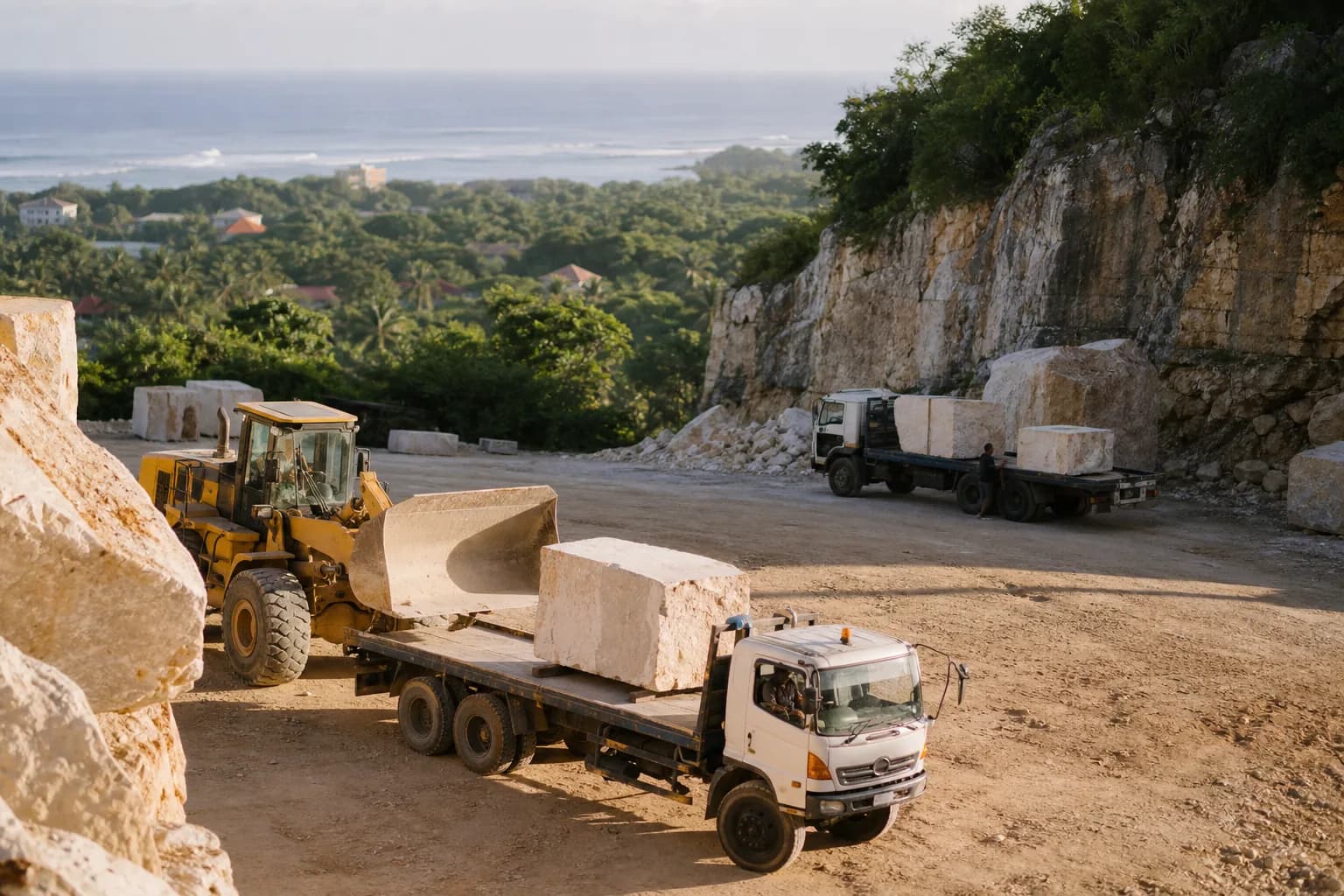
The Hidden Cost Variable in Bukit Peninsula Limestone Sourcing
When planning villa construction cost Bali projects in the southern peninsula, limestone sourcing appears straightforward—the Bukit Peninsula hosts active quarries mere kilometers from construction sites in Uluwatu, Pecatu, and Jimbaran. Yet transport costs from these quarries frequently exceed material costs by 40-60%, creating budget overruns that derail construction timelines. The rugged limestone terrain that produces premium building stone simultaneously creates logistical challenges: narrow access roads carved through coral cliffs, weight restrictions on aging infrastructure, and fuel consumption rates that triple on steep gradients. For developers executing Bali villa construction projects, understanding the true delivered cost of Bukit limestone—not just the quarry gate price—determines whether your material budget holds or collapses mid-project.
Engineering the Transport Economics: Bukit Limestone Logistics Analysis
Bukit Peninsula limestone quarrying concentrates in three primary zones: the Jimbaran-Pecatu corridor, the Ungasan plateau, and the coastal Uluwatu cliffs. Each zone presents distinct transport cost profiles based on road infrastructure, elevation changes, and distance to construction hubs.
Quarry Access Infrastructure Reality
The Bukit’s limestone extraction sites operate on roads originally designed for light vehicle traffic, not 10-ton dump trucks loaded with aggregate. Primary quarry access routes—particularly the Pecatu Indah Resort back roads and Ungasan’s interior lanes—feature gradients exceeding 12% with hairpin turns limiting truck speeds to 15-20 km/h. This creates a transport cost multiplier effect: a 5-kilometer direct distance translates to 25-30 minute travel times one-way, compared to 8-10 minutes on flat coastal routes.
Road surface conditions directly impact vehicle maintenance costs. Unpaved quarry access roads in the Ungasan area generate tire wear rates 3-4 times higher than paved routes, with suspension system failures occurring every 18-24 months versus 36-48 months on maintained roads. When calculating building permits Bali project budgets, these hidden maintenance costs add 8-12% to nominal transport rates.
Vehicle Capacity and Load Optimization
Standard dump trucks operating in Bali’s limestone transport sector carry 6-8 cubic meters per load, equivalent to approximately 10-13 tons of crushed limestone or 8-10 tons of cut stone blocks. However, Bukit Peninsula road weight restrictions—particularly on the aging Jimbaran bypass and interior village roads—often mandate reduced loads of 6-8 tons to prevent road damage and comply with local regulations.
This load reduction directly impacts per-cubic-meter transport costs. A fully loaded truck delivering limestone from Pecatu quarries to a Canggu construction site (22 km) completes the round trip in approximately 90 minutes including loading time. Reducing the load by 30% to meet road restrictions increases the per-unit transport cost by 43%, as the same fuel, labor, and time overhead now distributes across fewer cubic meters.
Fuel Consumption Variables in Limestone Transport
Diesel consumption represents 35-45% of total transport costs for Bukit limestone hauling. Loaded trucks climbing the Bukit’s interior roads consume 28-35 liters per 100 km, compared to 18-22 liters on flat coastal routes. For a typical tropical construction engineering project requiring 200 cubic meters of limestone aggregate, this elevation penalty adds 1,200-1,800 liters of additional fuel consumption across the material delivery cycle.
With diesel prices in Bali ranging from IDR 6,800-7,500 per liter (as of 2026), the fuel cost differential between coastal and interior quarry sources reaches IDR 8.1-13.5 million for a mid-scale villa project. This figure excludes the time cost of slower transport cycles, which reduces daily delivery capacity and extends project timelines.
Distance Decay Model for Bukit Limestone
Transport cost analysis reveals a non-linear relationship between quarry distance and delivered material cost. Within a 5-kilometer radius of Bukit quarries, transport costs average IDR 85,000-120,000 per cubic meter. This rate increases to IDR 140,000-180,000 for 10-15 kilometer distances, and IDR 200,000-260,000 for deliveries to northern Bali construction sites (25-35 km range).
The cost curve steepens beyond 15 kilometers due to driver overtime requirements, increased fuel consumption, and reduced daily trip frequency. A truck completing four round trips daily within the 5-kilometer zone drops to two trips for 20-kilometer distances, effectively doubling the per-trip overhead allocation.
Infrastructure Development Impact on Transport Costs
The planned Bali metro and highway expansion projects—particularly the Benoa-Nusa Dua toll extension and the Uluwatu coastal road improvements—promise to reduce transport times by 20-30% for limestone deliveries to southern peninsula construction sites. However, construction phase disruptions (2026-2028) currently increase transport times by 15-25% due to detours and traffic congestion around infrastructure work zones.
For land purchase Bali decisions involving construction timelines, this temporary cost inflation matters. Projects breaking ground during the infrastructure construction window face transport cost premiums of IDR 25,000-40,000 per cubic meter above baseline rates, adding IDR 5-8 million to material budgets for typical villa projects requiring 200 cubic meters of limestone products.
Hidden Risks in Bukit Limestone Transport Procurement
The most costly mistake in limestone sourcing involves accepting quarry gate prices without analyzing delivered cost structures. Suppliers quoting IDR 180,000 per cubic meter “ex-quarry” appear competitive until transport adds IDR 150,000-200,000 per cubic meter for distant sites, creating total costs exceeding integrated suppliers offering delivered prices of IDR 280,000-320,000.
Seasonal Access Restrictions
Bukit Peninsula’s limestone quarries face seasonal operational constraints during the December-February wet season. Heavy rainfall renders unpaved access roads impassable for loaded trucks, forcing 3-7 day delivery delays. Projects scheduled for material deliveries during this period require buffer stock strategies, increasing on-site storage costs and theft risk exposure.
Quality Variation by Quarry Zone
Not all Bukit limestone offers equivalent structural properties. Coastal quarries near Uluwatu produce harder, denser limestone suitable for load-bearing applications, while interior Ungasan quarries yield softer stone appropriate for decorative cladding but inadequate for structural foundations. Transport cost savings from closer interior quarries become irrelevant when material quality necessitates replacement or structural reinforcement.
Permit Compliance and Transport Legality
Limestone transport from Bukit quarries requires proper extraction permits, transport manifests, and vehicle weight certifications. Suppliers operating without complete documentation expose construction projects to material seizure risks and project delays. The 2025 Bali environmental regulations increased enforcement of quarry permits, with non-compliant material shipments subject to confiscation and fines reaching IDR 50-100 million.
Step-by-Step Process: Optimizing Bukit Limestone Transport Costs
Step 1: Conduct Site-Specific Transport Cost Modeling
Before finalizing building permits Bali applications, map your construction site’s exact distance from each viable Bukit quarry using actual road routes, not straight-line distances. Request time-distance data from suppliers for loaded truck travel, including elevation changes and road surface conditions. Calculate the true cost per cubic meter delivered, factoring in the supplier’s truck capacity, fuel rates, and trip frequency limitations.
For projects in Canggu, Seminyak, or northern areas, model the cost differential between Bukit limestone and alternative sources in Tabanan or Karangasem. Transport cost advantages often disappear beyond 18-20 kilometer distances, making regional alternatives economically competitive despite higher quarry gate prices.
Step 2: Verify Quarry Permits and Material Quality Certifications
Demand documentation proving quarry operational permits (Izin Usaha Pertambangan), environmental compliance certificates (AMDAL), and material testing reports showing compressive strength, porosity, and chemical composition. Reputable suppliers provide this documentation readily; hesitation indicates compliance risks that threaten project continuity.
Conduct independent material testing for structural limestone applications. The IDR 3-5 million cost of laboratory compression testing prevents the IDR 50-150 million cost of structural remediation when substandard limestone fails under load.
Step 3: Structure Delivery Schedules Around Transport Efficiency
Negotiate delivery schedules that maximize truck utilization and minimize per-trip overhead. Consolidated deliveries of 40-60 cubic meters (5-7 truck loads) in single-day campaigns reduce per-unit costs by 12-18% compared to scattered small deliveries. However, this requires adequate on-site storage and material protection infrastructure.
For Bali villa construction projects, align limestone deliveries with foundation and structural phases when material consumption rates justify bulk delivery economics. Premature delivery increases storage costs, weather exposure risks, and theft vulnerability.
Step 4: Implement Quality Control at Delivery Point
Establish receiving protocols that verify material quantity, quality, and documentation before truck unloading. Measure actual cubic meters delivered using calibrated methods—suppliers occasionally short-load by 8-15%, effectively increasing per-unit costs. Photograph material condition and verify stone dimensions match specifications.
Reject loads containing excessive fines (crushed particles below specification), contamination from soil or organic matter, or stone showing fracture patterns indicating blast damage. These quality defects compromise structural performance and waste transport costs on unusable material.
Step 5: Build Transport Cost Contingencies into Project Budgets
Allocate 15-20% contingency reserves for limestone transport costs to absorb fuel price fluctuations, seasonal access delays, and infrastructure disruption impacts. This buffer prevents the common scenario where transport cost overruns force material specification downgrades that compromise building quality.
Review our construction process documentation to understand how Teville integrates material sourcing risk management into project planning, preventing the budget surprises that plague independently managed builds.
Realistic Cost Ranges: Bukit Limestone Transport Economics 2026
Current market rates for Bukit Peninsula limestone transport break down as follows:
- 0-5 km radius: IDR 85,000-120,000 per cubic meter transport cost
- 5-10 km radius: IDR 120,000-160,000 per cubic meter transport cost
- 10-15 km radius: IDR 160,000-200,000 per cubic meter transport cost
- 15-25 km radius: IDR 200,000-280,000 per cubic meter transport cost
- 25+ km radius: IDR 280,000-350,000 per cubic meter transport cost
These rates assume standard road conditions, legal load weights, and normal operational periods. Add 20-35% during wet season constraints (December-February) and 15-25% during infrastructure construction disruption periods (2026-2028 for southern Bali).
For a typical 250-square-meter villa requiring 180-220 cubic meters of limestone products (foundation aggregate, structural stone, decorative elements), total transport costs range from IDR 15.3 million (adjacent to quarry) to IDR 77 million (northern Bali sites). This represents 8-18% of total material costs and 2-4% of overall villa construction cost Bali budgets.
Fuel price sensitivity analysis shows that a 10% increase in diesel costs raises transport expenses by 3.5-4.5%, while road infrastructure improvements reduce costs by 8-12% through faster trip cycles and reduced vehicle wear.
Frequently Asked Questions: Bukit Limestone Transport Cost Analysis
How do I verify that quoted transport costs for Bukit limestone are competitive?
Request itemized cost breakdowns showing per-kilometer rates, fuel surcharges, loading fees, and any seasonal adjustments. Competitive rates for 10-kilometer distances should fall within IDR 140,000-180,000 per cubic meter all-inclusive. Obtain quotes from three suppliers and compare delivered costs, not just quarry gate prices. Suppliers offering suspiciously low transport rates often compensate through reduced load volumes or hidden surcharges, negating apparent savings. Cross-reference quotes against the distance-based ranges provided in this analysis, adjusting for your specific site conditions and access road quality.
Does sourcing limestone from closer Bukit quarries always reduce total project costs?
Not necessarily. Proximity advantages disappear when closer quarries produce lower-quality limestone requiring thicker applications, additional processing, or structural reinforcement. A quarry 3 kilometers closer but yielding limestone with 15% lower compressive strength may increase total costs through greater material volume requirements and engineering modifications. Additionally, smaller quarries near construction sites often lack economy-of-scale advantages, charging premium gate prices that offset transport savings. Conduct total-cost analysis including material quality, processing requirements, and structural engineering implications—not just transport distance. For leasehold Bali villa projects with 25-30 year performance requirements, material durability trumps marginal transport savings.
How do infrastructure development projects affect limestone transport costs during 2026-2028?
The Benoa-Nusa Dua toll extension and Uluwatu road improvements create temporary transport cost inflation of 15-25% due to detours, reduced road capacity, and extended travel times. Deliveries to southern peninsula sites currently add 20

Want to calculate?
 2144 m²11 month(s)from 104.000 USD
Narayana
 172 m²8 month(s)from 120.000 USD
Keshava
 1from 198.000 USD
Private: Haridas Villas
 164 m²7 month(s)from 79.000 USD
TALA TWO
 3173 m²6 month(s)from 125.000 USD
TALA FOUR
164 m²7 month(s)from 79.000 USDPrivate: Haridas Villas, Tegallalang
 3104 m²11 month(s)from 99.000 USD
TALA 100
 4344 m²16 month(s)from 290.000 USD
Radha
 3127 m²9 month(s)from 177.000 USD
Mukunda
 3124 m²6 month(s)from 123.000 USD
TALA 8
 3180 m²7 month(s)from 142.000 USD
Vasudeva
Start With Real Numbers, Not Guesses
Before buying land or finalizing a design, check the realistic build cost range for your project in Bali.
Our team reviews your inputs and gives a grounded estimate.
Available lands
 250 m²15 min$ 40025Bali, Munggu
 3254 m²5 min$ 631800Bali, All
 585 m²8 min$ 165702Bali, Mengwi
 444 m²10 min$ 111000Bali, Tabanan
 700 m²20 min$ 90517Bali, Cepaka
 6000 m²10 min$ 1330049Bali, Kutuh South Bali
 8313 m²15 min$ 716670Bali, Buduk
 750 m²15 min$ 187038Bali, Kerobokan
 1000 m²8 min$ 134544Bali, Bukit
 2800 m²15 min$ 310345Bali, Tabanan
 700 m²7 min$ 400000Bali, Canggu
 2000 m²5 min$ 738916Bali, Ungasan
 2115 m²5 min$ 1139547Bali, Pererenan
 18900 m²2 min$ 6912931Bali, Pecatu
 2130 m²10 min$ 495776Bali, Pecatu
Essential Bali build & buy guides
- Bali villa construction cost per m² in 2026
- How much will your villa cost? Calculator
- Building a villa in Bali: the complete guide
- Buying land in Bali: step-by-step for foreigners
- Bali villa investment: yields, risks, returns
- Leasehold vs freehold: what foreigners can own
- Construction defect liability & 10-year warranty
- Bali building codes and construction standards
Related guides
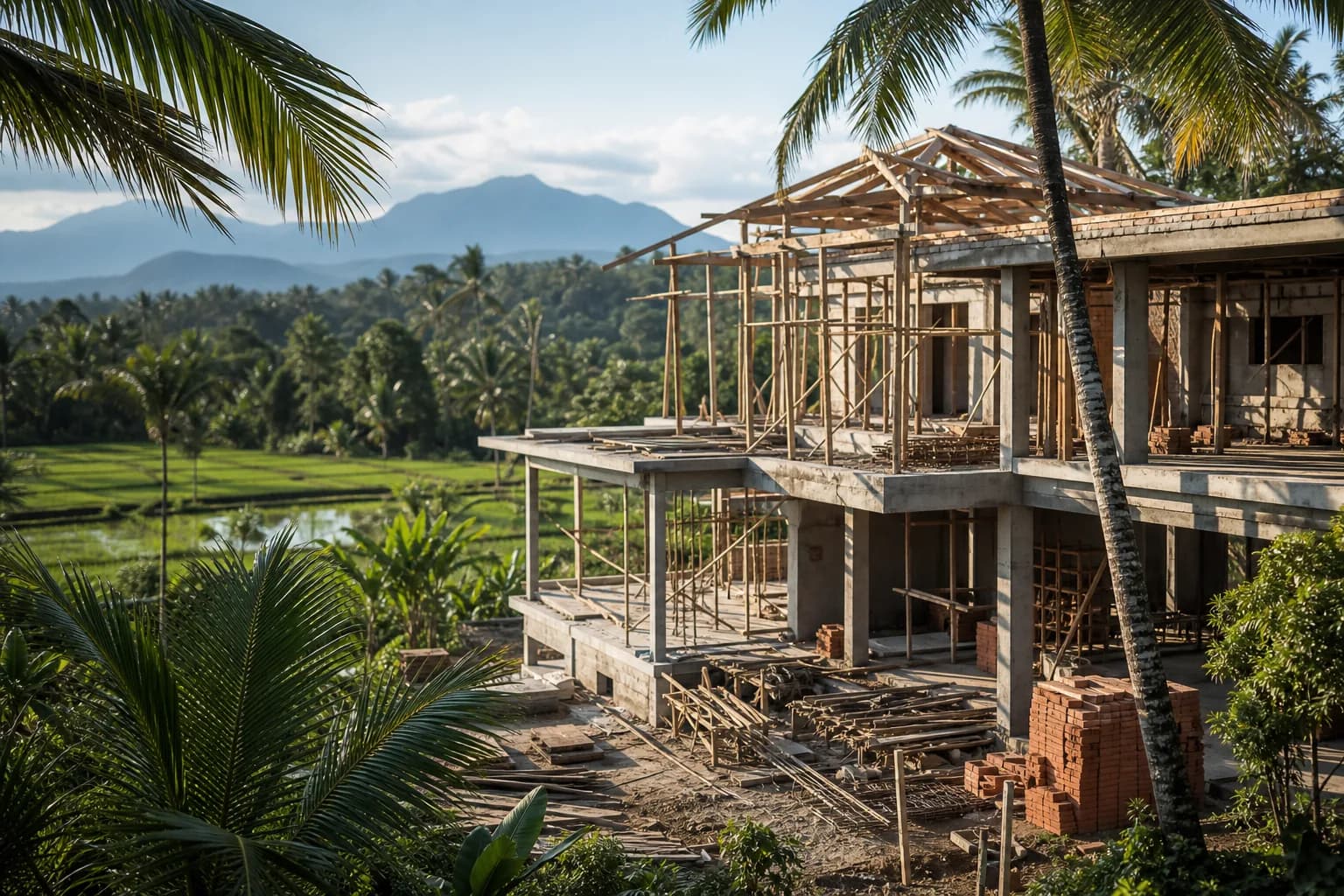
How to Build a Villa in Bali: The Complete Step-by-Step Process (2026)
Every stage of building a villa in Bali as a foreigner — from securing land and permits to handover — with realistic timelines, costs and the mistakes that derail first-time builders.
5 min read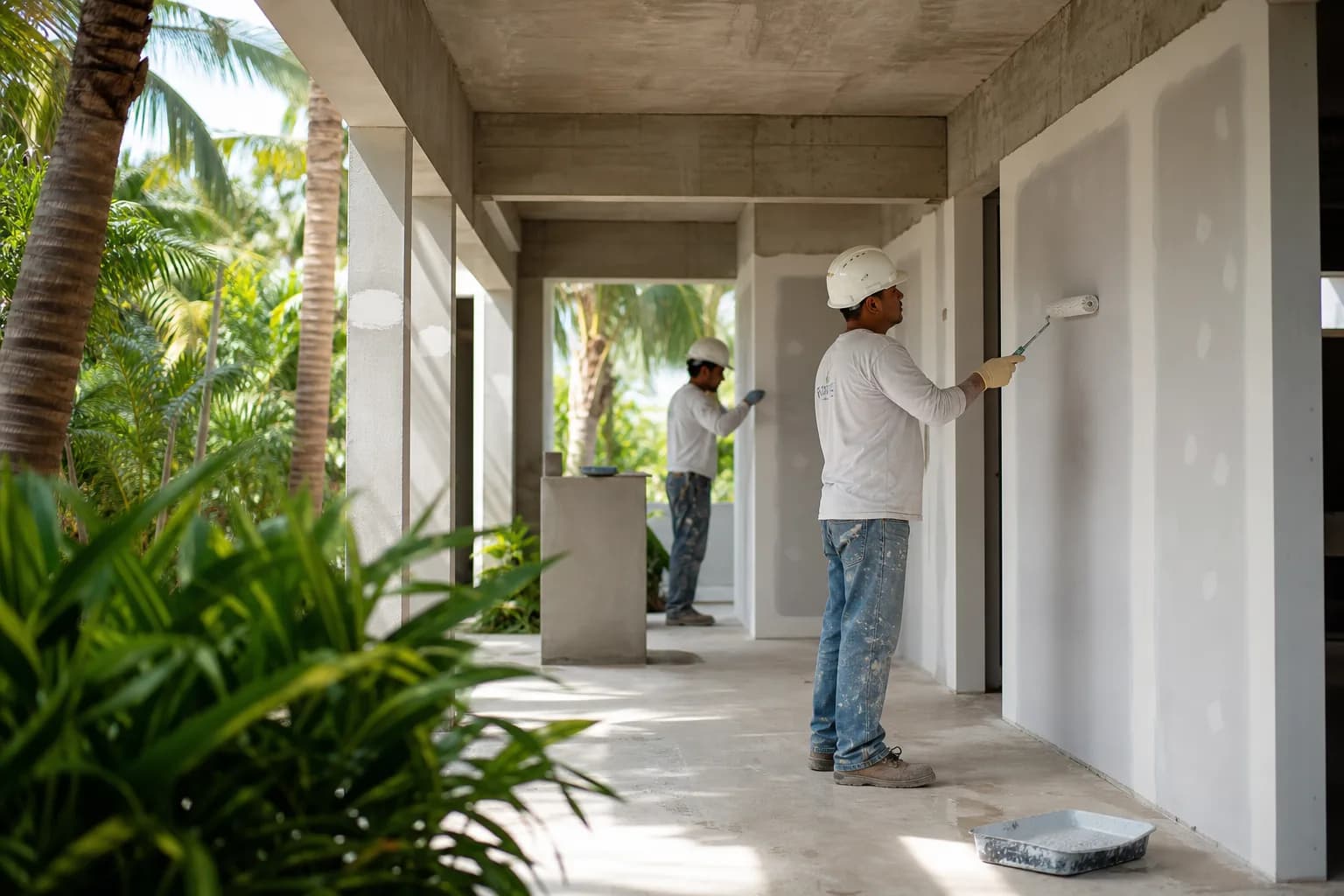
Moisture-Resistant Gypsum Board Finishing with Epoxy Primer Bali
Learn how moisture-resistant gypsum boards with epoxy primer boost durability, finish quality, and mold resistance in Bali projects. Great for Bali homes.
10 min read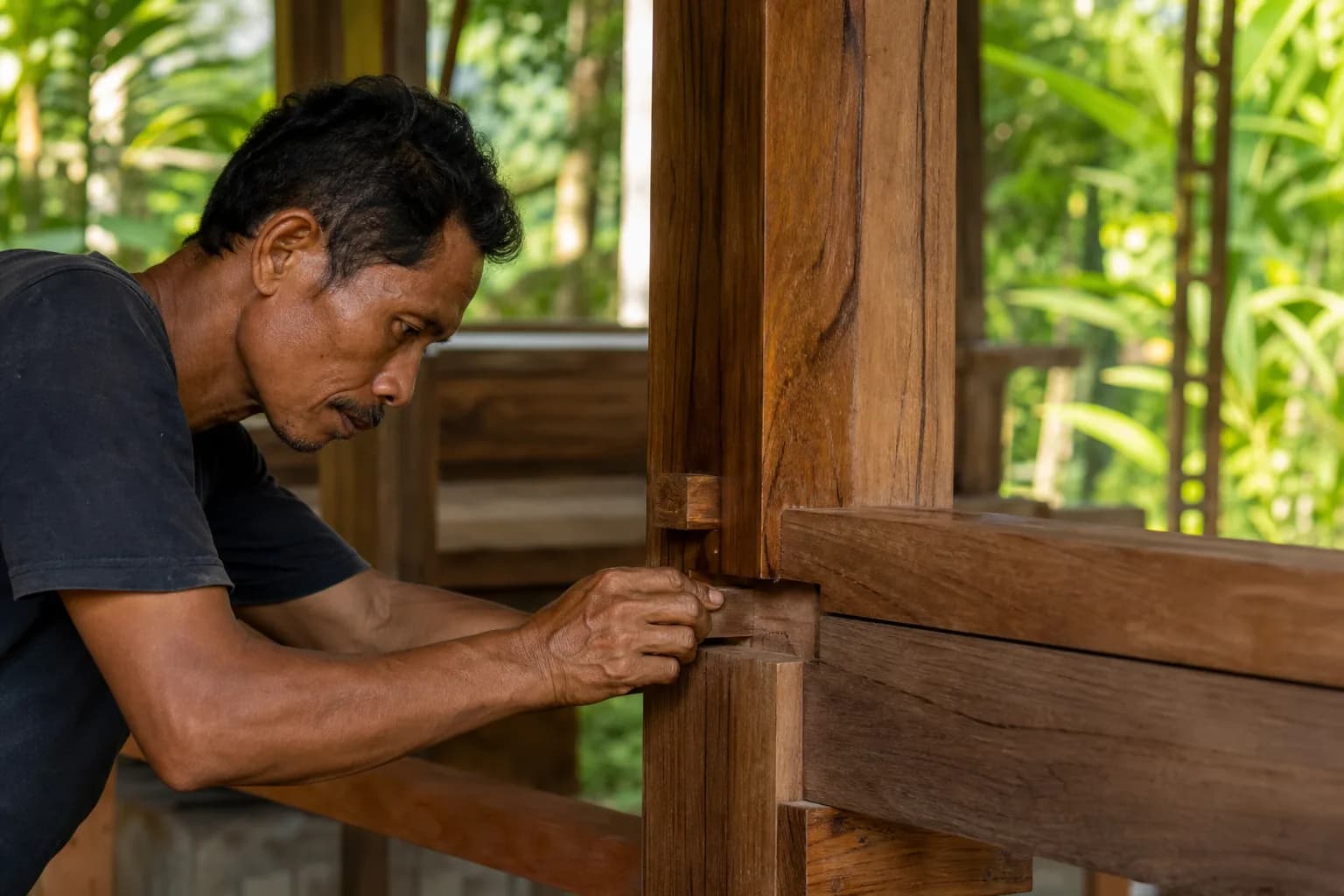
Marine-Grade Timber Joinery Finishing Corrosion Protection Bali
Discover marine-grade timber joinery finishing and corrosion protection in Bali. Durable coastal timber care, coatings, and maintenance for lasting protection.
8 min read