Villa Handover in Bali: Snagging Checklist and What to Test Before Final Payment
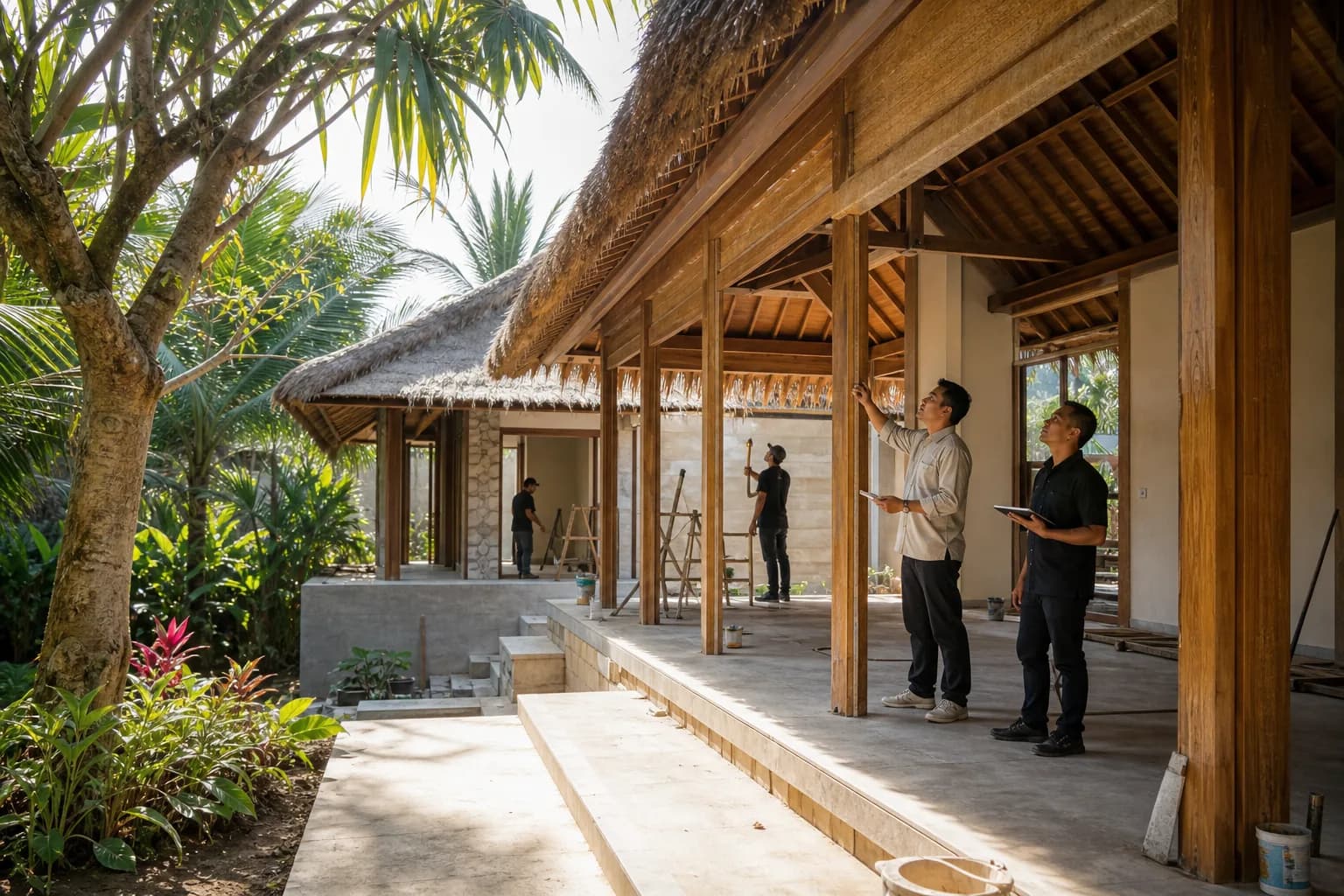
Villa handover in Bali is the last moment you hold real leverage over your builder. Before final payment, defects are the contractor's problem; after it, they have a way of becoming yours. A disciplined handover — a systematic snagging inspection, written defect documentation, and payment released only when the list is closed — is the difference between moving into a finished villa and spending your first year chasing repairs.
This guide walks through the full handover process: what to test, how to document defects so they actually get fixed, which documents must change hands, and how the final payment and warranty period should be structured in your contract long before handover day arrives.
What handover should look like — and when it goes wrong
In a well-run project, handover is an organized event: the contractor declares practical completion, you (or your representative) conduct a snagging inspection against the contract documents, defects are listed and rectified, documents and keys transfer, and the final milestone payment is released. In a badly run project, handover is a handshake, a bag of keys, and a vague promise to "come back and sort the small things."
The structural protection is your payment schedule. When a build is paid in verified milestones — Teville uses a 6-stage schedule — the final tranche is still unpaid at handover, which keeps the economics aligned: the contractor finishes properly because finishing properly is how they get paid. If you signed a contract where 95%+ is already paid before inspection, you are negotiating with goodwill only.
Timing note: most Bali villa builds run 8–16 months, and the final month is where schedule pressure concentrates. Resist the temptation to compress the handover stage to hit a rental date — defects found before furniture arrives are far easier to fix than after.
Before the inspection: bring the paper
Snagging is a comparison exercise, not a vibes walk-through. Arrive with:
- The signed contract and bill of quantities / finish schedule — the brands, grades, and materials you actually paid for;
- Approved drawings and any signed change orders, so disputes about "that's what you asked for" are settled by paper;
- The payment ledger, showing what has been released against which milestone;
- A camera, a notebook or snagging app, and ideally an independent inspector — Bali has professional building inspectors, and their fee is small against a final payment worth tens of thousands of dollars.
Inspect in daylight, with water and power connected, and give it hours, not minutes. A thorough snagging inspection of a 3–4 bedroom villa is most of a day's work.
The snagging checklist: what to test room by room
Structure and envelope
- Walls, ceilings, and floors: cracks, damp patches, uneven render, hollow-sounding tiles (tap them — hollow tiles debond and crack later).
- Roof: from inside, check ceilings for water staining; ask for photos of the roof insulation and waterproofing installed before closing up.
- External waterproofing: balconies, roof terraces, bathroom floors — ask when they were flood-tested and request a re-test while you watch.
- Drainage: pour water; watch gutters, floor drains, and site drainage. Bali's rainy season will run this test anyway — better you run it first.
Doors, windows, and finishes
- Every door and window: smooth operation, alignment, locks, keys, seals. Timber in Bali's humidity swells — sticking now means jammed later.
- Paint and finishes: consistent coverage, no rough patches; joinery aligned; countertops undamaged; silicone sealing complete and tidy.
- Glass: chips, scratches, and safety glass markings where specified.
Water, power, and systems
- Run every tap, shower, and toilet; check pressure (upstairs especially), hot-water delivery time, and drainage speed. Look under every sink for weeping joints.
- Test every power outlet and switch, all lighting circuits, and the distribution board labeling. Confirm grounding/earthing was tested — humid climates punish sloppy electrical work.
- Air conditioning: run every unit long enough to verify cooling and check condensate drains actually drain outside, not into a wall.
- Pool: equipment runs, no visible leaks, tiling and grouting sound, water balanced. Ask for the commissioning record.
- Appliances and fixtures: match brands and models against the specification — substitution of cheaper equivalents is one of the most common handover discoveries.
Outside
- Boundary walls, gates, and access; landscaping per scope; external lighting; septic/wastewater system installed and documented.
Documenting defects so they get fixed
A defect that isn't written down doesn't exist. Professional practice:
- Number every defect and log it with location, description, and a photo (with something for scale where relevant).
- Agree severity: items that block handover (safety, water ingress, missing systems) versus items fixable during the defect period.
- Put dates on it. The snag list becomes a signed annex: contractor commits to rectify listed items by an agreed date, and a re-inspection is scheduled.
- Re-inspect and close out — items are signed off one by one, not "all sorted, boss."
Expect a snag list on even excellent builds; dozens of minor items is normal for a full villa. The signal of contractor quality is not a short list — it's how fast and how completely the list closes.
Documents that must change hands
| Document | Why it matters |
|---|---|
| PBG (building approval) | Proof the villa was approved and built legally |
| SLF (certificate of functional worthiness) | Required for legal use of the building — insist on it, not a promise of it |
| As-built drawings | Where pipes and cables actually run — essential for every future repair |
| Warranties | Contractor's warranty terms plus manufacturer warranties (AC, pumps, appliances) |
| Commissioning/test records | Electrical tests, waterproofing flood tests, pool commissioning |
| Keys, access codes, manuals | Complete sets, labeled |
The SLF deserves emphasis: it certifies the finished building is fit for use, and rental licensing and future resale both lean on it. A contractor who treats the SLF as optional is leaving you with a compliance problem — buyers' lawyers in any future sale will ask for it, as covered in our guides on permits and resale.
Final payment, retention, and the defect period
Structure this in the contract at signing, not at handover:
- Final payment against completion, released when the snag list is closed or reduced to agreed minor items — never against a promise.
- A defects liability period after handover, during which the contractor must fix emerging faults. In Bali, warranties on finishes and workmanship commonly run from several months to a year; structural coverage should be far longer. Teville backs its builds with a lifetime structural guarantee.
- Ideally, a small retention — a percentage of the final payment held until the defect period ends — keeping the contractor responsive after the crew has demobilized. This is standard construction practice and a reasonable ask; agree the exact percentage in the contract.
- One rainy season is the real test. Waterproofing, drainage, and roof performance reveal themselves between November and March. A defect period that spans a rainy season protects you where it matters most.
If you're still comparing builders, weight this heavily: handover discipline correlates almost perfectly with everything upstream. The firms that hand over with documents, test records, and a managed snag process are the same ones that supervised the hidden stages properly — browse finished work in the portfolio and check how a bid handles handover terms alongside price in the villa cost calculator.
How Teville fits in
Teville delivers villas turnkey against a 6-stage milestone schedule, with handover as a documented process: joint snagging inspection, defect close-out, full permit and warranty handover, and a lifetime structural guarantee behind the building. If you want a build where the last payment still means something, contact the team.
FAQ: villa handover in Bali
Should I hire an independent snagging inspector in Bali?
For most owners, yes — especially if you built remotely. Professional building inspectors operate in Bali and will test systems, tap tiles, flood-test waterproofing, and produce a documented defect report. The fee is minor against a final milestone payment, and an independent report removes the "you're being too picky" dynamic from negotiations with your contractor.
What if the contractor demands final payment before fixing defects?
Point to the contract — which is why payment-versus-completion wording matters at signing. Reasonable practice is releasing final payment when handover-blocking defects are fixed and minor items are documented with committed dates, ideally with a small retention held through the defect period. Paying in full against verbal promises removes the contractor's incentive to return.
How long should the defect liability period be?
Common practice in Bali is several months to a year for workmanship and finishes, with structural coverage running much longer — Teville provides a lifetime structural guarantee. Whatever the length, make sure the period spans at least one full rainy season, because water is what finds the weaknesses in roofs, terraces, and drainage.
What documents should I refuse to complete handover without?
The PBG building approval, the SLF certifying the building fit for use, as-built drawings, warranty documents, and commissioning records for electrical, waterproofing, and pool systems. The SLF matters beyond move-in day: rental licensing and any future resale due diligence will ask for it, and obtaining it retroactively is harder than insisting on it now.
Essential Bali build & buy guides
- Bali villa construction cost per m² in 2026
- How much will your villa cost? Calculator
- Building a villa in Bali: the complete guide
- Buying land in Bali: step-by-step for foreigners
- Bali villa investment: yields, risks, returns
- Leasehold vs freehold: what foreigners can own
- Construction defect liability & 10-year warranty
- Bali building codes and construction standards
Related guides

Energy-Efficient Villa in Bali: Solar, Insulation and Passive Cooling That Pay Back
Which energy-efficiency measures actually pay back in Bali's tropical climate — passive design and roof insulation first, efficient equipment second, and self-consumption solar last — with honest 2026 numbers.
7 min read
Choosing a General Contractor in Bali: Red Flags, Questions and Contract Must-Haves
A practical filter for hiring a general contractor in Bali: the red flags that end conversations, the questions professionals answer with documents, and the contract clauses no villa build should start without.
7 min read
Construction Cost Overruns in Bali: Why Budgets Blow Up — and the Contract Terms That Prevent It
Most Bali construction budgets do not blow up in one disaster — they leak through vague scope, unpriced change orders and open-ended contracts. The real causes of cost overruns, and the specific contract terms, payment structure and contingency planning that prevent them.
8 min read