Construction Cost Overruns in Bali: Why Budgets Blow Up — and the Contract Terms That Prevent It
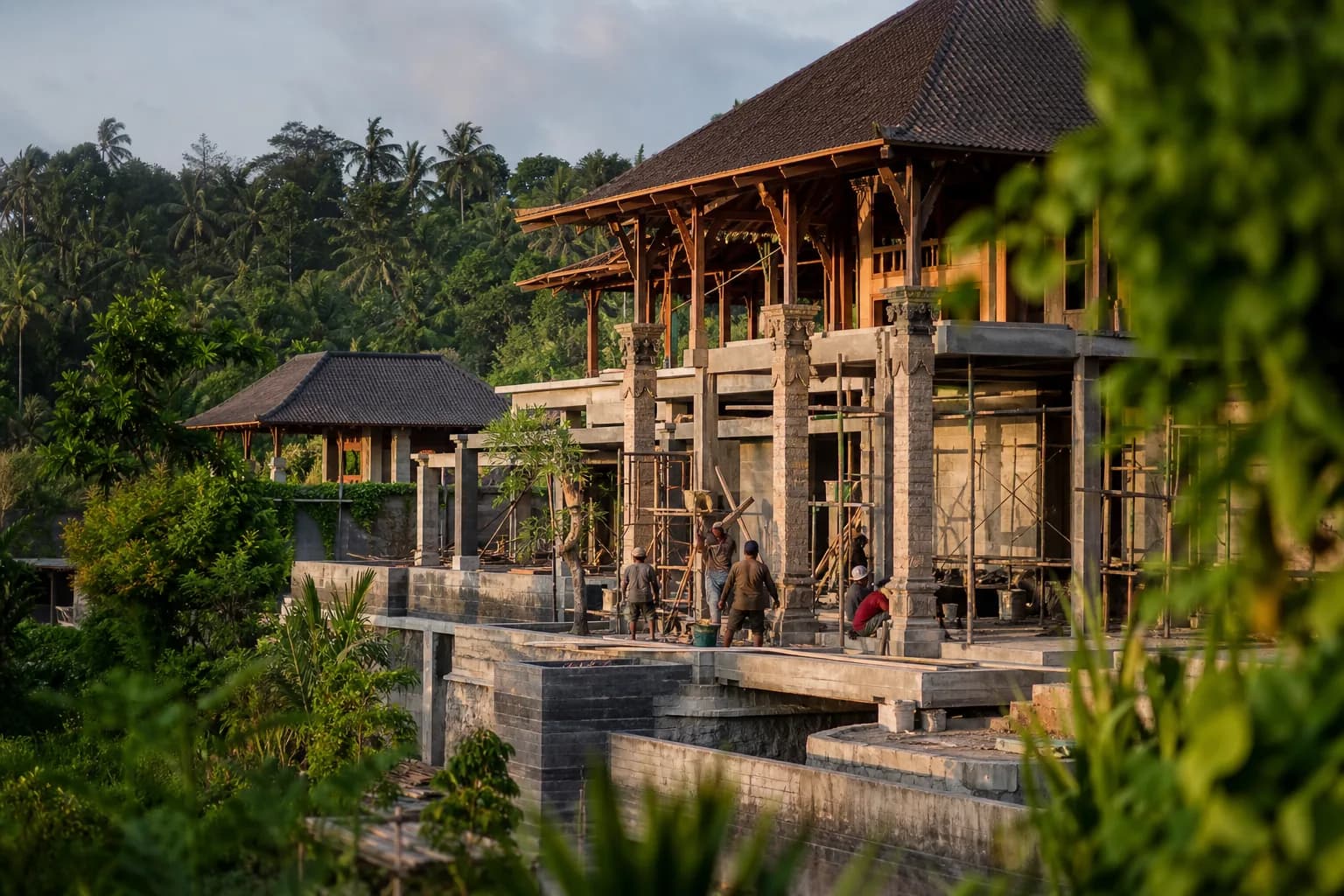
Ask ten foreign villa owners in Bali about their build and several will tell you the same story: the project came in far above the number they signed for. A Bali construction cost overrun is rarely one dramatic event — it is a slow leak through vague scope documents, unpriced change orders, optimistic allowances and contracts that quietly shift every risk onto the client. The encouraging part: almost all of it is preventable, and the prevention happens before ground is broken, in the contract. This guide covers why budgets blow up and the specific terms that stop it.
For calibration, honest 2026 construction pricing runs roughly $600–800/m² for Essential specification, $900–1,300/m² for Premium and $1,400–2,000/m² for Luxury (construction only, land separate) — Teville's published rates, in line with what credible builders across the island quote. A bid dramatically below that range is not a bargain; it is usually the first chapter of an overrun story.
Where the money actually leaks
- Vague scope and thin drawings. A contract referencing a concept render instead of full working drawings and a specification list prices nothing precisely. Every unresolved detail — tile grade, door hardware, waterproofing system — becomes a negotiation later, when you have no leverage.
- The lowball-then-variation model. Some contractors win jobs with a deliberately low bid, knowing they will recover margin through variations once you are committed. By mid-build, switching contractors costs more than paying up, and they know it.
- Unpriced change orders. The client asks for a bigger pool; the builder says 'no problem'; nobody signs a price. Multiply by twenty decisions and the surprise arrives at handover, when disputing it means delaying your own villa.
- Provisional sums and allowances set low. Contracts often carry placeholder amounts for kitchens, pools or finishes. If the allowance is set at a fantasy level, the 'overrun' was baked in on day one.
- Ground and site surprises. Soft ground needing deeper foundations, rock excavation, drainage problems, difficult access for materials — real issues, but ones a competent builder investigates before pricing, not after.
- Material price movements. Imported fittings and volatile commodity prices can shift costs mid-project. Who carries that risk is purely a question of what the contract says.
- Client-side scope creep. The honest entry on the list: owners upgrade finishes, add rooms and move walls mid-build. Legitimate — but each change must be priced and signed before execution, or it merges into the general leak.
Fixed-price vs cost-plus: choose your risk
The single biggest budget decision is the contract model, and in Bali the practical answer for most foreign clients is clear:
| Fixed-price (lump sum) | Cost-plus | |
|---|---|---|
| How it works | One agreed price for a fully defined scope | You pay actual costs plus the builder's fee or margin |
| Who carries cost risk | The contractor | You |
| Requires | Complete drawings and specification before signing | Trust plus genuine, auditable cost transparency |
| Typical failure mode | Weak scope definition reopens the price via variations | Costs drift with no ceiling; oversight burden falls on a client 10,000 km away |
| Best for | Most foreign-owned villa builds | Experienced developers with on-ground teams |
A fixed price is only as fixed as the scope behind it. The working rule: never sign a lump-sum contract against incomplete documentation. Money spent finishing drawings and specifications before tendering repays itself many times over, because it converts every future ambiguity into a priced line item while you still have negotiating power.
The contract terms that actually protect you
These are the clauses that separate a protected client from an exposed one:
- Complete scope annex. Full working drawings, structural drawings, and a room-by-room specification (brands, models, grades) attached to and referenced by the contract. If it is not in the annex, it is not in the price — so make the annex complete.
- Milestone-based payments. Pay as verified work progresses — Teville uses a typical 6-stage schedule — so your cash never runs far ahead of the physical building. This is the core protection: a builder holding your money has leverage over you; a builder awaiting the next milestone payment is motivated to progress. Keep the deposit modest and tie every payment to inspectable, defined completion states, not calendar dates.
- Written change-order procedure. No variation is executed without a signed document stating the price and the schedule impact. Agree the procedure — who can request, who approves, how costs are calculated — before construction starts. This one clause prevents more overrun than any other.
- Realistic provisional sums, clearly flagged. Where allowances are unavoidable, set them at real market levels and list them explicitly so you know exactly which parts of the price can still move.
- Site investigation before pricing. Soil testing and site survey done pre-contract, with ground risk explicitly allocated. What was discoverable in advance should not become your variation later.
- Delay terms with teeth. A defined completion window — most quality villa builds complete in 8–16 months — with agreed remedies for contractor-caused delay. Time is money too: every extra month is foregone rental income.
- Retention and defect liability. A final percentage held until snagging is complete, plus a defined defects period. Serious builders also stand behind the structure long-term — Teville provides a lifetime structural guarantee.
- Currency clarity. Agree the contract currency and how (or whether) exchange movements affect payments, so a rupiah swing does not become a surprise invoice.
More practical material on vetting builders and reading Bali contracts is in our guides.
Budgeting: the honest numbers framework
Prevention also means budgeting for reality rather than the brochure:
- Start from verified per-m² rates against your actual specification level — run scenarios in the villa cost calculator — and resist anchoring on the lowest bid you receive.
- Hold a contingency reserve outside the contract. Even on a fixed-price build, sensible practice in Bali is keeping roughly 10–15% of project value in reserve for client-driven upgrades, utility connections and genuine unknowns. If you never touch it, it becomes your furniture upgrade; if you need it, it is the difference between a hiccup and a crisis.
- Budget the whole project, not just the build: design and permit costs (PBG before construction, SLF at completion), utility connections, landscaping, furniture and equipment if not in a turnkey scope, and professional oversight if you build with a contractor who does not report transparently.
- Front-load decisions. Every finish chosen before signing is a priced item; every finish chosen mid-build is a potential variation. Slow decisions are expensive decisions.
Overruns and the remote owner
Most Teville clients build from abroad, and distance is where weak processes get expensive: an owner who cannot see the site cannot challenge a vague invoice. The remedies are structural, not heroic. Milestone payments mean money only moves when defined work is verifiably complete. Regular photo and video reporting against the schedule replaces trust with evidence. A single accountable general contractor removes the classic gap where the architect, builder and supplier each blame the other while the budget absorbs the difference. Remote building via Power of Attorney and staged payments is routine when the process is designed for it — see how finished projects have come through this process in the portfolio.
Red flags that predict an overrun
- A bid far below the credible $600–2,000/m² range for its claimed specification.
- Reluctance to attach full drawings and a specification list to the contract.
- Requests for large up-front payments — 30–50% deposits before meaningful work — instead of a staged schedule.
- 'We will sort the details as we go' as an answer to scope questions.
- No written change-order procedure, or a history of disputes about variations (ask former clients specifically about this).
- No soil test and no site survey before the price is given.
- Contract silent on delay, retention, defects and currency.
Any one of these is negotiable; several together are a decision.
How Teville fits in
Teville's process is built around exactly these protections: fully specified scope before signing, a typical 6-stage milestone payment schedule where you pay as verified work progresses, written change control, 8–16 month tracked timelines, turnkey delivery and a lifetime structural guarantee — all manageable fully remotely. If you want a build priced honestly against a complete specification, talk to us or start with the cost calculator.
If you are weighing the numbers, our villa cost calculator gives an instant range based on real 2026 build rates, the land catalog lists legally vetted leasehold plots, and the villa concepts show what different budgets actually buy. More practical guides live in the Bali construction library.
FAQ: Bali construction cost overruns
How common are cost overruns in Bali construction?
Common enough to be the default expectation with the wrong contract. The pattern is structural: lowball bids recovered through variations, vague scopes, and open-ended cost-plus arrangements. Projects with complete pre-signed specifications, fixed prices and milestone payments overwhelmingly avoid serious overruns — the difference is process, not luck. Client-driven upgrades remain the one leak only you control.
Should I choose a fixed-price or cost-plus contract in Bali?
For most foreign owners, fixed-price (lump sum) against a fully documented scope is the right answer: the contractor carries cost risk and your budget certainty is maximised. Cost-plus can suit experienced developers with on-ground oversight, but for a remote owner it transfers all drift risk to you. Remember that a fixed price is only as fixed as the drawings and specification behind it.
How much contingency should I hold for a Bali villa build?
Sensible practice is a reserve of roughly 10–15% of project value held outside the contract — even on a fixed-price build — covering client-driven upgrades, utility connections and genuine unknowns. On top of that, budget the full project: design and permits, landscaping, furniture if not included in a turnkey scope. Unused contingency is never wasted; unbudgeted overrun always hurts.
How do milestone payments prevent overruns?
Staged payments — Teville uses a typical 6-stage schedule — mean your money never runs ahead of verified physical progress. That removes the leverage imbalance behind most overrun stories: a builder holding a large advance can renegotiate at will, while a builder awaiting the next milestone is motivated to complete defined work to standard. Combined with written change orders, it keeps every price movement visible and signed.
Essential Bali build & buy guides
- Bali villa construction cost per m² in 2026
- How much will your villa cost? Calculator
- Building a villa in Bali: the complete guide
- Buying land in Bali: step-by-step for foreigners
- Bali villa investment: yields, risks, returns
- Leasehold vs freehold: what foreigners can own
- Construction defect liability & 10-year warranty
- Bali building codes and construction standards
Related guides
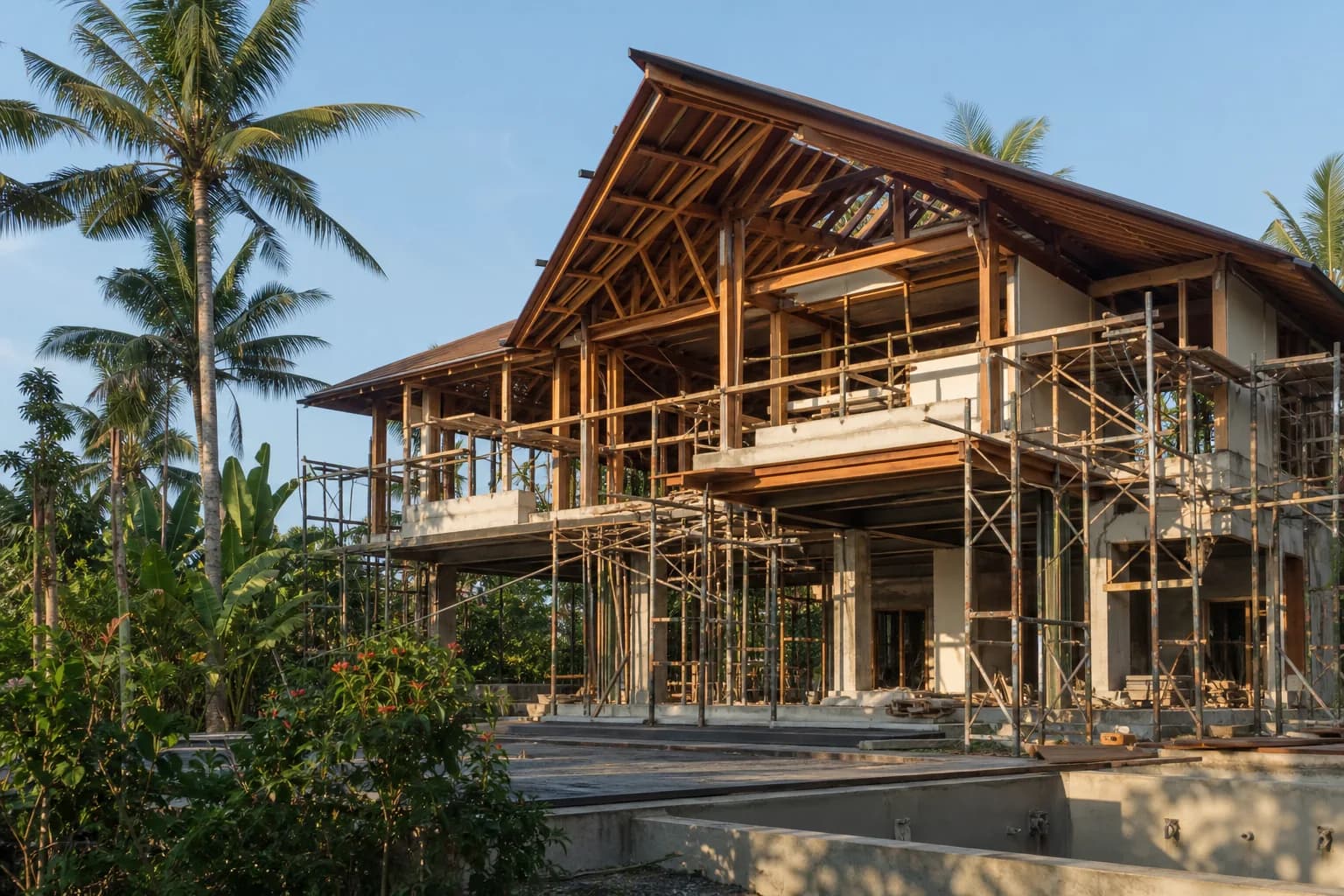
Build vs Buy a Villa in Bali in 2026: The Full Comparison
Building a Bali villa typically costs 20–30% less than buying comparable turnkey stock, but takes 8–16 months and demands more decisions. A full, honest comparison of cost, time, control, risk and resale — plus who should choose which route.
7 min read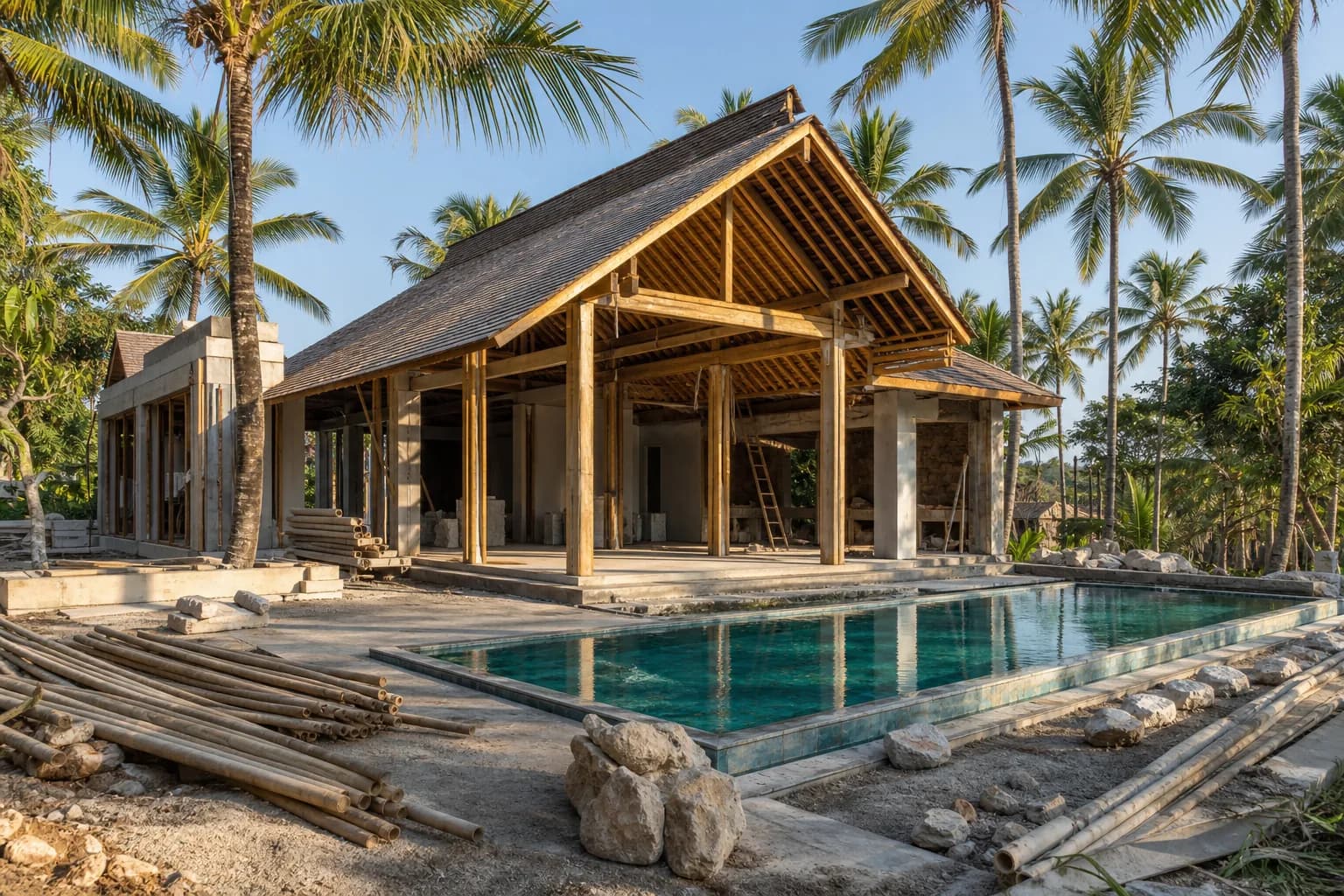
Designing a Bali Villa for Rental Performance: Layouts, Bedrooms, Pools and Features That Actually Book
In an oversupplied 2026 market, design is the difference between a Bali villa that books at premium rates and one that discounts to survive. What bedroom counts, layouts, pool decisions and features actually drive occupancy and ADR — and what they cost to build.
8 min read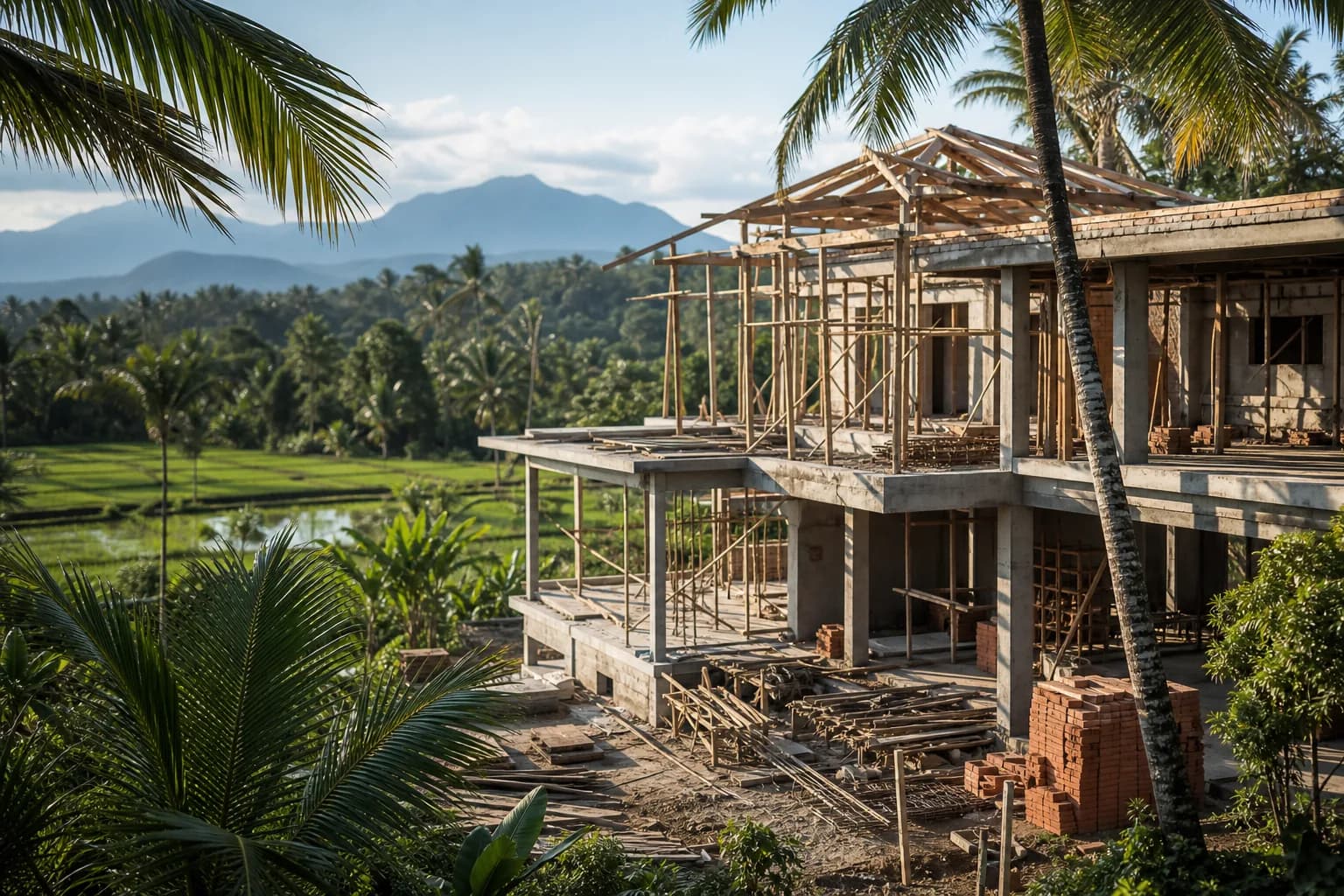
How to Build a Villa in Bali: The Complete Step-by-Step Process (2026)
Every stage of building a villa in Bali as a foreigner — from securing land and permits to handover — with realistic timelines, costs and the mistakes that derail first-time builders.
5 min read