Build vs Buy a Villa in Bali in 2026: The Full Comparison
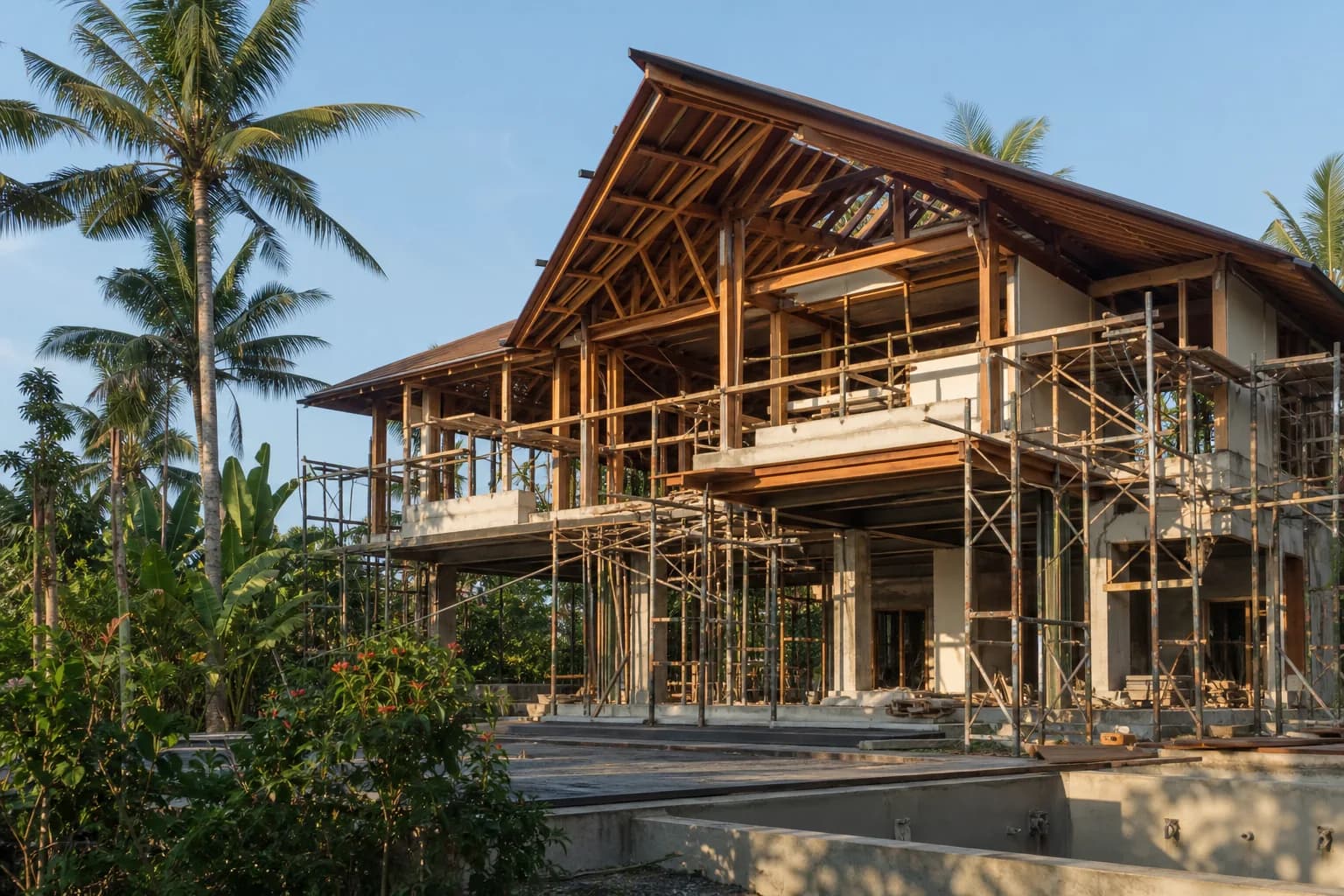
Every serious Bali buyer eventually runs the same calculation: is it smarter to buy a finished villa and start earning next month, or to build and get exactly what you want for less money? The build vs buy villa Bali decision in 2026 is not close to a coin flip — the two routes differ sharply in cost, time, control, risk profile and eventual resale position. This guide lays out the full comparison honestly, including the cases where buying finished stock genuinely is the right answer.
One rule before anything else: whichever route you choose, the land underneath must pass the same legal checks — certificate, zoning/ITR, ownership chain. A discount villa on defective land is not a discount.
The cost comparison, with real numbers
Construction in Bali is priced per square metre of built area. Teville's 2026 rates: Essential $600–800/m², Premium $900–1,300/m², Luxury $1,400–2,000/m² — construction only, land separate. Market-wide surveys of Bali construction pricing in 2026 land in similar territory, so treat these as representative of a properly specified build, not a promotional number.
Finished villas are priced differently: land value plus construction plus the developer's margin plus, in fashionable areas, a scarcity premium. Market analyses in 2026 consistently find that building comes out roughly 20–30% cheaper than buying an equivalent finished villa — the spread is essentially the margin and convenience premium you pay someone else for having taken the timeline risk.
A concrete worked example (illustrative — run your own numbers in the villa cost calculator):
| Build route | Buy turnkey route | |
|---|---|---|
| Land (leasehold, 25–30 yrs) | Negotiated directly; you choose plot and terms | Embedded in price; remaining term often shorter |
| 200 m² Premium villa | $180,000–260,000 construction | Included, at developer's margin |
| Furniture and equipment | Included in turnkey delivery or itemised | Usually included |
| Typical total position | Land + build, commonly 20–30% below finished-stock pricing | Full market price, immediate availability |
| Income starts | After 8–16 months | Immediately (if genuinely finished) |
The honest caveat on the build side: the saving assumes a competent, contract-disciplined builder. A mismanaged build with change-order creep and rework can erase the entire spread. The saving is real, but it is earned through process, not automatic.
Time: the strongest argument for buying
Most quality villa builds complete in 8–16 months, milestone-tracked, depending on size, terrain and specification. Add one to three months up front for design and permits (PBG approval before construction, SLF certification after). A turnkey purchase, by contrast, can close in weeks and earn from day one.
That difference has a price you can calculate. If a finished villa would net you, say, $2,500–4,000 a month, a 12-month build 'costs' roughly $30,000–48,000 in foregone income — often a similar order of magnitude to the purchase-price saving on a mid-sized villa. Two things tilt the maths back toward building: first, the build saving compounds on larger and higher-spec projects, where 20–30% is a much bigger absolute number; second, foregone income only counts if the finished villa you would have bought actually performs — in oversupplied segments, projected income and achieved income are not the same thing.
Beware the false middle option: off-plan purchases promise turnkey convenience at build-route prices, but you carry construction risk without construction control. Paying heavily up front for renders is how most Bali deposit horror stories begin. If you accept a construction timeline anyway, milestone-based building — where you pay as verified work progresses, typically across a 6-stage schedule — puts the same waiting period under vastly better payment protection.
Control and quality: the strongest argument for building
Buying finished stock means accepting someone else's decisions on the things that determine both livability and rental performance: layout, orientation, room count, pool position, storage, staff areas, acoustic separation. In a market saturated with near-identical developer two-bedrooms, that sameness is now a commercial problem, not just an aesthetic one — undifferentiated villas compete on price.
Building gives you:
- Design for your actual use. A pure rental machine, a family base with rental in between, a future retirement home — these are different buildings. See how differently they can resolve in the Teville portfolio.
- Verified construction quality. You (or your contractor's reporting) see the structure, waterproofing and installations before they are covered up. With finished stock you inspect surfaces and hope; hidden defects in tropical construction — waterproofing, drainage, electrical — are exactly the expensive ones.
- Documentation done right from day one. Correct PBG/SLF for the building as actually built, which later underpins rental licensing and clean resale. Older finished stock frequently carries permit mismatches that surface at the worst moment.
- A warranty. A serious builder stands behind the structure — Teville provides a lifetime structural guarantee. Resale villas come as-is.
- Land choice. Building lets you pick from the whole land market — including 100+ legally vetted leasehold plots Teville lists at /lands/ — rather than only plots someone already built on. Land terms (remaining lease years, extension clauses) are negotiated fresh, not inherited.
Risk profile: different, not equal
Buying risks: hidden construction defects; inherited legal or permit problems; short remaining lease terms priced as if they were long; paying a hype premium at the top of an area's cycle; and, for off-plan, developer non-delivery. Mitigation is due diligence — legal, technical and commercial — before money moves.
Building risks: choosing the wrong contractor (the dominant risk); cost overruns through vague scope and change orders; timeline slippage; and managing a project from abroad. Mitigation is a fixed-scope contract, milestone-based payments so money follows verified progress, and remote build management with regular photo and video reporting — the standard Teville setup for overseas owners. Practical checklists for vetting builders and contracts are in our guides.
Note what is not on either list: land risk. It is identical on both routes and is solved the same way — certificate check, zoning/ITR confirmation, ownership-chain verification — before any commitment.
Resale: which villa sells better later?
Bali resale is a leasehold market, so remaining lease term dominates value. Here the build route holds a structural advantage: you start with a fresh 25–30-year term (extendable, if you negotiate extension options at purchase — always do), while a resale villa hands you whatever is left of someone else's term. A villa with 12 remaining years is a fundamentally harder asset to exit than one with 24.
Beyond term, buyers of resale villas in 2026 increasingly pay for exactly the things a well-run build produces: clean documentation, distinctive design, verifiable construction quality and a transferable structural warranty. Generic aging developer stock with fuzzy paperwork is the hardest segment to sell. Building is not just cheaper going in; done properly, it produces a more sellable asset going out.
Who should buy, who should build
- Buy finished if: you need income or personal use within weeks; you have found a genuinely well-built, well-documented villa with a long remaining term at a fair price; or the project size is small enough that a 20–30% spread does not justify a year of your attention.
- Build if: you can accept an 8–16-month timeline; you want the cost advantage on a mid-size or larger project; differentiation matters to your rental strategy; you want fresh lease terms, verified quality and a warranty; or you simply cannot find finished stock that fits your brief — increasingly common outside the cookie-cutter segment.
- Avoid regardless: heavy up-front payments for unbuilt off-plan product, and any purchase — built or not — where the seller resists independent legal due diligence.
How Teville fits in
Teville exists for the build route: land sourcing and legal vetting, architecture, PBG/SLF permits, milestone-based construction over 8–16 months, and turnkey fully-furnished delivery with a lifetime structural guarantee — managed remotely for overseas owners. If you are weighing both routes, send us your brief and we will give you a straight build-side number to compare against the finished stock you are looking at.
If you are weighing the numbers, our villa cost calculator gives an instant range based on real 2026 build rates, the land catalog lists legally vetted leasehold plots, and the villa concepts show what different budgets actually buy. More practical guides live in the Bali construction library.
FAQ: build vs buy in Bali
How much cheaper is building than buying in Bali?
Market analyses in 2026 consistently put the spread at roughly 20–30% for an equivalent villa, reflecting the developer margin and convenience premium embedded in finished-stock prices. Teville's construction rates run $600–800/m² Essential, $900–1,300/m² Premium and $1,400–2,000/m² Luxury, construction only. The saving assumes a disciplined, fixed-scope build — a mismanaged project can erase it.
How long does it take to build a villa in Bali?
Most villas complete in 8–16 months of construction, tracked against milestones, plus roughly one to three months up front for design and the PBG building permit, and SLF certification at completion. Smaller Essential-spec villas sit at the short end; large or complex-terrain projects at the long end. Payments are staged, typically across six milestones, so money follows verified progress.
Is buying off-plan a good middle option?
Usually it is the worst of both worlds: you wait like a builder but pay like a buyer, with large sums transferred before anything exists and little control over quality or completion. If you can accept a construction timeline, a milestone-paid build gives you the same wait with far stronger payment protection and full design control. If you cannot accept the wait, buy genuinely finished, inspectable stock.
Does a newly built villa resell better than a resale villa?
Generally yes, for structural reasons: a new build starts with a fresh 25–30-year leasehold term (negotiate extension options at land purchase), clean PBG/SLF documentation, and — with a serious builder — a structural warranty. Resale buyers pay for remaining term and verifiable quality, so villas with short terms or fuzzy paperwork trade at steep discounts and sell slowly.
Essential Bali build & buy guides
- Bali villa construction cost per m² in 2026
- How much will your villa cost? Calculator
- Building a villa in Bali: the complete guide
- Buying land in Bali: step-by-step for foreigners
- Bali villa investment: yields, risks, returns
- Leasehold vs freehold: what foreigners can own
- Construction defect liability & 10-year warranty
- Bali building codes and construction standards
Related guides
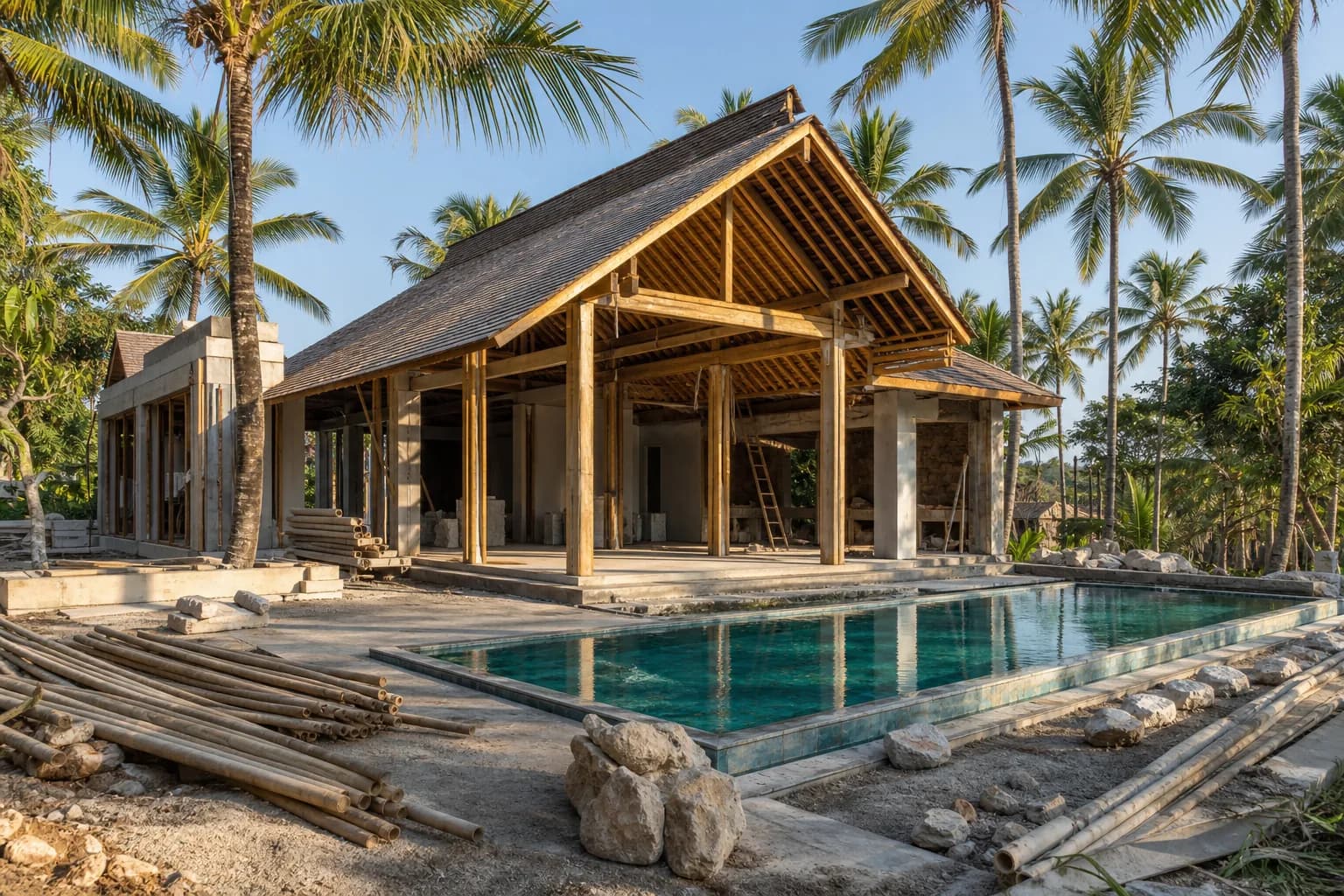
Designing a Bali Villa for Rental Performance: Layouts, Bedrooms, Pools and Features That Actually Book
In an oversupplied 2026 market, design is the difference between a Bali villa that books at premium rates and one that discounts to survive. What bedroom counts, layouts, pool decisions and features actually drive occupancy and ADR — and what they cost to build.
8 min read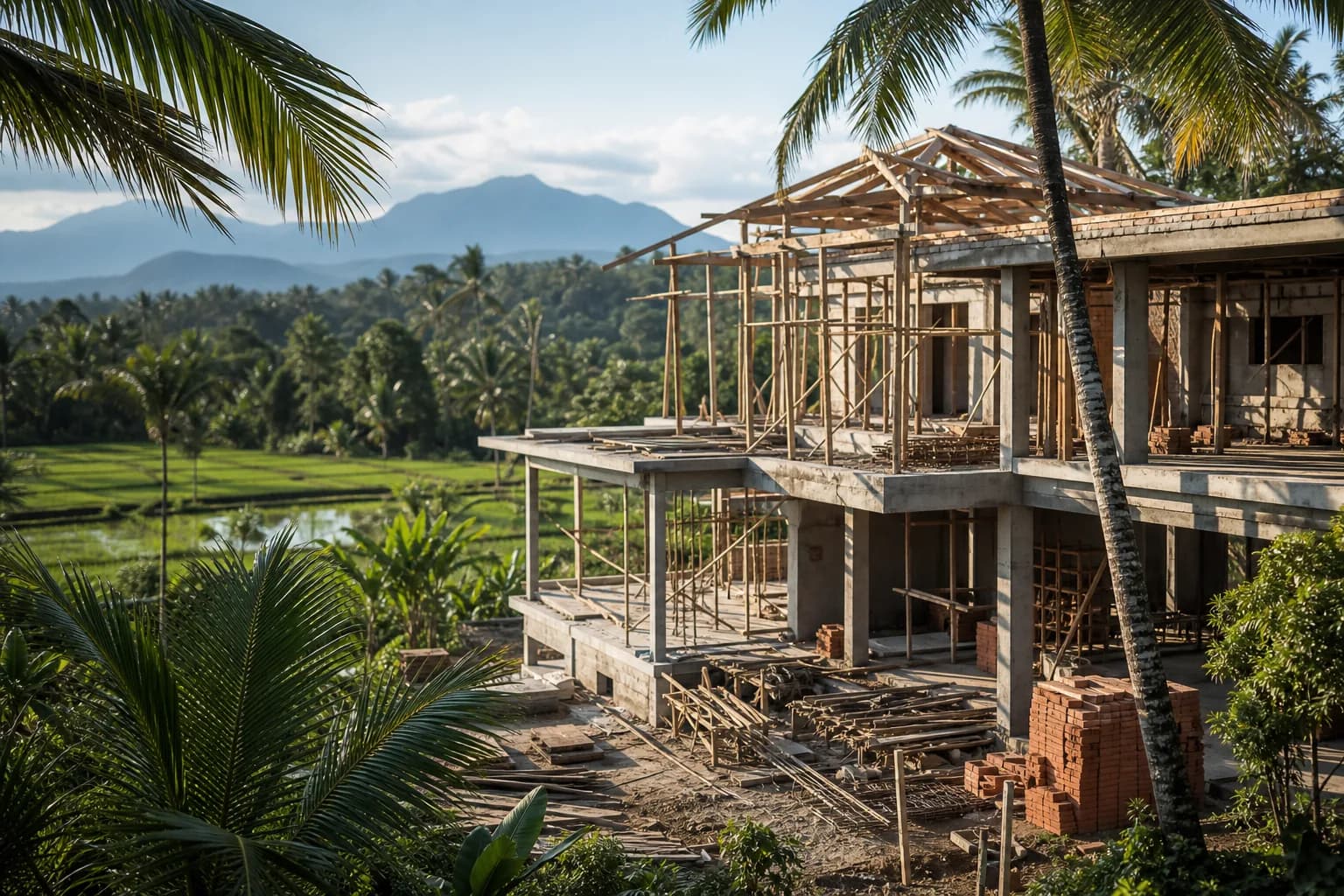
How to Build a Villa in Bali: The Complete Step-by-Step Process (2026)
Every stage of building a villa in Bali as a foreigner — from securing land and permits to handover — with realistic timelines, costs and the mistakes that derail first-time builders.
5 min read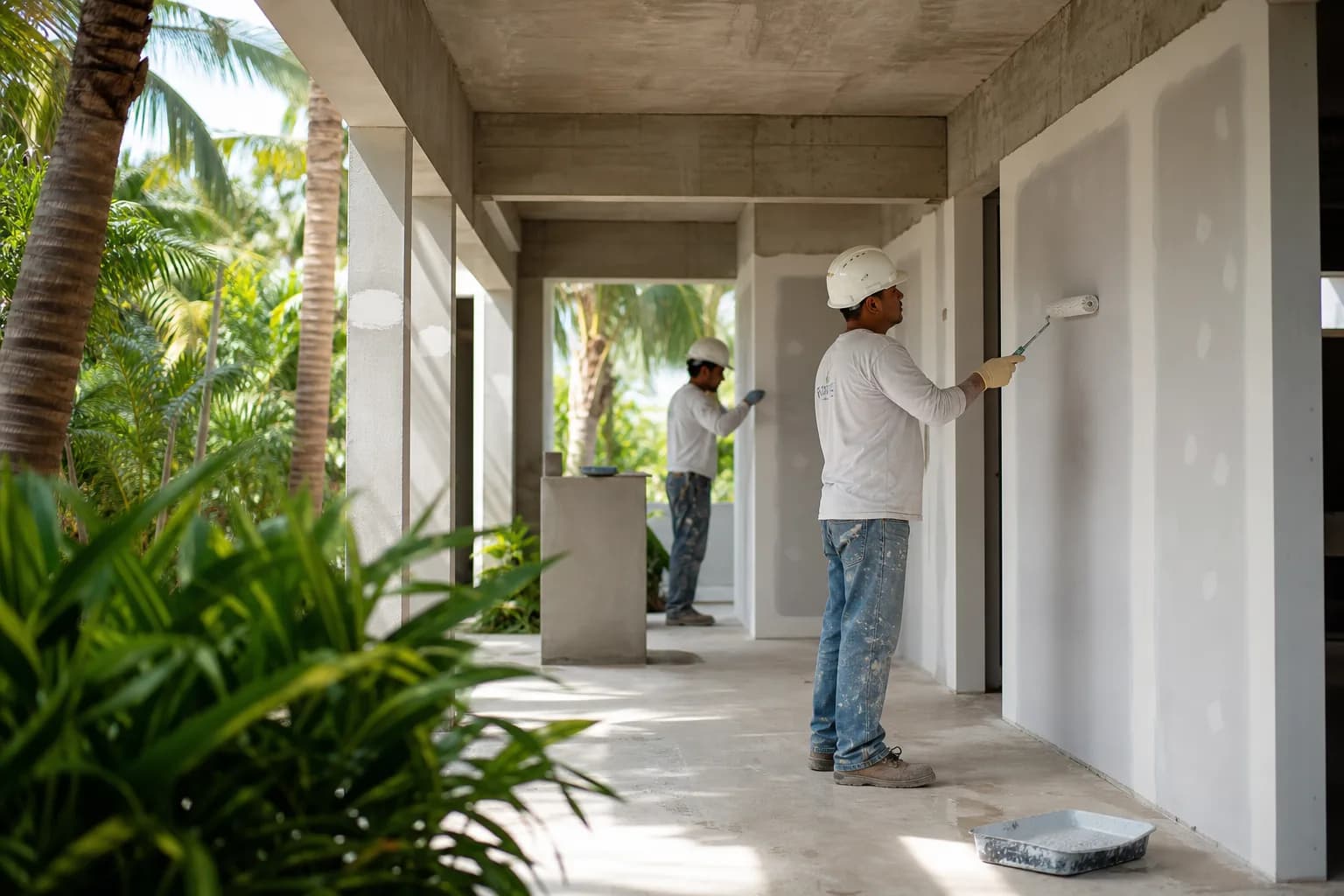
Moisture-Resistant Gypsum Board Finishing with Epoxy Primer Bali
Learn how moisture-resistant gypsum boards with epoxy primer boost durability, finish quality, and mold resistance in Bali projects. Great for Bali homes.
10 min read