Soft-Close Kitchen Hinge Failures in Bali: Quality Issues
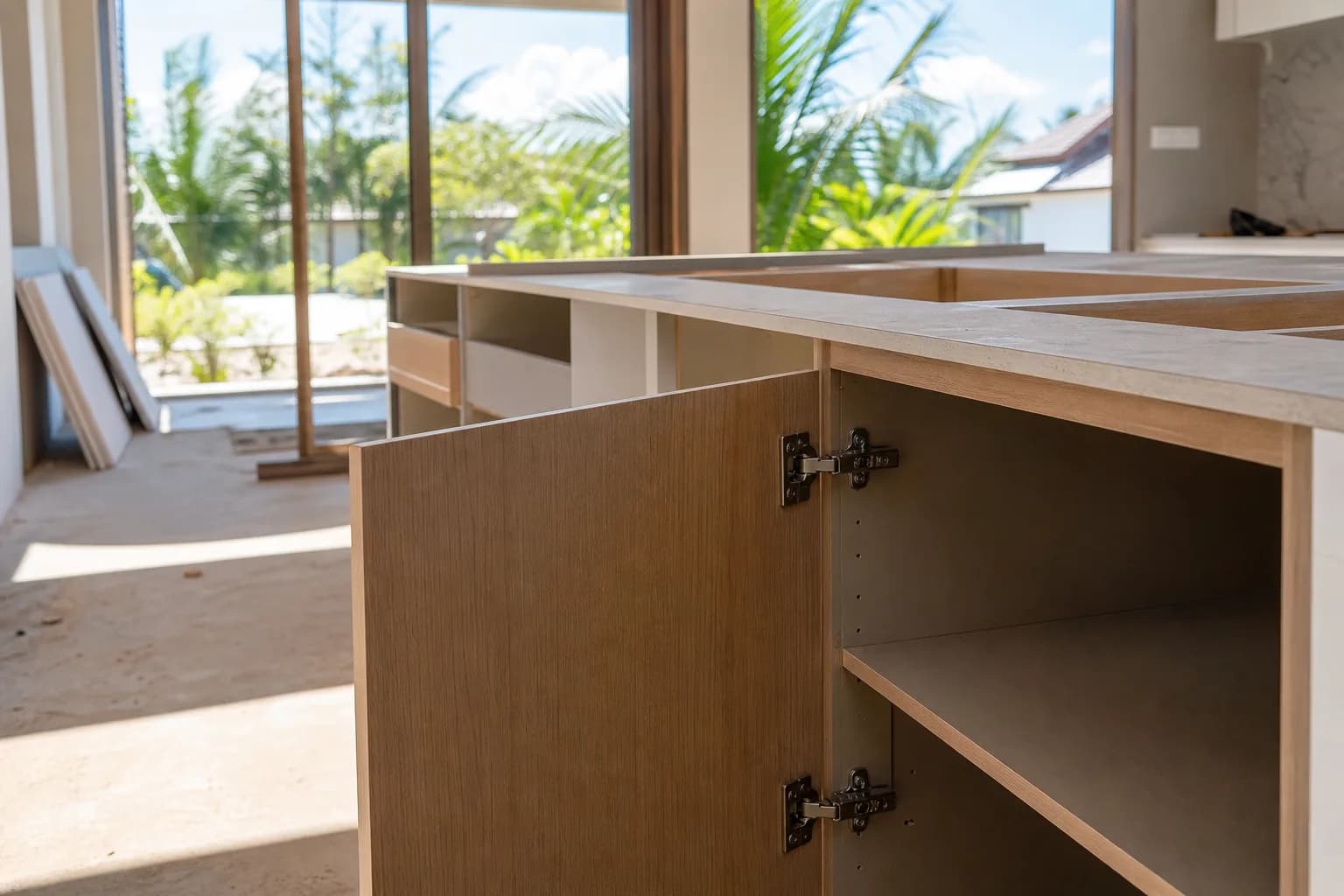
Why Do Soft-Close Kitchen Cabinet Hinges Fail Prematurely in Bali Villas?
Soft-close cabinet hinges represent one of the most common failure points in Bali villa construction and renovation projects, with premature breakdown rates reaching 30-40% within the first three years when inferior products or improper installation techniques are employed. The combination of Bali’s tropical humidity levels averaging 75-85%, salt-laden coastal air, and temperature fluctuations creates an aggressive environment that accelerates corrosion and mechanical wear in substandard hinge mechanisms. Property owners investing in interior finishing Bali projects frequently discover that the elegant soft-close feature they specified becomes a source of frustration when cabinet doors slam shut or refuse to close properly within months of completion.
Technical Analysis: Soft-Close Hinge Failure Mechanisms in Tropical Environments
The soft-close mechanism in modern cabinet hinges relies on a hydraulic damper containing specialized oil and precision-engineered springs that control door deceleration. In Bali villa construction contexts, these components face environmental stressors rarely encountered in temperate climates. The damper cylinder, typically constructed from steel or zinc alloy, must resist corrosion while maintaining seal integrity against moisture infiltration that would compromise the hydraulic fluid’s viscosity.
High-quality European manufacturers like Blum, Hettich, and Grass utilize multi-stage corrosion protection including zinc-nickel plating with chromate conversion coatings, achieving salt spray test ratings exceeding 240 hours per ASTM B117 standards. These premium hinges incorporate sealed damper units with synthetic hydraulic oils formulated to maintain consistent viscosity across temperature ranges from 5°C to 50°C—critical for Bali’s climate where kitchen temperatures can spike significantly during cooking activities in naturally ventilated spaces.
Conversely, economy-grade hinges commonly sourced through general furniture installation suppliers in Bali utilize basic electroplating with minimal corrosion resistance, often failing salt spray tests within 24-48 hours. The damper seals in these units employ standard rubber compounds that degrade rapidly under UV exposure and humidity, allowing moisture penetration that causes hydraulic fluid dilution and subsequent damper failure. The spring mechanisms in inferior hinges use lower-grade steel with inadequate tempering, resulting in tension loss and premature fatigue failure under the constant cycling typical of kitchen cabinet usage.
Installation precision directly impacts hinge longevity regardless of component quality. The mounting plate must achieve perfect perpendicularity to the cabinet frame, with drilling accuracy within ±0.5mm tolerances. Misalignment creates uneven load distribution across the hinge barrel, accelerating wear on the pivot points and causing binding that overworks the soft-close damper. In renovation Bali projects involving existing cabinetry, installers frequently encounter warped cabinet boxes or doors that have swelled due to moisture absorption, making proper hinge alignment nearly impossible without corrective carpentry work.
The hinge cup depth—the circular recess drilled into the cabinet door—requires precise 35mm diameter boring to 11-13mm depth depending on hinge specifications. Shallow drilling prevents full hinge seating, while excessive depth weakens the door structure and creates stress concentration points. Professional installation for villa utilities and finishing work demands the use of adjustable boring jigs and Forstner bits specifically designed for hinge cup drilling, yet many local installers rely on freehand drilling with standard spade bits, producing irregular cup geometry that compromises hinge performance.
The cabinet door overlay dimension—how much the door overlaps the cabinet frame—must match the hinge’s designed overlay capacity, typically available in 0mm (inset), 9mm (half-overlay), or 18mm (full-overlay) configurations. Forcing a hinge to operate outside its designed overlay range places excessive stress on the damper mechanism and pivot points, dramatically reducing service life. This specification error occurs frequently when contractors attempt to retrofit soft-close hinges onto existing cabinetry without verifying compatibility.
Material Specifications and Quality Standards for Tropical Applications
Premium soft-close hinges suitable for Bali’s coastal environment require specific material compositions and surface treatments. The hinge body should utilize cold-rolled steel with minimum 1.2mm thickness, formed through progressive die stamping to maintain dimensional consistency. Surface protection must include zinc-nickel alloy plating (12-15 microns thickness) followed by trivalent chromate passivation, providing superior corrosion resistance compared to standard zinc plating used in economy products.
The damper housing represents the critical component in soft-close functionality. Specification-grade units employ injection-molded engineering polymers such as polyoxymethylene (POM) or glass-filled nylon for the damper body, materials selected for dimensional stability across humidity and temperature variations. The damper piston utilizes precision-ground stainless steel with surface hardness ratings of 55-60 HRC, ensuring wear resistance over 100,000+ cycle lifespans. Hydraulic seals must employ fluoroelastomer (FKM) compounds rather than standard nitrile rubber, as FKM maintains sealing integrity at temperatures up to 200°C and resists degradation from cooking oils and cleaning chemicals.
For interior finishing Bali projects in direct coastal exposure (within 500 meters of shoreline), specification should mandate marine-grade stainless steel hinges with 316-grade construction. While significantly more expensive, these hinges eliminate corrosion concerns entirely and provide indefinite service life in salt air environments. The soft-close dampers in marine-grade hinges utilize completely sealed cartridge designs with synthetic hydraulic fluids that resist moisture contamination.
Mounting screws deserve equal attention to hinge body specifications. Standard carbon steel screws corrode rapidly in Bali’s climate, with rust staining appearing on cabinet faces within months. Professional furniture installation protocols specify stainless steel mounting screws (minimum 304-grade) with Pozidriv or Torx drive systems that prevent cam-out during installation and allow proper torque application without stripping.
Professional Installation Process for Maximum Hinge Longevity
Proper soft-close hinge installation begins before any drilling occurs, with comprehensive assessment of cabinet box and door conditions. Inspect cabinet frames for squareness using a precision square, measuring diagonal dimensions to verify rectangular geometry within 2mm tolerance. Warped or twisted cabinet boxes require shimming or structural correction before hinge installation proceeds, as no hinge can compensate for fundamental cabinet geometry problems.
Step 1: Cabinet Door Preparation and Moisture Conditioning
Verify door panels have achieved equilibrium moisture content (EMC) appropriate for Bali’s climate, typically 12-14% for solid wood or wood composite materials. Doors installed at lower moisture content will swell after installation, binding against frames and overloading hinge mechanisms. Allow imported doors to acclimate in the installation environment for minimum 72 hours before hinge installation. Seal all door edges with appropriate finish coatings to prevent moisture absorption that causes dimensional changes.
Step 2: Precision Hinge Cup Drilling
Mark hinge cup centerpoints at specified distances from door edges, typically 90-120mm from top and bottom edges for standard applications. Secure the door in a horizontal position with the hinge-mounting face upward. Install a 35mm Forstner bit in a drill press or use a portable drilling jig to ensure perpendicular boring. Set depth stop to achieve 11.5-12.5mm cup depth for standard European hinges. Drill at moderate speed (800-1200 RPM) with steady downward pressure, clearing chips periodically to prevent overheating. Verify cup depth with a depth gauge before proceeding.
Step 3: Hinge Mounting Plate Installation
Position mounting plates on cabinet frame sides at heights corresponding to door hinge cup locations. The mounting plate’s forward edge must align precisely with the cabinet frame’s front edge to achieve proper door overlay. Mark screw hole locations using the mounting plate as a template. Pre-drill pilot holes using a 2.5mm bit for standard 4mm mounting screws, drilling to 25mm depth. Install mounting plates using stainless steel screws, tightening to finger-tight plus one-quarter turn—over-tightening can strip particleboard or plywood substrates.
Step 4: Hinge Body Installation and Door Mounting
Insert hinge bodies into drilled cups, ensuring the hinge arm extends at the correct angle for the specified overlay. Secure hinges with provided mounting screws, again avoiding over-tightening that can compress the door material and create uneven hinge seating. With an assistant supporting the door weight, engage hinge arms onto mounting plates by sliding the hinge cam into the mounting plate’s retention slot. Secure the connection by tightening the mounting plate’s locking screw.
Step 5: Three-Dimensional Adjustment and Calibration
Quality hinges provide adjustment in three axes: depth (in-out), height (up-down), and side (left-right). Begin with height adjustment, ensuring consistent reveal gaps between adjacent doors. Adjust depth to achieve uniform overlay across all cabinet faces. Fine-tune side adjustment to create even vertical gaps between doors. Each adjustment affects others slightly, requiring iterative refinement. The soft-close damper should engage approximately 15-20 degrees before full closure, providing smooth deceleration without abrupt stopping.
Step 6: Load Testing and Damper Verification
Cycle each door through 20-30 complete open-close operations, verifying smooth damper engagement and consistent closing force. Doors should close completely from any opening angle greater than 30 degrees without requiring manual assistance. Listen for unusual sounds indicating binding or misalignment. Apply lateral pressure to closed doors to verify secure latching without excessive play.
Cost Analysis and Project Timeline for Quality Hinge Installation
Material costs for soft-close hinges vary dramatically based on quality tier and sourcing. Economy-grade Chinese-manufactured hinges available through local Bali suppliers cost Rp 15,000-30,000 per hinge pair, while mid-tier brands like Hafele or Salice range from Rp 75,000-150,000 per pair. Premium European brands (Blum Blumotion, Hettich Sensys) cost Rp 200,000-350,000 per pair when sourced through authorized distributors. For a typical villa kitchen with 20-25 cabinet doors, hinge material costs range from Rp 300,000 (economy) to Rp 7,000,000 (premium specification).
Professional installation labor for renovation Bali projects typically costs Rp 50,000-100,000 per door including drilling, mounting, and adjustment, with experienced installers completing 8-12 doors per day. Total installation labor for a complete kitchen ranges from Rp 1,000,000-2,500,000 depending on complexity and access conditions. Projects requiring cabinet box correction or door remediation before hinge installation incur additional carpentry charges of Rp 500,000-1,500,000.
Timeline for professional hinge installation spans 2-3 days for typical residential kitchens, including door removal, preparation, installation, and final adjustment. Rush installations compressed into single-day schedules compromise quality, as proper adjustment requires time for iterative refinement. Bali villa construction schedules should allocate one week for complete kitchen cabinet finishing including hinge installation, hardware mounting, and final detailing to ensure quality outcomes.
The cost differential between economy and premium hinges represents minimal impact on total project budgets—typically 0.5-1.5% of complete kitchen renovation costs—yet dramatically affects long-term satisfaction and maintenance requirements. Teville’s approach prioritizes specification-grade components that eliminate callback visits and warranty claims, ultimately reducing total ownership costs despite higher initial material investment.
Frequently Asked Questions: Soft-Close Hinge Performance in Bali
How long should quality soft-close hinges last in Bali’s climate?
Premium European-manufactured soft-close hinges with proper corrosion protection should provide 10-15 years of trouble-free service in Bali’s tropical environment when professionally installed and maintained. Marine-grade stainless steel hinges in coastal locations can exceed 20-year lifespans. Economy-grade hinges typically show performance degradation within 2-4 years, with complete damper failure common by year five. The investment in quality hinges pays dividends through eliminated replacement costs and maintained functionality throughout the villa’s operational life.
Can soft-close hinges be retrofitted to existing cabinets?
Retrofitting soft-close hinges to existing cabinetry is technically feasible but requires careful compatibility assessment. The existing hinge cup drilling must match standard 35mm specifications, and cabinet box construction must provide adequate material thickness (minimum 16mm) for mounting plate installation. Doors that have warped or swollen due to moisture exposure may require planing or replacement before successful hinge installation. Many renovation Bali projects discover that retrofit costs approach new cabinet construction expenses when extensive remediation is required, making complete cabinet replacement more economical.
What maintenance do soft-close hinges require?
Quality soft-close hinges require minimal maintenance beyond periodic cleaning and adjustment verification. Every 6-12 months, wipe hinge mechanisms with a dry cloth to remove accumulated cooking oils and dust that can interfere with damper operation. Avoid applying lubricants to the damper mechanism, as this attracts contaminants and can dilute hydraulic fluids. Check mo
 1from 198.000 USD
Private: Haridas Villas
 164 m²7 month(s)from 79.000 USD
Private: Haridas Villas, Tegallalang
164 m²7 month(s)from 79.000 USDTALA TWO
 3173 m²6 month(s)from 125.000 USD
TALA FOUR

Want to calculate?
 4344 m²16 month(s)from 290.000 USD
Radha
 3124 m²6 month(s)from 123.000 USD
TALA 8
 2144 m²11 month(s)from 104.000 USD
Narayana
 3127 m²9 month(s)from 177.000 USD
Mukunda
 172 m²8 month(s)from 120.000 USD
Keshava
 3104 m²11 month(s)from 99.000 USD
TALA 100
 3180 m²7 month(s)from 142.000 USD
Vasudeva
Start With Real Numbers, Not Guesses
Before finalizing your finishing works plan, check realistic cost ranges for your Bali villa project.
Available lands
 515 m²7 min$ 570813Bali, Canggu
 1950 m²7 min$ 150092Bali, Tabanan
 260 m²5 min$ 51872Bali, Kedungu
 300 m²55 min$ 32475Bali, Tegelalang
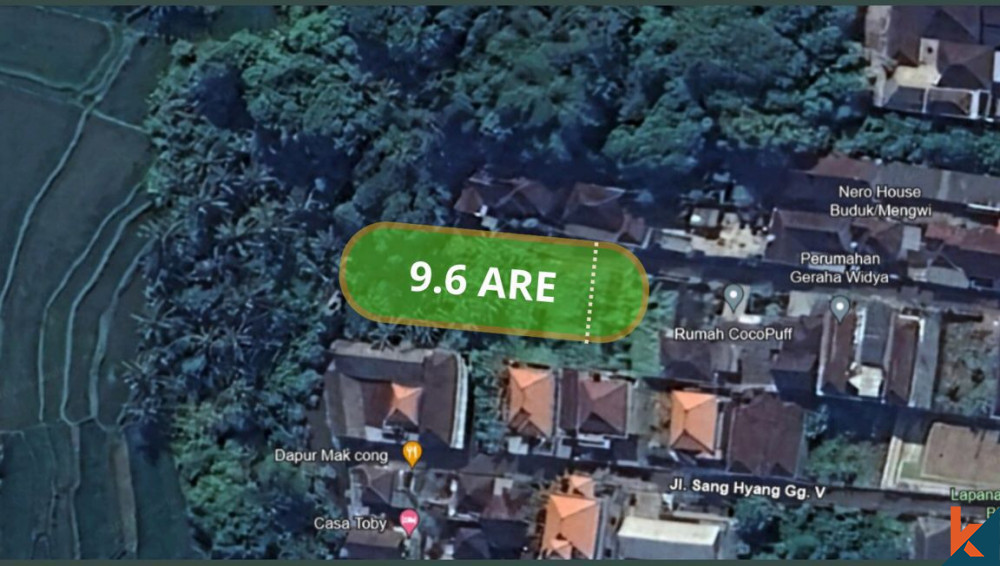 960 m²15 min$ 91034Bali, Mengwi
 422 m²15 min$ 93547Bali, Kerobokan
 1000 m²10 min$ 384852Bali, Canggu
 911 m²15 min$ 248217Bali, Pererenan
 1600 m²32 min$ 266010Bali, Tabanan
 1350 m²5 min$ 283467Bali, Pecatu
 4270 m²10 min$ 394397Bali, Ubud
 3254 m²5 min$ 631800Bali, All
 2130 m²10 min$ 495776Bali, Pecatu
 2400 m²7 min$ 496552Bali, Canggu
 615 m²15 min$ 113608Bali, Tabanan
Essential Bali build & buy guides
- Bali villa construction cost per m² in 2026
- How much will your villa cost? Calculator
- Building a villa in Bali: the complete guide
- Buying land in Bali: step-by-step for foreigners
- Bali villa investment: yields, risks, returns
- Leasehold vs freehold: what foreigners can own
- Construction defect liability & 10-year warranty
- Bali building codes and construction standards
Related guides

Why a Cheap Bali Leasehold Is Cheap: Pricing Red Flags Every Buyer Should Decode
Suspiciously cheap Bali leaseholds are priced low for a reason: short remaining terms, forbidden zoning, missing road access, disputes or weak contracts. How to decode the discount before you pay for it.
8 min read
Fake Compliance and Licensing Agents in Bali: The 2026 Paperwork Scam and How to Verify Documents
Forged certificates, permit fixers and fake notaries: how Bali's paperwork scams work in 2026 and how to verify every property document at its government source.
7 min read
Buying a Bali Villa from Instagram: Phantom Listings, Render-Only Projects and How to Verify
Instagram is Bali's biggest property shop window and its least verified. How phantom listings, render-only projects and cloned developer accounts work — and the verification steps that expose them.
7 min read