Why a Cheap Bali Leasehold Is Cheap: Pricing Red Flags Every Buyer Should Decode

Every week, someone finds a cheap leasehold in Bali — a plot or villa priced 30, 40, sometimes 60 percent below everything comparable around it — and wonders whether they have found the island's last bargain. Almost always, they have found something else: a property whose price honestly reflects a defect the listing does not mention. Bali's land market is informal but not stupid; local owners and brokers know what plots are worth, and sustained discounts have causes. This guide walks through how leasehold pricing actually works, the five defects that most often explain a low price, and the rare cases where cheap is genuinely fine.
How leasehold pricing actually works
Bali land is priced per are (100 m²), and leasehold land is typically quoted per are per year of the lease term. A leasehold price therefore compresses three variables into one number: location, plot quality, and — crucially — the term you are actually getting. A "cheap" plot with 12 years remaining is not the same product as a market-priced plot with a fresh 30-year term and a written extension option; comparing their headline prices tells you nothing.
Leasehold in Bali typically runs 25–30 years and is extendable by agreement — but the value of a specific lease depends entirely on what is written in it. When a price looks like an outlier, the explanation is nearly always in one of five places: the term, the zoning, the access, the legal state of the land, or the contract itself.
Red flag 1: a short remaining term
A leasehold is a depreciating asset: as remaining years shrink, so does resale value, because the next buyer is purchasing a shorter runway. The resale market strongly prefers long remaining terms — a villa with 20+ years left sells into a deep buyer pool, while one with under 10 years appeals mainly to operators doing yield math on a countdown. Sellers of short leases know this, which is why short-term leaseholds are structurally cheap.
Short terms are not automatically bad buys — the price can be fair for the years you get — but two conditions apply. First, the discount must actually compensate for the missing years and for the weak exit. Second, and more important: check what the lease says about extension. If extension terms, pricing and conditions were locked in writing in the original agreement, a short lease can be repaired. If extension is "to be negotiated with the owner" at expiry, you will be negotiating with zero leverage against a party who gets the land — and your building — back if you fail to agree.
Red flag 2: zoning that forbids what you plan
The single most common defect behind suspiciously cheap land is zoning. Land in a green (agricultural) zone cannot legally carry a rental villa, full stop — and a striking amount of cheap inventory is green-zone land marketed with the assurance that it "will become buildable soon". Treat that claim as a red flag in itself: rezoning is not something a seller can promise, and buying on the hope of it is speculation, not investment.
Zoning is checked against the local spatial plan (ITR) for the exact parcel — not the neighbourhood, the road, or the neighbour's plot. In 2026 the stakes are higher still: Bali's provincial government has moved to restrict new tourism-accommodation construction in several saturated districts, so even correctly zoned land needs its current permit outlook verified. A plot you cannot get a PBG building approval for is not discounted; it is a different, much less valuable product. Every plot in Teville's land catalogue passes exactly this screening — certificate, zoning/ITR and ownership chain — before we list it.
Red flag 3: access, utilities and the road that is not yours
Bali has a specific and recurring trap: the beautiful plot reached by a narrow private path. Legal access is not guaranteed by physical access — if the road to the land is not public and not legally included in your lease, you can hold a 30-year lease on land you have no enforceable right to reach, and the owner of the path has a veto over your project. Related defects that quietly justify a discount:
- Access roads too narrow for construction vehicles, adding real cost to any build;
- No electricity connection nearby, or capacity that cannot support a villa;
- No reliable water source, in areas where wells are regulated or saline;
- Ravine, river-boundary or steep-slope plots where setback rules consume much of the buildable area;
- Flood paths and drainage problems that locals know about and visiting buyers do not.
None of these appear in listing photos, and several are expensive or impossible to fix. Any plot priced well under its neighbours deserves a site visit in the wet season and an access-rights check in the lease documents.
Red flag 4: disputes, encumbrances and consent
Some cheap land is cheap because the seller cannot cleanly deliver it. The classic cases: land mortgaged to a bank; land under an ownership dispute; inherited land where not all heirs have consented to the lease; certificates that are forged, double-issued or covering different boundaries than the fence suggests; and lessors who are not actually the certificate holder. Any of these can surface years later and unwind your position — the discount you enjoyed becomes the litigation you fund.
The defence is standard due diligence, done before money moves: physical verification of the certificate at the BPN land office by your own lawyer, a check of the full ownership chain, confirmation that every required party — including spouses and co-heirs where relevant — signs the deed, and a search for encumbrances. A genuine seller accepts the two to six weeks this takes. A seller who needs to close before verification completes has answered your question about why the price is low.
Red flag 5: the contract itself
Finally, some leaseholds are cheap because the paper is weak. Watch for: extension clauses that defer everything to future negotiation; no notarised deed, just a private agreement; missing provisions on what happens to the building at expiry; no right to sublease or assign, which kills rental use and resale; renewal pricing left open, or pegged to whatever the owner decides; and Indonesian-language texts that differ materially from the English version you negotiated — in dispute, the Indonesian text is what counts. A clean lease is notarised, bilingual and explicit on term, extension mechanics and price basis, transfer and sublease rights, and end-of-term treatment of improvements.
Reading the discount: a quick diagnostic
| Why it is cheap | Fixable? | Buy or walk? |
|---|---|---|
| Short remaining term, extension locked in writing | Yes — extend at documented terms | Can be a genuine value buy |
| Short term, extension "to be negotiated" | Only with the owner's future goodwill | Price in a likely total loss of leverage |
| Green-zone or restricted zoning | No — rezoning promises are not bankable | Walk, unless you want farmland |
| No legal road access / no utilities | Sometimes, at significant cost | Only with access rights secured in writing first |
| Dispute, mortgage, missing heir consent | Occasionally, with legal work before closing | Walk unless fully cleared pre-payment |
| Weak, unnotarised contract | Yes — renegotiate and notarise properly | Fix before paying, never after |
| Motivated seller, remote emerging area | Nothing to fix | The legitimate bargain — verify and move |
When cheap is genuinely fine
Real bargains exist. Emerging areas away from the saturated southwest coast price land far below Canggu long before infrastructure catches up; owners with genuine liquidity needs sell clean leases at honest discounts; oddly shaped or sloped plots that defeat cookie-cutter projects can suit a custom design perfectly. The defining feature of a legitimate bargain is that it survives full due diligence — the certificate verifies, the zoning permits your use, access is legal, the term is real, and the contract is clean. In other words: a true bargain gets cheaper to confirm the deeper you dig, while a false one gets more complicated. Run the numbers soberly, too — land is only one line in a project budget, and our villa cost calculator shows what construction adds at 2026 prices ($600–2,000/m² depending on spec). Browse our guides for the due-diligence checklist, and see the portfolio for what difficult-looking plots can become.
FAQ: cheap leasehold in Bali
Is a 10–15 year leasehold ever worth buying?
Sometimes — as an operating play, not a hold. If the price honestly reflects the short runway, the rental math works over the remaining years, and ideally extension terms are documented, a short lease can perform. But your exit will be hard, and your building reverts with the land at expiry, so model it as yield with zero terminal value unless extension is contractual.
How big a discount justifies zoning risk?
None. Zoning is binary: if the plot cannot legally carry a rental villa, no discount rescues the business plan, and promised rezoning is not something a seller can deliver. Pay for verified, correctly zoned land or do not buy. The apparent savings on a green-zone plot are the full purchase price at risk.
Can I fix a bad lease after signing?
Rarely on good terms. Once you have paid, the lessor has your money and no incentive to grant the extension option, sublease right or access clause you forgot. Every protective clause is negotiated before signing, while you still have the one lever that matters — the ability to walk away.
Why are similar plots priced so differently on the same street?
Because the headline hides the variables: remaining years, extension terms, access rights, zoning of the exact parcel, and the legal state of the certificate. Two neighbouring listings can differ on all five. Normalise prices per are per year of secured term, then reprice for defects — most mysterious gaps disappear immediately.
How Teville fits in
Teville lists 100+ leasehold plots that have already survived the checks this article describes — certificate, zoning, ownership chain and access — with leases typically running 25–30 years and extension terms addressed up front, and remote purchase possible via Power of Attorney. If you have found a suspiciously cheap plot elsewhere, send it to us; we will tell you honestly what the discount is buying.
Essential Bali build & buy guides
- Bali villa construction cost per m² in 2026
- How much will your villa cost? Calculator
- Building a villa in Bali: the complete guide
- Buying land in Bali: step-by-step for foreigners
- Bali villa investment: yields, risks, returns
- Leasehold vs freehold: what foreigners can own
- Construction defect liability & 10-year warranty
- Bali building codes and construction standards
Related guides
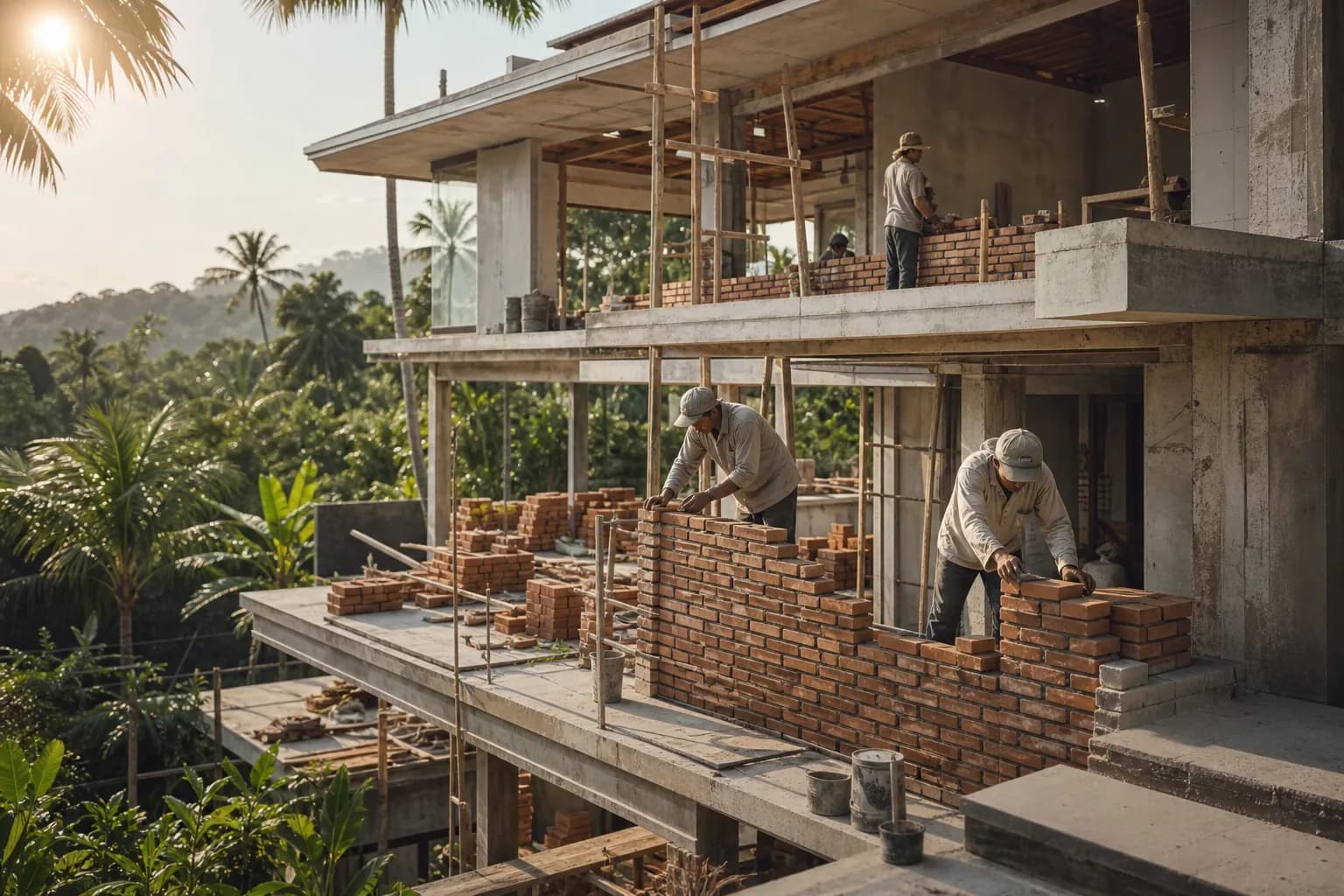
Fake Compliance and Licensing Agents in Bali: The 2026 Paperwork Scam and How to Verify Documents
Forged certificates, permit fixers and fake notaries: how Bali's paperwork scams work in 2026 and how to verify every property document at its government source.
7 min read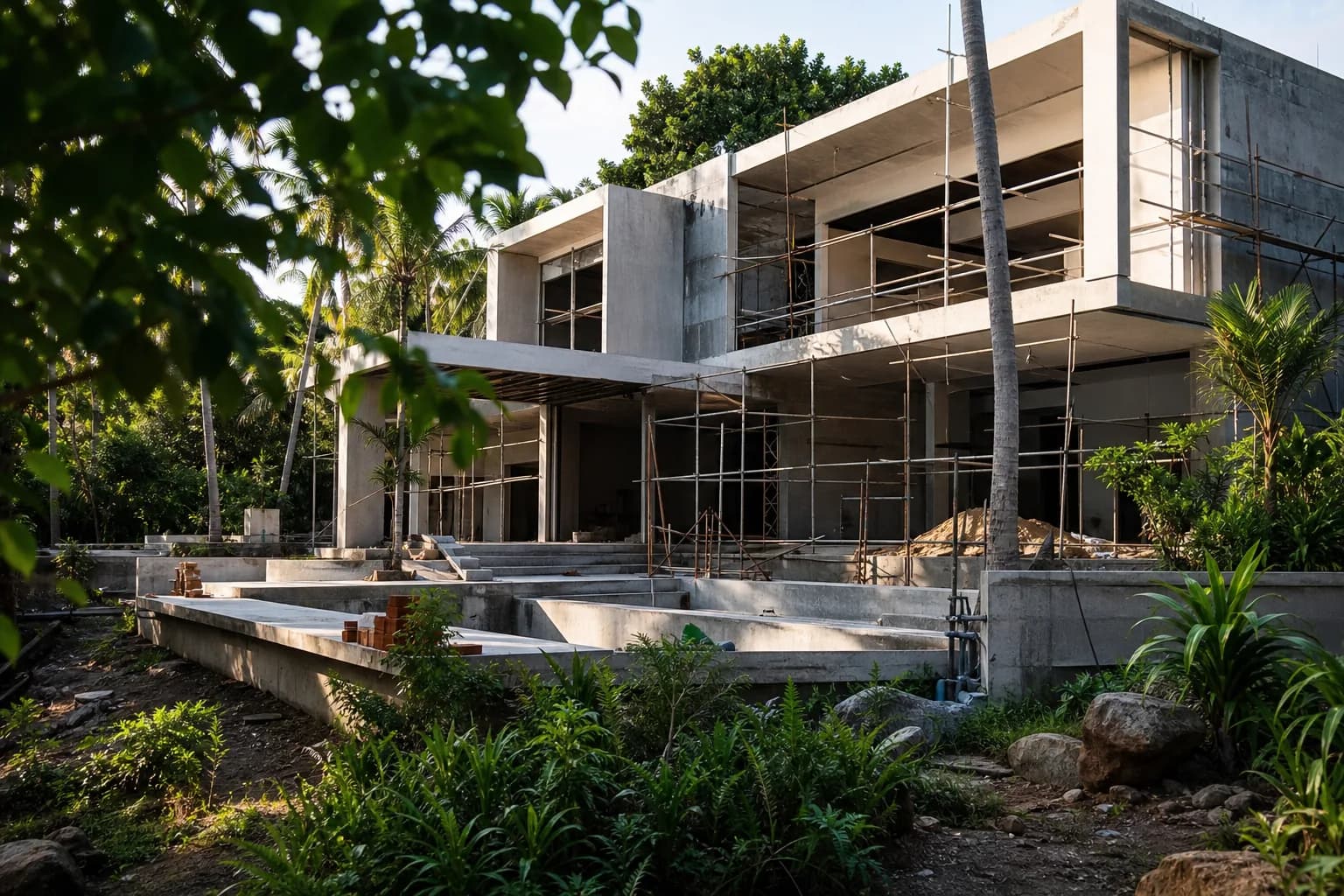
Buying a Bali Villa from Instagram: Phantom Listings, Render-Only Projects and How to Verify
Instagram is Bali's biggest property shop window and its least verified. How phantom listings, render-only projects and cloned developer accounts work — and the verification steps that expose them.
7 min read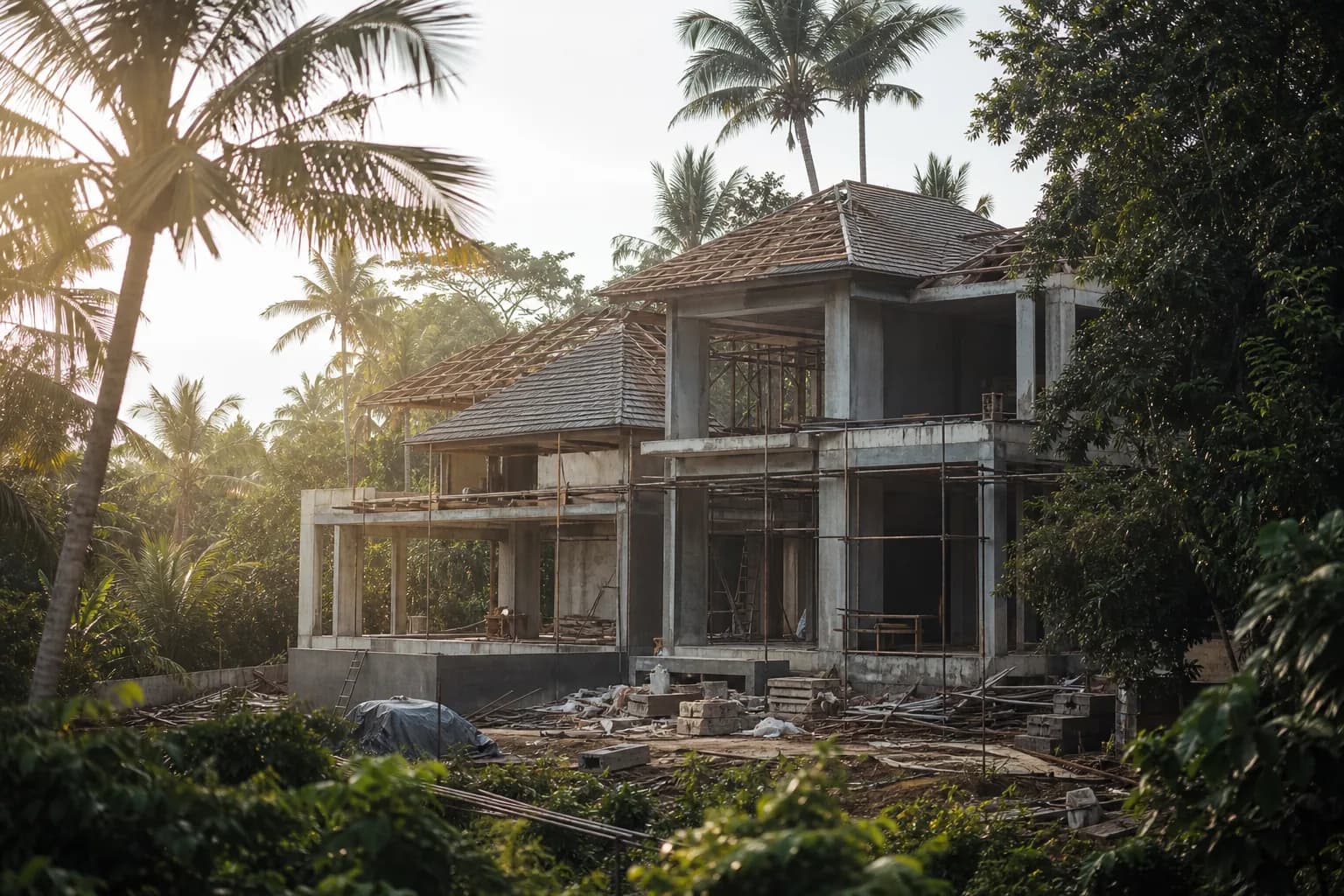
Bali Developer Bankruptcy: Early Warning Signs and What Deposit Recovery Really Involves
How to spot a failing Bali developer before your money is trapped: the early warning signs, how Indonesian insolvency law treats foreign buyers, and realistic deposit recovery routes.
7 min read