How to Vet a Bali Developer or Contractor: 12 Checks Before You Wire Money
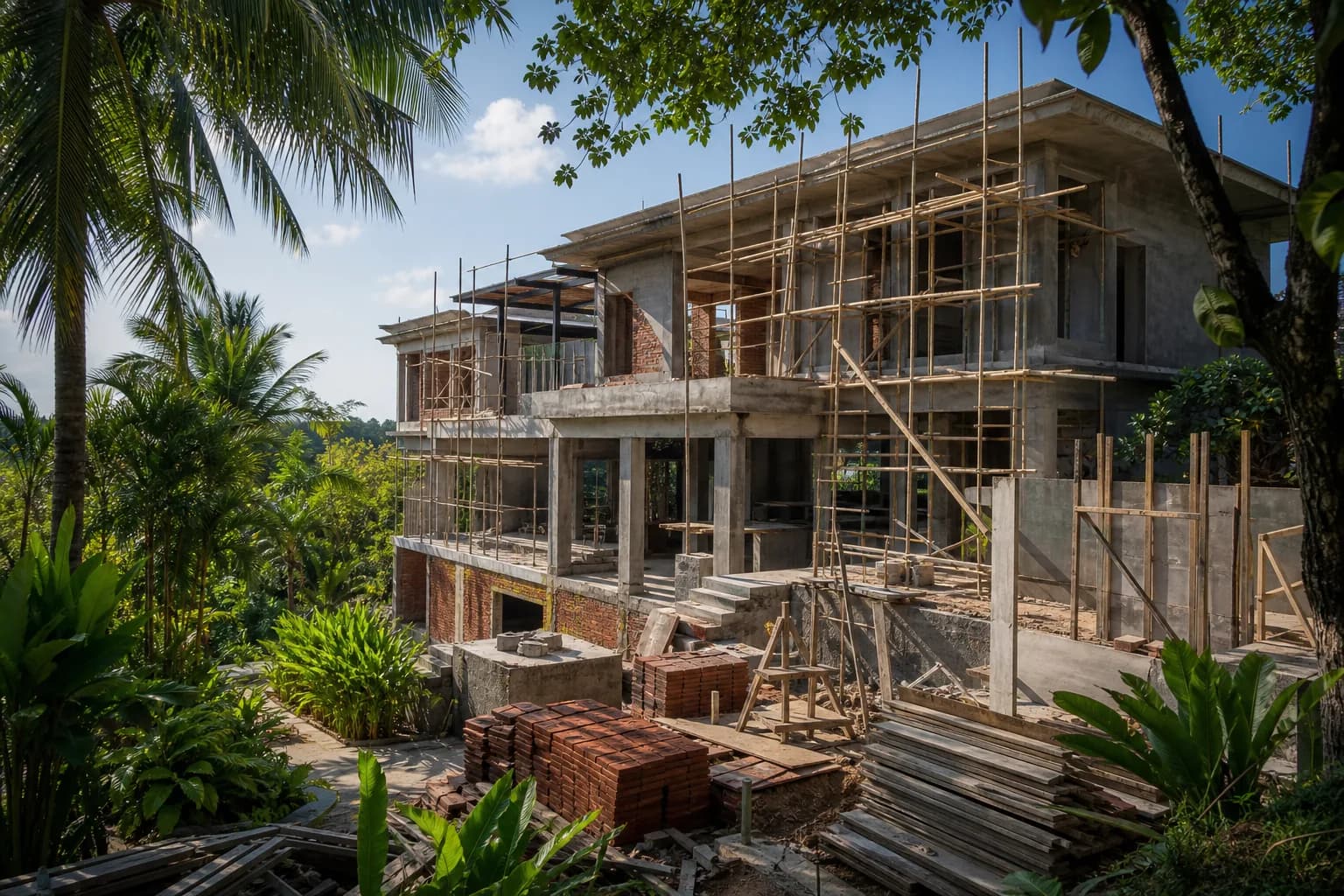
Knowing how to vet a Bali developer is the single most valuable skill a foreign buyer can bring to the island. Bali's construction market has no licensing barrier that filters out weak operators the way regulated markets do: anyone with an Instagram account and a rendering package can call themselves a developer. Deposits are routinely wired to companies buyers have never verified, for land they have never checked, under contracts they cannot read. The good news is that almost every serious loss we hear about would have been caught by a handful of unglamorous checks that cost far less than a lost deposit. Here are the twelve we consider non-negotiable before any money moves.
Why vetting matters more in Bali than at home
In most Western markets, buyer protection is structural: statutory escrow, mandatory developer bonding, consumer protection agencies, searchable court records. Bali off-plan property runs on contractual protection only. There is no statutory escrow regime for villa presales, no compensation fund, and Indonesian private companies do not publish audited accounts. If a purchase goes wrong, you are typically an unsecured creditor in a foreign jurisdiction.
That does not make Bali un-investable — thousands of villas are delivered properly every year. It means the filtering that regulators do elsewhere, you must do yourself, before wiring anything. Every check below is something you or your independent lawyer can actually perform in 2026.
How to vet a Bali developer: the 12 checks
1. Verify the legal entity exists — AHU and NIB
Ask for the company's full legal name and registration details, then verify them independently. Indonesian legal entities are registered with the Ministry of Law and can be checked through the AHU Online system; business licensing is handled through the government's OSS system, which issues the NIB (Nomor Induk Berusaha), a 13-digit business identification number. A legitimate developer selling to foreigners typically operates through a PT or PT PMA and can show both. If the name on the contract does not match the registered entity, stop.
2. Confirm who controls the land
A developer can only sell you rights it actually holds. Ask for the land certificate and have it verified at the local BPN (national land agency) office — physically, not from a photocopy, since forged and double-issued certificates circulate in the Bali market. Check the ownership chain, and whether the land is mortgaged or disputed. Every plot Teville lists on its vetted land catalogue goes through exactly this process: certificate check, zoning, and ownership chain, before it is offered.
3. Check zoning before you believe the brochure
Land in a green (agricultural) zone cannot legally carry a rental villa, no matter what the seller promises about future rezoning. Zoning is verified against the local spatial plan (ITR); a proper developer will show you the zoning confirmation for the exact plot, not the district in general. In 2026 this matters more than ever, as Bali's provincial government has moved to restrict new tourism-accommodation construction in several saturated districts — verify the current status for your specific area.
4. Ask for the PBG — and verify it on SIMBG
The PBG (Persetujuan Bangunan Gedung) is the building approval required before construction starts. For off-plan purchases, confirming that a PBG exists and matches the unit you are buying is one of the most consequential checks you can make. Your lawyer can verify the permit through the government's SIMBG portal. "The PBG is in process" is the most common phrase in stalled-project histories; if it cannot be evidenced, price the project as speculative.
5. Ask about the SLF on completed projects
The SLF (Sertifikat Laik Fungsi) certifies a finished building fit for occupancy; without it a villa cannot legally be occupied or rented out. A developer who has delivered projects should be able to show SLFs for them. A portfolio of "completed" villas with no SLFs suggests buildings that deviate from their permits — a liability you would inherit.
6. Inspect finished buildings, not renders
Renders are marketing; buildings are evidence. Visit at least one completed project in person or through a representative. Look at how three-year-old work is ageing in the tropics: waterproofing, timber movement, pool equipment, drainage. Bali's climate exposes corner-cutting within two wet seasons. Teville's portfolio exists precisely so buyers can judge built quality rather than concept art.
7. Speak to past clients directly
Ask for two or three previous buyers and contact them without the developer in the room. Useful questions: Was the handover on time? What did snagging look like? How were defects handled after final payment? A developer who cannot produce a single reachable past client either has none or has none who are happy.
8. Walk an active site
Active sites tell you about cash flow. Healthy sites have consistent crews, materials on hand, and visible weekly progress. Warning signs: skeleton crews, idle scaffolding, subcontractors who mention late payment. Unpaid subcontractors are one of the earliest public symptoms of a developer running out of money.
9. Read the contract like it will be tested
Indonesian law requires contracts involving Indonesian parties to have an Indonesian-language version, and in dispute the Indonesian text will carry decisive weight — so have your own lawyer verify the two versions match. The contract should specify: exact specifications and materials, a completion date with per-day delay penalties, a defect liability period, and what happens to your money if the developer fails to deliver. Vague contracts are not a style choice; they are a strategy.
10. Insist on milestone-based payments
Payment structure is your strongest practical protection. Money should follow verified construction stages — foundation, structure, roof, finishing — never the other way round. Large upfront percentages before ground is broken are a classic red flag, especially with no escrow arrangement. Teville builds on a six-stage milestone schedule: you pay as work progresses and can verify each stage before releasing the next payment. Use our villa cost calculator to see how a realistic budget maps onto stages.
11. Look for financial and legal distress signals
You cannot pull audited accounts, but you can look for proxies: court records naming the company, complaints in owner and expat communities, projects launched but not finished, and heavy discounting to raise fast cash. A developer funding Project B with deposits from Project C is a structure that fails the moment sales slow.
12. Pin down the guarantee — in writing
Ask what is guaranteed after handover, for how long, and what the claims process is. A serious builder stands behind its structure for the long term — Teville provides a lifetime structural guarantee on its builds — and will put defect-liability terms in the contract rather than in conversation.
The paper trail: what to verify and where
| Document | Where to verify | Red flag |
|---|---|---|
| Company registration (PT / PT PMA) | AHU Online, Ministry of Law | Contract name differs from registered entity |
| NIB business licence | OSS system | No NIB, or inactive status |
| Land certificate | BPN land office, in person | Verification refused or "certificate is with the bank" |
| Zoning confirmation (ITR) | Local spatial-plan authorities | Green-zone land sold as villa land |
| PBG building approval | SIMBG portal | "In process" with nothing to show |
| SLF on past projects | Ask; cross-check with local authority | Completed portfolio, zero SLFs |
Red flags that should end the conversation
- Pressure to pay a "reservation fee" before any documents are shown.
- Refusal to let your own lawyer verify the certificate at BPN — legitimate sellers welcome verification and allow the weeks it takes.
- Guaranteed rental returns baked into the sales pitch. Well-run Bali villas have historically netted roughly 7–12%, but that is market context, never a promise a builder can honestly make.
- A discount that only exists "if you decide today".
- No physical office, no completed buildings, no reachable past clients — only renders and a payment link.
None of these checks is exotic. Together they take two to six weeks and a modest legal budget — the same due-diligence window any legitimate seller in Bali will accept. If a counterparty cannot survive this list, the discount was never a bargain. For deeper dives on each document, our guides section covers certificates, zoning and due diligence step by step.
FAQ: vetting a Bali developer
How long does it take to vet a Bali developer properly?
Plan for two to six weeks. Company and licence checks through AHU and OSS take days; physical certificate verification at BPN and zoning confirmation take longer. Legitimate sellers accept this window as normal. Anyone insisting the deal cannot wait for verification is telling you something important about the deal.
Can I do these checks remotely?
Mostly, yes. Registry checks are online, and an independent Indonesian lawyer or notary can verify certificates at BPN and inspect sites on your behalf. Many buyers complete the entire process — including a purchase via Power of Attorney — without flying in, provided the people acting for them are genuinely independent of the seller.
What is the single most important check?
Land control plus the PBG. A developer who provably controls titled, correctly zoned land and holds a building approval for your exact unit has passed the two hurdles where most failed projects die. Everything else — track record, contract quality, payment structure — determines how safe the remaining journey is.
Is a well-known brand or big Instagram following proof of legitimacy?
No. Marketing reach and construction competence are unrelated skills, and some of Bali's most visible failures were heavily advertised. Followers, ads and show units are cheap; SLF certificates, verifiable permits and reachable past clients are not. Vet the paperwork and the buildings, not the feed.
How Teville fits in
Teville has built villas in Bali since 2018 as a general contractor, and we designed our own process around the checks above: legally vetted land, permits handled in our name-transparent structure, six-stage milestone payments and a lifetime structural guarantee. If you want to see how a developer looks when it expects to be vetted, talk to us — and bring this checklist.
Essential Bali build & buy guides
- Bali villa construction cost per m² in 2026
- How much will your villa cost? Calculator
- Building a villa in Bali: the complete guide
- Buying land in Bali: step-by-step for foreigners
- Bali villa investment: yields, risks, returns
- Leasehold vs freehold: what foreigners can own
- Construction defect liability & 10-year warranty
- Bali building codes and construction standards
Related guides

Why a Cheap Bali Leasehold Is Cheap: Pricing Red Flags Every Buyer Should Decode
Suspiciously cheap Bali leaseholds are priced low for a reason: short remaining terms, forbidden zoning, missing road access, disputes or weak contracts. How to decode the discount before you pay for it.
8 min read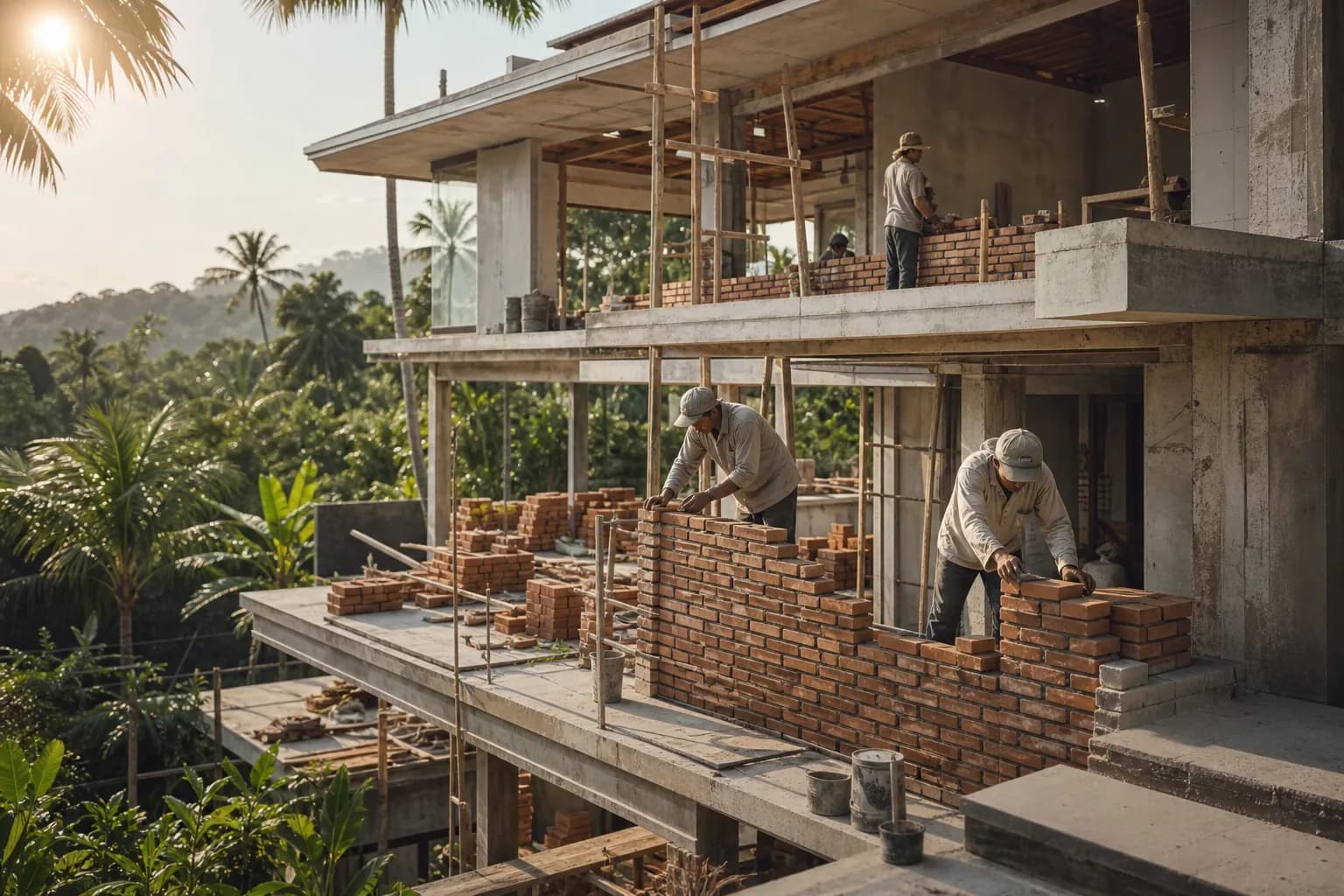
Fake Compliance and Licensing Agents in Bali: The 2026 Paperwork Scam and How to Verify Documents
Forged certificates, permit fixers and fake notaries: how Bali's paperwork scams work in 2026 and how to verify every property document at its government source.
7 min read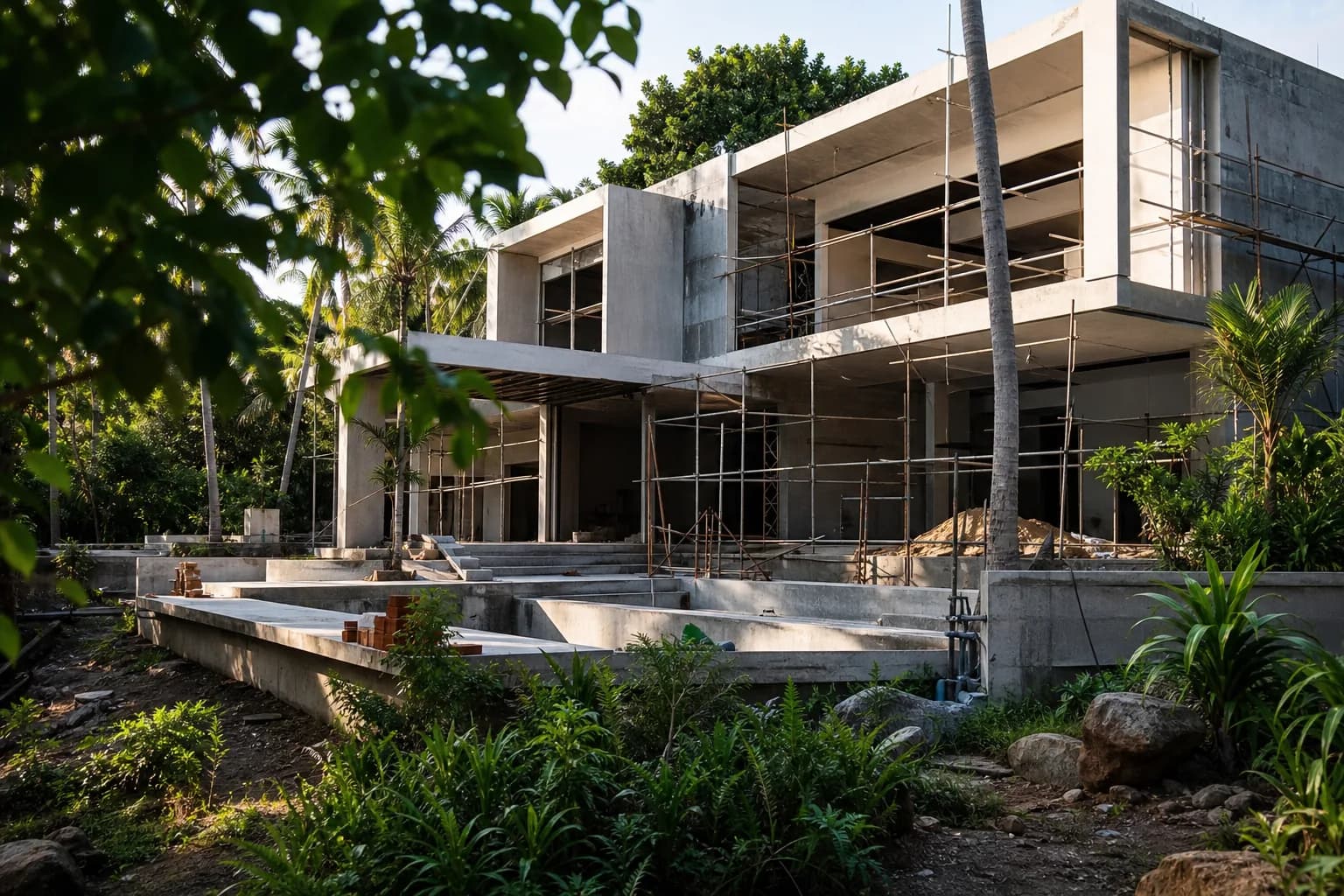
Buying a Bali Villa from Instagram: Phantom Listings, Render-Only Projects and How to Verify
Instagram is Bali's biggest property shop window and its least verified. How phantom listings, render-only projects and cloned developer accounts work — and the verification steps that expose them.
7 min read