Bali Property Scams in 2026: Double Selling, Forged Titles and Fake Agents — How Each One Works
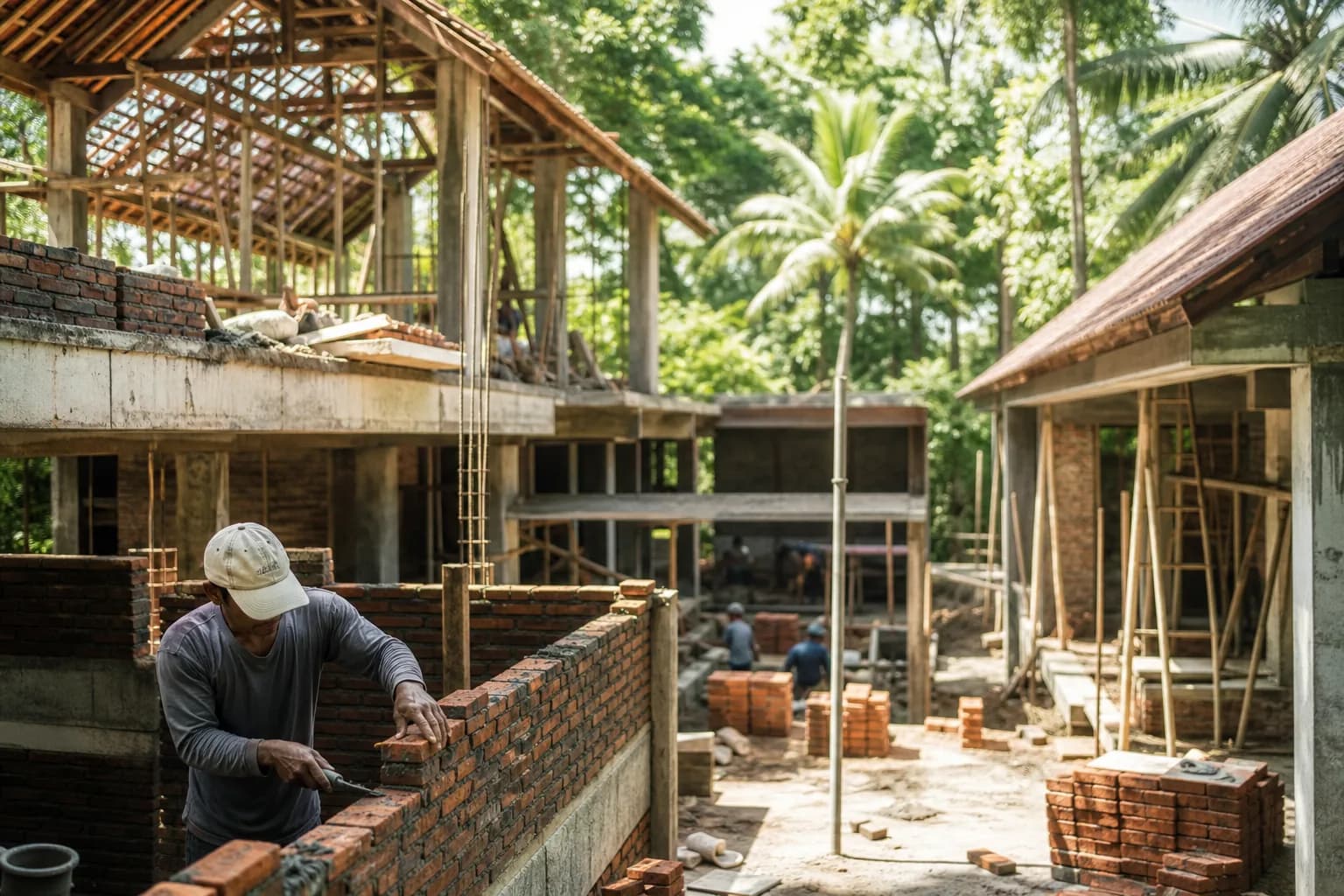
Bali's property boom has a shadow economy, and it is professionalising. Bali property scams in 2026 are no longer just a sketchy character selling a rice field he does not own — they are structured operations with convincing paperwork, polished Instagram accounts, and scripts tuned specifically for foreign buyers. Losses in individual cases regularly run into six figures. This guide breaks down how each major scam actually works — double selling, forged certificates, fake agents, phantom listings, fake compliance paperwork — because understanding the mechanics is what lets you spot the setup before your money moves. None of these scams survives proper due diligence; all of them rely on you skipping it.
Why foreign buyers are the target
Scammers target foreigners for rational reasons. The legal system is unfamiliar to you, the documents are in Indonesian, and the ownership concepts (SHM, HGB, hak sewa) do not map onto anything from home. Deals are often done remotely, on compressed holiday timelines, in a market where "pay a deposit today or lose it" pressure feels normal. And when things go wrong, pursuing a case from abroad through Indonesian courts is slow and expensive enough that many victims simply absorb the loss — which the scammers know.
None of this means the market is untouchable. Thousands of clean transactions close every year through notaries and verified titles. The dividing line is process: buyers who verify at the land office, use independent professionals, and pay against milestones almost never appear in scam statistics. Buyers who wire deposits to "hold" a listing do.
Double selling: one plot, several buyers
The mechanics: a landowner — or someone controlling the paperwork — sells or leases the same plot to multiple buyers in sequence, collecting deposits or even full payments from each. The scheme exploits the gap between signing a private agreement and registering the transaction. If your deal exists only as a signed piece of paper and money transferred, nothing physically stops the counterparty from signing the same piece of paper with someone else next week. By the time two "owners" show up at the same gate, the seller and the money are gone, and the buyers are left to litigate against each other.
Variants include selling land that is already leased long-term to someone else, and family members separately selling inherited land that was never formally divided.
The defence: transact only through a notary/PPAT who runs an official certificate check with the land office (BPN) immediately before signing, verify the signer is the registered rights holder, and register the deed promptly. A land-office check shows the current registered state of the plot — which is exactly the information a double-seller needs you not to have.
Forged and manipulated certificates
Forged land certificates in Bali range from crude colour copies to professional fakes referencing real plot numbers. The common configurations:
- The full forgery: a fabricated certificate for land the "seller" has no connection to — often a genuinely attractive, empty plot.
- The stale certificate: a real document that is no longer current — the land has since been sold, subdivided, or re-registered.
- The encumbered certificate: genuine title, but with an undisclosed mortgage (hak tanggungan) or court seizure attached. You buy the land and inherit the bank's claim.
- The wrong-parcel switch: the certificate is real but corresponds to a different, less valuable plot than the one you were shown.
The defence: never rely on a certificate the seller hands you. Only an official verification at BPN — standard practice for any competent notary — confirms authenticity, current holder, boundaries and encumbrances. Insist on a boundary survey that matches certificate to physical plot. This is precisely why every plot Teville lists passes certificate verification, zoning/ITR checks and an ownership-chain review before it reaches our land catalogue.
Fake and unlicensed agents
Bali's agency market is lightly policed in practice, and anyone with a phone can call themselves a broker. The scam versions escalate from unprofessional to criminal:
- The deposit collector shows real properties they have no mandate to sell, collects a "reservation fee" to take the listing off the market, then disappears or strings you along.
- The middleman markup inserts themselves between you and an owner who has no idea their land is being offered — sometimes with a fabricated price 30–50% above what the owner would accept.
- The fake office is a rented storefront or serviced office with branding, live for one season of deposits, then gone.
The defence: verify the agent's company exists as a registered Indonesian legal entity, ask for the written mandate from the owner, and — the hard rule — never pay a deposit to an agent's personal account. Reservation money belongs in a notary's escrow or, at minimum, with the verified owner under a written, refundable agreement.
Phantom listings and render-only projects
Some of the most effective scams never involve real land at all. Phantom listings are attractive villas or plots advertised at 20–30% below market, harvested from other people's photos, existing purely to collect "secure it now" deposits from remote buyers. Render-only projects are more elaborate: a branded off-plan development with CGI imagery, a payment schedule and a sales office — but no land control and no building permit (PBG) behind it. Money in, renders forever, villa never.
The defence: for anything off-plan, verify three things independently before any payment: that the developer's entity legally controls the land (certificate check), that a PBG building permit exists for the actual project, and that the developer has completed and handed over previous projects you can visit. A legitimate builder can evidence all three without friction — compare how an established contractor presents completed work in a portfolio you can verify on the ground.
The 2026 vector: fake compliance and licensing paperwork
As enforcement around zoning, building permits and rental licensing has tightened, a newer scam has emerged: fake fixers selling compliance itself. They offer to "arrange" building permits, rental licences or land re-zoning for a fee, and deliver either forged documents or nothing. The victim discovers the truth when authorities check the paperwork — by which point they may face fines or even demolition exposure on top of the money lost, since operating on fake permits is itself a violation.
The defence: permits and licences in Indonesia are issued through official government systems and can be verified through them. Use established notaries, licensed consultants or your contractor's permitting team, and treat any promise to "fix" zoning that officially prohibits your project as a scam by definition. Zoning does not get fixed by a fee; it gets checked before you buy — our guides cover how to read zoning and ITR before committing to a plot.
Scam patterns at a glance
| Scam | How it works | The tell | Kill switch |
|---|---|---|---|
| Double selling | Same plot sold/leased to several buyers before registration | Pressure to sign privately and pay fast | BPN check + notarial deed + prompt registration |
| Forged title | Fake, stale or encumbered certificate presented as clean | Seller resists an official land-office check | Independent certificate verification via your notary |
| Fake agent | No mandate; collects deposits into personal accounts | "Reservation fee" to a personal account | Verify entity + mandate; escrow only |
| Phantom listing | Stolen photos, below-market price, remote deposit | Can't visit; urgency; too cheap | Physical verification before any money |
| Render-only project | Off-plan sales without land control or PBG | No completed projects to visit | Verify land title + permit + track record |
| Fake compliance docs | Forged permits/licences sold by "fixers" | Promises to bypass zoning or official process | Verify through official channels only |
The process that defeats all of them
Notice the common thread: every scam depends on money moving before verification. Reverse the order and the scams collapse. The safe sequence for any Bali purchase or build:
- Independent notary/PPAT chosen by you, not supplied by the seller.
- Full due diligence before any non-refundable payment: certificate check at BPN, zoning/ITR, ownership chain, encumbrances, physical boundary survey.
- Bilingual notarial deeds — never private English-only agreements.
- Staged money: deposits in escrow, and for construction, milestone-based payments so funds always follow verified progress. Run the numbers for a properly staged build with our villa cost calculator.
- Verification of every counterparty: agent mandates, developer entities, contractor track records, permits — through official sources, not screenshots.
How Teville fits in
Teville is a construction company, not a listing marketplace — every plot we offer has already passed certificate, zoning and ownership-chain due diligence, and our builds are paid against milestones rather than up-front trust. If you want the version of Bali property where verification comes before money, talk to us about land and building safely.
FAQ: Bali property scams
What is the most common Bali property scam in 2026?
Deposit-based scams lead in frequency: fake or unmandated agents and phantom listings collecting "reservation fees" from remote buyers. Double selling and encumbered or forged certificates cause the largest individual losses. All variants share one dependency — money moving before independent verification — which is why escrowed deposits and a land-office check defeat nearly all of them.
How do I verify a Bali land certificate is genuine?
Through an official check with the national land office (BPN), which your notary/PPAT performs as standard before a deed is signed. It confirms the certificate's authenticity, the current registered holder, boundaries and any mortgages or seizures. Never rely on the seller's copy, a photo, or an agent's assurance — verification only counts when it comes from the registry itself.
Can I get my money back after a property scam in Bali?
Sometimes, but treat recovery as unlikely. Criminal complaints and civil suits are possible, and police do pursue larger fraud cases, but proceedings are slow, cross-border enforcement is hard, and scammers dissipate funds quickly. Practically, prevention is worth far more than remedy: escrow, notarial process and pre-payment due diligence cost a fraction of what recovery attempts do.
Are off-plan villa purchases in Bali always risky?
No — but they concentrate risk in the developer. Off-plan is reasonable when the developer's entity verifiably controls the land, a building permit exists for the project, previous projects were delivered and can be visited, and your payments are staged against construction milestones rather than paid up-front. Absent any one of those, walk away regardless of the discount.
Essential Bali build & buy guides
- Bali villa construction cost per m² in 2026
- How much will your villa cost? Calculator
- Building a villa in Bali: the complete guide
- Buying land in Bali: step-by-step for foreigners
- Bali villa investment: yields, risks, returns
- Leasehold vs freehold: what foreigners can own
- Construction defect liability & 10-year warranty
- Bali building codes and construction standards
Related guides

Why a Cheap Bali Leasehold Is Cheap: Pricing Red Flags Every Buyer Should Decode
Suspiciously cheap Bali leaseholds are priced low for a reason: short remaining terms, forbidden zoning, missing road access, disputes or weak contracts. How to decode the discount before you pay for it.
8 min read
Fake Compliance and Licensing Agents in Bali: The 2026 Paperwork Scam and How to Verify Documents
Forged certificates, permit fixers and fake notaries: how Bali's paperwork scams work in 2026 and how to verify every property document at its government source.
7 min read
Buying a Bali Villa from Instagram: Phantom Listings, Render-Only Projects and How to Verify
Instagram is Bali's biggest property shop window and its least verified. How phantom listings, render-only projects and cloned developer accounts work — and the verification steps that expose them.
7 min read