Where to Buy or Build a Villa in Bali in 2026: Area-by-Area Comparison
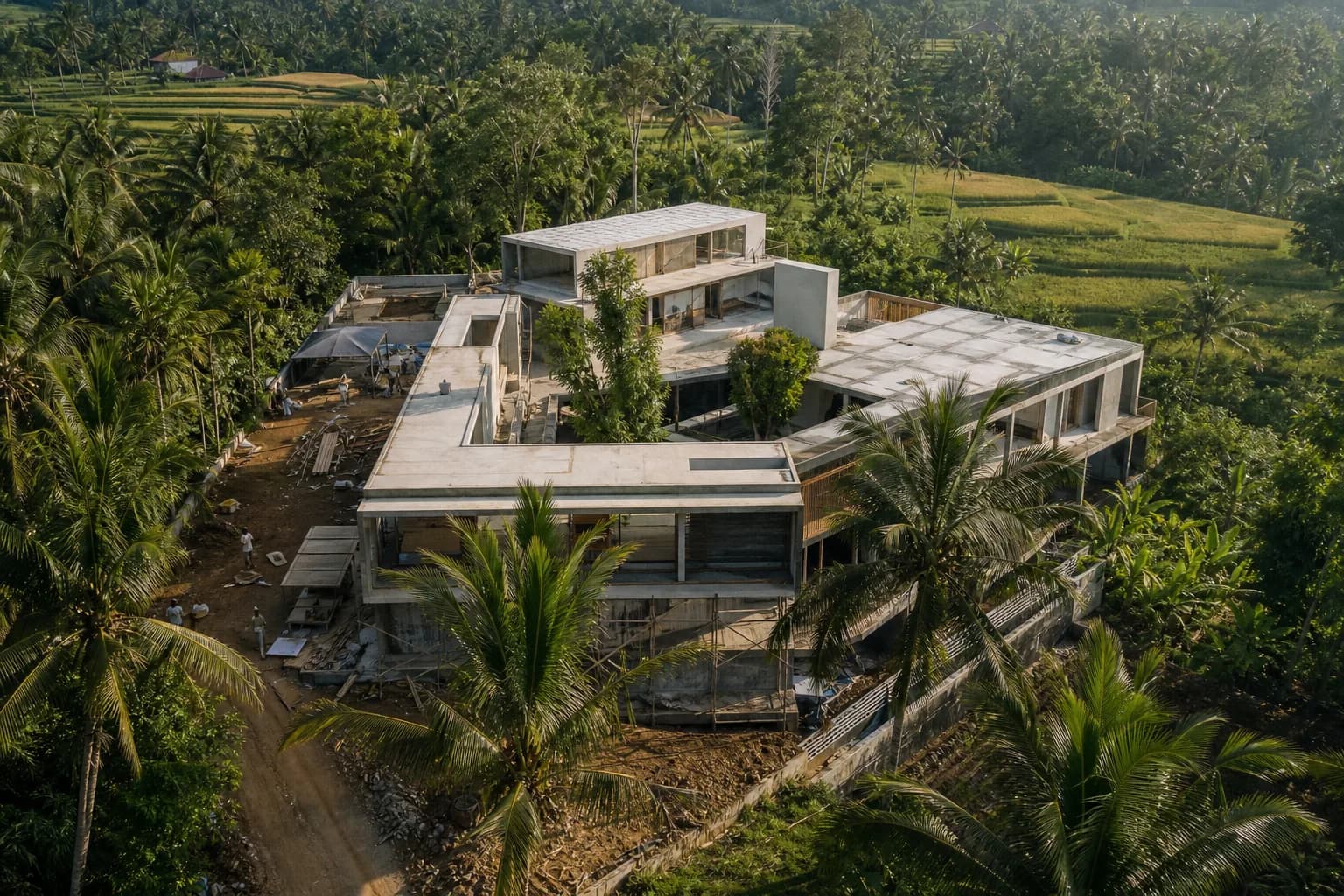
Ask ten people for the best area to buy a villa in Bali and you will get ten confident, contradictory answers. That is because there is no single best area — there is a best area for your budget, your holding period, and whether you plan to live in the villa, rent it out, or both. In 2026 the differences between Canggu, Pererenan, Uluwatu, Ubud and Sanur are sharper than they have ever been, and choosing on vibe alone is how buyers end up with the wrong asset in the right postcode.
This guide compares the five areas foreign buyers ask about most, using the numbers we see in the market and on the plots we vet ourselves. Prices below are indicative asking ranges for leasehold land in 2026; individual plots vary widely with road access, view and remaining lease term, so treat them as orientation, not quotes.
How to compare Bali areas properly
Before the area-by-area breakdown, fix the framework. Four variables drive almost every outcome:
- Land cost per are. Bali land is priced per are (100 m²). The same villa build costs roughly the same anywhere on the island — at Teville, construction runs $600–800/m² for an Essential spec, $900–1,300/m² Premium, and $1,400–2,000/m² Luxury — so land is where area choice really moves your total budget.
- Demand profile. Short-stay tourists, digital nomads, families, wellness guests and long-term expats book different areas at different rates and seasons.
- Supply pipeline. An area with hundreds of near-identical villas under construction will price rentals down regardless of how strong demand looks today.
- Zoning and enforcement. 2025–2026 brought visible enforcement against non-compliant buildings in several coastal areas. Land that is correctly zoned for tourism accommodation, verified against the ITR, is worth a premium — and unzoned land is worth far less than its asking price suggests.
Every plot Teville lists passes certificate, zoning and ownership-chain checks before it reaches our catalogue of vetted plots, because in 2026 the zoning question decides more outcomes than the view does.
Canggu: liquidity at a price
Canggu remains the most liquid villa market on the island. Occupancy is strong year-round, the tenant pool is the deepest in Bali, and resale interest is constant. That liquidity is priced in: leasehold land in the core Canggu–Berawa corridor is commonly quoted around $70,000–95,000 per are in 2026, among the highest on the island.
The trade-offs are real. Traffic congestion is the worst in Bali, construction noise is near-permanent, and the sheer volume of new villas means your rental competes with hundreds of comparable listings. Canggu still works for buyers who value exit liquidity and a proven rental engine over peace — but the era of cheap entry and effortless double-digit growth is over in the core streets.
Pererenan and the new west coast: the value corridor
One river west of Canggu, Pererenan has become the default answer for buyers who want Canggu demand without core-Canggu land prices. Asking prices for leasehold land typically run $55,000–75,000 per are — a meaningful discount to Berawa — while guests treat the area as part of the same destination. Agency reports put Pererenan land appreciation among the strongest on the island through 2024–2025, and the cafe-and-studio infrastructure has matured fast.
Further west, Seseh, Cemagi, Nyanyi and Kedungu continue the pattern: each step west drops the land price and thins out the infrastructure. These areas suit buyers building for the medium term who accept that some conveniences are a scooter ride away. We cover the corridor in detail in our area guides.
Uluwatu and the Bukit: views, growth and homework
The Bukit peninsula — Uluwatu, Bingin, Balangan, Ungasan — has been Bali's stand-out growth story of the past four years. Clifftop and ocean-view leasehold land is commonly quoted around $40,000–60,000 per are in 2026, with inland plots a short drive from the coast at roughly $25,000–40,000. Demand is driven by surf, dramatic scenery and a guest profile that skews toward higher nightly rates.
The Bukit also demands the most homework. Municipal water does not reach every plot, so wells, storage tanks and water deliveries must be budgeted. Cliff-edge and beach-adjacent land carries setback rules that were dramatically enforced in July 2025, when authorities demolished dozens of non-compliant buildings at Bingin Beach. The lesson was not “avoid the Bukit” — it was that correctly zoned, properly permitted projects now stand apart from a large informal market. Build with PBG and SLF in place, respect setbacks, and the Bukit remains one of the strongest risk-adjusted plays on the island.
Ubud: the wellness economy inland
Ubud plays a different game. Guests come for yoga, retreats, jungle views and culture, stay longer, and book across seasons more evenly than beach traffic. Land is generally cheaper than the south coast, but pricing varies enormously — a ridge with a river-valley view can cost multiples of a plot ten minutes away with none.
Ubud rewards specific product: private pools facing green, retreat-capable layouts, quiet. Generic party-villa product underperforms here. It also punishes lazy due diligence, because much of the surrounding land is agricultural or green-zoned and cannot legally host tourism accommodation. Verify the ITR before you fall in love with a rice-field view — that view often exists precisely because the land in front cannot be built on, which is good for you, unless it is your plot that cannot be built on.
Sanur: the quiet compounder
Sanur was long dismissed as sleepy. That changed with the government-backed health and wellness Special Economic Zone on its beachfront, anchored by the Bali International Hospital which opened in 2025. Medical-travel demand, an older and wealthier guest profile, calm sea, and a genuinely walkable promenade give Sanur the most stable demand base outside the tourist-hype cycle.
Rental yields here are usually lower than Canggu or Uluwatu headline numbers, but so is volatility: long-stay tenants, returning guests and medical visitors book in patterns that barely notice Instagram trends. Sanur suits buyers who think in decades, including those planning to live in the villa part-time.
2026 comparison at a glance
| Area | Typical leasehold land (per are, 2026 asking) | Demand driver | Best suited to |
|---|---|---|---|
| Canggu core | $70k–95k | Nomads, surf, nightlife — deepest tenant pool | Liquidity-first investors |
| Pererenan / west coast | $55k–75k (falling further west) | Canggu overflow, quieter lifestyle | Value buyers, medium-term growth |
| Uluwatu / Bukit | $40k–60k cliff area; $25k–40k inland | Surf, views, premium nightly rates | Growth investors who do homework |
| Ubud | Wide range; below south coast on average | Wellness, retreats, culture | Retreat operators, lifestyle buyers |
| Sanur | Wide range; premium near beach | Medical SEZ, families, long stays | Stability-focused, live-in owners |
A note on yields: well-run Bali villas have historically netted around 7–12% — that is market context, not a guarantee, and every area contains villas doing far better and far worse than the average. Be sceptical of any listing promising more.
Buying land vs buying a finished villa
Area choice interacts with a second decision: buy a completed villa or build. In high-priced areas like core Canggu, finished villas often trade close to replacement cost, so buying can be efficient. In emerging corridors — west of Pererenan, inland Bukit — the gap between land-plus-build cost and finished-villa asking prices is wider, which is exactly where building makes financial sense. A typical Teville build takes 8–16 months with milestone-based payments, meaning you pay in six stages as work completes rather than handing a developer your capital upfront. Run your own numbers with our villa cost calculator, and browse completed villa concepts to see what each budget realistically buys.
Whichever route you choose, the sequence matters: verify zoning first, negotiate the lease second, design third. Buyers who reverse that order fund most of the island's cautionary tales.
FAQ: best area to buy a villa in Bali
Which Bali area has the best rental returns in 2026?
No area guarantees returns. Canggu and Uluwatu show the strongest gross rental demand; Pererenan offers lower entry prices against a similar guest pool; Sanur and Ubud trade lower peaks for steadier occupancy. Historically, well-run villas across these areas have netted roughly 7–12%, with the spread inside each area larger than the spread between areas. Operations and product quality matter more than the postcode.
Is Canggu overbuilt in 2026?
The core streets carry heavy supply, and generic two-bedroom product there competes hard on price. But demand is also the deepest on the island, and well-located, well-designed villas continue to book strongly. Overbuilt is a real risk for me-too product, less so for differentiated villas on good streets. If you want growth rather than liquidity, look one corridor west.
Where is the cheapest land that still makes sense for a villa?
In 2026, inland Bukit plots and the Tabanan-side coast (Kedungu, Nyanyi) offer the lowest sensible entry points — often well under half of core Canggu prices. The discount reflects thinner infrastructure and a longer wait for the area to mature. They make sense for buyers with a five-year-plus horizon, not for someone needing strong bookings in month one.
Should I choose an area before or after setting my budget?
Budget first. Construction cost is broadly similar island-wide, so your total budget minus build cost defines what land you can afford — and that immediately rules areas in or out. A $250k all-in budget shops a very different map than $600k. Fixing the budget first keeps the search honest.
How Teville fits in
Teville builds villas across all five of these areas and maintains 100+ legally vetted leasehold plots, so we see what each corridor actually costs and returns rather than what listings claim. If you are weighing areas, talk to us — we will tell you honestly where your budget works and where it does not.
Essential Bali build & buy guides
- Bali villa construction cost per m² in 2026
- How much will your villa cost? Calculator
- Building a villa in Bali: the complete guide
- Buying land in Bali: step-by-step for foreigners
- Bali villa investment: yields, risks, returns
- Leasehold vs freehold: what foreigners can own
- Construction defect liability & 10-year warranty
- Bali building codes and construction standards
Related guides
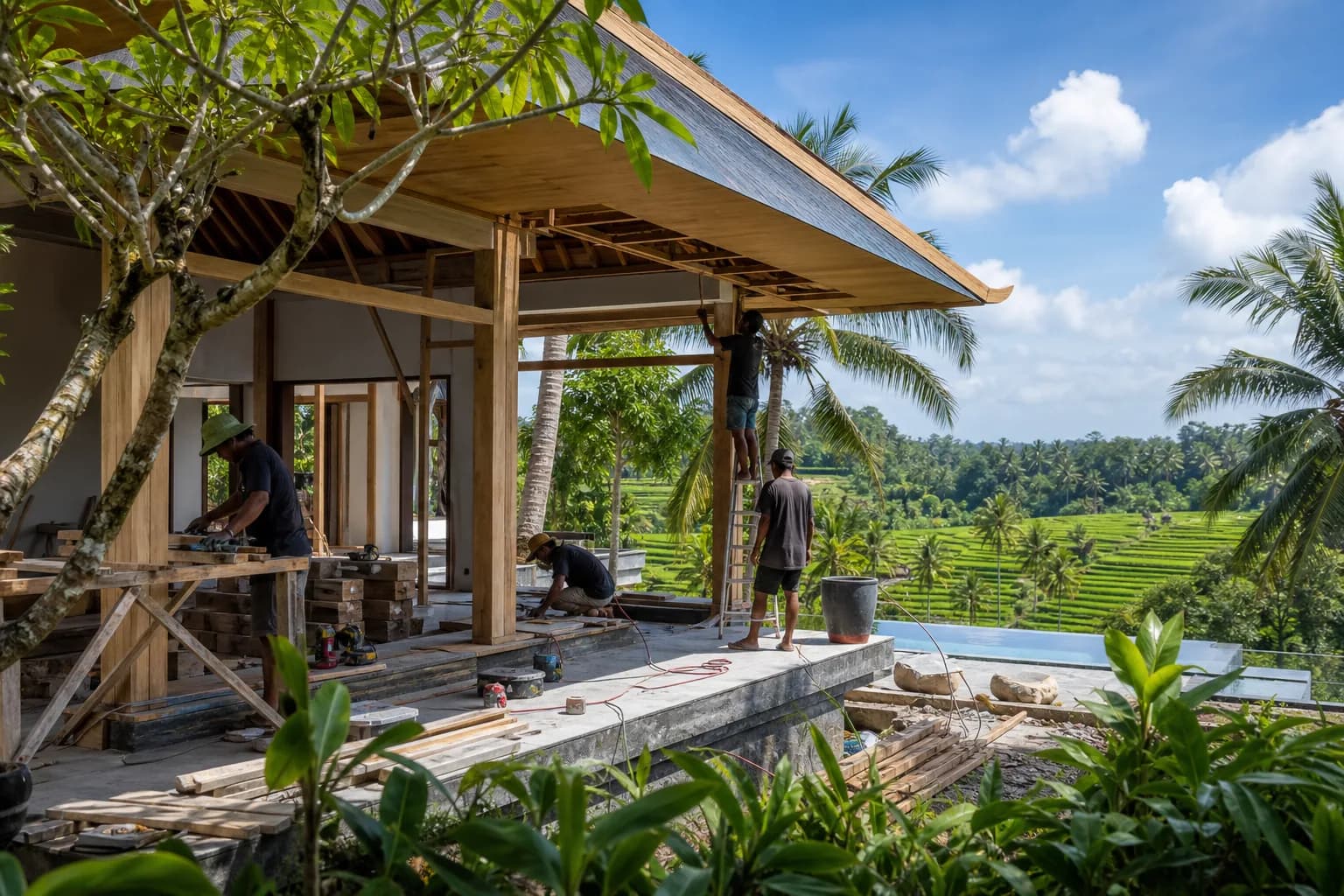
Building a Villa in Lombok or Sumba vs Bali: Construction Costs Compared (2026)
Land is cheaper on Lombok and Sumba — but is building there? Real 2026 construction cost comparison across Indonesia's villa islands: materials, labour, logistics and the numbers that surprise people.
3 min read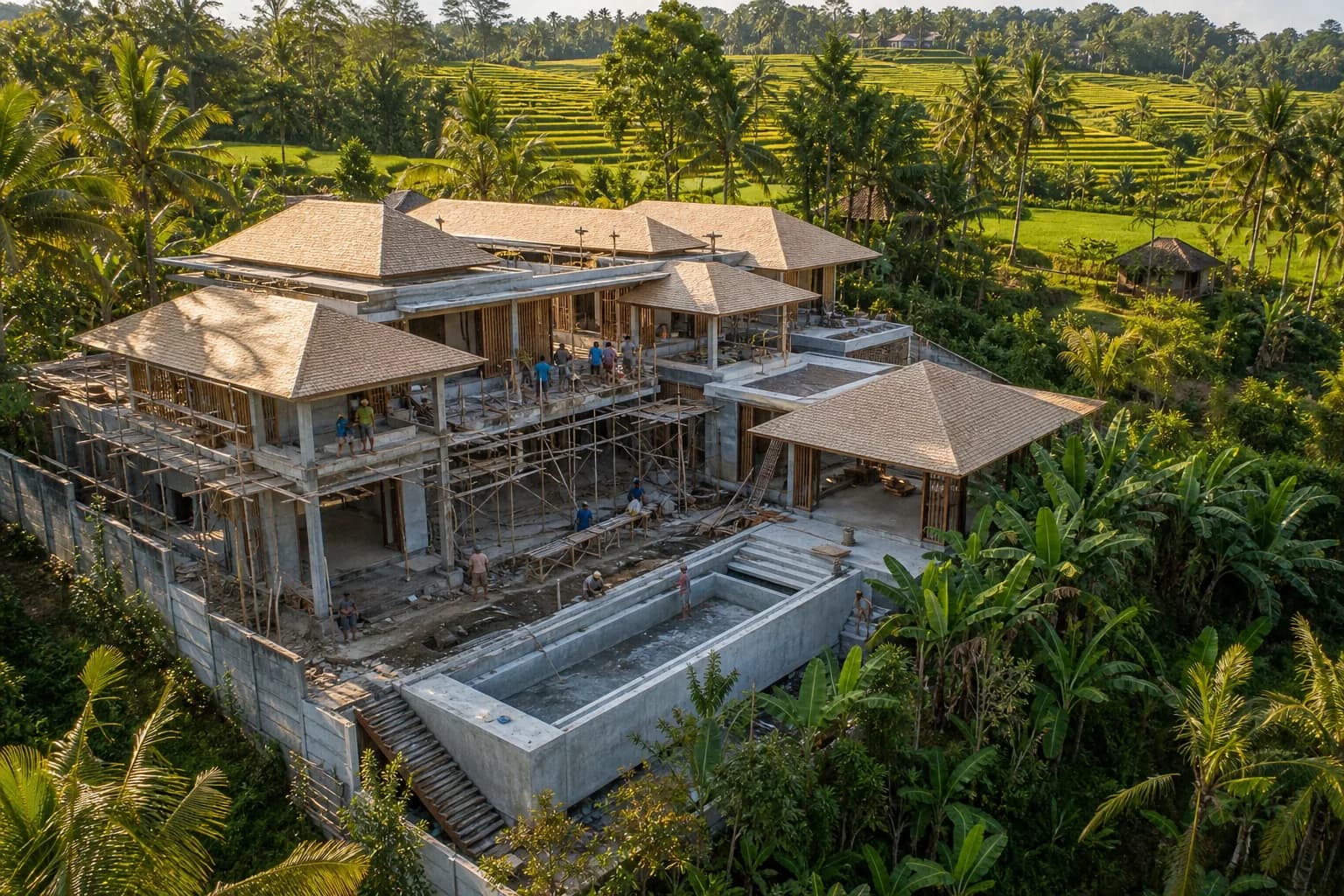
Bali Villa Construction Cost per m² in 2026: Real Contractor Prices
imageimagegrid_viewLayoutimageimagegrid_viewLayoutschedule8 monthsconstruction timeline bed1 BRPool included square_foot72 m²sqm, building [vc_custom_heading text="«KESHAVA»" font_container="tag:h1|text_align:left" google_fonts="font_family:Yanone%20Kaffeesatz%3A200%2C300%2Cregular%2C700|font_style:
7 min read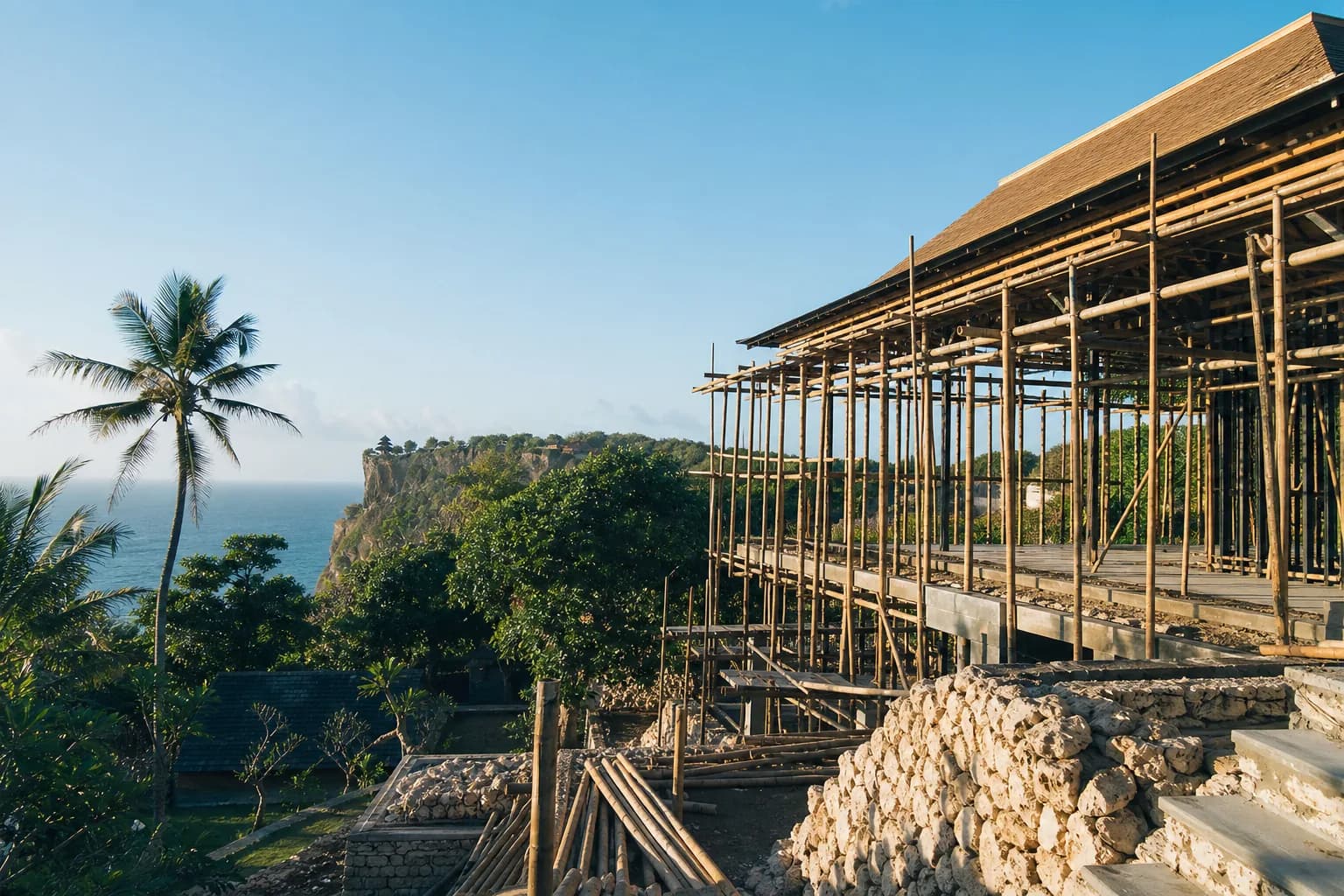
Uluwatu Temple Zone Construction Restrictions in Bali
Learn Bali s heritage setback rules and construction restrictions around Uluwatu Temple. Expert guide to compliance requirements for development projects.
10 min read