Ubud and the Wellness Market: Buying or Building for Retreats
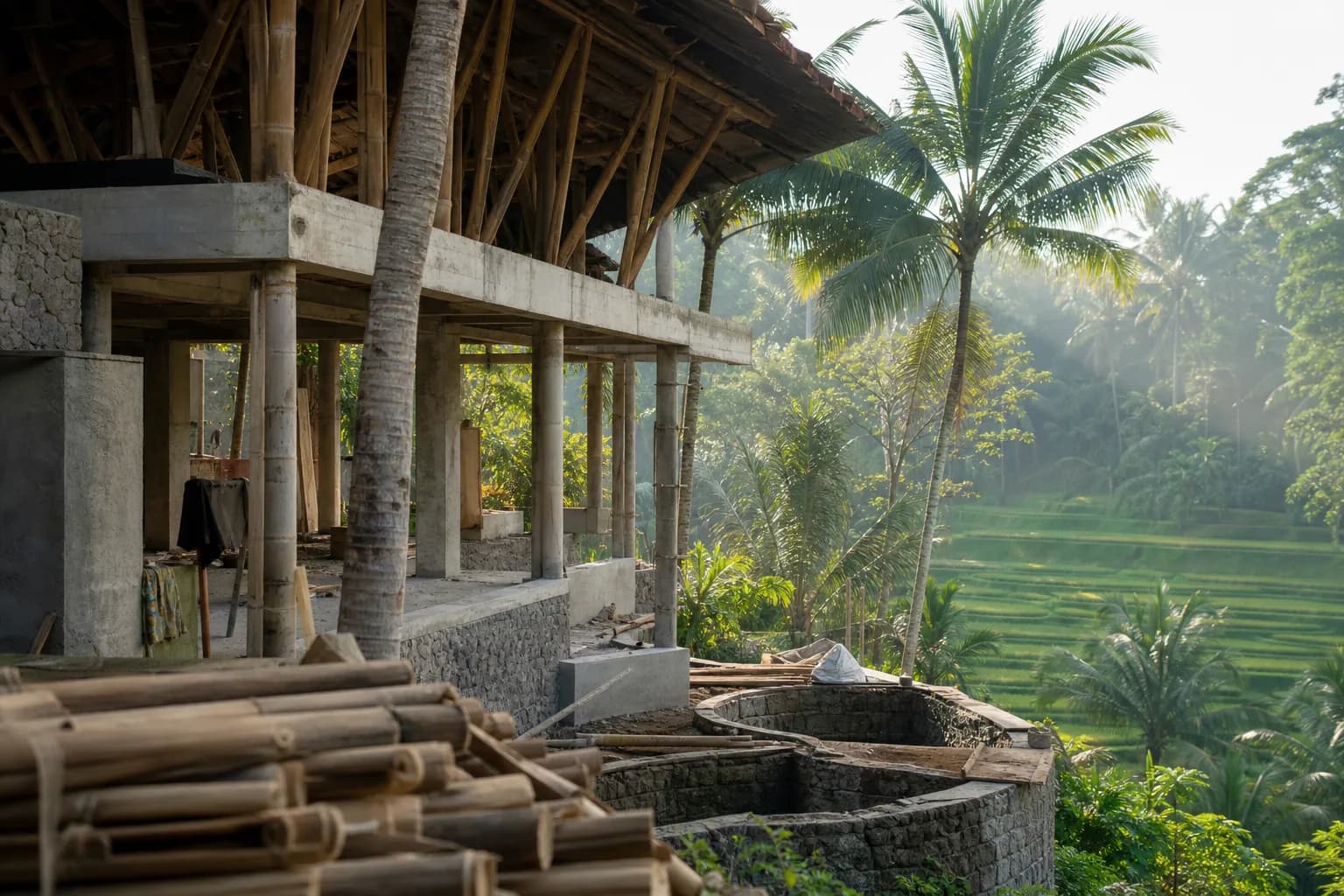
Ubud is the one Bali market where property income is not built on beach proximity. An Ubud retreat property earns from yoga teachers block-booking ten rooms for a week, from wellness travellers staying five to ten nights instead of two, and from a guest profile that books in shoulder season when coastal villas sit empty. That changes what you should buy or build — and where the traps are. This guide covers demand, land prices, zoning, licensing, retreat formats that actually book, and realistic build costs in 2026.
One framing note up front: retreat property is an operating business wrapped in real estate. The buyers who do well in Ubud think like small hoteliers, not like passive villa landlords.
Why Ubud owns Bali's wellness market
The macro trend is real. Global wellness tourism is now roughly a trillion-dollar market growing at high single digits annually, and Asia-Pacific is its fastest-expanding region. Bali sits at the centre of that flow: the island received over six million foreign visitors in 2024 and close to seven million in 2025, and a meaningful share of them come specifically for yoga, meditation, breathwork, plant-based food and healing programmes rather than for beaches.
Ubud captured this positioning decades ago and has compounded it since. The town has the island's densest concentration of yoga studios, retreat centres, healers, vegan restaurants and sound-healing venues, plus the jungle-and-rice-terrace setting that retreat marketing depends on. International wellness resort brands continue to select sites in and around Ubud, which tells you where institutional money believes demand is heading.
What this means for a property owner is a demand base that behaves differently from coastal party-and-surf tourism:
- Longer stays. Retreat guests commonly book 5–14 nights; retreat organisers block-book entire properties for a week or more.
- Group economics. One retreat leader filling eight rooms is one sales effort, not eight.
- Seasonal resilience. Retreats are scheduled year-round, so Ubud occupancy dips less sharply in low season than beach areas.
- Repeat business. Successful retreat organisers return to the same venue annually if the operations are reliable.
Land and property prices in Ubud in 2026
Ubud remains one of the better-value established markets in Bali. Market listings in 2026 typically put Ubud-area land at roughly $250–750 per square metre depending on distance from the centre, road access and view (river gorge and rice-terrace frontage command the top of the range). That is a substantial discount to comparable plots in Canggu or Pererenan — a gap that reflects lower short-stay nightly rates, not weaker fundamentals.
Almost everything a foreigner buys here is leasehold, typically 25–30 years with negotiated extension options. The same rules apply as anywhere in Bali: the certificate, the zoning and the ownership chain must be verified before money moves. Teville lists 100+ legally vetted leasehold plots across the island, each checked for certificate validity, zoning/ITR status and ownership history — you can browse current options at /lands/.
Two Ubud-specific pricing notes. First, land further out — Tegallalang, Payangan, Pejeng, Mas — can be dramatically cheaper than central Ubud, and for retreats that is often fine or even preferable: retreat guests want seclusion, not walkability to Ubud Palace. Second, abundant surrounding land means capital appreciation in Ubud is steadier and slower than in supply-constrained coastal strips. You buy Ubud for defensible income, not for speculative uplift.
Zoning and licensing for retreat use
This is where most retreat plans succeed or die, and it must be checked before you commit to any plot.
- Zoning (ITR). Ubud regency contains large tracts of protected rice-field and green zone where commercial accommodation is not permitted at all. Your plot must sit in a zone that allows tourism accommodation under the local spatial plan. Never rely on a seller's verbal assurance — pull the zoning confirmation for the exact parcel. Every plot Teville lists has already passed this check.
- PBG and SLF. Any building you construct needs PBG (building approval) matching its declared function, and an SLF (certificate of worthiness) after completion. Licensing for rental use builds on these documents, so cutting corners at the permit stage blocks you later.
- Pondok Wisata. The standard short-term rental licence covers up to five rentable rooms and requires the property to sit in an eligible tourism zone with PBG and SLF in place. Many boutique retreat properties are deliberately designed at or under this threshold.
- Beyond five rooms. A larger retreat centre moves into hotel-class licensing, with heavier requirements. It is entirely doable — many Ubud retreat centres operate this way — but it is a different compliance and staffing tier. Decide which side of the line you want to be on before you design, not after.
Regulations and their enforcement evolve; verify the current licensing pathway for your specific structure with a notary or licensing consultant before finalising a design.
What actually books: retreat property formats
Not every beautiful jungle villa works as a retreat property. Organisers shortlist venues against a practical checklist: a dedicated practice space, enough same-standard rooms, group dining, and seclusion without isolation. The formats below reflect what performs:
| Format | Typical setup | Who books it | Notes |
|---|---|---|---|
| Wellness villa | 3–4 bedrooms, pool, yoga deck | Families, small private groups, long-stay guests | Easiest to run; competes with ordinary villas unless the wellness features are real |
| Boutique retreat (≤5 rooms) | 4–5 uniform rooms, shala, communal dining | Retreat leaders block-booking; direct guests between retreats | Sweet spot for licensing and economics; shala size (60–100 m²+) is the booking filter |
| Retreat centre (6–15+ rooms) | Room clusters, large shala, commercial kitchen, spa | Established organisers, teacher trainings | Hotel-class licensing and professional management required; strongest block-booking revenue |
Design details that move bookings in this niche: one generous covered practice space with a quiet outlook (this is the first photo organisers evaluate), equal-quality rooms so no participant feels short-changed, bathtubs and outdoor showers, a dining table that seats the whole group, reliable fast Wi-Fi, and genuine quiet — check for road noise, dogs and nearby construction at different times of day before buying. You can explore villa and retreat-scale concepts in the Teville portfolio.
Building a retreat property: cost and timeline
Construction economics in Ubud follow the island-wide picture. In 2026 Teville builds at $600–800/m² for Essential specification, $900–1,300/m² for Premium, and $1,400–2,000/m² for Luxury — construction only, land separate. A boutique retreat of five rooms, shala and communal areas might enclose 500–700 m² of built space, which puts a Premium-spec build in the broad range of $450,000–900,000 before land. Run your own numbers with the villa cost calculator.
Most builds complete in 8–16 months, tracked against milestones, with payments released stage by stage as work is verified — a structure that matters even more on a larger, multi-building retreat project than on a single villa. Ubud terrain adds specific engineering considerations: gorge-edge and slope sites need proper geotechnical work and retaining structures, jungle humidity punishes cheap materials and poor ventilation detailing, and access roads to secluded plots can add real cost for material delivery. Budget honestly for these rather than discovering them mid-build.
Risks to respect in the Ubud market
- Competition density. Ubud has an enormous accommodation supply for its size, from $15 homestays to five-star wellness resorts. A generic villa with a yoga mat in the corner competes with all of it. Differentiation — genuine retreat facilities, a distinct concept, organiser relationships — is what protects rates.
- Flat resale dynamics. Abundant land means Ubud resale prices appreciate modestly. Model your return on operating income, and treat capital gain as a bonus. Bali-wide, well-run villas have historically netted around 7–12% — market context, never a guarantee, and retreat properties earn their place in that range only when well operated.
- Zoning traps. The prettiest rice-field plots are frequently the ones you cannot legally build on. Green-zone land is offered cheaply to foreigners every season; walking away is the only correct response.
- Operations burden. Retreat guests expect flawless logistics — airport transfers, dietary catering, schedule coordination. Factor a capable manager or operating partner into your budget from day one.
- Access and terrain. Narrow village roads, river crossings and steep driveways affect both construction cost and guest experience. Inspect access in the rainy season if you can.
How Teville fits in
Teville is a construction company, not a retreat operator — and that is exactly the part of an Ubud project where most budgets and timelines go wrong. We source and legally vet land, design for your intended licensing tier, handle PBG/SLF permits, and build to a milestone-based schedule with a lifetime structural guarantee, including fully remote project management for overseas owners. If you are weighing an Ubud retreat project, talk to us about land, numbers and feasibility before you commit to a plot.
If you are weighing the numbers, our villa cost calculator gives an instant range based on real 2026 build rates, the land catalog lists legally vetted leasehold plots, and the villa concepts show what different budgets actually buy. More practical guides live in the Bali construction library.
FAQ: Ubud retreat property
Is Ubud better than Canggu for a wellness or retreat property?
For retreat use, generally yes. Ubud's guest base books longer stays and whole-property retreats, and demand is spread across the year rather than concentrated in high season. Canggu offers higher nightly rates and stronger capital appreciation but is saturated with lookalike villas. The honest answer depends on your model: retreat operations favour Ubud; short-stay beach tourism favours the coast.
How many rooms can I rent out legally in Ubud?
The standard Pondok Wisata licence covers up to five rentable rooms, provided the property sits in an eligible tourism zone and holds PBG and SLF documents. Above five rooms you move into hotel-class licensing with heavier requirements. Confirm the current rules for your specific parcel with a notary or licensing consultant — zoning eligibility varies street by street around Ubud.
What does it cost to build a small retreat centre near Ubud?
Using 2026 construction rates of $600–800/m² (Essential), $900–1,300/m² (Premium) and $1,400–2,000/m² (Luxury), a five-room boutique retreat with a shala and communal areas — roughly 500–700 m² built — lands broadly between $350,000 and $900,000 depending on specification, excluding land. Most projects complete in 8–16 months on a milestone-tracked schedule.
Can I buy Ubud land remotely from abroad?
Yes. Leasehold purchases can be completed remotely via Power of Attorney, with the notary process handled locally on your behalf. The critical safeguard is due diligence before signing anything: certificate verification, zoning/ITR confirmation for the exact parcel, and a clean ownership chain. See more practical guides at /guides/.
Essential Bali build & buy guides
- Bali villa construction cost per m² in 2026
- How much will your villa cost? Calculator
- Building a villa in Bali: the complete guide
- Buying land in Bali: step-by-step for foreigners
- Bali villa investment: yields, risks, returns
- Leasehold vs freehold: what foreigners can own
- Construction defect liability & 10-year warranty
- Bali building codes and construction standards
Related guides
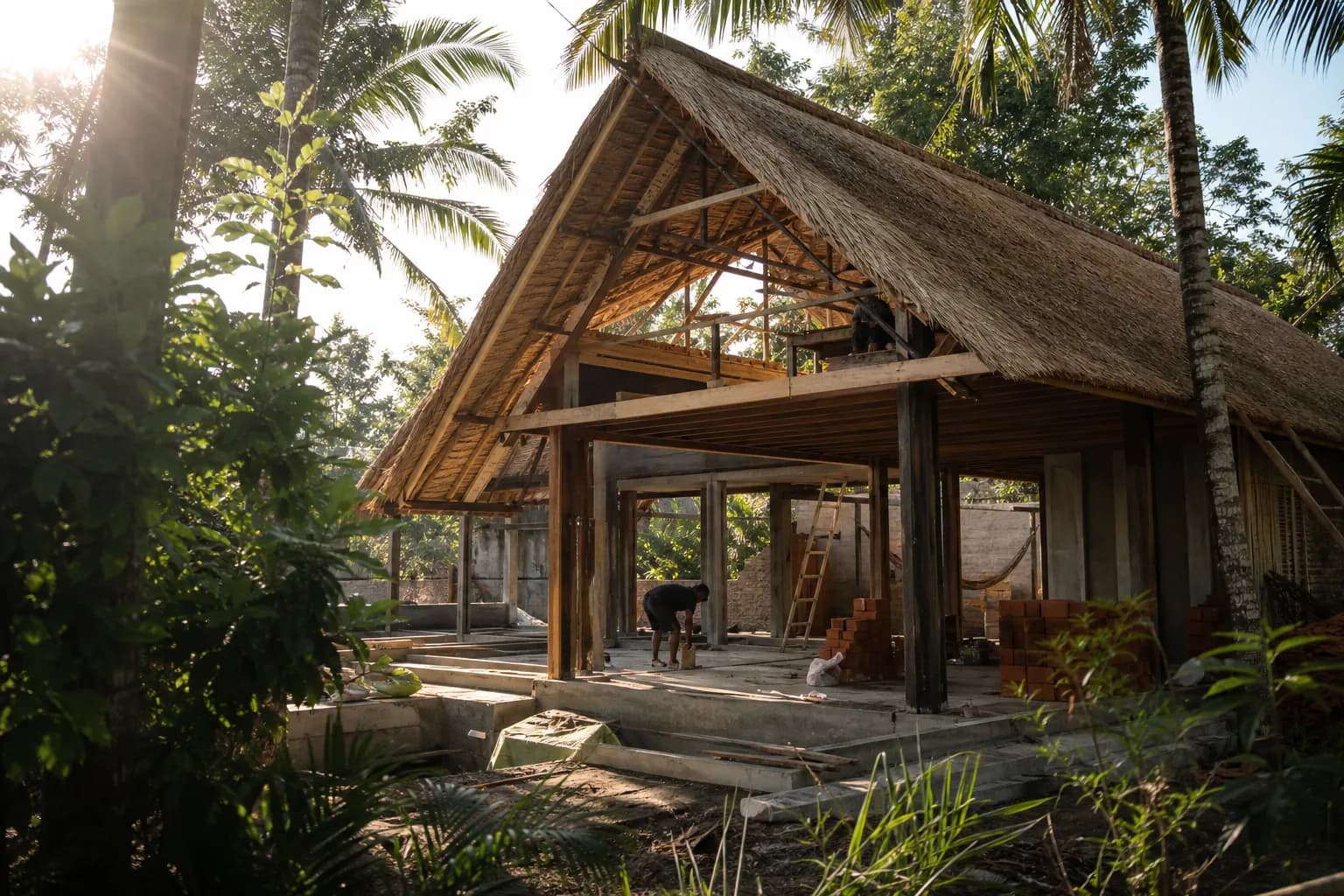
Buying and Building on the Bukit: Uluwatu, Bingin and Balangan from a Buyer's Seat
A buyer's-seat 2026 guide to the Bukit peninsula — Uluwatu, Bingin and Balangan land prices, the water problem nobody budgets, cliff setbacks after the 2025 Bingin demolitions, and how to build there properly.
7 min read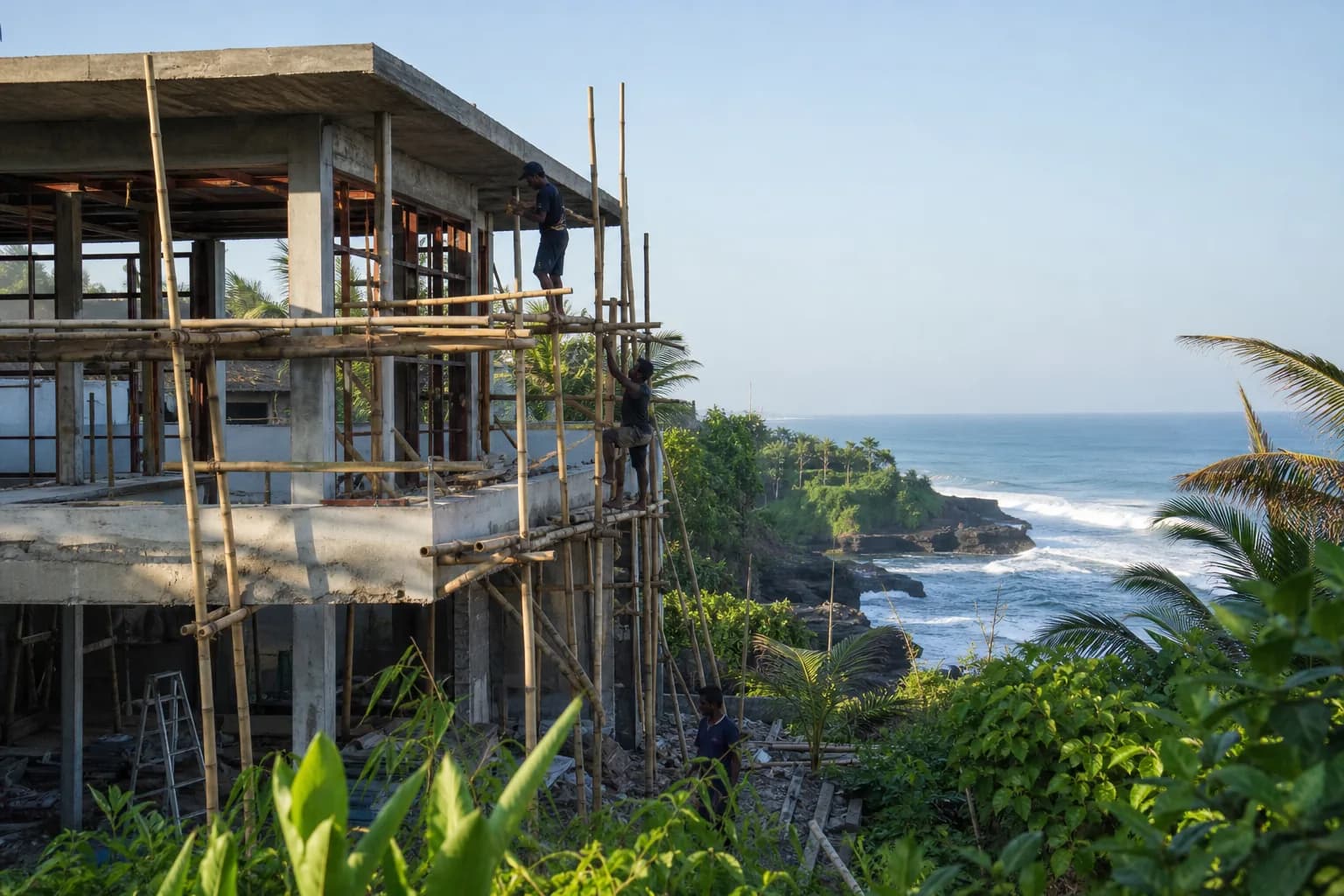
Kedungu and Nyanyi: Tabanan's Emerging Coast for Buyers and Builders
A grounded 2026 guide to Kedungu and Nyanyi on Bali's Tabanan coast — what land really costs, how Nuanu Creative City changed the market, the zoning checks that matter most, and honest rental expectations.
7 min read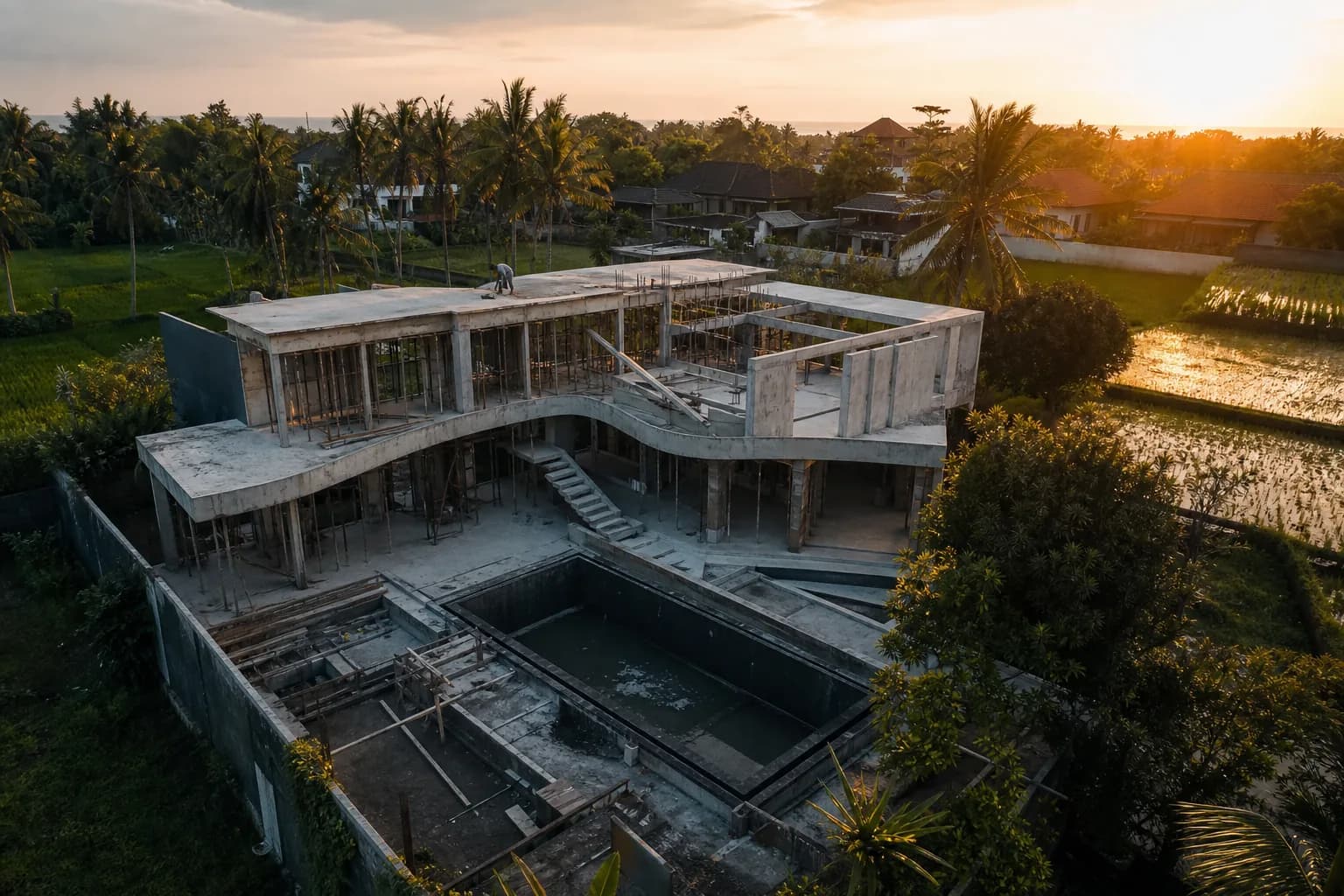
Pererenan, Seseh and Cemagi: Buying and Building on Bali's New West Coast
A practical 2026 guide to Pererenan, Seseh and Cemagi — how the three villages differ, what land and villas cost, the zoning checks that make or break deals on this coast, and how to build there.
7 min read