Pererenan, Seseh and Cemagi: Buying and Building on Bali's New West Coast
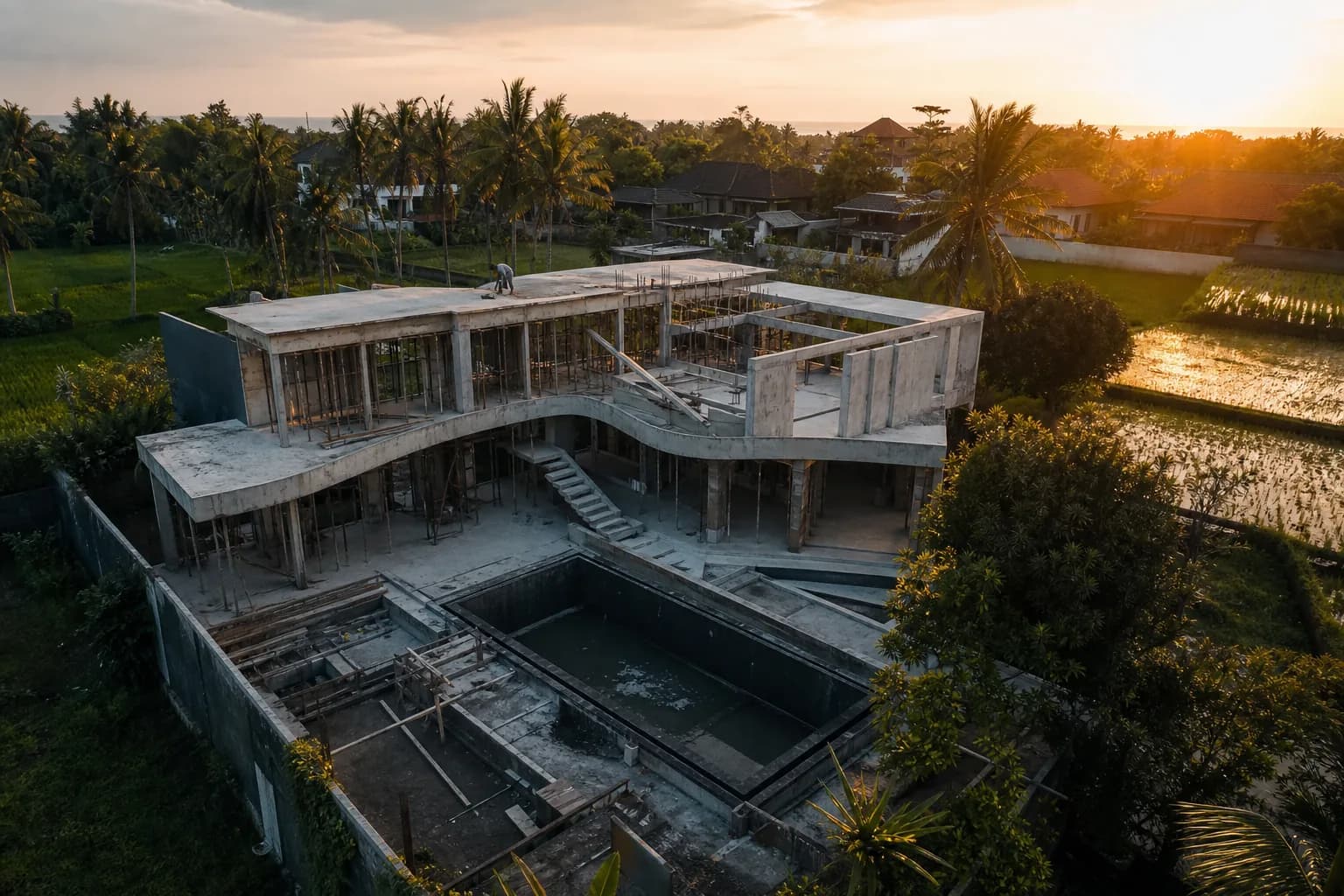
For years, “Canggu” kept stretching west. First Berawa, then Batu Bolong, then Pererenan — and now the momentum has crossed the rivers into Seseh and Cemagi, a stretch of black-sand coast and rice fields that agents have started calling Bali's new west coast. Anyone researching Pererenan or Seseh property in 2026 is really asking one question: is this corridor early Canggu all over again, or a different market with different rules? The honest answer is both, and the difference decides how you should buy and build there.
This guide covers what each of the three villages actually offers, indicative 2026 prices, and the practical realities of buying land and building a villa on this coast — including the zoning caveats that matter more here than almost anywhere else on the island.
The corridor at a glance: three villages, three characters
Pererenan is the mature end. Ten years ago it was the quiet neighbour; today it has its own restaurant scene, gyms, surf beach and a strong claim to being where Canggu's creative crowd migrated when Batu Bolong got loud. It is no longer a frontier — it is an established market trading at a discount to core Canggu, not a fraction of it.
Seseh is the middle chapter. A temple, a black-sand beach with real surf, rice fields running almost to the sand, and a fast-growing but still thin scatter of villas and a handful of beach clubs and cafes. Guests describe it as what they imagined Bali would look like. Development pressure is visible, but the village still reads as a village.
Cemagi is the quietest of the three — ceremonial, green, and closest in feel to pre-boom Canggu. Villas here sell privacy and rice-field serenity, not walkability. It borders the Tanah Lot conservation area, which brings real building-height and zoning sensitivities.
All three share one geography lesson: the coast road network is thin. Distances look tiny on the map, but rivers force traffic inland, so a plot's practical access matters more than its straight-line distance to a beach.
Pererenan, Seseh and Cemagi prices in 2026
Prices below are indicative leasehold asking ranges we see in 2026. Individual plots vary sharply with river frontage, road width, view and remaining lease term — use these for orientation, then verify against real plots.
| Village | Leasehold land (per are, indicative asking) | Typical finished leasehold villa | Character |
|---|---|---|---|
| Pererenan | $55k–75k prime; less on inland lanes | $250k–600k+ (2–4BR) | Established, walkable pockets, strong rental engine |
| Seseh | Generally below Pererenan; premium near beach | $200k–500k (2–3BR) | Emerging, scenic, thin but growing infrastructure |
| Cemagi | Lowest of the three on average | $180k–450k (2–3BR) | Quiet, green, privacy-led, conservation-adjacent |
Two patterns are consistent. First, each river crossing west drops the land price — the discount from core Canggu to Pererenan is meaningful, and from Pererenan to Cemagi meaningful again. Second, appreciation has run hottest in Pererenan: agency reports repeatedly ranked it among the island's fastest-appreciating areas through 2024–2025. Nobody can promise that continues, but the direction of infrastructure spending suggests the corridor's trajectory is not finished.
For rental context: well-run villas in the wider Canggu area have historically netted around 7–12%. The corridor's newer villages can beat that when a distinctive villa meets thin local supply — and undershoot it badly when access is poor or the product is generic. Treat any pitch promising more as marketing until proven.
Why this corridor is rising: the demand logic
- Canggu overflow. Guests priced out of — or simply tired of — central Canggu book five to fifteen minutes west without changing their holiday. The corridor borrows Canggu's demand engine at lower land cost.
- Lifestyle migration. Long-stay residents and families favour the quieter streets, creating year-round rental demand rather than pure holiday peaks.
- Westward infrastructure. New roads, bridges and commercial projects keep pushing along this coast toward Nyanyi and Kedungu, pulling the market's centre of gravity west with them.
- Scarcity by design. Rice-field zoning and river geography restrict how much of this coast can ever legally be built on — which limits supply in a way core Canggu never enjoyed.
That last point cuts both ways, which brings us to the most important section of this guide.
Zoning: the make-or-break check on the west coast
The postcard views that sell Seseh and Cemagi exist because much of the surrounding land is agricultural or otherwise protected. That means a large share of the land you will be shown cannot legally host a villa or short-term rental, whatever the seller implies. In recent years authorities have also moved visibly against non-compliant buildings elsewhere on the island, and discussions about restricting conversion of productive rice fields to tourism use continue at provincial level — verify the current rules with your notary at the time you buy.
Practical checklist for this corridor specifically:
- Check the zoning designation (ITR) before anything else. Confirm the plot's designation in the current spatial plan allows residential or tourism accommodation use — in writing, not verbally.
- Verify the certificate and ownership chain. Land here is often still held in family hands with multiple heirs; every signature matters.
- Confirm legal access. Some plots are reached across neighbours' land or ceremonial paths. You need documented access rights, not a handshake.
- Respect river and coastal setbacks. Riverbank plots are attractive and disproportionately affected by setback rules.
- Check what surrounds you. A serene rice-field outlook that is itself zoned for development may become a construction site. Conservation-adjacent land near Tanah Lot faces the opposite issue — stricter limits on what you can build.
Every plot in Teville's vetted land catalogue goes through exactly this due diligence — certificate check, zoning/ITR verification, ownership chain — before we list it, because on this coast the legal layer is where deals live or die.
Building in Pererenan, Seseh and Cemagi
Construction cost does not change much across the corridor: expect $600–800/m² for an Essential build, $900–1,300/m² Premium, and $1,400–2,000/m² Luxury, land excluded, with most villas taking 8–16 months. What does change is logistics and context:
- Site access. Narrow village lanes complicate material delivery; a plot two turns off the main road can add real cost and time. Factor it before you buy, not after.
- Ground and drainage. Former rice paddies hold water. Proper soil investigation, fill and drainage design are non-negotiable — this is a frequent source of cracked floors in cheaply built villas here.
- Neighbourhood relations. These are functioning villages with ceremonies and community obligations. A contractor who manages banjar relationships well saves you months of friction.
- Design for the setting. Buyers come to this coast for green views and calm. Villas that frame the landscape — generous glazing toward paddies, courtyards, single-loaded plans — outperform imported urban layouts, both in rentals and resale.
Because the corridor is popular with remote buyers, it is worth knowing the purchase itself can be completed without flying in: a properly drafted Power of Attorney lets a notary execute the lease on your behalf, a process Teville manages routinely for overseas clients. Budget the full picture with our villa cost calculator and browse built villa concepts to calibrate spec against price.
Who should buy where
Choose Pererenan if you want the strongest rental engine of the three and are willing to pay for maturity. It suits first-time Bali investors who want emerging-market upside with training wheels.
Choose Seseh if you want the growth story. You accept thinner infrastructure today in exchange for a lower entry price on a coast where demand is clearly arriving. Best for buyers with a five-year-plus horizon.
Choose Cemagi if privacy and setting outrank walkability — personal-use buyers, retreat concepts, and investors targeting guests who explicitly want quiet. Accept that liquidity is thinner and marketing your rental takes more skill.
And if your budget stretches further west still, Nyanyi and Kedungu continue the same logic at lower prices — we cover them separately in our guides.
FAQ: Pererenan, Seseh and Cemagi property
Is Pererenan already too expensive to make sense?
It is no longer cheap, but it still trades at a clear discount to core Canggu while drawing on the same guest pool. Whether it makes sense depends on your goal: for rental performance backed by proven demand, it remains rational; for maximum land appreciation from a low base, Seseh, Cemagi or the Tabanan coast further west offer more headroom with more risk.
Can foreigners buy land in Seseh or Cemagi?
Foreigners cannot own freehold land anywhere in Indonesia, including here. The standard structure is leasehold — typically 25–30 years with extension options — held in your own name, or HGB title through a properly established foreign-owned company for business use. Leasehold is how the vast majority of villa buyers on this coast hold property. Have a notary structure it; never use a nominee.
Is the rice-field view I am buying protected?
Only if the land producing it is zoned so it cannot be developed — and that is exactly what you must check in the ITR, plot by plot. Many west-coast views are over agricultural land that may stay green for decades; others overlook plots already earmarked for villas. A view is an asset only when the zoning map says so.
What does a villa in this corridor cost all-in for 2026?
As orientation: a 2–3 bedroom villa on 2–3 are of leasehold land typically lands between roughly $250k and $500k all-in, depending on village, plot and spec — land at the corridor's 2026 prices plus construction at $600–2,000/m² depending on finish level. Run your specific numbers rather than trusting package prices.
How Teville fits in
Teville has been building on this coast since the corridor was still called “past Canggu”, and our vetted plot list covers Pererenan through Cemagi and beyond. If you want a straight answer on which village fits your budget and plan, get in touch — we will show you real plots and real numbers.
Essential Bali build & buy guides
- Bali villa construction cost per m² in 2026
- How much will your villa cost? Calculator
- Building a villa in Bali: the complete guide
- Buying land in Bali: step-by-step for foreigners
- Bali villa investment: yields, risks, returns
- Leasehold vs freehold: what foreigners can own
- Construction defect liability & 10-year warranty
- Bali building codes and construction standards
Related guides
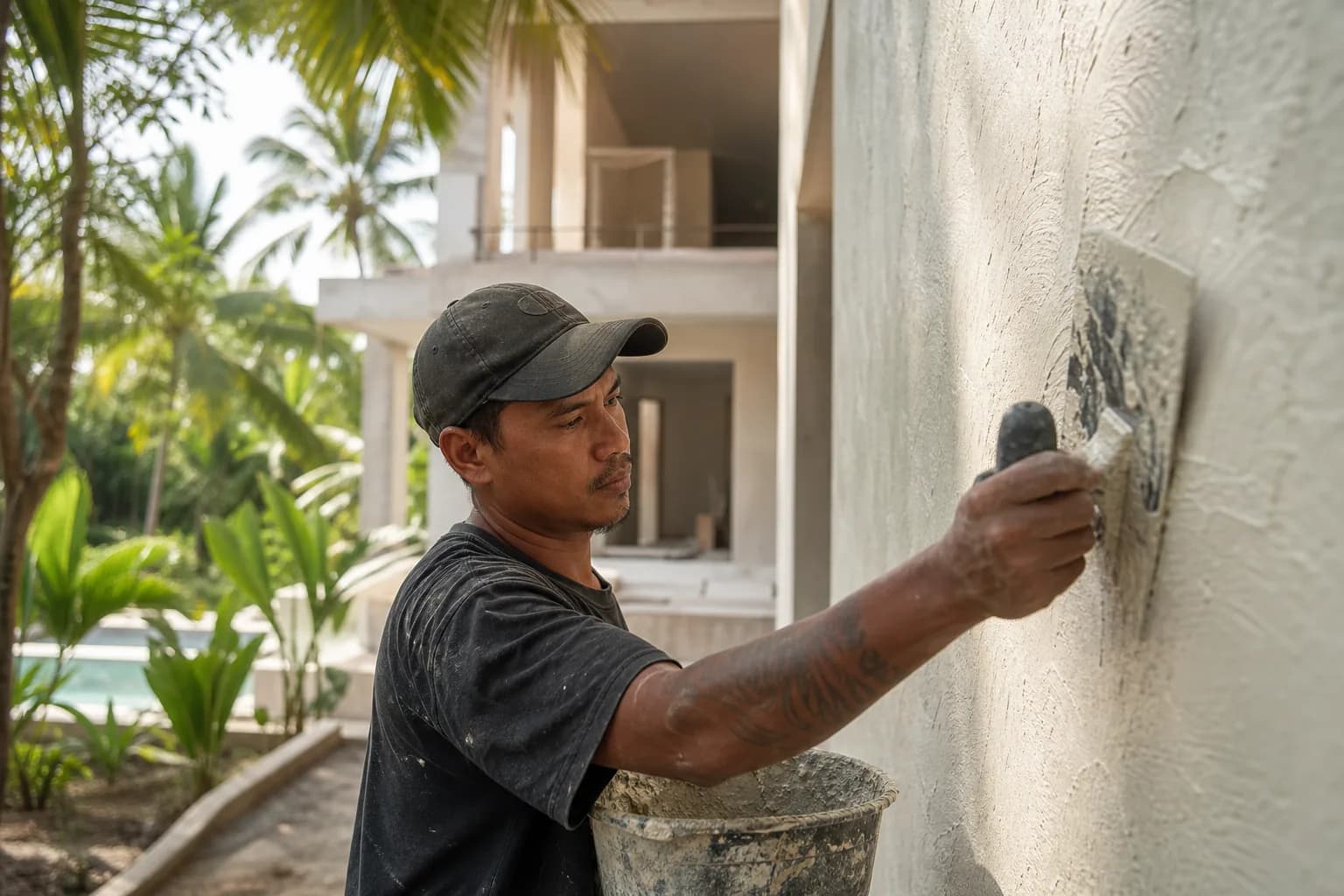
Resin-Infused Plaster Finishes: Anti-Salt Systems Bali
Expert technical guide: Resin-Infused Plaster Finishes: Anti-Salt Systems Bali
8 min read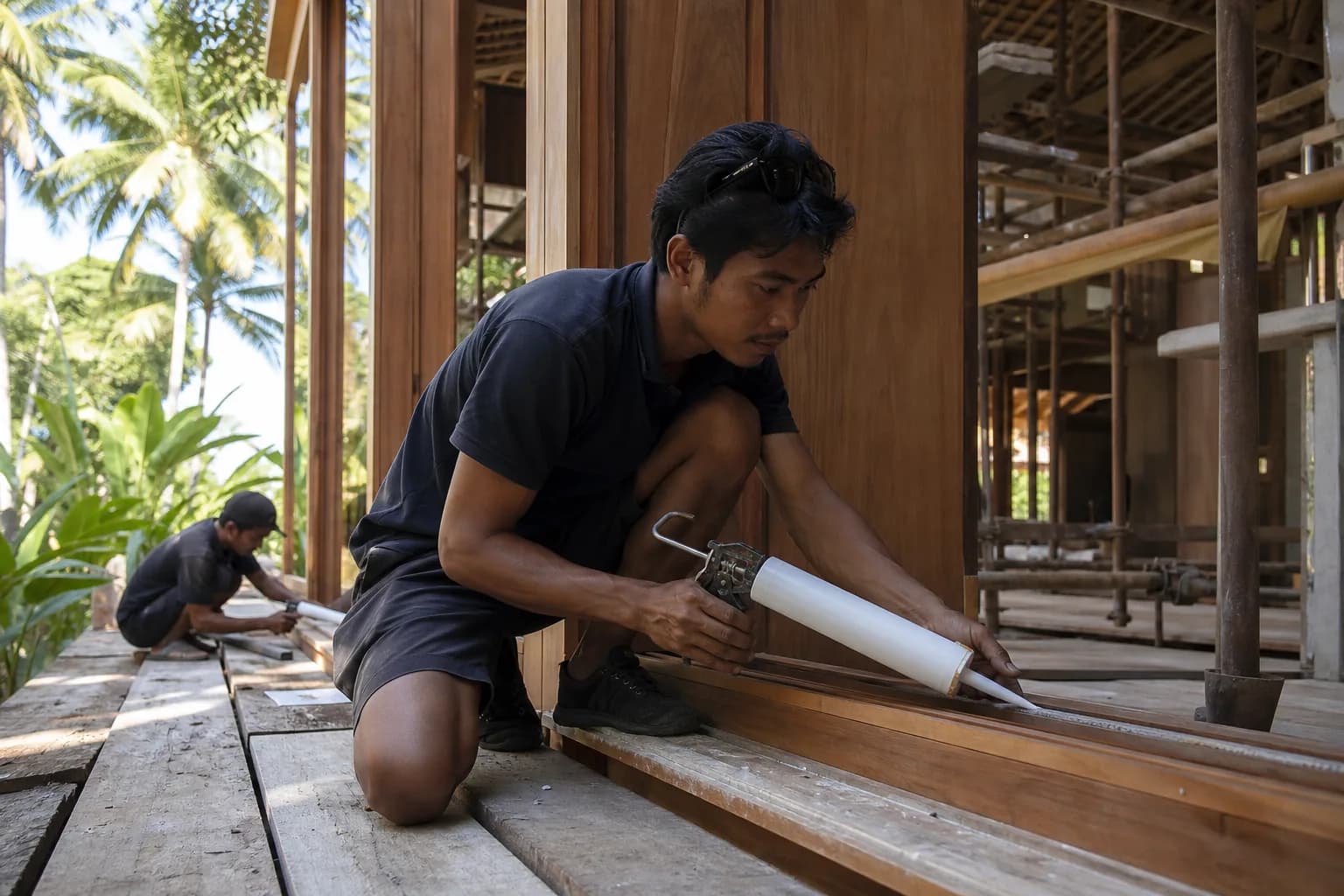
Prefinished Timber Joinery: Silicone Seals Fixings Bali
Professional prefinished timber joinery installation in Bali with silicone seals and fixings for durable weatherproof performance and a premium finish.
10 min read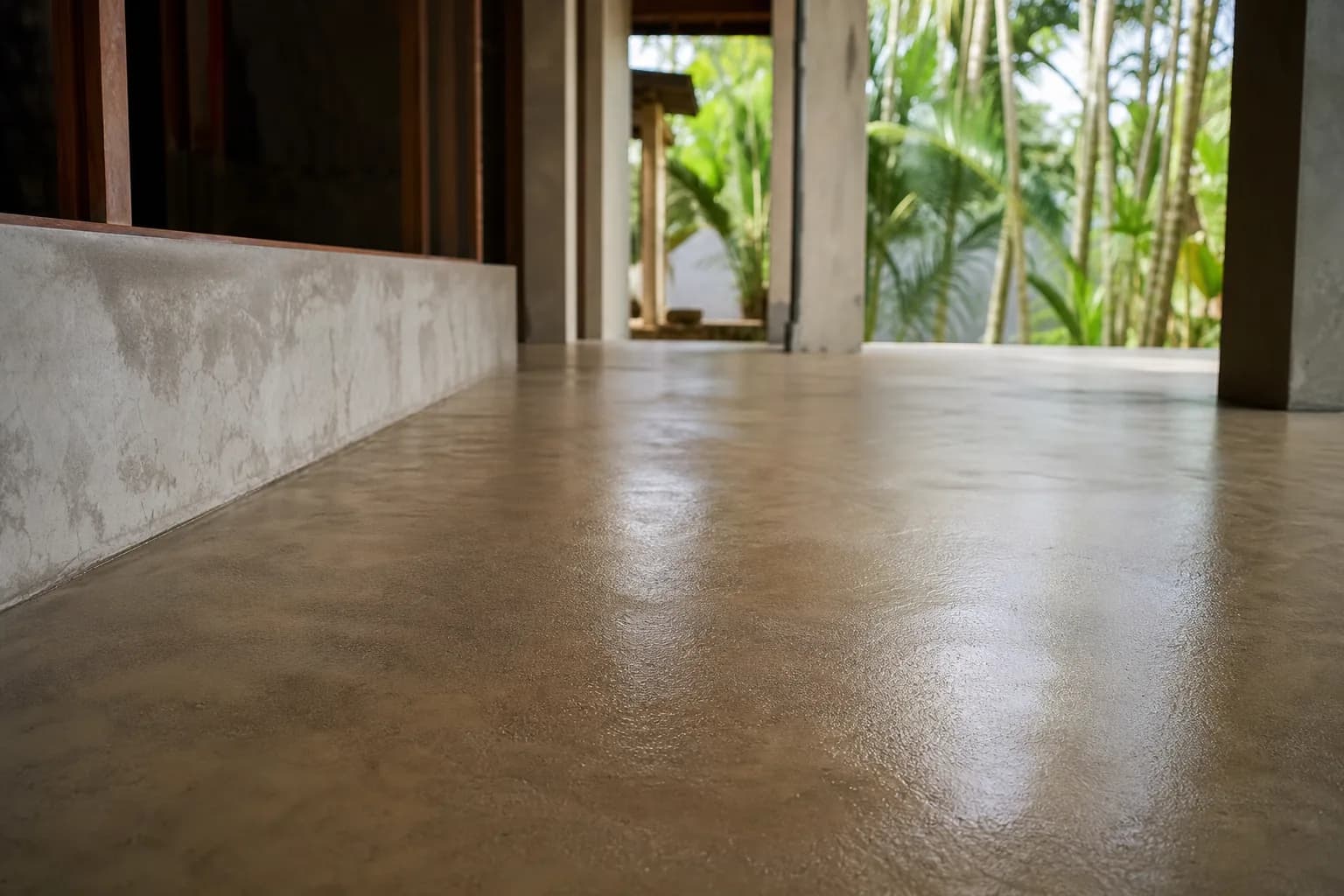
Polished Concrete Microtopping: Surface Prep Sealants Bali
Discover Bali s polished concrete microtopping: expert surface prep, durable sealants, and a flawless finish for modern floors with minimal maintenance.
9 min read