Kedungu and Nyanyi: Tabanan's Emerging Coast for Buyers and Builders
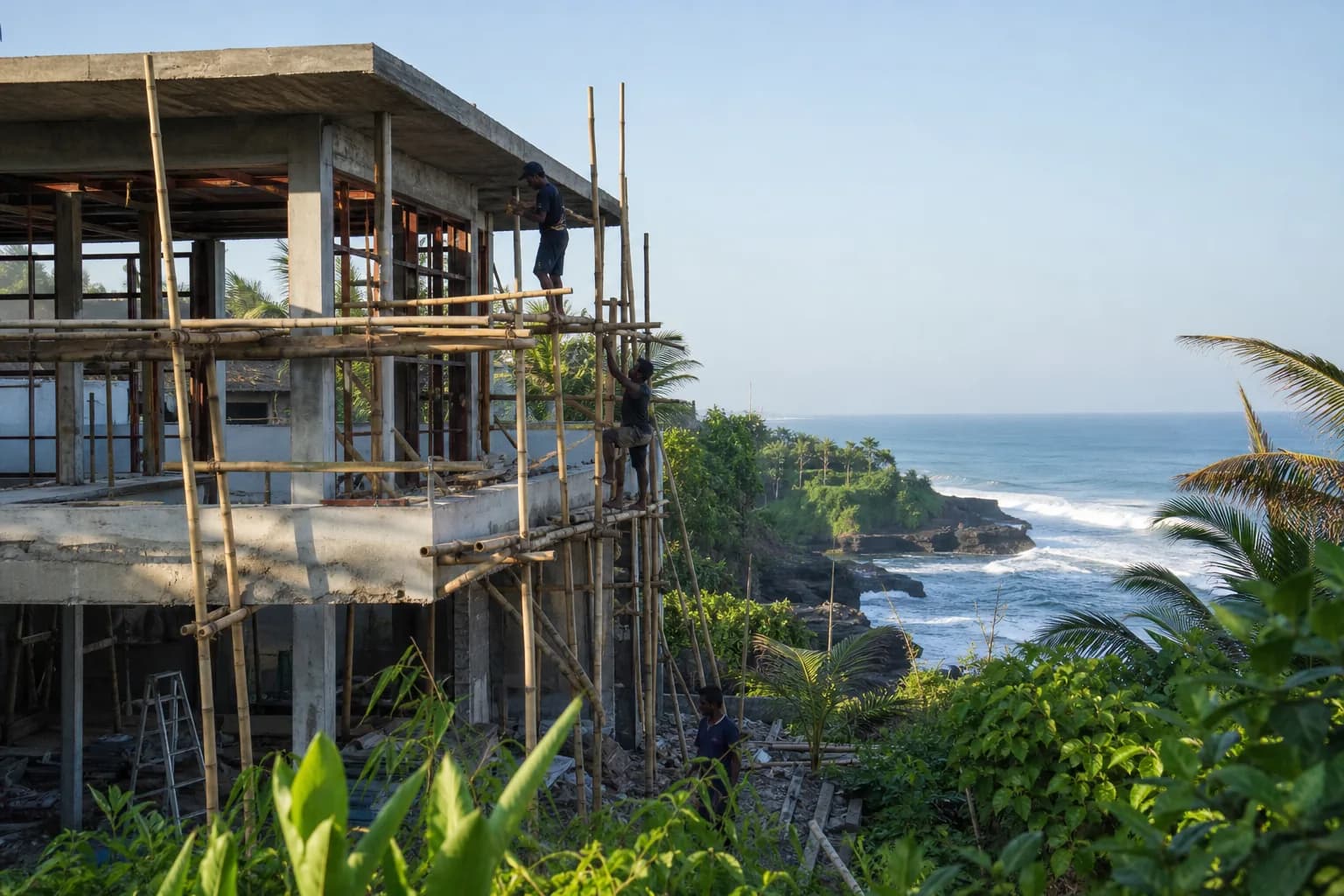
Every few years, Bali's property market picks a “next Canggu”. In 2026, the smart money's answer is increasingly specific: the Tabanan coast, and above all Kedungu and Nyanyi. Anyone researching Kedungu Bali property today is looking at a genuine frontier — land prices far below the Canggu corridor, a surf beach that regulars have loved for years, and a single catalytic project, Nuanu Creative City, that has changed how investors read the whole coastline. This guide explains what is actually there, what land costs, what is speculation versus signed reality, and how to buy and build on this coast without frontier-market mistakes.
Where Kedungu and Nyanyi sit — and why the regency line matters
Kedungu and Nyanyi are neighbouring coastal villages in Tabanan regency, immediately west of the Badung regency line that runs past Cemagi and Munggu. On the map they continue the same black-sand coast as Canggu, Pererenan and Seseh; by scooter, Kedungu is roughly 20–30 minutes from Pererenan depending on traffic, and the Tanah Lot temple complex sits between them.
The regency line is not a technicality. Tabanan is a different administration from Badung: different land pricing, different pace of permitting, historically far less tourism development, and a strong agricultural identity — Tabanan is Bali's rice bowl, and parts of its landscape connect to the UNESCO-listed subak irrigation heritage. That is precisely why the land is cheaper, and why the zoning homework here is heavier than anywhere in Canggu.
What the villages offer today is honest frontier fare: Kedungu has a broad, consistent beginner-to-intermediate surf beach, a scatter of warungs, cafes and early villa projects, and a lot of green. Nyanyi, one bay east, was until recently pure rice fields and temple land — and is now home to the coast's biggest bet.
Nuanu: the project that put this coast on the map
Nuanu Creative City is a roughly 44-hectare development on Nyanyi Beach combining event and education spaces, art installations, a beach club, hospitality and residential elements, built out in phases through the mid-2020s. Its developers emphasise an infrastructure-first, green-first approach, with a large majority of the site kept as open and green space.
For property buyers, Nuanu matters in three ways. First, it imported a demand anchor: events, festivals and a beach club give visitors a reason to come to Nyanyi specifically, years before the area would organically have earned one. Second, it brought infrastructure spending — roads and utilities improve faster when a large project needs them. Third, it reset price expectations: land around a named international project is marketed differently from anonymous rice fields.
Keep perspective, though. One project is not a district. Canggu's rise was powered by hundreds of independent cafes, gyms and schools, not a single campus. Nuanu accelerates the timeline; it does not guarantee the destination. Buy land that makes sense even if the wider build-out takes a decade.
What land costs in Kedungu and Nyanyi in 2026
The headline: Tabanan-coast land is commonly quoted at levels several times below the core Canggu corridor — market reports put the discount at roughly 30–60% versus comparable Badung coastal plots, and deeper still against Berawa or Batu Bolong. Exact asking prices move quickly and vary enormously with beach proximity, road access and lease terms, so treat published per-are figures with caution and price against real plots.
| Location type | 2026 price context (leasehold) | Notes |
|---|---|---|
| Near-beach Kedungu / Nyanyi | Highest on this coast; rising fastest since Nuanu | Thin supply of legally buildable plots |
| Inland lanes, 5–10 min from beach | Meaningfully cheaper than near-beach | Access quality drives value; check road width |
| Wider Tabanan coast (toward Balian) | Cheapest; genuinely early | Infrastructure thin; long-horizon land banking |
Appreciation on this coast since Nuanu broke ground has been strong, and agents will happily extrapolate that curve for you. Be careful: frontier land appreciates in jumps tied to infrastructure milestones, with flat stretches in between. If your plan requires selling within two or three years, this is the wrong coast. If you can hold seven to ten, the entry price is the entire argument.
The zoning reality: rice fields are not building plots
The single biggest risk in Kedungu and Nyanyi is buying land you cannot legally build on. Much of the surrounding landscape is productive agricultural land, some of it tied to subak irrigation systems, and Bali's government has in recent years moved to protect exactly this — including publicly discussed restrictions on converting productive rice fields to tourism use in several regencies, Tabanan among them. The current status of any moratorium or conversion rule is something to verify with your notary at purchase time, not something to assume from a listing.
Non-negotiable checks on this coast:
- ITR / spatial-plan verification. Written confirmation that the plot's zoning permits residential or tourism accommodation. Verbal assurances that conversion is “easy” are the classic Tabanan trap.
- Certificate and ownership chain. Village land here often has long family histories and multiple heirs; every one of them must sign.
- Coastal and river setbacks. The dramatic near-beach plots are the ones most constrained by setback rules — and enforcement against non-compliant coastal buildings elsewhere in Bali in 2025–2026 shows these rules have teeth.
- Legal access. Many plots sit behind others on informal paths. Demand documented access, ideally on the certificate.
- Utilities. Confirm realistic electricity capacity and water solution (well depth, quality) before committing — infrastructure is improving but uneven.
This due diligence — certificate, zoning, ownership chain — is exactly what Teville runs on every plot before it enters our vetted land catalogue, and on this coast we reject more plots than we accept.
Building in Kedungu and Nyanyi: costs and practicalities
Construction pricing is island-wide: expect $600–800/m² for an Essential specification, $900–1,300/m² Premium, and $1,400–2,000/m² Luxury — land excluded — with most villas completing in 8–16 months. The Tabanan specifics that affect your project:
- Former paddy ground. Water-retaining soils demand proper investigation, engineered fill and drainage. Skipping this is how cheap builds here crack within two years.
- Material logistics. Suppliers are concentrated toward Denpasar; a well-run contractor prices and schedules deliveries realistically for the extra distance.
- Community integration. These are living villages with strong temple culture. Contractors who handle banjar relationships properly build faster and hand over a villa the neighbourhood accepts.
- Design for the guest who comes here. People choose Kedungu over Canggu for space and calm. Bigger plots are affordable, so use them: generous gardens, pool orientation to green or ocean, retreat-friendly layouts. Our portfolio shows what different budgets buy at each spec level.
Because entry prices are low, this coast is popular with remote buyers securing land early. A lease can be executed via Power of Attorney without you flying in — Teville manages this routinely — and staged construction payments mean you fund the build in six milestones as work completes, not upfront. Model the full budget with our villa cost calculator.
Rental reality: what returns look like this early
Be honest about the demand curve. Kedungu and Nyanyi today draw surfers, Nuanu event traffic, and travellers deliberately escaping the Canggu crowd — a real but thin market compared with the corridor to the east. Occupancy is lumpier, nightly rates lower than Pererenan for equivalent product, and marketing matters more because guests do not yet default to searching this area.
Context for expectations: well-run Bali villas have historically netted around 7–12%. Early-area villas can land inside that range when the product is distinctive and well-operated, but the honest model for this coast is moderate rental income now with the real return carried by land appreciation and rate growth as the area matures. Anyone selling you Canggu occupancy spreadsheets for a Nyanyi villa is selling fiction. For strategy comparisons across areas, see our guides.
FAQ: Kedungu and Nyanyi property
Is Kedungu really the next Canggu?
It is the most credible candidate on the west coast, but on a longer clock than marketing suggests. The ingredients are present — surf beach, land supply, a demand anchor in Nuanu, infrastructure spending, and price momentum. What is missing is the dense independent ecosystem of cafes, schools and services that made Canggu. Expect a multi-year build-out, and buy only what works on that timeline.
What makes Nyanyi different from Kedungu?
Nyanyi's identity is currently tied to Nuanu Creative City — event-driven visitors, a beach club, and land marketed on proximity to the project. Kedungu's identity is its surf beach and a more organic, surfer-led scene. Nyanyi offers a sharper catalyst; Kedungu arguably offers broader appeal if the coast matures. Many investors treat them as one market and pick plots on legal quality first.
Can I still buy cheap land near the beach there?
Near-beach plots with clean certificates and correct zoning are no longer cheap by Tabanan standards — the discount to Canggu has narrowed precisely where everyone wants to buy. Genuine bargains remain inland and further west, at the price of thinner infrastructure. Beware near-beach plots priced dramatically under market: the discount usually encodes a zoning, setback or access problem.
Is rental income realistic in Kedungu today?
Yes, but at frontier levels. A well-designed, well-marketed villa can achieve respectable occupancy from surfers, long-stay guests and Nuanu-driven traffic, and historic island-wide net yields of roughly 7–12% frame the realistic ceiling. Model conservative occupancy for your first years and treat appreciation as the primary return driver.
How Teville fits in
Teville vets land and builds turnkey villas on the Tabanan coast, applying the same due diligence and milestone-payment structure we use across Bali. If you are weighing Kedungu or Nyanyi against the corridor further east, contact us — we will give you a straight read on plots, budgets and timelines.
Essential Bali build & buy guides
- Bali villa construction cost per m² in 2026
- How much will your villa cost? Calculator
- Building a villa in Bali: the complete guide
- Buying land in Bali: step-by-step for foreigners
- Bali villa investment: yields, risks, returns
- Leasehold vs freehold: what foreigners can own
- Construction defect liability & 10-year warranty
- Bali building codes and construction standards
Related guides
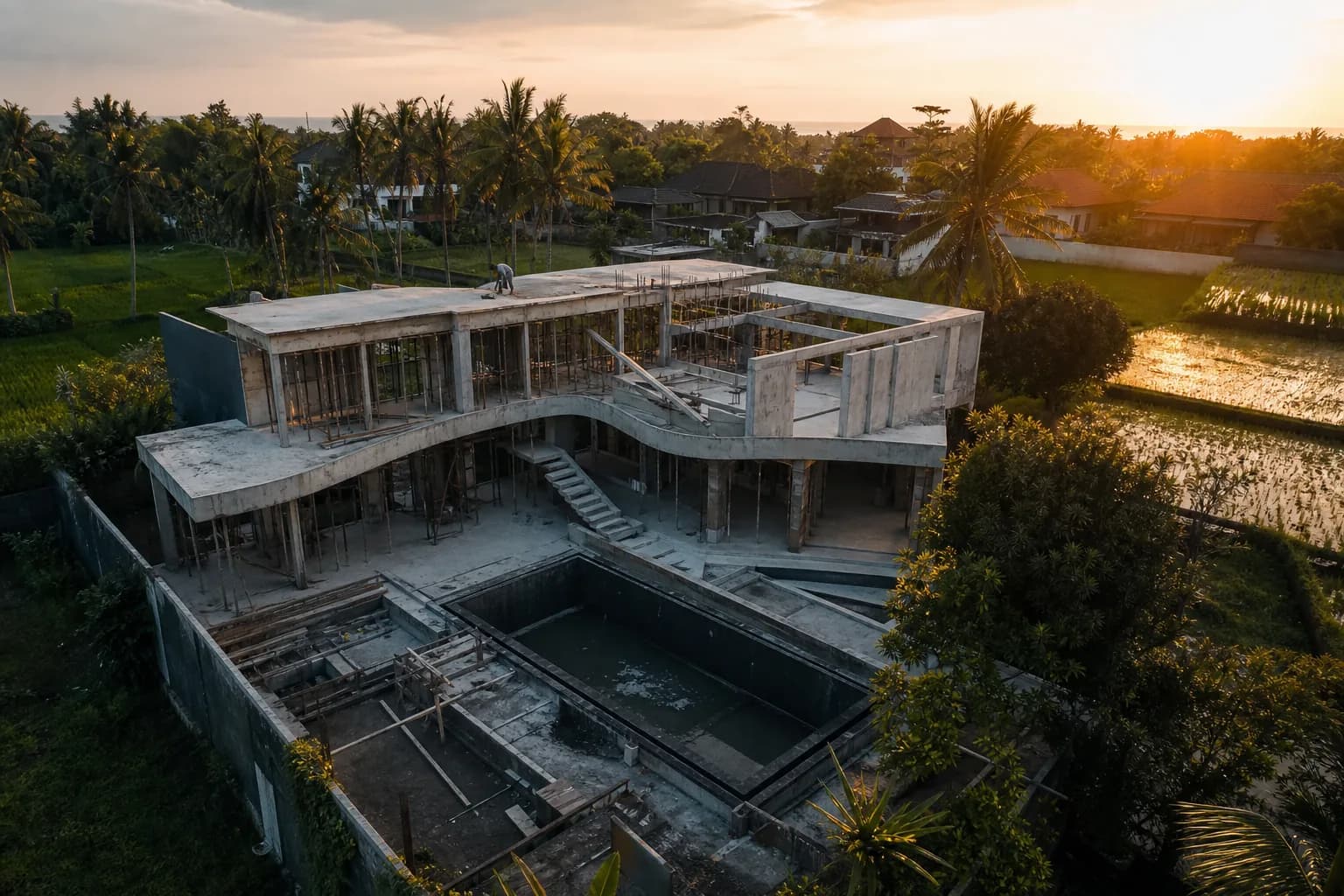
Pererenan, Seseh and Cemagi: Buying and Building on Bali's New West Coast
A practical 2026 guide to Pererenan, Seseh and Cemagi — how the three villages differ, what land and villas cost, the zoning checks that make or break deals on this coast, and how to build there.
7 min read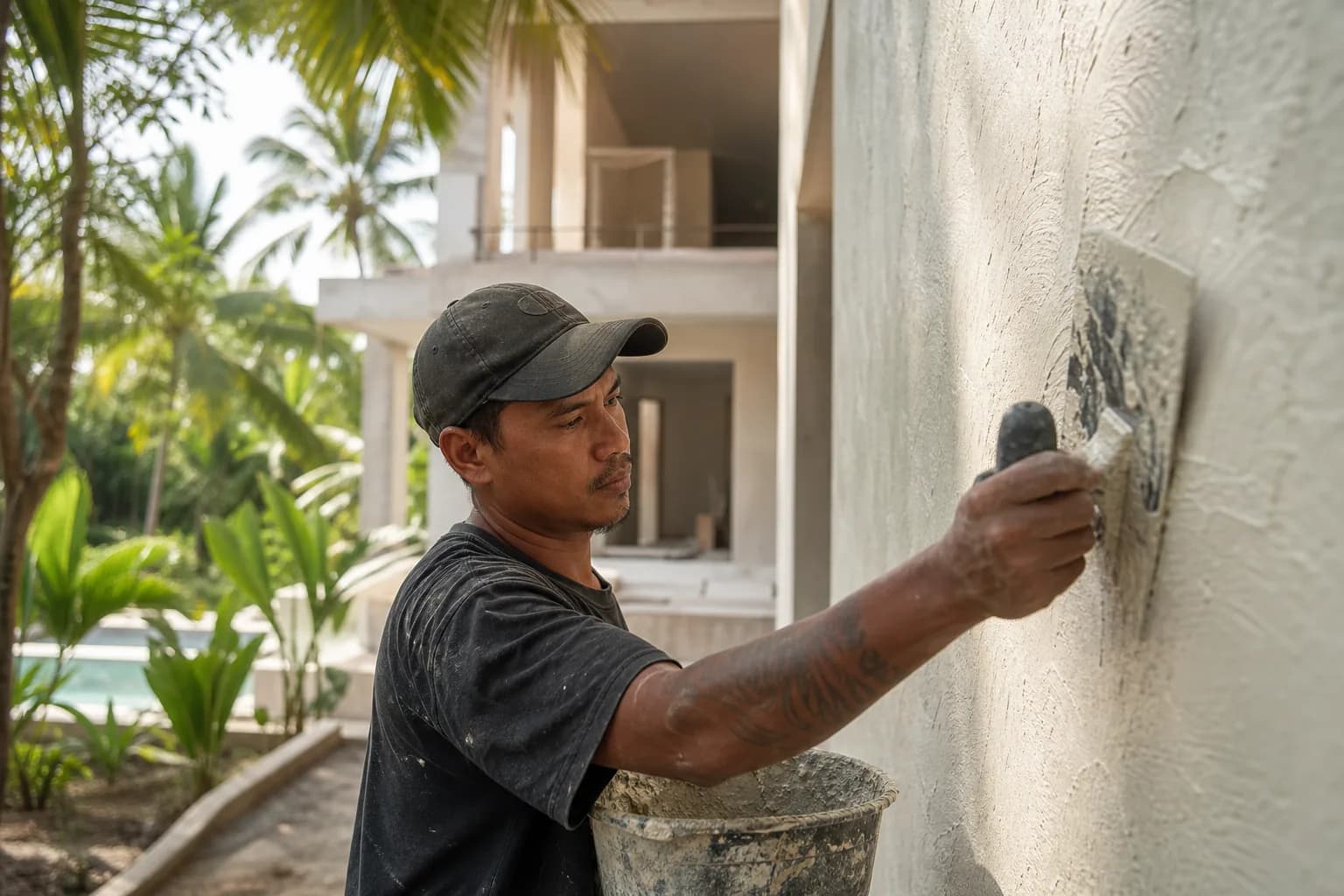
Resin-Infused Plaster Finishes: Anti-Salt Systems Bali
Expert technical guide: Resin-Infused Plaster Finishes: Anti-Salt Systems Bali
8 min read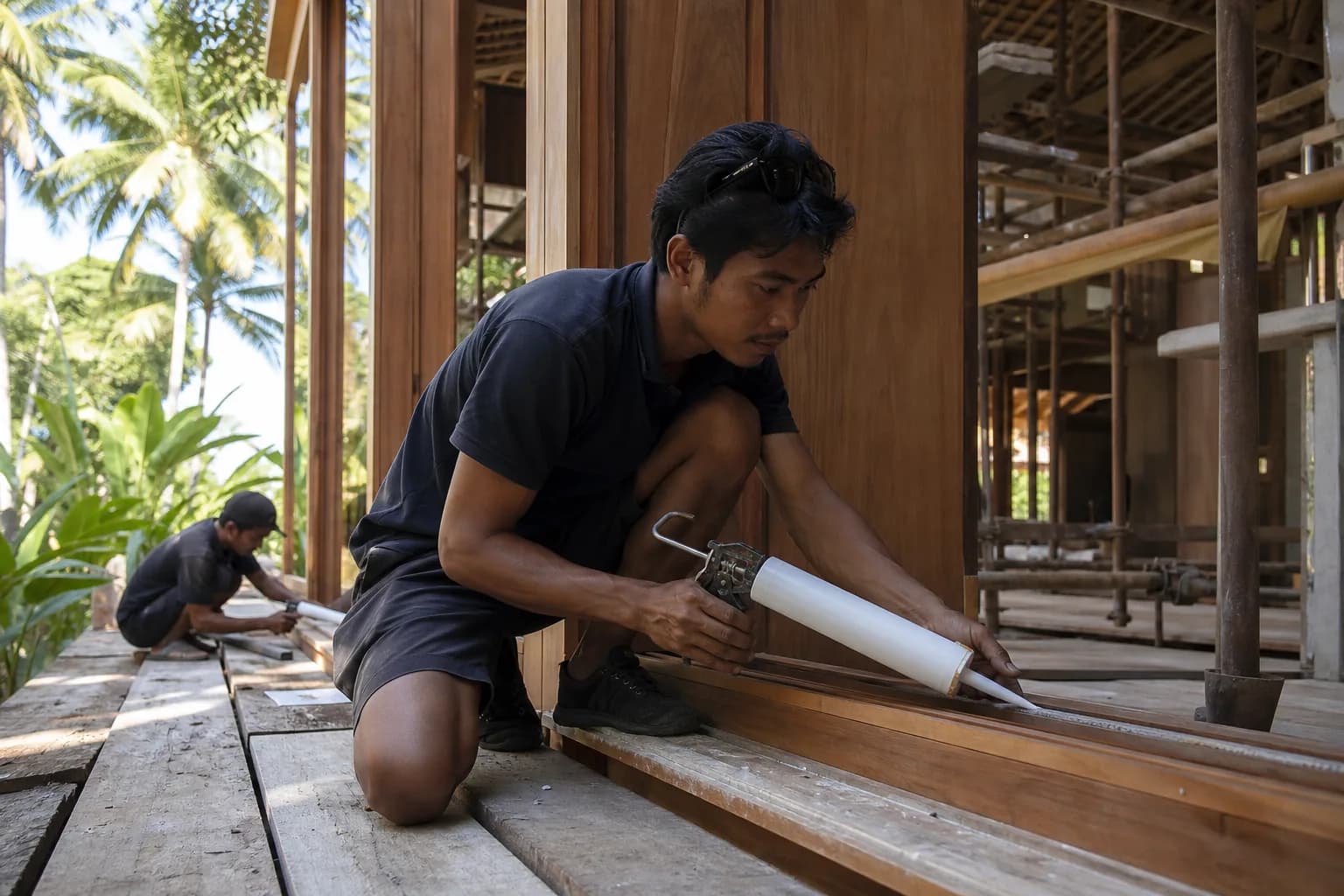
Prefinished Timber Joinery: Silicone Seals Fixings Bali
Professional prefinished timber joinery installation in Bali with silicone seals and fixings for durable weatherproof performance and a premium finish.
10 min read