Terrazzo vs Cement Tile Installation Costs in Bali

Understanding Terrazzo vs Cement Tile Labor Costs in Ubud’s Unique Construction Market
Villa owners and developers in Ubud face a critical decision when selecting flooring for their properties: should they invest in traditional terrazzo or opt for cement tiles? While material costs are transparent, the labor component—which can represent 40-60% of total installation expenses in Bali—remains poorly understood. In Ubud’s 2026 construction market, terrazzo installation labor ranges from $35-$75 per square meter, while cement tile installation costs $15-$28 per square meter. This significant difference stems from specialized skill requirements, equipment needs, and installation complexity that directly impact your interior finishing Bali project timeline and budget.
Technical Deep Dive: Why Labor Costs Differ Dramatically Between Terrazzo and Cement Tile
The labor cost disparity between terrazzo and cement tile installation in Ubud reflects fundamental differences in technical complexity, skill requirements, and time investment. Understanding these factors is essential for accurate Bali villa construction budgeting and realistic project scheduling.
Terrazzo Installation Labor Complexity
Terrazzo installation demands highly specialized craftsmen with years of training—a resource that commands premium rates in Ubud’s competitive construction market. The process involves multiple skilled trades working in precise sequence. First, substrate preparation specialists must create perfectly level concrete bases with proper moisture barriers, critical in Bali’s humid tropical climate where ground moisture can compromise adhesion. This preparation alone requires 2-3 days for a standard 100-square-meter area.
The actual terrazzo pouring requires master craftsmen who mix aggregates (marble chips, glass, or mother-of-pearl) with cement or epoxy binders in exact proportions. These specialists, often trained through multi-year apprenticeships, earn $45-$65 per day in Ubud—significantly higher than general construction labor at $25-$35 daily. The pouring process demands continuous work without interruption to prevent visible seams, often requiring teams to work extended hours, which increases labor costs by 30-40% due to overtime premiums.
After curing (7-14 days depending on climate conditions), grinding specialists use industrial equipment to expose the aggregate and create the characteristic terrazzo appearance. This multi-stage grinding process—from coarse 60-grit to fine 400-grit—requires experienced operators who understand how different aggregate materials respond to abrasion. Equipment rental adds $150-$250 daily to labor costs, as these specialized grinders aren’t standard construction tools in Ubud.
Finally, polishing specialists apply sealers and polish the surface to achieve the desired sheen level. This finishing work, critical for durability in high-traffic villa areas, requires another 3-4 days for proper application and curing. The total labor timeline for terrazzo spans 18-25 days for a 100-square-meter installation, with multiple specialized teams coordinating their work.
Cement Tile Installation Labor Requirements
Cement tile installation, while requiring skilled tile setters, involves significantly less specialized knowledge and equipment. Experienced tile installers in Ubud, earning $30-$45 per day, can complete cement tile projects using standard construction tools already available on most renovation Bali sites. The installation process follows familiar tile-setting protocols that most experienced craftsmen have mastered.
Substrate preparation for cement tiles is less demanding than terrazzo, requiring only a level mortar bed or properly prepared concrete slab. While precision remains important, the tolerance for minor substrate imperfections is greater because individual tiles can compensate for small variations. This preparation typically requires 1-2 days for 100 square meters.
The actual tile setting process moves relatively quickly, with experienced teams installing 15-25 square meters daily depending on pattern complexity. Cement tiles’ smaller format (typically 20x20cm or 30x30cm) allows for easier handling and adjustment compared to poured terrazzo’s monolithic nature. Pattern-intensive installations with multiple colors or intricate designs slow progress to 10-15 square meters daily, but even complex projects maintain predictable timelines.
Grouting and sealing complete the installation within 2-3 days after tile setting. While cement tiles require proper sealing to protect against staining—particularly important in Ubud’s tropical environment—this process uses standard penetrating sealers applied with rollers or sprayers, not specialized grinding equipment. Total labor timeline for cement tile installation spans 8-12 days for 100 square meters, less than half the terrazzo timeline.
Climate-Specific Labor Considerations in Ubud
Ubud’s tropical climate introduces labor cost variables absent in temperate regions. High humidity (75-85% year-round) extends curing times for both terrazzo and cement tile installations, potentially adding 20-30% to labor duration during rainy season (November-March). Experienced contractors factor these delays into labor quotes, while inexperienced teams may underestimate climate impacts, leading to budget overruns.
Temperature stability in Ubud (24-30°C) benefits installation quality but requires careful scheduling around daily rain patterns. Labor teams often start at 6 AM to maximize productive hours before afternoon storms, which can affect daily labor rates when early-start premiums apply. These scheduling considerations particularly impact terrazzo installations, where weather interruptions during pouring can create visible defects requiring costly remediation.
Materials and Standards: How Material Choices Impact Labor Costs
Material selection directly influences labor expenses through handling requirements, installation complexity, and quality standards that govern proper interior finishing Bali execution.
Terrazzo Material Variables
Traditional cement-based terrazzo uses locally-sourced aggregates (Bali marble, river stones, recycled glass) mixed with white or gray cement. These materials require less specialized handling but demand longer curing times (14-21 days) before grinding can begin, extending labor timelines. Epoxy-based terrazzo, increasingly popular in high-end villa projects, cures faster (3-5 days) but requires specialized mixing skills and precise temperature control during application, commanding 25-35% higher labor rates.
Aggregate size and type significantly affect grinding labor costs. Larger marble chips (10-15mm) require more aggressive initial grinding, increasing equipment wear and operator time. Delicate materials like mother-of-pearl or semi-precious stones demand gentler grinding approaches, potentially doubling polishing labor hours. When planning villa projects, material selection should consider these labor implications alongside aesthetic preferences.
Cement Tile Quality Standards
Cement tiles vary dramatically in quality, from locally-produced Bali tiles at $8-$15 per square meter to imported European tiles at $45-$80 per square meter. While material cost differences are obvious, labor costs remain relatively consistent because installation techniques don’t vary significantly. However, higher-quality tiles with precise dimensional tolerances install faster, potentially reducing labor costs by 10-15% through improved efficiency.
Handmade cement tiles, popular in boutique villa projects, may have slight dimensional variations (±1-2mm) requiring skilled installers who can adjust spacing and alignment. This precision work increases labor time by 15-20% compared to machine-made tiles with consistent dimensions. The labor premium for handmade tile installation reflects the installer’s experience and attention to detail rather than fundamentally different techniques.
Substrate and Preparation Standards
Both terrazzo and cement tile installations require proper substrate preparation, but standards differ significantly. Terrazzo demands structural concrete slabs with minimal deflection (L/360 or better) and comprehensive moisture barriers, as any substrate movement creates cracks in the monolithic surface. This preparation may require structural remediation in older buildings, adding $25-$45 per square meter in labor costs before terrazzo installation begins.
Cement tiles tolerate slightly more substrate flexibility because individual tiles can move independently within grout joints. However, proper substrate preparation remains critical for longevity, particularly in Ubud’s seismic zone where minor ground movement occurs regularly. Experienced renovation Bali contractors invest in proper substrate preparation regardless of flooring type, understanding that inadequate preparation creates costly failures within 2-3 years.
Step-by-Step Installation Process: Labor Requirements at Each Stage
Terrazzo Installation Process
Stage 1: Site Preparation and Substrate Work (Days 1-3)
Labor teams remove existing flooring, clean and level the substrate, and install moisture barriers. This stage requires 3-4 general laborers plus one supervisor, costing approximately $400-$550 for 100 square meters. Proper substrate preparation cannot be rushed—attempting to compress this timeline compromises the entire installation.
Stage 2: Divider Strip Installation (Day 4)
Metal or plastic divider strips create control joints and design patterns while preventing crack propagation. Skilled installers position these strips according to architectural drawings, ensuring proper spacing (typically 1.2-1.8 meter grids). This precision work requires 2 experienced craftsmen, costing $120-$180 daily.
Stage 3: Terrazzo Pouring (Days 5-6)
Master terrazzo craftsmen mix and pour the terrazzo matrix, working systematically across the floor area. Teams of 4-6 workers complete 100 square meters over 2 days, with material mixing, pouring, and initial leveling occurring simultaneously. Labor costs reach $500-$750 for this critical phase, with premium rates for experienced pourers who ensure consistent aggregate distribution and proper compaction.
Stage 4: Curing Period (Days 7-20)
While no active labor occurs during curing, the site requires monitoring and protection. Light foot traffic is permitted after 7 days, but grinding cannot begin until 14-21 days post-pour. This extended timeline affects overall project scheduling and may incur site supervision costs of $25-$35 daily.
Stage 5: Grinding and Polishing (Days 21-24)
Grinding specialists progressively refine the surface through multiple passes with increasingly fine abrasives. This labor-intensive process requires 2 equipment operators plus 2 assistants for dust control and equipment management, costing $600-$900 for 100 square meters including equipment rental. Each grinding stage must be completed before proceeding to finer grits, preventing timeline compression.
Stage 6: Sealing and Final Finishing (Days 25-27)
Final sealing protects the terrazzo and enhances its appearance. Specialists apply penetrating sealers followed by topical finishes, with proper curing time between coats. This finishing work costs $250-$350 for 100 square meters and directly impacts long-term durability in Ubud’s humid climate.
Cement Tile Installation Process
Stage 1: Substrate Preparation (Days 1-2)
Teams level the substrate and apply appropriate underlayment or mortar bed. This work requires 2-3 skilled laborers, costing $180-$280 for 100 square meters. While less demanding than terrazzo substrate work, proper preparation remains essential for preventing tile cracking and lippage.
Stage 2: Layout and Planning (Day 2)
Installers dry-lay tiles to finalize pattern placement and minimize cuts, particularly important for patterned cement tiles where design continuity matters. This planning phase, often overlooked in budget estimates, requires 4-6 hours of skilled labor costing $60-$90 but prevents costly mistakes during installation.
Stage 3: Tile Setting (Days 3-7)
Experienced tile setters install cement tiles using thin-set mortar, working systematically across the floor area. Teams of 2-3 installers complete 15-20 square meters daily for standard patterns, with complex designs reducing output to 10-12 square meters daily. Labor costs range from $800-$1,200 for 100 square meters depending on pattern complexity and tile size.
Stage 4: Grouting (Days 8-9)
After 24-48 hours curing time, grout specialists fill joints and clean excess material. This process requires 2 workers and costs $200-$300 for 100 square meters. Proper grouting technique prevents water infiltration and staining, particularly critical for cement tiles’ porous nature.
Stage 5: Sealing (Days 10-11)
Cement tiles require thorough sealing to prevent staining and moisture absorption. Applicators apply multiple coats of penetrating sealer, allowing proper drying between applications. This final stage costs $180-$250 for 100 square meters and significantly impacts the floor’s maintenance requirements and longevity.
Costs and Timeline: Real Numbers for Ubud Projects in 2026
For a standard 100-square-meter villa floor installation in Ubud, expect these labor cost ranges:
Terrazzo Installation Labor:
Total labor cost: $3,500-$7,500 (Rp 56,000,000-120,000,000)
Timeline: 18-27 days
Cost per square meter: $35-$75
Specialized equipment rental: $1,200-$2,000 additional
Cement Tile Installation Labor:
Total labor cost: $1,500-$2,800 (Rp 24,000,000-45,000,000)
Timeline: 8-12 days
Cost per square meter: $15-$28
Standard equipment (included in labor rates)
These figures reflect current Ubud market rates for experienced contractors delivering quality work. Significantly lower quotes often indicate inexperienced teams, inadequate preparation, or compressed timelines that compromise installation quality. When evaluating proposals for your villa construction project, consider the total cost including materials, with terrazzo projects typically totaling $85-$175 pe
 3124 m²6 month(s)from 123.000 USD
TALA 8
 3180 m²7 month(s)from 142.000 USD
Vasudeva
 3104 m²11 month(s)from 99.000 USD
TALA 100
 2144 m²11 month(s)from 104.000 USD
Narayana

Want to calculate?
 3127 m²9 month(s)from 177.000 USD
Mukunda
 164 m²7 month(s)from 79.000 USD
Private: Haridas Villas, Tegallalang
 3173 m²6 month(s)from 125.000 USD
TALA FOUR
164 m²7 month(s)from 79.000 USDTALA TWO
 172 m²8 month(s)from 120.000 USD
Keshava
 1from 198.000 USD
Private: Haridas Villas
 4344 m²16 month(s)from 290.000 USD
Radha
Start With Real Numbers, Not Guesses
Before finalizing your finishing works plan, check realistic cost ranges for your Bali villa project.
Available lands
 889 m²15 min$ 145612Bali, Cepaka
 1720 m²2 min$ 241478Bali, Tabanan
 750 m²15 min$ 187038Bali, Kerobokan
 1410 m²15 min$ 390702Bali, Tabanan
 1600 m²32 min$ 266010Bali, Tabanan
 5815 m²5 min$ 815740Bali, Tabanan
 260 m²5 min$ 51872Bali, Kedungu
 444 m²10 min$ 111000Bali, Tabanan
 2230 m²15 min$ 410573Bali, Padonan
 1350 m²5 min$ 283467Bali, Pecatu
 204 m²5 min$ 40899Bali, Kedungu
 800 m²8 min$ 113300Bali, Ungasan
 600 m²12 min$ 101970Bali, Mengwi
 3700 m²15 min$ 738177Bali, Tabanan
 1230 m²15 min$ 132543Bali, Tegallalang
Essential Bali build & buy guides
- Bali villa construction cost per m² in 2026
- How much will your villa cost? Calculator
- Building a villa in Bali: the complete guide
- Buying land in Bali: step-by-step for foreigners
- Bali villa investment: yields, risks, returns
- Leasehold vs freehold: what foreigners can own
- Construction defect liability & 10-year warranty
- Bali building codes and construction standards
Related guides
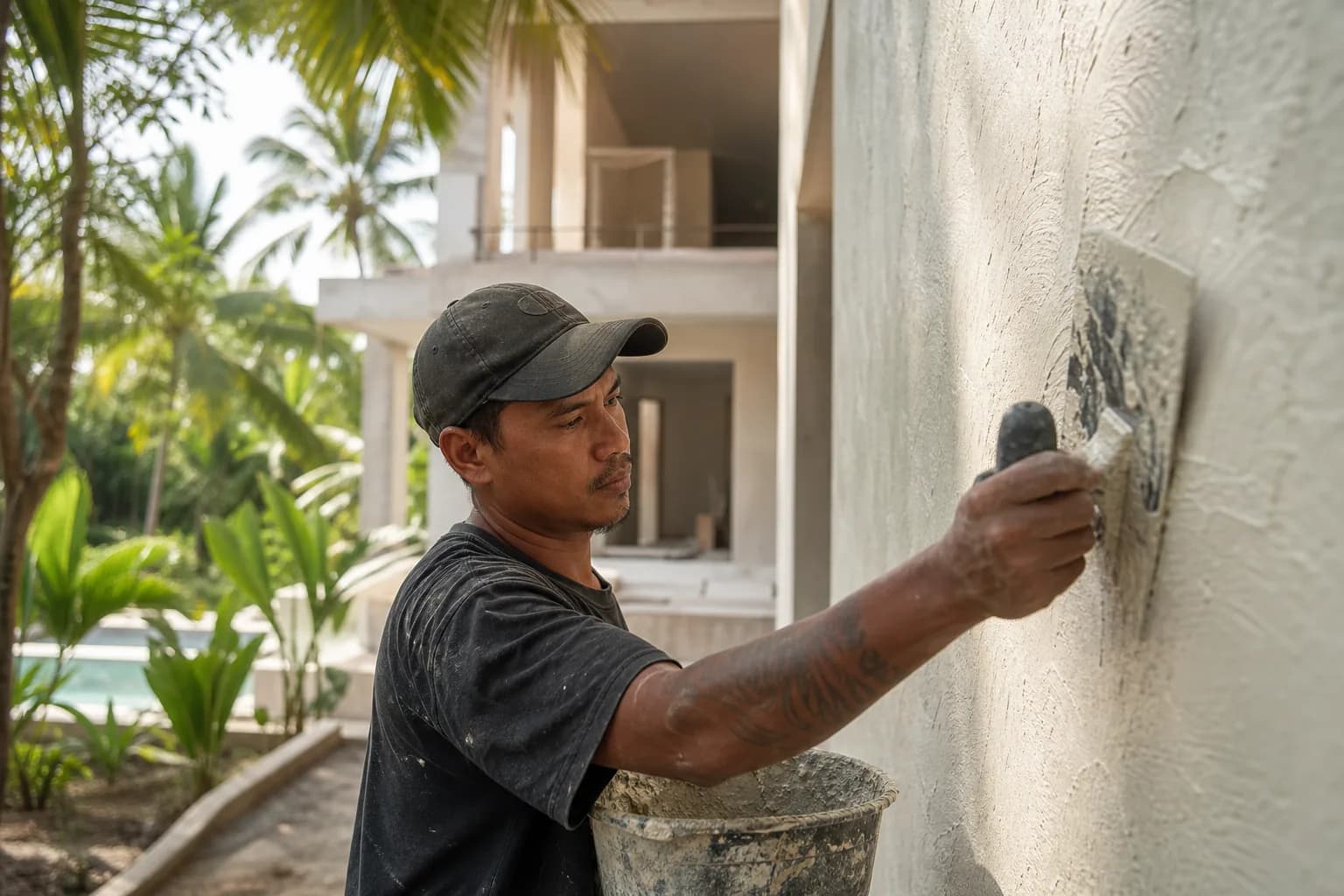
Resin-Infused Plaster Finishes: Anti-Salt Systems Bali
Expert technical guide: Resin-Infused Plaster Finishes: Anti-Salt Systems Bali
8 min read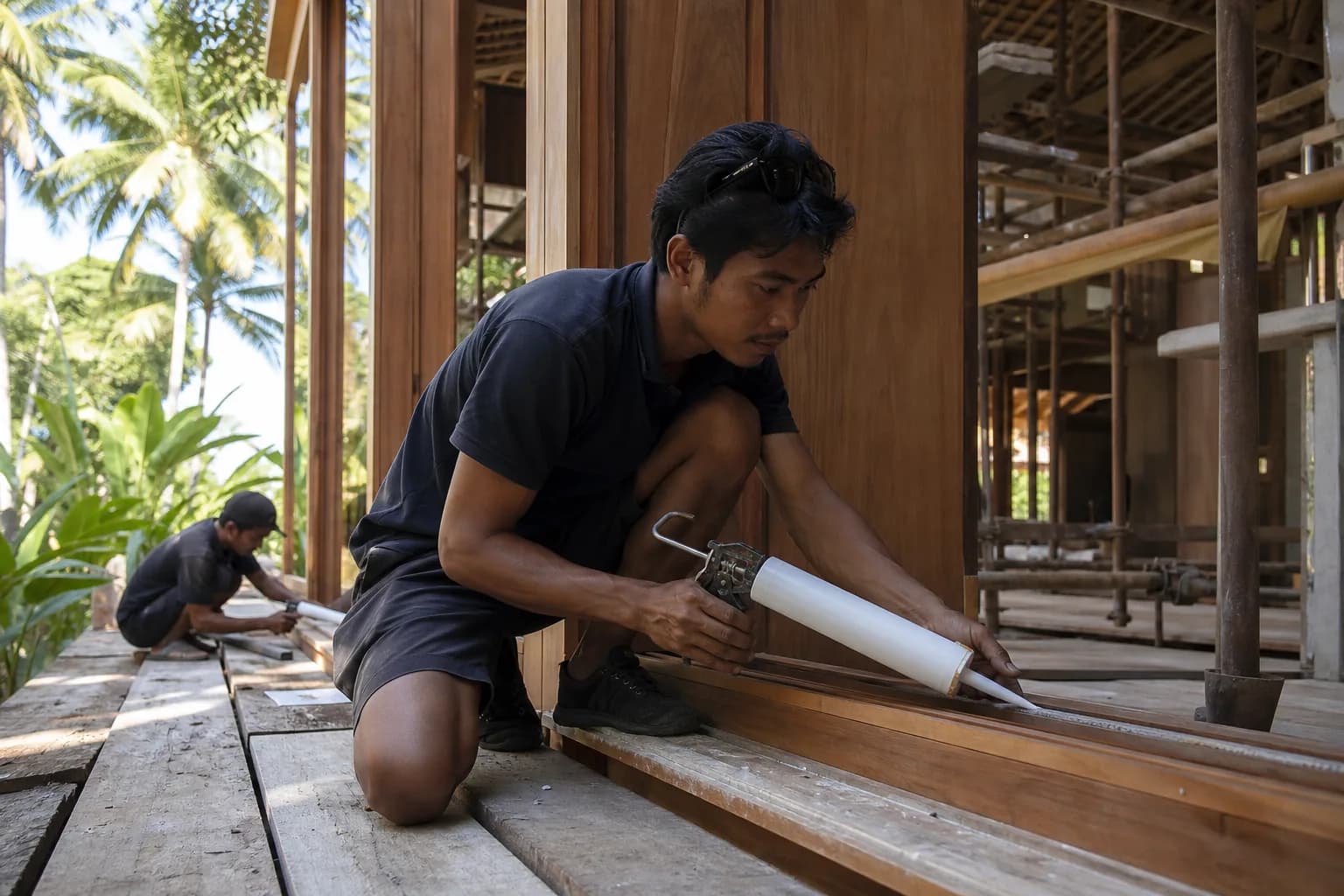
Prefinished Timber Joinery: Silicone Seals Fixings Bali
Professional prefinished timber joinery installation in Bali with silicone seals and fixings for durable weatherproof performance and a premium finish.
10 min read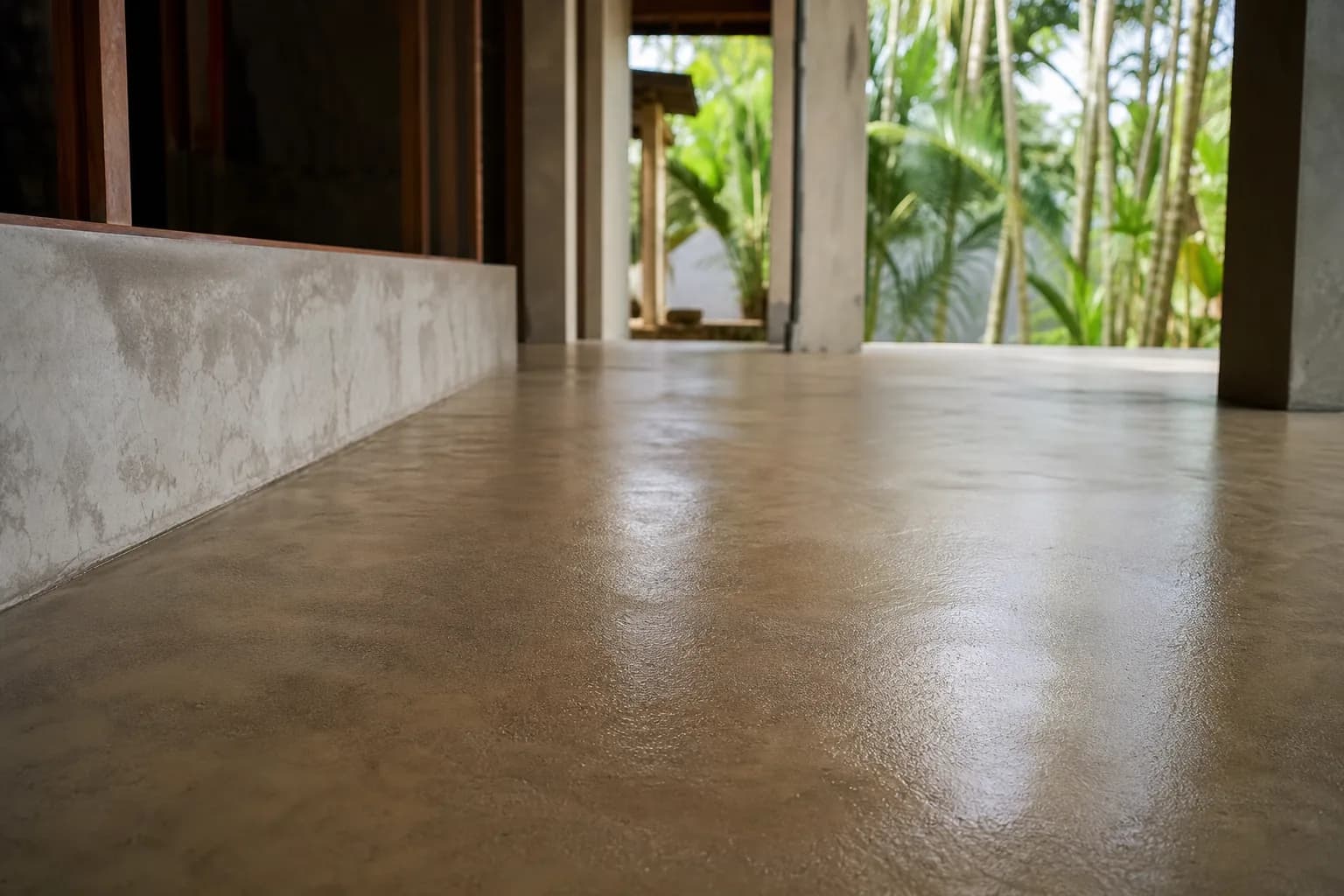
Polished Concrete Microtopping: Surface Prep Sealants Bali
Discover Bali s polished concrete microtopping: expert surface prep, durable sealants, and a flawless finish for modern floors with minimal maintenance.
9 min read