Sanur and Nusa Dua vs Canggu: Stability Plays vs Hype
Every Bali property conversation eventually reaches the same fork: chase the high nightly rates and Instagram gravity of Canggu, or take the quieter, steadier path on the east and south coasts. Sanur property investment — and its master-planned southern cousin Nusa Dua — attracts a fundamentally different buyer from the Canggu crowd, and in 2026 the case for the stability play is stronger than it has been in years. This is an honest comparison, including the arguments against each side.
The short version: Canggu still wins on gross rates and resale liquidity, but carries oversupply and saturation risk. Sanur and Nusa Dua win on occupancy stability, regulatory clarity and low volatility, but will never produce the explosive appreciation stories that built Canggu's reputation. Which is better depends entirely on what kind of investor you are.
Three markets, three personalities
Canggu (with its spillover corridor through Berawa, Babakan and toward Pererenan) is Bali's growth machine: surf, beach clubs, digital nomads, and the island's highest concentration of new villa supply. Nightly rates are strong, brand recognition among renters is unmatched, and resale demand is deep — but the area now holds roughly a third of Bali's entire available villa supply, traffic is chronic, and thousands of near-identical two-bedroom villas compete for the same guest.
Sanur is the island's original resort town, long stereotyped as sleepy and grey-haired. That stereotype is now out of date. Sanur hosts Indonesia's flagship health-tourism project — a special economic zone anchored by the Bali International Hospital — explicitly designed to capture medical travel that Indonesians currently spend abroad. Add a renovated beachfront promenade, calm swimmable water and proximity to the airport bypass, and Sanur has quietly become a genuine long-stay and family market with year-round demand.
Nusa Dua is unlike anywhere else in Bali: a master-planned resort enclave developed and managed by the state tourism corporation (ITDC), with gated infrastructure, five-star hotels, manicured streets and conference traffic. Surrounding neighbourhoods such as Tanjung Benoa and the fringes toward Jimbaran offer villa product that borrows Nusa Dua's orderliness. It is the island's lowest-chaos market — and its least bohemian.
Demand drivers: hype vs structural
The core distinction is what fills the calendar. Canggu demand is lifestyle-driven: surf seasons, nomad waves, social-media trends. It is real demand — and large — but it is fashion-sensitive, and fashion moves. Pererenan was 'the new Canggu' within a few years; something will eventually be the new Pererenan.
Sanur and Nusa Dua demand is structural. Medical travellers and their families need weeks of accommodation near the hospital zone regardless of season. Conference delegates fill Nusa Dua midweek year-round. Retirees and long-stay families choose calm water and walkable promenades over beach clubs, and they rebook annually. This kind of demand produces flatter occupancy curves: lower peaks than Canggu in high season, far shallower troughs in low season.
Bali-wide context helps here: well-run villas across the island have historically netted roughly 7–12% — market context, never a guarantee. Within that band, Canggu properties tend to earn their return with high rates and volatile occupancy; Sanur properties tend to earn theirs with moderate rates and dependable occupancy, often on longer average stays that reduce management cost and wear.
Prices and what you get in 2026
Exact pricing always depends on plot, title and remaining lease term, but the broad 2026 pattern in market listings looks like this:
| Canggu corridor | Sanur | Nusa Dua area | |
|---|---|---|---|
| Land cost level | Highest; premium strips command top-of-market rates | Mid; meaningfully below Canggu for comparable plots | Mid-to-high; limited villa-zoned supply near the enclave |
| Typical buyer | Yield-chasers, first-time Bali investors, flippers | Long-stay landlords, conservative investors, end users | Premium buyers, low-risk capital, resort-adjacent investors |
| Rental profile | Short-stay, high rate, seasonal swings | Mixed short/long-stay, stable occupancy | Premium short-stay and corporate, steady |
| Supply pressure | Heavy — largest share of island supply | Moderate and growing | Constrained by master planning |
| Volatility | High | Low | Low |
Because land is the biggest variable, the build-side maths are worth stating plainly: construction cost is essentially the same island-wide. In 2026 Teville builds at $600–800/m² Essential, $900–1,300/m² Premium and $1,400–2,000/m² Luxury (construction only, land separate), with most projects completing in 8–16 months. The same $250,000 Premium build sits on cheaper land in Sanur than in Canggu — which is precisely why building in the stability markets can produce better total-cost positions than buying finished stock in the hype market. Model your own scenario with the villa cost calculator.
The case against each market
Honesty cuts both ways, so here are the real weaknesses:
- Against Canggu: oversupply is no longer a forecast, it is the present. A large share of the island's villas compete in this one corridor, which pressures occupancy and forces discounting on undifferentiated product. Traffic congestion degrades the guest experience the marketing photos promise. And entry prices already capitalise years of expected growth.
- Against Sanur: the medical-zone thesis is compelling but still maturing — buy because the fundamentals are already decent, not because a masterplan render promises the future. Nightly rates are below Canggu, so gross income on a like-for-like villa is lower. Nightlife-seeking guests will simply not book here.
- Against Nusa Dua: the enclave's orderliness comes with limited villa-zoned land and less character; growth is deliberately managed, so capital appreciation is slower than in speculative zones. It suits buyers who want predictability, not upside stories.
Zoning, titles and diligence — same rules everywhere
Whichever market you choose, the legal fundamentals do not change. Foreign buyers hold leasehold (typically 25–30 years, extendable) or use a properly structured company for HGB-type titles; every parcel needs certificate verification, zoning/ITR confirmation and a clean ownership chain before any money moves. Sanur's special-economic-zone boundaries and Nusa Dua's ITDC master planning add location-specific layers worth checking parcel by parcel — verify with your notary rather than assuming an area-wide rule.
Teville lists 100+ legally vetted leasehold plots across Bali, each already through this due diligence, and purchases can be completed remotely via Power of Attorney. Browse current plots at /lands/, and see practical legal explainers in our guides.
Which buyer profile belongs where
- Choose Canggu / Pererenan if you want maximum gross yield potential, accept occupancy volatility, will invest in genuine differentiation (design, management, marketing), and value deep resale liquidity.
- Choose Sanur if you want dependable income with lower management intensity, believe in the long-stay and health-tourism demand base, may use the villa yourself or eventually retire into it, and prefer buying into a market before it is fully repriced.
- Choose Nusa Dua if capital preservation ranks above yield, you want the island's most orderly regulatory environment, and your renters are premium travellers rather than nomads.
- Split the difference: some investors deliberately pair one coastal growth asset with one stability asset — the Bali equivalent of balancing a portfolio.
Whatever the area, the villa itself must fit the local guest: family-friendly layouts, workspaces and enclosed gardens perform in Sanur; statement architecture and pool-centric social space perform in Canggu. See how different concepts translate to different markets in the Teville portfolio.
How Teville fits in
Teville builds across all three of these markets, which keeps us honestly neutral: we earn the same whether you build in Sanur, Nusa Dua or Canggu, so our advice follows your goals, not an area we need to sell. From vetted land and permits through milestone-based construction to turnkey furnished delivery with a lifetime structural guarantee, the process is the same island-wide — talk to us about which market fits your numbers.
If you are weighing the numbers, our villa cost calculator gives an instant range based on real 2026 build rates, the land catalog lists legally vetted leasehold plots, and the villa concepts show what different budgets actually buy. More practical guides live in the Bali construction library.
FAQ: Sanur and Nusa Dua vs Canggu
Is Sanur a good property investment in 2026?
For income stability, yes — with realistic expectations. Sanur offers dependable year-round occupancy driven by long-stay guests, families and the growing health-tourism zone, at land prices below Canggu. It will not match Canggu's peak nightly rates or its speculative appreciation. It suits investors who prioritise steady net income and lower volatility over maximum gross yield.
Is Canggu oversupplied?
The Canggu corridor holds the largest share of Bali's villa supply — roughly a third by several 2026 market counts — and undifferentiated two-bedroom product there faces genuine occupancy and rate pressure. That does not make Canggu uninvestable: well-located, well-designed, well-managed villas still perform. It does mean the era of easy returns on generic stock is over.
What is different about buying near Nusa Dua?
Nusa Dua's core is a master-planned resort enclave managed by the state tourism corporation, so villa opportunities sit mostly in surrounding neighbourhoods such as Tanjung Benoa and toward Jimbaran. The upside is orderly infrastructure, premium demand and low chaos; the trade-off is constrained supply, higher entry prices and deliberately managed (slower) growth. Standard leasehold and due diligence rules apply parcel by parcel.
Do rental yields differ much between these areas?
Gross yields differ more than net. Canggu earns high nightly rates with seasonal swings and heavier management and marketing costs; Sanur and Nusa Dua earn moderate rates with steadier occupancy and longer stays. Across Bali, well-run villas have historically netted around 7–12% — treat that as market context, never a guarantee, and stress-test any projection you are shown.
Essential Bali build & buy guides
- Bali villa construction cost per m² in 2026
- How much will your villa cost? Calculator
- Building a villa in Bali: the complete guide
- Buying land in Bali: step-by-step for foreigners
- Bali villa investment: yields, risks, returns
- Leasehold vs freehold: what foreigners can own
- Construction defect liability & 10-year warranty
- Bali building codes and construction standards
Related guides
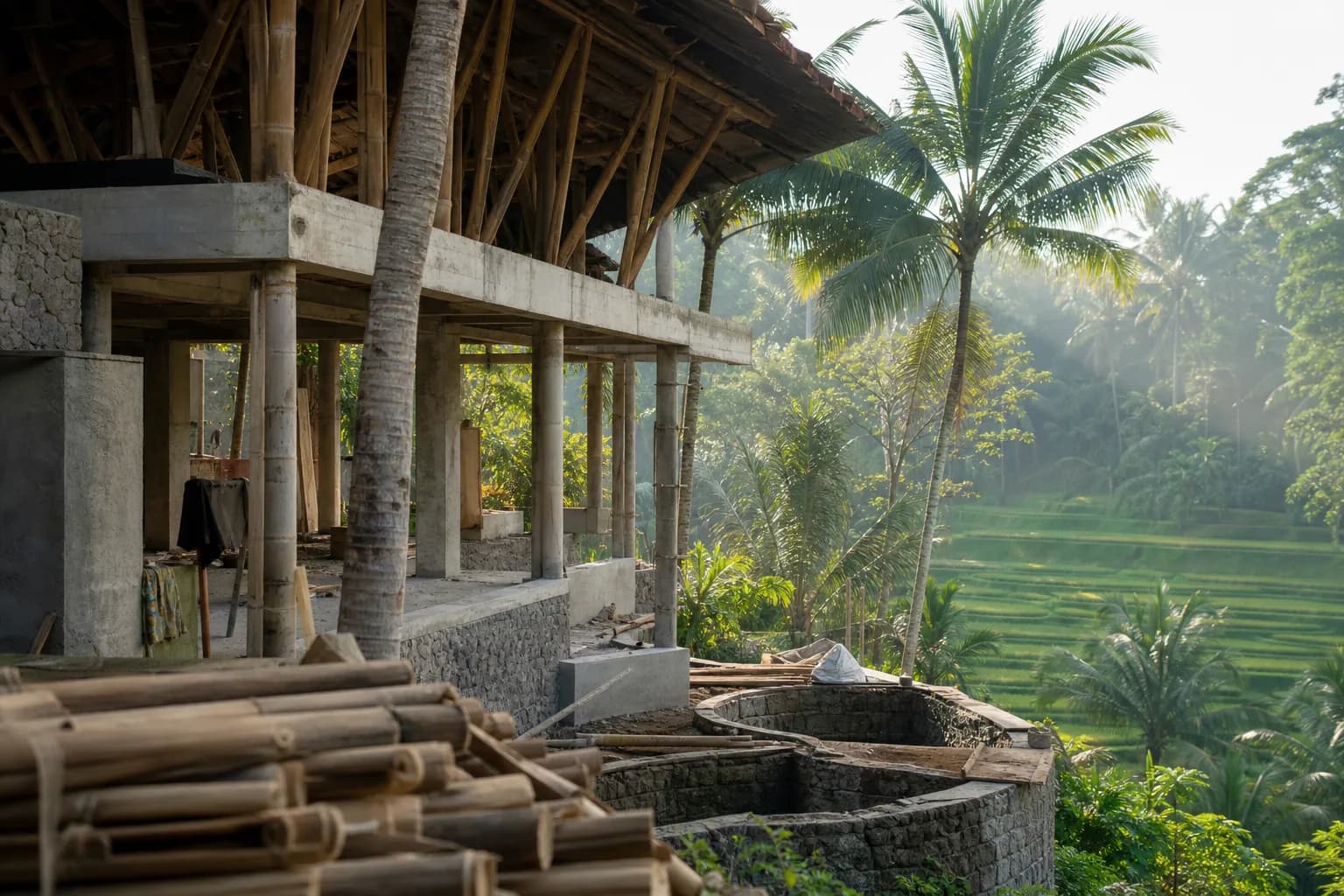
Ubud and the Wellness Market: Buying or Building for Retreats
Ubud is Bali's wellness capital, and retreat-focused property behaves differently from beach villas: longer stays, group bookings, lower volatility. Here is what the market rewards, what zoning allows, and what it costs to buy or build a retreat property in 2026.
8 min read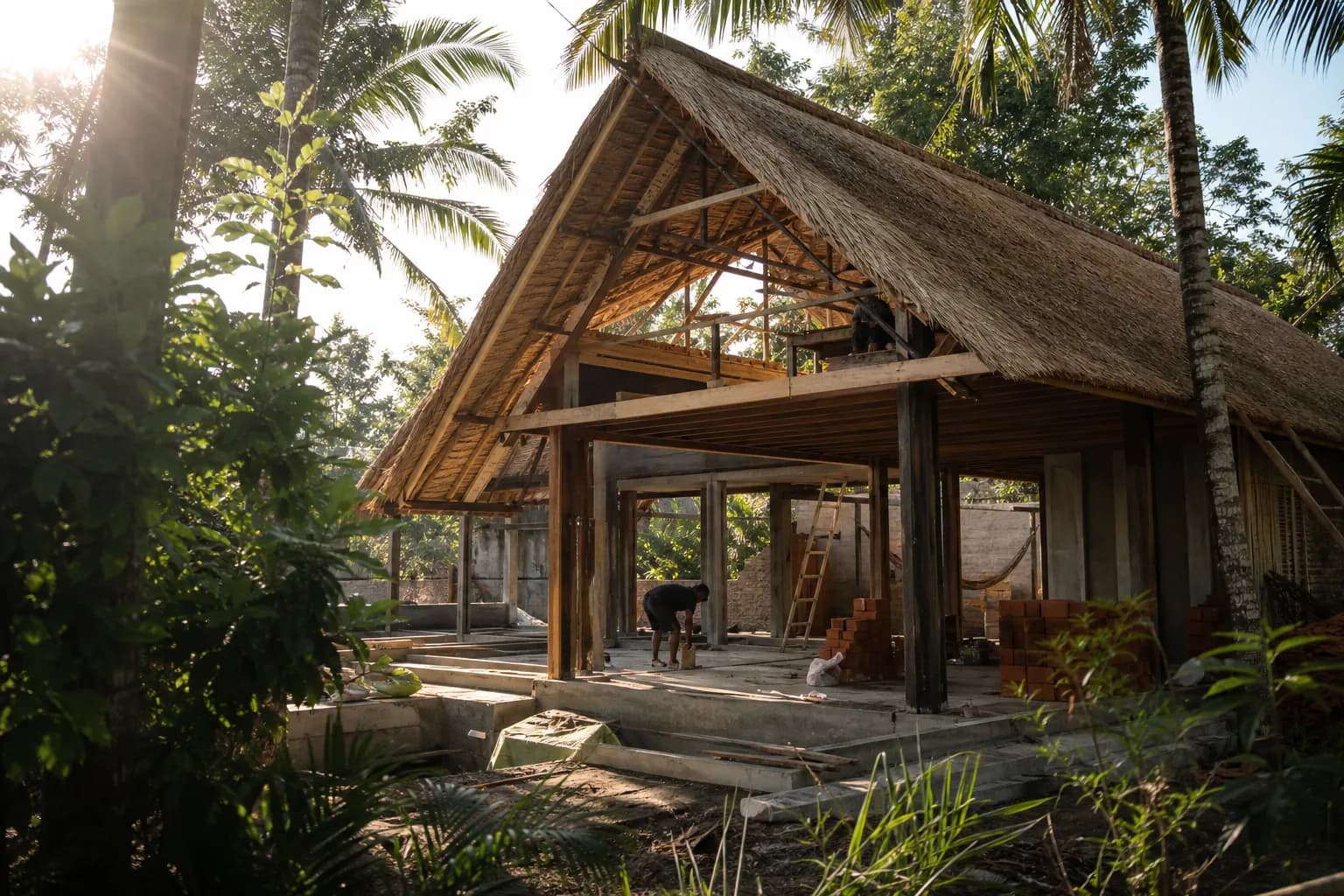
Buying and Building on the Bukit: Uluwatu, Bingin and Balangan from a Buyer's Seat
A buyer's-seat 2026 guide to the Bukit peninsula — Uluwatu, Bingin and Balangan land prices, the water problem nobody budgets, cliff setbacks after the 2025 Bingin demolitions, and how to build there properly.
7 min read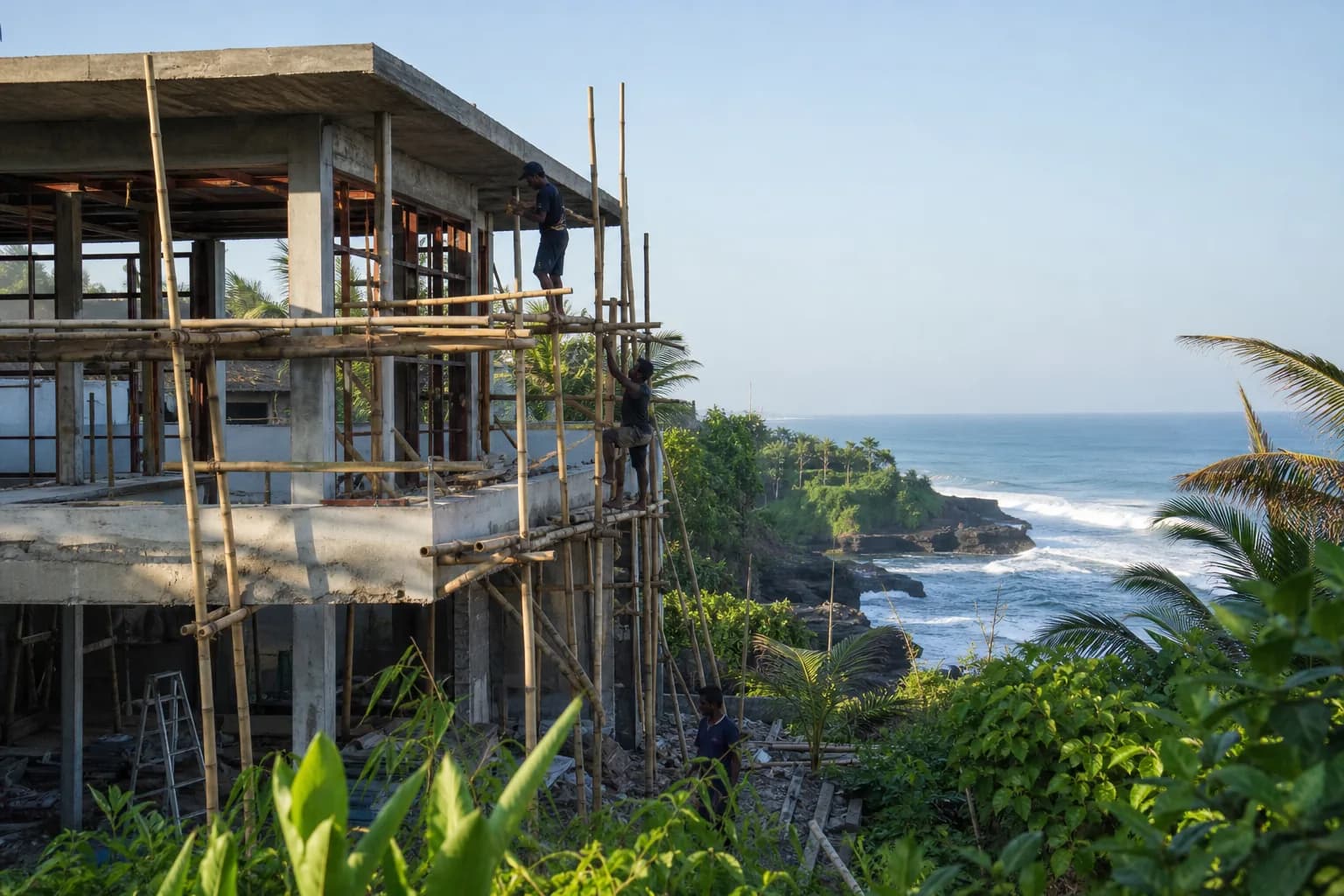
Kedungu and Nyanyi: Tabanan's Emerging Coast for Buyers and Builders
A grounded 2026 guide to Kedungu and Nyanyi on Bali's Tabanan coast — what land really costs, how Nuanu Creative City changed the market, the zoning checks that matter most, and honest rental expectations.
7 min read