Seminyak Underground Utility Fees Grid Access Delays Bali
Seminyak Underground Utility Connection Fees & Grid Access Delays Bali
Seminyak’s underground utility infrastructure presents a complex challenge for villa construction projects that most developers discover too late in the planning process. While Badung Regency has initiated infrastructure overhauls including underground cabling programs, the transition from overhead to underground systems creates a dual-cost scenario: property owners face both legacy connection fees for existing overhead systems and future upgrade costs for underground integration. Grid access delays in Seminyak currently range from 4-9 months for new villa connections, with underground utility hookups adding 30-45% to standard electrical connection budgets. The engineering reality is that Seminyak’s aging grid infrastructure, combined with rapid development density, creates bottlenecks that impact construction timelines and require strategic utility planning from the foundation design phase forward.
Technical Infrastructure Reality: Seminyak’s Underground Utility Transition
Seminyak operates within a transitional utility framework where PLN (Perusahaan Listrik Negara) is gradually implementing underground electrical distribution while maintaining legacy overhead systems. This creates engineering complications that directly impact villa construction budgets and timelines. The underground cabling initiative, part of Badung’s broader infrastructure modernization launched in 2025, prioritizes main arterial roads including Jalan Raya Seminyak, Jalan Kayu Aya, and Jalan Petitenget, but secondary access roads remain on overhead systems indefinitely.
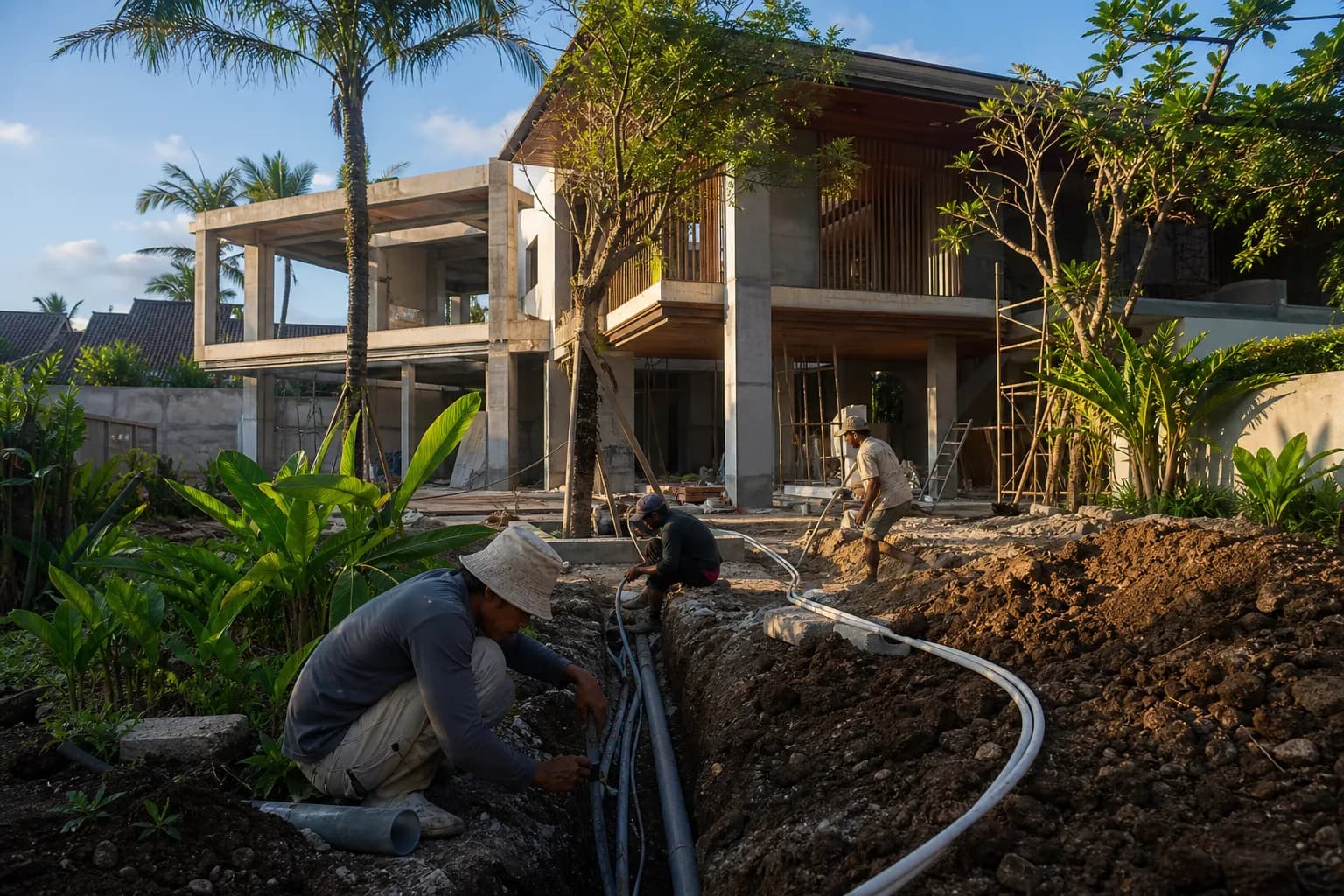
From a construction engineering perspective, the critical issue is determining which utility connection protocol applies to your specific land parcel. Properties fronting roads with completed underground infrastructure must connect via underground conduit systems, requiring trenching from the property boundary to the nearest PLN access vault—typically 15-40 meters depending on road width and vault placement. This underground connection mandates PVC conduit installation (minimum 100mm diameter for residential services), concrete encasement in high-traffic zones, and coordination with PLN’s underground access schedule, which operates on a queue system with 60-90 day lead times after application approval.
The technical specification for underground villa connections in Seminyak requires a dedicated utility trench separate from drainage systems, minimum burial depth of 80cm below finished grade, and installation of a property-side junction box that meets PLN’s IP65 weatherproof standards for tropical environments. The junction box must be accessible for PLN maintenance but secured against tampering, creating design challenges for properties with limited setback areas or complex landscaping plans.
Grid capacity is the second engineering constraint. Seminyak’s transformer stations, particularly in the high-density zones between Jalan Dhyana Pura and Jalan Camplung Tanduk, operate near capacity during peak tourist seasons. PLN’s load analysis for new connections now includes seasonal demand modeling, and properties requiring three-phase connections above 10,600 VA frequently encounter capacity allocation delays. The technical solution involves either waiting for grid capacity expansion (unpredictable timelines) or accepting single-phase service with load management systems—a compromise that impacts villa amenity planning, particularly for properties with multiple air conditioning zones, pool heating systems, or commercial kitchen equipment.
The underground water utility situation differs significantly. PDAM (Perusahaan Daerah Air Minum) maintains overhead and underground water mains, but Seminyak’s water infrastructure suffers from pressure inconsistencies due to elevation variations and aging pipe networks. Most villa projects require supplementary systems: rooftop storage tanks (minimum 2,000L for 3-bedroom villas), pressure pumps, and filtration systems. The connection fee structure for PDAM includes a capacity-based charge (per cubic meter of daily allocation) plus installation costs, but the engineering reality is that PDAM water quality and pressure make it a backup system rather than primary supply for luxury villa standards.
Fiber optic and telecommunications infrastructure in Seminyak has better underground penetration than electrical systems, with Telkom and private providers maintaining conduit networks along major roads. However, the “last mile” connection from street to property still requires trenching coordination, and properties on gang (alleyway) access often face higher installation costs due to limited conduit access and manual trenching requirements through narrow passages.
Hidden Risks: What Villa Developers Miss in Seminyak Utility Planning
The most expensive mistake in Seminyak villa construction is assuming utility connection costs match the figures quoted for other Bali regions. Seminyak’s land prices and development density create a premium cost structure for all utility services. PLN connection fees in Seminyak average 35-50% higher than comparable services in Canggu or Sanur due to underground infrastructure requirements and grid congestion surcharges.
A critical hidden risk is the timing disconnect between construction completion and utility activation. Villa projects that reach practical completion without confirmed PLN connection dates face holding costs (security, maintenance, loan interest) that can exceed IDR 15-25 million monthly for a three-bedroom property. The engineering solution is reverse-scheduling: apply for PLN connection during foundation work, not during finishing stages, to align utility activation with occupancy readiness.
Road opening permits (IMB Galian) for underground utility trenching represent another overlooked cost and delay factor. Seminyak’s municipal regulations require separate permits for any excavation in public right-of-way, with fees ranging from IDR 3-8 million depending on trench length and road classification. The permit process adds 14-21 days to connection timelines, and trenching work must be completed within the permit validity period (typically 30 days) or face renewal fees and penalties.
The technical risk of inadequate temporary power planning during construction is particularly acute in Seminyak. Grid access delays mean construction projects often rely on temporary PLN connections or generator power for 6-12 months. Generators sized for construction loads (concrete mixers, welding equipment, power tools) consume 15-25 liters of diesel daily, adding IDR 8-12 million monthly to construction operating costs. This temporary power expense rarely appears in initial budget projections but significantly impacts cash flow during the construction phase.
Step-by-Step Process: Securing Underground Utility Connections in Seminyak
The utility connection process for Seminyak villa construction requires parallel tracking of multiple applications, each with distinct timelines and technical requirements. This process should begin during the building permit (IMB) application phase, not after construction commences.
Phase 1: Pre-Construction Utility Assessment (Weeks 1-3)
Conduct a site-specific utility survey to determine existing infrastructure at your property boundary. This requires physical site inspection to identify PLN transformer locations, underground vault positions (marked by green PLN access covers), PDAM main line locations, and telecommunications conduit access points. Engage a licensed electrical consultant to perform a load calculation based on your villa design—this calculation determines whether single-phase or three-phase service is required and identifies the amperage rating needed (typically 5,500 VA for basic villas up to 16,500 VA for luxury properties with extensive amenities).
Verify with PLN’s Seminyak service office whether your property falls within an underground utility zone. This designation is not always obvious from visual inspection, as some roads have partial underground implementation. Request a written confirmation of connection requirements and current grid capacity status for your transformer zone.
Phase 2: Formal Applications and Documentation (Weeks 4-8)
Submit your PLN connection application (Permohonan Sambungan Listrik) with required documentation: land certificate copy, IMB (building permit), site plan showing utility entry point, electrical load calculation signed by a certified engineer, and applicant identification. The application fee is nominal (IDR 500,000-1,000,000), but the connection cost quotation will follow after PLN’s site assessment.
Simultaneously apply for PDAM connection if municipal water service is planned, though most Seminyak villas rely primarily on drilled wells with PDAM as backup. The PDAM application requires similar documentation plus a water usage projection based on villa capacity and amenities.
For telecommunications, apply to Telkom or private fiber providers (Biznet, MyRepublic) for service availability confirmation. Fiber installation timelines are generally shorter (4-6 weeks) than electrical connections, but coordination is essential to avoid multiple trenching operations.
Phase 3: Infrastructure Installation Coordination (Weeks 9-20)
Once PLN issues your connection approval and cost quotation, payment triggers the installation queue. For underground connections, PLN’s timeline depends on vault availability and trenching crew scheduling. Your construction team must prepare the property-side infrastructure: install the conduit from property boundary to electrical panel location, ensuring proper depth and protection, and construct the junction box to PLN specifications.
Obtain the road opening permit (IMB Galian) from Badung’s Public Works department before any trenching in public areas. This permit requires a site plan showing trench route, traffic management plan for trenching work, and restoration plan for road surface after conduit installation. The permit fee varies based on trench length but typically ranges IDR 3-8 million for standard villa connections.
Coordinate trenching schedules to combine multiple utilities where possible. Running electrical conduit, telecommunications conduit, and water lines in a single trench operation (with proper separation and marking) reduces permit costs and road restoration expenses, though it requires careful coordination between multiple utility providers.
Phase 4: Connection Activation and Testing (Weeks 21-24)
PLN’s final connection work includes installing the meter, connecting service cables, and conducting safety testing. This activation requires the property’s electrical installation to pass PLN’s inspection, which verifies proper grounding, circuit protection, and compliance with PUIL (Persyaratan Umum Instalasi Listrik) standards. Failed inspections delay activation by 7-14 days while corrections are made.
After meter installation, conduct a full load test of your villa’s electrical system under supervision of your electrical contractor. This test identifies any capacity issues, voltage drop problems, or circuit imbalances before the property enters operation. For three-phase installations, verify phase balance to prevent premature equipment failure and optimize energy efficiency.
Realistic Cost Ranges and Timeline Expectations for Seminyak
Underground utility connection costs in Seminyak vary significantly based on property location, service capacity, and infrastructure requirements. PLN connection fees for standard single-phase service (5,500 VA) range from IDR 8-12 million for overhead connections but increase to IDR 15-22 million for underground connections due to additional materials and labor. Three-phase connections (10,600-16,500 VA) required for larger villas cost IDR 28-45 million for underground installation, including the meter, service cable, and PLN’s installation labor.
Property-side infrastructure costs add substantially to these figures. Underground conduit installation from property boundary to electrical panel location costs IDR 450,000-750,000 per linear meter depending on trench depth requirements and ground conditions. A typical Seminyak villa with 25-meter setback from road to building incurs IDR 11-19 million for conduit installation alone. The junction box, grounding system, and electrical panel installation add another IDR 8-12 million to property-side costs.
Road opening permits and restoration costs range from IDR 3-8 million for standard residential connections, but properties on main roads (Jalan Raya Seminyak, Jalan Kayu Aya) face higher fees due to stricter restoration requirements and traffic management obligations during trenching work.
Timeline expectations for Seminyak underground utility connections: 4-6 months from application to activation for straightforward cases with available grid capacity, extending to 7-9 months when transformer upgrades or grid expansion is required. Properties in newly developed areas or locations requiring new transformer installations face 10-14 month timelines, as PLN’s transformer procurement and installation process operates on quarterly planning cycles.
PDAM connection fees are capacity-based, ranging from IDR 6-10 million for standard residential allocations (10-15 cubic meters daily), but installation quality and water pressure issues make this a secondary system for most luxury villas. Drilled well costs (IDR 25-45 million for 40-60 meter depth) plus storage and filtration systems (IDR 15-25 million) provide more reliable water supply for villa operations.
Frequently Asked Questions: Seminyak Underground Utility Connections
Can I start villa construction before PLN connection is confirmed?
Yes, construction can proceed with temporary power solutions, but this approach carries cost implications. Temporary PLN connections (if available) cost IDR 5-8 million for installation plus monthly service fees, or generator rental averages IDR 6-10 million monthly including fuel for construction-grade loads. The strategic approach is applying for permanent connection during foundation work to align activation with construction completion. Most experienced contractors in Seminyak plan for 6-8 months of temporary power in project budgets to avoid construction delays while permanent connections are processed.
What happens if my property is on a gang (alleyway) without underground infrastructure?
Properties on gang access typically connect via overhead lines from the nearest pole-mounted transformer, even in areas where main roads hav
 3124 m²6 month(s)from 123.000 USD
TALA 8
 3104 m²11 month(s)from 99.000 USD
TALA 100
 4344 m²16 month(s)from 290.000 USD
Radha
 2144 m²11 month(s)from 104.000 USD
Narayana

Want to calculate?
 3173 m²6 month(s)from 125.000 USD
TALA FOUR
 3180 m²7 month(s)from 142.000 USD
Vasudeva
 1from 198.000 USD
Private: Haridas Villas
 164 m²7 month(s)from 79.000 USD
Private: Haridas Villas, Tegallalang
 3127 m²9 month(s)from 177.000 USD
Mukunda
 172 m²8 month(s)from 120.000 USD
Keshava
164 m²7 month(s)from 79.000 USDTALA TWO
Start With Real Numbers, Not Guesses
Before buying land or finalizing a design, check the realistic build cost range for your project in Bali.
Our team reviews your inputs and gives a grounded estimate.
Available lands
 422 m²15 min$ 93547Bali, Kerobokan
 7250 m²56 min$ 235714Bali, Tabanan
 928 m²15 min$ 910123Bali, Pererenan
 2200 m²3 min$ 183842Bali, Berawa
 700 m²7 min$ 400000Bali, Canggu
 200 m²5 min$ 59113Bali, Bukit
 700 m²15 min$ 90517Bali, Central Bali
 700 m²15 min$ 109052Bali, Buduk
 2000 m²5 min$ 738916Bali, Ungasan
 1000 m²5 min$ 350431Bali, Drupadi
 1000 m²10 min$ 123154Bali, Jimbaran
 260 m²5 min$ 51872Bali, Kedungu
 2115 m²5 min$ 1139547Bali, Pererenan
 700 m²8 min$ 165517Bali, Umalas
 3900 m²10 min$ 432266Bali, Tabanan
Essential Bali build & buy guides
- Bali villa construction cost per m² in 2026
- How much will your villa cost? Calculator
- Building a villa in Bali: the complete guide
- Buying land in Bali: step-by-step for foreigners
- Bali villa investment: yields, risks, returns
- Leasehold vs freehold: what foreigners can own
- Construction defect liability & 10-year warranty
- Bali building codes and construction standards
Related guides
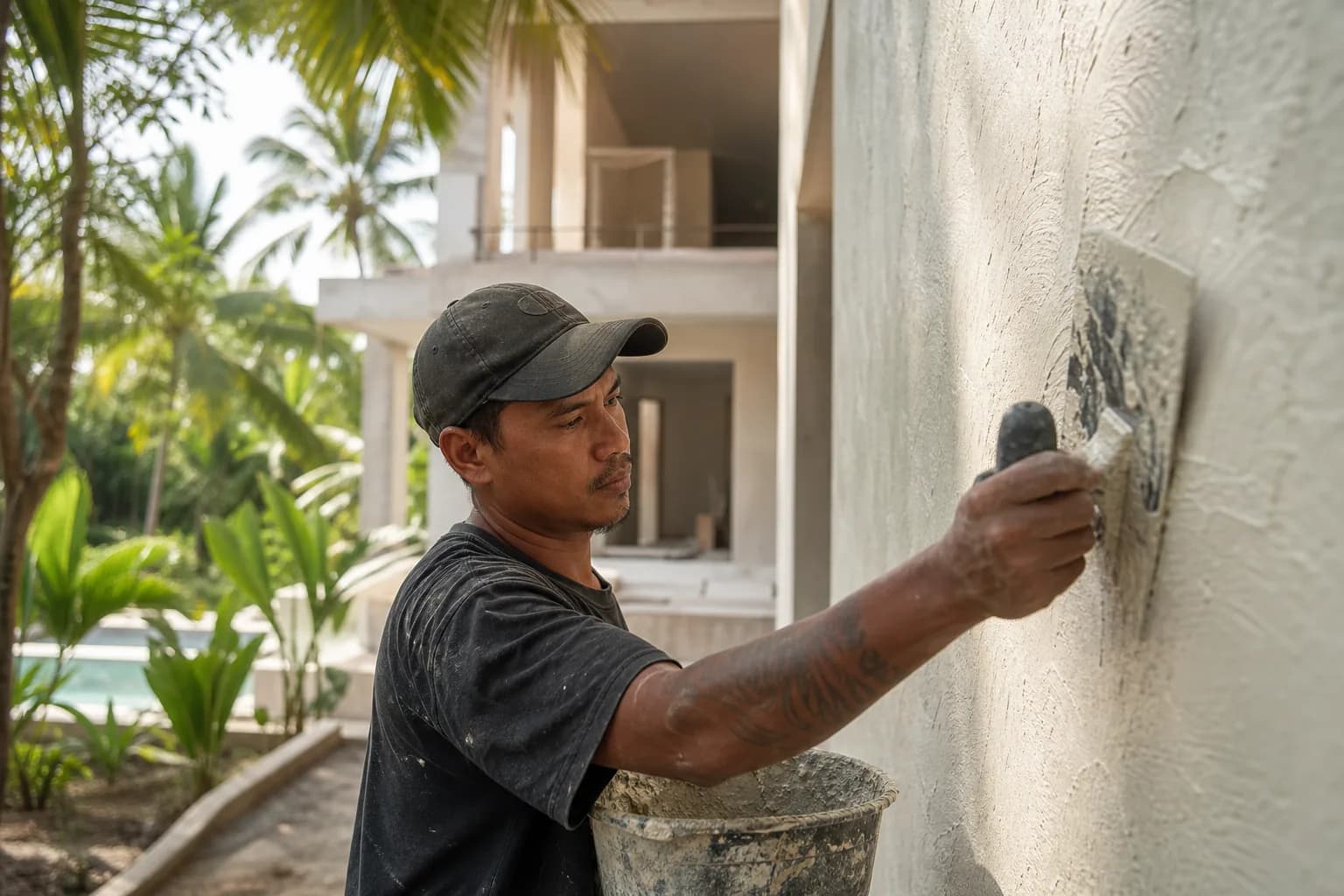
Resin-Infused Plaster Finishes: Anti-Salt Systems Bali
Expert technical guide: Resin-Infused Plaster Finishes: Anti-Salt Systems Bali
8 min read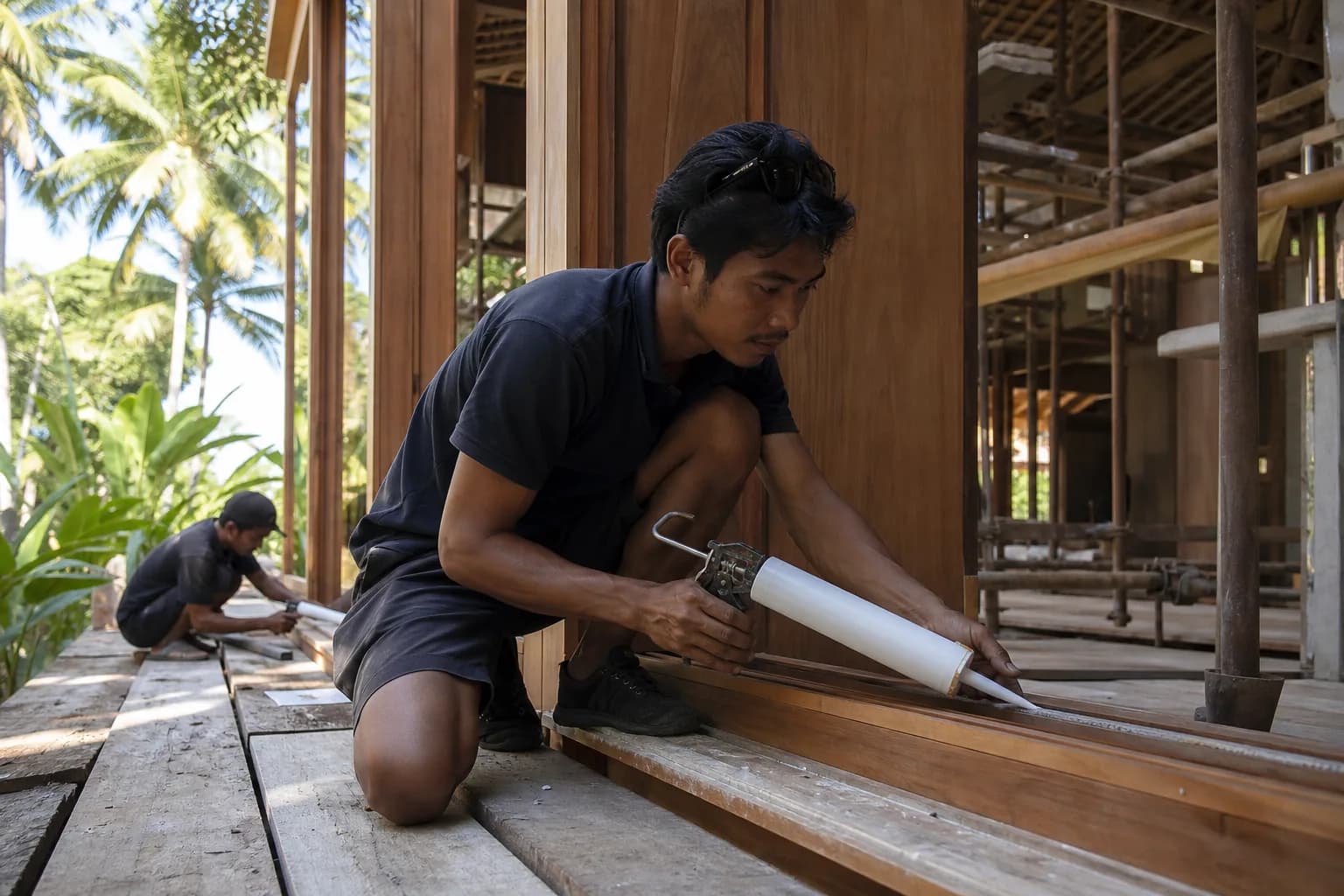
Prefinished Timber Joinery: Silicone Seals Fixings Bali
Professional prefinished timber joinery installation in Bali with silicone seals and fixings for durable weatherproof performance and a premium finish.
10 min read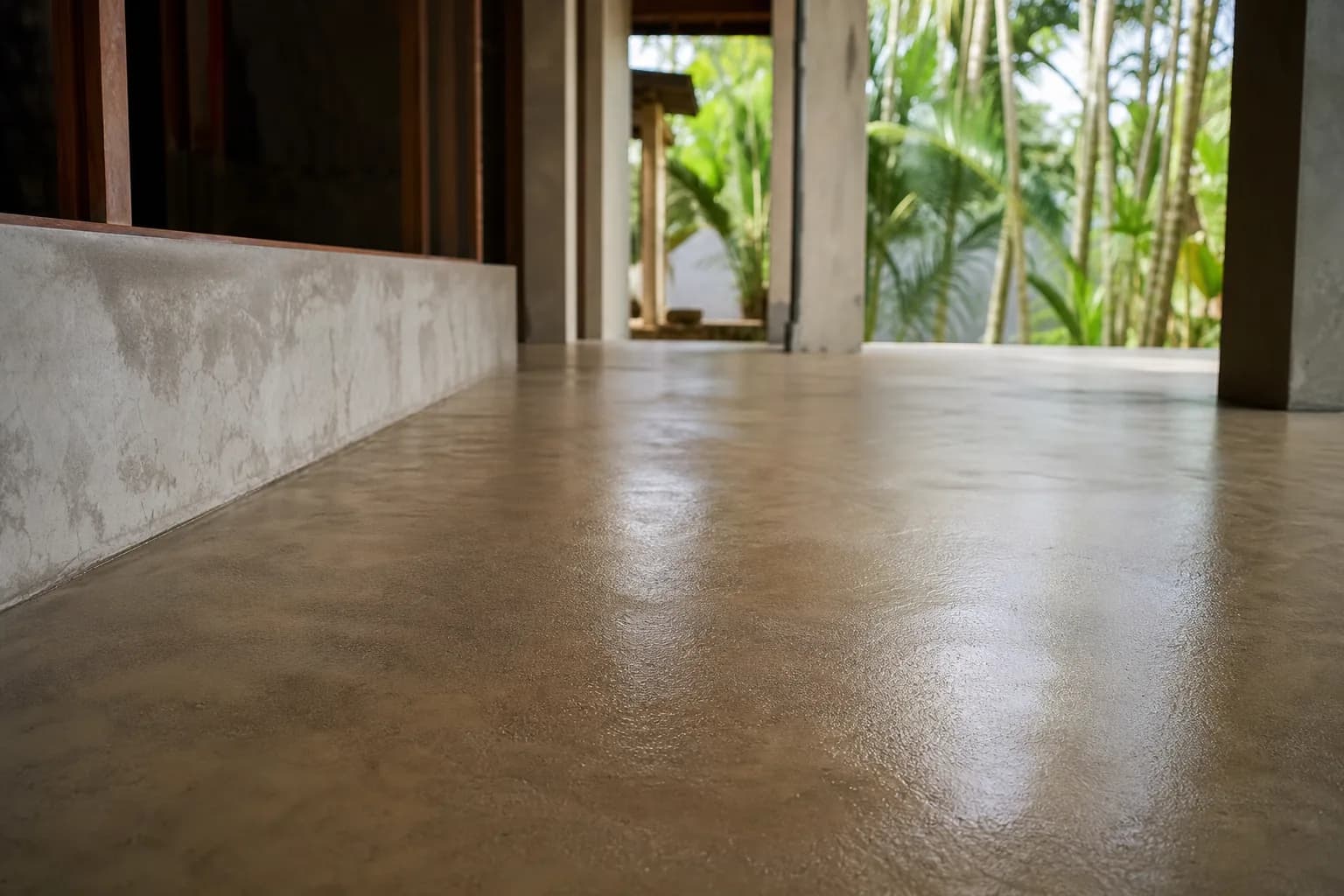
Polished Concrete Microtopping: Surface Prep Sealants Bali
Discover Bali s polished concrete microtopping: expert surface prep, durable sealants, and a flawless finish for modern floors with minimal maintenance.
9 min read