Bali Zoning for Buyers: Green Zones, Tourism Zones and ITR Explained
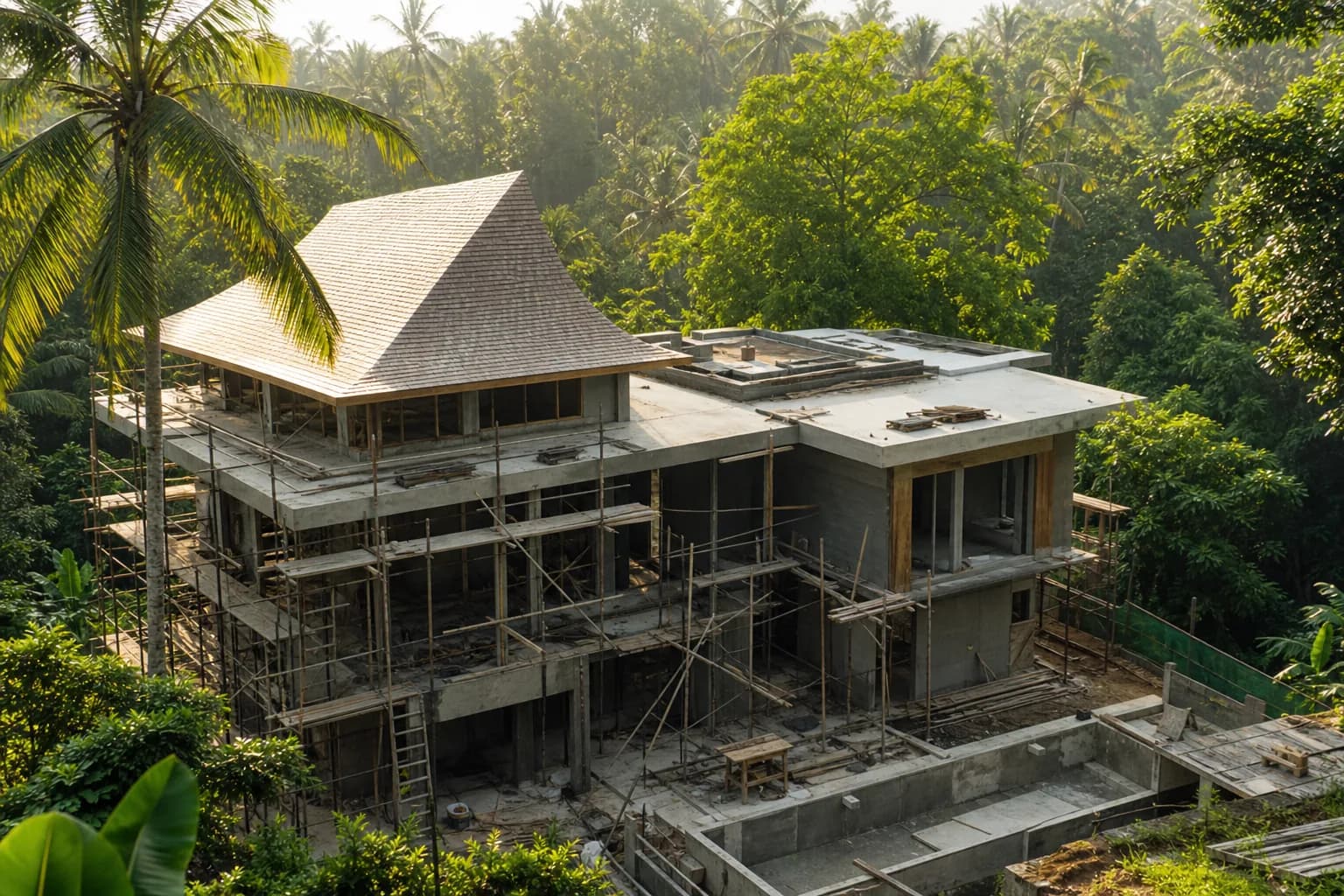
In 2025 the Bali government demolished dozens of villas, restaurants and beach clubs built where construction was never allowed. Most of those owners had certificates, contracts, and receipts — what they did not have was correct zoning. Understanding Bali zoning, and especially what a green zone means, is now the single most important legal check before buying or building on the island. This guide explains how the zoning system works, what each zone allows, and exactly how to verify a plot's status before you commit money.
How Bali zoning actually works
Every square metre of Bali is classified under government spatial plans (RTRW at province and regency level, with more detailed local plans beneath them). These plans assign each area a designated use — tourism, residential, commercial, agricultural, protected — and set building parameters like height limits, site coverage, and setbacks from rivers, cliffs, beaches and temples.
Two practical consequences follow:
- Zoning binds the land, not the owner. A freehold certificate over agricultural land does not create a right to build a villa on it. Ownership and permitted use are separate questions.
- Permits flow from zoning. The building approval (PBG) that legalizes construction — and the occupancy certificate (SLF) after it — can only be issued if the plot's zoning allows the intended use. Wrong zone means no legal permit, ever, at any price.
For decades enforcement was loose enough that people built anyway. That era is over: recent demolitions and permit audits show the spatial plans are now being enforced on the ground, not just on paper.
The zones that matter for villa buyers
Colour codes on zoning maps vary slightly between sources, but the categories a buyer needs to recognize are consistent:
| Zone | Typical designation | What it means for a villa buyer |
|---|---|---|
| Tourism zone | Zona Pariwisata (often shown pink/orange) | Best case: villa construction and short-term rental accommodation are consistent with the designated use, subject to permits. |
| Residential zone | Zona Permukiman (often yellow) | Building a home is generally supported; commercial short-term rental may need extra licensing and local approval. Check before assuming rental income. |
| Commercial / trade zone | Perdagangan dan Jasa (often red) | Shops, offices, mixed use. Villas possible in some areas but verify plot by plot. |
| Agricultural / green zone | Zona Hijau, farmland, protected areas | Construction heavily restricted or prohibited. Rice-field views are often rice-field views precisely because the land in front — or the plot itself — cannot legally be developed. |
| Protected / sacred areas | Coastal strips, river borders, temple radius, cliffs | Setback rules restrict or forbid building within defined distances even inside otherwise buildable zones. |
The trap is that green-zone land is cheap, beautiful, and often marketed aggressively — sometimes with claims that the zoning "will change soon" or that "everyone builds here". Zoning reclassification does happen, but it is a government planning decision you cannot buy, schedule, or rely on.
Why the green zone risk is no longer theoretical
In July 2025, authorities demolished dozens of structures at Bingin Beach on the Bukit peninsula — reported at around 48 buildings, including operating villas and businesses — for construction in violation of zoning and permit rules, with further sites announced for enforcement afterwards. It was a highly public signal that the province is willing to remove finished, revenue-generating buildings, not just fine them.
For buyers, the lessons are blunt:
- A finished villa, an operating business, and years of paid taxes do not legalize a building in the wrong zone.
- Buying an existing villa requires the same zoning check as buying land — you may be buying someone else's demolition order.
- Verbal assurances from sellers, agents, or even village officials do not override the spatial plan.
Bali zoning checks: how to verify before you buy
Verification is cheap and fast relative to what it protects. A proper check has three layers:
- Online map screening. Indonesia's spatial-planning ministry publishes zoning maps through public GIS portals, and Bali-specific map services exist. This is a useful first filter — if a plot shows agricultural or protected designation, you can walk away before spending anything. But public maps are indicative and sometimes outdated or low-resolution at plot scale.
- Official ITR for the exact plot. The document that matters is the ITR (Informasi Tata Ruang) — official zoning information for the specific parcel, obtained from the relevant spatial-planning authority. It states the zone designation and applicable building rules. Your notary or a spatial-planning consultant can obtain it; allow one to two weeks.
- Permit-path confirmation. For a build, confirm with your architect or contractor that the intended villa fits the zone's parameters — site coverage, height, setbacks — so the PBG application will actually pass. For an existing building, verify the PBG and SLF exist and match what was built.
At Teville, no plot enters our land catalogue without this zoning verification, alongside certificate and ownership-chain checks — it is one of the three pillars of our due diligence on every listing.
Setbacks and parameters: the zoning details that shrink your plot
Even inside a buildable zone, spatial rules define how much of the land you can use. Before you fall in love with a 1,000 m² plot, understand what is actually buildable:
- River and ravine setbacks. Plots bordering rivers carry mandatory no-build strips along the bank. On narrow riverside land this can consume a large share of the usable area.
- Coastal and cliff setbacks. Beachfront and clifftop land — the most expensive views in Bali — carries the strictest setback rules. Verify the buildable line before paying a premium for frontage.
- Temple proximity. Sacred sites carry protective radii that restrict development nearby.
- Height limits. Bali famously restricts building height island-wide (the traditional benchmark is roughly the height of a coconut palm, applied through local rules). Plan for low-rise; do not assume a rooftop third floor.
- Site coverage and floor-area ratios. Local plans cap what percentage of the plot may be built on. This directly determines the villa size you can put on a given plot — and therefore the construction budget you should model in our villa cost calculator.
Red flags when a listing meets a zoning map
Patterns we see repeatedly in listings that fail zoning checks:
- Price well below the area's market. Cheap land in an expensive area usually has a reason, and zoning is the most common one.
- "Zoning change coming" as a selling point. Treat any pitch built on a future reclassification as speculation, priced accordingly — which usually means not priced for you.
- Pressure to skip the ITR. A seller who resists a two-week official check is telling you what it will say.
- "Build first, legalize later." Retroactive legalization of a building in a non-conforming zone is not a plan; it is the exact scenario the 2025 demolitions punished.
- Existing villa with no PBG/SLF. Missing permits on a finished building can mean the permits were never obtainable.
FAQ: Bali zoning and green zones
What is a green zone in Bali?
Green zone commonly refers to land designated for agriculture, open space, or environmental protection in Bali's spatial plans, where construction is heavily restricted or prohibited. It exists to protect rice fields, water systems, and the island's landscape. Buying green-zone land to build a villa is the highest-risk mistake in Bali property — permits are unavailable and enforcement now includes demolition.
How do I check the zoning of a specific plot?
Screen it first on public GIS zoning maps, then have your notary or a spatial-planning consultant obtain the official ITR (zoning information) for the exact parcel from the local planning authority. Only the plot-specific official document is reliable for a purchase decision — public map colours are indicative and can be outdated at parcel scale.
Can zoning change after I buy?
Spatial plans are reviewed and revised periodically, so designations can change over time — in both directions. You cannot rely on a favourable change, and an unfavourable one generally will not retroactively outlaw a properly permitted existing building, though it can affect rebuilding and expansion. Buy land that works under today's plan, with permits secured before construction.
Is tourism zoning required to rent my villa on Airbnb?
Short-term rental sits most comfortably in tourism-designated zones, and rental licensing is tied to location and permits. In residential zones the position is more restrictive and depends on local rules and the licence type available. If rental income is central to your plan, verify the zone and the licensing path before buying, not after.
How Teville fits in
Teville builds villas in Bali as a general contractor, and zoning verification is built into how we work: every plot in our catalogue of 100+ vetted leasehold plots passes an ITR and due diligence check before listing, and every project we design is planned to fit the zone's parameters so the PBG and SLF permits go through cleanly. If you want land you can actually build on — or a zoning reality-check on a plot you are considering — contact us or browse more guides.
Essential Bali build & buy guides
- Bali villa construction cost per m² in 2026
- How much will your villa cost? Calculator
- Building a villa in Bali: the complete guide
- Buying land in Bali: step-by-step for foreigners
- Bali villa investment: yields, risks, returns
- Leasehold vs freehold: what foreigners can own
- Construction defect liability & 10-year warranty
- Bali building codes and construction standards
Related guides
Visas and Bali Property: What Ownership Does and Does Not Give You
Buying a Bali villa does not grant you residency — a persistent myth that sells property. What the investor KITAS and the second-home visa actually require in 2026, how property fits into each pathway, and how to plan a build alongside a visa strategy.
8 min read
Bali Property Contracts and Indonesian Language Law: Dual-Language Pitfalls That Void Deals
Indonesian law requires property agreements with Indonesian parties to exist in Indonesian — and the two language versions can quietly diverge. What the language law demands in 2026, the real court history, and the dual-language pitfalls that damage Bali deals.
8 min read
Bali Land Certificates Decoded: SHM, HGB, Hak Pakai and Girik Explained for Buyers
A buyer's decoder for Bali land certificates: what SHM, HGB, Hak Pakai and girik actually mean, why girik lost standalone legal force in February 2026, and how to verify a title before you commit.
9 min read