Bali Land Due Diligence Checklist 2026: What to Verify Before You Buy
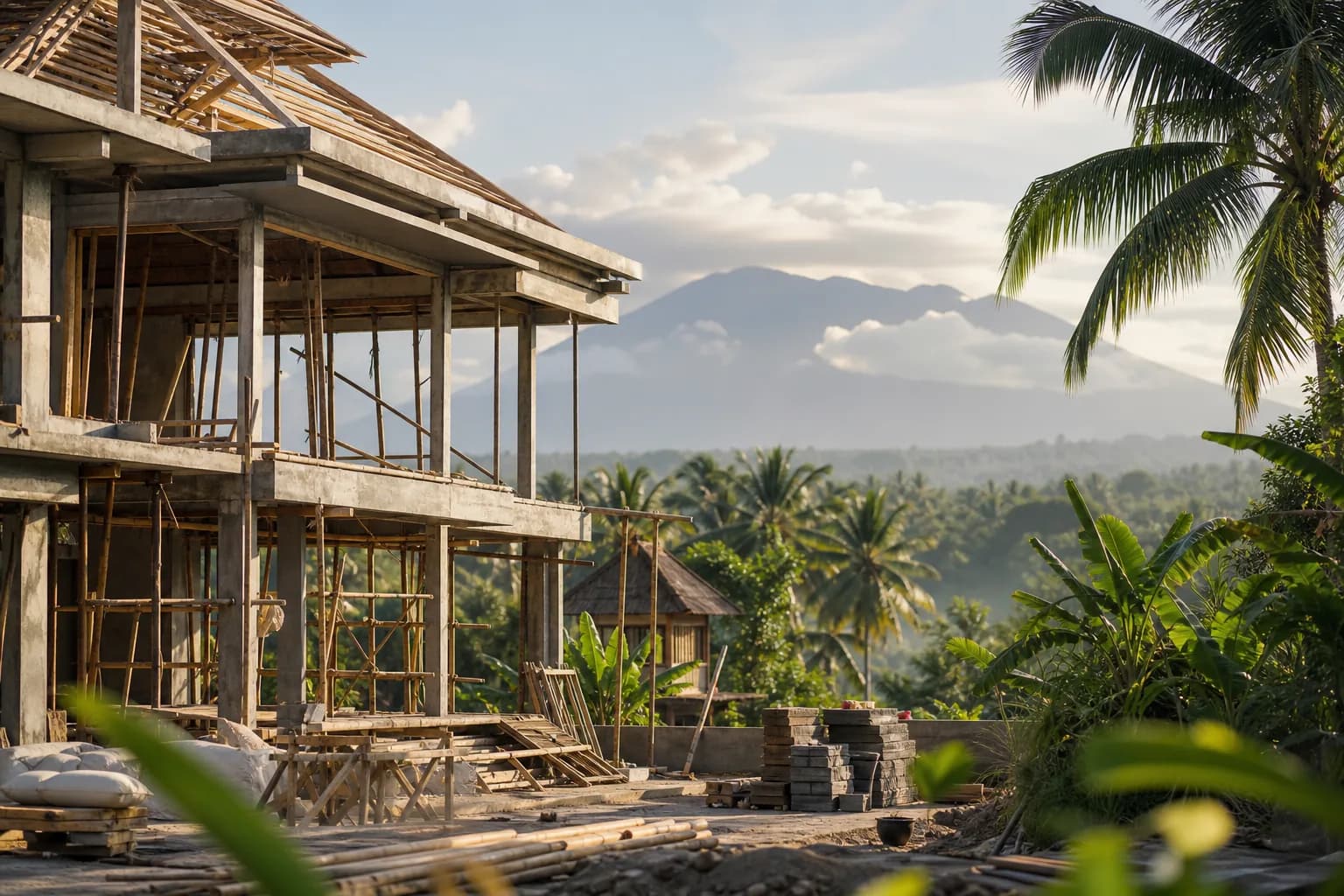
Most Bali property horror stories trace back to the same root cause: money moved before the land was checked. A disciplined Bali land due diligence process is not bureaucratic theatre — it is the only thing standing between you and a plot with a forged certificate, a seller who does not fully own it, or zoning that forbids the villa you plan to build. This 2026 checklist walks through every check a careful buyer (or their notary and legal team) should complete before a single dollar leaves escrow.
At Teville we run this process on every plot before it reaches our catalogue of vetted leasehold land — certificate check, zoning/ITR, and ownership chain are non-negotiable. Whether you buy through us or elsewhere, the checklist below is the standard you should hold any transaction to.
Why Bali land due diligence is different in 2026
Indonesia's land system mixes registered certificates, older unregistered village records, customary (adat) claims, and family co-ownership. Layer on top of that a spatial-planning regime that the Bali government now actively enforces — including the widely reported demolition of dozens of non-compliant structures in the Bukit area in 2025 — and you get a market where the paperwork matters as much as the view.
Three things changed the risk picture recently:
- Zoning enforcement is real now. Authorities have moved from warnings to demolitions of buildings in prohibited zones, so a zoning error is no longer a theoretical risk.
- Verification got easier. Certificate data can be cross-checked through the national land agency (BPN), and official zoning information is accessible online and through formal information requests.
- Prices rose, so fraud pays better. Double selling, inflated claims about buildability, and "certificate in process" stories all target buyers who skip verification to move fast.
Professional due diligence typically takes one to three weeks and costs a small fraction of the purchase price. Skipping it to save that time is the most expensive shortcut in Bali real estate.
Step 1: verify the certificate at BPN
Every legitimate transaction starts with the land certificate. Your notary (PPAT) should run a formal check with the National Land Agency (Badan Pertanahan Nasional, BPN) — not just look at a photocopy from the seller. The check should confirm:
- Authenticity. The certificate number exists in the BPN registry and has not been flagged as forged, duplicated, or reported lost.
- Certificate type. Freehold (SHM/Hak Milik), right-to-build (HGB), right-to-use (Hak Pakai), or unregistered land under older records. The type determines what a foreigner can legally do with it.
- Registered owner. The name on the certificate matches the person signing your agreement — verified against their ID (KTP) and family card.
- Boundaries and area. The measured plot on the certificate matches what you are shown on the ground. Discrepancies between the fence line and the certificate drawing are common and must be resolved before signing.
Treat any reluctance to allow a BPN check as a deal-breaker. A genuine owner has nothing to hide from the land office.
Step 2: zoning and ITR — can you actually build?
A clean certificate on unbuildable land is still a bad purchase. Before committing, obtain the official zoning information (ITR — Informasi Tata Ruang) for the exact plot and confirm it against your intended use:
- Tourism or residential zoning generally supports villa construction and, in tourism zones, short-term rental operation.
- Green/agricultural zones heavily restrict or prohibit construction. Sellers sometimes claim "everyone builds here anyway" — the 2025–2026 enforcement wave shows how that ends.
- Setbacks and restrictions. River borders, cliff edges, roads, and sacred sites carry mandatory setback distances that can shrink your buildable footprint dramatically.
- Building parameters. Height limits and site-coverage ratios in the local spatial plan determine how many square metres you can actually build — which drives the budget you can model in a villa cost calculator.
Do not rely on a screenshot of an online zoning map alone. Colours on public maps are indicative; the plot-specific ITR statement from the relevant spatial-planning office is what your permit application will be judged against.
Step 3: trace the ownership chain
The person selling must have the full, undisputed right to sell — and in Bali that is less obvious than it sounds. Your legal team should verify:
- How the current owner acquired the land — purchase deed, inheritance, grant — and that each historical transfer was properly documented and registered.
- Spousal consent. Under Indonesian marital-property rules, a married seller usually needs the spouse's written consent. Missing consent is a classic ground for a deal being challenged later.
- Heirs and family claims. Inherited land often has multiple heirs. Every heir with a claim must sign or formally waive; one missing signature can unwind a sale years later.
- Village and adat context. For land close to temples or held under customary arrangements, confirm there are no communal claims or obligations attached to the plot.
- For leasehold: if you are taking over an existing lease, verify the original lease deed, the landowner's consent to assignment, and that the remaining term is what the seller claims.
Step 4: debts, disputes and unpaid taxes
Land can carry invisible liabilities that transfer with it or block the transaction entirely. The due diligence file should confirm:
- No mortgage or lien. A BPN check reveals whether the certificate is pledged as loan collateral (Hak Tanggungan). Encumbered land cannot cleanly transfer until the lender releases it.
- No court blocks or disputes. Ongoing litigation, inheritance disputes, or administrative blocks registered against the plot.
- Land tax (PBB) paid up. Ask for recent annual land-and-building tax receipts. Arrears are usually small money, but they signal a disorganized or distressed seller — and must be settled before transfer.
- No overlapping claims. In some areas, two parties hold documents over overlapping plots. A field survey cross-checked against BPN mapping catches this.
Step 5: physical, access and utility checks
Paper checks are half the job. Walk the land — or have someone independent do it — with a checklist:
- Legal access. Is the access road public, or does it cross private land? If private, you need a registered right of way, not a handshake. Landlocked plots are heavily discounted for a reason.
- Road width. Construction trucks need workable access; a 1.5-metre lane means higher build costs and delivery constraints.
- Water and power. Confirm realistic options: mains water or well (and at what depth), electricity connection distance and capacity.
- Flood and drainage. Visit in or ask about the rainy season. Low-lying plots near rivers and rice-field runoff can flood.
- Slope and soil. Steep or filled land can add serious foundation and retaining-wall cost — a factor we price explicitly when planning builds across our villa projects.
- Neighbours and noise. Planned construction next door, a nearby event venue, or a temple's ceremony schedule all affect rental performance later.
The 2026 due diligence checklist at a glance
| Check | What you verify | Who performs it |
|---|---|---|
| Certificate check | Authenticity, type, registered owner, boundaries at BPN | Notary/PPAT |
| Zoning / ITR | Zone allows villa use; setbacks; buildable area | Notary or spatial-planning consultant |
| Ownership chain | Historic transfers, spousal consent, heirs, adat claims | Legal counsel |
| Encumbrances | Mortgages, liens, court blocks, disputes | Notary/PPAT via BPN |
| Taxes | PBB receipts current, no arrears | Legal counsel / seller documents |
| Physical survey | Access, utilities, flood, slope, boundary match | Surveyor / contractor |
| Lease terms (if leasehold) | Remaining term, extension clause, assignment rights | Legal counsel |
How to structure the deal so due diligence protects you
The sequence matters as much as the checks themselves. Best practice in 2026 looks like this:
- Sign a conditional agreement first. A short binding memorandum or preliminary agreement should make the purchase conditional on due diligence results, with your deposit fully refundable if checks fail.
- Deposit goes to notary escrow — never to the seller. A typical deposit is around 10%. It should sit in the notary's escrow account until conditions are met.
- Run all checks in parallel. Certificate, zoning, ownership chain, and physical survey can run simultaneously; expect one to three weeks.
- Renegotiate or walk on findings. Minor issues (small tax arrears, a boundary marker to reset) are fixable and priceable. Structural issues — disputed ownership, prohibited zoning, no legal access — are walk-away findings, whatever the discount.
- Close only on verified documents. The final deed is signed only after every condition in the preliminary agreement is documented as satisfied.
If you are buying from abroad, this entire sequence can be executed remotely through a properly drafted Power of Attorney — our guides section covers the remote purchase process in detail.
FAQ: Bali land due diligence
How long does Bali land due diligence take?
Typically one to three weeks for a straightforward plot with a registered certificate. Complications — multiple heirs, unregistered land, boundary discrepancies, or a slow response from the land office — can extend this. Build the timeline into your preliminary agreement so your deposit stays protected in escrow while checks complete.
How much does due diligence cost?
Legal and notary due diligence on a Bali plot is generally a small fraction of the purchase price — commonly in the range of a few hundred to a couple of thousand US dollars depending on complexity, plus survey costs. Against the downside of buying disputed or unbuildable land, it is the cheapest insurance in the entire transaction.
Can I rely on the agent's or seller's documents?
No. Photocopies prove nothing — certificates must be verified directly with BPN through your own notary, and zoning must come from an official ITR statement for the specific plot. A seller or agent may be honest, but due diligence exists precisely so you never have to depend on that assumption.
What are absolute walk-away findings?
Prohibited zoning for your intended use, a certificate that fails BPN verification, an unresolved ownership dispute or missing heir consent, no legal access to the plot, and a seller refusing escrow or independent checks. These are not negotiation points — no discount compensates for land you may lose or never be allowed to build on.
How Teville fits in
Teville has built villas in Bali since 2018, and every one of the 100+ leasehold plots in our land catalogue has already passed this exact due diligence — certificate check, zoning/ITR, and ownership chain — before we list it. If you want a plot that is verified before you ever see it, or a second opinion on land you found elsewhere, talk to our team.
Essential Bali build & buy guides
- Bali villa construction cost per m² in 2026
- How much will your villa cost? Calculator
- Building a villa in Bali: the complete guide
- Buying land in Bali: step-by-step for foreigners
- Bali villa investment: yields, risks, returns
- Leasehold vs freehold: what foreigners can own
- Construction defect liability & 10-year warranty
- Bali building codes and construction standards
Related guides
Visas and Bali Property: What Ownership Does and Does Not Give You
Buying a Bali villa does not grant you residency — a persistent myth that sells property. What the investor KITAS and the second-home visa actually require in 2026, how property fits into each pathway, and how to plan a build alongside a visa strategy.
8 min read
Bali Property Contracts and Indonesian Language Law: Dual-Language Pitfalls That Void Deals
Indonesian law requires property agreements with Indonesian parties to exist in Indonesian — and the two language versions can quietly diverge. What the language law demands in 2026, the real court history, and the dual-language pitfalls that damage Bali deals.
8 min read
Bali Land Certificates Decoded: SHM, HGB, Hak Pakai and Girik Explained for Buyers
A buyer's decoder for Bali land certificates: what SHM, HGB, Hak Pakai and girik actually mean, why girik lost standalone legal force in February 2026, and how to verify a title before you commit.
9 min read