Financing a Bali Villa: Why the Market Is Cash-Only for Foreigners — and the Realistic Alternatives
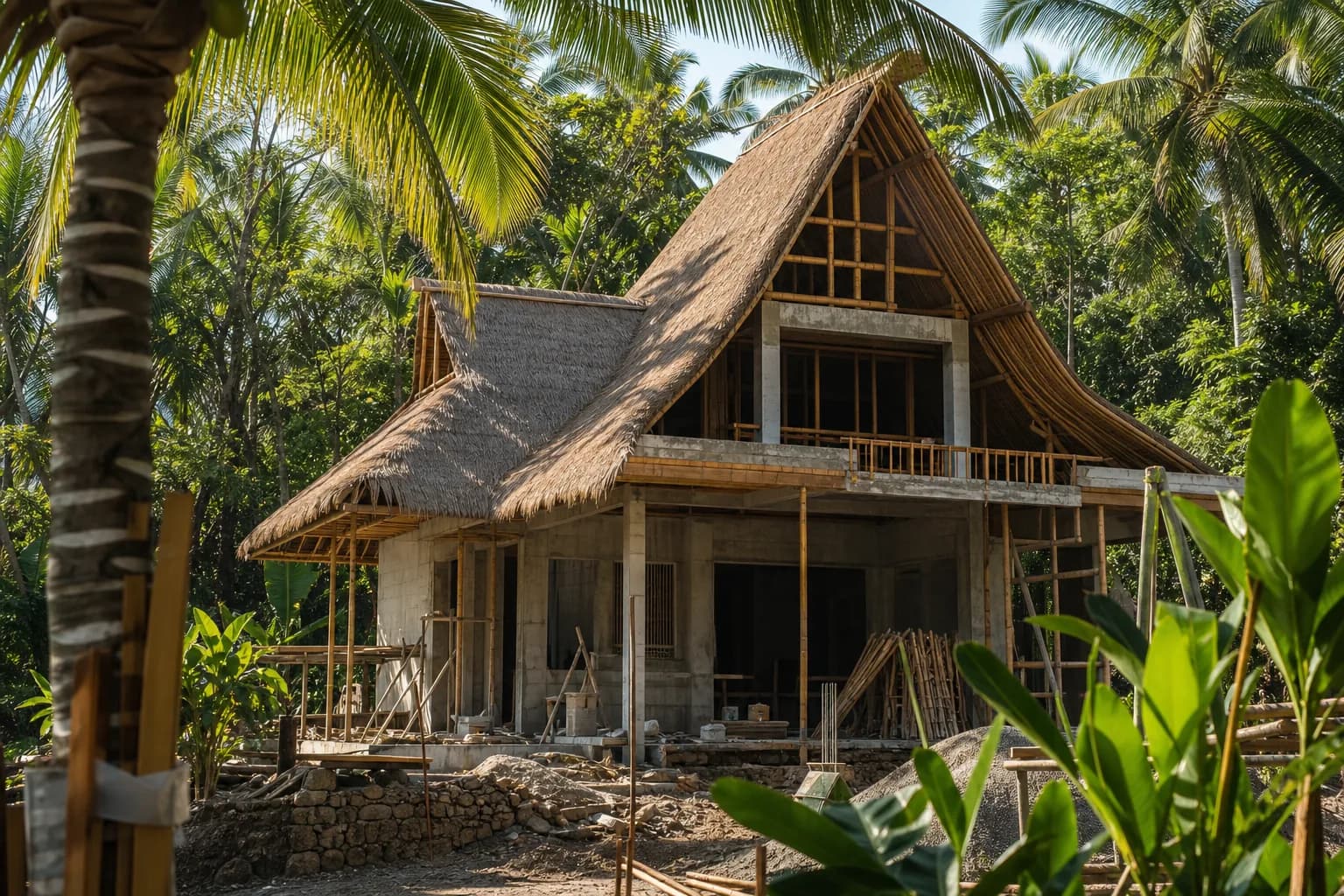
Ask any agent about Bali property financing for foreigners and you will get the same short answer: bring cash. It is mostly true — there is no Bali equivalent of walking into a bank and mortgaging 80% of a villa at 4% over 25 years — but "mostly true" is not the whole story. In 2026 there are a handful of genuine bank products for resident foreigners, several financing-shaped alternatives that work in practice, and a lot of dangerous improvisations dressed up as "developer financing". This guide explains why the market is structured the way it is, what actually exists, and how buyers realistically fund a Bali villa without a local mortgage.
Why Bali property financing for foreigners barely exists
Three structural reasons, none of them going away soon:
- Collateral law. Indonesian banks secure home loans against registered titles. Foreigners mostly hold leaseholds — contractual rights, not registered titles — which are weak collateral. Even foreigner-accessible titles like Hak Pakai or company-held HGB are unfamiliar, harder-to-liquidate security for a domestic bank.
- Flight risk pricing. A borrower who can leave the country is a different credit animal than a local salary earner. Banks that do lend to foreigners demand residence permits (KITAS/KITAP), local income history and large equity buffers.
- A cash-liquid market. Bali's villa market grew up on cash buyers — so sellers, developers and notaries built their entire transaction culture around full payment or short instalment schedules, not 20-year amortisation.
The consequence: the honest baseline assumption for a foreign buyer in 2026 is 100% equity funding — your capital, structured sensibly. Everything below is about how to make that easier, safer, or partially financed.
What actually exists: the realistic options in 2026
1. Indonesian bank mortgages — narrow, but no longer mythical
A small number of Indonesian banks now offer home financing to foreigners, and 2025 saw the first dedicated expat mortgage product launched by a major bank — structured under Islamic-finance rules and aimed at KITAS/KITAP holders. The common shape of these products:
- Residence permit required (KITAS or KITAP), often with local income or business history of several years.
- Minimum property values that exclude budget purchases — commonly in the billions of rupiah, with higher thresholds applied to houses in Bali.
- Loan-to-value around 50–60%, i.e. you still bring 40–50% equity.
- Shorter tenors and higher rates than Western mortgages; documentation in Indonesian.
Verdict: worth investigating if you already live and earn in Indonesia; not a plan you should build a purchase around from abroad. Requirements shift bank by bank and year by year — verify current terms directly with the bank before counting on any of it.
2. Home-country financing — the most common "mortgage" in Bali
The single most used financing route is borrowing against assets where you have credit history: a home-equity line or remortgage on property in your own country, a securities-backed loan, or a business facility. Advantages: rates and terms from a mature market, no dependency on Indonesian collateral law, and you arrive in Bali as what the market respects most — a cash buyer with negotiating power. The discipline required: currency risk is now yours (you owe euros or dollars against an asset earning rupiah-linked income), so stress-test repayments against a weaker rental year.
3. Developer and contractor instalment plans — financing-shaped, not financing
Most "financing available" claims in Bali marketing mean staged payments during construction: a deposit, then instalments over the 12–24 months of a build, occasionally with a tail after handover. Two very different versions exist:
- Construction-linked schedules, where each payment unlocks against verified physical progress — foundation, structure, roof, finishing, handover. This is the healthy version: your cash exposure tracks the value actually built. It is how Teville structures every project — a typical 6-stage milestone schedule where you pay as work progresses, documented at each stage.
- Time-based schedules, where payments fall due on calendar dates regardless of progress. This shifts construction risk onto you: if the site stalls, your money keeps flowing. Treat pure time-based plans, especially with large upfront percentages, as a risk flag, not a convenience.
Understand clearly: instalments spread your cash flow across the build period — they do not reduce the total or create leverage. But for many buyers, paying a Premium-tier build ($900–1,300/m²) over 8–16 months from income and savings is precisely the affordability mechanism they were looking for a mortgage to provide. Model it concretely with the villa cost calculator.
4. Seller instalments on leasehold land
Some landowners will accept a lease price paid in two or three tranches, documented by the notary with rights transferring appropriately as payments complete. Less common in hot areas, more available on larger or slower-moving plots. Everything depends on drafting: what you own if you stop paying, and what the owner owes you if they default, must be explicit. Never structure this on trust; structure it on the deed.
5. Partnerships and co-investment
Splitting a villa between two or three investors — via a jointly held PT PMA or carefully drafted lease and cost-sharing agreements — is a legitimate way to reach the market with less capital each. The failure mode is never the money; it is the unwritten exit. Fix in advance: who can force a sale, how valuation works, who operates the rental, what happens on death or divorce. Inheritance and exit mechanics deserve their own reading in our guides.
Comparing the routes honestly
| Route | Leverage | Availability for non-residents | Main risk |
|---|---|---|---|
| Indonesian bank mortgage | Up to ~50–60% LTV | No — residents (KITAS/KITAP) only | Strict eligibility; documentation; rate levels |
| Home-country equity release | Depends on your assets | Yes | Currency mismatch; your home asset at stake |
| Construction-linked instalments | None (cash-flow spreading) | Yes | Contractor quality — mitigated by milestone verification |
| Time-based developer plans | None | Yes | Paying ahead of progress; developer solvency |
| Seller instalments on land | Partial deferral | Yes, case by case | Weak drafting; default mechanics |
| Co-investment | Shared capital | Yes | Partner disputes; exit ambiguity |
What to avoid
- Private "loans" from local intermediaries secured by side letters — unenforceable, expensive, occasionally predatory.
- Nominee arrangements as a financing hack. Putting property in a local person's name to access local credit compounds an already-illegal ownership structure with a lender's claim on an asset that was never securely yours.
- Deposits into unverified off-plan projects sold as "easy payment plans". A payment plan is only as good as the builder's balance sheet and your contract's progress protections. Vet the builder as if the plan did not exist — track record, completed projects you can visit (see how a contractor presents finished work in a portfolio), permits in place before money moves.
- Stretching to buy with zero reserves. Furnishing, licensing, and the first slow season all cost money after handover. Arriving at completion with an empty account is how good purchases become distressed sales.
A realistic funding plan for a 2026 buyer
- Price the whole project first: land lease + construction ($600–800/m² Essential, $900–1,300/m² Premium, $1,400–2,000/m² Luxury) + closing costs + furnishing + licensing + a 10–15% contingency.
- Decide your capital source: savings, home-country borrowing, or partners — and lock its cost and currency plan before committing to anything in Bali.
- Use construction itself as your instalment plan: with a milestone-based contract over 8–16 months, a build spreads outflows naturally and keeps every payment tied to verified progress.
- Keep the land deal clean and vetted — a legally screened leasehold from a curated source like Teville's land catalogue is the asset your whole plan stands on.
How Teville fits in
Teville cannot lend you money — nobody in Bali honestly can, for most foreign buyers — but our milestone-based contracts do the next best thing: they spread payment across a 6-stage schedule tied to verified construction progress, so your capital is never far ahead of the value standing on site. Talk to us about phasing a build around your cash flow.
FAQ: financing a Bali villa
Can a foreigner get a mortgage in Bali in 2026?
Only in narrow cases. A few Indonesian banks lend to foreigners holding KITAS/KITAP residence permits, with local income history, high minimum property values and roughly 40–50% down. A non-resident buying from abroad will not qualify. Most foreign buyers fund purchases with their own capital or by borrowing against assets in their home country.
Is "developer financing" in Bali real financing?
Usually it is a staged payment plan during construction, not a loan — you still pay 100% of the price, just spread over the build. The healthy version links every payment to verified construction milestones; the risky version bills on calendar dates regardless of progress. Read which one you are being offered before treating it as a benefit.
What deposit and payment schedule is normal for a Bali build?
Market practice is an initial payment at contract signing followed by instalments at physical milestones — foundation, structure, roof, finishing — with a final payment at handover; construction typically runs 8–16 months. Teville uses a 6-stage milestone schedule where each payment follows documented progress. Be wary of any schedule demanding most of the money before the structure exists.
Should I borrow at home to buy in Bali?
It is the most common route, because you get mature-market rates and arrive as a cash buyer. The discipline it requires: you carry currency risk between your loan and a rupiah-linked asset, and your home property secures the debt. Borrow conservatively, stress-test against a weak rental year, and never rely on projected Bali income to service the loan.
Essential Bali build & buy guides
- Bali villa construction cost per m² in 2026
- How much will your villa cost? Calculator
- Building a villa in Bali: the complete guide
- Buying land in Bali: step-by-step for foreigners
- Bali villa investment: yields, risks, returns
- Leasehold vs freehold: what foreigners can own
- Construction defect liability & 10-year warranty
- Bali building codes and construction standards
Related guides
Bali Rental Income Tax and Compliance Costs: The 10% Rule and the Real Math
How Bali rental income is really taxed in 2026 — the 10% final tax, the 20% non-resident trap, PB1, licensing overhead — and a worked example showing what a villa owner actually keeps.
7 min read
True Closing Costs of a Bali Purchase: Notary, Taxes and Fees on Top of the Price
What you really pay on top of a Bali property price in 2026: notary fees, transfer and lease taxes, VAT on developer units — with realistic totals for each deal type and a worked example.
7 min read
Bali Property Taxes for Foreigners: BPHTB, PPh and PBB-P2 — Who Pays What and When
A clear 2026 breakdown of the three taxes every foreign buyer meets in Bali — BPHTB, PPh and PBB-P2 — with who pays what, on which value, and at which point in the deal.
9 min read