Recessed LED Downlight Spacing Standards for Bali Villa Ceilings
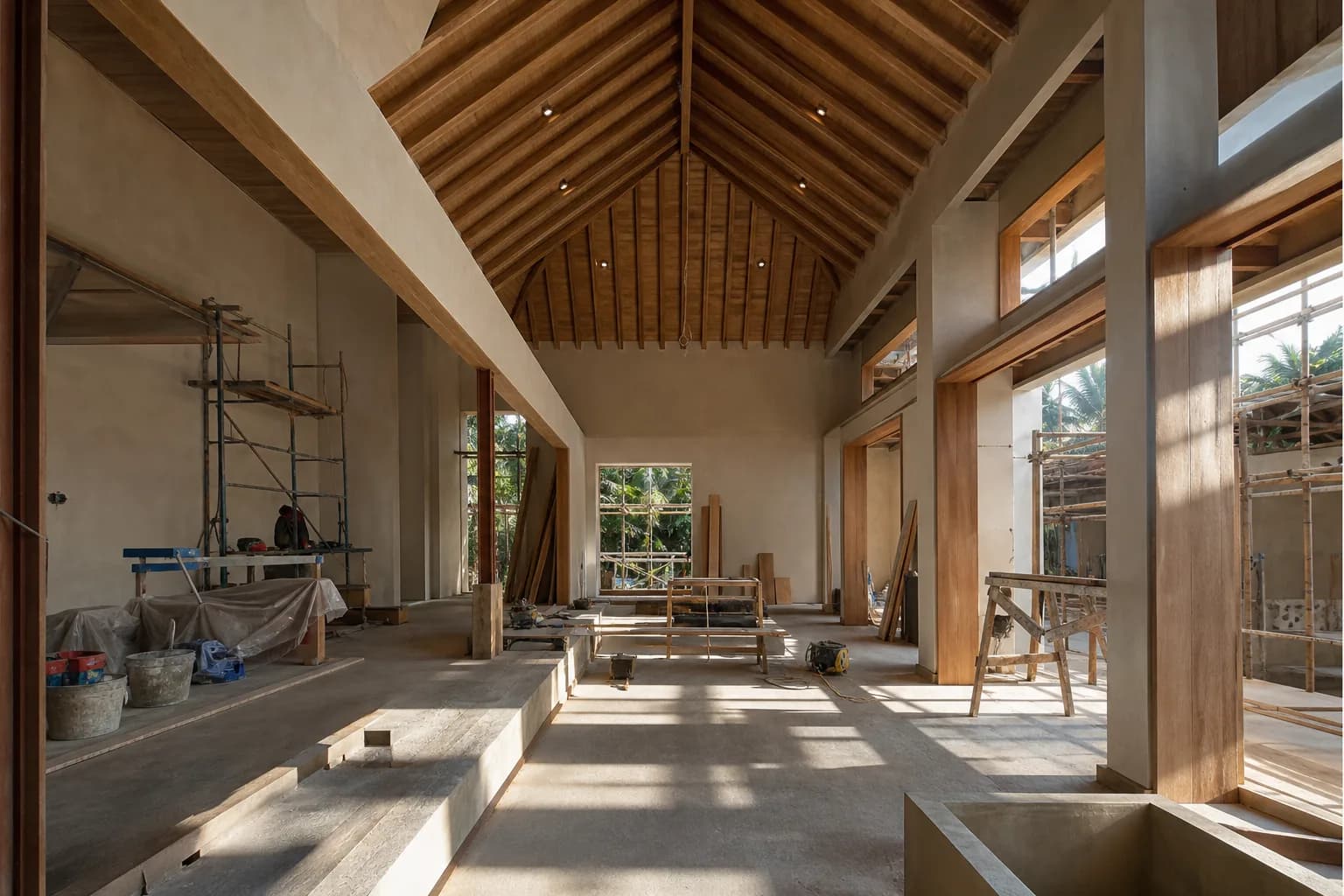
# Recessed LED Downlight Spacing Standards for Bali Villa Ceilings
The Critical Challenge of Downlight Spacing in Tropical Villa Environments
Improperly spaced recessed LED downlights create uneven illumination patterns, harsh shadows, and visual discomfort in Bali villa interiors—a common finishing mistake that undermines otherwise premium construction quality. The tropical climate, high-ceiling architectural styles, and open-plan living spaces characteristic of Bali villa construction demand precise technical calculations for downlight placement. Unlike standard residential projects, Bali villas feature ceiling heights ranging from 3.5 to 6 meters, natural ventilation requirements that affect heat dissipation, and humidity levels exceeding 80% that impact electrical installations. Professional interior finishing Bali contractors must account for beam angles, lumen output degradation in humid conditions, and the interaction between natural daylight and artificial lighting throughout the day.
Technical Specifications for Recessed Downlight Spacing in Bali Villa Ceilings
The fundamental principle governing recessed LED downlight spacing follows the beam angle calculation method, where spacing distance equals ceiling height multiplied by the tangent of half the beam angle. For standard 8-10 foot (2.4-3 meter) ceilings common in Bali villa bedrooms and bathrooms, this translates to 1.2-1.8 meter spacing between fixtures using 40-degree beam angle downlights. However, Bali’s distinctive architectural features require modified approaches.
For high-ceiling living pavilions reaching 4-6 meters, the spacing calculation must account for increased mounting height while maintaining adequate foot-candle levels at floor height. A 5-meter ceiling with 60-degree beam angle downlights requires approximately 2.5-3 meter spacing to achieve 300-500 lux at task height—the recommended illumination for residential living spaces. The maximum spacing rule states that fixtures should never exceed 1.5 times the ceiling height to prevent dark spots, meaning a 4-meter ceiling requires maximum 6-meter spacing, though practical applications rarely exceed 3 meters for quality illumination.
Bali’s tropical humidity presents unique challenges for villa utilities installation. Recessed downlights generate heat that must dissipate through ceiling cavities, but high moisture content in building materials reduces thermal conductivity. This necessitates increased spacing—typically 15-20% greater than temperate climate standards—to prevent premature LED driver failure and maintain the 50,000-hour lifespan expected from quality fixtures. Ceiling cavity depth becomes critical; Bali villa construction should provide minimum 200mm clearance above recessed fixtures for adequate ventilation and heat dissipation.
The interaction between downlight spacing and ceiling finish materials significantly impacts installation quality. Traditional Balinese alang-alang (thatched) ceilings require fire-rated downlight housings with minimum 300mm spacing from combustible materials. Concrete slab ceilings common in modern Bali villa construction demand precise core drilling and waterproofing around each fixture to prevent moisture ingress during monsoon seasons. Timber ceiling applications—increasingly popular in eco-luxury villas—require structural assessment to ensure joists can support fixture weight and accommodate wiring runs without compromising integrity.
Beam angle selection directly determines optimal spacing. Narrow 25-degree beams create focused pools of light suitable for accent lighting, requiring closer 0.8-1.2 meter spacing for continuous coverage. Medium 40-degree beams—the standard for general illumination—perform optimally at 1.5-2 meter spacing in standard ceiling heights. Wide 60-degree beams provide broader coverage, allowing 2-3 meter spacing but with reduced intensity, making them suitable for ambient lighting in high-ceiling spaces. Bali villa projects typically employ layered lighting strategies combining multiple beam angles at varying spacing intervals to achieve both functional illumination and atmospheric quality.
Material Standards and Fixture Selection for Tropical Climate Performance
Recessed LED downlight selection for Bali villa applications requires IP (Ingress Protection) ratings appropriate for tropical humidity exposure. Bathroom and outdoor covered areas demand minimum IP65-rated fixtures providing complete dust protection and water jet resistance. Interior living spaces require IP44 minimum—protection against solid objects over 1mm and water splashing from any direction. Standard IP20 fixtures suitable for temperate climates fail prematurely in Bali’s 70-85% average humidity environment.
Housing material selection impacts both longevity and installation quality in renovation Bali projects. Die-cast aluminum housings with powder-coated finishes resist corrosion better than steel alternatives, critical for coastal villa locations where salt air accelerates oxidation. Stainless steel trim rings maintain appearance longer than painted alternatives, though they command 30-40% price premiums. Plastic housings, while economical, degrade under UV exposure in outdoor applications and should be avoided for covered terrace installations.
LED driver quality determines fixture lifespan in tropical conditions. Drivers rated for 40-50°C ambient temperatures fail rapidly when ceiling cavity temperatures exceed specifications during Bali’s dry season. Premium fixtures incorporate thermal management systems with heat sinks and ventilation channels, justifying their 2-3x cost premium through extended service life. The driver location—integral versus remote—affects maintenance accessibility; remote drivers installed in accessible ceiling cavities simplify replacement without disturbing finished ceiling surfaces.
Color temperature selection influences perceived space quality and should align with villa design intent. Warm white (2700-3000K) creates intimate, relaxing atmospheres suitable for bedrooms and living areas, matching the golden tones of traditional Balinese architecture. Neutral white (3500-4000K) provides balanced illumination for kitchens and bathrooms where color accuracy matters. Cool white (5000-6500K) rarely suits residential applications but may be specified for utility areas. Consistency across fixtures prevents color temperature variation that creates visual discomfort—a common issue when mixing fixture brands or batches.
Step-by-Step Installation Process for Optimal Downlight Spacing
The professional installation process begins with comprehensive ceiling survey and lighting design calculation. Measure room dimensions accurately, noting ceiling height variations common in traditional Bali villa construction where hand-finished concrete creates undulating surfaces. Identify structural elements—beams, joists, electrical conduits, and plumbing—that constrain fixture placement. Create a scaled floor plan marking furniture layouts, as downlight positioning should illuminate functional areas rather than following rigid geometric patterns.
Calculate required lumen output based on room function and size. Living areas require 1500-3000 lumens per 10 square meters; bedrooms need 1000-2000 lumens; kitchens demand 3000-4000 lumens for task lighting. Divide total lumen requirement by individual fixture output to determine fixture quantity, then apply spacing calculations to create an even distribution pattern. For a 5×6 meter bedroom (30 sqm) requiring 4500 total lumens, six 750-lumen downlights spaced in a 2×3 grid at 2-meter intervals provides balanced illumination.
Mark fixture locations on the ceiling using laser levels to ensure alignment and consistent spacing. The starting point should be 0.5-1 meter from walls—half the inter-fixture spacing distance—to prevent wall-washing effects and maintain even illumination. In rectangular rooms, establish the primary axis along the longest dimension, then create perpendicular rows. Account for ceiling fans, structural beams, and architectural features that may require spacing adjustments. Verify that planned locations avoid conflicts with existing or planned electrical, plumbing, and HVAC installations.
Core drilling requires specialized equipment and technique for different ceiling materials. Concrete ceilings demand diamond-core drill bits with water cooling to prevent thermal cracking—critical in Bali villa construction where aggregate composition varies. Drill from the finished ceiling surface to prevent spalling and edge damage. Timber ceilings require hole saws sized precisely to fixture diameter, cutting from below to prevent tear-out on the visible surface. Maintain perpendicular drilling angles; angled holes create installation difficulties and compromise fixture appearance.
Electrical rough-in follows local building codes and international standards. Run 2.5mm² cable minimum for lighting circuits, with 4mm² recommended for circuits exceeding 10 fixtures or 2000 watts total load. Install junction boxes above ceiling level at accessible locations for circuit connections and future maintenance. Use waterproof cable glands where wiring penetrates fixture housings. In renovation projects, trace existing wiring to avoid conflicts and ensure adequate circuit capacity—many older Bali villas have undersized electrical systems requiring upgrades during renovation Bali projects.
Fixture installation begins with housing insertion into prepared ceiling openings. Secure housings using provided spring clips or mounting brackets, ensuring firm contact with ceiling material to prevent rattling and maintain fire rating integrity. Connect electrical wiring following manufacturer specifications—typically line, neutral, and earth connections with secure terminal blocks. Install LED modules and drivers according to assembly instructions, verifying thermal paste application on heat sinks where specified. Attach trim rings last, after confirming fixture operation and making final alignment adjustments.
Testing and commissioning verify installation quality. Energize circuits individually, checking for proper operation, flicker-free performance, and consistent color temperature across all fixtures. Measure illumination levels at floor height using a lux meter, confirming achievement of design targets. Inspect for light leakage around trim rings indicating poor sealing—particularly important in air-conditioned spaces where gaps allow conditioned air loss. Document circuit layouts and fixture specifications for future maintenance reference.
Cost Analysis and Project Timeline for Downlight Installation
Material costs for recessed LED downlight installation in Bali villa projects vary significantly based on fixture quality and specification. Economy-grade IP44 downlights with integrated drivers cost IDR 150,000-300,000 per fixture, suitable for budget renovations but with limited lifespan in tropical conditions. Mid-range fixtures with separate drivers and improved thermal management range from IDR 400,000-800,000, offering better longevity and performance. Premium IP65-rated fixtures with advanced thermal management and 5-year warranties cost IDR 1,000,000-2,000,000 per unit, justified for high-end villa projects where maintenance accessibility is limited.
Installation labor costs depend on ceiling material and accessibility. Standard concrete ceiling installations average IDR 200,000-350,000 per fixture including core drilling, wiring, and commissioning. Complex installations in high ceilings requiring scaffolding or lift equipment add 50-100% to labor costs. Timber ceiling installations cost 20-30% more due to precision requirements and structural considerations. Renovation projects involving existing fixture removal and ceiling repair add IDR 150,000-250,000 per location to project costs.
Supporting materials and equipment contribute 15-25% of total project cost. Electrical cable, junction boxes, cable glands, and mounting hardware typically cost IDR 75,000-150,000 per fixture. Ceiling repairs, painting, and finishing around new installations add variable costs depending on existing conditions. Projects requiring electrical panel upgrades or circuit additions incur additional costs of IDR 5,000,000-15,000,000 depending on scope.
Project timelines for professional downlight installation span 3-7 days for typical villa spaces. Design and planning require 1-2 days for site survey, calculations, and material procurement. Installation of 20-30 fixtures in standard ceiling conditions takes 2-3 days with a two-person crew. Complex projects with multiple ceiling types, heights, or extensive electrical work extend to 5-7 days. Renovation projects requiring coordination with other trades may span 2-3 weeks when integrated into comprehensive interior finishing Bali schedules. For detailed project estimation, consult Teville’s cost estimation service.
Frequently Asked Questions About Downlight Spacing in Bali Villas
What spacing is required for 4-meter high ceilings in Bali villa living rooms?
For 4-meter ceiling heights, use 2.5-3 meter spacing with 60-degree beam angle downlights rated at 1000-1500 lumens per fixture. This configuration provides 300-400 lux at floor level suitable for living areas. Avoid exceeding 3-meter spacing as this creates dark spots between fixtures. High-ceiling applications benefit from adjustable or directional downlights that allow beam angle modification after installation, accommodating furniture rearrangement and changing functional requirements.
How does humidity affect downlight spacing requirements in tropical climates?
Bali’s 70-85% humidity reduces LED efficiency by 10-15% and accelerates lumen depreciation, requiring 15-20% closer spacing than manufacturer specifications based on temperate climate testing. Humidity also necessitates increased spacing for thermal management—fixtures spaced too closely create heat accumulation that moisture-laden air cannot dissipate effectively. Specify IP65-rated fixtures with remote drivers in high-humidity areas, allowing standard spacing while ensuring longevity. Coastal locations require additional corrosion protection and may benefit from marine-grade fixtures despite higher costs.
Can I install recessed downlights in traditional alang-alang thatched ceilings?
Recessed downlights in combustible alang-alang ceilings require fire-rated IC (Insulation Contact) housings with minimum 300mm clearance from thatch material and
 164 m²7 month(s)from 79.000 USD
TALA TWO
 3124 m²6 month(s)from 123.000 USD
TALA 8
 3173 m²6 month(s)from 125.000 USD
TALA FOUR
 172 m²8 month(s)from 120.000 USD
Keshava
164 m²7 month(s)from 79.000 USDPrivate: Haridas Villas, Tegallalang
 2144 m²11 month(s)from 104.000 USD
Narayana
 3104 m²11 month(s)from 99.000 USD
TALA 100
 4344 m²16 month(s)from 290.000 USD
Radha
 3127 m²9 month(s)from 177.000 USD
Mukunda
 3180 m²7 month(s)from 142.000 USD
Vasudeva

Want to calculate?
 1from 198.000 USD
Private: Haridas Villas
Start With Real Numbers, Not Guesses
Before finalizing your finishing works plan, check realistic cost ranges for your Bali villa project.
Available lands
 700 m²7 min$ 400000Bali, Canggu
 3300 m²15 min$ 449889Bali, Tabanan
 422 m²15 min$ 93547Bali, Kerobokan
 1375 m²10 min$ 447044Bali, Canggu
 500 m²15 min$ 124692Bali, Kaba Kaba
 1700 m²10 min$ 392549Bali, Nusadua
 2800 m²15 min$ 310345Bali, Tabanan
 1000 m²10 min$ 280788Bali, Pecatu
 2400 m²7 min$ 496552Bali, Canggu
 700 m²8 min$ 165517Bali, Umalas
 2800 m²2 min$ 713793Bali, Kedungu
 1720 m²2 min$ 241478Bali, Tabanan
 700 m²20 min$ 90517Bali, Cepaka
 1200 m²2 min$ 155172Bali, Klungkung
 5028 m²10 min$ 361000Bali, Ubud
Essential Bali build & buy guides
- Bali villa construction cost per m² in 2026
- How much will your villa cost? Calculator
- Building a villa in Bali: the complete guide
- Buying land in Bali: step-by-step for foreigners
- Bali villa investment: yields, risks, returns
- Leasehold vs freehold: what foreigners can own
- Construction defect liability & 10-year warranty
- Bali building codes and construction standards
Related guides
Resin-Infused Plaster Finishes: Anti-Salt Systems Bali
Expert technical guide: Resin-Infused Plaster Finishes: Anti-Salt Systems Bali
8 min read
Prefinished Timber Joinery: Silicone Seals Fixings Bali
Professional prefinished timber joinery installation in Bali with silicone seals and fixings for durable weatherproof performance and a premium finish.
10 min read
Polished Concrete Microtopping: Surface Prep Sealants Bali
Discover Bali s polished concrete microtopping: expert surface prep, durable sealants, and a flawless finish for modern floors with minimal maintenance.
9 min read