Land Purchase Bali: Construction Site Assessment Legal Requirem
Why Most Foreign Buyers Discover Land Problems After Purchase—Not Before
You’ve found land in Canggu or Ubud. The agent says it’s “ready to build.” The price seems fair. But here’s the question most buyers ask too late: Is this land actually cleared for villa construction under current zoning law, and does the lease structure allow multi-decade extension? In Bali’s evolving regulatory environment, land purchase decisions made without construction-grade due diligence often surface costly problems 6–12 months later—when architects discover zoning conflicts, when notaries flag title inconsistencies, or when contractors find subsurface water issues that triple foundation costs.
This article explains the technical and legal realities of land purchase in Bali from a construction engineering perspective—not as investment advice, but as risk-prevention guidance for buyers planning to build villas, retreat centers, or boutique hospitality projects.
The Engineering and Legal Reality of Land Purchase in Bali
Bali’s land acquisition process differs fundamentally from Western freehold systems. Foreigners cannot own land outright under Indonesian law. Instead, legal ownership structures include Hak Pakai (Right to Use, typically 25–30 years with extensions), Hak Sewa (long-term lease, 25+ years), or nominee arrangements (legally risky and increasingly scrutinized). As of February 2026, new regulations link property ownership to residency status, requiring foreign buyers to hold valid visas and comply with stricter documentation standards.
From a construction perspective, the critical issue isn’t just who owns the land—it’s whether the land is legally and physically suitable for your intended building project. This requires verification across four technical domains:
- Zoning compliance: ITR (Izin Tata Ruang) zoning certificates confirm whether the parcel is designated for residential, commercial, or mixed-use development. Green belt zones, cultural heritage zones, and coastal setback areas carry strict building restrictions.
- Title clarity: Certificate verification through BPN (National Land Agency) confirms ownership chain, boundary accuracy, and absence of disputes or encumbrances.
- Physical buildability: Soil bearing capacity, water table depth, slope stability, and access road width determine foundation design, drainage engineering, and construction cost.
- Utility access: Proximity to PLN electrical grid, PDAM water mains, and fiber internet infrastructure affects both construction timeline and long-term operational costs.
The new PBG (Persetujuan Bangunan Gedung) building permit system, which replaced the older IMB framework, requires zoning compliance verification before permit issuance. This means land purchased without ITR verification may be unbuildable under your intended design—even if the seller claims it’s “construction-ready.”
Leasehold structures dominate foreign land transactions. A well-structured lease includes:
- Initial term (typically 25–30 years)
- Extension clauses (often 2–3 renewals of 20–25 years each, negotiated upfront)
- Transfer rights (allowing lease assignment or sale)
- Construction rights (explicitly permitting permanent structures)
- Dispute resolution mechanisms (arbitration clauses, governing law)
Poorly drafted leases omit extension terms, restrict building modifications, or lack clear transfer rights—creating legal uncertainty that undermines long-term project viability. Notary involvement is mandatory for lease registration, but notaries verify legal form, not construction suitability. That technical assessment requires engineering and architectural review.
Hidden Risks and Mistakes Buyers Overlook
Zoning mismatches discovered post-purchase: Buyers assume “residential land” permits villa construction, but ITR zoning may restrict building height, footprint coverage, or commercial use (critical for retreat centers or rental villas). Coastal zones within 100 meters of high tide lines face additional restrictions under environmental protection laws.
Subsurface conditions ignored during site visits: Bali’s volcanic geology creates highly variable soil conditions. Land that appears flat and dry may have high water tables (requiring deep pile foundations), expansive clay soils (causing structural cracking), or buried rock layers (increasing excavation costs by 40–60%). Professional soil testing before purchase prevents expensive surprises during construction.
Access road inadequacy: Many parcels have legal access via 2-meter-wide village paths—insufficient for concrete mixer trucks (requiring 3.5+ meters) or crane access. This forces hand-mixing concrete or helicopter material delivery, adding 15–25% to construction costs.
Lease extension terms left vague: Contracts stating “extension possible by mutual agreement” provide no legal certainty. Without pre-negotiated extension terms and pricing formulas, landowners can demand arbitrary renewal fees or refuse extension entirely, jeopardizing your long-term investment.
Utility connection costs underestimated: Land located 500+ meters from PLN transformers may require $8,000–$15,000 in electrical infrastructure upgrades. Similarly, parcels beyond PDAM service areas need private wells (adding $3,000–$6,000) and wastewater treatment systems (IPAL, $4,000–$8,000).
Step-by-Step Land Verification and Purchase Process
Phase 1: Pre-Purchase Technical Due Diligence (2–3 weeks)
Step 1: Request and verify land certificates. Obtain copies of the land certificate (Sertifikat Hak Milik for Indonesian owners, or existing lease agreements). Cross-check certificate numbers with BPN records to confirm authenticity, boundary accuracy, and absence of liens or disputes.
Step 2: Obtain ITR zoning verification. Request the official ITR document from the local planning office (Dinas Penataan Ruang). This confirms permitted land use, maximum building coverage (KDB), floor area ratio (KLB), and height restrictions. For example, residential zones in Canggu typically allow 60% site coverage and 2-story construction, while green belt zones may restrict coverage to 30%.
Step 3: Conduct geotechnical assessment. Commission soil boring tests (minimum 2 test pits to 4-meter depth) to determine soil bearing capacity, water table level, and subsurface composition. This data informs foundation design and cost estimation. Expect to pay $400–$800 for professional soil testing.
Step 4: Verify utility access and costs. Confirm distance to PLN transformers, PDAM water lines, and fiber internet nodes. Request connection cost estimates from utility providers. For remote parcels, budget for private well drilling, septic/IPAL systems, and potential solar power backup.
Step 5: Assess access road suitability. Measure road width and surface condition. Verify legal access rights through village records or easement agreements. Determine whether heavy construction vehicles can reach the site or if road upgrades are required.
Phase 2: Legal Structure and Contract Negotiation (2–4 weeks)
Step 6: Engage qualified legal counsel. Hire a notary (PPAT) experienced in foreign property transactions and a lawyer specializing in construction law. They will structure the lease agreement, verify seller authority, and ensure compliance with current foreign ownership regulations.
Step 7: Negotiate lease terms with construction focus. Secure explicit rights to construct permanent buildings, modify structures, and transfer the lease. Negotiate extension terms upfront—ideally 2–3 renewals of 20–25 years each, with pricing formulas tied to land value indices rather than arbitrary renegotiation.
Step 8: Include construction-specific clauses. Add provisions allowing temporary construction access, material storage, and contractor activity. Clarify responsibility for property taxes (PBB), maintenance obligations, and insurance requirements during construction and operation.
Phase 3: Transaction Execution and Post-Purchase Preparation (2–3 weeks)
Step 9: Complete notarized lease registration. Execute the lease agreement before a licensed notary, who will register the lease with BPN. Ensure all payments are documented with official receipts and bank transfer records (avoid cash transactions).
Step 10: Commission architectural feasibility study. Before finalizing design, have an architect review the site against your project requirements, confirming that your villa concept complies with zoning restrictions and can be built within your budget given site conditions.
Step 11: Initiate PBG permit preparation. Begin compiling documents for the PBG building permit: land certificates, ITR zoning clearance, architectural drawings, structural calculations, and environmental compliance documents (UKL-UPL or AMDAL for larger projects). Permit processing typically takes 2–4 months.
Realistic Cost Ranges and Timeframes for Land Purchase
Land prices (leasehold, 25–30 year terms):
- Canggu/Seminyak: $180–$350 per square meter
- Ubud/Sanur: $120–$220 per square meter
- Uluwatu/Bingin: $150–$280 per square meter
- Rural areas (Tabanan, Sidemen): $40–$90 per square meter
Due diligence and legal costs:
- Soil testing: $400–$800
- Legal counsel and notary fees: $1,500–$3,500
- ITR zoning verification: $200–$400
- BPN certificate verification: $150–$300
- Architectural feasibility study: $800–$1,500
Transaction taxes and fees:
- BPHTB land transfer tax: 5% of assessed land value
- Notary registration fees: 1–2% of transaction value
- Annual property tax (PBB): 0.1–0.3% of assessed value
Timeframes:
- Due diligence phase: 2–3 weeks
- Legal negotiation and contract drafting: 2–4 weeks
- Notary registration and BPN processing: 1–2 weeks
- PBG permit preparation and approval: 2–4 months
For a 500-square-meter parcel in Canggu at $250/sqm, expect total acquisition costs of $125,000 (land) + $6,250 (transfer tax) + $2,500 (legal/notary) + $1,500 (due diligence) = approximately $135,000 before construction begins.
Frequently Asked Questions: Land Purchase in Bali
Can foreigners legally own land in Bali, or only lease it?
Foreigners cannot own freehold land (Hak Milik) in Indonesia. Legal ownership structures include Hak Pakai (Right to Use, 25–30 years with extensions) or long-term leases (Hak Sewa, 25+ years). As of 2026, foreign property ownership requires valid residency visas and compliance with updated documentation standards. Nominee arrangements—where land is registered under an Indonesian citizen’s name—carry significant legal risk and are increasingly scrutinized by authorities. Well-structured leasehold agreements with clear extension terms and transfer rights provide the most secure legal framework for foreign buyers planning construction projects.
What is ITR zoning, and why does it matter for villa construction?
ITR (Izin Tata Ruang) is the official zoning clearance document issued by local planning authorities. It specifies permitted land use (residential, commercial, mixed-use), maximum building coverage (KDB), floor area ratio (KLB), height limits, and setback requirements. ITR verification is now mandatory for PBG building permit issuance. Land purchased without ITR review may be zoned for agriculture, green belt preservation, or cultural heritage protection—prohibiting villa construction entirely or imposing severe restrictions. Always obtain and review the ITR document before finalizing land purchase to ensure your project is legally feasible.
How much does soil testing cost, and is it really necessary?
Professional geotechnical assessment costs $400–$800 for a standard residential site (2–3 test pits to 4-meter depth). It’s essential because Bali’s volcanic geology creates highly variable subsurface conditions. High water tables require deep pile foundations (adding $8,000–$15,000 to construction costs), expansive clay soils cause structural cracking, and buried rock layers increase excavation expenses by 40–60%. Soil testing before purchase allows accurate cost estimation and prevents expensive surprises during construction. Skipping this step to save $600 often results in $20,000+ in unforeseen foundation work.
What should a foreigner-friendly lease agreement include?
A construction-grade lease must include: (1) Initial term of 25–30 years, (2) Pre-negotiated extension clauses (typically 2–3 renewals of 20–25 years each with fixed pricing formulas), (3) Explicit construction rights permitting permanent buildings and modifications, (4) Transfer rights allowing lease assignment or sale, (5) Clear responsibility allocation for property taxes, maintenance, and insurance, (6) Dispute resolution mechanisms (arbitration clauses, governing law). Avoid vague language like “extension by mutual agreement”—this provides no legal certainty and exposes you to arbitrary renewal demands. Have both a notary and construction-focused lawyer review the agreement before signing.
How long does the PBG building permit process take, and what documents are required?
PBG (Persetujuan Bangunan Gedung) permit processing typically takes 2–4 months after submission of complete documentation. Required documents include: land certificates, ITR zoning clearance, architectural drawings (site plan, floor plans, elevations), structural engineering calculations, MEP (mechanical/electrical/plumbing) plans, environmental compliance documents (UKL-UPL for projects under 5,000 sqm, AMDAL for larger developments), and proof of land ownership or lease rights. The PBG is followed by SLF (Sertifikat Laik Fungsi) certification after construction completion, confirming the building meets safety and functional standards. Incomplete documentation or zoning conflicts can delay permits by 3–6 months, underscoring the importance of thorough pre-purchase due diligence.
Expert Summary: Construction-Grade Land Purchase Requires Engineering Due Diligence
Before buying land or finalizing a design, check the realistic build cost range for your project in Bali.Our team reviews your inputs and gives a grounded estimate.
Available lands
 928 m²15 min$ 910123Bali, Pererenan
 500 m²10 min$ 107143Bali, Tabanan
 800 m²10 min$ 307882Bali, Tibubeneng
 204 m²5 min$ 40899Bali, Kedungu
 1000 m²10 min$ 230911Bali, Kerobokan
 3300 m²15 min$ 449889Bali, Tabanan
 1720 m²2 min$ 241478Bali, Tabanan
 2400 m²7 min$ 496552Bali, Canggu
 3000 m²15 min$ 1246921Bali, Tabanan
 220 m²2 min$ 66565Bali, Cemagi
 2500 m²5 min$ 609606Bali, Kedungu
 1950 m²7 min$ 150092Bali, Tabanan
 1375 m²10 min$ 447044Bali, Canggu
 2200 m²15 min$ 508005Bali, Canggu
 660 m²10 min$ 175567Bali, Mengwi
Planning a build in Bali?
Get a feasibility view, budget range and timeline from Teville.
Related guides
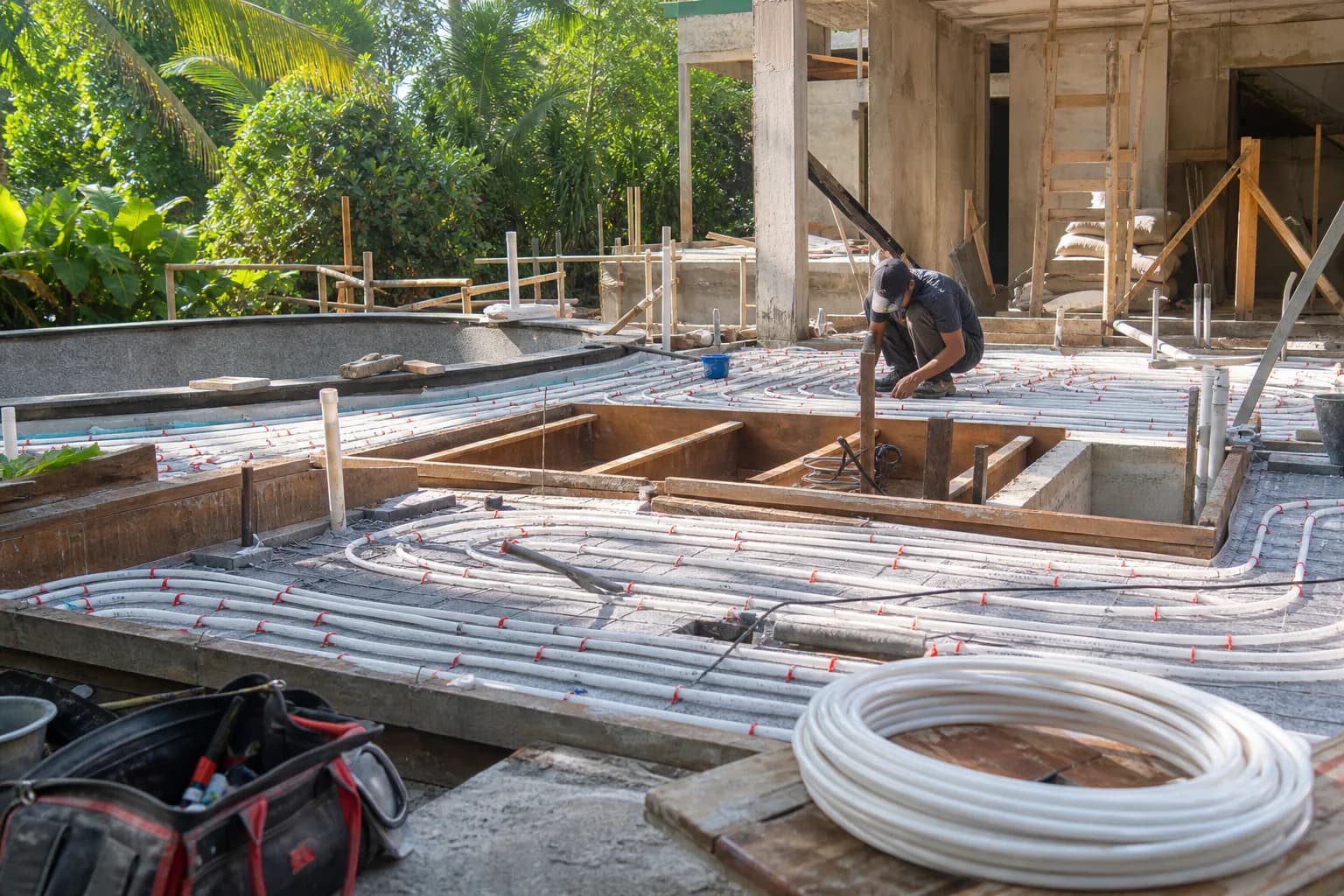
Underfloor Heating: Tile vs Concrete Subfloors in Bali
Compare underfloor heating options for tile and concrete subfloors in Bali. Learn viability, costs, and best practices for tropical climates.
10 min read
IMB Building Permit Timeline: Foundation to CO in Bali
Complete IMB building permit timeline from foundation to Certificate of Occupancy in Bali regencies. Expert guide on approval stages and requirements.
10 min read
IMB Permit Processing Times: Denpasar vs Gianyar Bali
Compare IMB permit processing times between Denpasar and Gianyar regency in Bali. Expert guide to building permit timelines and requirements.
11 min read