IMB Building Permit Timeline: Foundation to CO in Bali
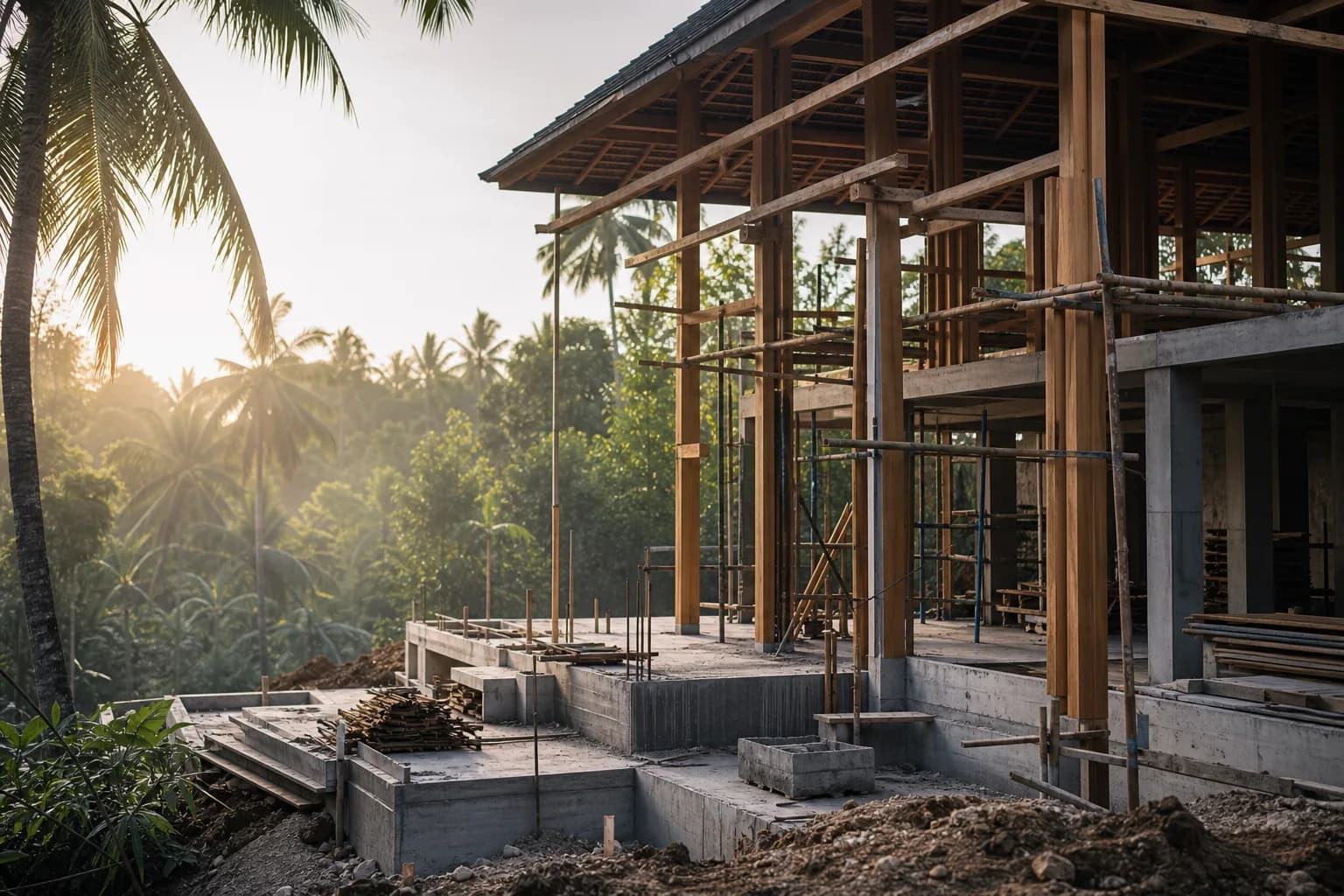
The 8-12 Month Reality: Why Your IMB Timeline Depends on Regency-Specific Engineering Reviews
Most foreign investors purchasing land in Bali underestimate a critical construction reality: the IMB (Izin Mendirikan Bangunan) or modern PBG (Persetujuan Bangunan Gedung) timeline from foundation approval to Certificate of Occupancy varies dramatically between Badung, Gianyar, Tabanan, and other regencies. While generic timelines suggest 8-12 months, the actual duration hinges on regency-specific structural review protocols, soil classification requirements, and inspection scheduling systems that differ fundamentally across Bali’s administrative zones. A villa project in Canggu (Badung) follows entirely different permit milestone sequences than an identical design in Ubud (Gianyar), creating construction delays that cascade through your entire build schedule if not properly mapped during the land purchase phase.
Engineering Reality: How Regency Building Departments Process Foundation-to-Occupancy Permits
The IMB/PBG timeline isn’t a single linear process—it’s a series of regency-administered engineering checkpoints that must align with construction phases. Understanding this technical framework is essential for realistic Bali villa construction scheduling.
Phase 1: Foundation Permit Approval (Months 0-3)
Before any excavation begins, your structural engineering documents must pass regency-specific foundation review. Badung Regency requires geotechnical boring reports for any structure exceeding 200m² footprint, with soil bearing capacity calculations certified by Indonesian-licensed engineers. The technical review examines foundation depth relative to water table levels, pile specifications for coastal zones, and seismic load calculations per SNI 1726:2019 standards.
Gianyar Regency adds cultural heritage proximity reviews—if your land sits within 500 meters of temple complexes or archaeological zones, foundation plans require Balai Pelestarian Cagar Budaya approval, adding 4-6 weeks to baseline timelines. Tabanan’s agricultural conversion zones demand additional environmental impact assessments for foundation work that alters irrigation water flow patterns.
The foundation permit approval triggers your official construction commencement date, which starts the clock on subsequent inspection schedules. Delays here compress later phases—a reality often missed during initial land purchase Bali feasibility analysis.
Phase 2: Structural Milestone Inspections (Months 3-8)
Regency building departments mandate physical inspections at specific structural completion percentages. Badung requires four mandatory inspections: foundation completion (before backfill), structural frame at 50%, roof structure completion, and pre-finishing inspection. Each inspection must be scheduled minimum 7 days in advance, and inspectors operate on fixed weekly routes—missing your slot adds 1-2 week delays.
Gianyar implements a three-tier system: foundation sign-off, structural midpoint (typically at column/beam completion), and pre-occupancy. However, Gianyar’s inspection teams cover larger geographic areas, meaning projects in remote Payangan or Tegallalang subdistricts face longer scheduling windows than central Ubud locations.
Tabanan’s coastal zones (Tanah Lot, Balian areas) require additional corrosion-resistance documentation for structural steel and rebar specifications, verified during frame inspection. This isn’t discretionary—saltwater exposure zones demand hot-dip galvanized connections and epoxy-coated reinforcement, with material certifications reviewed on-site.
Critical engineering reality: inspection failures restart the clock. If your structural frame doesn’t meet approved plans (common with contractors who “improvise” beam dimensions), you’re issued a correction notice requiring re-inspection after remediation—typically adding 3-4 weeks to your timeline.
Phase 3: SLF and Certificate of Occupancy (Months 8-12)
The Sertifikat Laik Fungsi (SLF) is your functional safety certificate, required before any Certificate of Occupancy issuance. This involves final inspection covering electrical systems (SNI 0225:2011 compliance), plumbing pressure testing, septic system capacity verification, and fire safety equipment for structures exceeding certain thresholds.
Badung processes SLF applications within 14 working days post-final inspection, but only if all prior inspection reports show zero outstanding corrections. Gianyar’s timeline extends to 21 working days, with additional requirements for water source legality documentation (critical for properties using deep wells rather than PDAM connections).
The Certificate of Occupancy (often called IMB Completion or PBG Final) is issued after SLF approval, typically within 7-10 days. However, this document requires proof of property tax registration (PBB) and waste management service enrollment—administrative steps that many foreign owners overlook until the final week, causing unnecessary delays.
Hidden Risks: What Delays Your Permit Timeline Beyond Published Estimates
The 8-12 month baseline assumes perfect execution. Real-world building permits Bali timelines encounter specific failure points that extend durations significantly.
Incomplete Geotechnical Documentation
Many land sellers provide topographic surveys but not soil boring reports. If your foundation design assumes 150 kPa bearing capacity but actual soil tests reveal 80 kPa, you’re redesigning foundations mid-permit process. This triggers re-submission of structural calculations, adding 6-8 weeks minimum. Coastal Badung and riverine Gianyar properties frequently encounter this issue—high water tables require deeper pile foundations not reflected in preliminary designs.
Zoning Coefficient Misinterpretation
Each regency publishes KDB (building coverage ratio), KLB (floor area ratio), and KDH (green space ratio) coefficients, but interpretation varies by subdistrict. A 60% KDB in Canggu’s commercial-residential zone differs from 60% KDB in Ubud’s cultural preservation zone—the latter includes stricter setback measurements from property boundaries. Discovering this during permit review forces design revisions that restart the approval clock.
Contractor License Jurisdiction Mismatch
Indonesian construction law requires contractors to hold licenses valid in the regency where they’re building. A contractor licensed in Denpasar cannot automatically work in Gianyar—they need regency-specific registration. If your contractor’s paperwork doesn’t match your land’s regency during permit application, you’re rejected outright. This administrative detail causes 2-3 month delays when discovered late, particularly affecting foreign owners who hire contractors based on portfolio rather than licensing verification.
Monsoon Season Inspection Gaps
Regency inspection schedules reduce frequency during peak monsoon (December-February). Structural inspections requiring dry conditions get postponed, and the backlog extends into March. Projects reaching structural milestones during this window automatically absorb 3-4 week delays regardless of construction readiness.
Step-by-Step Process: Mapping Your Regency-Specific IMB Timeline
Executing a predictable permit timeline requires regency-specific process mapping before land purchase finalization. Here’s the technical workflow for tropical construction engineering permit management:
Step 1: Pre-Purchase Regency Requirement Audit (Week -8 to -4)
Before finalizing land purchase Bali, obtain the specific building department requirements for your target regency. Request the official checklist from Dinas PUPR (Public Works Department) for your subdistrict—these documents list mandatory engineering reports, inspection sequences, and processing timelines. Badung publishes these on their SIMBG online system; Gianyar requires in-person requests at the Semarapura office. This audit reveals hidden requirements like heritage proximity studies or agricultural conversion permits that affect timeline feasibility.
Step 2: Commission Geotechnical and Topographic Surveys (Week -4 to 0)
Engage Indonesian-certified soil engineers to conduct boring tests at your exact plot. Specify SNI 8460:2017 compliant reporting—regency building departments reject non-standard formats. Simultaneously, commission detailed topographic surveys showing existing drainage patterns, adjacent structure locations, and utility access points. These documents form the foundation of your structural engineering package and prevent redesign delays during permit review.
Step 3: Structural Design with Regency Code Compliance (Week 0-6)
Work with architects and structural engineers who maintain active licenses in your specific regency. Designs must reference local zoning coefficients, setback requirements, and height restrictions explicitly in plan documents. Include material specifications that meet regency-specific requirements—Tabanan coastal zones need corrosion-resistant details; Gianyar cultural zones require traditional roof pitch ratios for certain areas. Submit preliminary designs to building department for informal review before final submission—this unofficial check catches major issues early.
Step 4: IMB/PBG Application Submission (Week 6-8)
Submit complete application packages including: approved site plans, structural calculations sealed by Indonesian engineers, geotechnical reports, environmental compliance documents, contractor license verification, and land ownership proof. Incomplete submissions get rejected without review—there’s no “submit now, add documents later” option. Track submission through regency online systems (Badung’s SIMBG, Gianyar’s SIPPBG) or assign a local permit expediter who understands department workflows.
Step 5: Foundation Approval and Construction Commencement (Week 8-12)
Once foundation permits issue, schedule your first inspection before beginning excavation in some regencies. Badung allows immediate start; Gianyar requires pre-excavation site verification. Coordinate contractor mobilization with permit issuance—starting early risks stop-work orders; starting late wastes approved timeline windows.
Step 6: Milestone Inspection Coordination (Month 3-8)
Schedule each mandatory inspection 10-14 days in advance, not the minimum 7 days—this provides buffer for inspector schedule changes. Prepare inspection-ready conditions: clean work areas, exposed structural elements per inspection requirements, material certifications on-site. Failed inspections due to poor preparation (debris covering foundations, incomplete formwork) are the primary cause of timeline extensions.
Step 7: SLF Application and Final Occupancy (Month 8-12)
Submit SLF applications immediately after final structural inspection approval—don’t wait for finishing work completion. The SLF review occurs in parallel with final construction phases. Prepare occupancy certificate applications simultaneously, ensuring PBB tax registration and utility connections are documented. The final 4-6 weeks involve administrative processing, not construction work, so plan handover schedules accordingly.
Realistic Timeline Ranges: Regency-Specific Duration Expectations
Actual villa construction cost Bali planning requires regency-specific timeline data, not generic estimates. Based on 2024-2025 processing patterns:
Badung Regency (Canggu, Seminyak, Uluwatu)
Baseline timeline: 8-10 months foundation to CO. Badung’s digitized SIMBG system processes permits faster, with foundation approvals in 8-12 weeks for standard residential villas. Add 2-3 months for beachfront properties requiring coastal setback verification and environmental clearances. Inspection scheduling is most reliable here—weekly routes cover major development zones consistently.
Gianyar Regency (Ubud, Tegallalang, Sukawati)
Baseline timeline: 10-12 months foundation to CO. Cultural heritage reviews add 4-8 weeks for properties near temple complexes. Remote subdistrict locations (Payangan, northern Tegallalang) face longer inspection scheduling—inspectors visit these areas bi-weekly rather than weekly. Water source legality documentation for SLF adds 2-3 weeks if using private wells rather than municipal supply.
Tabanan Regency (Tanah Lot, Balian, Tabanan Town)
Baseline timeline: 9-11 months foundation to CO. Agricultural conversion zones require additional environmental assessments adding 6-10 weeks to initial permit approval. Coastal corrosion-resistance requirements demand specific material certifications that extend structural inspection reviews by 1-2 weeks per milestone. Less developed permit digitization means more in-person document submissions and manual processing delays.
Timeline Extension Factors (All Regencies)
Add 20-30% buffer for: first-time foreign ownership (additional documentation verification), properties exceeding 400m² built area (enhanced structural review), monsoon season structural milestones (inspection delays), and contractor license issues (regency registration delays). Projects managed by experienced firms like Teville’s integrated construction process typically hit baseline timelines through proactive permit coordination and regency-specific expertise.
Frequently Asked Questions: IMB Timeline Specifics
Can I start foundation work while waiting for full IMB approval?
No—commencing construction before foundation permit issuance results in stop-work orders and potential permit rejection. Some regencies allow site preparation (clearing, temporary fencing) but no excavation or structural work. Badung enforces this strictly through satellite monitoring and neighbor reporting systems. Violations require demolition of unauthorized work and restart the entire permit process, adding 4-6 months to your timeline. Always wait for official foundation approval documentation before contractor mobilization.
How do regency inspection failures affect my overall timeline?
Each failed inspection adds 3-4 weeks minimum: 1 week for correction work, 1-2 weeks for re-inspection scheduling, and processing time. Common failures include: foundation dimensions not matching approved plans (requires engineering re-certification), structural steel grade mismatches (requires material replacement and testing), and inadequate rebar coverage (requires concrete removal and rework)
 164 m²7 month(s)from 79.000 USD
Private: Haridas Villas, Tegallalang
 3173 m²6 month(s)from 125.000 USD
TALA FOUR
 3124 m²6 month(s)from 123.000 USD
TALA 8

Want to calculate?
 3180 m²7 month(s)from 142.000 USD
Vasudeva
 172 m²8 month(s)from 120.000 USD
Keshava
 1from 198.000 USD
Private: Haridas Villas
 2144 m²11 month(s)from 104.000 USD
Narayana
164 m²7 month(s)from 79.000 USDTALA TWO
 3127 m²9 month(s)from 177.000 USD
Mukunda
 4344 m²16 month(s)from 290.000 USD
Radha
 3104 m²11 month(s)from 99.000 USD
TALA 100
Start With Real Numbers, Not Guesses
Before buying land or finalizing a design, check the realistic build cost range for your project in Bali.
Our team reviews your inputs and gives a grounded estimate.
Available lands
 1430 m²5 min$ 209862Bali, Klungkung
 1950 m²7 min$ 150092Bali, Tabanan
 2400 m²7 min$ 496552Bali, Canggu
 1230 m²15 min$ 132543Bali, Tegallalang
 2700 m²30 min$ 314224Bali, Sidemen
 3800 m²15 min$ 100616Bali, Pererenan
 1700 m²10 min$ 632257Bali, Kuta
 3900 m²10 min$ 432266Bali, Tabanan
 1000 m²8 min$ 134544Bali, Bukit
 300 m²55 min$ 32475Bali, Tegelalang
 7250 m²56 min$ 235714Bali, Tabanan
 400 m²15 min$ 67192Bali, Tabanan
 1660 m²10 min$ 343448Bali, Kerobokan
 700 m²15 min$ 162500Bali, Tabanan
 204 m²5 min$ 40899Bali, Kedungu
Essential Bali build & buy guides
- Bali villa construction cost per m² in 2026
- How much will your villa cost? Calculator
- Building a villa in Bali: the complete guide
- Buying land in Bali: step-by-step for foreigners
- Bali villa investment: yields, risks, returns
- Leasehold vs freehold: what foreigners can own
- Construction defect liability & 10-year warranty
- Bali building codes and construction standards
Related guides
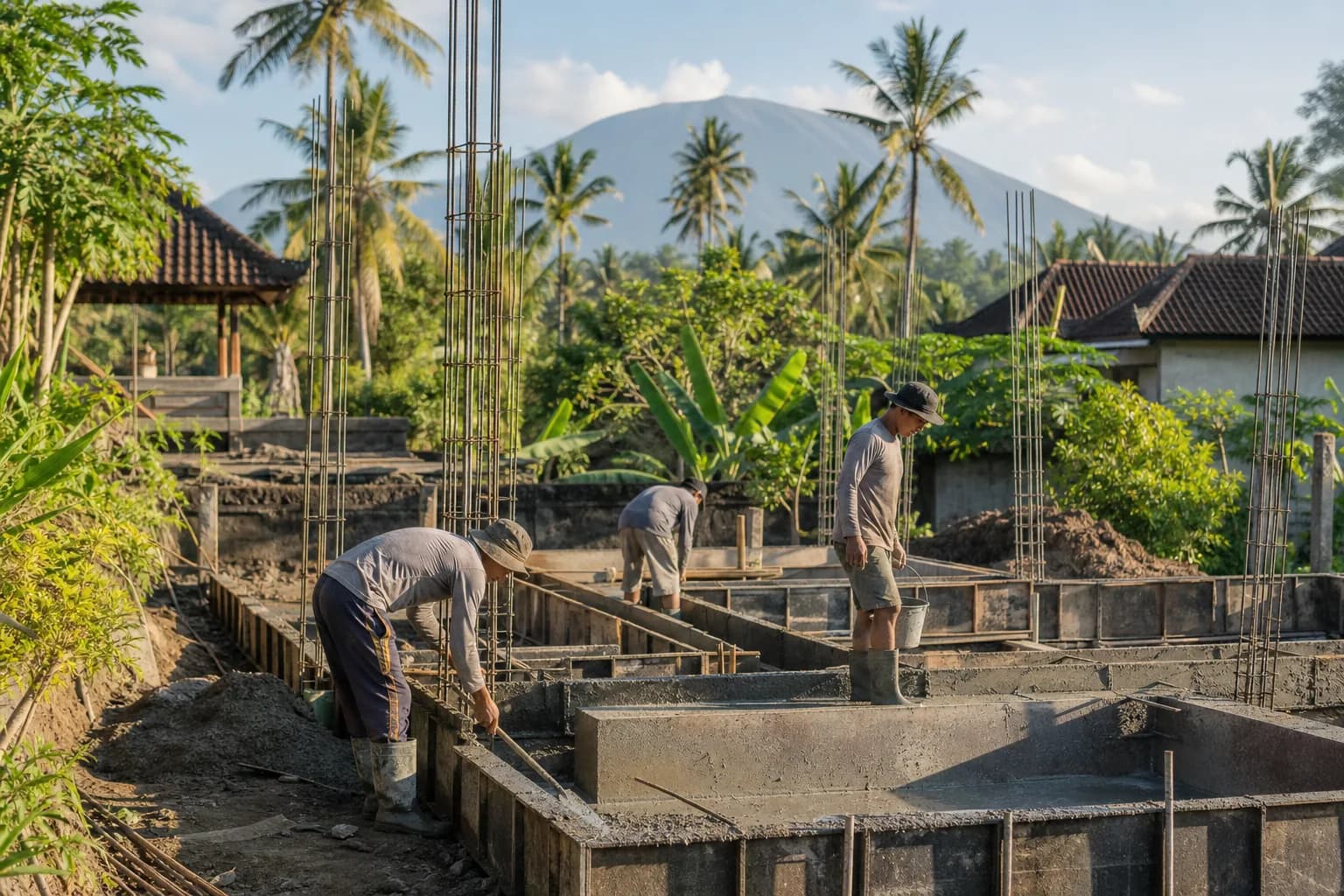
Visas and Bali Property: What Ownership Does and Does Not Give You
Buying a Bali villa does not grant you residency — a persistent myth that sells property. What the investor KITAS and the second-home visa actually require in 2026, how property fits into each pathway, and how to plan a build alongside a visa strategy.
8 min read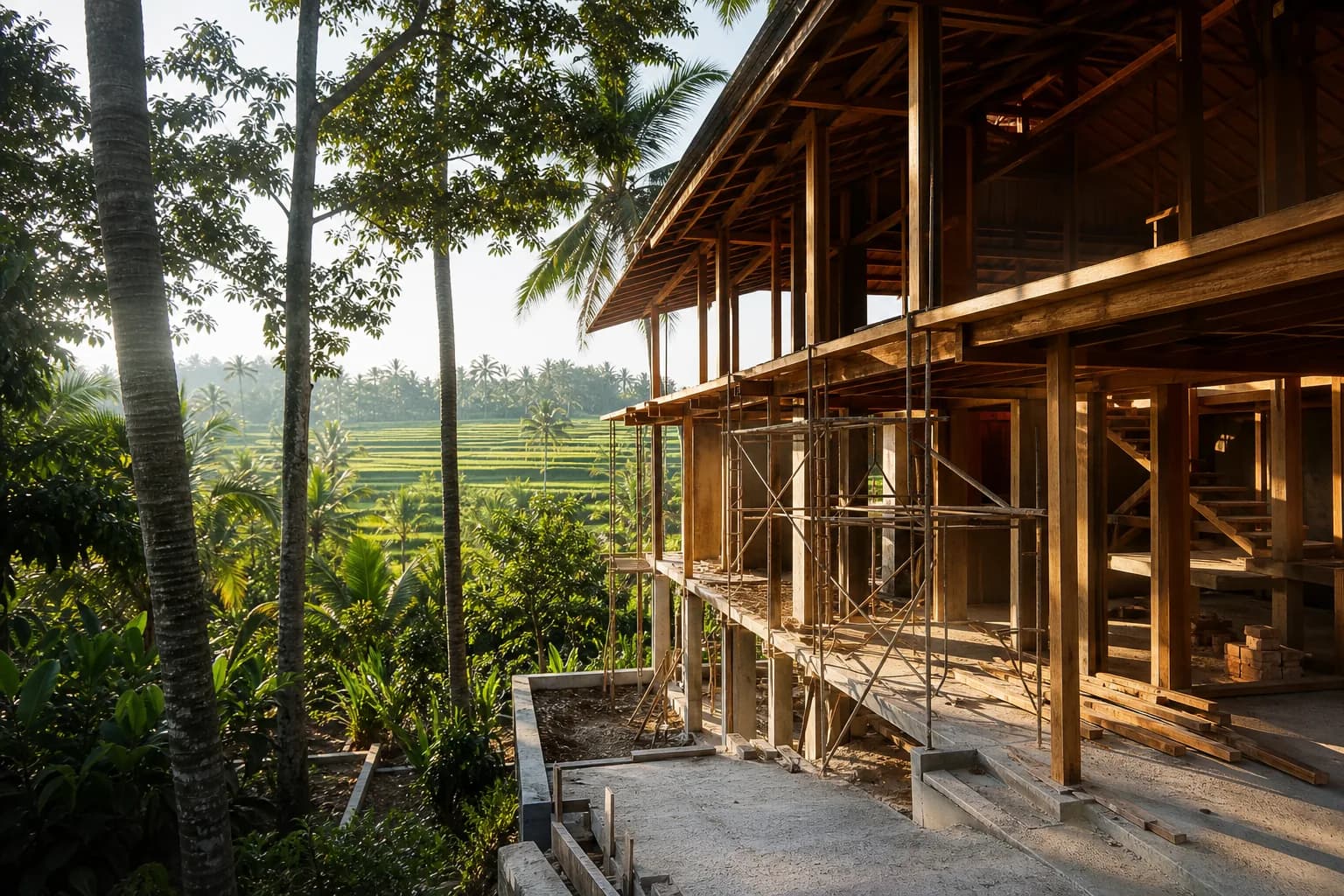
Bali Property Contracts and Indonesian Language Law: Dual-Language Pitfalls That Void Deals
Indonesian law requires property agreements with Indonesian parties to exist in Indonesian — and the two language versions can quietly diverge. What the language law demands in 2026, the real court history, and the dual-language pitfalls that damage Bali deals.
8 min read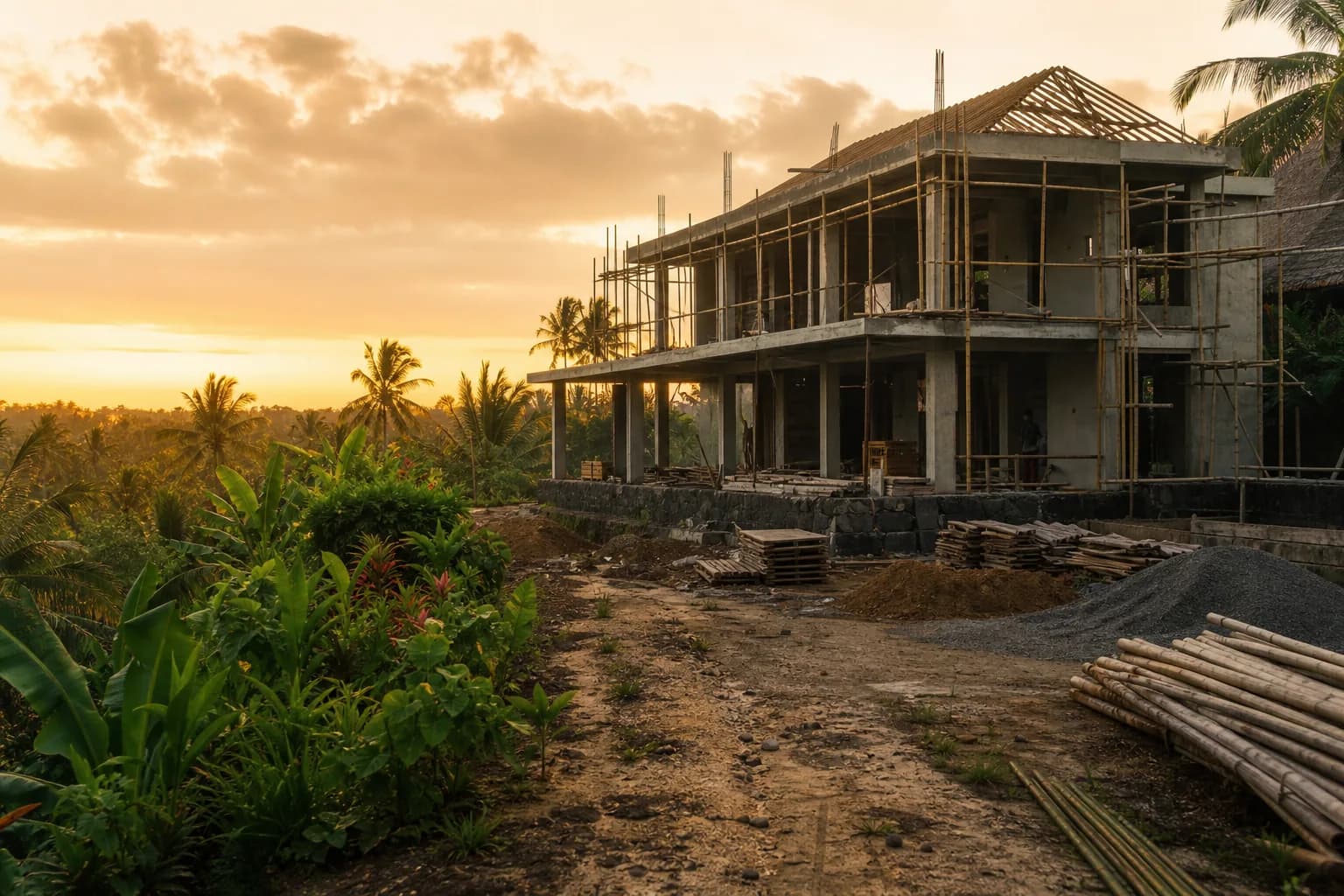
Bali Land Certificates Decoded: SHM, HGB, Hak Pakai and Girik Explained for Buyers
A buyer's decoder for Bali land certificates: what SHM, HGB, Hak Pakai and girik actually mean, why girik lost standalone legal force in February 2026, and how to verify a title before you commit.
9 min read