IMB Permit Processing Times: Denpasar vs Gianyar Bali
{
“article”: “
Why IMB Processing Speed Varies Between Denpasar and Gianyar—And What It Means for Your Construction Timeline
\n\n
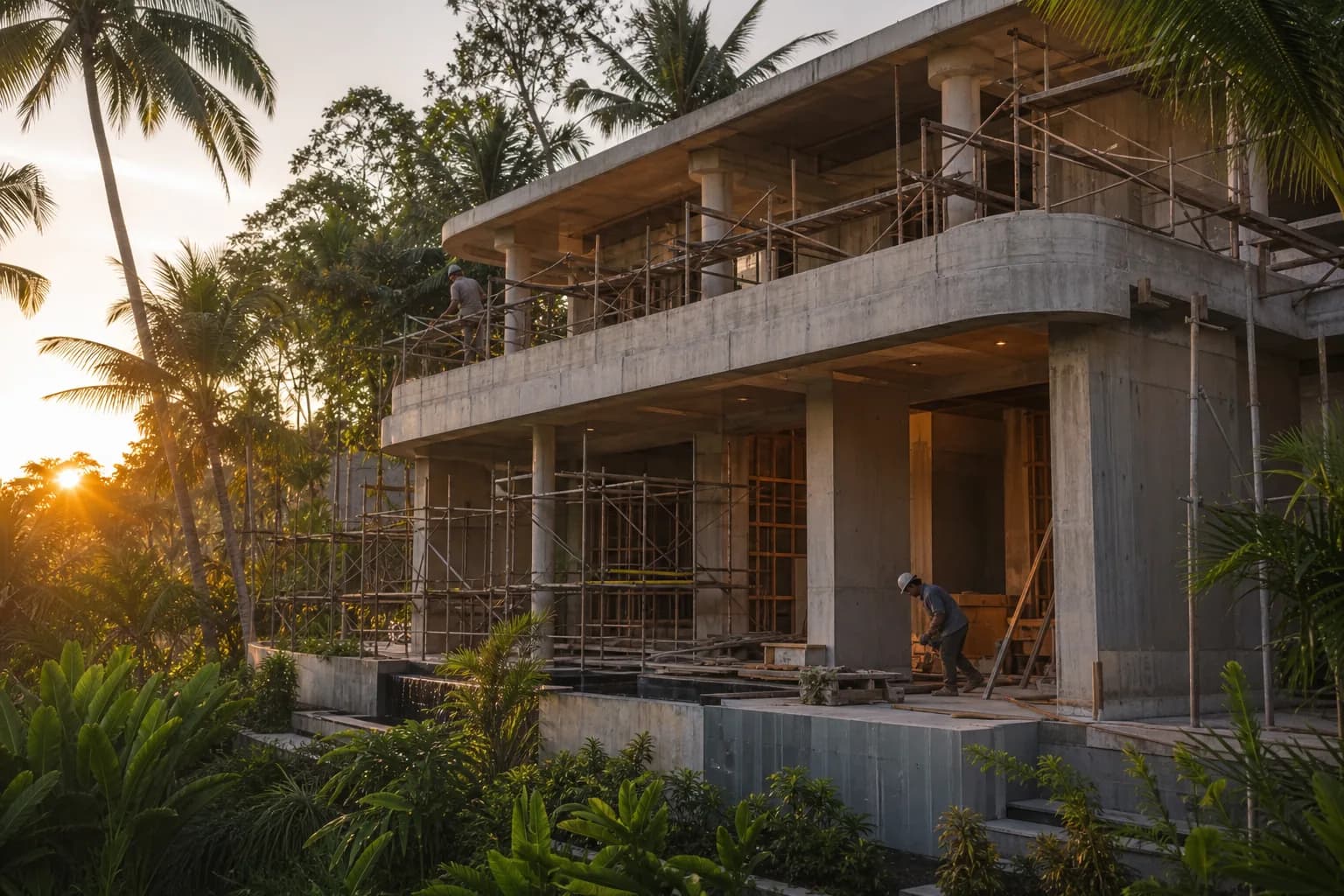
When planning villa construction in Bali, the difference between a 2-month and 6-month permit approval can derail financing schedules, contractor availability, and seasonal construction windows. Foreign investors and developers often underestimate how administrative jurisdiction—specifically Denpasar City versus Gianyar Regency—directly impacts IMB (Izin Mendirikan Bangunan) processing velocity. This isn’t about bureaucratic inconvenience; it’s about cash flow management, contractor retention during monsoon seasons, and whether your structural foundation work begins in dry season or gets delayed into heavy rains. Understanding these regional differences is critical for realistic project scheduling and risk mitigation in land purchase Bali decisions.
\n\n
Technical Breakdown: Administrative Structure and Processing Mechanisms
\n\n
The fundamental difference between Denpasar and Gianyar IMB processing stems from administrative capacity, digitalization levels, and inspection resource allocation. Denpasar, as Bali’s provincial capital, operates the DPMPTSP (Dinas Penanaman Modal dan Pelayanan Terpadu Satu Pintu) with higher staff-to-application ratios and more advanced SIMBG (Sistem Informasi Manajemen Bangunan Gedung) integration. Gianyar Regency, covering larger geographic area including Ubud and surrounding villages, manages higher application volumes with proportionally fewer technical reviewers.
\n\n
As of February 2026, Denpasar processes standard residential IMB applications (Type 1 buildings under 500m²) in approximately 45-75 days when documentation is complete. This includes initial document verification (7-10 days), technical drawing review by structural engineers (14-21 days), site inspection scheduling (10-14 days), and final approval issuance (14-20 days). The city’s centralized office location at Jalan Raya Puputan allows for direct consultant-officer interaction, reducing clarification delays.
\n\n
Gianyar Regency’s processing extends to 60-120 days for equivalent projects. The extended timeline reflects decentralized inspection logistics—site visits to Ubud, Tegallalang, or Sukawati require coordinated travel schedules for technical officers. Document review occurs at the regency office in Gianyar town, but many applicants submit through sub-district offices (kecamatan), adding 7-14 days for internal document transfer. The regency prioritizes tourism-zone applications (Ubud central) over peripheral village locations, creating processing hierarchy not present in Denpasar’s more uniform approach.
\n\n
Critical technical difference: Denpasar requires geotechnical soil reports for all structures exceeding 2 stories, processed through certified labs with 10-day turnaround. Gianyar mandates these reports only for buildings over 3 stories or on slopes exceeding 15 degrees, but when required, lab coordination through Denpasar facilities adds 14-21 days to Gianyar timelines. This affects tropical construction engineering planning for hillside Ubud properties versus flat Sanur locations.
\n\n
The SIMBG online portal theoretically standardizes processing, but practical implementation differs. Denpasar’s system allows real-time application tracking with automated status updates. Gianyar’s portal requires initial online submission followed by physical document verification at regency offices—a hybrid system that doesn’t eliminate in-person requirements. For villa construction cost Bali projections, this means Gianyar projects need buffer time for multiple office visits, impacting consultant fees and project management schedules.
\n\n
Inspection scheduling represents the largest variable. Denpasar conducts site inspections within 14 days of request, with backup slots available weekly. Gianyar’s geographic spread means inspections are batched by area—Ubud sites might wait 21-30 days for an inspector’s scheduled northern route. Monsoon season (November-March) extends this further as muddy access roads delay rural Gianyar inspections but rarely affect Denpasar’s urban sites. This directly impacts building permits Bali strategy for projects with seasonal construction dependencies.
\n\n
Hidden Risks: What Developers Miss in Regional Permit Planning
\n\n
The most overlooked risk is assuming online submission equals uniform processing. Developers budget 90 days for IMB regardless of location, then face contractor demobilization costs when Gianyar applications extend to 120+ days. Contractors secured for dry-season starts (April-October) may commit to other projects if permits delay beyond 60 days, forcing renegotiation at higher rates or 2-3 month wait for crew availability.
\n\n
Document rejection rates differ significantly. Denpasar’s centralized review team applies consistent interpretation of technical standards—rejection typically occurs once with clear correction lists. Gianyar’s multi-reviewer system (different officers for different application batches) can produce inconsistent feedback, with secondary rejections for issues not flagged initially. This isn’t incompetence; it reflects less standardized internal protocols across a larger administrative area.
\n\n
Village-level complications disproportionately affect Gianyar timelines. While both jurisdictions require village head (kepala desa) approval letters, Gianyar’s rural villages often have part-time administrators with limited office hours. Obtaining required signatures can add 14-30 days in villages like Tegallalang or Payangan, versus 3-7 days in Denpasar’s urban kelurahan offices with full-time staff. Foreign buyers pursuing land purchase Bali in \”authentic village settings\” rarely account for this administrative reality.
\n\n
Revision cycles compound delays differently by region. Denpasar allows same-day resubmission of corrected documents at their central office. Gianyar requires resubmission through the original channel (sub-district office if initially filed there), restarting the internal transfer process. A simple drawing correction that costs 7 days in Denpasar can consume 21 days in Gianyar’s system. For leasehold Bali properties with time-sensitive lease commencement dates, this distinction is financially material.
\n\n
Step-by-Step Process: Optimizing Timeline by Jurisdiction
\n\n
For Denpasar Projects:
\n\n
Week 1-2: Engage licensed architect (IPTB-certified) to prepare technical drawings conforming to Denpasar’s specific CAD file requirements (.dwg format with specific layer naming). Simultaneously commission geotechnical report if building exceeds 2 stories—use Denpasar-based labs (10-day turnaround) rather than Java labs (21+ days including shipping). Secure village approval letter from kelurahan office, typically 3-5 business days with complete land ownership documentation.
\n\n
Week 3-4: Submit complete application via SIMBG portal with all attachments: land certificate (SHM/HGB), IMB drawings (site plan, floor plans, elevations, structural), geotechnical report, village letter, environmental compliance statement (SPPL for residential under 500m²). Pay retribusi fees online (approximately IDR 2.5-4 million for 300m² villa). Track application status daily through portal—Denpasar typically confirms document completeness within 7 days.
\n\n
Week 5-7: Technical review phase. Denpasar’s structural engineers review foundation design, setback compliance (minimum 3m from boundaries), and building coefficient (KDB) adherence. If revisions requested, architect submits corrections directly to DPMPTSP office same-day. Schedule site inspection once technical review passes—inspections occur within 14 days of approval.
\n\n
Week 8-10: Site inspection verifies physical conditions match submitted plans: boundary markers, existing structures, access road width, utility connections. Denpasar inspectors complete reports within 5 days post-visit. Final IMB issuance follows 14-20 days after successful inspection. Total optimized timeline: 60-75 days.
\n\n
For Gianyar Regency Projects:
\n\n
Week 1-3: Architect preparation identical to Denpasar, but add village coordination buffer. Rural Gianyar villages (Ubud periphery, Tegallalang) require in-person meetings with kepala desa—schedule during village office hours (typically Monday/Thursday mornings). Bring land documents, passport copies, and local sponsor if foreign-owned leasehold. Budget 14-21 days for village letter in rural areas versus 7 days in Ubud central.
\n\n
Week 4-5: Submit via SIMBG but prepare for physical verification requirement. Gianyar DPMPTSP (located in Gianyar town, 30-40 minutes from Ubud) requires original document presentation within 7 days of online submission. Assign local representative with power of attorney if you’re off-island—multiple visits likely needed.
\n\n
Week 6-10: Extended technical review reflecting higher application volumes. Gianyar processes applications in batches by sub-district. Ubud-area applications reviewed before peripheral villages. If revisions needed, resubmit through original sub-district office (kecamatan) if filed there, adding 7-10 days versus direct Denpasar resubmission.
\n\n
Week 11-14: Site inspection scheduling depends on location clustering. Ubud central sites inspected within 21 days; Tegallalang/Payangan sites wait for northern route batching (30+ days). Monsoon season adds 7-14 days for rural access. Post-inspection report processing: 7-10 days. Final IMB issuance: 14-21 days. Total realistic timeline: 90-120 days, extending to 150+ days for remote villages during rainy season.
\n\n
Critical for both jurisdictions: Engage consultants experienced in specific regency protocols. Teville’s project management team maintains direct relationships with technical reviewers in both jurisdictions, enabling clarification calls that prevent rejection cycles. Review our construction process methodology at /how-we-build/ to understand integrated permit-construction coordination.
\n\n
Realistic Cost and Timeline Ranges by Jurisdiction
\n\n
Denpasar IMB Processing: Retribusi fees for 300m² two-story villa: IDR 3.2-3.8 million (approximately $200-240 USD). Consultant fees for complete application preparation and submission: IDR 15-25 million ($950-1,580 USD) depending on complexity. Geotechnical report (required): IDR 8-12 million ($500-760 USD). Total permit-related costs: IDR 26-40 million ($1,650-2,530 USD). Timeline: 60-75 days optimized, 90-105 days with one revision cycle.
\n\n
Gianyar Regency IMB Processing: Retribusi fees for equivalent villa: IDR 2.8-3.5 million ($175-220 USD)—slightly lower than Denpasar. Consultant fees: IDR 20-35 million ($1,265-2,215 USD)—higher due to multiple office visits, village coordination, and extended timeline management. Geotechnical report (if required for hillside sites): IDR 10-15 million ($630-950 USD) including Denpasar lab coordination. Total costs: IDR 32-53 million ($2,025-3,350 USD). Timeline: 90-120 days optimized, 120-150 days with revisions, 150-180 days for remote villages or monsoon delays.
\n\n
The cost differential isn’t dramatic, but timeline variance significantly impacts villa construction cost Bali through contractor standby fees (IDR 15-25 million per month for crew retention), equipment rental extensions, and potential material price increases during delay periods. For projects on tight financing schedules, Denpasar’s predictability offers quantifiable risk reduction worth 15-20% premium in land acquisition costs versus equivalent Gianyar locations.
\n\n
Hidden cost: revision cycles. Each rejection-correction cycle in Denpasar adds approximately IDR 3-5 million in consultant fees and 14-21 days. In Gianyar, equivalent revisions cost IDR 5-8 million and 21-35 days due to resubmission logistics. Proper initial document preparation—Teville’s standard practice—eliminates 70-80% of revision risk regardless of jurisdiction.
\n\n
Frequently Asked Questions: Denpasar vs Gianyar IMB Processing
\n\n
Can I start construction while IMB is processing to save time?
\n\n
Legally prohibited and practically disastrous. Both Denpasar and Gianyar conduct random construction site inspections—unauthorized work results in stop-work orders, fines (up to IDR 50 million), and mandatory demolition of non-compliant structures. More critically, starting foundation work before geotechnical review approval risks structural design errors that compromise long-term building integrity. Insurance and liability coverage is void for unpermitted construction. The 60-120 day permit timeline must be incorporated into project schedules—attempting shortcuts creates exponentially larger problems. Teville’s project timelines at /projects_catalog/ demonstrate realistic permit-to-completion scheduling.
\n\n
Does choosing Denpasar over Gianyar location solely for faster permits make sense?
\n\n
Permit speed is one variable among many in land purchase Bali decisions. Denpasar offers faster processing but higher land costs (IDR 15-40 million/are in Sanur vs IDR 8-20 million/are in Ubud periphery), less availability of large plots, and different market positioning (beach proximity vs cultural/jungle settings). The 30-45 day permit advantage in Denpasar translates to approximately IDR 20-35 million in reduced carrying costs and contractor coordination—significant but not determinative. Evaluate permit timeline as part of total project feasibility including land cost, target market, access to tourism zones, and long-term property management logistics. Our verified lands inventory at /lands/ includes jurisdiction-specific timeline projections for each listing.
\n\n
How does leasehold vs freehold status affect IMB processing speed in each area?
\n\n
Ownership structure (leasehold/freehold) doesn’t directly impact processing duration in either jurisdiction—both require identical technical documentation. However, leasehold Bali properties add upstream complexity: the lease agreement must be notarized and registered before IMB application, adding 14-30 days to pre-permit timeline. Gianyar’s rural villages scrutinize foreign leaseholder arrangements more carefu

Want to calculate?
 3127 m²9 month(s)from 177.000 USD
Mukunda
 2144 m²11 month(s)from 104.000 USD
Narayana
 3180 m²7 month(s)from 142.000 USD
Vasudeva
 164 m²7 month(s)from 79.000 USD
Private: Haridas Villas, Tegallalang
 3104 m²11 month(s)from 99.000 USD
TALA 100
 1from 198.000 USD
Private: Haridas Villas
164 m²7 month(s)from 79.000 USDTALA TWO
 3173 m²6 month(s)from 125.000 USD
TALA FOUR
 4344 m²16 month(s)from 290.000 USD
Radha
 172 m²8 month(s)from 120.000 USD
Keshava
 3124 m²6 month(s)from 123.000 USD
TALA 8
Start With Real Numbers, Not Guesses
Before buying land or finalizing a design, check the realistic build cost range for your project in Bali.
Our team reviews your inputs and gives a grounded estimate.
Available lands
 2000 m²5 min$ 1440887Bali, Pecatu
 2000 m²10 min$ 243842Bali, Mengwi
 2800 m²15 min$ 310345Bali, Tabanan
 2000 m²15 min$ 261700Bali, Babakan
 600 m²12 min$ 101970Bali, Mengwi
 700 m²15 min$ 162500Bali, Tabanan
 700 m²20 min$ 90517Bali, Cepaka
 500 m²2 min$ 175862Bali, Cemagi
 750 m²15 min$ 187038Bali, Kerobokan
 1000 m²10 min$ 230911Bali, Kerobokan
 400 m²15 min$ 67192Bali, Tabanan
 7250 m²56 min$ 235714Bali, Tabanan
 1000 m²10 min$ 280788Bali, Pecatu
 615 m²15 min$ 113608Bali, Tabanan
 5815 m²5 min$ 815740Bali, Tabanan
Essential Bali build & buy guides
- Bali villa construction cost per m² in 2026
- How much will your villa cost? Calculator
- Building a villa in Bali: the complete guide
- Buying land in Bali: step-by-step for foreigners
- Bali villa investment: yields, risks, returns
- Leasehold vs freehold: what foreigners can own
- Construction defect liability & 10-year warranty
- Bali building codes and construction standards
Related guides
Visas and Bali Property: What Ownership Does and Does Not Give You
Buying a Bali villa does not grant you residency — a persistent myth that sells property. What the investor KITAS and the second-home visa actually require in 2026, how property fits into each pathway, and how to plan a build alongside a visa strategy.
8 min read
Bali Property Contracts and Indonesian Language Law: Dual-Language Pitfalls That Void Deals
Indonesian law requires property agreements with Indonesian parties to exist in Indonesian — and the two language versions can quietly diverge. What the language law demands in 2026, the real court history, and the dual-language pitfalls that damage Bali deals.
8 min read
Bali Land Certificates Decoded: SHM, HGB, Hak Pakai and Girik Explained for Buyers
A buyer's decoder for Bali land certificates: what SHM, HGB, Hak Pakai and girik actually mean, why girik lost standalone legal force in February 2026, and how to verify a title before you commit.
9 min read