Mengwi Temple Building Height Restrictions IMB Costs Bali
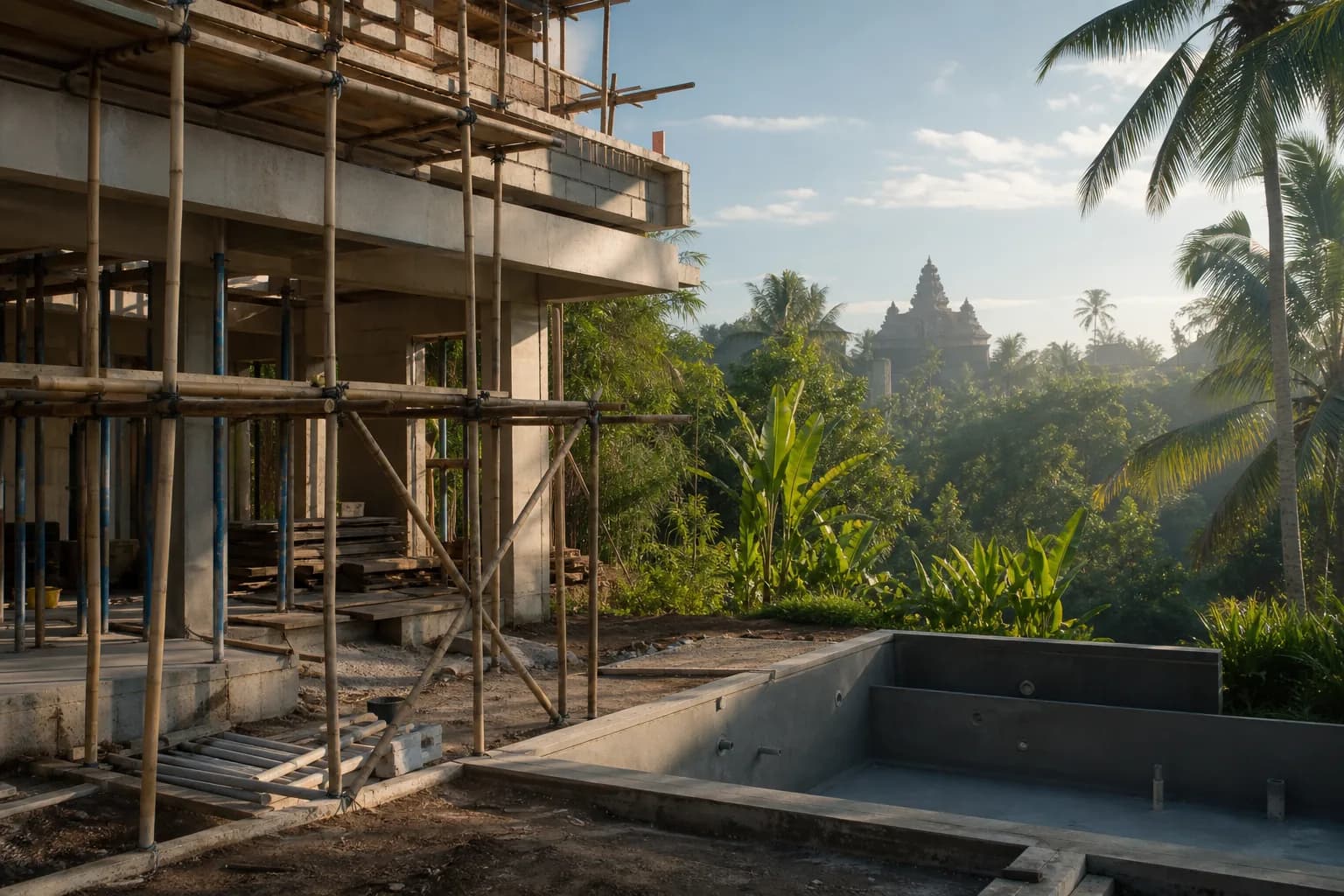
Why Mengwi Temple Proximity Creates Unique Building Height Challenges for Land Buyers
Mengwi’s cultural landscape presents a specific construction dilemma that catches foreign buyers off-guard: proximity to Pura Taman Ayun and dozens of smaller temples creates layered height restrictions that standard 15-meter zoning rules don’t fully explain. A plot 800 meters from a major temple might face different limitations than one 1.2 kilometers away, yet both fall within Mengwi’s administrative boundaries. The IMB (Izin Mendirikan Bangunan) application process becomes exponentially more complex when temple sight-line preservation, ceremonial procession routes, and sacred geometry principles intersect with modern engineering plans. Understanding these restrictions before land purchase Bali decisions prevents costly redesigns or permit rejections months into your project timeline.
Technical Framework: How Temple Proximity Zones Override Standard Height Regulations
Mengwi’s building regulations operate on a dual-layer system. The baseline 15-meter height restriction—equivalent to a mature coconut palm—applies across Badung Regency’s rural zones, including most of Mengwi subdistrict. However, temple proximity introduces additional constraints through the Tri Mandala spatial concept, which divides sacred space into three concentric zones of decreasing sanctity. Properties within 500 meters of major temples like Pura Taman Ayun often face 12-meter maximum heights, while those within 200 meters may be restricted to single-story structures not exceeding 8 meters.
The engineering challenge intensifies because these zones aren’t published on standard cadastral maps. During building permits Bali applications, the local banjar (customary village council) conducts site assessments that consider factors invisible to foreign buyers: historical procession routes used during odalan ceremonies, traditional sight lines from temple gates to Mount Batukaru, and even the symbolic relationship between your plot and sacred water sources. A 2024 case in Mengwi saw a three-story villa design reduced to two stories because the roofline would have interrupted the visual axis between a neighborhood temple and a holy spring 600 meters away.
IMB costs in temple-proximity zones carry additional expense layers. Standard permit fees for a 200-square-meter villa in Bali range from IDR 15-25 million, but Mengwi applications near significant temples require supplementary documentation: a surat keterangan (clearance letter) from the banjar (IDR 2-5 million in administrative fees), a cultural impact assessment if within 300 meters of heritage sites (IDR 8-15 million), and often a ceremonial blessing with the pemangku (temple priest) before construction begins (IDR 3-7 million in offerings and fees). These aren’t optional—without banjar approval, the district office won’t process your IMB application regardless of technical compliance.
The structural engineering implications are significant. Reducing a planned three-story design to two stories doesn’t simply mean removing a floor—it requires recalculating foundation loads, adjusting the structural grid, and often redesigning the entire spatial program. For villa construction cost Bali budgets, this can mean 15-20% cost increases due to inefficient space utilization. A villa that could have achieved 350 square meters across three floors might only reach 280 square meters on two floors with the same footprint, forcing either acceptance of reduced space or expansion of the building footprint (which may trigger different setback requirements).
Teville’s engineering approach in Mengwi projects involves pre-permit cultural mapping. Before finalizing architectural concepts, we conduct banjar consultations to identify non-negotiable height constraints, then design within those parameters from the start. This prevents the common scenario where buyers fall in love with a three-story villa concept from our projects catalog, purchase land, then discover their specific plot can only support two stories. Our construction process integrates cultural compliance as a technical requirement, not an afterthought.
Hidden Risks: What Temple Proximity Assessments Miss During Land Due Diligence
Most land agents provide basic zoning information—”15-meter height limit, residential zone”—without investigating temple-specific restrictions. The critical gap: banjar boundaries don’t align with administrative village boundaries. Your plot might be in Mengwi administratively but fall under the customary jurisdiction of a banjar in neighboring Abiansemal, which has different temple relationships and therefore different height interpretations.
A second hidden risk involves temporal restrictions. Some temple-proximity zones allow standard heights 11 months per year but impose construction blackouts during major ceremony periods—sometimes 2-3 weeks when no concrete pouring, pile driving, or roofing work is permitted. These aren’t documented in official regulations but are enforced through banjar social pressure. Violating ceremony blackouts can result in work stoppages, required purification ceremonies (at your expense), or in extreme cases, community-demanded project modifications.
The IMB cost estimation error is equally problematic. Online calculators and even some local consultants quote standard permit fees without accounting for temple-proximity supplements. A buyer budgeting IDR 20 million for permits discovers the actual cost is IDR 45 million once cultural assessments, banjar clearances, and required ceremonies are included. This 125% cost overrun typically surfaces after land purchase, when backing out isn’t practical.
Foundation engineering faces unique constraints near temples. Some areas prohibit deep pile foundations that might “pierce” sacred ground layers, requiring more expensive raft foundations or grade beams. This isn’t codified in building codes but emerges during banjar technical reviews. The structural cost impact: IDR 150-250 million additional foundation expense for a typical 300-square-meter villa, plus 3-4 weeks added to the construction timeline.
Step-by-Step Process: Navigating Mengwi Temple Proximity Permits
Phase 1: Pre-Purchase Cultural Mapping (2-3 Weeks)
Before committing to land purchase Bali in Mengwi, conduct a cultural constraint assessment. This involves three parallel investigations: First, identify all temples within 1-kilometer radius using both Google Maps and local knowledge (many small sanggah shrines don’t appear on digital maps). Second, visit the relevant banjar office to inquire about customary height restrictions—bring a translator, as these discussions rarely happen in English. Third, request a meeting with the kelian banjar (customary village head) to understand ceremony schedules and construction blackout periods.
Teville’s verified lands inventory includes pre-assessed cultural constraints for Mengwi properties, eliminating this research burden. Each listing specifies maximum buildable height based on actual banjar consultations, not just zoning maps.
Phase 2: Conceptual Design Within Constraints (3-4 Weeks)
Once height limits are confirmed, develop architectural concepts that optimize space within those constraints. For 12-meter limits, this typically means two full stories plus a rooftop terrace (which doesn’t count toward height if properly designed). For 8-meter limits, focus on single-story pavilion-style layouts with high ceilings and mezzanine sleeping lofts. The engineering principle: design to the constraint, don’t fight it.
Our tropical construction engineering approach treats height restrictions as design opportunities. Lower profiles often mean better natural ventilation, reduced wind loads during storms, and more harmonious integration with the landscape—all performance advantages in Bali’s climate.
Phase 3: Banjar Clearance Application (4-6 Weeks)
Submit your conceptual design to the banjar for preliminary approval. Required documents include: site plan showing building footprint and height, elevations from all four sides, a letter in Indonesian explaining the project purpose, and proof of land ownership or lease rights. The banjar will convene a meeting—often requiring your attendance or your representative’s—to discuss the proposal. Be prepared for modification requests: shifting the building 3 meters to avoid a sight line, reducing ridge height by 50 centimeters, or reorienting the entrance gate.
This phase cannot be rushed. Banjar meetings follow traditional schedules tied to the Balinese calendar, not Western project timelines. Attempting to expedite through payments or pressure typically backfires, extending timelines further.
Phase 4: Formal IMB Application (6-8 Weeks)
With banjar clearance secured, submit the formal IMB application to Badung Regency’s DPMPTSP office. Required documents now include the banjar clearance letter, structural engineering calculations, architectural drawings stamped by an Indonesian-licensed architect, soil test reports, and environmental compliance documents. The district reviews technical compliance with building codes while respecting the cultural constraints already approved by the banjar.
Processing time averages 6-8 weeks for complete applications, but incomplete submissions restart the clock. Teville manages this process as part of our full-cycle construction service, ensuring all documentation meets both technical and cultural requirements on first submission.
Phase 5: Pre-Construction Ceremony (1 Day + Preparation)
Before breaking ground, conduct a melaspas ceremony with the pemangku to bless the site and request permission from spiritual guardians. This isn’t superstition—it’s social contract. Skipping this step can result in worker reluctance (Balinese construction crews may refuse to work on unblessed sites), community friction, or banjar intervention during construction. Budget IDR 5-10 million for ceremony costs including offerings, priest fees, and a communal meal for neighbors.
Realistic Cost Breakdown: Mengwi Temple-Proximity IMB and Compliance
For a 250-square-meter villa on a temple-proximity plot in Mengwi, expect the following permit and compliance costs:
- Standard IMB Fees: IDR 18-22 million (based on building area and construction value)
- Banjar Clearance Process: IDR 3-6 million (administrative fees, document preparation, translation services)
- Cultural Impact Assessment: IDR 10-15 million (if within 300m of heritage temple; not required for all plots)
- Structural Engineering Modifications: IDR 25-40 million (redesign costs if height reduction required after initial concept)
- Pre-Construction Ceremony: IDR 5-10 million (offerings, priest, community meal)
- Legal Consultation: IDR 8-12 million (attorney review of banjar agreements and permit compliance)
Total Permit and Cultural Compliance Cost Range: IDR 69-105 million (USD 4,300-6,600 at current rates), compared to IDR 25-35 million for non-temple-proximity plots elsewhere in Bali.
Timeline expectations: 14-18 weeks from land purchase to construction commencement, versus 8-12 weeks for standard Bali projects. This extended timeline has carrying cost implications—leasehold Bali agreements begin their term at signing, meaning 6-10 additional weeks of lease consumption before construction starts.
The hidden cost multiplier: design inefficiency. A villa restricted to two stories instead of three requires 30-40% more land area to achieve the same built space, increasing land acquisition costs proportionally. For buyers targeting 300 square meters of living space, this might mean purchasing 600 square meters of land instead of 400 square meters—an additional USD 30,000-50,000 in land cost depending on location.
Frequently Asked Questions: Mengwi Temple Proximity Building Regulations
How do I know if my Mengwi land falls within temple proximity restrictions before purchasing?
Request a surat keterangan from the local banjar office before signing the land purchase agreement. This clearance letter will specify any customary height restrictions, setback requirements, or ceremony blackout periods. Don’t rely on the seller’s verbal assurances—banjar rules can change, and sellers may not be current on restrictions. Teville’s land consultation service includes pre-purchase banjar verification for Mengwi properties, providing written confirmation of buildable parameters before you commit capital.
Can I appeal a banjar height restriction if it’s lower than the 15-meter zoning limit?
Technically yes, practically no. While you can request reconsideration through the banjar assembly process, overturning cultural restrictions requires community consensus—unlikely when temple sight lines or ceremonial considerations are involved. A more effective approach: modify your design to excel within the constraint rather than fighting it. Some of Bali’s most architecturally distinguished villas are single-story pavilion designs that turned height restrictions into design advantages. Our portfolio includes several Mengwi projects where 8-meter height limits produced more innovative spatial solutions than unrestricted designs.
What happens if I build without banjar clearance but have a valid IMB?
You face social sanctions, not legal ones—which in Bali can be more consequential. The banjar can impose fines, require purification ceremonies at your expense, or in extreme cases, organize community work stoppages that halt your project indefinitely. Your IMB remains technically valid, but construction becomes practically impossible without community cooperation. Balinese construction crews, material suppliers, and even utility connection teams defer to banjar authority. The resolution cost: typi
 1from 198.000 USD
Private: Haridas Villas
 3173 m²6 month(s)from 125.000 USD
TALA FOUR
 172 m²8 month(s)from 120.000 USD
Keshava

Want to calculate?
 164 m²7 month(s)from 79.000 USD
Private: Haridas Villas, Tegallalang
 3127 m²9 month(s)from 177.000 USD
Mukunda
 2144 m²11 month(s)from 104.000 USD
Narayana
 3124 m²6 month(s)from 123.000 USD
TALA 8
 3104 m²11 month(s)from 99.000 USD
TALA 100
 3180 m²7 month(s)from 142.000 USD
Vasudeva
 4344 m²16 month(s)from 290.000 USD
Radha
164 m²7 month(s)from 79.000 USDTALA TWO
Start With Real Numbers, Not Guesses
Before buying land or finalizing a design, check the realistic build cost range for your project in Bali.
Our team reviews your inputs and gives a grounded estimate.
Available lands
 680 m²15 min$ 110751Bali, Pererenan
 3100 m²20 min$ 272968Bali, Tabanan
 4270 m²10 min$ 394397Bali, Ubud
 8313 m²15 min$ 716670Bali, Buduk
 2000 m²15 min$ 110837Bali, Karangasem
 1000 m²10 min$ 184729Bali, Kutuh South Bali
 1600 m²32 min$ 266010Bali, Tabanan
 700 m²15 min$ 162500Bali, Tabanan
 1200 m²2 min$ 155172Bali, Klungkung
 220 m²2 min$ 66565Bali, Cemagi
 420 m²15 min$ 41897Bali, Tabanan
 1158 m²12 min$ 291996Bali, Mengwi
 1720 m²2 min$ 241478Bali, Tabanan
 1300 m²10 min$ 348214Bali, Tabanan
 500 m²2 min$ 175862Bali, Cemagi
Essential Bali build & buy guides
- Bali villa construction cost per m² in 2026
- How much will your villa cost? Calculator
- Building a villa in Bali: the complete guide
- Buying land in Bali: step-by-step for foreigners
- Bali villa investment: yields, risks, returns
- Leasehold vs freehold: what foreigners can own
- Construction defect liability & 10-year warranty
- Bali building codes and construction standards
Related guides
Visas and Bali Property: What Ownership Does and Does Not Give You
Buying a Bali villa does not grant you residency — a persistent myth that sells property. What the investor KITAS and the second-home visa actually require in 2026, how property fits into each pathway, and how to plan a build alongside a visa strategy.
8 min read
Bali Property Contracts and Indonesian Language Law: Dual-Language Pitfalls That Void Deals
Indonesian law requires property agreements with Indonesian parties to exist in Indonesian — and the two language versions can quietly diverge. What the language law demands in 2026, the real court history, and the dual-language pitfalls that damage Bali deals.
8 min read
Bali Land Certificates Decoded: SHM, HGB, Hak Pakai and Girik Explained for Buyers
A buyer's decoder for Bali land certificates: what SHM, HGB, Hak Pakai and girik actually mean, why girik lost standalone legal force in February 2026, and how to verify a title before you commit.
9 min read