Jimbaran Bay Land Reclamation Permits Marine Impact Costs Bali
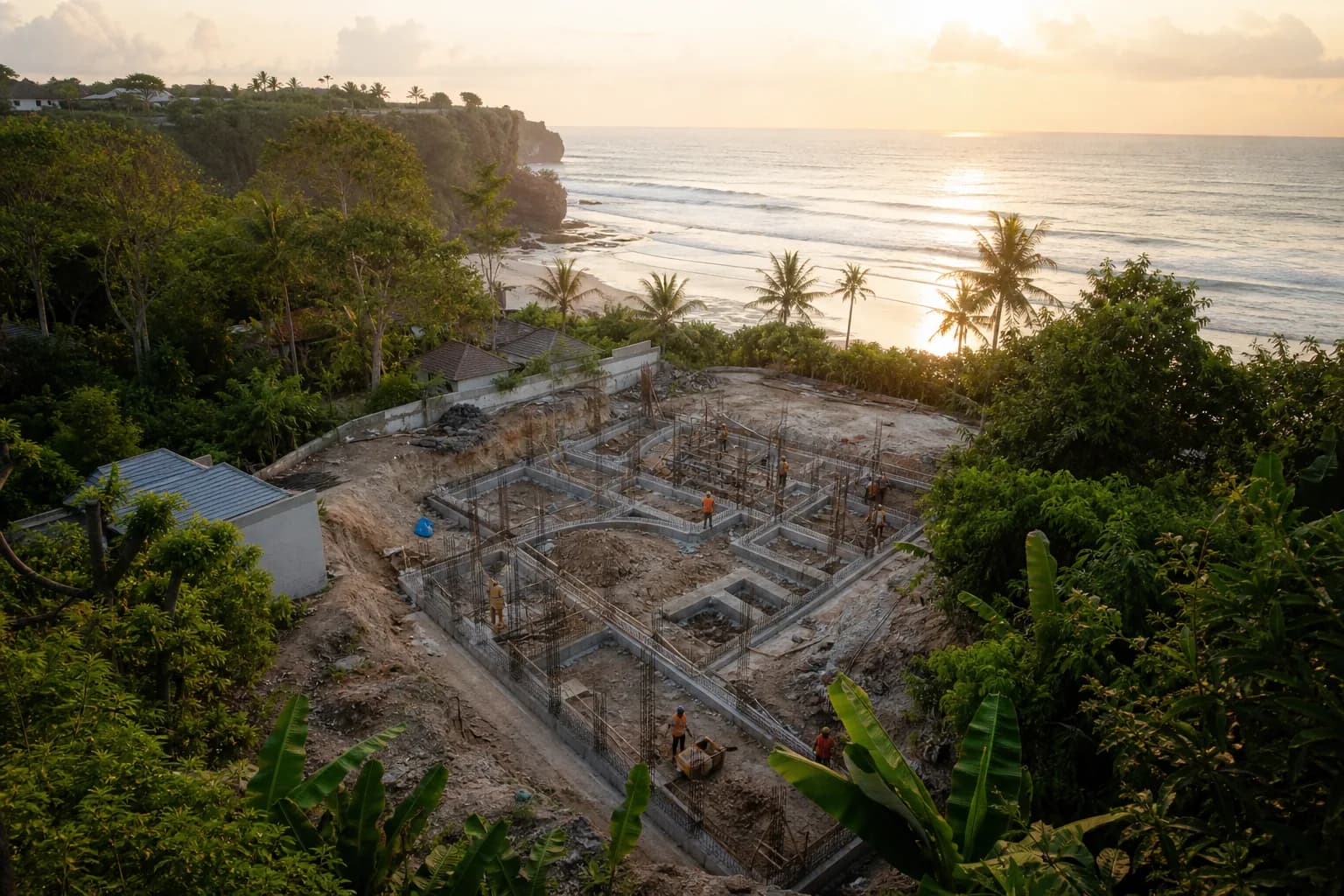
Why Jimbaran Bay Land Reclamation Projects Face Unprecedented Regulatory Complexity in 2026
Jimbaran Bay’s coastal development landscape has fundamentally shifted following Indonesia’s 2024-2025 environmental policy reforms and the ongoing Benoa Bay reclamation controversy. Property developers and construction firms now face a multi-layered permitting framework where marine impact assessments alone can cost USD $85,000-$320,000 before a single cubic meter of fill material touches water. The technical challenge isn’t just regulatory—it’s engineering coastal structures in a seismically active zone with monsoon-driven wave action, coral reef ecosystems, and artisanal fishing grounds that carry legal protection status. For construction companies evaluating reclamation feasibility, understanding the true cost structure means analyzing not just permit fees, but geotechnical surveys, hydrodynamic modeling, long-term subsidence monitoring, and community consultation processes that can extend timelines by 18-36 months beyond initial projections.
Technical Framework: Marine Impact Assessment Requirements for Jimbaran Coastal Projects
Jimbaran Bay reclamation projects fall under Indonesia’s AMDAL (Analisis Mengenai Dampak Lingkungan) framework, specifically the enhanced coastal zone variant requiring ANDAL-RKL-RPL documentation. The technical scope differs fundamentally from inland building permits Bali processes. Marine impact assessments must address seven critical engineering domains:
- Hydrodynamic Modeling: 12-month tidal cycle analysis, wave refraction patterns, littoral drift calculations, and sediment transport modeling using MIKE 21 or Delft3D software. Costs: USD $45,000-$78,000 for baseline studies.
- Benthic Habitat Mapping: Side-scan sonar surveys, coral reef health assessments, seagrass bed documentation within 500m radius. Required resolution: 0.5m grid spacing. Costs: USD $28,000-$52,000.
- Geotechnical Marine Surveys: Seabed core sampling to 25m depth, soil bearing capacity analysis, liquefaction risk assessment for reclaimed land. Minimum 8 borehole locations per hectare. Costs: USD $35,000-$68,000.
- Water Quality Baseline: 6-month pre-construction monitoring of turbidity, dissolved oxygen, salinity, heavy metals at 12 designated stations. Costs: USD $18,000-$32,000.
- Fisheries Impact Study: Catch data analysis, spawning ground identification, economic valuation of artisanal fishing activities. Costs: USD $22,000-$41,000.
- Coastal Erosion Modeling: Predictive analysis of shoreline changes, beach profile alterations, impact on adjacent properties. Costs: USD $31,000-$58,000.
- Climate Adaptation Assessment: Sea level rise projections (2050/2100 scenarios), storm surge vulnerability, design elevation requirements. Costs: USD $15,000-$28,000.
The cumulative technical assessment cost ranges from USD $194,000 to $357,000 before permit application submission. This excludes the AMDAL document preparation itself, which requires accredited environmental consultants (LP3L certification) and costs an additional USD $65,000-$125,000 for projects exceeding 5 hectares.
Permit processing involves three regulatory tiers: Badung Regency BPMPTSP (investment/licensing board), Bali Provincial Marine and Fisheries Agency, and Ministry of Marine Affairs coordination for projects within 4 nautical miles of shore. The legal framework references Presidential Regulation No. 122/2012 on reclamation, but Bali’s Special Regulation (Perda Provinsi) No. 16/2009 on Spatial Planning imposes stricter coastal setback requirements—typically 100-150m from high tide line in Jimbaran’s tourism zones.
Engineering specifications for reclamation fill material must meet SNI 8640:2017 standards. Acceptable sources include dredged marine sand (prohibited if sourced from coral reef areas), quarry rock, or geotextile-contained hydraulic fill. The structural design must account for 0.8m sea level rise by 2100 (IPCC RCP 8.5 scenario), requiring minimum reclamation elevations of +4.5m above mean sea level. This significantly increases fill volume requirements and project costs compared to standard Bali villa construction on existing land.
Hidden Regulatory Risks: What Marine Impact Assessments Don’t Reveal Upfront
The published AMDAL guidelines obscure three critical cost escalation factors that emerge during actual permit processing:
Community Consultation Liability: Jimbaran’s traditional fishing communities (Kedonganan, Kelan) hold customary marine rights (hak ulayat laut) recognized under Constitutional Court Decision 3/PUU-VIII/2010. Reclamation projects require formal consent through village assemblies (paruman desa adat), which can demand compensation packages valued at USD $180,000-$450,000 per affected village. These aren’t permit fees—they’re negotiated settlements that don’t appear in official cost estimates but are practically mandatory for project approval.
Coral Reef Offset Requirements: If marine surveys identify coral coverage exceeding 15% within the project footprint, developers must fund coral transplantation programs at 3:1 replacement ratios. Transplantation costs run USD $85-$140 per square meter, monitored over 5 years. A 2-hectare reclamation impacting 0.4 hectares of coral triggers USD $1.02-$1.68 million in offset obligations.
Performance Bond Escalation: Standard reclamation permits require environmental performance bonds equal to 15% of total project value, held for 3 years post-completion. However, Jimbaran Bay’s proximity to Ngurah Rai Airport flight paths adds aviation safety review requirements, potentially increasing bonds to 22% if reclamation alters coastal radar reflection patterns or creates bird strike hazards.
The temporal risk is equally significant. While official permit timelines state 120-180 days, actual processing for Jimbaran coastal projects averages 14-22 months due to inter-agency coordination delays and mandatory public comment periods. This holding cost—land lease payments, consultant retainers, financing charges—can add 18-25% to total pre-construction expenditure for projects involving land purchase Bali coastal parcels.
Step-by-Step Process: Navigating Jimbaran Bay Reclamation Permit Acquisition
Phase 1: Pre-Feasibility Assessment (Months 1-3)
Engage a marine engineering consultant to conduct preliminary site analysis. Critical deliverables include bathymetric survey (seabed depth mapping), preliminary wave climate analysis, and regulatory zoning verification. Cost: USD $28,000-$45,000. Verify the site isn’t within Jimbaran’s designated “green belt” coastal protection zones (check Badung Regency RTRW spatial plan map, available at BPMPTSP office). Simultaneously commission a legal due diligence review of land title status—reclamation permits cannot be issued for leasehold Bali properties without explicit owner consent documented through notarized agreements.
Phase 2: AMDAL Scoping and Terms of Reference (Months 4-6)
Submit project concept to Bali Provincial Environmental Agency (DLH) for AMDAL scoping. This determines which of the seven technical studies are mandatory for your specific site. Attend the mandatory scoping meeting with regulatory stakeholders—bring preliminary engineering drawings showing reclamation extent, fill volumes, and coastal structure designs. The scoping document (KA-ANDAL) approval takes 45-75 days. Cost for consultant preparation: USD $18,000-$32,000.
Phase 3: Comprehensive Technical Studies (Months 7-15)
Execute all required marine impact assessments concurrently to compress timeline. Hydrodynamic modeling requires full monsoon cycle data (June-September wet season critical). Coordinate geotechnical boring during dry season (April-October) when seabed access is optimal. Budget 8-9 months for complete data collection and analysis. Engage only LP3L-certified environmental consultants—non-certified reports will be rejected, restarting the entire process. Total cost: USD $194,000-$357,000 as detailed earlier.
Phase 4: AMDAL Document Preparation and Submission (Months 16-18)
Compile technical studies into formal ANDAL (impact analysis), RKL (management plan), and RPL (monitoring plan) documents. These must follow standardized format per Minister of Environment Regulation No. 16/2012. The RKL must specify measurable performance indicators—turbidity limits during construction (50 NTU maximum 100m from site), noise thresholds (70 dBA at nearest residence), and marine life monitoring protocols. Document preparation: USD $65,000-$125,000. Submit through OSS (Online Single Submission) system with complete engineering drawings, financial capability proof, and company environmental management certification (ISO 14001 strongly recommended).
Phase 5: AMDAL Commission Review (Months 19-22)
The Provincial AMDAL Commission conducts technical review, typically requiring 2-3 rounds of revisions. Prepare for public hearing (mandatory for projects >5 hectares)—expect opposition from fishing cooperatives and environmental NGOs. Document all community consultation efforts meticulously. Commission approval takes 75-120 days from complete submission. No fees for government review, but budget USD $15,000-$28,000 for revision cycles and public hearing logistics.
Phase 6: Reclamation Permit Issuance (Months 23-24)
With approved AMDAL, apply for formal reclamation permit (Izin Reklamasi) through Badung Regency BPMPTSP. Submit performance bond (bank guarantee), proof of marine insurance (minimum USD $2 million coverage), and construction methodology statement. Permit fee: 0.05% of project value (minimum USD $8,500). Processing: 30-45 days. Permit valid 3 years, renewable once.
Throughout this process, maintain parallel engagement with traditional village authorities. Budget USD $25,000-$45,000 for ceremonial obligations, community development contributions, and customary consultation processes that operate outside formal government channels but are essential for social license to operate.
Realistic Cost Structure: Breaking Down Jimbaran Bay Reclamation Economics
For a representative 3-hectare reclamation project in Jimbaran Bay (typical scale for boutique resort development), the pre-construction permit and assessment costs structure as follows:
Regulatory and Assessment Costs:
- Marine impact technical studies: USD $245,000-$357,000
- AMDAL document preparation: USD $85,000-$125,000
- Legal consultancy and permit processing: USD $35,000-$52,000
- Community consultation and customary obligations: USD $205,000-$495,000
- Government permit fees and levies: USD $12,000-$18,000
Financial Instruments:
- Environmental performance bond (15-22% of construction value): USD $450,000-$880,000 (held, not spent)
- Marine insurance premiums (3-year term): USD $45,000-$68,000
Total Pre-Construction Outlay: USD $1,077,000-$1,995,000 before any physical construction begins. This represents 22-35% of typical villa construction cost Bali for equivalent land area, making reclamation economically viable only for projects exceeding USD $8-10 million total development value.
Timeline realism: 24-28 months from initial site assessment to construction commencement. Holding costs during this period (land lease at USD $8-15/m²/year, consultant retainers, financing charges) add USD $185,000-$340,000 to total pre-construction expenditure.
Post-construction monitoring obligations extend 5 years, requiring quarterly water quality testing, annual bathymetric surveys, and coral health assessments. Budget USD $28,000-$42,000 annually for compliance monitoring—a cost rarely included in initial feasibility studies but legally mandated under RKL-RPL commitments.
Frequently Asked Questions: Jimbaran Bay Reclamation Permit Specifics
Can foreign-owned companies obtain reclamation permits in Jimbaran Bay, or are there ownership restrictions?
Reclamation permits are issued to the legal entity holding land rights, not based on ownership nationality. However, foreign investment companies (PT PMA) face additional scrutiny under Indonesia’s Negative Investment List. Coastal reclamation falls under “conditionally open” sectors requiring minimum 51% Indonesian ownership for projects within 4 nautical miles of shore. The practical workaround: structure the project through a domestic PT with foreign technical partnership agreements. The permit itself doesn’t discriminate by nationality, but the underlying land rights do—reclaimed land cannot be held under Hak Pakai (Right to Use) titles available to foreigners; it requires Hak Guna Bangunan (Building Rights) which demands Indonesian majority ownership. This creates complex structuring requirements that add USD $25,000-$45,000 in legal setup costs beyond standard land purchase Bali transactions.
How do Jimbaran Bay reclamation costs compare to purchasing existing beachfront land?
Existing beachfront land in Jimbaran’s prime zones (Kedonganan to Four Seasons area) trades at USD $850-$1,400 per square meter. Reclamation total cost (permits, assessments, fill material, coastal protection structures, monitoring) runs USD $420-$680 per square meter for the reclaimed area itself, appearing 50-60% cheaper. However, this excludes three critical factors: (1) 24-28 month delay before construction can begin versus immediate building on existing land, (2) ongoing subsidence risk requiring foundation engineering 40% more expensive than standard tropical construction engineering methods, and (3) resale value discount of 25-35% that buyers apply to reclaimed versus natural beachfront. The economic advantage exists only for large-scale projects (>5 hectares) where land acquisition costs would exceed USD $4.2-7 million, making the 2-year permit timeline acceptable relative to capital deployment.
What happens if marine impact assessments reveal protected species or critical habitats in the project area?
Discovery of protected species (sea turtles, dugongs, specific coral species listed under Indonesian Government Regulation No. 7/1999) triggers mandatory project redesign or relocation. The AMDAL Commission will not approve reclama
 1from 198.000 USD
Private: Haridas Villas
 3124 m²6 month(s)from 123.000 USD
TALA 8

Want to calculate?
 3180 m²7 month(s)from 142.000 USD
Vasudeva
 164 m²7 month(s)from 79.000 USD
TALA TWO
164 m²7 month(s)from 79.000 USDPrivate: Haridas Villas, Tegallalang
 4344 m²16 month(s)from 290.000 USD
Radha
 3173 m²6 month(s)from 125.000 USD
TALA FOUR
 172 m²8 month(s)from 120.000 USD
Keshava
 2144 m²11 month(s)from 104.000 USD
Narayana
 3127 m²9 month(s)from 177.000 USD
Mukunda
 3104 m²11 month(s)from 99.000 USD
TALA 100
Start With Real Numbers, Not Guesses
Before buying land or finalizing a design, check the realistic build cost range for your project in Bali.
Our team reviews your inputs and gives a grounded estimate.
Available lands
 911 m²15 min$ 248217Bali, Pererenan
 3800 m²15 min$ 100616Bali, Pererenan
 1410 m²15 min$ 390702Bali, Tabanan
 2000 m²15 min$ 523000Bali, Canggu
 1600 m²32 min$ 266010Bali, Tabanan
 515 m²7 min$ 570813Bali, Canggu
 1000 m²10 min$ 230911Bali, Kerobokan
 3000 m²15 min$ 1246921Bali, Tabanan
 2000 m²5 min$ 1440887Bali, Pecatu
 608 m²15 min$ 310377Bali, Seminyak
 680 m²15 min$ 110751Bali, Pererenan
 1430 m²5 min$ 209862Bali, Klungkung
 8313 m²15 min$ 716670Bali, Buduk
 2000 m²5 min$ 738916Bali, Ungasan
 325 m²15 min$ 44472Bali, Ungasan
Essential Bali build & buy guides
- Bali villa construction cost per m² in 2026
- How much will your villa cost? Calculator
- Building a villa in Bali: the complete guide
- Buying land in Bali: step-by-step for foreigners
- Bali villa investment: yields, risks, returns
- Leasehold vs freehold: what foreigners can own
- Construction defect liability & 10-year warranty
- Bali building codes and construction standards
Related guides
Bali Property Contracts and Indonesian Language Law: Dual-Language Pitfalls That Void Deals
Indonesian law requires property agreements with Indonesian parties to exist in Indonesian — and the two language versions can quietly diverge. What the language law demands in 2026, the real court history, and the dual-language pitfalls that damage Bali deals.
8 min read
Bali Land Certificates Decoded: SHM, HGB, Hak Pakai and Girik Explained for Buyers
A buyer's decoder for Bali land certificates: what SHM, HGB, Hak Pakai and girik actually mean, why girik lost standalone legal force in February 2026, and how to verify a title before you commit.
9 min read
Inheritance of Bali Property for Foreigners: Leasehold, PT PMA Shares and Wills
What happens to your Bali villa when you die: why a leasehold passes to heirs only if the deed says so, how PT PMA shares are inherited, the one-year rule for foreign heirs of freehold land, and the Indonesian notarial will that makes it all work.
7 min read