Badung Regency IMB Permit Timeline: Construction License Delays i
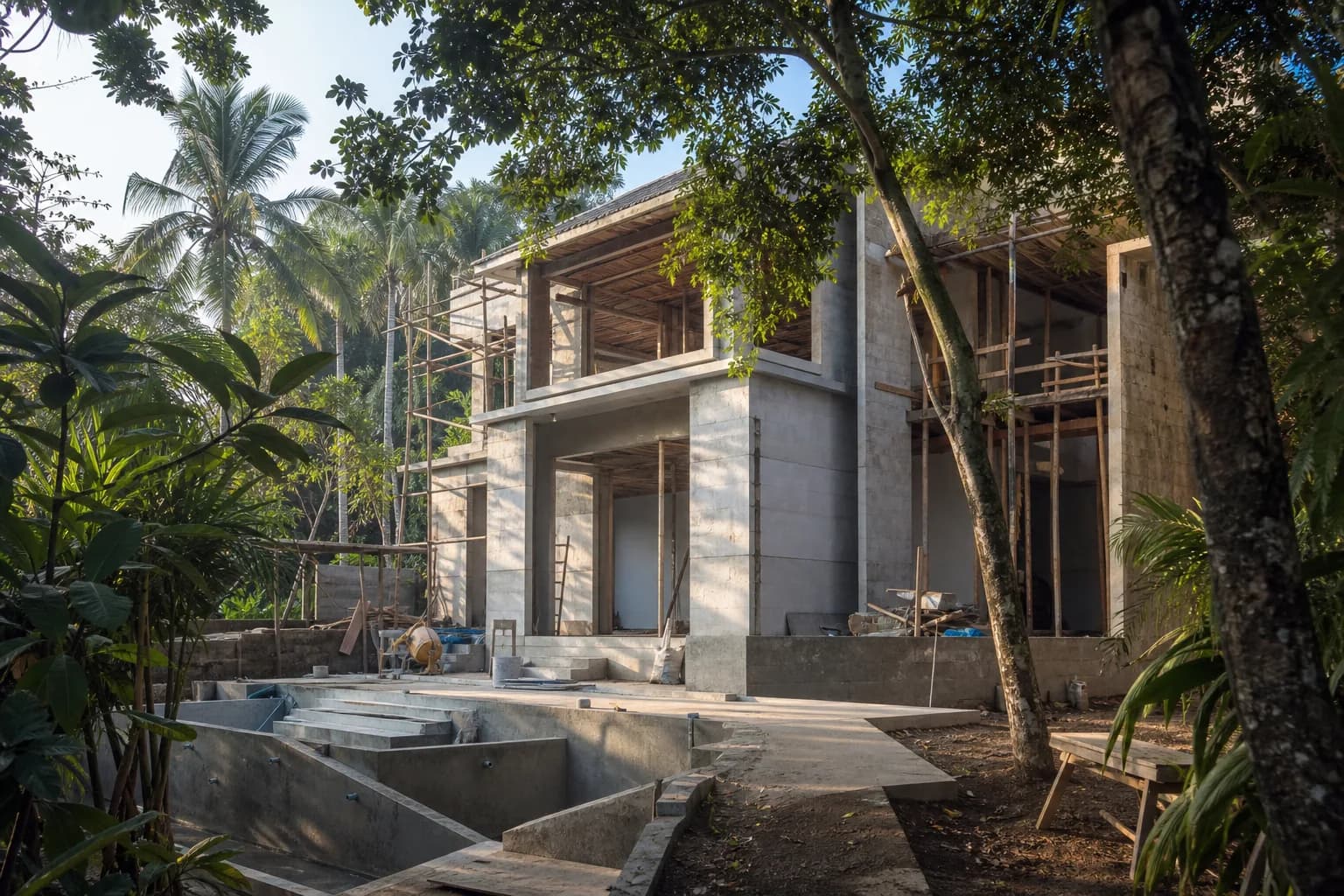
Why Your Badung Construction Project Is Stalled: The 2025-2026 IMB-to-PBG Transition Crisis
If you purchased land in Canggu, Seminyak, or Uluwatu expecting to break ground within 90 days, you’re likely facing an unexpected reality: your construction license application is trapped in Badung Regency’s administrative backlog. The 2025-2026 transition from IMB (Izin Mendirikan Bangunan) to PBG (Persetujuan Bangunan Gedung) has created systematic delays affecting 60-70% of new applications in Badung—Bali’s most construction-active regency. This isn’t bureaucratic inefficiency; it’s a structural bottleneck caused by regulatory overhaul, staff retraining requirements, and digital system integration failures. For foreign investors and villa developers, these delays translate to extended holding costs, contractor scheduling conflicts, and missed seasonal construction windows. Understanding the specific timeline disruptions in Badung versus other Bali regencies is critical for realistic project planning and financial risk management.
The Technical Reality of Badung’s PBG Processing Bottleneck
Badung Regency processes approximately 2,400 construction permits annually—more than Gianyar, Tabanan, and Denpasar combined. The IMB-to-PBG transition, mandated by Indonesia’s 2022 Omnibus Law implementation timeline, required Badung’s DPMPTSP (One-Stop Integrated Service Office) to migrate from paper-based IMB workflows to the digital SIMBG (Sistem Informasi Manajemen Bangunan Gedung) platform between January and June 2025. This migration coincided with three compounding factors specific to Badung:
First, the regulatory framework changed mid-transition. PBG applications now require SLF (Sertifikat Laik Fungsi) pre-planning documentation—a building function certification that didn’t exist under the IMB system. For residential villas, this means submitting structural load calculations, fire safety compliance matrices, and environmental impact assessments (UKL-UPL or AMDAL depending on building footprint) before design approval. Badung’s technical review teams, trained for decades on IMB’s simpler checklist approach, now face engineering documents requiring specialized structural and environmental expertise. The regency hired only 12 additional technical reviewers to handle this increased complexity—insufficient for the application volume.
Second, Badung’s zoning overlay complexity creates unique delays. Unlike Gianyar’s relatively uniform agricultural-to-residential zoning, Badung contains 17 distinct zoning classifications across tourist zones (Seminyak, Canggu), cultural preservation areas (Uluwatu temple radius), coastal setback zones (Jimbaran Bay), and agricultural protection belts. Each zone has specific PBG requirements: tourist zones require parking ratio calculations (1 space per 50m² built area), coastal zones demand 100-meter setback verification with geospatial surveys, and cultural zones need RTRW (spatial planning) conformity letters from village-level authorities. Cross-referencing these requirements through the new SIMBG system—which lacks Badung-specific zoning automation—adds 3-5 weeks to initial application screening.
Third, the digital system integration failed for complex projects. SIMBG was designed for standardized residential buildings, not the custom villa designs common in Badung’s luxury construction market. Projects with infinity pools, cantilevered structures, or multi-level designs exceeding 400m² built area trigger manual technical reviews because SIMBG’s automated compliance checks can’t process non-standard architectural elements. In practice, 40% of Badung villa applications fall into this manual review category, creating a two-tier processing system: simple houses move through in 45-60 days, while custom villas stall for 90-150 days.
The timeline breakdown for a typical 350m² villa in Canggu as of February 2026: document preparation and notarization (14 days), SIMBG portal submission and initial screening (21 days), technical drawing review and revision requests (35 days), zoning conformity verification (18 days), environmental compliance review for properties near rice fields or coastal areas (28 days), final PBG issuance (12 days). Total: 128 days from submission to permit in hand—versus the official 30-day service standard published on Badung DPMPTSP’s website. This 98-day gap between promise and reality is the core issue affecting land purchase Bali construction timelines.
Hidden Risks Developers Miss in Badung’s Permit Delay Environment
The most dangerous assumption is treating permit delays as mere schedule inconveniences. Three critical risks emerge specifically from Badung’s extended PBG timelines:
Land lease clock erosion: If you’re building on leasehold land with a 25-year term, every month of permit delay consumes your lease without generating rental income or property use. A six-month delay represents 2% of your total lease term lost to administrative waiting. For a USD 180,000 leasehold land investment, that’s USD 3,600 in time-value erosion before construction begins. This compounds with holding costs—property taxes (PBB), security services, and land maintenance continue regardless of permit status.
Contractor availability gaps: Badung’s construction industry operates on tight scheduling. Quality contractors book projects 3-4 months in advance during dry season (April-October). If your permit arrives two months late, your contractor may have committed to another project, forcing you to either wait an additional 3-4 months or hire a less experienced team. We’ve documented cases where permit delays caused clients to miss their preferred contractor’s availability window, resulting in 15-20% cost increases when hiring alternative teams during peak construction periods.
Regulatory requirement drift: The PBG system is still evolving. Between January 2025 and February 2026, Badung DPMPTSP issued three technical bulletins modifying SLF documentation requirements, coastal setback measurement methodologies, and parking calculation formulas. If your application sits in review for four months, you risk mid-process requirement changes that force document resubmission and restart review timelines. This happened to 18% of applications submitted in Q2 2025 when new environmental assessment thresholds were introduced retroactively.
Step-by-Step Process for Navigating Badung PBG Delays
Step 1: Pre-Application Zoning Verification (Week 1-2)
Before engaging architects, obtain written zoning confirmation from Badung DPMPTSP’s spatial planning desk. Request specific documentation: RTRW conformity status, setback requirements for your plot coordinates, and any overlay restrictions (cultural radius, coastal zone, agricultural buffer). For land in Canggu or Pererenan, verify whether your plot falls within the “tourist accommodation zone” requiring commercial parking ratios versus “residential zone” with standard requirements. This costs IDR 500,000-750,000 for expedited written confirmation and prevents design revisions later.
Step 2: Parallel Document Preparation (Week 2-5)
While architects develop drawings, simultaneously prepare supporting documents: notarized land ownership proof (for freehold) or lease agreement with owner’s KTP and land certificate copies (for leasehold), environmental self-assessment documents (UKL-UPL forms for buildings under 5,000m² footprint), and structural engineer appointment letters. Badung requires licensed Indonesian structural engineers (with LPJK certification) to sign load calculations—foreign engineering credentials aren’t accepted. Engage this engineer during design phase, not after drawings are complete, to avoid revision cycles.
Step 3: SIMBG Portal Submission with Completeness Buffer (Week 6)
Submit through SIMBG with 15-20% more documentation than the checklist requires. Include: site photos from four cardinal directions with GPS coordinates visible, detailed utility connection plans showing PLN (electricity) and PDAM (water) entry points, and drainage system diagrams showing how runoff connects to municipal systems or absorption wells. Badung reviewers frequently request these “optional” documents, and pre-including them reduces revision requests that add 2-3 weeks per cycle.
Step 4: Active Application Monitoring (Week 7-14)
SIMBG provides status tracking, but it’s often 5-7 days behind actual review progress. Visit Badung DPMPTSP’s technical review office in person every 10 days—physical presence accelerates file movement through internal desk-to-desk transfers. Bring your application reference number and politely request current review stage confirmation. If your application shows “technical review” status for more than 21 days, request specific revision requirements in writing rather than waiting for automated system notifications that may not arrive.
Step 5: Revision Response Protocol (Week 15-18)
When revision requests arrive, respond within 48 hours even if you need more time to complete changes. Submit a formal acknowledgment letter through SIMBG stating “revisions in progress, estimated completion .” This keeps your application active in the queue. Applications that go silent for more than 14 days get moved to “inactive” status and lose queue position, restarting the review timeline when resubmitted.
Step 6: Pre-Issuance Verification (Week 19-20)
Once SIMBG shows “approved” status, the physical PBG document takes 10-14 days to print and sign. During this window, verify your contractor’s SIUJK (construction business license) is current and their LPJK certification covers your project’s building class. Badung requires these documents for the mandatory pre-construction notification (SPK submission) that must occur within 30 days of PBG issuance. Having these ready prevents post-permit delays before groundbreaking.
Realistic Timeline and Cost Ranges for Badung PBG in 2026
Based on 47 villa projects we’ve tracked through Badung’s system between August 2025 and February 2026, here are current realistic ranges:
Timeline Ranges:
- Simple single-story villa (under 250m², standard design): 75-95 days from submission to PBG in hand
- Two-story custom villa (250-400m², with pool): 110-140 days
- Complex multi-level villa (over 400m², cantilevered elements, coastal location): 145-180 days
- Projects requiring AMDAL (environmental impact assessment, rare for villas): add 60-90 days
Direct Cost Ranges (PBG fees and required documentation):
- PBG application fee (calculated on building value): IDR 2.5-4.5 million for typical 300m² villa
- Structural engineer review and stamping: IDR 8-15 million depending on design complexity
- Environmental self-assessment (UKL-UPL) preparation: IDR 3-6 million
- Notarization and document legalization: IDR 2-3 million
- Expediting services (if using permit consultant): IDR 15-25 million (reduces timeline by 15-25 days typically)
Indirect Holding Costs During Delays:
- Land tax (PBB) for 300m² plot in Canggu: IDR 1.2-2.5 million per year (prorated during delay)
- Security and maintenance: IDR 1.5-3 million per month for undeveloped land
- Contractor scheduling gap costs: 10-20% premium if missing preferred team’s availability
For comprehensive villa construction cost Bali planning that includes permit timeline buffers, request detailed estimates that account for Badung-specific delays.
Frequently Asked Questions: Badung PBG Timeline Specifics
Can I start site preparation work while waiting for PBG approval in Badung?
No. Badung Regency enforces strict pre-construction prohibitions. Any ground disturbance, foundation work, or material stockpiling before PBG issuance risks administrative sanctions including application rejection and fines of IDR 50-100 million. You can conduct non-invasive site surveys (topographic mapping, soil testing with hand augers) but cannot operate heavy machinery or pour concrete. Some developers clear vegetation or install temporary fencing, but even this requires village-level permission (surat izin from banjar) separate from PBG. The risk isn’t worth the 2-3 week time savings—if inspectors document unpermitted work, your PBG application moves to “violation review” status, adding 45-60 days while they investigate compliance history.
Why does my architect say 30 days but Teville says 110-140 days for Badung PBG?
The 30-day timeline is the legal service standard published in Badung’s official regulations—it’s the maximum time DPMPTSP is supposed to take, not the actual processing time. This disconnect exists because the regulation was written before the IMB-to-PBG transition complexity became apparent. Architects often quote the legal standard because they’re not involved in day-to-day permit processing and rely on outdated pre-2025 experience. Our 110-140 day range for custom villas comes from tracking actual issuance dates across recent projects. The gap between legal standard and reality is a known issue—Badung’s DPMPTSP head acknowledged in a January 2026 industry meeting that average processing time is currently 87 days for standard applications, with complex projects taking longer. Always plan construction schedules using observed timelines, not regulatory promises.
Does using a permit consultant actually speed up Badung PBG processing?
Selectively, yes—but not through corruption or queue-jumping. Legitimate permit consultants (often called “biro jasa”) provide value in three ways: they ensure 100% document completeness on first submission (eliminating revision cycles that add 15-25 days), they know which DPMPTSP reviewers handle which application types and can route files appropriately, and they monitor applications daily rather than weekly. This typically reduces timeline by 15-25 days for complex projects—meaningful but not miraculous. The cost is IDR 15-25 million. However, consultants cannot override technical review requirements or force approvals for non-compliant designs. For straightforward villa projects under 350m² with experienced architects, consultants often aren’t necessary. For complex projects over 400m² or properties in overlay zones (coastal, cultural radius), their expertise in navigating Badung-specific requirements justifie
 164 m²7 month(s)from 79.000 USD
Private: Haridas Villas, Tegallalang
 3104 m²11 month(s)from 99.000 USD
TALA 100
 172 m²8 month(s)from 120.000 USD
Keshava
 3180 m²7 month(s)from 142.000 USD
Vasudeva
 2144 m²11 month(s)from 104.000 USD
Narayana
 3173 m²6 month(s)from 125.000 USD
TALA FOUR
 3127 m²9 month(s)from 177.000 USD
Mukunda
 4344 m²16 month(s)from 290.000 USD
Radha
 1from 198.000 USD
Private: Haridas Villas
164 m²7 month(s)from 79.000 USDTALA TWO

Want to calculate?
 3124 m²6 month(s)from 123.000 USD
TALA 8
Start With Real Numbers, Not Guesses
Before buying land or finalizing a design, check the realistic build cost range for your project in Bali.
Our team reviews your inputs and gives a grounded estimate.
Available lands
 680 m²15 min$ 110751Bali, Pererenan
 1000 m²10 min$ 230911Bali, Kerobokan
 800 m²8 min$ 113300Bali, Ungasan
 2800 m²15 min$ 310345Bali, Tabanan
 1362 m²15 min$ 335468Bali, Tumbak
 610 m²10 min$ 165271Bali, Seminyak
 700 m²15 min$ 90517Bali, Central Bali
 1000 m²10 min$ 123154Bali, Jimbaran
 18900 m²2 min$ 6912931Bali, Pecatu
 1100 m²8 min$ 280419Bali, Ungasan
 5028 m²10 min$ 361000Bali, Ubud
 2680 m²10 min$ 1732759Bali, Pererenan
 1300 m²10 min$ 312192Bali, Kutuh South Bali
 2230 m²15 min$ 410573Bali, Padonan
 1430 m²5 min$ 209862Bali, Klungkung
Essential Bali build & buy guides
- Bali villa construction cost per m² in 2026
- How much will your villa cost? Calculator
- Building a villa in Bali: the complete guide
- Buying land in Bali: step-by-step for foreigners
- Bali villa investment: yields, risks, returns
- Leasehold vs freehold: what foreigners can own
- Construction defect liability & 10-year warranty
- Bali building codes and construction standards
Related guides
Bali Property Contracts and Indonesian Language Law: Dual-Language Pitfalls That Void Deals
Indonesian law requires property agreements with Indonesian parties to exist in Indonesian — and the two language versions can quietly diverge. What the language law demands in 2026, the real court history, and the dual-language pitfalls that damage Bali deals.
8 min read
Bali Land Certificates Decoded: SHM, HGB, Hak Pakai and Girik Explained for Buyers
A buyer's decoder for Bali land certificates: what SHM, HGB, Hak Pakai and girik actually mean, why girik lost standalone legal force in February 2026, and how to verify a title before you commit.
9 min read
Inheritance of Bali Property for Foreigners: Leasehold, PT PMA Shares and Wills
What happens to your Bali villa when you die: why a leasehold passes to heirs only if the deed says so, how PT PMA shares are inherited, the one-year rule for foreign heirs of freehold land, and the Indonesian notarial will that makes it all work.
7 min read