Villa Construction Cost Bali: Complete Guide to Building Your Dre
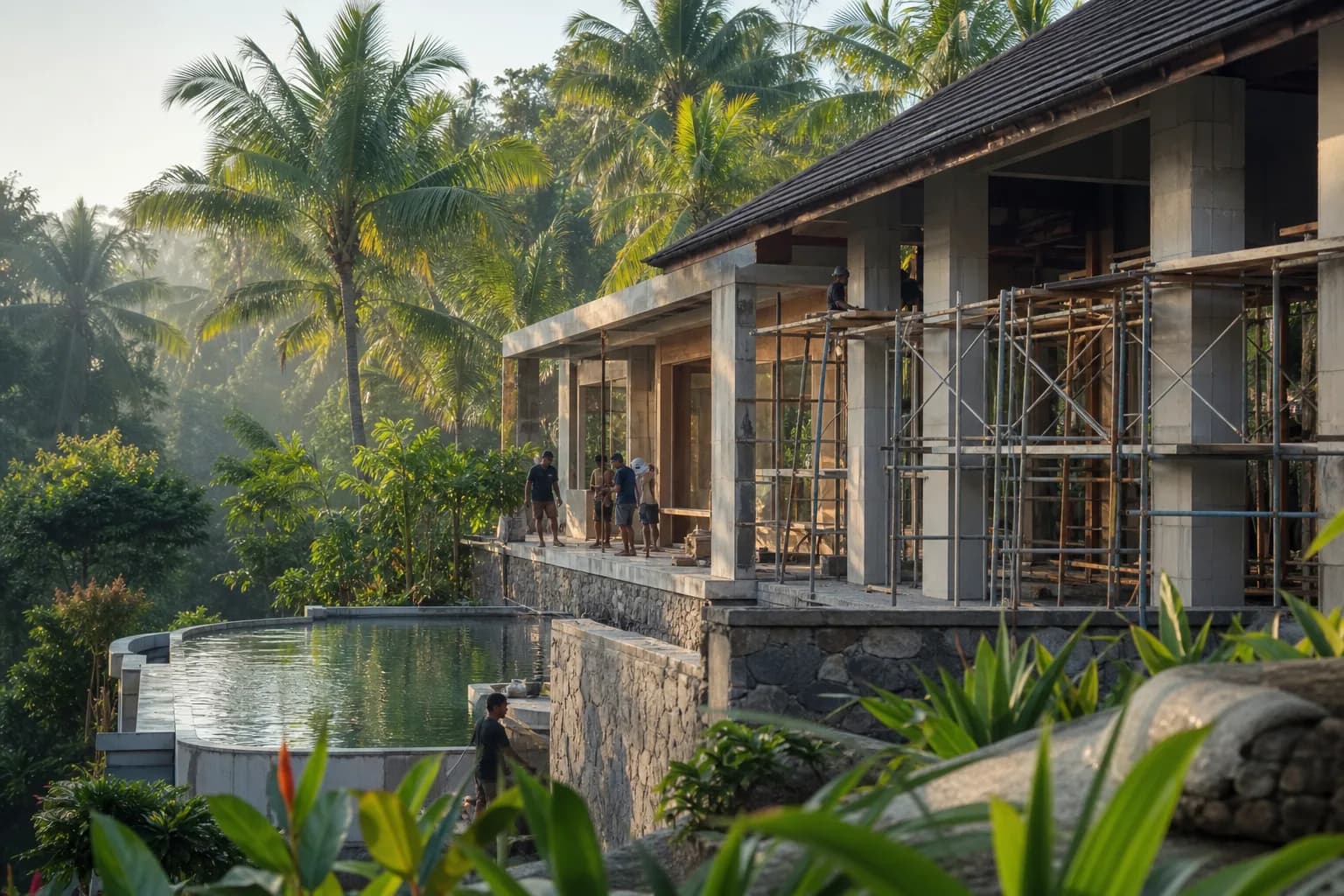
# Villa Construction Cost Bali: Complete Budget Planning Guide for 2026
Understanding Villa Construction Investment in Bali
Building a villa in Bali represents one of the most rewarding investment opportunities in Southeast Asia, combining the island’s booming tourism industry with relatively accessible construction costs. However, villa construction cost Bali projects require meticulous budget planning that accounts for unique tropical conditions, Indonesian building regulations, and the complexities of foreign property ownership. At Teville, we’ve guided hundreds of clients through the financial maze of Bali construction, transforming budget estimates into tangible luxury properties that deliver exceptional returns on investment.
The average villa construction cost in Bali ranges from $800 to $1,500 per square meter for standard builds, with luxury projects reaching $2,000-$3,000 per square meter. These figures encompass everything from foundation work adapted to volcanic soil conditions to finishing touches that meet international hospitality standards. Unlike simple renovation projects, ground-up villa construction demands comprehensive financial planning that extends beyond basic building costs to include land acquisition, legal structuring, utility connections, and contingency reserves for tropical climate challenges.
The Hidden Complexities of Bali Construction Budgeting
Most property investors underestimate the financial complexity of villa construction in Bali by 30-40%, leading to project delays, quality compromises, or complete abandonment. The primary challenge stems from Indonesia’s unique regulatory environment where foreign ownership requires establishing a PT PMA (foreign investment company) structure, adding $5,000-$15,000 in initial setup costs plus ongoing compliance expenses. This legal framework isn’t optional—it’s the foundation upon which your entire investment rests, yet many budget projections overlook these essential expenditures.
The tropical environment introduces cost variables absent in temperate climates. Bali’s high humidity, intense UV exposure, and monsoon seasons demand specialized materials and construction techniques that significantly impact budgets. Standard cement formulations fail within years; you need sulfate-resistant concrete mixtures costing 15-20% more. Timber must be treated against termites and fungal growth, adding another layer of expense. Roofing materials face extreme thermal cycling, requiring premium options like concrete tiles or treated alang-alang thatch that withstand both 35°C heat and torrential rainfall.
Currency fluctuations between USD, IDR, and your home currency create another budgeting nightmare. The Indonesian Rupiah can swing 5-10% against major currencies within a construction timeline, potentially adding tens of thousands to your final costs. Material imports face customs duties ranging from 10-40%, while local alternatives may not meet international quality standards. Labor costs, though relatively low at $15-30 per day for skilled workers, require careful management as productivity rates differ significantly from Western expectations, often necessitating larger crews and longer timelines than initially projected.
Technical Cost Breakdown: Engineering for Tropical Conditions
Understanding the technical cost components of villa construction cost Bali projects requires breaking down each construction phase with tropical engineering considerations. Foundation work in Bali typically consumes 12-15% of total construction budgets, compared to 8-10% in temperate regions. The island’s volcanic soil composition varies dramatically—from stable bedrock in elevated areas to loose sedimentary deposits near coastlines. Geotechnical surveys cost $1,500-$3,000 but are non-negotiable, as they determine whether you need simple strip footings ($50-80/m²) or extensive pile foundations ($150-250/m²).
Structural Framework and Tropical Adaptation
The structural framework represents 20-25% of construction costs, with significant variations based on design complexity. Reinforced concrete frames remain the gold standard in Bali, offering superior resistance to seismic activity, humidity, and pest damage. Expect to pay $180-280 per square meter for structural concrete work, including columns, beams, and floor slabs. Steel reinforcement costs have increased 25% since 2024 due to global supply chain adjustments, currently running $850-1,100 per ton installed. Earthquake-resistant design isn’t optional—Bali sits in a seismically active zone requiring structures to meet SNI (Indonesian National Standard) specifications, adding 8-12% to structural costs compared to non-seismic designs.
Roofing systems demand particular attention in budget planning. Traditional alang-alang thatch creates stunning aesthetics at $45-70 per square meter installed, but requires replacement every 8-12 years and carries fire risk. Concrete tiles cost $35-55/m² with 30-year lifespans, while premium options like Bali stone tiles run $80-120/m². The roof structure itself—typically using coconut wood or treated timber—costs $60-95/m² including labor. Proper ventilation systems are critical; without adequate airflow, interior humidity promotes mold growth and material degradation, necessitating ridge vents, soffit ventilation, and sometimes mechanical extraction systems adding $3,000-$8,000 to budgets.
Walls, Finishes, and Moisture Management
Wall construction and finishing consume 18-22% of total budgets. Standard concrete block walls cost $45-65 per square meter including plastering, while decorative options like Bali stone cladding reach $120-180/m². The critical factor often overlooked is moisture barrier systems. Without proper damp-proofing membranes ($8-15/m²), capillary action draws groundwater into walls, causing paint failure, efflorescence, and structural degradation. External render systems must incorporate waterproofing additives and breathable finishes, adding 20-30% to standard plastering costs but preventing expensive remediation work.
Interior finishes vary wildly in cost. Basic ceramic tiles start at $15-25/m² installed, while premium natural stone reaches $80-150/m². Timber flooring requires tropical hardwoods like merbau or teak ($65-120/m² installed) that resist humidity and termites. Paint systems must be mold-resistant and UV-stable; premium exterior coatings cost $8-12/m² but last 7-10 years versus 3-4 years for economy options. Joinery and built-in furniture typically run $15,000-$40,000 for a three-bedroom villa, with costs escalating rapidly for custom designs using premium materials.
Mechanical, Electrical, and Plumbing Systems
MEP (Mechanical, Electrical, Plumbing) installations account for 15-20% of construction budgets but dramatically impact operational costs and guest satisfaction. Electrical systems must handle Bali’s 220V supply with frequent voltage fluctuations requiring surge protection ($1,500-$3,000) and potentially voltage stabilizers ($2,000-$5,000) for sensitive equipment. Complete electrical installation costs $35-55 per square meter including wiring, distribution boards, outlets, and lighting fixtures. Air conditioning represents a major expense—split systems cost $600-$1,200 per unit installed, with a three-bedroom villa typically requiring 4-6 units. VRV/VRF systems offer better efficiency at $8,000-$15,000 for whole-villa installations.
Plumbing systems face unique challenges from Bali’s hard water and inconsistent municipal supply. Water treatment systems ($2,000-$5,000) are essential for protecting fixtures and ensuring guest comfort. Hot water systems range from individual electric heaters ($200-$400 each) to central gas or heat pump systems ($3,000-$8,000). Swimming pools—virtually mandatory for rental villas—cost $15,000-$40,000 for standard 3x7m pools, with infinity edges, beach entries, or premium finishes pushing costs to $50,000-$100,000. Filtration, heating, and chemical systems add another $3,000-$8,000, plus ongoing maintenance costs of $150-$300 monthly.
Risk Factors That Derail Construction Budgets
Budget overruns in Bali construction projects average 25-35%, with specific risk factors that demand proactive financial planning. The most significant risk involves land title complications. Indonesia’s land ownership system includes multiple title types—Hak Milik (freehold for Indonesian citizens), Hak Guna Bangunan (building rights), and Hak Pakai (right to use). Foreign investors typically access land through leasehold arrangements (25-30 years, extendable) or nominee structures, each carrying legal and financial risks. Title verification costs $1,000-$2,500 but prevents catastrophic losses from disputed ownership or encumbered properties.
Regulatory Compliance and Permit Costs
Building permits (IMB – Izin Mendirikan Bangunan) cost 2-3% of construction value but obtaining them requires navigating complex bureaucracy. The process involves multiple agencies—village administration (banjar), district planning offices, environmental departments, and sometimes tourism authorities. Processing times range from 2-6 months, during which land holding costs accumulate. Expediting services cost $3,000-$8,000 but can reduce delays. Environmental impact assessments (AMDAL or UKL-UPL) add $2,000-$10,000 depending on project scale and location sensitivity.
Zoning violations represent another major risk. Bali’s spatial planning regulations (RTRW) restrict construction in certain areas, limit building heights, and mandate setbacks from beaches, rivers, and rice fields. Violations result in stop-work orders, fines, or demolition orders. Professional site due diligence costs $2,000-$5,000 but identifies restrictions before you commit capital. Some areas require special permits for foreign-owned businesses, adding complexity and expense to the approval process.
Material Supply Chain Vulnerabilities
Bali’s island geography creates supply chain vulnerabilities that impact budgets and timelines. Most construction materials arrive via Java, with shipping adding 10-20% to costs compared to mainland Indonesia. Global commodity price fluctuations affect steel, cement, and timber costs—steel prices have varied 40% over the past three years. Fixed-price contracts with suppliers mitigate this risk but typically carry 5-10% premiums. Import dependencies for premium fixtures, appliances, and specialized materials expose projects to customs delays, duty changes, and currency fluctuations.
The monsoon season (November-March) disrupts construction schedules and increases costs. Heavy rainfall halts concrete pours, delays deliveries on muddy access roads, and reduces labor productivity. Smart scheduling avoids critical phases during peak monsoon, but unexpected weather still causes delays. Building contingency time (15-20% buffer) and budget reserves (10-15%) into planning prevents crisis management when weather disrupts schedules.
The Construction Process: Phase-by-Phase Budget Allocation
Effective budget management for villa construction cost Bali projects requires understanding cash flow across construction phases. The pre-construction phase (months 1-3) consumes 8-12% of total budgets covering land acquisition, legal structuring, design development, and permitting. Land costs vary dramatically—$150-$500 per square meter in emerging areas like Tabanan or North Bali, $500-$1,500/m² in established zones like Canggu or Seminyak, and $1,500-$5,000/m² in premium locations like Uluwatu or Ubud ridge areas. Legal structuring through PT PMA establishment costs $8,000-$15,000 including notary fees, ministry approvals, and initial capital requirements.
Design and Engineering Investment
Architectural design fees range from 5-10% of construction costs, with $8,000-$25,000 typical for residential villas. This investment delivers construction drawings, 3D visualizations, material specifications, and regulatory compliance documentation. Structural engineering adds $2,000-$5,000, ensuring designs meet seismic codes and tropical loading conditions. MEP engineering costs another $1,500-$4,000, optimizing system efficiency and integration. Landscape design, often underestimated, requires $3,000-$10,000 for comprehensive plans that integrate tropical plantings, drainage systems, and outdoor living spaces.
Value engineering during design phases can reduce construction costs by 10-20% without compromising quality. This involves analyzing material alternatives, optimizing structural efficiency, and eliminating unnecessary complexity. For example, simplifying roof geometry might save $5,000-$15,000 while maintaining aesthetic appeal. Standardizing window sizes reduces custom fabrication costs. Strategic material selection—using local stone instead of imported marble—cuts expenses while supporting sustainability goals.
Foundation and Structure Phase
The foundation and structural phase (months 4-7) represents 30-35% of construction budgets and establishes project quality. Site preparation costs $3,000-$8,000 including clearing, excavation, and temporary facilities. Foundation work varies by soil conditions—simple footings cost $8,000-$15,000 for a 200m² villa, while pile foundations reach $20,000-$40,000. Structural concrete and steel installation follows, with typical three-bedroom villas requiring $35,000-$65,000 for complete structural frames including earthquake-resistant detailing.
Quality control during this phase is critical. Concrete testing costs $500-$1,500 but ensures structural integrity. Steel reinforcement inspection prevents corrosion issues that plague tropical construction. Proper curing of concrete in Bali’s heat requires continuous water application for 7-14 days; shortcuts here lead to cracking and reduced strength. Waterproofing below-grade structures costs $2,000-$5,000 but prevents groundwater infiltration that causes long-term damage.
Enclosure and Finishing Phase
The enclosure phase (months 7-10) consumes 35-40% of budgets, transforming structural frames into weathertight buildings. Wall construction, roofing, windows, and doors cost $40,000-$80,000 for typical villas. Window and door systems deserve careful specification—aluminum frames with double glazing cost $250-$400 per square meter but provide superior durability and thermal performance compared to timber alternatives. External finishes including render, paint, and stone cladding add $15,000-$35,000.
Interior finishing (months 10-14) represents the final 25-30% of budgets where design visions materialize. Flooring, wall finishes, joinery, and fixtures cost $
 164 m²7 month(s)from 79.000 USD
Private: Haridas Villas, Tegallalang
164 m²7 month(s)from 79.000 USDTALA TWO
 3127 m²9 month(s)from 177.000 USD
Mukunda
 3104 m²11 month(s)from 99.000 USD
TALA 100
 1from 198.000 USD
Private: Haridas Villas
 4344 m²16 month(s)from 290.000 USD
Radha
 3180 m²7 month(s)from 142.000 USD
Vasudeva
 3124 m²6 month(s)from 123.000 USD
TALA 8
 3173 m²6 month(s)from 125.000 USD
TALA FOUR
 172 m²8 month(s)from 120.000 USD
Keshava
 2144 m²11 month(s)from 104.000 USD
Narayana

Want to calculate?
Start With Real Numbers, Not Guesses
Before buying land or finalizing a design, check the realistic build cost range for your project in Bali.
Our team reviews your inputs and gives a grounded estimate.
Available lands
 1700 m²10 min$ 632257Bali, Kuta
 3700 m²15 min$ 738177Bali, Tabanan
 3100 m²15 min$ 257697Bali, Tegallalang
 3254 m²5 min$ 631800Bali, All
 2200 m²15 min$ 508005Bali, Canggu
 700 m²15 min$ 109052Bali, Buduk
 911 m²15 min$ 248217Bali, Pererenan
 2500 m²5 min$ 609606Bali, Kedungu
 5000 m²8 min$ 424877Bali, Ungasan
 300 m²55 min$ 32475Bali, Tegelalang
 928 m²15 min$ 910123Bali, Pererenan
 585 m²8 min$ 165702Bali, Mengwi
 2000 m²15 min$ 110837Bali, Karangasem
 2000 m²10 min$ 243842Bali, Mengwi
 6000 m²30 min$ 55419Bali, Tabanan
Planning a build in Bali?
Get a feasibility view, budget range and timeline from Teville.
Related guides
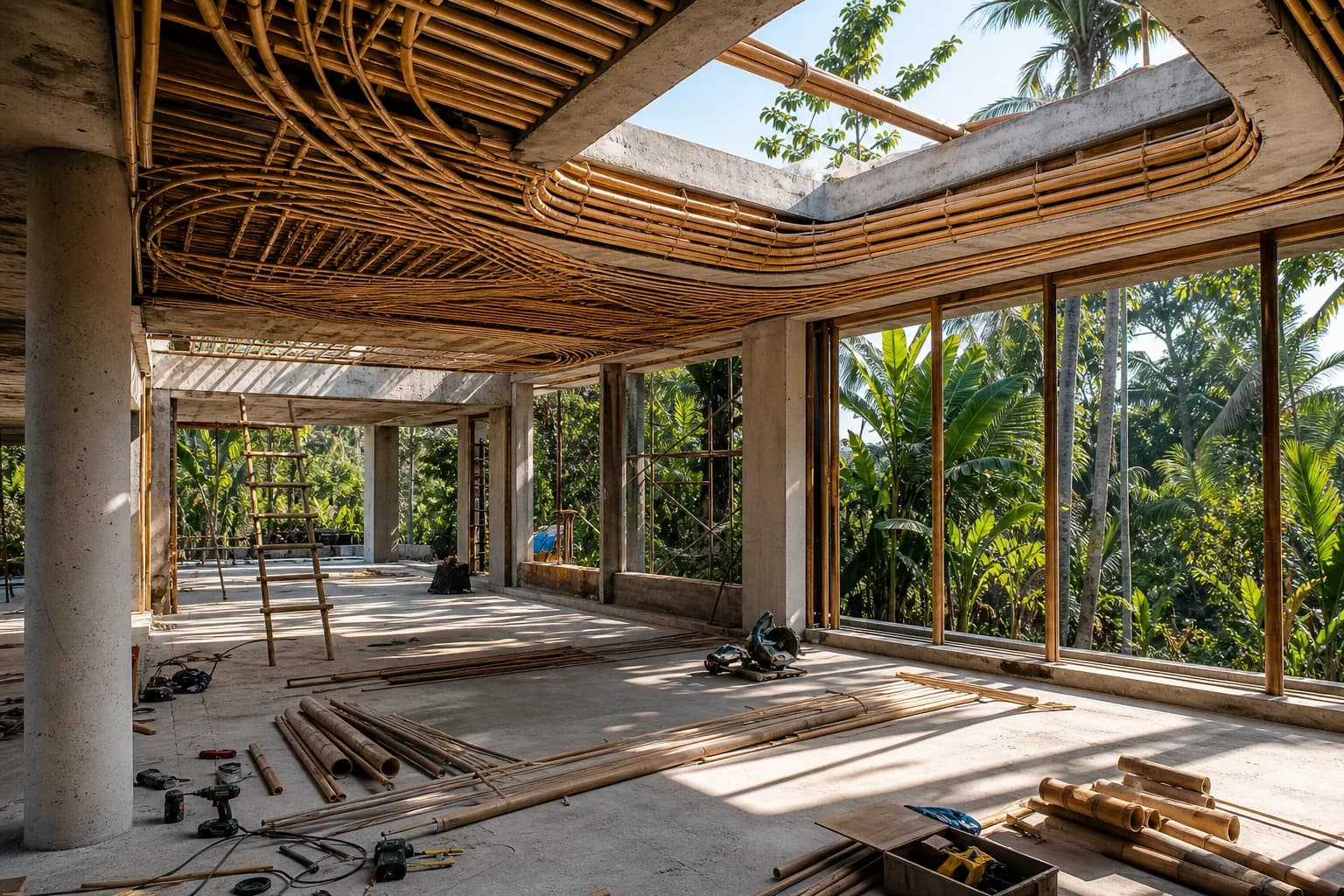
Recessed Lighting Costs: Concrete vs Bamboo Ceilings Bali
Compare recessed lighting installation costs for concrete and bamboo ceilings in Bali villas. Get accurate pricing and expert tips for your construction project
10 min read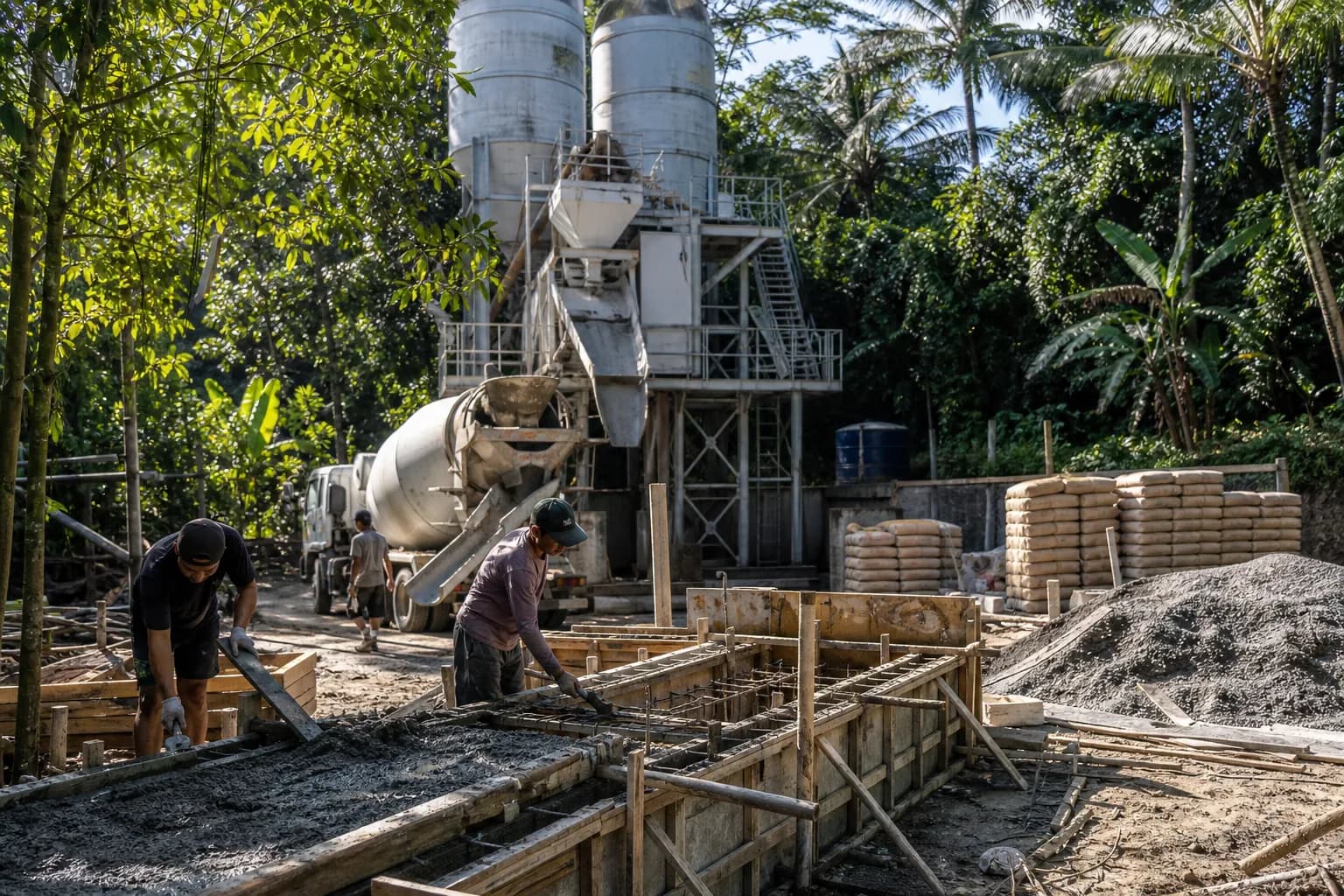
Concrete Batching Plant vs Ready-Mix: Cost Per m³ Bali
Compare concrete batching plant vs ready-mix costs per m³ for Bali construction projects. Expert analysis on pricing, efficiency best options for villas.
10 min read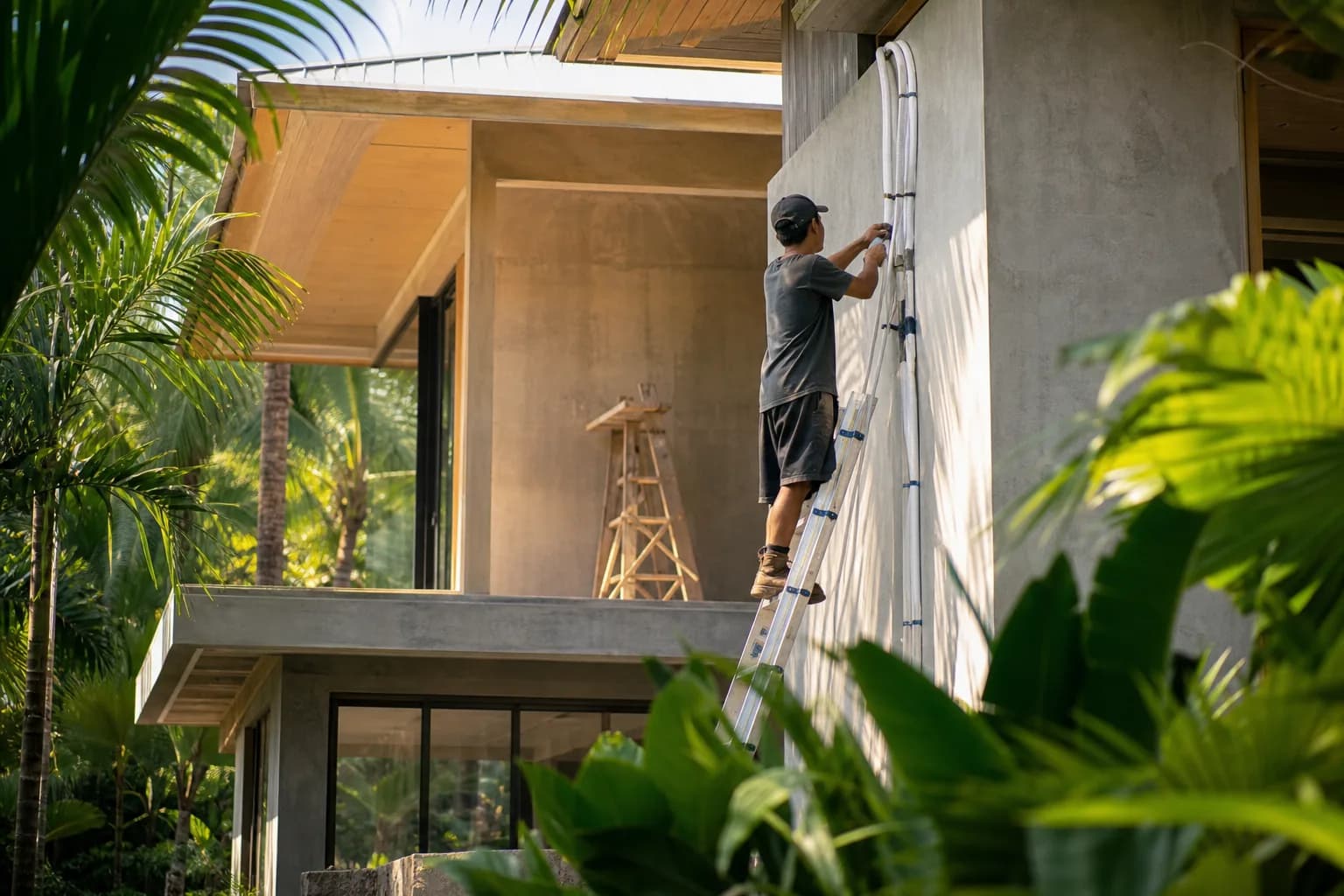
Split AC Refrigerant Line Limits for Bali Multi-Story Villas
Expert guide to split AC refrigerant line set length limits for Bali villas. MEP specifications, installation best practices, and performance optimization.
11 min read