Tabanan Rice Field View Premiums Land Costs Bali
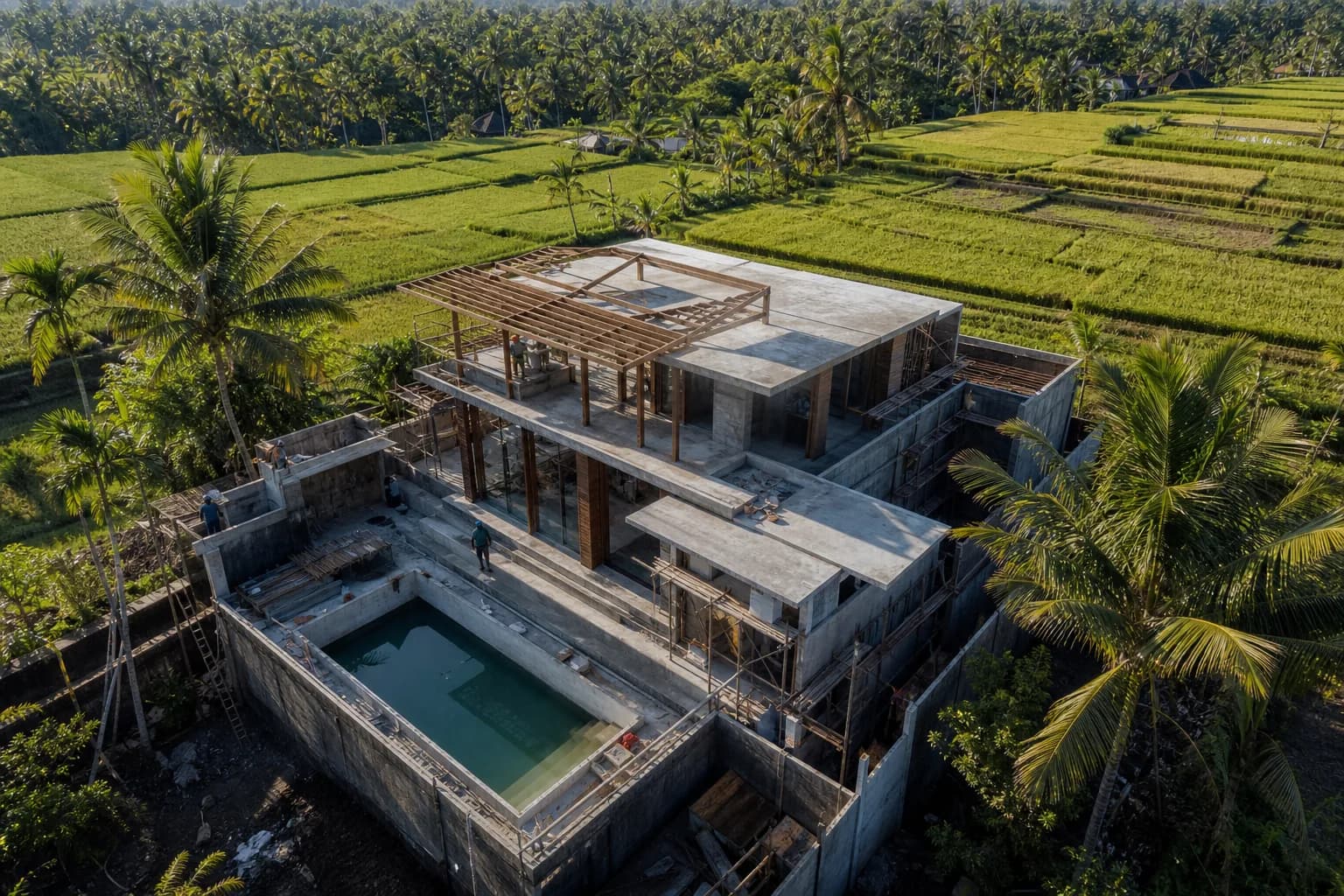
The Hidden Cost Structure of Tabanan Rice Field View Land: Why Premium Pricing Doesn’t Always Mean Premium Construction Value
When evaluating land parcels in Tabanan with rice field views, most buyers focus exclusively on the per-are price differential—typically Rp. 55,000,000 per are for view properties versus Rp. 35,000,000-45,000,000 for non-view parcels. However, the real financial challenge emerges during negotiation when sellers inflate prices based on aesthetic appeal without disclosing the engineering costs required to make that land construction-viable. A 1,800 m² plot listed at $59,787 may appear competitively priced until soil testing reveals 4-6 meters of unstable clay requiring Rp. 180,000,000 in foundation reinforcement—costs that eliminate any negotiation advantage gained from the initial land price. The critical question isn’t whether rice field views command premiums, but whether those premiums reflect actual construction readiness or merely speculative positioning that transfers engineering risk entirely to the buyer.
Engineering Reality Behind Tabanan Rice Field View Premium Pricing
Rice field view properties in Tabanan command 25-40% price premiums over comparable non-view parcels, but this premium structure rarely accounts for the geotechnical realities that define construction feasibility. Land adjacent to active rice terraces sits within hydrological systems designed for water retention, not structural load-bearing. The premium you pay for unobstructed sawah views often correlates directly with proximity to saturated soils, high water tables (typically 1.5-3 meters below surface during wet season), and subgrade conditions requiring specialized foundation engineering.
From a construction engineering perspective, Tabanan’s rice field view parcels fall into three distinct categories with vastly different cost implications. Elevated ridge parcels (5-8 meters above rice terrace elevation) offer genuine construction advantages—natural drainage, stable subgrade, and minimal foundation intervention—justifying premiums of 30-35% over baseline land prices. These properties typically require standard 1.2-meter depth foundations with conventional reinforcement schedules. Terrace-adjacent parcels (2-4 meters elevation differential) represent the middle category where view premiums of 20-25% may be justified if proper retaining wall systems and drainage infrastructure are factored into total project costs. Terrace-level parcels (0-2 meters differential) command similar view premiums but require the most intensive engineering intervention—deep pile foundations, comprehensive drainage systems, and often legal complications regarding water flow rights that can add Rp. 250,000,000-400,000,000 to construction budgets.
The negotiation challenge centers on information asymmetry. Sellers price land based on view aesthetics and comparable sales data from other view properties, regardless of subsurface conditions. A 2,000 m² parcel in Kerambitan listed at Rp. 55,000,000 per are appears aligned with market rates until geotechnical investigation reveals marine clay layers at 2-3 meter depth with bearing capacities of only 0.8-1.2 kg/cm²—requiring either deep pile systems (adding Rp. 3,500-4,500 per cm² of building footprint) or extensive soil replacement and compaction (Rp. 850,000-1,200,000 per cubic meter of excavation and engineered fill).
Legal zoning adds another layer of complexity to premium pricing. Tabanan rice field view properties often fall within subak (traditional irrigation cooperative) jurisdictions or carry agricultural zoning designations that require conversion to residential/commercial status before construction permits can be issued. This conversion process—when legally possible—costs Rp. 45,000,000-85,000,000 and takes 4-8 months, yet sellers rarely discount land prices to reflect this administrative burden. Properties advertised as “ready to build” frequently mean only that access roads exist, not that zoning conversions are complete or that IMB (building permit) applications will be approved without extensive documentation of water rights, environmental impact, and subak consent.
The premium pricing structure also fails to account for long-term maintenance costs inherent to rice field proximity. Properties within 50 meters of active terraces experience 30-40% higher humidity levels during planting and growing seasons, accelerating corrosion of reinforcement steel, promoting mold growth on finished surfaces, and requiring more frequent repainting and sealing cycles. Construction specifications must include enhanced waterproofing systems, upgraded ventilation design, and corrosion-resistant materials—adding 8-12% to base construction costs. These operational realities should inform negotiation strategies but are rarely reflected in asking prices that focus purely on view amenity value.
Critical Mistakes Buyers Make When Negotiating Tabanan Rice Field View Land
The most expensive mistake is accepting seller representations about construction readiness without independent verification. A common scenario: land marketed as “1,800 m² freehold with rice field views, ready for villa development” at $59,787 appears competitively priced at approximately $33 per square meter. Buyers negotiate 5-10% discounts, believing they’ve secured favorable terms, only to discover during due diligence that the parcel lacks legal road access (requiring Rp. 120,000,000 for 80-meter access road construction), sits partially within a 50-meter river buffer zone (making 30% of the land unbuildable), and requires agricultural zoning conversion that the local subak has historically opposed.
Another critical error is negotiating based on comparable sales data without accounting for subsurface variability. Two adjacent 2,000 m² parcels with identical rice field views may have dramatically different construction costs if one sits on volcanic tuff with excellent bearing capacity while the other overlays alluvial clay requiring deep foundations. Sellers use the higher-priced comparable to justify their asking price, but construction feasibility may be inverse to land price—the cheaper parcel potentially offering better building conditions. Without geotechnical investigation before price negotiation, buyers lack the technical data needed to justify price adjustments based on actual construction costs.
Buyers also underestimate the negotiation leverage provided by comprehensive due diligence. Commissioning soil testing, topographic surveys, and legal title verification before making offers costs Rp. 25,000,000-35,000,000 but frequently reveals issues that justify 15-25% price reductions—far exceeding the investigation cost. Sellers expect buyers to negotiate based on market comparables and aesthetic preferences; presenting engineering data that quantifies additional construction costs required shifts negotiation dynamics from subjective value assessment to objective cost analysis. A soil report showing 4 meters of unsuitable material requiring removal and replacement provides concrete justification for price reduction equal to remediation costs, which sellers often partially absorb rather than lose the sale.
Step-by-Step Process for Negotiating Tabanan Rice Field View Land Purchases
Phase 1: Pre-Negotiation Technical Assessment (3-4 weeks)
Before making any offer, commission independent verification of construction feasibility. Engage a licensed geotechnical engineer to conduct preliminary soil investigation—typically 3-4 test borings to 6-meter depth, costing Rp. 18,000,000-25,000,000. Request topographic survey showing elevation differentials between the parcel and adjacent rice terraces, drainage patterns, and flood history. Verify legal status through notary review of land certificates, confirming freehold/leasehold status, zoning designation, and any encumbrances or easements. This investigation phase costs Rp. 30,000,000-40,000,000 total but provides objective data that either justifies walking away or supports price negotiation based on construction realities rather than aesthetic preferences.
Phase 2: Cost-Based Offer Formulation (1 week)
Calculate total project cost including land purchase, site preparation, foundation engineering, zoning conversion, and access infrastructure. If geotechnical investigation reveals challenging conditions, quantify remediation costs with contractor estimates. For example: asking price Rp. 990,000,000 (18 are at Rp. 55,000,000/are), but soil conditions require Rp. 180,000,000 in additional foundation work compared to standard construction. Your offer should reflect this: Rp. 810,000,000-850,000,000, positioning the reduction as cost-neutrality rather than discount-seeking. Present engineering data supporting the adjustment—sellers often accept cost-based reductions they would reject as arbitrary negotiation tactics.
Phase 3: Structured Negotiation With Technical Documentation (2-3 weeks)
Present your offer with supporting documentation: soil test results, foundation engineering estimates, zoning conversion cost quotations, and comparable sales data adjusted for construction readiness. Emphasize that your offer reflects fair market value for land as-is, accounting for the engineering intervention required. Be prepared to walk away if sellers refuse to acknowledge construction realities—overpriced land with challenging conditions creates projects that exceed budget before construction begins. Teville’s experience across completed villa projects consistently shows that paying 10-15% more for construction-ready land saves 25-35% in total project costs compared to purchasing problematic parcels at apparent discounts.
Phase 4: Conditional Purchase Agreement (2-3 weeks)
Structure the purchase agreement with contingencies protecting against undisclosed issues: successful zoning conversion within specified timeframe, confirmation of water rights and utility access, and verification that no additional subak fees or community obligations exist beyond those disclosed. Include provisions allowing price renegotiation if comprehensive geotechnical investigation (conducted post-agreement but pre-closing) reveals conditions materially worse than preliminary assessment. This protects against sellers who restrict site access during initial due diligence, then claim conditions were “obvious” after purchase completion.
Realistic Cost Ranges for Tabanan Rice Field View Land Acquisition and Preparation
Current market data (February 2026) shows Tabanan rice field view land ranging from Rp. 50,000,000-65,000,000 per are depending on location, access quality, and elevation relative to terraces. A typical 1,800 m² (18 are) parcel costs Rp. 900,000,000-1,170,000,000 ($54,000-$70,000 at current exchange rates). However, total acquisition and preparation costs include:
- Due diligence and legal verification: Rp. 30,000,000-40,000,000
- Zoning conversion (if required): Rp. 45,000,000-85,000,000
- Access road construction/improvement: Rp. 80,000,000-150,000,000 for 60-100 meter private access
- Site preparation and leveling: Rp. 120,000-180,000 per cubic meter of cut/fill
- Enhanced foundation systems: Rp. 180,000,000-320,000,000 additional cost for challenging soil conditions
- Drainage infrastructure: Rp. 85,000,000-140,000,000 for comprehensive systems preventing water intrusion
Total land acquisition and preparation for an 1,800 m² rice field view parcel in Tabanan realistically ranges from Rp. 1,400,000,000-2,000,000,000 ($84,000-$120,000) when all engineering requirements are included—substantially higher than the advertised land price alone. Buyers who negotiate land price to Rp. 45,000,000-48,000,000 per are by presenting construction cost data often achieve better total project economics than those who pay full asking price then discover preparation costs during construction.
Frequently Asked Questions: Tabanan Rice Field View Land Negotiation
How much premium should I expect to pay for rice field views in Tabanan compared to non-view properties?
Market data shows 25-40% premiums for rice field view properties, but this range doesn’t reflect construction value. Elevated parcels with stable soils and natural drainage may justify 30-35% premiums as they offer both aesthetic and engineering advantages. Terrace-level properties commanding similar premiums often represent poor value—you’re paying for views while absorbing foundation costs that can exceed the premium itself. Negotiate based on total project cost (land plus site preparation plus foundation engineering) rather than land price alone. A non-view parcel at Rp. 40,000,000/are requiring standard foundations often delivers better project economics than a view parcel at Rp. 55,000,000/are requiring Rp. 200,000,000 in additional foundation work.
What technical data should I obtain before negotiating on Tabanan rice field view land?
Commission geotechnical investigation with minimum 3 test borings to 6-meter depth, providing soil classification, bearing capacity, and water table depth data. Obtain topographic survey showing elevation differentials and drainage patterns. Verify zoning status and any agricultural land conversion requirements through notary and local planning office. Request documentation of subak membership status and water rights. This investigation costs Rp. 30,000,000-40,000,000 but provides objective data supporting cost-based negotiation. Sellers who refuse site access for pre-offer investigation are typically hiding problems—walk away rather than negotiate blind. Teville’s verified land listings include this technical documentation, eliminating negotiation uncertainty.
Can I negotiate lower prices by pointing out foundation challenges revealed in soil testing?
Yes, and this represents the most effective negotiation strategy for rice field view properties. Present contractor estimates quantifying additional foundation costs required due to soil conditions—sellers often accept reductions equal to 50-70% of remediation costs rather than lose the sale. Frame the negotiation as cost-neutrality: “The asking price of Rp. 990,000,000 reflects land suitable for standard construction, but soil conditions require Rp. 180,000,000 in additional foundation work. An adjusted price of Rp. 850,00
 172 m²8 month(s)from 120.000 USD
Keshava
 164 m²7 month(s)from 79.000 USD
Private: Haridas Villas, Tegallalang
 1from 198.000 USD
Private: Haridas Villas
 3180 m²7 month(s)from 142.000 USD
Vasudeva
 2144 m²11 month(s)from 104.000 USD
Narayana
 3104 m²11 month(s)from 99.000 USD
TALA 100
164 m²7 month(s)from 79.000 USDTALA TWO
 4344 m²16 month(s)from 290.000 USD
Radha
 3124 m²6 month(s)from 123.000 USD
TALA 8

Want to calculate?
 3173 m²6 month(s)from 125.000 USD
TALA FOUR
 3127 m²9 month(s)from 177.000 USD
Mukunda
Start With Real Numbers, Not Guesses
Before buying land or finalizing a design, check the realistic build cost range for your project in Bali.
Our team reviews your inputs and gives a grounded estimate.
Available lands
 2800 m²2 min$ 713793Bali, Kedungu
 5000 m²8 min$ 424877Bali, Ungasan
 800 m²8 min$ 113300Bali, Ungasan
 1362 m²15 min$ 335468Bali, Tumbak
 2000 m²10 min$ 243842Bali, Mengwi
 700 m²15 min$ 162500Bali, Tabanan
 1000 m²8 min$ 134544Bali, Bukit
 3100 m²15 min$ 257697Bali, Tegallalang
 600 m²10 min$ 206897Bali, Canggu
 444 m²10 min$ 111000Bali, Tabanan
 6000 m²10 min$ 1330049Bali, Kutuh South Bali
 2115 m²5 min$ 1139547Bali, Pererenan
 1720 m²2 min$ 241478Bali, Tabanan
 1200 m²2 min$ 155172Bali, Klungkung
 260 m²5 min$ 51872Bali, Kedungu
Essential Bali build & buy guides
- Bali villa construction cost per m² in 2026
- How much will your villa cost? Calculator
- Building a villa in Bali: the complete guide
- Buying land in Bali: step-by-step for foreigners
- Bali villa investment: yields, risks, returns
- Leasehold vs freehold: what foreigners can own
- Construction defect liability & 10-year warranty
- Bali building codes and construction standards
Related guides
Milestone Payment Schedules in Bali Construction: How Staged Payments Protect You
Milestone-based payment schedules are a Bali builder's best client protection: what a healthy 6-stage structure looks like, how to verify progress remotely, and which payment terms to refuse.
7 min read
Financing a Bali Villa: Why the Market Is Cash-Only for Foreigners — and the Realistic Alternatives
Why foreign buyers in Bali almost always pay cash, the narrow 2026 bank options for residents, and the realistic alternatives — from home-country equity to milestone-staged construction payments.
7 min read
Bali Rental Income Tax and Compliance Costs: The 10% Rule and the Real Math
How Bali rental income is really taxed in 2026 — the 10% final tax, the 20% non-resident trap, PB1, licensing overhead — and a worked example showing what a villa owner actually keeps.
7 min read