Palimanan Stone Efflorescence Prevention in Bali: Sealing Methods
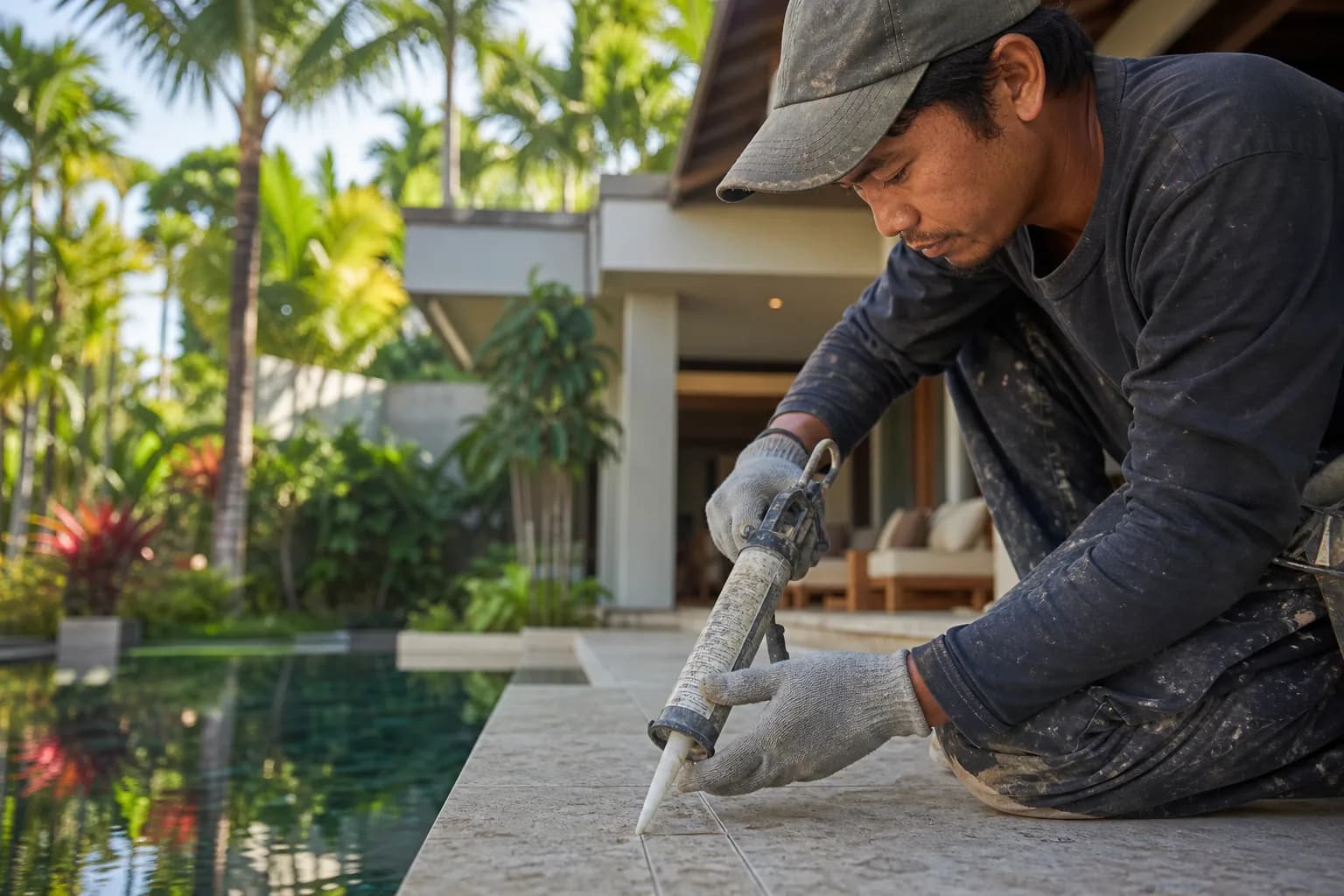
Palimanan Stone Efflorescence Prevention: Sealing Methods for Bali Humidity
Palimanan stone, a porous limestone quarried from West Java, has become a signature material in Bali villa construction for its warm, natural aesthetic. However, the island’s tropical humidity—averaging 75-85% year-round—creates the perfect conditions for efflorescence: those unsightly white salt deposits that bloom across stone surfaces. For villa owners investing in premium natural stone finishes, watching crystalline patches emerge weeks after installation represents both an aesthetic disappointment and a technical failure. The challenge isn’t just Bali’s humidity; it’s the combination of moisture, soluble salts in the stone and substrate, and inadequate sealing protocols during the finishing stage that transforms beautiful Palimanan installations into maintenance nightmares.
Understanding Efflorescence in Bali’s Tropical Climate
Efflorescence occurs when water-soluble salts migrate through porous stone and crystallize on the surface as moisture evaporates. In Bali’s climate, this process accelerates dramatically. Palimanan stone, with its natural porosity ranging from 15-25%, acts like a sponge—absorbing moisture from humid air, ground water, and installation materials. The salts originate from multiple sources: the stone itself, cement-based adhesives, grout, and even the substrate concrete.
During Bali villa construction, the finishing stage coincides with the highest moisture content in building materials. Fresh concrete screeds contain significant water, cement mortars introduce additional salts, and the tropical atmosphere prevents proper drying. When Palimanan stone is laid over these moisture-laden substrates without proper sealing protocols, capillary action draws salt-laden water upward through the stone. As Bali’s warm temperatures cause surface evaporation, salts concentrate and crystallize, creating the characteristic white blooms.
The technical challenge extends beyond visible efflorescence. Repeated wet-dry cycles in Bali’s climate cause subflorescence—salt crystallization beneath the surface—which generates internal pressure that can spall and delaminate the stone. This subsurface damage often appears months after installation, when warranty periods have expired and remediation becomes the owner’s burden.
Professional Bali villa construction requires understanding that efflorescence prevention isn’t a single treatment but a systematic approach during the finishing works phase. The solution involves three critical interventions: substrate moisture management, back-sealing the stone before installation, and applying surface sealants that block salt migration while maintaining breathability. Each step addresses a specific failure point in the moisture-salt-evaporation cycle.
Breathable water-repellent sealants like FILAW68 work by creating a hydrophobic barrier on the stone’s back face, preventing moisture absorption from the substrate while allowing vapor transmission. This maintains the stone’s natural ability to “breathe”—essential in Bali’s humid climate where trapped moisture can cause more problems than it solves. Surface treatments like PW10 efflorescence-blocking sealants create a molecular barrier that prevents salt migration to the surface while maintaining the stone’s natural appearance and slip resistance—critical for pool decks and outdoor applications common in villa renovation Bali projects.
Professional Installation Process for Efflorescence Prevention
The installation sequence for Palimanan stone in Bali’s humidity requires methodical execution, beginning well before the stone touches adhesive. At Teville, our finishing works protocol for natural stone installations follows a moisture-control timeline that accounts for tropical drying conditions.
Pre-Installation Substrate Preparation
Before any stone arrives on site, the concrete substrate must reach appropriate moisture levels—typically below 4% for interior applications, measured with a calibrated moisture meter. In Bali’s climate, this requires 28-35 days for standard concrete screeds, longer during rainy season. Rushing this phase guarantees efflorescence problems. We apply a waterproof membrane system to the substrate, creating a capillary break that prevents ground moisture from migrating upward. This step is non-negotiable for ground-floor installations and outdoor applications.
Stone Acclimatization and Back-Sealing
Palimanan stone should acclimatize on-site for 48-72 hours in covered, ventilated storage. During this period, apply FILAW68 or equivalent breathable water-repellent to the back face and edges of each stone piece. Application method matters: use a low-pressure sprayer or roller to achieve uniform coverage at the manufacturer’s specified rate (typically 1 liter per 5-8 m² depending on stone porosity). Allow 24 hours curing time before installation—this cannot be rushed regardless of project schedules.
Adhesive Selection and Application
Use only polymer-modified, low-alkali adhesives specifically formulated for natural stone. Standard cement mortars contain excessive soluble salts that feed efflorescence. Apply adhesive using the back-buttering method: trowel adhesive on both the substrate and stone back to ensure 95%+ coverage and eliminate voids where moisture can accumulate. Maintain consistent 3-5mm joint widths for proper grout coverage.
Grouting Protocol
Wait minimum 72 hours after installation before grouting—longer in humid conditions. Use epoxy-based or polymer-modified grouts with low water content and minimal salt content. Clean excess grout immediately with pH-neutral cleaners; acidic cleaners can etch Palimanan stone and introduce additional salts. Allow grout to cure fully (7-10 days in Bali’s humidity) before surface sealing.
Surface Sealing Application
The final protection layer uses efflorescence-blocking sealants like PW10. Surface must be completely clean and dry—use moisture meters to verify below 2% moisture content. Apply sealant in two thin coats 4-6 hours apart, following manufacturer’s coverage rates. For outdoor applications and pool surrounds, specify sealants with UV resistance and anti-slip properties. The entire installation-to-sealing process should span 14-21 days minimum in Bali’s climate—compressed schedules compromise every protective layer.
Materials and Technical Specifications
Selecting appropriate materials for Palimanan stone installation in Bali’s humidity requires understanding product chemistry and performance characteristics specific to tropical conditions.
Sealant Systems
Back-face sealants: FILAW68 (Fila Solutions) or equivalent breathable water-repellent impregnators. Specifications: water-based, solvent-free, penetrating depth 3-5mm, vapor permeability >150g/m²/24h. Coverage: 1L per 5-8m² depending on stone porosity. Alternative products include Aqua Mix Penetrating Sealer or Laticrete Stonetech Impregnator Pro.
Surface sealants: PW10 efflorescence-blocking treatment or similar molecular barrier systems. Must maintain breathability (vapor transmission >100g/m²/24h) while blocking salt migration. For high-traffic areas, specify sealants with hardness rating >4H. Reapplication intervals: 2-3 years for exterior, 3-5 years interior depending on traffic and cleaning protocols.
Adhesives and Grouts
Polymer-modified thin-set adhesives: minimum 50% polymer content, alkali content <0.5%, open time >30 minutes in tropical conditions. Recommended: Laticrete 254 Platinum, Mapei Kerabond T-R, or equivalent. Avoid standard cement mortars entirely. Grout specifications: epoxy-based for wet areas (pools, bathrooms), polymer-modified for interior dry areas, joint width 3-5mm, color-stable formulations resistant to UV and moisture.
Substrate Treatments
Waterproof membrane systems: liquid-applied or sheet membranes rated for continuous water immersion, minimum 0.5mm thickness, crack-bridging capability >2mm. For ground-floor installations, include vapor barrier beneath concrete slab. Primer systems compatible with both membrane and adhesive—incompatibility causes delamination failures common in rushed villa renovation Bali projects.
Cost Breakdown for Professional Installation
Efflorescence prevention adds 15-25% to basic Palimanan stone installation costs, but eliminates expensive remediation work. Based on current Bali market rates for quality materials and skilled labor:
Materials (per m²): Palimanan stone: Rp 350,000-550,000 depending on grade and finish. Back-face sealant (FILAW68): Rp 25,000-35,000. Polymer-modified adhesive: Rp 45,000-65,000. Low-alkali grout: Rp 30,000-45,000. Surface sealant (PW10): Rp 35,000-50,000. Waterproof membrane: Rp 40,000-60,000. Total materials: Rp 525,000-805,000/m².
Labor (per m²): Substrate preparation and membrane: Rp 75,000-100,000. Stone installation with back-buttering: Rp 150,000-200,000. Grouting: Rp 50,000-75,000. Sealing application (two coats): Rp 60,000-85,000. Total labor: Rp 335,000-460,000/m².
Total installed cost: Rp 860,000-1,265,000/m² for complete efflorescence-resistant installation. Premium locations (pool decks, feature walls) trend toward upper range. Compare this to basic installation at Rp 600,000-750,000/m² without proper sealing—which typically requires Rp 400,000-600,000/m² remediation within 12-24 months. For a typical 150m² villa flooring project, investing an additional Rp 39-77 million upfront prevents Rp 60-90 million in future remediation costs.
Common Installation Mistakes and Prevention
Inadequate substrate drying: The most frequent failure in Bali villa construction occurs when contractors install stone over substrates exceeding 4% moisture content. Prevention requires mandatory moisture testing and willingness to delay schedules. Teville’s villa projects build substrate drying time into construction schedules from the planning phase.
Skipping back-face sealing: Many contractors apply only surface sealants, leaving the stone’s back face unprotected. Moisture absorption from substrate continues unabated, overwhelming surface treatments. Prevention: make back-sealing a non-negotiable specification with photographic documentation required before installation proceeds.
Using incompatible products: Mixing solvent-based and water-based sealants, or using acidic cleaners on alkaline adhesives, creates chemical reactions that compromise all protective layers. Prevention: specify complete product systems from single manufacturers with proven tropical climate performance.
Insufficient curing time: Rushing from installation to grouting to sealing prevents proper chemical curing and moisture evaporation. Each layer needs time to develop full protective properties. Prevention: establish minimum waiting periods in contracts with weather-dependent extensions during rainy season.
Poor surface preparation before sealing: Applying sealants over residual grout haze, adhesive smears, or moisture creates a compromised barrier that fails within months. Prevention: thorough cleaning with pH-neutral products, complete drying verification with moisture meters, and quality control inspections before sealing authorization.
Frequently Asked Questions
How long does efflorescence prevention sealing last in Bali’s climate?
Properly applied breathable sealant systems typically provide 3-5 years protection for interior applications and 2-3 years for exterior installations in Bali’s humidity. However, longevity depends on traffic levels, cleaning methods, and exposure to pool chemicals or saltwater. High-traffic areas may require resealing every 18-24 months. Annual inspections help identify when resealing becomes necessary—look for water absorption (stone darkens when wet) or early efflorescence signs. Maintenance resealing costs approximately Rp 95,000-150,000/m² including surface preparation.
Can efflorescence be removed after it appears, or is prevention the only option?
Existing efflorescence can be removed using specialized cleaners, but removal addresses symptoms, not causes. Without proper sealing, efflorescence returns within weeks in Bali’s climate. Remediation requires: removing surface deposits with efflorescence removers, identifying and eliminating moisture sources, allowing complete drying (often requiring 2-3 weeks), then applying the full sealing protocol described above. Remediation costs 40-60% more than prevention due to additional cleaning, drying time, and potential stone damage from repeated salt crystallization. For finishing works Bali projects, prevention during initial installation remains far more cost-effective.
Is it necessary to seal both the back and front of Palimanan stone?
Yes, dual-side sealing provides comprehensive protection against Bali’s humidity. Back-face sealing with breathable water-repellent prevents moisture absorption from substrate—the primary efflorescence source. Surface sealing blocks salt migration and provides stain resistance. Using only surface sealant creates a moisture trap: water enters through the back, cannot escape through the sealed surface, and causes subflorescence damage. The back-face product must be breathable to allow vapor transmission while blocking liquid water—this balance is critical in tropical climates where complete moisture barriers cause more problems than they solve.
What’s the difference between breathable and non-breathable sealants for tropical applications?
Breathable sealants allow water vapor to pass through while blocking liquid water—essential for Bali’s high humidity where moisture constantly moves through building materials. Non-breathable sealants (like some topical coatings) trap moisture beneath the surface, causing pressure buildup, delamination, and accelerated subflorescence. For MEP systems Bali integration—particularly underfloor heating or cooling—breathable sealants prevent system moisture from being trapped. Breathability is measured as vapor transmission rate; specify products with >100g/m²/24h for tropical applications. This allows the stone to equilibrate with ambient humidity while preventing liquid water ingress.
How does pool proximity affect Palimanan stone sealing requirements?
Pool surrounds require enhanced sealing protocols due to c
 3124 m²6 month(s)from 123.000 USD
TALA 8
 3173 m²6 month(s)from 125.000 USD
TALA FOUR
 2144 m²11 month(s)from 104.000 USD
Narayana
 3104 m²11 month(s)from 99.000 USD
TALA 100
 3127 m²9 month(s)from 177.000 USD
Mukunda

Want to calculate?
 1from 198.000 USD
Private: Haridas Villas
 4344 m²16 month(s)from 290.000 USD
Radha
 172 m²8 month(s)from 120.000 USD
Keshava
 164 m²7 month(s)from 79.000 USD
TALA TWO
 3180 m²7 month(s)from 142.000 USD
Vasudeva
164 m²7 month(s)from 79.000 USDPrivate: Haridas Villas, Tegallalang
Start With Real Numbers, Not Guesses
Before buying land or finalizing a design, check the realistic build cost range for your project in Bali.
Our team reviews your inputs and gives a grounded estimate.
Available lands
 800 m²10 min$ 307882Bali, Tibubeneng
 3800 m²15 min$ 100616Bali, Pererenan
 325 m²15 min$ 44472Bali, Ungasan
 1100 m²8 min$ 280419Bali, Ungasan
 2500 m²5 min$ 609606Bali, Kedungu
 2000 m²15 min$ 523000Bali, Canggu
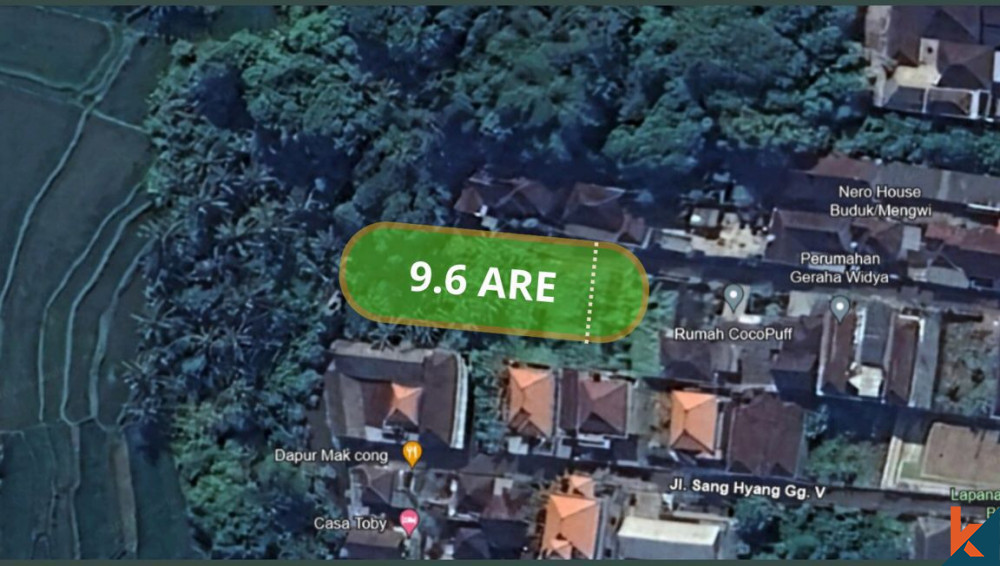 960 m²15 min$ 91034Bali, Mengwi
 1200 m²2 min$ 155172Bali, Klungkung
 3000 m²15 min$ 738916Bali, Cepaka
 8313 m²15 min$ 716670Bali, Buduk
 1350 m²5 min$ 283467Bali, Pecatu
 2130 m²10 min$ 495776Bali, Pecatu
 204 m²5 min$ 40899Bali, Kedungu
 1300 m²10 min$ 312192Bali, Kutuh South Bali
 420 m²15 min$ 41897Bali, Tabanan
Essential Bali build & buy guides
- Bali villa construction cost per m² in 2026
- How much will your villa cost? Calculator
- Building a villa in Bali: the complete guide
- Buying land in Bali: step-by-step for foreigners
- Bali villa investment: yields, risks, returns
- Leasehold vs freehold: what foreigners can own
- Construction defect liability & 10-year warranty
- Bali building codes and construction standards
Related guides
Leasehold Depreciation in Bali: How Remaining Term Affects Resale Value — and What Offsets It
A Bali leasehold is a depreciating right on land plus an ageing building — but the loss of value is neither linear nor unmanageable. How remaining term drives resale price, where the danger lines sit, and the clauses and decisions that protect your exit.
7 min read
Annual Holding Costs of a Bali Villa: A Realistic Owner's Budget
The purchase price is only the entry ticket. Here is what a Bali villa actually costs to hold each year — staff, utilities, pool, maintenance, insurance, taxes and management — with realistic 2026 numbers and a sample budget.
7 min read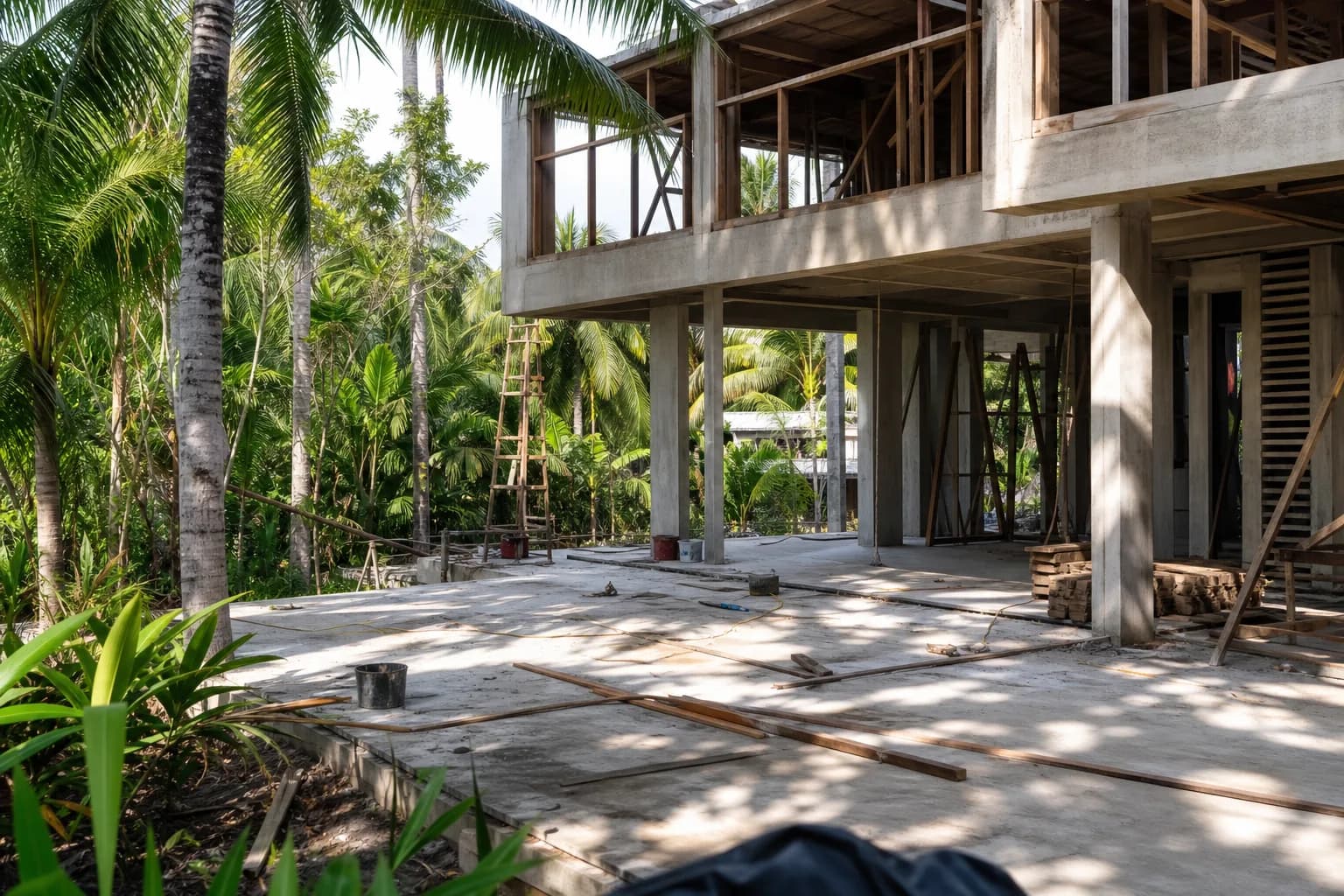
Transferring Money to Indonesia for a Property Purchase: Banking, Documentation and Safe Practice
Moving six figures across borders is the least glamorous part of buying in Bali, and the part most buyers under-prepare for. This guide covers the rupiah rule, notary escrow, transfer documentation, and the paper trail that protects a future exit.
8 min read