Gianyar Stone Carving Labor Rates Temple Costs Bali
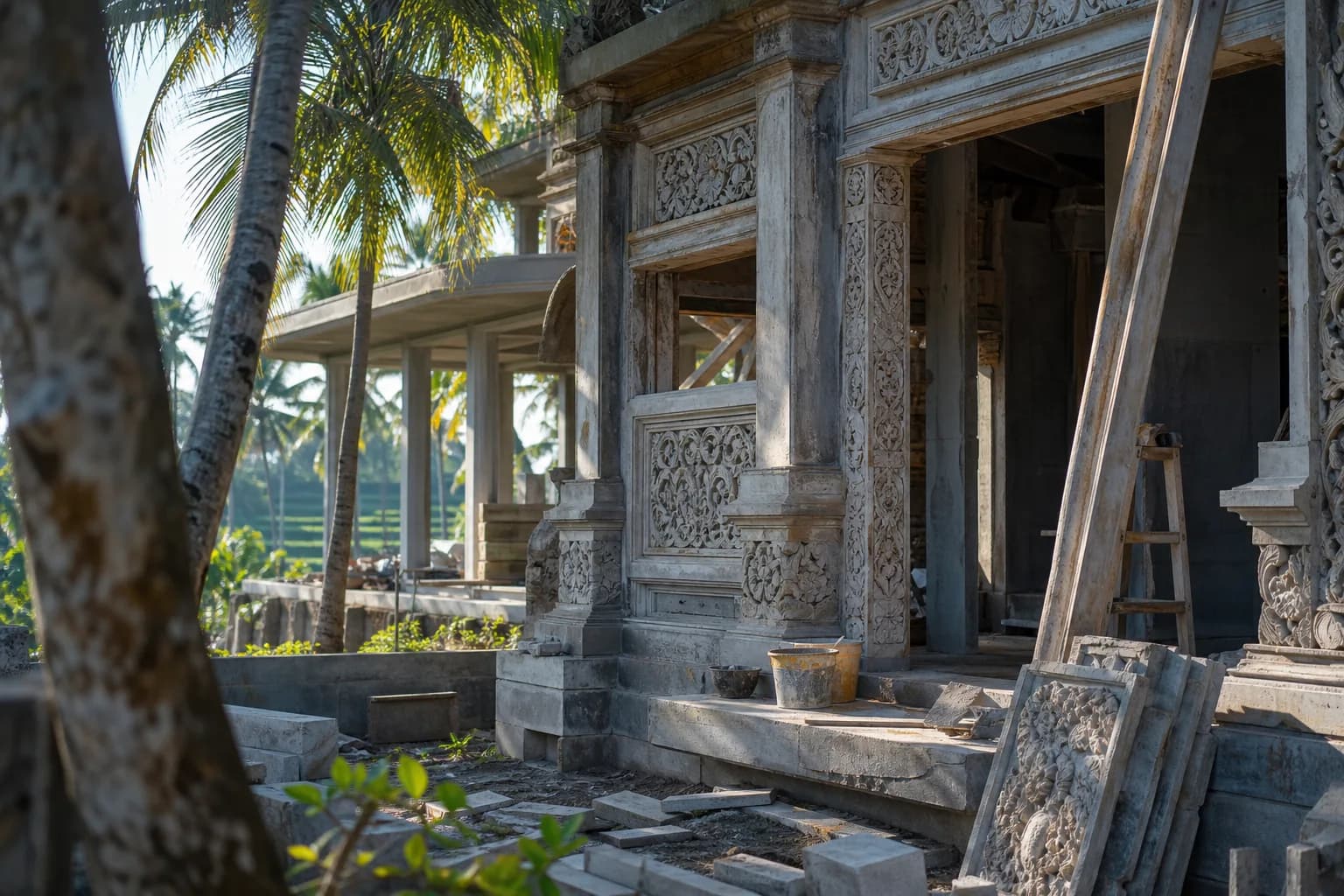
Why Gianyar Stone Carving Labor Rates Determine Your Villa’s Cultural Authenticity Budget
When architects specify traditional Balinese temple details for villa entrance gates, family shrines, or decorative relief panels, the construction budget suddenly encounters a specialized labor category that operates outside standard masonry rates. Gianyar regency—particularly the villages of Batubulan, Singapadu, and Batuan—hosts Bali’s most concentrated stone carving artisan community, where multi-generational craftsmen produce everything from simple paras stone borders to intricate temple guardian statues. The challenge for villa developers isn’t finding carvers; it’s understanding how artisan labor pricing differs fundamentally from conventional construction trades, how temple detail complexity exponentially affects costs, and why material selection between paras limestone, andesite volcanic stone, and sandstone creates 300-400% price variations for identical designs. Without engineering-level specification of carving depth, surface finish standards, and installation methodology, villa projects routinely experience budget overruns when “decorative stonework” estimates meet the reality of commissioning custom artisan labor in Bali’s craft economy.
Technical Structure of Gianyar Stone Carving Labor Economics
Gianyar’s stone carving labor market operates on a piece-rate system fundamentally different from hourly construction wages. Artisans quote projects by complexity level (halus/fine detail vs. kasar/rough work), stone type, and dimensional volume, not by time invested. A master carver (tukang ukir senior) commanding 250,000-400,000 IDR daily rates for conventional masonry will quote temple detail work at 1,500,000-8,000,000 IDR per square meter of carved surface, depending on relief depth and pattern intricacy.
The technical pricing structure breaks into four distinct categories. Basic border patterns (simple geometric or floral motifs with 5-10mm relief depth) on paras limestone typically cost 850,000-1,200,000 IDR per linear meter for 15cm width borders. Medium complexity panels (traditional Balinese flora patterns, kekarangan leaf motifs with 15-25mm depth) range 2,500,000-4,500,000 IDR per square meter. High-detail narrative reliefs (Ramayana scenes, deity figures, temple guardian faces with 40-60mm depth and undercut details) command 6,000,000-12,000,000 IDR per square meter. Three-dimensional sculptures (full-round temple guardians, naga serpents, garuda birds) are quoted by height and complexity: a 120cm temple guardian pair in andesite stone typically costs 18,000,000-35,000,000 IDR including carving labor and material.
Material selection creates the first major cost variable. Paras limestone (batu paras) from Gianyar quarries—the traditional Balinese temple stone—costs 450,000-650,000 IDR per cubic meter rough block, machines easily, but weathers rapidly in coastal salt environments, developing surface erosion within 5-8 years without proper sealing. Andesite volcanic stone (batu candi) costs 1,200,000-1,800,000 IDR per cubic meter, requires significantly more carving labor (adding 40-60% to labor quotes due to hardness), but provides superior durability in tropical weathering. Sandstone imports from Java cost 2,800,000-4,200,000 IDR per cubic meter, offer excellent carving properties and weather resistance, but transportation adds substantial cost.
The engineering challenge lies in specification precision. When villa architects specify “traditional Balinese carved entrance gate,” without defining relief depth standards, pattern complexity level, stone type, and surface finish requirements (hand-tooled vs. partially machine-cut), artisan quotes vary by 400-600%. A technically complete specification includes: carved surface area in square meters, relief depth in millimeters, reference pattern complexity (providing photo examples), stone type and source quarry, surface finish standard (traditional hand-chiseled texture vs. smoothed), installation method (carved in-situ vs. pre-carved panels), and sealing/weatherproofing requirements.
Labor team structure affects project timelines and supervision requirements. A medium-complexity temple gate project (4 square meters of carved surface at 20mm relief depth) typically requires a master carver plus 2-3 apprentice assistants working 3-4 weeks. The master carver executes all detailed facial features, hand positions, and critical decorative elements, while assistants rough-cut backgrounds and simple repetitive patterns. This team structure means labor costs include both master rates (350,000-500,000 IDR daily) and assistant rates (150,000-200,000 IDR daily), with the master typically working 60% of total project hours and assistants handling preparatory and finishing work.
Quality control requires understanding traditional vs. contemporary carving standards. Traditional temple carving emphasizes symbolic accuracy and spiritual appropriateness over geometric precision—slight asymmetries and hand-tool texture are considered authentic craftsmanship markers. Contemporary villa clients often expect architectural-grade dimensional accuracy and smooth surface finishes that require additional labor hours for sanding and detail refinement, potentially adding 25-40% to traditional artisan quotes. Specifying finish standards during quotation prevents disputes during installation.
Hidden Cost Traps in Temple Detail Commissioning
The most expensive mistake villa developers make is treating stone carving as a construction trade rather than commissioned artwork. Requesting “budget options” or “simplified versions” after receiving initial quotes often produces inferior results, as experienced artisans reduce quality rather than efficiency—using apprentices for detail work that requires master-level skill, reducing relief depth below structural integrity thresholds, or substituting lower-grade stone with hidden fractures. The cost difference between adequate and excellent temple carving is typically 30-40%, but the quality difference is permanent and highly visible.
Material procurement timing creates hidden costs when not coordinated with carving schedules. Paras limestone requires 4-6 weeks quarry seasoning after cutting to stabilize moisture content before carving; starting carving on fresh-cut stone results in cracking as the material dries. Artisans typically include seasoned stone in their quotes, but if clients source material independently to “save costs,” unseasoned stone leads to carving failures and replacement costs exceeding any initial savings.
Installation methodology affects both structural integrity and final costs. Carved panels installed as applied veneer over concrete or brick substrate (common cost-cutting approach) require stainless steel anchoring systems, waterproof membranes, and expansion joints that add 400,000-800,000 IDR per square meter to installation costs. Structural carved elements (load-bearing gate pillars, integrated wall sections) require engineering calculations for seismic loading and tropical weathering, typically adding 15-20% to total project cost but providing superior long-term durability.
Weatherproofing and maintenance specifications are routinely omitted from initial budgets. Paras limestone in Bali’s tropical climate requires penetrating silane/siloxane sealers (180,000-250,000 IDR per square meter application) reapplied every 18-24 months to prevent biological growth and surface erosion. Andesite stone requires less frequent sealing but benefits from anti-efflorescence treatments (120,000-180,000 IDR per square meter) to prevent salt migration staining. These ongoing maintenance costs should be calculated into total ownership budgets for villas featuring extensive carved stonework.
Engineering-Grade Process for Commissioning Gianyar Stone Carving
Step 1: Design Specification and Cultural Appropriateness Review (Week 1-2)
Engage a Balinese cultural consultant (pemangku or traditional architect) to review proposed temple detail designs for spiritual appropriateness before commissioning carving. Certain deity representations, guardian positions, and sacred symbols have specific placement rules and orientation requirements in Balinese Hindu tradition. Cultural errors require complete re-carving, as artisans will not install spiritually inappropriate work. Consultant fees typically run 2,500,000-5,000,000 IDR for villa-scale projects but prevent expensive mistakes. Simultaneously, develop technical drawings specifying exact dimensions, relief depths, and pattern details with reference photographs of desired complexity level.
Step 2: Artisan Selection and Workshop Site Visit (Week 2-3)
Visit minimum three established Gianyar carving workshops in Batubulan or Singapadu to review portfolio work, assess quality consistency, and evaluate workshop capacity. Examine completed temple projects similar in complexity to your requirements, checking detail sharpness, surface finish quality, and weathering performance on older installations. Request client references for projects completed 3-5 years prior to assess long-term satisfaction. Verify workshop has adequate covered workspace for your project timeline—outdoor carving during rainy season (November-March) causes quality issues and delays.
Step 3: Material Selection and Quarry Verification (Week 3-4)
Specify stone type based on installation environment: paras limestone for covered areas and inland locations with regular maintenance capacity; andesite for coastal properties and high-weathering exposure; sandstone for premium projects requiring both carving detail and maximum durability. Request quarry source documentation and inspect sample blocks for fractures, color consistency, and grain structure. For projects exceeding 5 cubic meters, visit quarry directly to select specific blocks, ensuring adequate material from single quarry batch for color matching across all carved elements.
Step 4: Detailed Quotation with Milestone Payment Structure (Week 4-5)
Obtain itemized quotations separating material costs, carving labor, finishing work, sealing/weatherproofing, transportation, and installation. Establish milestone payment schedule: 30% deposit upon contract signing and material procurement, 40% upon carving completion and client approval at workshop, 30% upon final installation and sealing. Include penalty clauses for timeline delays (typically 1-2% per week beyond agreed schedule) and quality dispute resolution process (independent master carver assessment). Specify warranty terms: minimum 12 months for carving quality defects, excluding weathering damage from inadequate maintenance.
Step 5: Carving Supervision and Progress Documentation (Week 6-10)
Schedule weekly workshop visits during carving phase to review progress and approve detail execution before subsequent layers are carved. Photograph all stages for documentation. Address any design modifications immediately—changes after 50% carving completion typically incur 40-60% additional labor charges. For complex projects, engage your construction supervisor or architect for technical progress reviews, verifying dimensional accuracy and surface finish standards match specifications.
Step 6: Pre-Installation Approval and Site Preparation (Week 10-11)
Conduct final workshop inspection before transportation, checking all carved elements for completion, damage, and quality standards. Verify installation substrate is properly prepared: structural supports installed, waterproofing membranes applied, anchor point locations marked and verified against carved element dimensions. Coordinate transportation during dry weather—carved stone transported during rain risks surface damage and moisture absorption affecting sealing effectiveness.
Step 7: Installation Supervision and Weatherproofing (Week 11-12)
Require master carver presence during installation to supervise positioning, anchoring, and any field adjustments. Document installation with photographs before sealing application. Apply specified weatherproofing treatments within 48 hours of installation, following manufacturer specifications for surface preparation and cure times. Establish maintenance schedule with property management, including inspection intervals and re-sealing requirements.
Realistic Budget Ranges for Gianyar Stone Carving Projects 2026
For a standard villa entrance gate with medium-complexity traditional carving (6 square meters total carved surface, 20mm relief depth, paras limestone, including two 100cm guardian statues): total project cost ranges 45,000,000-75,000,000 IDR, breaking down as material 8,000,000-12,000,000 IDR, carving labor 28,000,000-48,000,000 IDR, installation and finishing 9,000,000-15,000,000 IDR. Timeline: 8-10 weeks from design approval to completed installation.
A family temple (sanggah) with traditional carved details (12 square meters carved surface across multiple structures, mixed relief depths 15-40mm, andesite stone, including altar panels and shrine decorations): total cost 95,000,000-165,000,000 IDR, with material 22,000,000-35,000,000 IDR, carving labor 58,000,000-105,000,000 IDR, installation and ceremonial finishing 15,000,000-25,000,000 IDR. Timeline: 12-16 weeks including cultural consultation and blessing ceremony coordination.
Decorative wall relief panels for villa feature walls (per square meter, medium complexity, 18-25mm depth, paras limestone): 3,200,000-5,800,000 IDR fully installed and sealed. Custom water feature sculptures (naga serpent, deity figure, 80-120cm height, andesite): 12,000,000-28,000,000 IDR depending on detail complexity and finish requirements.
Annual maintenance costs for carved stonework: paras limestone requires 180,000-250,000 IDR per square meter sealing every 18-24 months; andesite requires 120,000-180,000 IDR per square meter every 24-36 months; plus periodic cleaning (80,000-120,000 IDR per square meter annually) to remove biological growth and atmospheric deposits.
Frequently Asked Questions: Gianyar Stone Carving Labor and Temple Detail Costs
How do I verify a Gianyar stone carving artisan’s skill level before commissioning expensive temple detail work?
Request to visit completed temple installations (not workshop showpieces) that are 3-5 years old, allowing assessment of both initial carving quality and weathering per
 3173 m²6 month(s)from 125.000 USD
TALA FOUR
 2144 m²11 month(s)from 104.000 USD
Narayana

Want to calculate?
 3180 m²7 month(s)from 142.000 USD
Vasudeva
 172 m²8 month(s)from 120.000 USD
Keshava
 3127 m²9 month(s)from 177.000 USD
Mukunda
 3124 m²6 month(s)from 123.000 USD
TALA 8
 1from 198.000 USD
Private: Haridas Villas
 164 m²7 month(s)from 79.000 USD
Private: Haridas Villas, Tegallalang
164 m²7 month(s)from 79.000 USDTALA TWO
 3104 m²11 month(s)from 99.000 USD
TALA 100
 4344 m²16 month(s)from 290.000 USD
Radha
Start With Real Numbers, Not Guesses
Before buying land or finalizing a design, check the realistic build cost range for your project in Bali.
Our team reviews your inputs and gives a grounded estimate.
Available lands
 1000 m²5 min$ 350431Bali, Drupadi
 325 m²15 min$ 44472Bali, Ungasan
 6000 m²30 min$ 55419Bali, Tabanan
 550 m²15 min$ 164594Bali, Mengwi
 200 m²5 min$ 59113Bali, Bukit
 5028 m²10 min$ 361000Bali, Ubud
 7500 m²5 min$ 206281Bali, Kedungu
 3300 m²15 min$ 449889Bali, Tabanan
 1950 m²7 min$ 150092Bali, Tabanan
 400 m²15 min$ 67192Bali, Tabanan
 18900 m²2 min$ 6912931Bali, Pecatu
 600 m²10 min$ 206897Bali, Canggu
 3100 m²20 min$ 272968Bali, Tabanan
 204 m²5 min$ 40899Bali, Kedungu
 29000 m²6 min$ 3857143Bali, Tabanan
Essential Bali build & buy guides
- Bali villa construction cost per m² in 2026
- How much will your villa cost? Calculator
- Building a villa in Bali: the complete guide
- Buying land in Bali: step-by-step for foreigners
- Bali villa investment: yields, risks, returns
- Leasehold vs freehold: what foreigners can own
- Construction defect liability & 10-year warranty
- Bali building codes and construction standards
Related guides
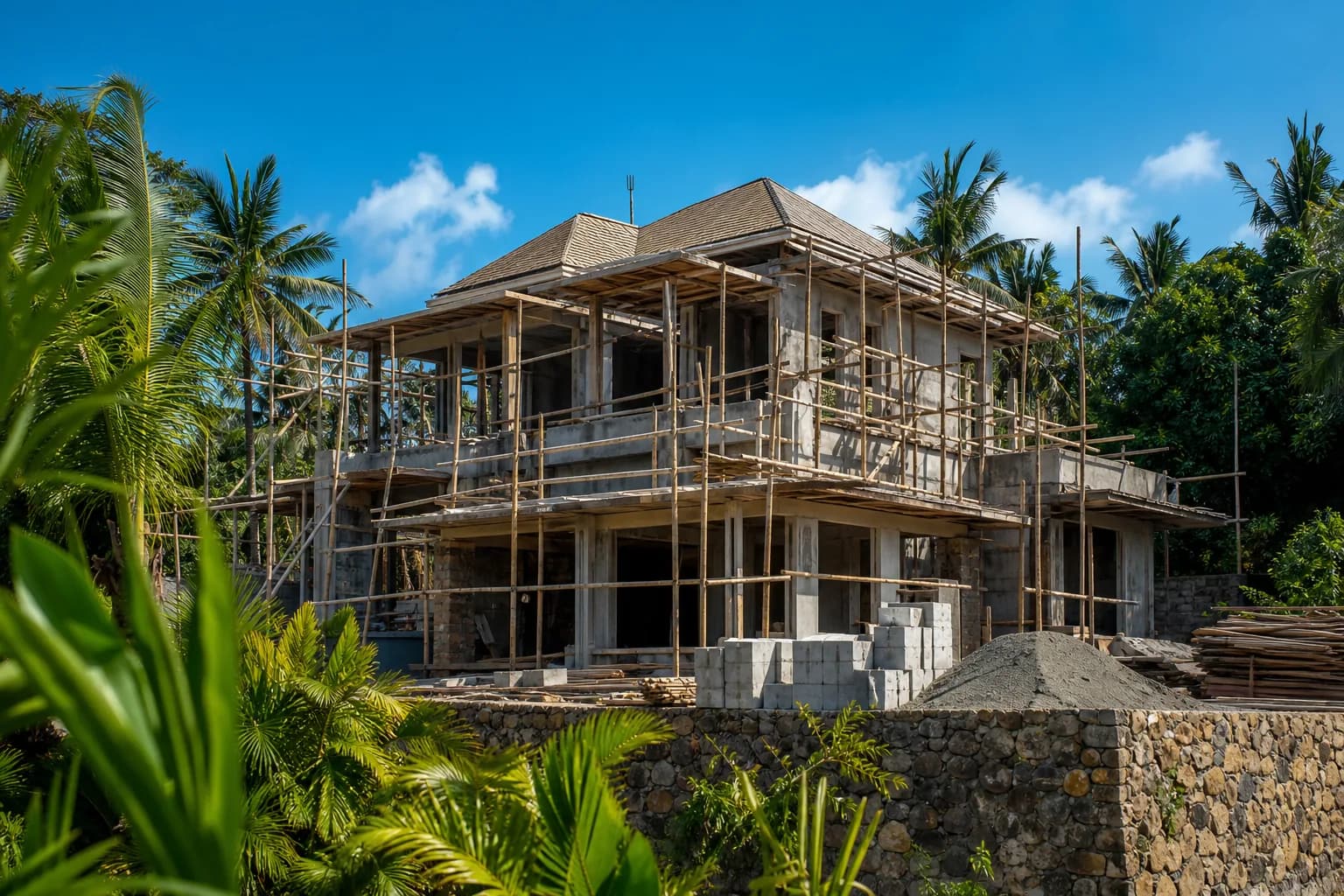
Milestone Payment Schedules in Bali Construction: How Staged Payments Protect You
Milestone-based payment schedules are a Bali builder's best client protection: what a healthy 6-stage structure looks like, how to verify progress remotely, and which payment terms to refuse.
7 min read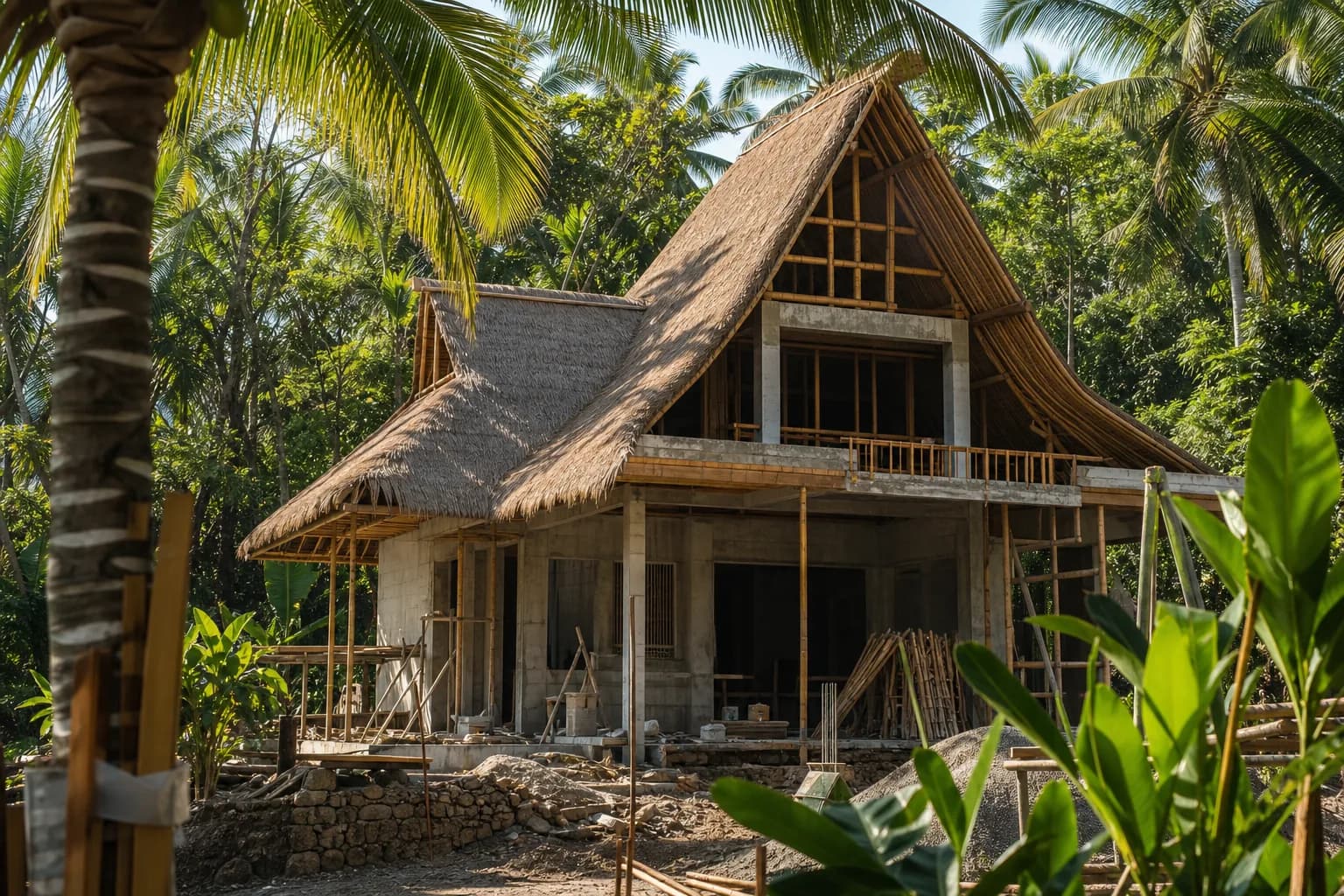
Financing a Bali Villa: Why the Market Is Cash-Only for Foreigners — and the Realistic Alternatives
Why foreign buyers in Bali almost always pay cash, the narrow 2026 bank options for residents, and the realistic alternatives — from home-country equity to milestone-staged construction payments.
7 min read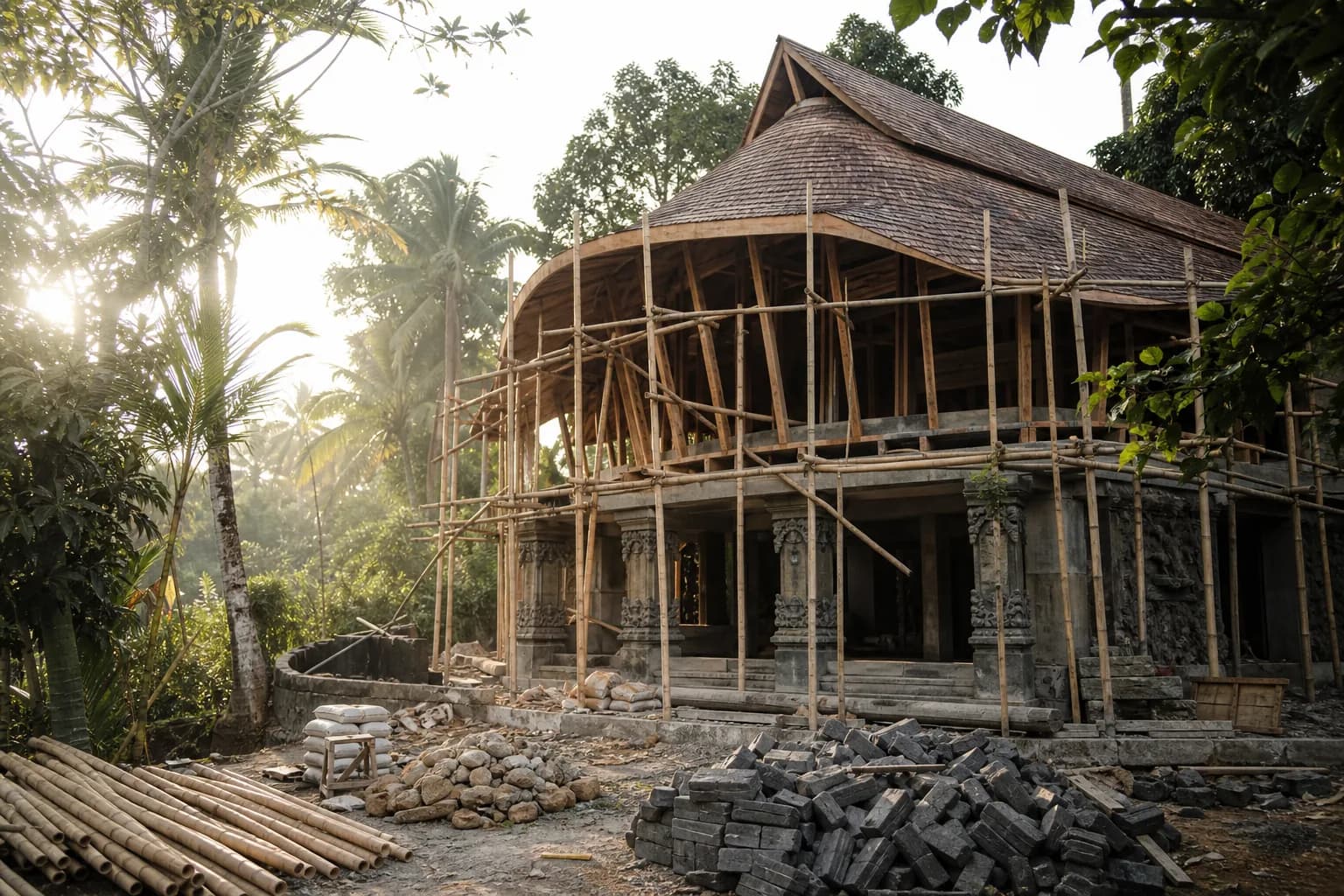
Bali Rental Income Tax and Compliance Costs: The 10% Rule and the Real Math
How Bali rental income is really taxed in 2026 — the 10% final tax, the 20% non-resident trap, PB1, licensing overhead — and a worked example showing what a villa owner actually keeps.
7 min read