Earthquake-Rated Steel Costs Candidasa Bali Seismic
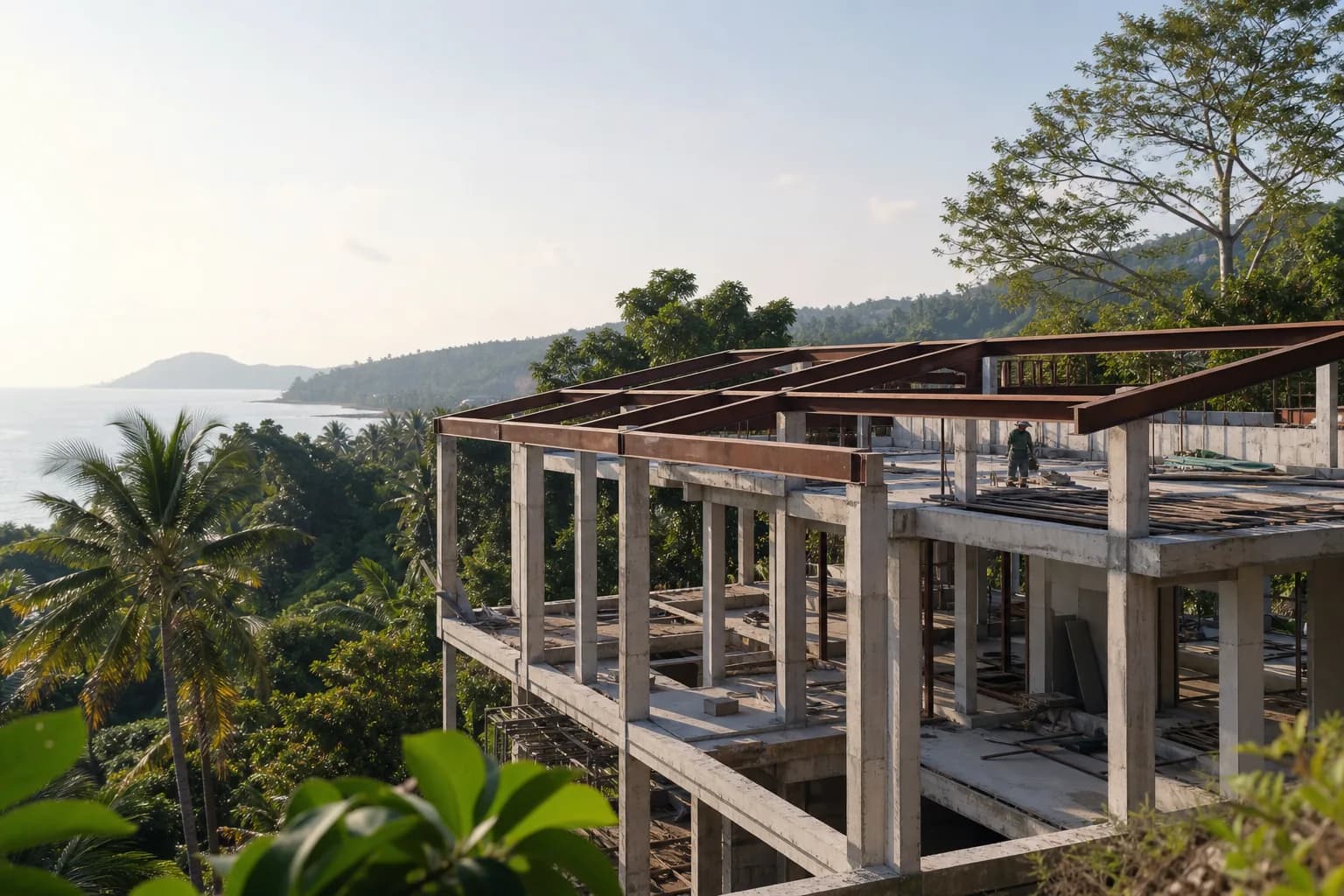
Why Candidasa’s Seismic Classification Demands Different Steel Specifications Than Seminyak or Ubud
Candidasa sits within a higher seismic risk zone than many popular Bali construction areas, requiring earthquake-rated steel reinforcement that meets specific SNI (Standar Nasional Indonesia) seismic design codes. Property developers often discover mid-construction that their structural engineer specified standard rebar grades insufficient for the zone’s seismic coefficient, forcing expensive material replacements and schedule delays. The cost differential between standard construction steel and properly certified earthquake-rated reinforcement in Candidasa ranges from 18-34% depending on grade specifications, yet this critical budget factor rarely appears in preliminary feasibility studies. Understanding the precise steel requirements for Candidasa’s seismic zone—and their actual delivered costs in 2026—prevents structural compliance failures that can halt construction for months while engineers redesign foundation and frame systems to meet mandatory seismic performance standards.
Technical Requirements for Seismic Steel Reinforcement in Candidasa Construction Zones
Candidasa falls under Indonesia’s seismic zone classification system, typically designated as Zone 4 or 5 depending on precise location, requiring steel reinforcement that meets SNI 2847 (concrete structural code) and SNI 1726 (earthquake resistance planning procedures). The fundamental difference lies in ductility requirements—earthquake-rated steel must demonstrate specific yield strength, tensile strength ratios, and elongation characteristics that allow controlled deformation during seismic events without catastrophic failure.
For Candidasa villa construction, this translates to mandatory use of deformed bars (beton bertulang) with minimum yield strength of 400 MPa (commonly specified as BjTS 40 or equivalent), compared to 240-300 MPa grades sometimes used in non-seismic applications. The steel must meet ASTM A706 specifications or Indonesian equivalent SNI 07-2052, which specifically addresses seismic reinforcement with controlled chemistry to ensure weldability and ductility. Standard ASTM A615 steel, while adequate for many applications, lacks the guaranteed ductility ratios required for seismic zones.
Structural engineers designing for Candidasa must calculate seismic loads using the site’s specific spectral acceleration values, soil classification (typically C or D in coastal Candidasa), and building importance factor. A two-story villa typically requires 12mm-16mm diameter rebar for columns at 150mm spacing, with 10mm-12mm bars for beams and slabs. Seismic detailing demands additional transverse reinforcement—stirrups and ties at closer spacing (typically 100mm in critical zones versus 200mm in standard construction) to provide confinement during seismic loading.
The technical specifications extend beyond material grade to installation requirements. Seismic steel placement requires minimum concrete cover (40mm for foundations, 30mm for beams/columns in tropical coastal environments), specific lap splice lengths (typically 60 times bar diameter for compression, 72 times for tension in seismic zones), and mandatory mechanical couplers or certified welding procedures where splices occur in high-stress regions. These requirements directly impact material quantities—seismic detailing typically increases total steel tonnage by 15-25% compared to non-seismic equivalent structures.
Candidasa’s coastal location adds corrosion considerations that compound seismic requirements. Chloride exposure from sea air demands epoxy-coated rebar or increased concrete cover, both adding cost. The combination of seismic ductility requirements and corrosion protection often necessitates stainless steel reinforcement for critical structural elements, particularly in foundations and lower-level columns where replacement would be impossible post-construction.
Material certification becomes critical—every steel shipment must include mill certificates documenting chemical composition, mechanical properties, and compliance with specified standards. Indonesian building authorities in Karangasem Regency (Candidasa’s administrative region) increasingly require third-party testing of reinforcement steel before concrete placement, adding laboratory costs of IDR 2,500,000-4,500,000 per project phase but preventing the use of substandard materials that plague some Bali construction projects.
Hidden Cost Factors Developers Miss in Seismic Steel Procurement
The published price per kilogram of earthquake-rated steel represents only 60-70% of actual delivered cost to Candidasa sites. Transportation from Denpasar suppliers to East Bali adds IDR 850,000-1,200,000 per truckload (typically 8-10 tons), with narrow coastal roads limiting delivery vehicle size and requiring multiple trips. Many developers budget steel costs based on Seminyak or Canggu delivery rates, discovering too late that Candidasa logistics add 8-12% to material costs.
Steel price volatility creates significant risk in fixed-price construction contracts. Global steel markets fluctuated 23% during 2025, with Indonesian prices following international trends plus currency exchange impacts. A villa requiring 18 tons of reinforcement steel faces potential cost variations of USD 3,600-6,500 between design phase and actual procurement if prices aren’t locked through forward contracts or material deposits. Teville’s construction process includes steel price protection mechanisms, but developers working with less experienced contractors often absorb these fluctuations.
Waste factors in seismic steel installation run higher than standard construction—typically 8-12% versus 5-7%—due to specific length requirements for seismic lap splices and the inability to use shorter offcuts in critical structural zones. Contractors unfamiliar with seismic detailing often under-order initial steel quantities, causing schedule delays while awaiting supplementary deliveries to remote Candidasa locations.
The certification and testing requirements add hidden costs: structural engineer review of shop drawings (IDR 8,000,000-15,000,000), third-party steel testing (IDR 2,500,000-4,500,000 per phase), and potential re-testing if initial samples fail specifications. These professional services typically add 4-7% to total steel costs but remain invisible in preliminary budgets focused only on material unit prices.
Step-by-Step Process for Specifying and Procuring Seismic Steel in Candidasa
Phase 1: Seismic Site Classification (Weeks 1-2)
Commission geotechnical investigation specifically documenting soil classification per SNI 1726 requirements. Candidasa’s coastal geology varies significantly—alluvial soils near the beach versus volcanic substrates inland—directly affecting seismic design parameters. The soil report must include shear wave velocity measurements or SPT (Standard Penetration Test) data to determine site class, which governs spectral acceleration values used in structural calculations. Cost: IDR 25,000,000-45,000,000 depending on required boring depth and testing extent.
Phase 2: Structural Engineering with Seismic Specifications (Weeks 3-6)
Engage a structural engineer certified in seismic design (look for Indonesian PII certification or equivalent) to develop reinforcement schedules specifically for Candidasa’s seismic zone. The engineer must specify exact steel grades (BjTS 40 minimum), bar sizes, spacing, lap splice lengths, and seismic detailing requirements. Request detailed bar bending schedules showing every reinforcement element—this documentation becomes the procurement specification and installation guide. Engineering fees for seismic design: IDR 35,000,000-65,000,000 for typical two-story villa.
Phase 3: Steel Specification and Supplier Qualification (Week 7)
Identify suppliers capable of providing certified earthquake-rated steel with proper mill certificates. Major suppliers include PT Krakatau Steel, PT Gunung Garuda, and PT Ispat Indo, but verify that specific grades meet ASTM A706 or SNI 07-2052 seismic specifications—not all “high-strength” steel qualifies. Request samples for independent testing before committing to full orders. Obtain written quotations including delivery to Candidasa, clearly specifying grade, certification requirements, and price validity period (typically 30-45 days given steel price volatility).
Phase 4: Quantity Calculation and Procurement (Weeks 8-9)
Calculate total steel tonnage from bar bending schedules, adding 10% waste factor for seismic detailing requirements. For reference, typical Candidasa villas require 85-120 kg of reinforcement steel per square meter of built area for seismic-compliant construction. Place orders with 50% deposit to lock pricing, scheduling delivery to align with construction phases—foundations first, then columns/beams, finally slabs. Coordinate delivery timing with concrete placement schedules to minimize on-site storage in Candidasa’s humid coastal environment where corrosion begins within weeks.
Phase 5: Delivery Verification and Testing (Weeks 10-12)
Upon delivery, verify mill certificates match ordered specifications and conduct visual inspection for surface condition, proper deformation patterns, and absence of corrosion. Extract samples (typically 3 specimens per 10 tons) for third-party laboratory testing of yield strength, tensile strength, and elongation properties. Use accredited laboratories in Denpasar (samples can be transported from Candidasa). Testing requires 5-7 days; do not begin steel installation until receiving passing test results. Failed tests require full batch rejection and replacement at supplier expense if specifications were guaranteed.
Phase 6: Installation Supervision and Compliance Documentation (Throughout Construction)
Require structural engineer site visits during critical steel installation phases—foundation cages, column reinforcement, beam-column joints—to verify compliance with seismic detailing requirements. Photograph all reinforcement before concrete placement, documenting bar sizes, spacing, lap splice lengths, and seismic ties. This photographic record becomes essential for building permit final inspection and future property transactions, proving seismic compliance that cannot be verified after concrete encasement.
Realistic Cost Ranges for Candidasa Seismic Steel in 2026
Earthquake-rated reinforcement steel (BjTS 40, SNI 07-2052 compliant) in Bali currently costs IDR 16,500-19,200 per kilogram for deformed bars in common sizes (10mm-20mm diameter), compared to IDR 13,800-15,500 for standard grades. For a 250-square-meter two-story villa in Candidasa requiring approximately 22-28 tons of reinforcement steel, total material costs range from IDR 363,000,000-537,600,000 (USD 23,000-34,000 at current exchange rates).
Delivery to Candidasa adds IDR 1,200,000-1,800,000 per shipment, with typical projects requiring 3-4 deliveries across construction phases. Steel fabrication (cutting and bending to shop drawings) costs an additional IDR 2,800-3,500 per kilogram if outsourced to specialized facilities, though many contractors perform this on-site with corresponding labor costs.
Professional services related to seismic steel specification and verification include: structural engineering (IDR 35,000,000-65,000,000), geotechnical investigation (IDR 25,000,000-45,000,000), steel testing (IDR 2,500,000-4,500,000 per phase, typically 3 phases), and construction supervision focused on seismic detailing (IDR 15,000,000-28,000,000). These services add approximately IDR 77,500,000-142,500,000 to the steel-related budget.
Total seismic steel costs for Candidasa villa construction—including materials, delivery, testing, and related professional services—typically represent 12-16% of total construction budget, compared to 9-12% for similar projects in lower seismic zones using standard reinforcement specifications. For comprehensive budget planning, Teville offers detailed cost estimation through our project assessment process, accounting for site-specific seismic requirements and current material pricing.
Frequently Asked Questions: Candidasa Seismic Steel Specifications
Can I use standard construction steel if my engineer says the design is “strong enough” for Candidasa?
No—Indonesian building codes mandate specific seismic-rated steel in designated seismic zones regardless of design strength calculations. Standard steel lacks the ductility characteristics required for earthquake performance, even if yield strength appears adequate. Building permit authorities in Karangasem Regency increasingly verify steel certifications during inspections, and using non-compliant materials can result in construction stop-work orders, mandatory demolition of non-compliant elements, and permit revocation. Insurance policies may also exclude earthquake damage claims if post-event investigation reveals non-compliant reinforcement materials were used.
How much does epoxy-coated seismic steel cost compared to standard seismic-grade rebar in Candidasa’s coastal environment?
Epoxy-coated earthquake-rated reinforcement costs approximately 35-45% more than uncoated seismic steel—typically IDR 22,500-27,800 per kilogram versus IDR 16,500-19,200 for standard seismic-grade rebar. For a 250-square-meter villa, this represents an additional investment of IDR 127,000,000-238,000,000. However, Candidasa’s direct coastal exposure (within 500 meters of ocean) creates severe chloride exposure conditions where uncoated steel begins corroding within 8-12 years despite concrete cover. The alternative—increasing concrete cover from 30mm to 50mm—reduces usable space and increases concrete costs by similar amounts while providing less reliable long-term protection. Most experienced engineers specify epoxy coating or stainless steel for foundations and lower-level columns in Candidasa coastal projects, accepting the upfront cost to prevent structural degradation that would require expensive remediation within 10-15 years.
What happens if steel prices increase significantly between design approval and construction start in Candidasa?
Steel price volatility represents a significant risk in Bali construction projects, with 15-25% fluctuations possible over 6-9 month periods between design and construction phases. Protection strategies include: (1) placing steel orders with 50% deposit immediately upon
 3180 m²7 month(s)from 142.000 USD
Vasudeva
 4344 m²16 month(s)from 290.000 USD
Radha
 3173 m²6 month(s)from 125.000 USD
TALA FOUR

Want to calculate?
 164 m²7 month(s)from 79.000 USD
TALA TWO
 2144 m²11 month(s)from 104.000 USD
Narayana
 1from 198.000 USD
Private: Haridas Villas
 172 m²8 month(s)from 120.000 USD
Keshava
164 m²7 month(s)from 79.000 USDPrivate: Haridas Villas, Tegallalang
 3104 m²11 month(s)from 99.000 USD
TALA 100
 3127 m²9 month(s)from 177.000 USD
Mukunda
 3124 m²6 month(s)from 123.000 USD
TALA 8
Start With Real Numbers, Not Guesses
Before buying land or finalizing a design, check the realistic build cost range for your project in Bali.
Our team reviews your inputs and gives a grounded estimate.
Available lands
 3700 m²15 min$ 738177Bali, Tabanan
 750 m²15 min$ 187038Bali, Kerobokan
 500 m²10 min$ 107143Bali, Tabanan
 700 m²15 min$ 162500Bali, Tabanan
 600 m²10 min$ 206897Bali, Canggu
 1430 m²5 min$ 209862Bali, Klungkung
 550 m²15 min$ 164594Bali, Mengwi
 200 m²5 min$ 59113Bali, Bukit
 1600 m²32 min$ 266010Bali, Tabanan
 700 m²8 min$ 165517Bali, Umalas
 3100 m²15 min$ 257697Bali, Tegallalang
 1158 m²12 min$ 291996Bali, Mengwi
 6000 m²10 min$ 1330049Bali, Kutuh South Bali
 1200 m²2 min$ 155172Bali, Klungkung
 800 m²5 min$ 295567Bali, Seseh
Essential Bali build & buy guides
- Bali villa construction cost per m² in 2026
- How much will your villa cost? Calculator
- Building a villa in Bali: the complete guide
- Buying land in Bali: step-by-step for foreigners
- Bali villa investment: yields, risks, returns
- Leasehold vs freehold: what foreigners can own
- Construction defect liability & 10-year warranty
- Bali building codes and construction standards
Related guides
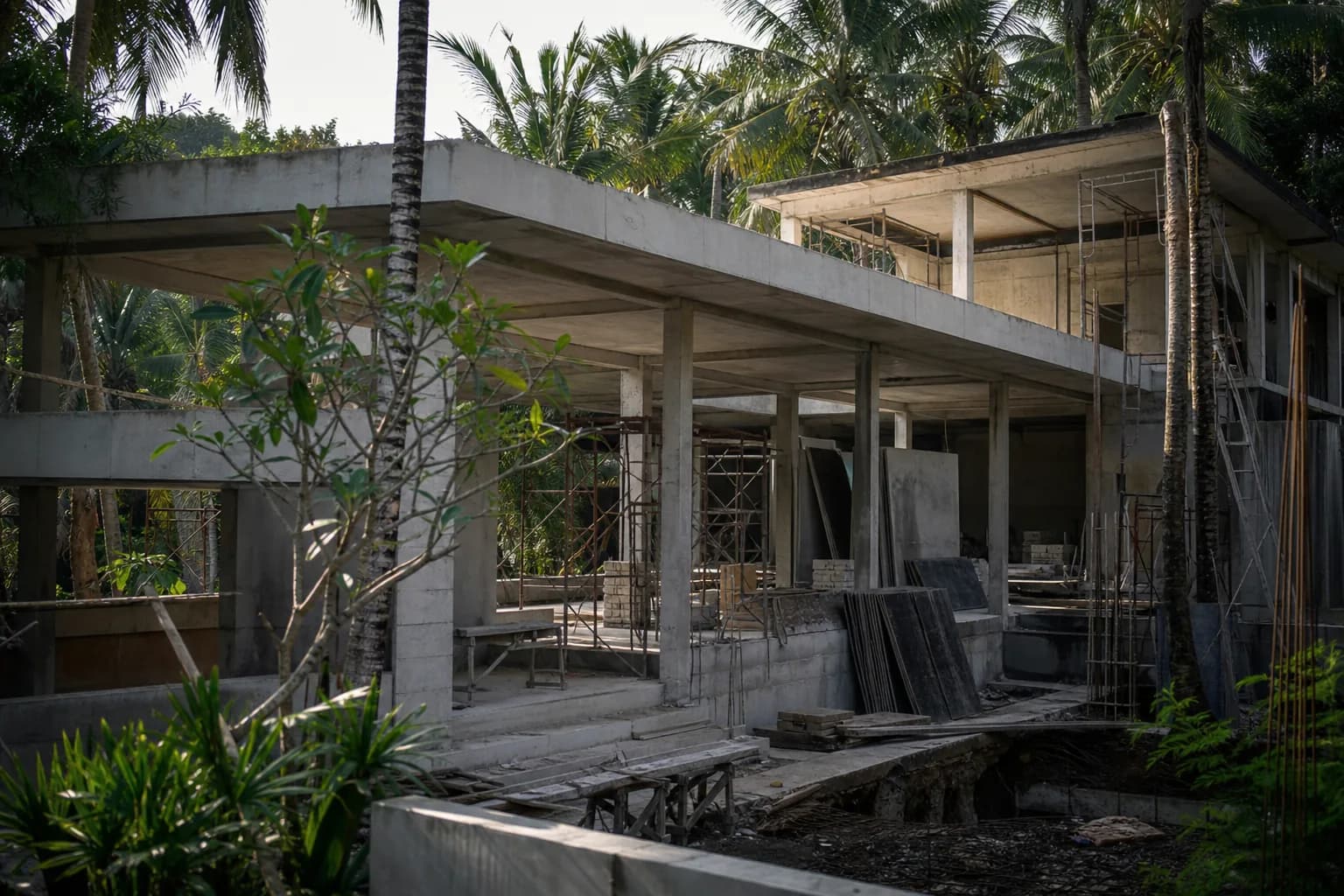
Leasehold Depreciation in Bali: How Remaining Term Affects Resale Value — and What Offsets It
A Bali leasehold is a depreciating right on land plus an ageing building — but the loss of value is neither linear nor unmanageable. How remaining term drives resale price, where the danger lines sit, and the clauses and decisions that protect your exit.
7 min read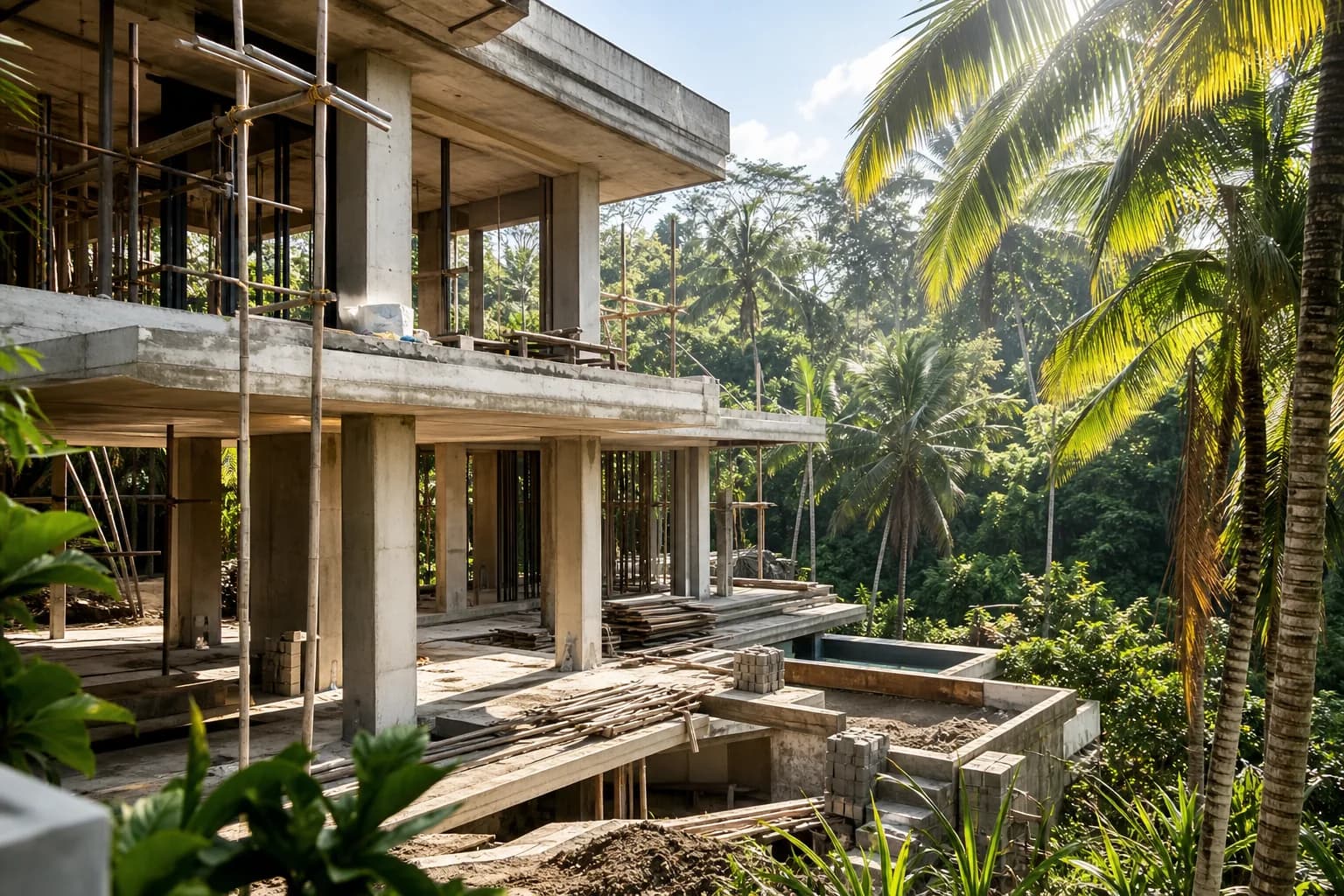
Annual Holding Costs of a Bali Villa: A Realistic Owner's Budget
The purchase price is only the entry ticket. Here is what a Bali villa actually costs to hold each year — staff, utilities, pool, maintenance, insurance, taxes and management — with realistic 2026 numbers and a sample budget.
7 min read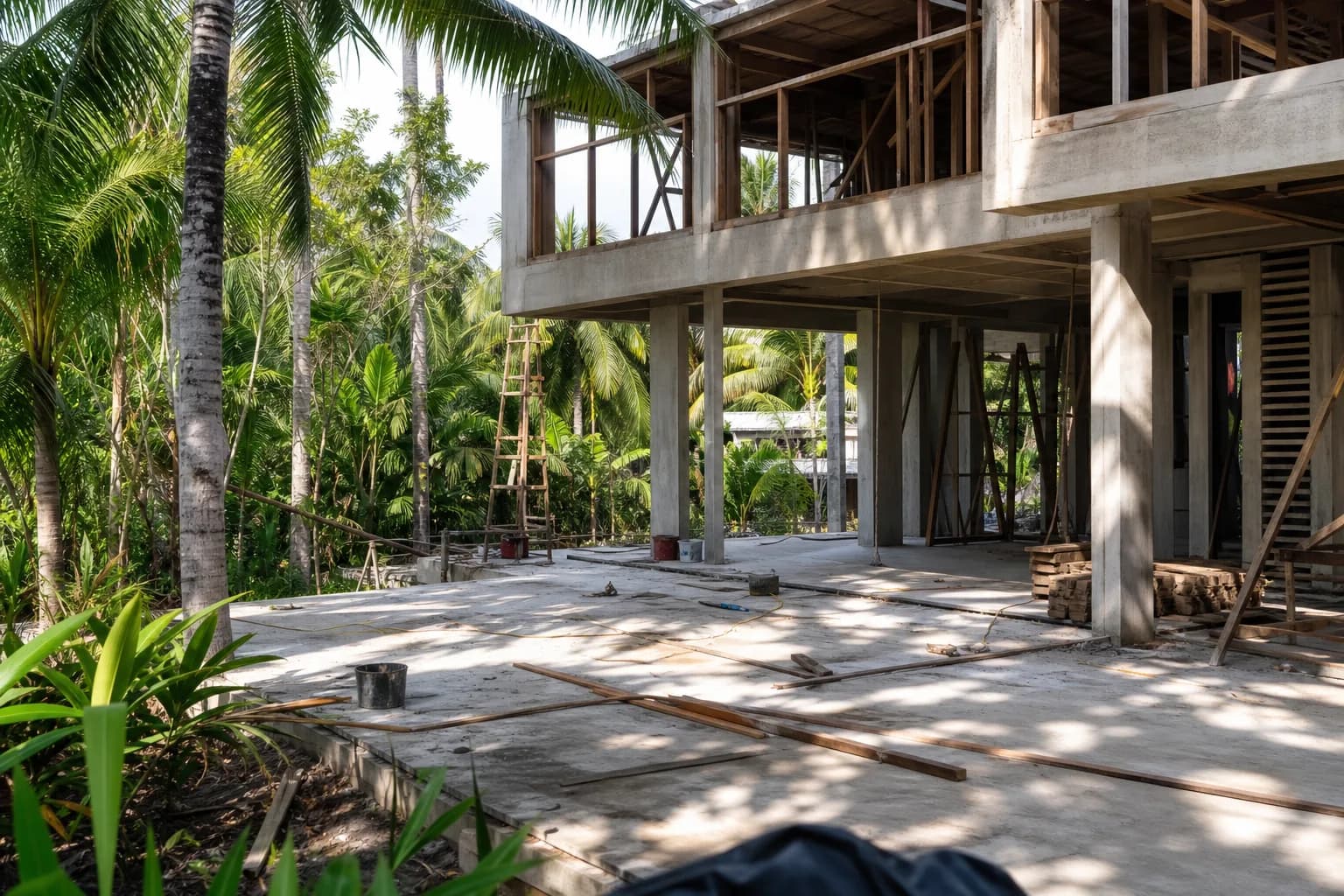
Transferring Money to Indonesia for a Property Purchase: Banking, Documentation and Safe Practice
Moving six figures across borders is the least glamorous part of buying in Bali, and the part most buyers under-prepare for. This guide covers the rupiah rule, notary escrow, transfer documentation, and the paper trail that protects a future exit.
8 min read