Bali Rainy Season Construction Delays: Budget Planning
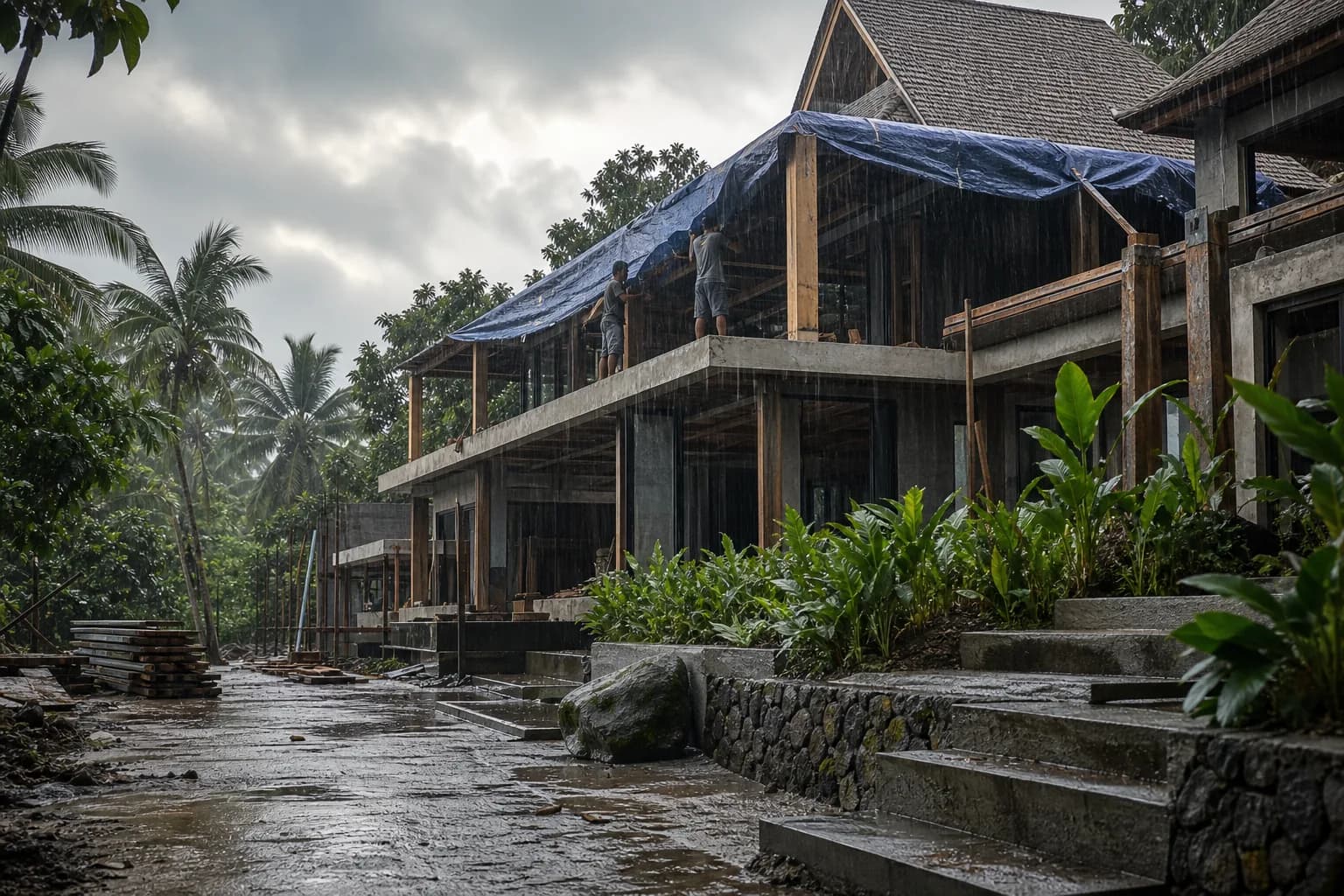
The Real Cost of Underestimating Bali’s Monsoon: Why 40% of Villa Projects Exceed Budget During Rainy Season
When construction schedules collide with Bali’s intense rainy season—particularly the extreme weather periods between December and March—the financial consequences extend far beyond a few wet days. A villa construction project budgeted at $250,000 can easily balloon to $310,000 when monsoon delays trigger cascading cost overruns: extended equipment rentals, labor standby costs, material degradation, and compressed timelines forcing premium rates for accelerated work. The critical question isn’t whether rainy season will impact your project, but whether your budget contingency planning accounts for the specific financial mechanisms through which tropical weather transforms minor delays into major cost escalations.
Most foreign villa developers approach Bali construction with temperate-climate assumptions, allocating a generic 10-15% contingency without understanding how monsoon patterns create unique cost multipliers. The reality: projects starting foundation work in November face fundamentally different risk profiles than those beginning in May, yet few budgets reflect this temporal variability in financial planning.
Engineering Reality: How Tropical Rainfall Patterns Create Predictable Budget Pressure Points
Bali’s rainy season operates on a bimodal pattern, with peak intensity typically occurring January through mid-March, when monthly rainfall can exceed 400mm with sustained multi-day downpours. From a construction engineering perspective, this isn’t simply about “waiting for rain to stop”—it’s about understanding how moisture saturation affects specific construction phases differently and planning budget contingencies accordingly.
Foundation and Earthwork: The Highest-Risk Budget Zone
Excavation and foundation work represent the most weather-vulnerable construction phase. When soil moisture content exceeds 25%, excavation becomes impractical—equipment bogs down, trench walls collapse, and concrete curing is compromised. A typical villa foundation requiring 12 working days in dry season can extend to 28 days during peak monsoon, but the budget impact isn’t linear. You’re not just paying for 16 extra days—you’re absorbing:
- Equipment standby costs: Excavators and concrete pumps rented monthly continue accruing charges at $1,200-1,800/month even during weather delays
- Labor retention fees: Skilled foundation crews (8-12 workers) require 50-70% standby payment ($25-35/day per worker) to prevent them moving to other projects
- Dewatering expenses: Continuous pumping to manage groundwater intrusion adds $400-800 weekly in fuel and pump rental
- Soil stabilization materials: Additional geotextiles, drainage aggregate, and cement for moisture management add 15-25% to earthwork material costs
The compounding effect: a $35,000 foundation budget can require $8,500-12,000 in weather-related contingency if scheduled during peak rainy months—a 24-34% increase that generic contingency planning rarely captures.
Structural Work: Concrete Curing and Quality Control Challenges
Concrete work during rainy season introduces quality risks that translate directly to budget implications. Proper concrete curing requires controlled moisture conditions—too much water compromises strength, while rain during placement can cause surface defects requiring costly remediation. Professional construction processes implement specific wet-season protocols:
- Weather window scheduling: Concrete pours restricted to verified 6-8 hour dry periods, requiring flexible labor scheduling and premium rates for short-notice mobilization (20-30% labor cost increase)
- Protective infrastructure: Temporary weather shelters for active pour areas ($1,500-3,000 per major structural element)
- Accelerated curing compounds: Chemical additives and controlled curing systems add $8-12 per cubic meter to concrete costs
- Extended formwork rental: Forms must remain in place 40-60% longer during humid conditions, extending rental periods and delaying subsequent phases
For a typical two-story villa requiring 180 cubic meters of structural concrete, rainy season quality protocols add $4,200-6,800 to structural costs beyond the base budget.
Material Logistics: The Hidden Inflation Factor
Bali’s rural construction sites become significantly less accessible during heavy rain. Unpaved access roads turn impassable, requiring material deliveries via smaller vehicles at premium rates. Cement and steel deliveries that cost $120 per truckload in dry season can jump to $180-220 during monsoon due to access challenges and delivery delays. When your project requires 320 bags of cement delivered across 8 shipments, this 50-80% logistics premium adds $480-800 to material costs—multiplied across all material categories throughout the wet season construction period.
Critical Oversights: What Standard Contingency Planning Misses
The Cascade Effect of Sequential Delays
Most budget contingencies treat delays as isolated events, but rainy season impacts cascade through project phases. A two-week foundation delay doesn’t just add two weeks to the schedule—it pushes structural work deeper into peak rainy season, which then delays roofing installation, which extends the period before interior work can begin in weather-protected spaces. A project starting excavation in December might experience:
- Week 3-4: Foundation delays push structural work from late January to mid-February (peak rain period)
- Week 8-10: Structural delays push roofing to late March, missing the dry transition window
- Week 14-18: Unprotected interior spaces suffer moisture damage, requiring remediation before finishing work
This cascade can extend a 32-week dry-season schedule to 44-48 weeks, with each additional month adding $4,500-7,000 in extended site management, security, and overhead costs that standard contingencies don’t anticipate.
Currency and Inflation Exposure
Extended timelines expose foreign developers to currency fluctuation risk. A project budgeted at $280,000 USD with 8-month timeline has defined currency exposure. When rainy season delays extend the project to 13 months, you’re exposed to an additional 5 months of IDR/USD volatility. During 2023-2024, the rupiah fluctuated 6-8% against the dollar—on a $280,000 project, this represents potential $16,800-22,400 in currency-driven cost increases that weather-related delays directly enable.
Quality Remediation Costs
Moisture intrusion during construction creates latent defects that emerge months later: concrete spalling, steel corrosion, mold in wall cavities, tile delamination. Budget contingencies rarely account for post-construction remediation, yet projects pushed through rainy season without proper protocols commonly face $8,000-15,000 in warranty repairs within the first two years—costs that should be factored into total project budgeting.
Strategic Budget Contingency Framework for Monsoon-Impacted Construction
Step 1: Conduct Phase-Specific Weather Risk Assessment
Map your construction schedule against Bali’s rainfall patterns with phase-specific risk scoring. Foundation and earthwork scheduled for December-February receives “high risk” designation requiring 30-40% phase contingency. Structural work in this period: 25-35% contingency. Roofing and exterior envelope: 20-30%. Interior finishing in weather-protected spaces: 10-15%. This granular approach replaces generic project-wide contingencies with targeted reserves aligned to actual risk exposure.
Document this assessment in your initial cost estimation process, ensuring weather risk is quantified before land purchase commitments.
Step 2: Implement Tiered Contingency Allocation
Structure your budget with three contingency tiers:
- Base contingency (8-12%): Standard construction variables unrelated to weather
- Weather contingency (15-25%): Rainy season-specific costs calculated from phase-risk assessment
- Schedule extension reserve (10-15%): Covers extended overhead if project duration increases by 25-40%
For a $300,000 base construction budget with November start date, this framework suggests total contingency of $99,000-156,000 (33-52% of base), significantly higher than the 15-20% most developers allocate, but aligned with actual monsoon-impacted project outcomes.
Step 3: Negotiate Weather-Indexed Contract Terms
Work with your construction partner to establish contract terms that acknowledge weather realities without creating open-ended cost exposure. Effective provisions include:
- Defined weather delay protocols: Specific criteria for work stoppages (rainfall exceeding 20mm in 4 hours, soil moisture above 25%, etc.) with documented verification
- Standby cost schedules: Pre-agreed rates for equipment and labor retention during weather delays (typically 50-70% of active rates)
- Weather window guarantees: Contractor commits to mobilizing within 4-6 hours of suitable weather windows, preventing unnecessary delays
- Quality protocol requirements: Mandatory weather protection measures with costs allocated in base budget, not contingency
These terms transform weather contingency from vague allowance to managed cost category with predictable financial parameters.
Step 4: Optimize Project Phasing for Weather Windows
Strategic scheduling can reduce weather contingency requirements by 30-40%. Key tactics:
- Dry season foundation priority: Schedule excavation and foundation for May-October window, even if it means delaying project start
- Rainy season interior focus: Plan structural completion before December, allowing weather-protected interior work during wet months
- Material pre-positioning: Deliver bulk materials (cement, steel, blocks) during dry season for use in subsequent wet period, avoiding monsoon logistics premiums
- Modular construction consideration: Prefabricated components manufactured off-site during rainy season, installed during dry windows
A well-phased project starting foundation work in June can reduce total weather contingency from 25% to 12-15% while maintaining realistic completion timelines.
Step 5: Establish Monthly Budget Review Protocols
Implement formal monthly budget reviews that track weather impact against contingency drawdown. Monitor: actual weather days lost vs. projected, contingency utilization rate, schedule variance, and remaining risk exposure. This allows mid-project adjustments—if you’ve consumed 60% of weather contingency by month 4 of an 8-month project, you can proactively secure additional funding or adjust scope before crisis conditions develop.
Financial Reality: What Adequate Weather Contingency Actually Costs
For a standard 250-square-meter two-story villa with $280,000 base construction budget:
Dry Season Start (May-June): Weather contingency of $28,000-42,000 (10-15% of base) typically proves adequate, as foundation and structural work complete before monsoon season. Total recommended budget: $336,000-365,000 including all contingencies.
Shoulder Season Start (October-November): Foundation work extends into early rainy season, structural work occurs during peak monsoon. Weather contingency should reach $56,000-84,000 (20-30% of base). Total recommended budget: $378,000-420,000.
Peak Rainy Season Start (December-February): All major phases impacted by monsoon conditions. Weather contingency of $70,000-112,000 (25-40% of base) required to avoid mid-project funding crises. Total recommended budget: $406,000-462,000.
The financial implication is clear: starting construction in December vs. June can add $70,000-97,000 to total project costs—a 21-29% premium driven primarily by weather-related delays and complications. This cost differential often exceeds the carrying cost of delaying project start by 6-8 months, making seasonal timing a critical budget optimization strategy.
These ranges reflect actual project data from tropical construction environments and align with outcomes documented in weather impact studies on construction scheduling. Developers working with experienced partners like those showcased in Teville’s completed projects portfolio benefit from refined contingency models based on historical performance data.
Frequently Asked Questions: Rainy Season Budget Contingency Planning
How much should I increase my construction budget if I must start during rainy season?
Increase your total project budget by 25-35% compared to dry season baseline if starting foundation work between November and February. For a $300,000 dry-season budget, plan for $375,000-405,000 total. This includes 20-30% weather-specific contingency plus 10-15% schedule extension reserve. The exact percentage depends on your specific construction phases—foundation and structural work require higher contingencies (30-40% for those phases) while interior finishing needs less (10-15%). Work with your construction partner to map your specific schedule against rainfall patterns for precise contingency calculation.
Can I reduce weather contingency by using faster construction methods?
Accelerated construction during rainy season typically increases costs rather than reducing contingency needs. “Fast-track” approaches require premium labor rates (25-40% higher), extended working hours with overtime costs, and often compromise quality protocols that prevent moisture-related defects. A better strategy: optimize project phasing to complete weather-vulnerable work during dry season, even if it extends total timeline. A 10-month project with strategic phasing often costs 15-20% less than an 8-month forced schedule during monsoon. Speed and weather don’t mix economically in tropical construction.
What happens if I don’t allocate sufficient weather contingency and run out of budget mid-project?
Mid-project funding shortfalls create se
 172 m²8 month(s)from 120.000 USD
Keshava
 2144 m²11 month(s)from 104.000 USD
Narayana
 1from 198.000 USD
Private: Haridas Villas
 3124 m²6 month(s)from 123.000 USD
TALA 8
 3127 m²9 month(s)from 177.000 USD
Mukunda
 3173 m²6 month(s)from 125.000 USD
TALA FOUR
 164 m²7 month(s)from 79.000 USD
Private: Haridas Villas, Tegallalang
164 m²7 month(s)from 79.000 USDTALA TWO
 3180 m²7 month(s)from 142.000 USD
Vasudeva
 3104 m²11 month(s)from 99.000 USD
TALA 100

Want to calculate?
 4344 m²16 month(s)from 290.000 USD
Radha
Start With Real Numbers, Not Guesses
Before buying land or finalizing a design, check the realistic build cost range for your project in Bali.
Our team reviews your inputs and gives a grounded estimate.
Available lands
 7500 m²5 min$ 206281Bali, Kedungu
 2700 m²30 min$ 314224Bali, Sidemen
 585 m²8 min$ 165702Bali, Mengwi
 8313 m²15 min$ 716670Bali, Buduk
 200 m²5 min$ 59113Bali, Bukit
 7900 m²25 min$ 413485Bali, Tabanan
 800 m²5 min$ 295567Bali, Seseh
 29000 m²6 min$ 3857143Bali, Tabanan
 3100 m²15 min$ 257697Bali, Tegallalang
 700 m²15 min$ 109052Bali, Buduk
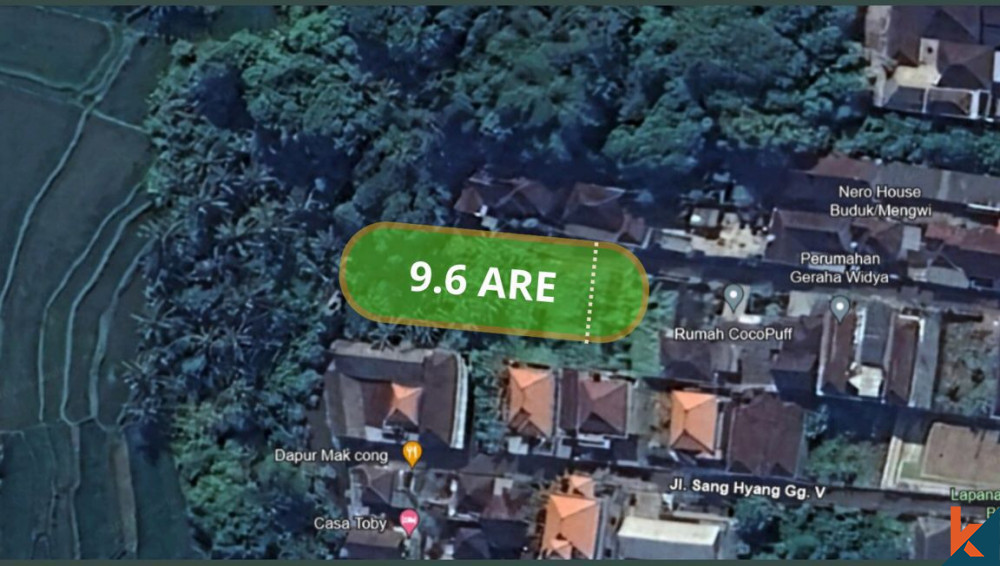 960 m²15 min$ 91034Bali, Mengwi
 928 m²15 min$ 910123Bali, Pererenan
 660 m²10 min$ 175567Bali, Mengwi
 1000 m²10 min$ 184729Bali, Kutuh South Bali
 911 m²15 min$ 248217Bali, Pererenan
Essential Bali build & buy guides
- Bali villa construction cost per m² in 2026
- How much will your villa cost? Calculator
- Building a villa in Bali: the complete guide
- Buying land in Bali: step-by-step for foreigners
- Bali villa investment: yields, risks, returns
- Leasehold vs freehold: what foreigners can own
- Construction defect liability & 10-year warranty
- Bali building codes and construction standards
Related guides
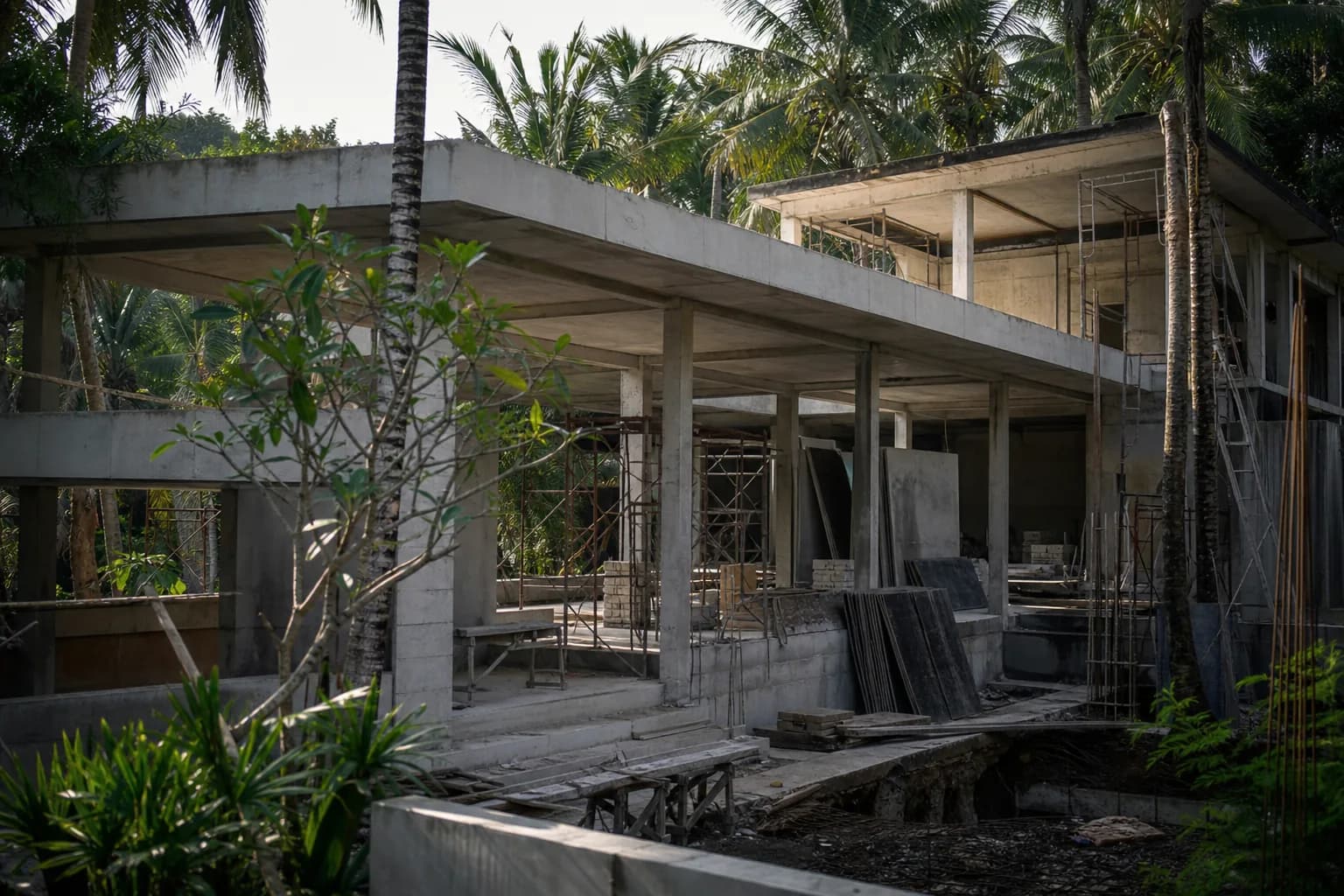
Leasehold Depreciation in Bali: How Remaining Term Affects Resale Value — and What Offsets It
A Bali leasehold is a depreciating right on land plus an ageing building — but the loss of value is neither linear nor unmanageable. How remaining term drives resale price, where the danger lines sit, and the clauses and decisions that protect your exit.
7 min read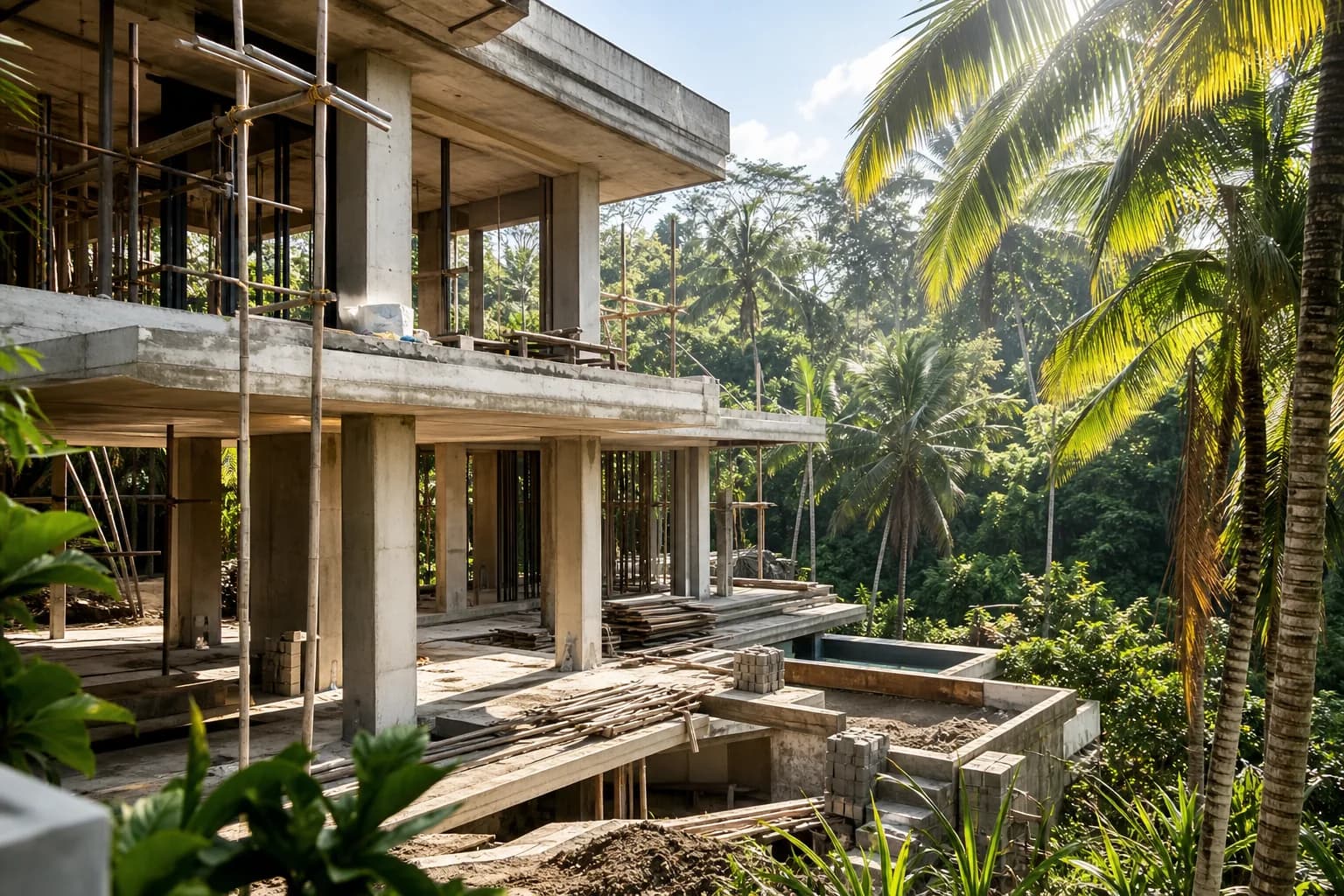
Annual Holding Costs of a Bali Villa: A Realistic Owner's Budget
The purchase price is only the entry ticket. Here is what a Bali villa actually costs to hold each year — staff, utilities, pool, maintenance, insurance, taxes and management — with realistic 2026 numbers and a sample budget.
7 min read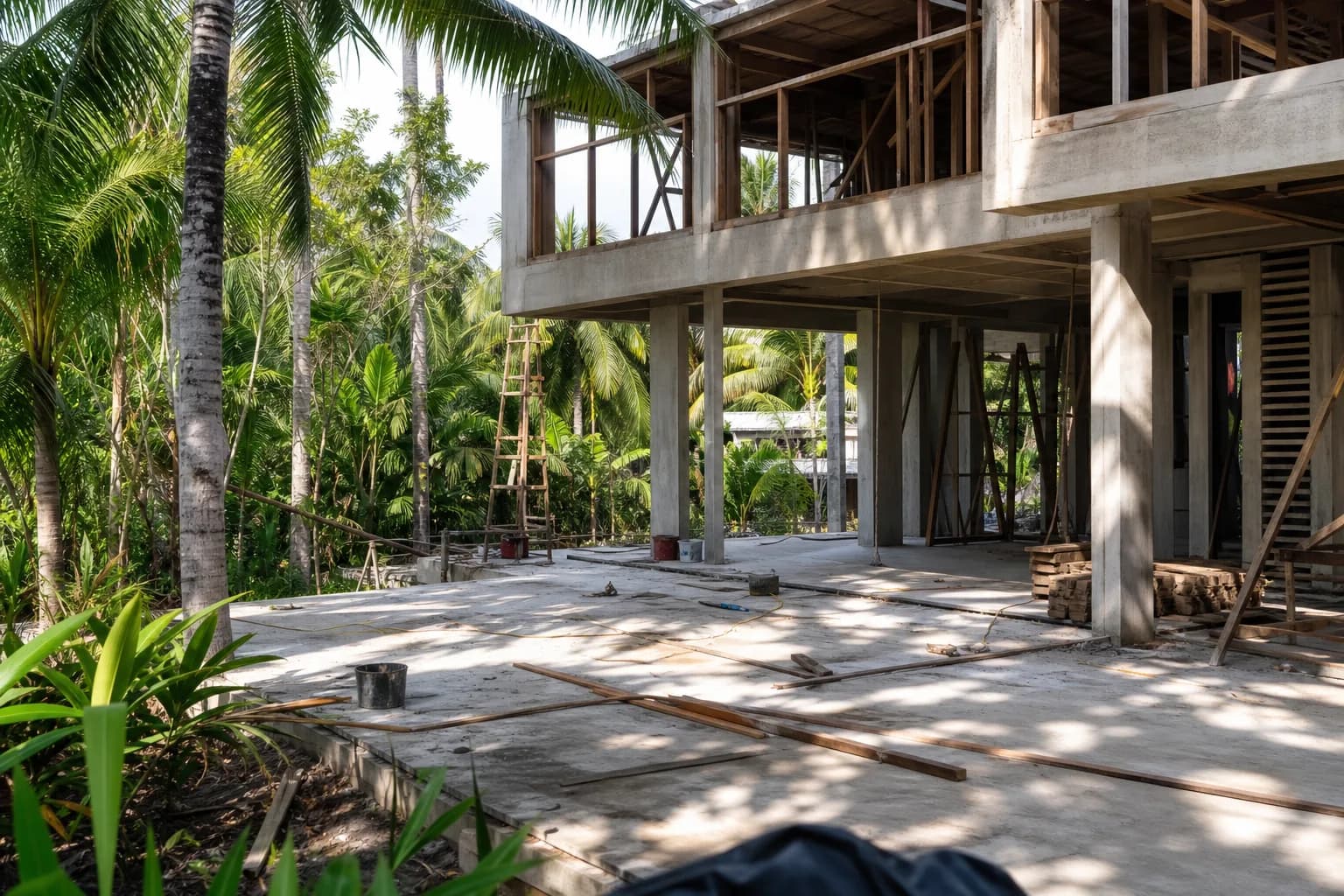
Transferring Money to Indonesia for a Property Purchase: Banking, Documentation and Safe Practice
Moving six figures across borders is the least glamorous part of buying in Bali, and the part most buyers under-prepare for. This guide covers the rupiah rule, notary escrow, transfer documentation, and the paper trail that protects a future exit.
8 min read