Amed Black Sand Beach Construction: Volcanic Soil Remediation Cos
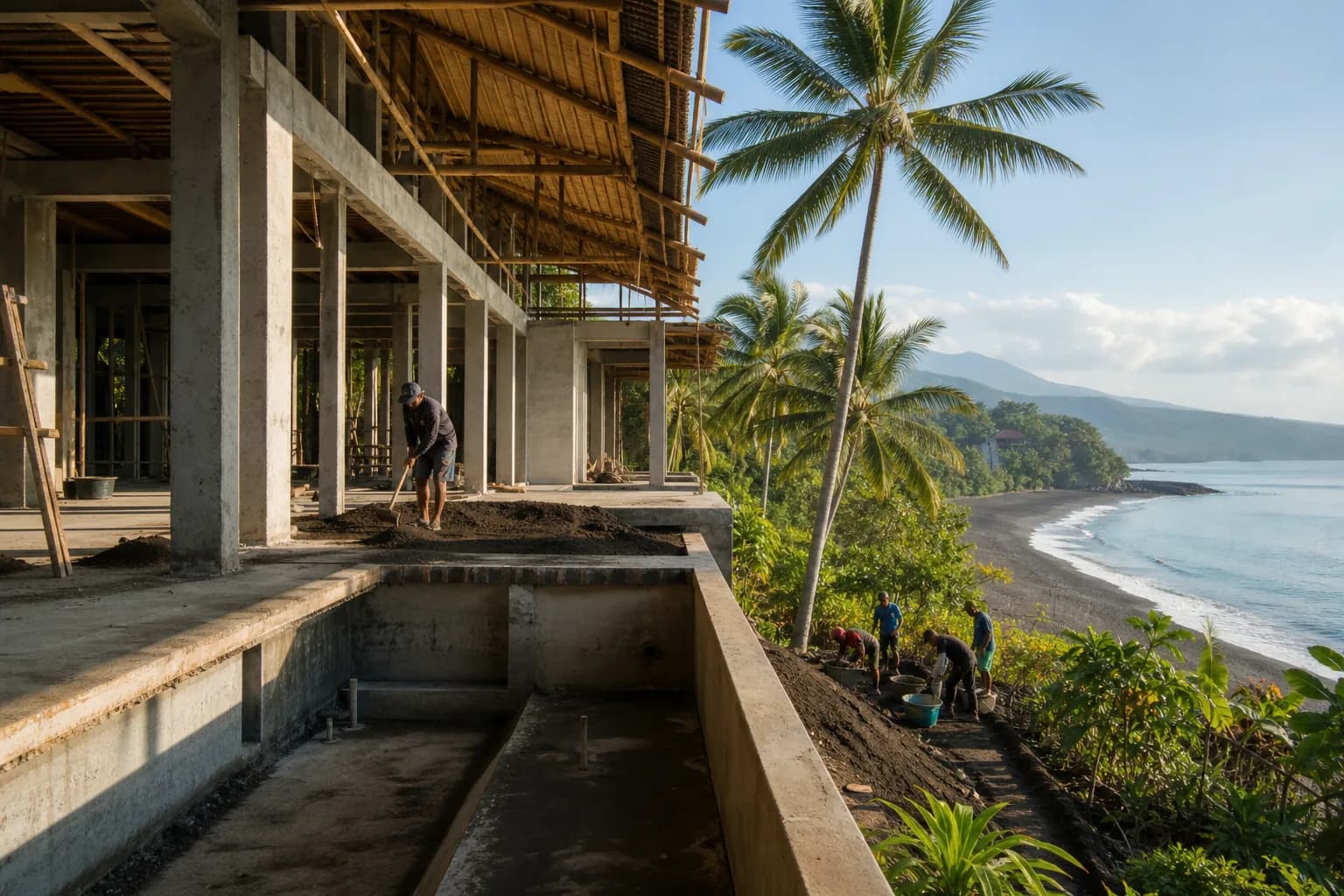
The Hidden Engineering Challenge: Why Amed’s Volcanic Black Sand Demands Specialized Foundation Strategies
Amed’s dramatic black sand coastline attracts villa developers seeking unique beachfront locations, but the volcanic soil composition that creates this striking landscape presents complex construction challenges rarely discussed in property marketing materials. The same pyroclastic deposits and weathered basalt that form the iconic dark beaches create unstable foundation conditions, requiring specialized soil remediation techniques that can add 18-35% to baseline construction budgets. Unlike Bali’s southern limestone regions, Amed’s volcanic substrate demands engineering approaches specifically calibrated for high iron content, variable compaction rates, and moisture retention patterns that differ fundamentally from conventional tropical soils. Developers who underestimate these geological realities face mid-construction budget overruns, structural settlement issues, and long-term durability problems that compromise both safety and investment value.
Volcanic Soil Composition: Engineering Analysis of Amed’s Black Sand Substrate
Amed’s black sand beaches originate from Mount Agung’s volcanic activity, creating a soil profile dominated by weathered basalt, volcanic ash (tephra), and iron-rich minerals. This composition creates three critical engineering challenges that directly impact construction feasibility and remediation costs.
Soil Bearing Capacity Variability
Standard geotechnical testing in Amed’s coastal zone reveals bearing capacity ranging from 0.8 to 2.4 kg/cm² in untreated volcanic soils—significantly below the 3.0 kg/cm² minimum recommended for two-story villa construction. The volcanic particle structure creates inconsistent load distribution, with pockets of compacted material adjacent to zones of loose, unconsolidated ash. This variability means foundation designs cannot rely on uniform soil assumptions used in southern Bali’s coral limestone regions.
The iron oxide content (typically 12-18% by weight) causes additional complications. While this mineral composition creates the distinctive black coloration, it also accelerates corrosion of standard reinforcement steel when moisture penetrates concrete. Coastal proximity compounds this issue, with salt spray increasing chloride exposure. Projects within 200 meters of Amed’s shoreline require either epoxy-coated rebar (adding 15-22% to steel costs) or stainless steel reinforcement (adding 180-240% to steel budgets) to prevent premature structural degradation.
Moisture Retention and Drainage Complications
Volcanic soils exhibit paradoxical drainage behavior. The fine ash particles create low permeability layers that trap water, while coarser basalt fragments create preferential flow paths. This results in unpredictable subsurface moisture accumulation, particularly during Bali’s November-March wet season when Amed receives 180-240mm monthly rainfall.
Excess moisture in volcanic soils triggers two destructive mechanisms: expansive clay behavior in ash-rich zones (causing foundation heave) and consolidation settlement in saturated tephra layers (causing foundation subsidence). A single foundation may experience both conditions simultaneously across different support points, creating differential settlement that manifests as cracked walls, jammed doors, and structural distress.
Chemical Reactivity with Concrete
Volcanic soils in Amed contain sulfates and chlorides at concentrations that attack standard Portland cement. Laboratory analysis of soil samples from coastal Amed sites shows sulfate levels of 1,200-3,800 ppm—well above the 1,000 ppm threshold requiring sulfate-resistant cement specifications. Without proper cement selection, chemical reactions degrade concrete strength by 25-40% over 5-8 years, compromising structural integrity long before typical 25-year design life expectations.
Hidden Risks: What Property Consultants Don’t Disclose About Volcanic Site Development
Most land offerings in Amed emphasize ocean views and “beachfront access” while omitting critical geological disclosures that impact construction viability. Three specific risks consistently surprise developers during the permitting and construction phases.
Inadequate Geotechnical Investigation Depth
Standard soil testing in Bali typically involves 2-3 boreholes to 6-meter depth. For Amed’s volcanic terrain, this approach misses critical subsurface variations. Volcanic ash deposits can extend 12-18 meters below surface grade, with buried lava flows creating unpredictable bearing strata. Developers who proceed with minimal testing discover mid-construction that planned shallow foundations require conversion to deep pile systems—a change order that adds USD $45,000-$85,000 to typical villa budgets and delays timelines by 6-10 weeks.
Seasonal Groundwater Fluctuation
Amed’s volcanic soils experience dramatic groundwater level changes between dry and wet seasons—often 2.5-4.0 meters of variation. Geotechnical investigations conducted during August-October dry season may show groundwater at 8 meters depth, leading to foundation designs that assume dry excavation conditions. When construction occurs during wet season, groundwater at 4-5 meters depth requires dewatering systems, waterproofing upgrades, and foundation redesign. These unplanned modifications typically cost USD $18,000-$32,000 for standard 250m² villa footprints.
Regulatory Requirements for Coastal Volcanic Sites
Bali’s coastal zone regulations (enforced within 100 meters of high tide line) impose additional requirements for volcanic soil sites. The Bali Environmental Agency (DLHK) requires specific erosion control measures, stormwater management systems, and environmental impact assessments for construction on volcanic substrates near beaches. These regulatory requirements add 8-14 weeks to permitting timelines and USD $12,000-$28,000 in compliance costs—expenses rarely included in preliminary budget estimates provided by land agents.
Step-by-Step Volcanic Soil Remediation Process for Amed Construction Sites
Phase 1: Comprehensive Geotechnical Investigation (3-4 weeks)
Proper site assessment for Amed volcanic soils requires minimum 4-6 boreholes to 12-meter depth, with sampling intervals every 1.5 meters. Each borehole should include Standard Penetration Tests (SPT) to measure soil density, laboratory analysis for sulfate/chloride content, and Atterberg limits testing to identify expansive clay behavior. Budget USD $8,500-$14,000 for thorough investigation that provides defensible foundation design data. Teville’s construction process mandates this investigation level before any design work begins, preventing costly mid-project discoveries.
Phase 2: Soil Stabilization Strategy Selection (1-2 weeks)
Based on geotechnical findings, engineers select appropriate remediation techniques. For Amed sites, three approaches dominate:
- Cement-lime stabilization: Mixing 6-10% cement and 3-5% lime into volcanic soil to improve bearing capacity and reduce moisture sensitivity. Effective for sites with bearing capacity above 1.2 kg/cm². Cost: USD $35-$58 per cubic meter of treated soil.
- Geogrid reinforcement: Installing synthetic mesh layers within compacted fill to distribute loads and prevent differential settlement. Suitable for moderately challenging sites. Cost: USD $22-$38 per square meter of foundation area.
- Deep foundation systems: Driven piles or drilled piers extending through weak volcanic layers to competent bearing strata. Required when surface soils cannot achieve adequate capacity. Cost: USD $180-$320 per linear meter of pile, with typical villa requiring 24-40 piles.
Phase 3: Site Preparation and Remediation Execution (4-8 weeks)
Remediation work begins with clearing and excavation to design subgrade elevation. For cement-lime stabilization, volcanic soil is excavated, mixed with stabilizing agents using specialized equipment, then recompacted in 200mm lifts. Each lift requires 48-72 hours curing before next layer placement. Quality control testing (density verification, bearing capacity confirmation) occurs at each stage. Geogrid installation requires precise layer placement and compaction verification. Deep foundation installation involves mobilizing pile driving or drilling equipment—a significant cost driver for remote Amed locations where equipment transport adds USD $8,000-$15,000 to project budgets.
Phase 4: Drainage System Integration (2-3 weeks)
Volcanic soil remediation must include comprehensive drainage design. This involves perimeter drainage trenches with perforated pipe, granular backfill zones to intercept groundwater, and surface grading to direct rainfall away from foundations. For Amed’s high water table conditions, drainage systems often include sump pumps with backup power—adding USD $6,500-$11,000 to construction costs but preventing catastrophic foundation saturation.
Phase 5: Foundation Construction with Volcanic-Specific Specifications (3-5 weeks)
Foundation concrete for Amed sites requires sulfate-resistant cement (Type V or equivalent), increased cover over reinforcement (75mm minimum vs. standard 50mm), and corrosion-inhibiting admixtures. Reinforcement steel should be epoxy-coated or stainless grade. These specifications increase foundation costs by 28-42% compared to standard Bali construction, but prevent the structural deterioration that plagues improperly specified coastal volcanic site projects.
Realistic Cost Ranges: Budgeting for Amed Volcanic Soil Remediation
Volcanic soil remediation costs for Amed construction sites vary based on soil conditions, site accessibility, and villa design parameters. For a typical 250m² villa footprint (supporting 300-400m² total built area), expect these ranges:
Minimal remediation scenario (favorable volcanic soil, bearing capacity 1.8-2.4 kg/cm²): USD $28,000-$42,000 including enhanced geotechnical investigation, selective cement stabilization, upgraded drainage, and volcanic-specific foundation specifications. Timeline: 8-11 weeks for remediation and foundation work.
Moderate remediation scenario (typical Amed coastal conditions, bearing capacity 1.2-1.8 kg/cm²): USD $58,000-$89,000 including comprehensive soil testing, extensive cement-lime stabilization or geogrid reinforcement, engineered drainage systems, and corrosion-resistant foundation construction. Timeline: 12-16 weeks.
Extensive remediation scenario (challenging volcanic substrate, bearing capacity below 1.2 kg/cm²): USD $95,000-$145,000 including deep geotechnical investigation, pile foundation system, comprehensive drainage infrastructure, and fully upgraded foundation specifications. Timeline: 16-22 weeks.
These costs represent 12-24% of total villa construction budgets for Amed locations—a significant premium over southern Bali limestone sites where foundation work typically consumes 7-11% of total budgets. Developers should request site-specific cost estimation after geotechnical investigation to establish accurate project budgets.
Frequently Asked Questions: Amed Volcanic Soil Construction
Can I build directly on Amed’s black sand without soil remediation?
No responsible engineer will approve foundation designs for untreated volcanic sand in Amed’s coastal zone. The loose, unconsolidated nature of black sand provides inadequate bearing capacity for permanent structures. Even single-story construction requires minimum soil stabilization, compaction verification, and engineered foundations. Attempting to build without remediation violates Indonesian structural codes (SNI 1726 and SNI 1727) and creates liability exposure for catastrophic foundation failure. Budget minimum USD $28,000-$42,000 for basic remediation even on seemingly favorable sites.
How does volcanic soil remediation cost in Amed compare to other Bali regions?
Amed’s volcanic soil remediation costs run 40-85% higher than foundation work in Canggu, Seminyak, or Uluwatu, where coral limestone provides superior natural bearing capacity. A villa requiring USD $35,000 in foundation work in Canggu might need USD $65,000-$95,000 in Amed due to volcanic soil challenges. However, Amed land prices (USD $180-$320/m² for coastal plots) remain significantly below southern Bali (USD $800-$2,500/m²), potentially offsetting higher construction costs for developers prioritizing total project economics over construction budgets alone.
What happens if I skip comprehensive geotechnical investigation to save costs?
Inadequate soil testing creates catastrophic risk exposure. Without proper investigation, foundation designs rely on assumptions that may prove incorrect during construction—triggering expensive change orders, timeline delays, and potential structural inadequacy. Teville has documented cases where developers saved USD $6,000 on geotechnical investigation only to face USD $75,000 in mid-construction foundation redesign costs. Comprehensive investigation represents 0.8-1.4% of total project budgets but prevents cost overruns that can reach 15-25% of construction value. This is false economy with severe consequences.
Do volcanic soil conditions affect villa resale value or structural longevity?
Properly remediated volcanic soil sites perform equivalently to other geological conditions over 25+ year building lifecycles. However, improperly addressed volcanic soil creates progressive structural deterioration—foundation settlement, concrete degradation, and moisture damage—that severely impacts resale value and may render buildings uninhabitable within 8-12 years. Buyers increasingly request geotechnical reports and foundation specifications during due diligence. Villas with documented proper remediation maintain value; those with inadequate foundation work face 30-50% value discounts or become unsaleable. Quality remediation is investment protection, not optional expense.
Can I use standard Bali construction contractors for volcanic soil remediation in Amed?
Most general contractors lack specialized equipment and technical expertise for volcanic soil remediation. Cement-lime stabilization requires soil mixing equipment, compaction testing devices, and quality control protocols unfamiliar to typical villa builders. Pile foundation installation demands specialized drilling or driving equipment an
 3104 m²11 month(s)from 99.000 USD
TALA 100
 3127 m²9 month(s)from 177.000 USD
Mukunda
 3173 m²6 month(s)from 125.000 USD
TALA FOUR

Want to calculate?
 172 m²8 month(s)from 120.000 USD
Keshava
 164 m²7 month(s)from 79.000 USD
TALA TWO
 4344 m²16 month(s)from 290.000 USD
Radha
 3124 m²6 month(s)from 123.000 USD
TALA 8
 1from 198.000 USD
Private: Haridas Villas
164 m²7 month(s)from 79.000 USDPrivate: Haridas Villas, Tegallalang
 2144 m²11 month(s)from 104.000 USD
Narayana
 3180 m²7 month(s)from 142.000 USD
Vasudeva
Start With Real Numbers, Not Guesses
Before buying land or finalizing a design, check the realistic build cost range for your project in Bali.
Our team reviews your inputs and gives a grounded estimate.
Available lands
 422 m²15 min$ 93547Bali, Kerobokan
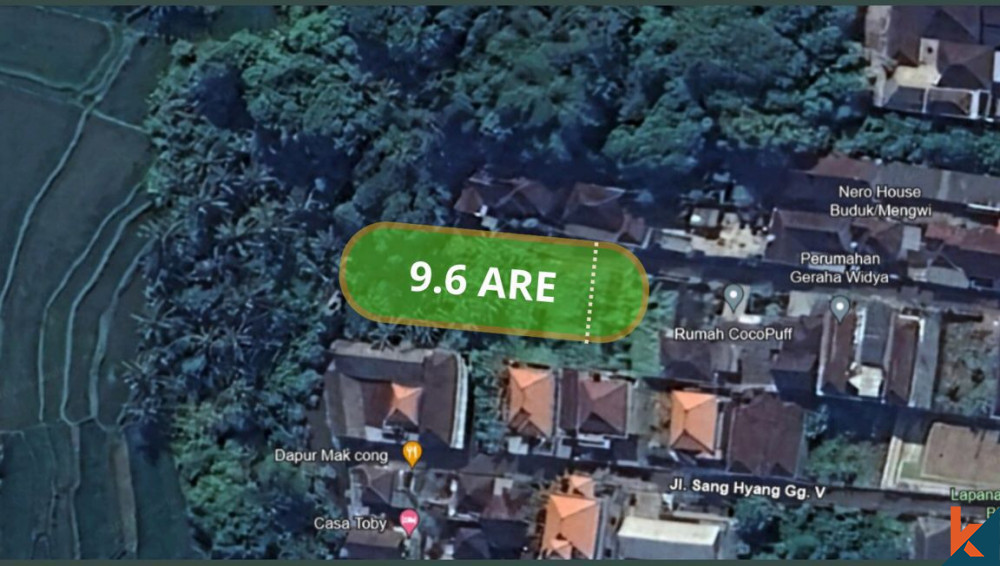 960 m²15 min$ 91034Bali, Mengwi
 5000 m²8 min$ 424877Bali, Ungasan
 1700 m²10 min$ 392549Bali, Nusadua
 8313 m²15 min$ 716670Bali, Buduk
 2800 m²2 min$ 713793Bali, Kedungu
 1300 m²10 min$ 312192Bali, Kutuh South Bali
 1720 m²2 min$ 241478Bali, Tabanan
 6000 m²30 min$ 55419Bali, Tabanan
 3000 m²15 min$ 738916Bali, Cepaka
 3800 m²15 min$ 100616Bali, Pererenan
 911 m²15 min$ 248217Bali, Pererenan
 250 m²15 min$ 40025Bali, Munggu
 7500 m²5 min$ 206281Bali, Kedungu
 1200 m²2 min$ 155172Bali, Klungkung
Essential Bali build & buy guides
- Bali villa construction cost per m² in 2026
- How much will your villa cost? Calculator
- Building a villa in Bali: the complete guide
- Buying land in Bali: step-by-step for foreigners
- Bali villa investment: yields, risks, returns
- Leasehold vs freehold: what foreigners can own
- Construction defect liability & 10-year warranty
- Bali building codes and construction standards
Related guides
Milestone Payment Schedules in Bali Construction: How Staged Payments Protect You
Milestone-based payment schedules are a Bali builder's best client protection: what a healthy 6-stage structure looks like, how to verify progress remotely, and which payment terms to refuse.
7 min read
Financing a Bali Villa: Why the Market Is Cash-Only for Foreigners — and the Realistic Alternatives
Why foreign buyers in Bali almost always pay cash, the narrow 2026 bank options for residents, and the realistic alternatives — from home-country equity to milestone-staged construction payments.
7 min read
Bali Rental Income Tax and Compliance Costs: The 10% Rule and the Real Math
How Bali rental income is really taxed in 2026 — the 10% final tax, the 20% non-resident trap, PB1, licensing overhead — and a worked example showing what a villa owner actually keeps.
7 min read