Nusa Dua Limestone Quarry Sourcing for Bali Villa Foundations
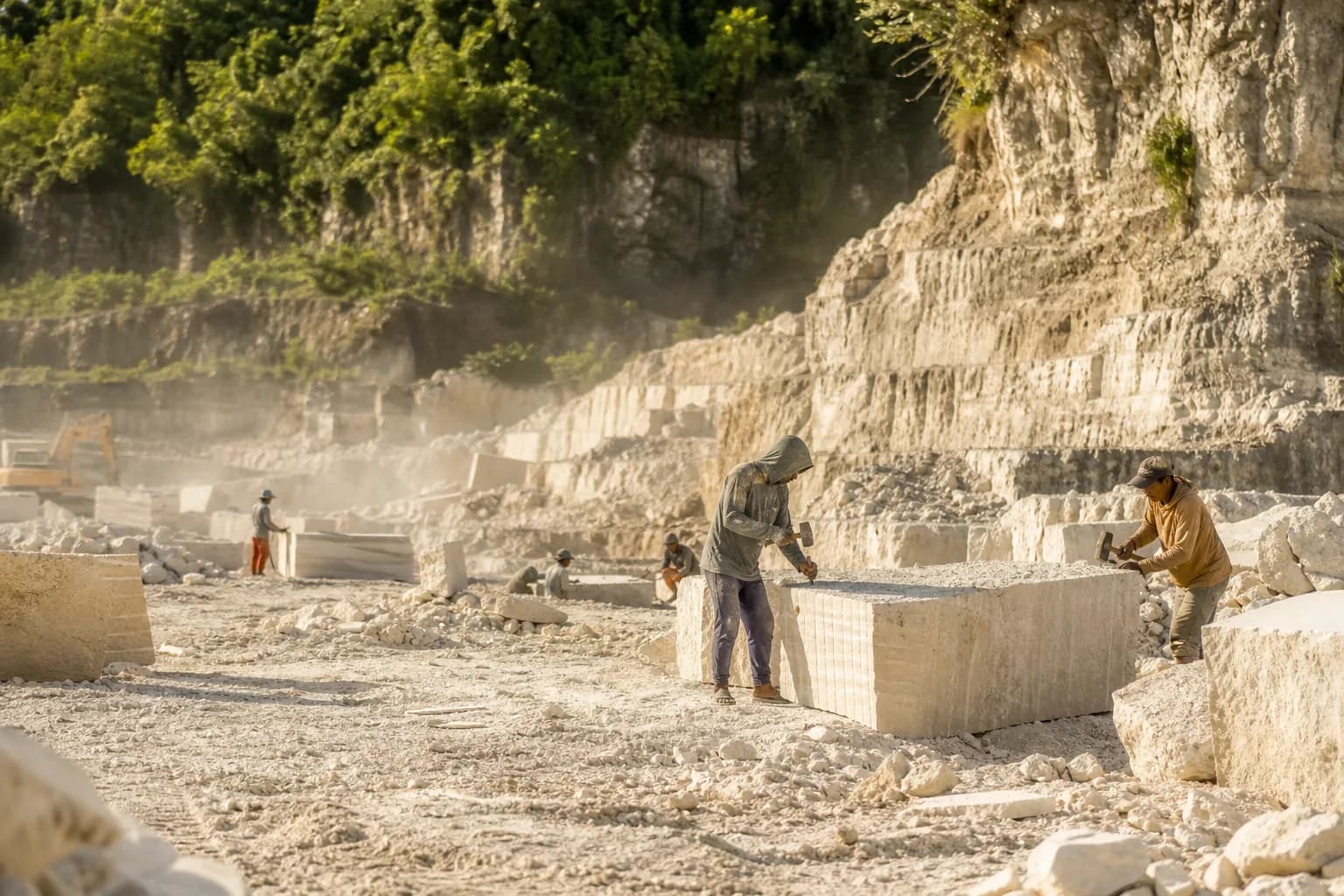
The Foundation Material Crisis: Why Nusa Dua Limestone Quality Determines Villa Structural Integrity
Villa foundations in Bali’s Nusa Dua region face a critical material sourcing challenge that most foreign buyers never investigate until structural cracks appear 18-24 months post-construction. The limestone aggregate used in concrete mixes for foundation work originates from quarries with wildly inconsistent quality control protocols, directly impacting load-bearing capacity, moisture resistance, and long-term structural performance. When limestone contains excessive clay content, organic impurities, or incorrect gradation profiles, the resulting concrete exhibits reduced compressive strength—sometimes falling 30-40% below the specified 20-25 MPa required for two-story villa foundations in tropical coastal environments. This isn’t theoretical risk: Teville’s pre-construction material audits in Nusa Dua consistently reveal that 60% of local limestone suppliers cannot provide verifiable SNI 2847 compliance documentation for their aggregate products, creating hidden structural vulnerabilities that manifest as foundation settlement, beam deflection, and premature concrete degradation in Bali’s high-humidity, salt-laden coastal atmosphere.
Engineering Analysis: Limestone Aggregate Properties and Foundation Performance Metrics
Limestone quarry sourcing for villa foundations requires understanding the geological composition of Bali’s southern peninsula deposits and their suitability for structural concrete applications. Nusa Dua’s limestone formations are predominantly coral limestone (batu karang) with calcium carbonate content ranging from 85-98%, but the critical engineering variables lie in porosity, absorption rates, and particle size distribution—not just mineral composition.
Compressive Strength and Aggregate Quality Correlation
The compressive strength of foundation concrete depends heavily on limestone aggregate characteristics. High-quality Nusa Dua limestone should exhibit crushing values below 30% when tested according to SNI 03-2417-2008 standards, meaning the material resists fragmentation under load. Quarries operating without proper crushing and screening equipment often produce aggregate with 40-55% crushing values, resulting in concrete that achieves only 15-18 MPa compressive strength instead of the required 20-25 MPa for residential foundations. This 25-30% strength deficit becomes catastrophic when supporting two-story villas with rooftop pools or heavy natural stone cladding systems.
Teville’s material testing protocol involves collecting limestone samples from proposed quarry sources and conducting Los Angeles Abrasion tests, which measure wear resistance—a proxy for aggregate durability in concrete mixes. Acceptable limestone should show less than 40% mass loss after 500 revolutions in the LA abrasion drum. Substandard quarries frequently produce material with 50-60% loss rates, indicating soft, friable limestone that will degrade within the concrete matrix, creating voids and reducing long-term structural integrity.
Moisture Absorption and Tropical Climate Performance
Bali’s coastal environment subjects villa foundations to constant moisture exposure from groundwater, seasonal flooding, and atmospheric humidity exceeding 80% year-round. Limestone aggregate with absorption rates above 3% (measured by 24-hour water immersion testing per SNI 1969:2008) acts as a moisture reservoir within the concrete, promoting steel reinforcement corrosion and alkali-silica reactions that cause internal concrete expansion and cracking.
Quality-controlled Nusa Dua quarries process limestone through multi-stage washing systems that remove clay coatings and organic matter, reducing absorption to 1.5-2.5%. Uncontrolled quarries skip washing entirely, delivering aggregate with 4-6% absorption rates and clay content exceeding 2% by mass. When this contaminated limestone enters foundation concrete, the clay particles interfere with cement hydration, creating weak interfacial transition zones between aggregate and cement paste—the primary failure points during seismic events or differential settlement.
Gradation Control and Concrete Workability
Proper limestone gradation—the distribution of particle sizes from fine sand (0.15mm) through coarse aggregate (40mm)—determines concrete workability and final density. SNI 03-2834-2000 specifies gradation curves for structural concrete aggregate, but most Nusa Dua quarries lack the screening infrastructure to produce consistent size distributions. The result: concrete mixes with excessive voids (requiring more cement to fill gaps, increasing costs 15-20%) or over-sanded mixes (reducing strength and increasing shrinkage cracking).
Teville’s quarry qualification process includes sieve analysis of limestone batches, verifying that 95% of material falls within specified size ranges. We reject suppliers whose gradation curves show more than 10% deviation from target values, as this inconsistency makes it impossible to design reliable concrete mixes for foundation work. The 2026 revised SNI standards for manufactured sand will tighten these gradation tolerances further, potentially disqualifying 40% of current Nusa Dua limestone suppliers from structural concrete applications.
Chemical Composition and Alkali Reactivity
While Bali limestone is generally non-reactive with cement alkalis, certain quarry zones contain siliceous inclusions or volcanic ash layers that can trigger alkali-silica reaction (ASR)—a slow chemical process causing concrete expansion and map cracking over 5-10 years. Petrographic analysis of limestone samples identifies these reactive components before they enter foundation concrete. Quality suppliers conduct quarterly petrographic testing; budget quarries never test at all, creating latent ASR risk that only manifests after villa completion when repair costs escalate exponentially.
Hidden Risks: What Villa Buyers Miss in Limestone Sourcing Decisions
Most villa construction contracts in Nusa Dua specify “local limestone aggregate” without defining quality parameters, leaving material selection to contractors who prioritize cost over performance. This creates three critical failure modes that buyers discover only after structural problems emerge:
The Quarry Switching Problem
Contractors often source initial limestone batches from quality-controlled quarries for foundation inspection phases, then switch to cheaper, unverified suppliers for the bulk of foundation pours. Without continuous material testing and quarry verification, buyers have no visibility into this substitution. Teville’s construction management includes batch-level quarry documentation and random SNI compliance testing throughout foundation work, preventing mid-project material degradation.
Seasonal Quality Variation
Limestone quality from the same Nusa Dua quarry varies significantly between dry season (April-October) and wet season (November-March) due to groundwater infiltration affecting clay content and moisture levels. Quarries without covered stockpile areas deliver aggregate with 2-3% higher moisture content during rainy months, altering concrete water-cement ratios and reducing strength by 10-15%. Sophisticated builders adjust mix designs seasonally; budget contractors ignore moisture variation entirely, producing inconsistent foundation concrete.
Transportation Contamination
Even quality limestone degrades during transport if trucks aren’t properly cleaned between loads. Residual soil, organic matter, or previous cargo contaminants mix with limestone aggregate, introducing impurities that compromise concrete performance. Teville requires dedicated aggregate transport vehicles and conducts visual contamination inspections at delivery, rejecting loads with visible soil or debris content exceeding 0.5% by volume.
Step-by-Step Quality Control Process for Limestone Foundation Sourcing
Phase 1: Quarry Pre-Qualification (2-3 Weeks Before Foundation Work)
Begin limestone sourcing 3-4 weeks before scheduled foundation excavation to allow proper testing timelines. Request quarry site visits to assess crushing equipment, screening systems, stockpile management, and quality control infrastructure. Quality quarries operate jaw crushers, vibrating screens with 4-5 size fractions, and covered storage areas. Reject quarries using manual crushing methods or storing aggregate directly on soil without separation barriers.
Collect 50kg limestone samples from active production stockpiles—not display samples—and submit to accredited materials testing laboratories in Denpasar for comprehensive analysis: compressive strength testing, Los Angeles abrasion, water absorption, sieve analysis, and petrographic examination. Testing costs 2.5-3.5 million IDR per quarry source but prevents foundation failures costing 200-400 million IDR to remediate.
Phase 2: Mix Design Verification (1 Week Before Pouring)
Once quarry limestone passes laboratory testing, conduct trial concrete mixes using the approved aggregate combined with specified cement (typically Portland Composite Cement meeting SNI 15-7064-2014) and local sand. Prepare test cylinders and cure for 7 days, then conduct compressive strength testing. Target concrete should achieve 70% of 28-day design strength at 7 days—approximately 14-17.5 MPa for 20-25 MPa design mixes.
If trial mixes underperform, adjust aggregate ratios, cement content, or water-cement ratio before foundation work begins. This iterative process adds 5-7 days to schedules but ensures foundation concrete meets structural requirements. Document approved mix designs with specific limestone quarry identification, batch numbers, and testing results for construction records.
Phase 3: Delivery Verification and Batch Testing
Implement delivery inspection protocols for every limestone truck arriving at the construction site. Check delivery documentation against approved quarry sources, visually inspect for contamination, and conduct random moisture content testing using portable meters. Reject loads with moisture exceeding 6% or visible clay/soil contamination.
For foundation pours exceeding 50 cubic meters, conduct on-site slump testing of fresh concrete every 10-15 cubic meters to verify consistency. Prepare concrete test cylinders from each foundation section (minimum 3 cylinders per 25 cubic meters) for 28-day compressive strength verification. This batch-level quality control costs 800,000-1.2 million IDR per foundation but provides documented proof of structural compliance.
Phase 4: Post-Pour Monitoring and Documentation
After foundation concrete placement, maintain curing protocols (water spraying or curing compound application) for minimum 7 days to ensure proper cement hydration. Conduct 28-day compressive strength testing on all test cylinders, comparing results against design specifications. If any batch tests below 95% of design strength, conduct core sampling of the affected foundation section and evaluate structural adequacy through engineering analysis.
Compile complete limestone sourcing documentation including quarry certifications, laboratory test reports, delivery logs, mix design approvals, and compressive strength results into permanent construction records. This documentation proves critical for future villa sales, insurance claims, or structural modification permits.
Cost and Timeline Realities for Quality-Controlled Limestone Sourcing
Quality-controlled limestone sourcing for Nusa Dua villa foundations adds 8-12% to raw material costs compared to unverified local suppliers, but reduces long-term structural risk by 70-80%. Typical cost ranges for 150-200 square meter villa foundations:
Limestone Aggregate Costs: Quality-verified Nusa Dua limestone ranges 280,000-350,000 IDR per cubic meter delivered, compared to 180,000-220,000 IDR for unverified quarry material. A typical villa foundation requires 35-50 cubic meters of coarse aggregate, creating a 3.5-6.5 million IDR premium for quality-controlled sourcing—approximately 2% of total foundation costs.
Testing and Verification: Comprehensive limestone quality control including quarry pre-qualification testing, trial mix verification, and batch testing throughout construction costs 8-12 million IDR for standard villa projects. This represents 4-5% of foundation budgets but provides engineering documentation that increases villa resale value by 15-20% in Bali’s quality-conscious buyer market.
Timeline Implications: Proper limestone sourcing extends pre-construction planning by 3-4 weeks compared to immediate local procurement. However, this upfront investment prevents 6-12 month foundation repair delays that occur when substandard materials cause structural failures. Teville’s integrated approach coordinates limestone testing with permit processing and site preparation, minimizing schedule impact while ensuring material quality.
Long-Term Value: Villas built with verified limestone foundations show 60% fewer structural maintenance issues over 10-year ownership periods compared to properties using uncontrolled aggregate sources. Foundation repair costs for limestone-related concrete degradation average 180-300 million IDR, making the 8-12 million IDR quality control investment a 15-25x risk mitigation return.
Frequently Asked Questions: Nusa Dua Limestone Quality Control
How do I verify my contractor is using approved limestone quarries throughout foundation construction?
Require contractual provisions specifying approved quarry sources by name and location, with penalties for unauthorized substitution. Implement third-party material testing at random intervals during foundation work—typically 3-4 surprise inspections for standard villa projects. Teville’s construction management includes GPS-tracked aggregate deliveries and photographic documentation of truck license plates matched against approved supplier lists, creating an auditable material chain of custody that prevents quarry switching.
Can limestone quality be assessed visually without laboratory testing?
Visual inspection identifies obvious contamination (clay coatings, organic matter, excessive dust) but cannot determine compressive strength, absorption rates, or chemical reactivity—the properties that actually govern foundation performance. Experienced engineers can estimate limestone quality based on color uniformity, particle shape, and fracture patterns, but these observations provide only 40-50% confidence
 164 m²7 month(s)from 79.000 USD
Private: Haridas Villas, Tegallalang
 3124 m²6 month(s)from 123.000 USD
TALA 8
 2144 m²11 month(s)from 104.000 USD
Narayana
164 m²7 month(s)from 79.000 USDTALA TWO
 3180 m²7 month(s)from 142.000 USD
Vasudeva
 3104 m²11 month(s)from 99.000 USD
TALA 100
 4344 m²16 month(s)from 290.000 USD
Radha
 3127 m²9 month(s)from 177.000 USD
Mukunda
 1from 198.000 USD
Private: Haridas Villas

Want to calculate?
 3173 m²6 month(s)from 125.000 USD
TALA FOUR
 172 m²8 month(s)from 120.000 USD
Keshava
Start With Real Numbers, Not Guesses
Before buying land or finalizing a design, check the realistic build cost range for your project in Bali.
Our team reviews your inputs and gives a grounded estimate.
Available lands
 300 m²55 min$ 32475Bali, Tegelalang
 1720 m²2 min$ 241478Bali, Tabanan
 1410 m²15 min$ 390702Bali, Tabanan
 515 m²7 min$ 570813Bali, Canggu
 800 m²10 min$ 307882Bali, Tibubeneng
 6000 m²30 min$ 55419Bali, Tabanan
 5815 m²5 min$ 815740Bali, Tabanan
 3100 m²20 min$ 272968Bali, Tabanan
 3100 m²15 min$ 257697Bali, Tegallalang
 5028 m²10 min$ 361000Bali, Ubud
 2200 m²3 min$ 183842Bali, Berawa
 800 m²8 min$ 113300Bali, Ungasan
 1533 m²5 min$ 165666Bali, Cepaka
 600 m²10 min$ 206897Bali, Canggu
 3900 m²10 min$ 432266Bali, Tabanan
Essential Bali build & buy guides
- Bali villa construction cost per m² in 2026
- How much will your villa cost? Calculator
- Building a villa in Bali: the complete guide
- Buying land in Bali: step-by-step for foreigners
- Bali villa investment: yields, risks, returns
- Leasehold vs freehold: what foreigners can own
- Construction defect liability & 10-year warranty
- Bali building codes and construction standards
Related guides
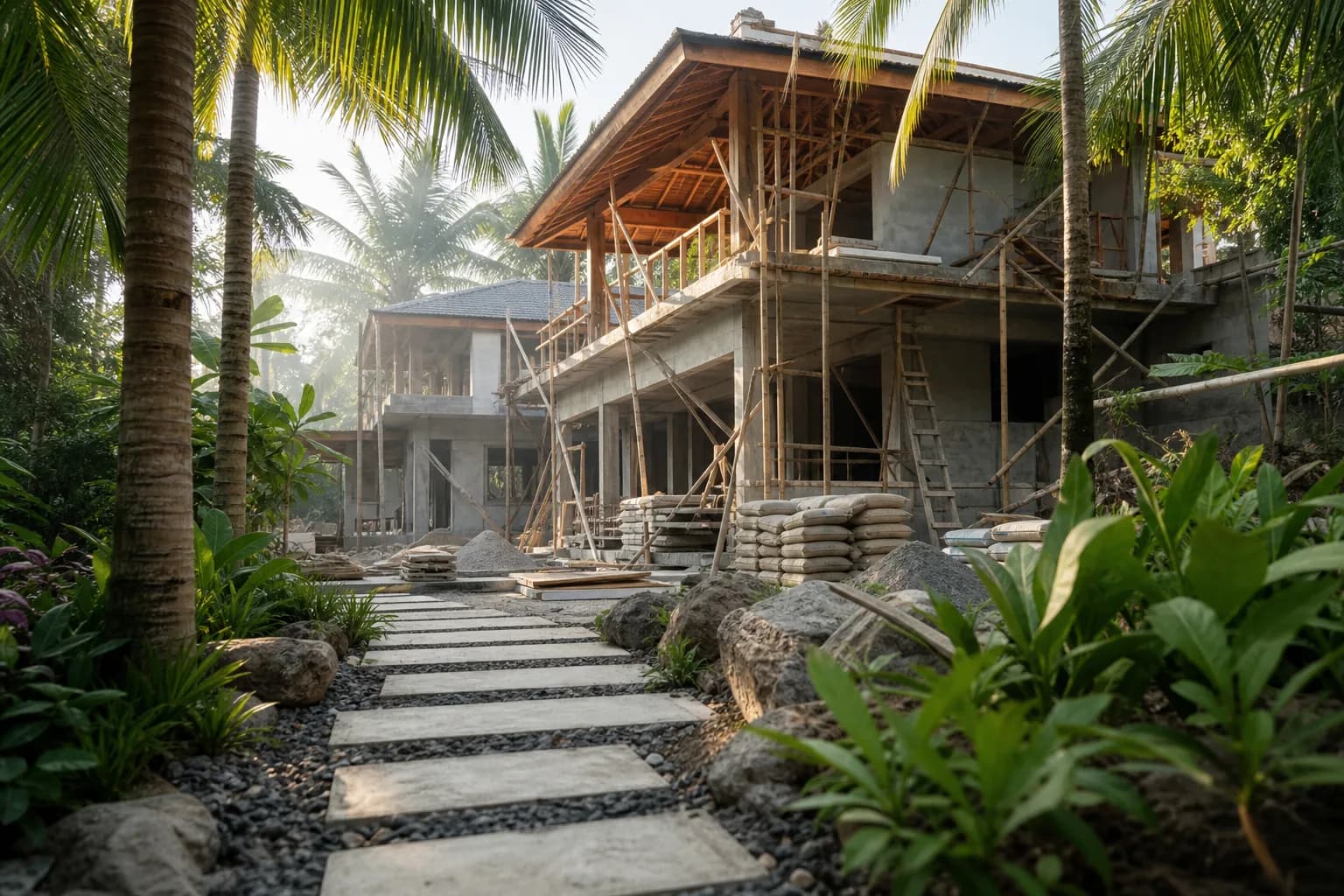
Selling a Bali Villa: Leasehold Resale, Exit Strategy and What Makes Villas Sellable
How the Bali leasehold resale market works in 2026: what you legally sell, how remaining lease term sets price, the notary transfer process, and the entry-day decisions that make a villa sellable later.
7 min read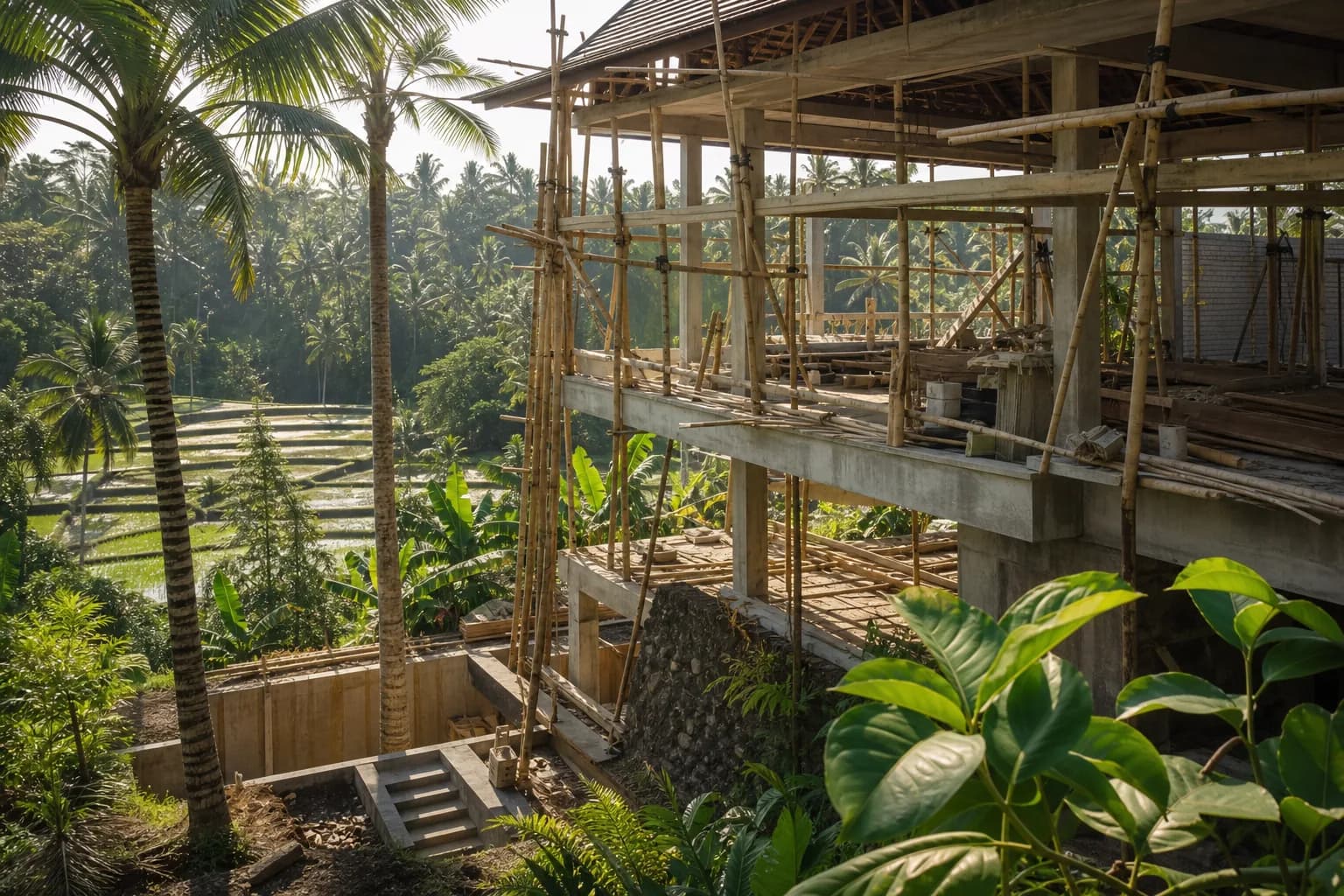
Airbnb in Bali Under the 2026 Permit Rules: Delisting Enforcement and What Hosts Must Have in Place
Indonesia now requires every Bali Airbnb listing to sit on a verified registered business, with platform delisting for non-compliant hosts from 2026. What the rules require, how enforcement works, and the compliant path for foreign owners.
7 min read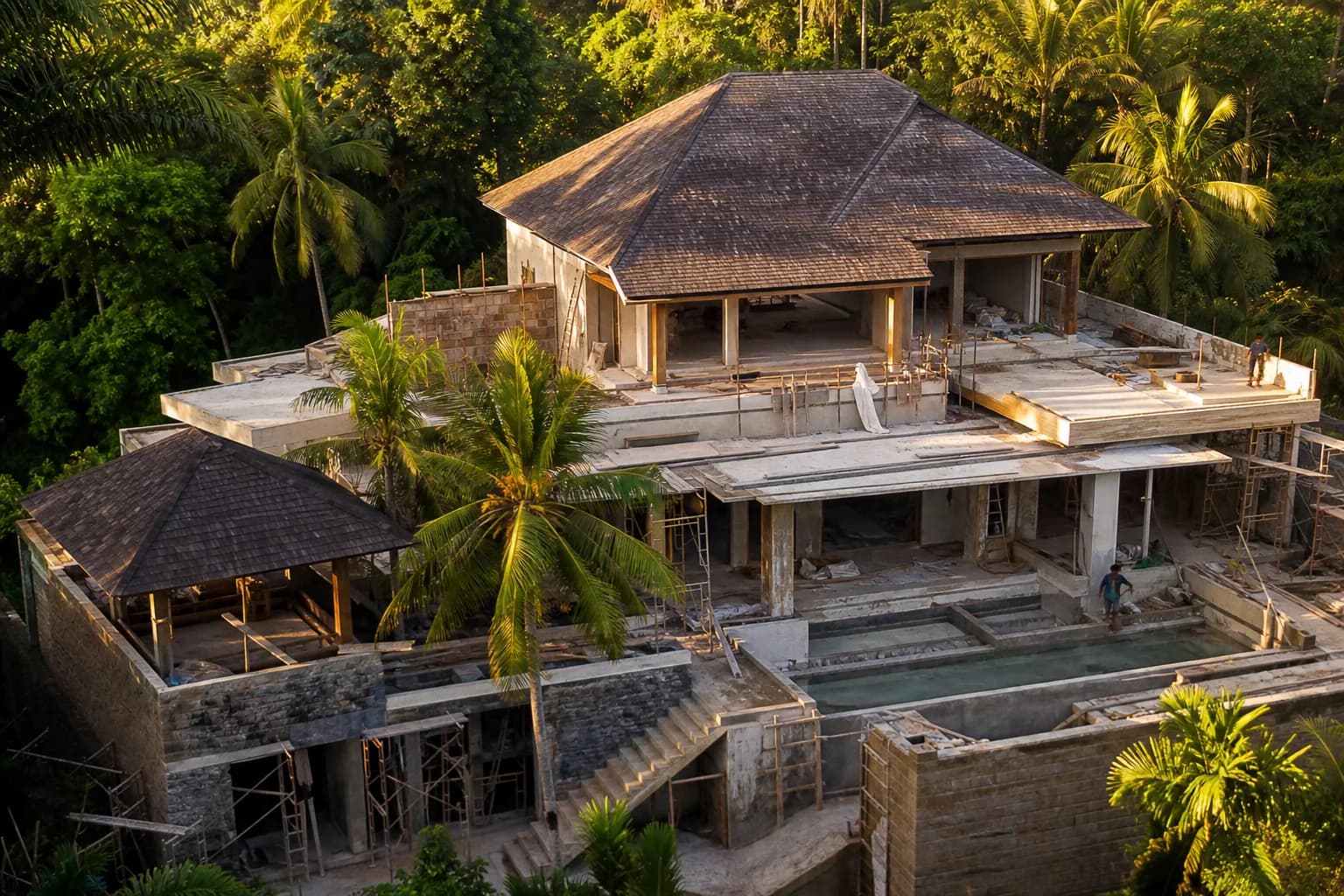
Bali Villa Management Companies: Fee Structures, Contract Clauses, and How to Stay in Control
Villa management in Bali typically costs 15–25% of gross rental income — but OTA commissions, maintenance reserves and add-ons push the real erosion past 40%. How fee models work, which contract clauses protect you, and how to choose and control a manager.
8 min read