Singaraja Port Zone Import Duty Exemptions Customs Costs Bali
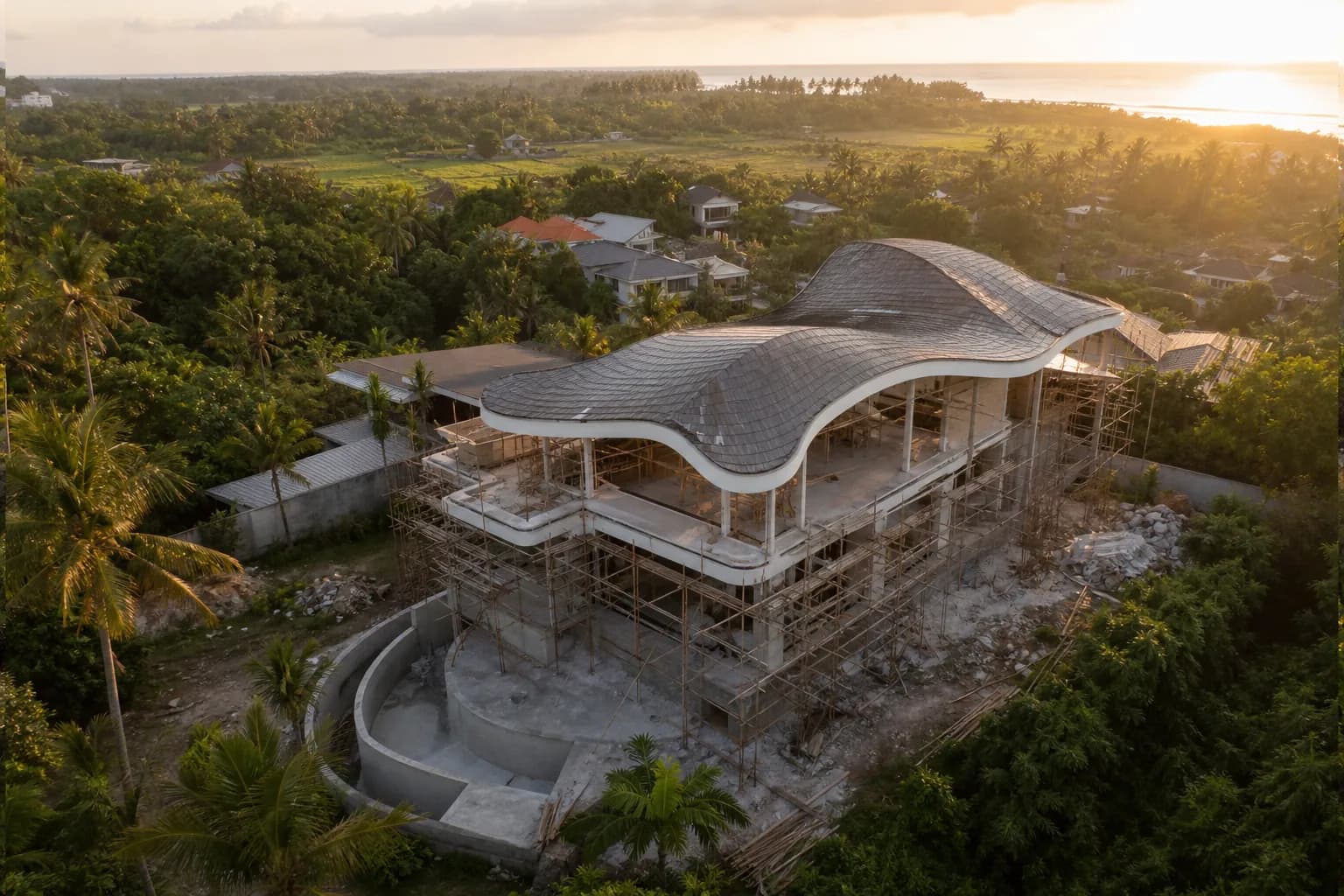
Why Singaraja Port Zone Material Imports Matter for North Bali Construction Projects
When planning villa construction in North Bali—particularly in Lovina, Pemuteran, or the emerging Buleleng regency development zones—the proximity to Singaraja Port creates a strategic advantage that few builders properly leverage. Unlike the congested southern ports handling tourist goods, Singaraja Port Zone operates as a commercial gateway with distinct customs protocols, duty structures, and material handling procedures that directly impact construction budgets. The critical question facing developers: how do import duty exemptions, bonded warehouse privileges, and customs cost structures at Singaraja Port translate into actual savings or hidden expenses when importing specialized construction materials that aren’t readily available in Bali’s domestic supply chain?
Technical Framework: Singaraja Port Customs Infrastructure and Construction Material Classification
Singaraja Port functions under Indonesia’s Directorate General of Customs and Excise (DJBC) jurisdiction, classified as a Type C port with specific commodity handling capabilities. For construction projects, understanding the port’s operational framework is essential before committing to material import strategies.
Port Classification and Material Handling Capacity
Singaraja Port’s infrastructure supports containerized cargo up to 20-foot equivalent units (TEUs), with draft limitations affecting vessel size. Construction materials typically arrive via feeder vessels from Jakarta or Surabaya, or occasionally direct from regional suppliers in Malaysia and Thailand. The port’s bonded warehouse facility—covering approximately 2,400 square meters—allows temporary storage of imported goods under customs supervision, creating potential duty deferral opportunities for qualifying construction projects.
Critical materials frequently imported through Singaraja include: engineered timber products (glulam beams, cross-laminated timber), specialized waterproofing membranes rated for tropical humidity, high-performance HVAC systems designed for salt-air environments, European-standard electrical components, and architectural glass with UV-filtering properties. These items often exceed the technical specifications of domestically-produced alternatives, justifying import despite additional costs.
Duty Structure for Construction Materials (2026 Framework)
Indonesia’s Harmonized System (HS) code classification determines duty rates. Construction materials fall under multiple HS chapters, each with distinct duty implications. Chapter 44 (wood products) typically carries 5-10% import duty plus 11% VAT. Chapter 73 (steel structures) ranges 0-15% depending on processing level. Chapter 70 (glass products) averages 10-20% duty. Chapter 84 (mechanical equipment including HVAC) varies 0-10% based on technology transfer considerations.
The 2026 personal goods duty reduction (50% for items under specific thresholds) does not apply to commercial construction imports, which remain under standard commercial duty schedules. However, Indonesia’s recent easing of import restrictions on 10 key commodities—while focused primarily on agricultural and industrial inputs—has streamlined documentation requirements, reducing clearance timeframes from 7-10 days to 4-6 days for properly documented shipments.
Exemption Mechanisms Available at Singaraja Port
Three primary exemption pathways exist for construction material imports: (1) Bonded Zone Storage, where materials destined for re-export or specific manufacturing can defer duties; (2) Temporary Import provisions (SKTB – Surat Keterangan Barang Impor Sementara) for equipment used during construction then removed; (3) Masterlist exemptions for projects qualifying under Indonesia’s investment incentive programs, particularly those registered with BKPM (Investment Coordinating Board) meeting minimum investment thresholds.
For villa construction projects, the most accessible mechanism is Temporary Import for construction equipment—cranes, concrete pumps, specialized formwork systems—that will be removed post-completion. This requires bank guarantees equivalent to the duty amount, released upon equipment export verification. Permanent material imports (timber, glass, fixtures) rarely qualify for full exemptions but may receive reduced rates if the project demonstrates technology transfer or employs Indonesian labor above mandated thresholds.
Hidden Risks: What Construction Buyers Overlook in Singaraja Port Import Planning
The most expensive mistake developers make is treating Singaraja Port imports as a simple cost-reduction strategy without accounting for the complete risk profile. Four critical oversights consistently emerge:
Demurrage and Storage Cost Accumulation
Singaraja Port’s limited storage capacity means containers must clear customs and exit the port zone within 72 hours of vessel discharge to avoid demurrage charges. These fees escalate rapidly: USD 50-75 per day for days 4-7, USD 100-150 per day thereafter. Construction projects lacking proper customs broker coordination or encountering documentation issues have incurred USD 2,000-4,000 in unexpected demurrage costs on single container shipments. The port’s bonded warehouse, while offering duty deferral, charges storage fees of approximately IDR 15,000-25,000 per cubic meter per week.
Customs Valuation Disputes and Reassessment
Indonesian customs officials at Singaraja Port maintain authority to challenge declared values if they suspect undervaluation. For specialized construction materials without clear market comparables in Indonesia, this creates assessment uncertainty. Customs may reference Jakarta or Surabaya pricing databases, which don’t reflect North Bali’s logistics realities. Disputes trigger physical inspections, laboratory testing for certain materials, and clearance delays of 10-21 days. Projects have faced duty reassessments 30-60% above initial calculations when customs applied different HS code interpretations or rejected supplier invoices as non-representative.
Coordination with Bali’s Domestic Supply Chain
Importing materials through Singaraja Port creates just-in-time delivery challenges for construction schedules. Unlike southern Bali where multiple suppliers maintain inventory, North Bali’s construction ecosystem operates with minimal buffer stock. A container of imported materials arriving during Nyepi (Balinese New Year) or coinciding with port operational disruptions can halt construction for 5-10 days. The risk compounds when imported materials require compatibility with locally-sourced components—European electrical systems with Indonesian voltage regulators, imported timber with local joinery standards.
Step-by-Step Process: Executing Material Imports Through Singaraja Port for Construction Projects
Phase 1: Pre-Import Feasibility and Documentation (Weeks 1-3)
Begin with HS code verification for each material category. Engage a licensed customs broker (PPJK – Pengusaha Pengurusan Jasa Kepabeanan) with Singaraja Port experience—not a general Bali broker. Request duty calculation worksheets showing: base duty rate, VAT, luxury tax (if applicable), and estimated clearance fees. Obtain API (Importer Identification Number) if importing directly; alternatively, structure imports through your construction contractor’s existing API to avoid the 4-6 week registration process.
Verify material compliance with Indonesian National Standards (SNI) where applicable. Certain construction products—steel reinforcement, cement, electrical cables—require SNI certification or technical equivalency documentation from Indonesia’s National Standardization Agency (BSN). Non-compliant materials face rejection at customs or require expensive third-party testing in Surabaya, adding 3-5 weeks and USD 1,500-3,000 per material category.
Phase 2: Supplier Coordination and Shipping Logistics (Weeks 4-8)
Coordinate with suppliers to ensure proper documentation: commercial invoice with detailed material specifications, packing list with cubic measurements and weights, certificate of origin (Form E for ASEAN suppliers enables preferential duty rates), and material safety data sheets (MSDS) for chemical products. Request suppliers use Incoterms that clearly define responsibility transfer—DAP (Delivered at Place) Singaraja Port is optimal, placing customs clearance responsibility on the importer but shipping logistics on the supplier.
Book shipping through freight forwarders experienced with Singaraja Port’s draft limitations and vessel schedules. Direct shipments from Singapore or Malaysia typically take 5-7 days; transshipment through Jakarta adds 10-14 days but may offer cost advantages for larger volumes. Confirm vessel schedules avoid Indonesian public holidays and Balinese ceremonial periods when port operations reduce capacity.
Phase 3: Customs Clearance and Port Exit (Weeks 9-10)
Submit customs declaration (PIB – Pemberitahuan Impor Barang) electronically through Indonesia’s National Single Window system 24-48 hours before vessel arrival. Your customs broker will coordinate with Singaraja Port’s customs office for inspection scheduling. Red channel inspections (physical examination) occur in 30-40% of construction material shipments; yellow channel (document review) in 50-60%; green channel (automatic clearance) in 10-20%.
Pay assessed duties and taxes immediately upon calculation—delays trigger storage fees. Arrange transportation from port to construction site within the 72-hour free period. North Bali’s road infrastructure to interior sites (Munduk, Pupuan areas) requires specialized trucks for heavy materials; coordinate with logistics providers familiar with weight restrictions on rural bridges and narrow village roads.
Phase 4: Post-Import Compliance and Documentation Retention
Maintain complete import documentation for minimum five years as required by Indonesian tax law. For projects claiming duty exemptions or reductions, prepare for potential post-clearance audits by DJBC within 12-24 months. Ensure construction contracts clearly allocate responsibility for import-related costs, delays, and compliance obligations between owner, contractor, and material suppliers.
Realistic Cost Analysis: Singaraja Port Import Economics for Villa Construction
Baseline Cost Structure (Per 20-foot Container)
Shipping costs from Singapore to Singaraja Port: USD 800-1,200. Customs broker fees: USD 300-500. Port handling charges: USD 150-250. Documentation and administrative fees: USD 100-200. Import duties and taxes: 15-30% of CIF (Cost, Insurance, Freight) value for typical construction materials. Transportation from port to North Bali construction site: USD 200-400 depending on distance and material weight.
For a container of specialized materials valued at USD 15,000 CIF, total landed cost typically reaches USD 19,500-23,000, representing a 30-53% premium over the supplier invoice price. This compares to domestic Bali procurement markups of 20-35% for equivalent materials when available locally, but imported materials often provide 15-25% performance advantages in durability, precision, or technical specifications.
Time Investment and Schedule Impact
Complete import cycle from order placement to site delivery: 8-12 weeks for ASEAN suppliers, 12-16 weeks for European or North American sources. This extended timeline requires construction scheduling that accommodates material lead times, typically pushing project commencement 2-3 months beyond initial planning for projects dependent on imported materials. Experienced construction managers like Teville’s engineering team integrate import timelines into critical path planning, ordering materials during design development phases to ensure site-ready delivery when construction reaches installation stages.
Break-Even Analysis for Import Decisions
Importing through Singaraja Port becomes cost-effective when: (1) material performance advantages justify 30-50% cost premiums through extended lifespan or reduced maintenance; (2) project scale exceeds USD 300,000 construction value, allowing import costs to amortize across larger material volumes; (3) specialized materials have no domestic equivalents meeting engineering specifications for tropical climate performance. For standard materials available in Bali—basic timber, standard glass, common fixtures—domestic procurement typically offers better total cost of ownership despite potentially lower initial quality.
Frequently Asked Questions: Singaraja Port Construction Material Imports
Can individual villa owners import materials directly through Singaraja Port, or must imports go through licensed contractors?
Individual owners can import directly but must obtain an API (Importer Identification Number), which requires establishing a legal entity in Indonesia—typically a PT PMA (foreign investment company) with minimum capitalization requirements. This process takes 6-10 weeks and costs USD 3,000-5,000 in legal and registration fees. Most villa construction projects find it more efficient to import through their contractor’s existing API, with material costs and import fees itemized in the construction contract. Teville’s full-cycle construction approach includes material procurement services that leverage established import relationships, eliminating the need for owners to navigate customs procedures independently while maintaining cost transparency through detailed material breakdowns.
How do duty exemptions for tourism-related projects apply to villa construction in North Bali?
Indonesia’s tourism investment incentives, administered through BKPM, can provide import duty reductions of 25-50% for projects meeting specific criteria: minimum investment thresholds (typically USD 500,000+), employment of Indonesian workers above mandated ratios, and classification as tourism infrastructure. Private villas rarely qualify unless developed as part of larger resort complexes or positioned as commercial accommodation properties. The application process requires 3-6 months and extensive documentation proving tourism contribution. For single-villa projects, pursuing these exemptions typically costs more in consulting fees and time delays than the duty savings provide. Focus instead on optimizing material selection and import timing to minimize baseline costs.
What happens if imported materials fail Indonesian building code inspections after
Want to calculate?
 1from 198.000 USD
Private: Haridas Villas
 3173 m²6 month(s)from 125.000 USD
TALA FOUR
 3180 m²7 month(s)from 142.000 USD
Vasudeva
 3127 m²9 month(s)from 177.000 USD
Mukunda
 3124 m²6 month(s)from 123.000 USD
TALA 8
 172 m²8 month(s)from 120.000 USD
Keshava
 4344 m²16 month(s)from 290.000 USD
Radha
 2144 m²11 month(s)from 104.000 USD
Narayana
 164 m²7 month(s)from 79.000 USD
Private: Haridas Villas, Tegallalang
 3104 m²11 month(s)from 99.000 USD
TALA 100
164 m²7 month(s)from 79.000 USDTALA TWO
Start With Real Numbers, Not Guesses
Before buying land or finalizing a design, check the realistic build cost range for your project in Bali.
Our team reviews your inputs and gives a grounded estimate.
Available lands
 420 m²15 min$ 41897Bali, Tabanan
 2800 m²15 min$ 310345Bali, Tabanan
 550 m²15 min$ 164594Bali, Mengwi
 2000 m²10 min$ 243842Bali, Mengwi
 6000 m²30 min$ 55419Bali, Tabanan
 660 m²10 min$ 175567Bali, Mengwi
 7500 m²5 min$ 206281Bali, Kedungu
 1375 m²10 min$ 447044Bali, Canggu
 500 m²10 min$ 107143Bali, Tabanan
 610 m²10 min$ 165271Bali, Seminyak
 2400 m²7 min$ 496552Bali, Canggu
 325 m²15 min$ 44472Bali, Ungasan
 1700 m²10 min$ 392549Bali, Nusadua
 1000 m²10 min$ 230911Bali, Kerobokan
 5028 m²10 min$ 361000Bali, Ubud
Essential Bali build & buy guides
- Bali villa construction cost per m² in 2026
- How much will your villa cost? Calculator
- Building a villa in Bali: the complete guide
- Buying land in Bali: step-by-step for foreigners
- Bali villa investment: yields, risks, returns
- Leasehold vs freehold: what foreigners can own
- Construction defect liability & 10-year warranty
- Bali building codes and construction standards
Related guides

Why a Cheap Bali Leasehold Is Cheap: Pricing Red Flags Every Buyer Should Decode
Suspiciously cheap Bali leaseholds are priced low for a reason: short remaining terms, forbidden zoning, missing road access, disputes or weak contracts. How to decode the discount before you pay for it.
8 min read
Fake Compliance and Licensing Agents in Bali: The 2026 Paperwork Scam and How to Verify Documents
Forged certificates, permit fixers and fake notaries: how Bali's paperwork scams work in 2026 and how to verify every property document at its government source.
7 min read
Buying a Bali Villa from Instagram: Phantom Listings, Render-Only Projects and How to Verify
Instagram is Bali's biggest property shop window and its least verified. How phantom listings, render-only projects and cloned developer accounts work — and the verification steps that expose them.
7 min read