Singaraja Port Container Demurrage Storage Fees Bali
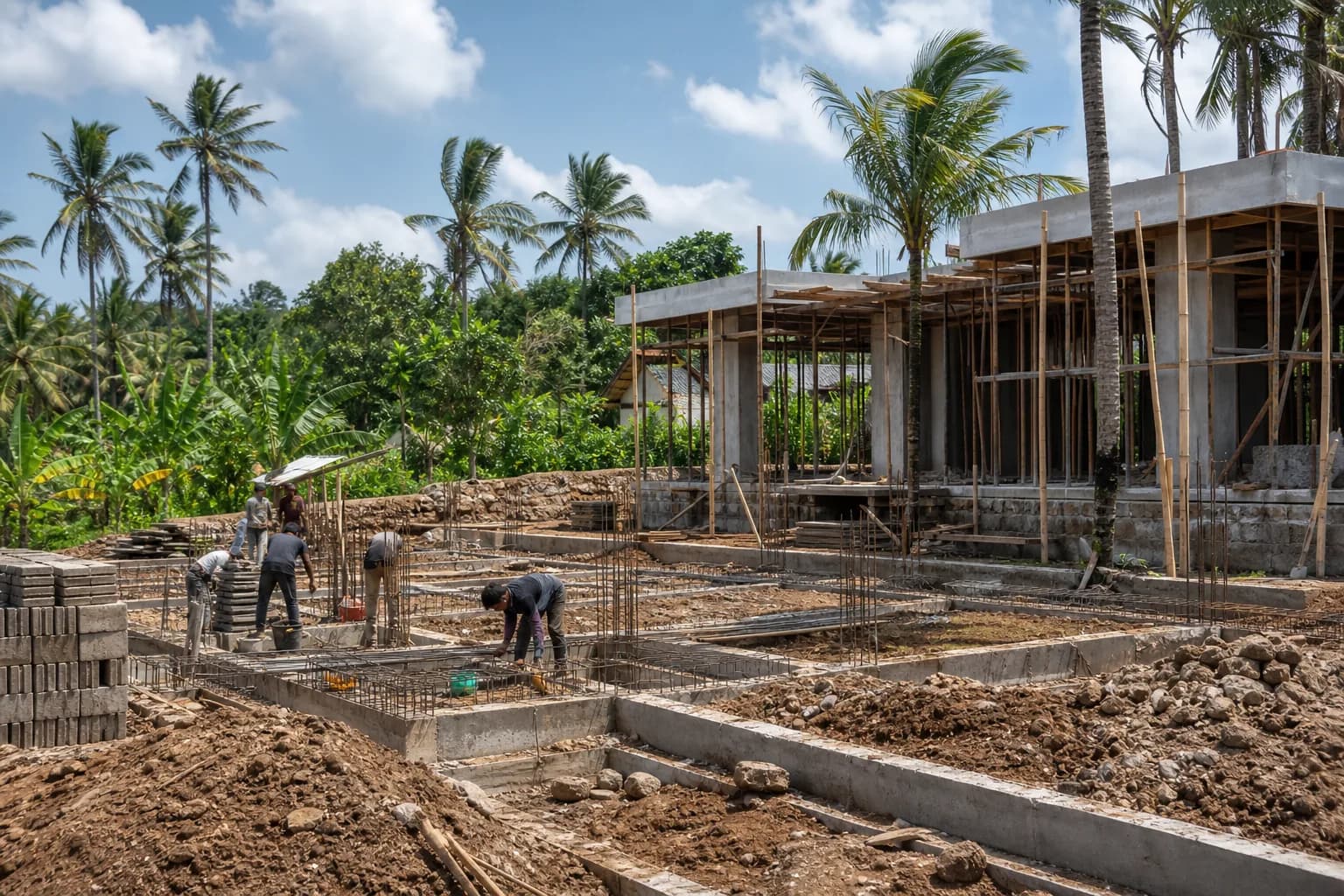
The Hidden Cost Trap: When Your Construction Materials Sit at Singaraja Port
A villa construction project in North Bali ground to a halt for 11 days—not due to design changes or permit delays, but because imported Italian tiles remained trapped in a container at Singaraja Port while demurrage fees accumulated at US$150 per day. The project owner, unaware that Bali’s northern port operates under different fee structures and storage limitations than Benoa, watched US$1,650 in avoidable costs erode their construction budget before materials ever reached the build site. For construction projects importing specialized materials through Singaraja Port, understanding container demurrage fees and material storage costs isn’t optional—it’s essential risk management that directly impacts project timelines and budgets.
Technical Deep Dive: Singaraja Port Container Logistics and Fee Structures
Singaraja Port (Pelabuhan Singaraja) operates as Bali’s secondary commercial port, handling significantly lower container volumes than Tanjung Benoa but serving as a critical entry point for construction projects in North Bali districts including Buleleng, Bangli, and northern Tabanan. The port’s container handling infrastructure and fee structures reflect its regional positioning, creating specific cost implications for villa construction cost Bali projects sourcing materials internationally.
Container Demurrage Fee Framework at Singaraja
Demurrage fees at Singaraja Port follow Indonesia’s port authority guidelines but with regional variations. Standard demurrage charges begin after the free time period expires—typically 3-5 days for import containers depending on carrier agreements and container type. For 20-foot containers (TEU), demurrage fees generally range from US$75-120 per day for days 6-10, escalating to US$150-200 per day for days 11-20, and reaching US$250-300 per day beyond 21 days. For 40-foot containers (FEU), fees increase proportionally, typically 1.5-2x the TEU rates.
Unlike Benoa’s more standardized fee schedules, Singaraja’s smaller operational scale means carrier-specific variations are more pronounced. Shipping lines serving Singaraja—primarily regional carriers connecting through Surabaya or Jakarta—may impose different free time allowances and escalation schedules. Construction projects importing materials must verify specific demurrage terms with their freight forwarder before shipment arrival, as assumptions based on Benoa experience can prove costly.
Port Storage Costs and Capacity Constraints
Beyond demurrage, Singaraja Port imposes separate storage fees for containers remaining in the port yard. These storage charges typically begin simultaneously with demurrage after free time expires, creating dual cost accumulation. Port storage fees at Singaraja range from IDR 50,000-100,000 (US$3-6) per day for the first 10 days, increasing to IDR 150,000-250,000 (US$9-15) per day thereafter. While individually modest, these fees compound demurrage costs and reflect the port’s limited container yard capacity.
Singaraja’s container yard can accommodate approximately 200-300 TEU at capacity—a fraction of Benoa’s throughput. During peak import periods (typically September-November and January-March when construction activity intensifies), yard congestion can trigger accelerated fee schedules or forced container removal to off-port storage facilities. For Bali villa construction projects, this capacity constraint means timing material arrivals to coincide with immediate site delivery becomes critical.
Customs Clearance Timeframes and Documentation Requirements
The primary driver of extended container dwell time at Singaraja is customs clearance duration. While Benoa processes most construction material imports within 2-4 days, Singaraja’s smaller customs office typically requires 5-8 business days for standard clearance, extending to 10-15 days for materials requiring technical verification (structural steel, specialized mechanical systems, imported fixtures requiring SNI certification verification).
Construction materials entering through Singaraja require identical documentation to Benoa entries: commercial invoice, packing list, bill of lading, import declaration (PIB), and material-specific certificates (for electrical components, plumbing fixtures, structural materials). However, Singaraja’s customs office has fewer staff trained in construction material classification, occasionally resulting in requests for additional documentation or physical inspections that extend clearance timelines. Projects importing through Singaraja should budget 7-10 days minimum for customs clearance versus 3-5 days at Benoa.
Material Handling and Inland Transportation Coordination
Once cleared, materials must be transported from Singaraja Port to construction sites. For North Bali projects, this represents a logistics advantage—sites in Lovina, Pemuteran, or northern Tabanan are 30-90 minutes from Singaraja versus 3-4 hours from Benoa. However, Singaraja’s container handling equipment is more limited, with fewer mobile cranes and specialized lifting equipment available. Projects importing heavy materials (steel beams, large-format stone, prefabricated components) may face 1-3 day delays waiting for appropriate handling equipment, during which demurrage and storage fees continue accumulating.
Coordination between customs clearance completion, container yard release, and trucking availability creates a critical window. Singaraja has fewer container trucking operators than South Bali—approximately 15-20 companies versus 100+ serving Benoa. During peak construction periods, trucking availability can extend material pickup by 2-4 days even after customs clearance, particularly for projects requiring specialized transport (flatbed for long materials, crane trucks for heavy items).
Hidden Risks & Mistakes: What Construction Buyers Miss
The most common mistake in managing Singaraja Port logistics is applying South Bali assumptions to North Bali realities. Buyers accustomed to Benoa’s infrastructure expect similar processing speeds and service availability, leading to inadequate timeline buffers and cost underestimation.
Underestimating Free Time Consumption
Construction projects frequently consume their entire free time period before customs clearance even begins. A container arriving Friday afternoon may not be available for customs inspection until Monday, immediately consuming 2-3 days of a 5-day free period. If customs requests additional documentation—common for first-time importers or unusual materials—the remaining 2-3 days evaporate before clearance completes, triggering demurrage from day one of actual processing.
Inadequate Freight Forwarder Selection
Many building permits Bali holders engage Denpasar-based freight forwarders experienced with Benoa but unfamiliar with Singaraja’s specific procedures, customs officer preferences, and local trucking networks. This knowledge gap extends clearance times by 30-50% compared to forwarders with established Singaraja relationships. The cost savings from using a familiar Denpasar forwarder are quickly erased by 3-5 additional days of demurrage fees.
Poor Material Arrival Timing
Projects often schedule material shipments to arrive “when needed” without accounting for Singaraja’s processing timeline variability. A container scheduled to arrive two weeks before installation may actually be needed on-site within 7-10 days of arrival to avoid demurrage, but site readiness delays (concrete curing, structural work completion) mean materials cannot be received. The result: materials sit at port accumulating fees, or arrive on-site before proper storage is available, leading to weather damage or theft—both common risks in tropical construction engineering.
Insufficient On-Site Storage Planning
To minimize port fees, projects rush materials to site immediately upon clearance, but without adequate covered storage, weather-sensitive materials (timber, drywall, fixtures) suffer tropical climate damage. The cost savings from avoiding 5 days of port storage (US$750-1,000 in combined demurrage and storage fees) becomes irrelevant when US$3,000-8,000 in materials require replacement due to moisture damage during Bali’s rainy season.
Step-by-Step Process: Managing Singaraja Port Material Imports
Step 1: Pre-Shipment Logistics Planning (4-6 Weeks Before Arrival)
Engage a freight forwarder with documented Singaraja Port experience—request references from at least two recent construction material imports through Singaraja specifically. Verify their relationships with local customs brokers and Singaraja trucking operators. Confirm demurrage terms with your shipping line in writing, including exact free time periods, daily rates, and escalation schedules. For land purchase Bali projects in North Bali, this forwarder selection is as critical as contractor selection.
Prepare complete documentation packages before shipment: commercial invoices with detailed material descriptions using Indonesian customs HS codes, packing lists with exact quantities and weights, material certificates (SNI compliance for applicable items), and import permits if required for restricted materials. Incomplete documentation is the primary cause of extended customs clearance at Singaraja.
Step 2: Arrival Coordination and Customs Preparation (1 Week Before to Arrival Day)
Confirm vessel arrival schedule 7 days prior—Singaraja-bound vessels occasionally experience schedule changes due to weather or port congestion in primary ports. Notify your customs broker immediately upon vessel arrival confirmation, providing all documentation electronically to enable pre-clearance preparation. Request customs inspection scheduling for the first available slot after container discharge—typically 1-2 days after vessel arrival.
Arrange trucking provisionally for 5-7 days post-arrival, with flexibility to adjust based on actual clearance completion. For projects requiring specialized transport, book equipment 10-14 days in advance as availability is limited.
Step 3: Customs Clearance Execution (Days 1-8 Post-Arrival)
Monitor clearance progress daily through your customs broker. If additional documentation is requested, provide within 24 hours—each day of delay adds US$75-150 in demurrage. For materials requiring physical inspection, ensure your broker or representative attends the inspection to answer questions and expedite approval. Construction materials occasionally require verification against import declarations, particularly structural steel, mechanical systems, or materials with safety certifications.
If clearance extends beyond day 5 (entering demurrage period), evaluate whether expedited processing fees (typically US$200-500) are cost-effective versus accumulating demurrage. For high-value containers, expediting often proves economical.
Step 4: Container Release and Transportation (Days 6-10 Post-Arrival)
Upon customs clearance, obtain container release documentation and coordinate immediate pickup. Singaraja’s container yard operates 08:00-16:00 Monday-Friday, 08:00-12:00 Saturday—containers cleared Friday afternoon cannot be retrieved until Monday, adding 2-3 days of fees. Schedule pickup for the same day or next morning after clearance to minimize storage costs.
Verify site readiness before container departure from port: access roads passable for container trucks (critical during rainy season), unloading area prepared, covered storage available for weather-sensitive materials, and labor available for immediate unloading. Container trucks typically allow 2-3 hours for unloading before charging detention fees.
Step 5: Material Receipt and Documentation (Delivery Day)
Conduct thorough material inspection during unloading, documenting any damage with photographs before the truck departs. Verify quantities against packing lists and check material condition. For Bali villa construction projects, this inspection is your only opportunity to document shipping damage for insurance claims. Store materials immediately in covered, secure areas—material theft and weather damage are the most common post-import losses in North Bali construction sites.
Realistic Numbers & Ranges: Singaraja Port Cost Scenarios
Baseline Import Scenario (Optimal Execution)
A 20-foot container of imported tiles and fixtures for a villa project, with experienced freight forwarder and complete documentation: 5 days free time utilized for customs clearance, container released day 6, trucked to site day 7. Total port-related costs: customs clearance US$300-450, trucking to North Bali site US$150-250, minimal demurrage (1-2 days) US$75-150. Total: US$525-850 beyond base shipping costs.
Typical Import Scenario (Minor Delays)
Same container with documentation issues requiring 2 additional days: customs clearance completes day 8, container released day 9, trucked day 10. Demurrage days 6-10: US$450-600 (5 days at US$90-120/day), storage fees US$25-40, customs clearance US$300-450, trucking US$150-250. Total: US$925-1,340.
Problem Import Scenario (Significant Delays)
Container requiring technical verification or with incomplete documentation: clearance completes day 15, released day 16. Demurrage days 6-16: US$1,485-2,200 (days 6-10 at US$90-120/day, days 11-16 at US$150-200/day), storage fees US$90-150, expedited processing US$300-500, customs clearance US$400-600, trucking US$150-250. Total: US$2,425-3,700—potentially exceeding the value of some material shipments.
Cost Comparison: Singaraja vs. Benoa for North Bali Projects
For construction sites in Buleleng or northern Tabanan, Singaraja offers transportation cost advantages (US$150-250 vs. US$400-600 from Benoa) but higher demurrage risk due to longer clearance times. Break-even analysis: if clearance extends beyond 8 days at Singaraja, the transportation savings are offset by additional demurrage, making Benoa economically equivalent despite longer trucking distance. For projects with experienced logistics management, Singaraja typically saves US$200-400 per container; for first-time importers, Benoa’s faster processing often proves more economical despite higher trucking costs.
FAQ: Singaraja Port Container Demurrage & Material Storage
How long is the free time period for construction material containers at Singaraja Port?
Free time at Singaraja Port typically ranges from 3-5 days

Want to calculate?
 172 m²8 month(s)from 120.000 USD
Keshava
 3127 m²9 month(s)from 177.000 USD
Mukunda
 164 m²7 month(s)from 79.000 USD
TALA TWO
 3173 m²6 month(s)from 125.000 USD
TALA FOUR
 3124 m²6 month(s)from 123.000 USD
TALA 8
 3104 m²11 month(s)from 99.000 USD
TALA 100
 1from 198.000 USD
Private: Haridas Villas
 3180 m²7 month(s)from 142.000 USD
Vasudeva
164 m²7 month(s)from 79.000 USDPrivate: Haridas Villas, Tegallalang
 4344 m²16 month(s)from 290.000 USD
Radha
 2144 m²11 month(s)from 104.000 USD
Narayana
Start With Real Numbers, Not Guesses
Before buying land or finalizing a design, check the realistic build cost range for your project in Bali.
Our team reviews your inputs and gives a grounded estimate.
Available lands
 7250 m²56 min$ 235714Bali, Tabanan
 1660 m²10 min$ 343448Bali, Kerobokan
 3100 m²20 min$ 272968Bali, Tabanan
 1000 m²10 min$ 230911Bali, Kerobokan
 300 m²55 min$ 32475Bali, Tegelalang
 1000 m²10 min$ 280788Bali, Pecatu
 500 m²10 min$ 107143Bali, Tabanan
 700 m²7 min$ 400000Bali, Canggu
 200 m²5 min$ 59113Bali, Bukit
 220 m²2 min$ 66565Bali, Cemagi
 608 m²15 min$ 310377Bali, Seminyak
 1158 m²12 min$ 291996Bali, Mengwi
 1230 m²15 min$ 132543Bali, Tegallalang
 615 m²15 min$ 113608Bali, Tabanan
 422 m²15 min$ 93547Bali, Kerobokan
Essential Bali build & buy guides
- Bali villa construction cost per m² in 2026
- How much will your villa cost? Calculator
- Building a villa in Bali: the complete guide
- Buying land in Bali: step-by-step for foreigners
- Bali villa investment: yields, risks, returns
- Leasehold vs freehold: what foreigners can own
- Construction defect liability & 10-year warranty
- Bali building codes and construction standards
Related guides

Why a Cheap Bali Leasehold Is Cheap: Pricing Red Flags Every Buyer Should Decode
Suspiciously cheap Bali leaseholds are priced low for a reason: short remaining terms, forbidden zoning, missing road access, disputes or weak contracts. How to decode the discount before you pay for it.
8 min read
Fake Compliance and Licensing Agents in Bali: The 2026 Paperwork Scam and How to Verify Documents
Forged certificates, permit fixers and fake notaries: how Bali's paperwork scams work in 2026 and how to verify every property document at its government source.
7 min read
Buying a Bali Villa from Instagram: Phantom Listings, Render-Only Projects and How to Verify
Instagram is Bali's biggest property shop window and its least verified. How phantom listings, render-only projects and cloned developer accounts work — and the verification steps that expose them.
7 min read