Mengwi Subak Irrigation Rights: Construction Impact Fees Bali
{
“article”: {
“title”: “Mengwi Subak Irrigation Rights: Construction Impact Fees & Compensation Costs Bali”,
“content”: “
The Subak Irrigation Conflict: When Your Construction Site Disrupts UNESCO Heritage Water Systems
\n\n
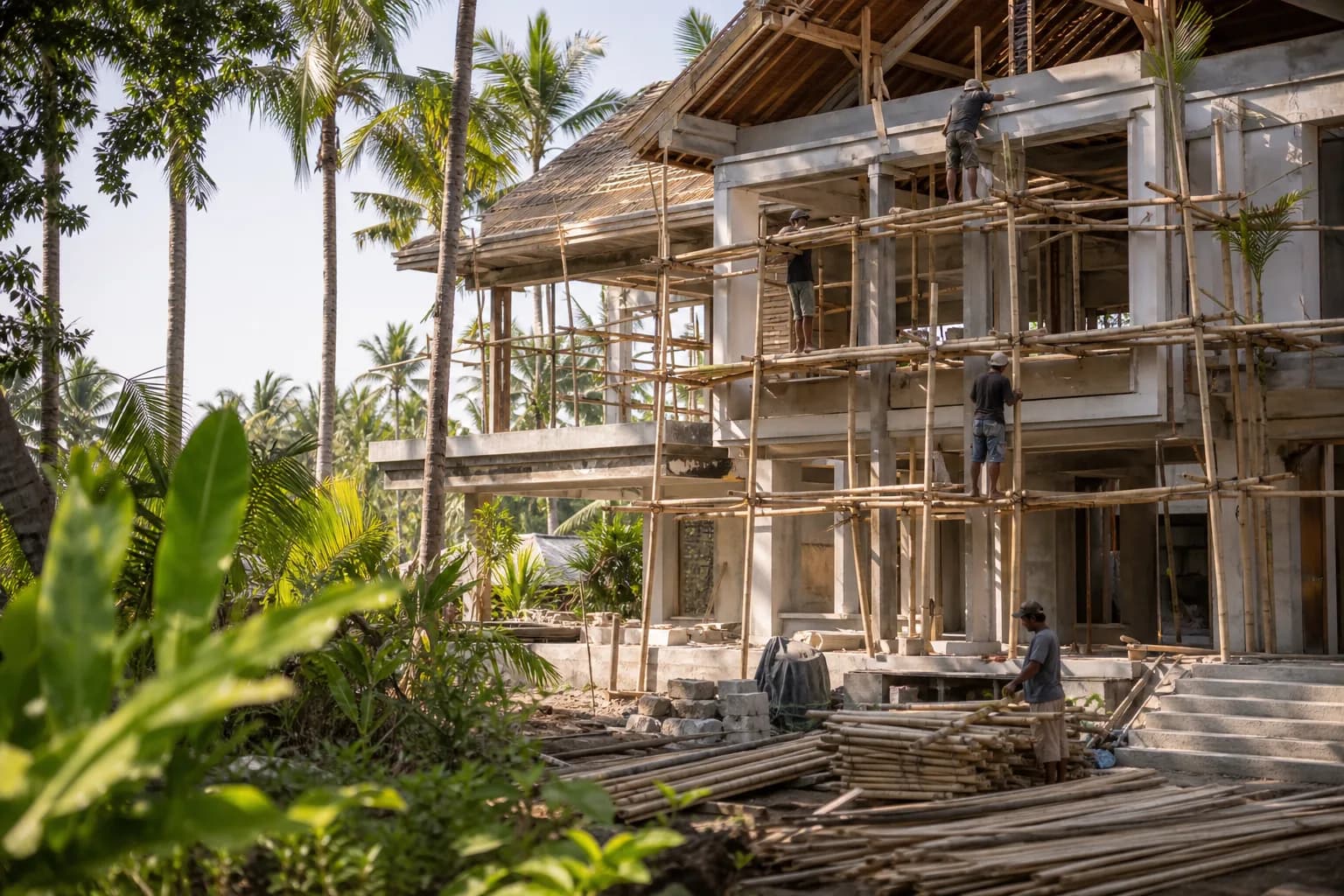
A foreign buyer purchases land in Mengwi, Badung Regency, planning a luxury villa development. During excavation, the contractor discovers an underground irrigation channel feeding a traditional subak system serving 12 downstream rice terraces. The local subak organization demands immediate construction halt, compensation for water flow disruption, and permanent easement rights. The buyer faces IDR 85-150 million in unexpected fees, 4-6 month project delays, and potential legal action from the subak cooperative. This scenario repeats across Mengwi’s agricultural transition zones where construction meets Bali’s 1,000-year-old irrigation heritage.
\n\n
Technical Engineering Reality: Subak Water Rights vs. Modern Construction Infrastructure
\n\n
The Mengwi subak system operates as a legally recognized water management cooperative (banjar subak) with documented irrigation rights predating modern land titles by centuries. Under Indonesian Water Resources Law (UU No. 17/2019) and Bali Provincial Regulation (Perda Bali No. 9/2012), subak organizations hold collective water access rights that supersede individual land ownership for irrigation infrastructure preservation.
\n\n
When construction projects in Mengwi intersect with subak channels—whether surface canals (telabah), underground conduits (aungan), or distribution weirs (tembuku)—developers trigger three distinct legal obligations:
\n\n
- \n
- Impact Assessment Requirement: Any construction within 50 meters of active subak infrastructure requires environmental impact analysis (AMDAL or UKL-UPL) specifically addressing water flow continuity, as mandated by Ministry of Environment Regulation No. 4/2021
- Compensation Mechanism: Disruption to irrigation flow—even temporary during construction—activates compensation claims under customary law (awig-awig subak) and civil code provisions for economic loss to agricultural productivity
- Permanent Easement Obligations: Construction that permanently alters water courses must provide alternative routing with equivalent flow capacity, engineered to subak specifications and maintained at developer expense in perpetuity
\n
\n
\n
\n\n
The engineering challenge intensifies in Mengwi due to the region’s complex topography. The area sits within the Sungi watershed system, where elevation drops create natural pressure gradients the subak system exploits through gravity-fed distribution. Modern construction—particularly basement excavations, retaining walls, and drainage systems—can inadvertently redirect groundwater flows that feed subak channels, creating conflicts invisible during initial site surveys.
\n\n
From a structural engineering perspective, subak channels present three construction complications: First, traditional channels use unlined earthwork or porous stone construction, making precise boundary determination difficult during excavation. Second, seasonal flow variations mean channels appearing dry during site assessment may carry critical irrigation water during planting seasons (October-March). Third, many Mengwi subak systems include underground spring capture structures (beji) considered sacred sites, adding cultural heritage protection requirements beyond pure engineering concerns.
\n\n
The legal framework creates a dual-authority challenge. While the Badung Regency Public Works Department (Dinas PUPR) issues building permits based on spatial planning compliance, the local subak organization—operating under customary law authority recognized by Constitutional Court Decision No. 35/PUU-X/2012—can independently halt construction for water rights violations. This creates scenarios where projects hold valid building permits but face legal injunctions from subak cooperatives, requiring separate negotiation and compensation agreements outside the formal permitting process.
\n\n
At Teville, our pre-construction site analysis in Mengwi includes hydrological mapping that extends 200 meters beyond property boundaries, identifying both visible and subsurface irrigation infrastructure. We coordinate with the relevant pekaseh (subak water master) during design phase to engineer drainage systems that maintain or enhance existing water flows, preventing compensation disputes before foundation work begins.
\n\n
Hidden Risks: What Foreign Buyers Miss in Subak Impact Assessments
\n\n
The most dangerous assumption foreign buyers make is treating subak channels as simple drainage ditches that can be rerouted or culverted during construction. Unlike municipal infrastructure, subak systems operate as living cultural heritage with legal protections equivalent to historical monuments. Attempting to modify channels without subak organization consent—even on land you legally own—can trigger criminal penalties under Cultural Heritage Law (UU No. 11/2010), with fines reaching IDR 500 million and potential imprisonment.
\n\n
The second critical oversight involves seasonal timing. Many buyers conduct site visits during Bali’s dry season (April-September) when irrigation channels carry minimal flow or appear abandoned. The subak system, however, operates on a ritual agricultural calendar (sasih) synchronized with temple ceremonies. Channels dormant in July may become primary water arteries in November, and construction that proceeds without understanding this cycle faces mandatory work stoppages during critical planting periods, extending project timelines by 3-5 months.
\n\n
Third, compensation calculations follow customary law formulas that differ fundamentally from standard Indonesian civil damages. Subak organizations calculate impact fees based on downstream agricultural productivity loss, measured in expected rice harvest yields (gabah) over multiple growing seasons. A construction project disrupting water flow to 8 hectares of rice terraces for 6 months may face compensation claims calculated as: (average yield per hectare) × (number of affected hectares) × (disruption duration in growing cycles) × (current rice market price) + (ritual ceremony costs for water blessing restoration). These figures often exceed IDR 100 million for projects foreign buyers assumed would have zero irrigation impact.
\n\n
Step-by-Step Process: Navigating Subak Rights in Mengwi Construction Projects
\n\n
Phase 1: Pre-Purchase Subak Due Diligence (2-3 weeks)
\n\n
Before land acquisition, commission a specialized subak impact survey from a consultant familiar with Mengwi’s specific irrigation networks. This survey should identify: (1) all surface and subsurface water channels within 100 meters of the property boundary, (2) the specific subak organization holding water rights, (3) historical water flow patterns across wet and dry seasons, and (4) any sacred water sources (beji or pancoran) with cultural heritage status. Request written confirmation from the pekaseh regarding known irrigation infrastructure on or adjacent to the target parcel. This documentation becomes critical leverage if disputes arise during construction.
\n\n
Phase 2: Subak Organization Consultation (3-4 weeks)
\n\n
Once land is secured, initiate formal consultation with the relevant subak cooperative before architectural design begins. This involves: (1) presenting preliminary site plans to the subak leadership council (krama subak), (2) conducting joint site inspection with the pekaseh to mark all irrigation infrastructure, (3) discussing construction timeline relative to planting calendar, and (4) negotiating preliminary agreement on water flow protection measures. Document all discussions in writing with witness signatures from both parties. Many Mengwi subak organizations require a ceremonial offering (upacara mecaru) before construction begins, costing IDR 3-8 million, which should be budgeted as a non-negotiable cultural compliance expense.
\n\n
Phase 3: Engineering Design Integration (4-6 weeks)
\n\n
Work with structural engineers and hydrologists to design foundation, drainage, and grading systems that maintain existing water flows. Specific technical requirements include: (1) culvert or bridge structures for any channels crossing the construction site, engineered to handle peak wet-season flow volumes, (2) sediment control systems preventing construction runoff from contaminating irrigation water, (3) temporary water bypass systems during excavation phases, and (4) permanent drainage outfalls positioned to return water to the subak system at equivalent or improved quality. Submit these engineering plans to both the subak organization and the Badung Public Works Department for concurrent approval. At Teville’s construction process, we integrate subak flow requirements into our drainage engineering from initial design, avoiding costly redesigns during permit review.
\n\n
Phase 4: Formal Compensation Agreement (2-3 weeks)
\n\n
If construction will cause any temporary water flow disruption, negotiate a written compensation agreement (perjanjian ganti rugi) with the subak organization before breaking ground. This agreement should specify: (1) exact compensation amount based on affected area and duration, (2) payment schedule (typically 50% upfront, 50% upon water flow restoration), (3) performance guarantees for water system restoration, and (4) dispute resolution mechanism through village mediation (paruman desa). Have the agreement reviewed by a notary familiar with customary law and registered with the village administration (perbekel) to ensure enforceability. Compensation typically ranges from IDR 15-35 million per hectare of affected downstream rice fields per growing season of disruption.
\n\n
Phase 5: Construction Monitoring & Compliance (ongoing)
\n\n
During construction, maintain regular communication with the subak pekaseh, providing advance notice of any excavation or drainage work near irrigation channels. Implement daily water flow monitoring at agreed checkpoints to document compliance with flow maintenance requirements. If unexpected subsurface channels are discovered during excavation—common in Mengwi due to historical irrigation modifications—halt work immediately and reconvene with subak leadership before proceeding. Budget 5-7% of total construction timeline for subak-related coordination and potential work stoppages during ceremonial periods or planting season peaks.
\n\n
Realistic Cost Ranges: Budgeting for Subak Compliance in Mengwi
\n\n
Based on 2024-2026 construction projects in Mengwi’s subak-adjacent zones, foreign buyers should budget the following subak-related expenses beyond standard construction costs:
\n\n
- \n
- Pre-Construction Subak Survey: IDR 8-15 million for specialized hydrological assessment and subak organization consultation
- Water Flow Engineering: IDR 25-60 million for culvert structures, bypass systems, and drainage modifications to maintain irrigation flows (varies with channel size and complexity)
- Temporary Disruption Compensation: IDR 15-35 million per hectare of affected downstream agriculture per growing season, typically covering 2-8 hectares for standard villa construction sites
- Permanent Easement Modifications: IDR 75-180 million if construction requires permanent channel rerouting, including engineering, construction of new channel sections, and perpetual maintenance fund contribution
- Cultural Ceremony Costs: IDR 3-8 million for pre-construction water blessing ceremonies and IDR 5-12 million for post-construction restoration ceremonies
- Legal Documentation: IDR 6-12 million for notarized compensation agreements and customary law compliance documentation
\n
\n
\n
\n
\n
\n
\n\n
Total subak-related costs for a typical 500-800 sqm villa construction site in Mengwi with moderate irrigation infrastructure impact: IDR 85-180 million (USD 5,400-11,400 at February 2026 exchange rates). Projects requiring significant channel rerouting or affecting large downstream agricultural areas can exceed IDR 300 million. Timeline impact: expect 4-8 weeks additional pre-construction planning and 2-4 weeks of construction delays for subak coordination and ceremonial requirements.
\n\n
Frequently Asked Questions: Mengwi Subak Construction Impacts
\n\n
Q: Can I legally refuse to pay subak compensation if I have a valid land title and building permit?
\n\n
A: No. Indonesian water law and Constitutional Court precedent recognize subak organizations’ collective water rights as separate from land ownership rights. Your land title grants surface development rights, but does not extinguish pre-existing irrigation easements or water access rights held by the subak cooperative. Refusing compensation for documented water flow disruption exposes you to civil lawsuits under tort law (Article 1365 of the Civil Code) and potential criminal charges under environmental protection statutes if irrigation damage affects food security. Badung courts consistently rule in favor of subak organizations in these disputes, with judgments often exceeding initial compensation demands due to legal costs and agricultural productivity losses during litigation.
\n\n
Q: How do I identify which subak organization has jurisdiction over my Mengwi construction site?
\n\n
A: Mengwi subdistrict contains multiple subak organizations, each with defined territorial boundaries following watershed and traditional village (desa adat) divisions. Start by consulting with your land’s banjar (neighborhood association) leadership, who can identify the relevant subak. Alternatively, contact the Badung Regency Agriculture Department (Dinas Pertanian), which maintains official subak registration records. For properties near subak boundaries, multiple organizations may claim jurisdiction—resolve this before construction by requesting written boundary confirmation from each subak’s pekaseh and the village head. Never rely solely on seller representations about subak status; many land disputes arise from sellers downplaying irrigation infras
 172 m²8 month(s)from 120.000 USD
Keshava
 2144 m²11 month(s)from 104.000 USD
Narayana
 3173 m²6 month(s)from 125.000 USD
TALA FOUR
 1from 198.000 USD
Private: Haridas Villas
 164 m²7 month(s)from 79.000 USD
TALA TWO
 3104 m²11 month(s)from 99.000 USD
TALA 100
164 m²7 month(s)from 79.000 USDPrivate: Haridas Villas, Tegallalang
 4344 m²16 month(s)from 290.000 USD
Radha
 3124 m²6 month(s)from 123.000 USD
TALA 8

Want to calculate?
 3127 m²9 month(s)from 177.000 USD
Mukunda
 3180 m²7 month(s)from 142.000 USD
Vasudeva
Start With Real Numbers, Not Guesses
Before buying land or finalizing a design, check the realistic build cost range for your project in Bali.
Our team reviews your inputs and gives a grounded estimate.
Available lands
 29000 m²6 min$ 3857143Bali, Tabanan
 660 m²10 min$ 175567Bali, Mengwi
 2000 m²10 min$ 243842Bali, Mengwi
 550 m²15 min$ 164594Bali, Mengwi
 2500 m²5 min$ 609606Bali, Kedungu
 200 m²11 min$ 89286Bali, Tabanan
 700 m²7 min$ 400000Bali, Canggu
 1600 m²32 min$ 266010Bali, Tabanan
 3000 m²15 min$ 1246921Bali, Tabanan
 750 m²15 min$ 187038Bali, Kerobokan
 1410 m²15 min$ 390702Bali, Tabanan
 2800 m²2 min$ 713793Bali, Kedungu
 800 m²8 min$ 113300Bali, Ungasan
 1000 m²10 min$ 384852Bali, Canggu
 515 m²7 min$ 570813Bali, Canggu
Essential Bali build & buy guides
- Bali villa construction cost per m² in 2026
- How much will your villa cost? Calculator
- Building a villa in Bali: the complete guide
- Buying land in Bali: step-by-step for foreigners
- Bali villa investment: yields, risks, returns
- Leasehold vs freehold: what foreigners can own
- Construction defect liability & 10-year warranty
- Bali building codes and construction standards
Related guides

Why a Cheap Bali Leasehold Is Cheap: Pricing Red Flags Every Buyer Should Decode
Suspiciously cheap Bali leaseholds are priced low for a reason: short remaining terms, forbidden zoning, missing road access, disputes or weak contracts. How to decode the discount before you pay for it.
8 min read
Fake Compliance and Licensing Agents in Bali: The 2026 Paperwork Scam and How to Verify Documents
Forged certificates, permit fixers and fake notaries: how Bali's paperwork scams work in 2026 and how to verify every property document at its government source.
7 min read
Buying a Bali Villa from Instagram: Phantom Listings, Render-Only Projects and How to Verify
Instagram is Bali's biggest property shop window and its least verified. How phantom listings, render-only projects and cloned developer accounts work — and the verification steps that expose them.
7 min read