Material Substitution Fraud in Bali: Buyer Verification
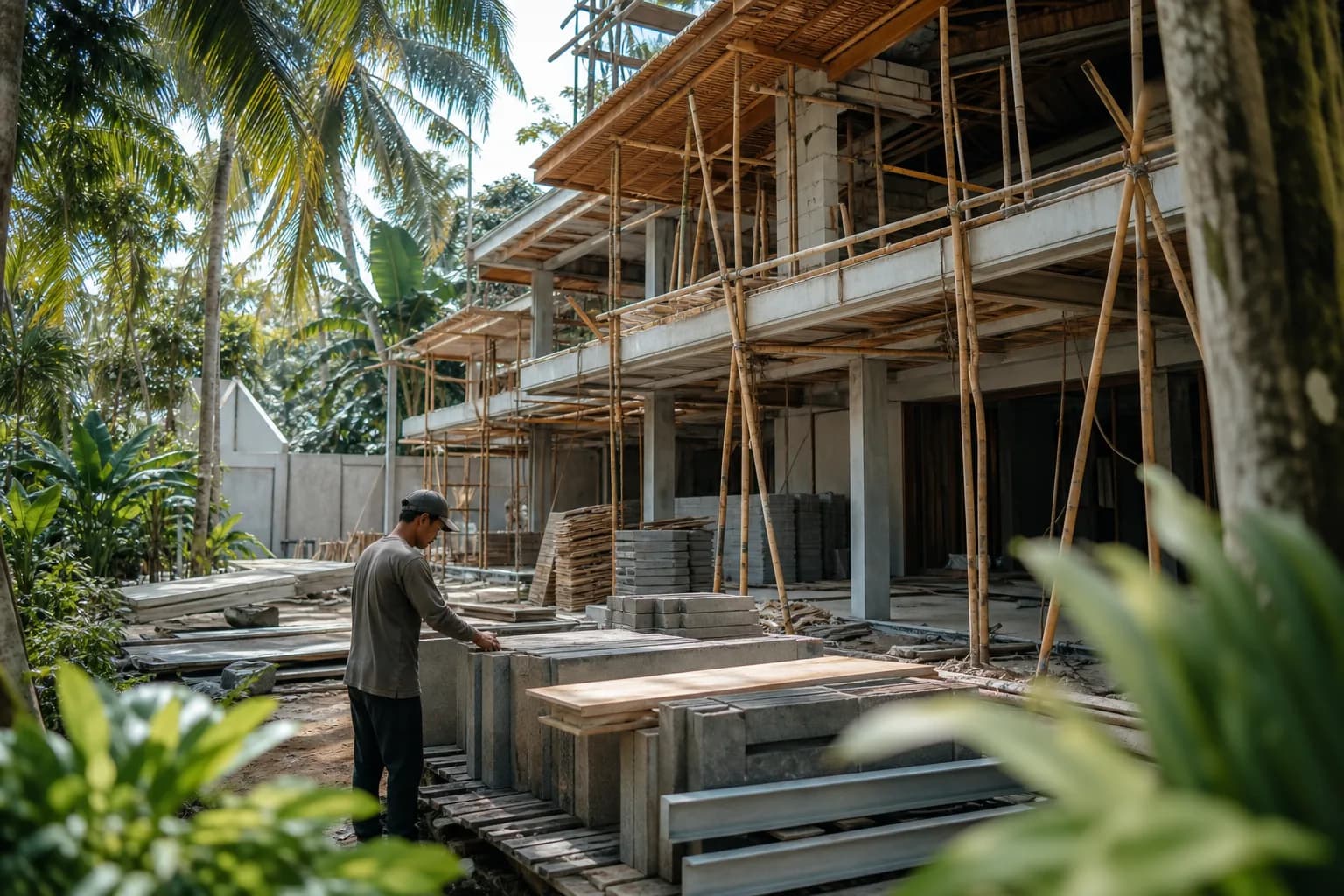
The Hidden Cost of Substituted Materials: When Your Bali Villa Isn’t Built With What You Paid For
Material substitution fraud represents one of the most financially damaging yet difficult-to-detect risks in Bali villa construction. Unlike visible construction defects, material fraud occurs behind walls, beneath floors, and within structural elements—often remaining undetected until catastrophic failure occurs years after completion. When a contractor substitutes Grade 40 concrete with Grade 25, replaces specified stainless steel reinforcement with standard rebar in coastal environments, or swaps imported waterproofing membranes with local alternatives, buyers pay premium prices for substandard buildings that deteriorate rapidly in Bali’s aggressive tropical climate. The financial impact extends beyond the initial fraud: premature structural failure, accelerated corrosion, water infiltration damage, and complete system replacements within 5-7 years instead of the expected 25-30 year lifespan. For foreign buyers investing $300,000-$800,000 in Bali villa construction, material substitution can reduce actual building value by 40-60% while creating liability exposure and safety risks that emerge only after warranties expire and contractors have moved on to new projects.
Engineering Analysis: How Material Substitution Compromises Structural Integrity in Tropical Environments
Material substitution fraud in Bali construction exploits the information asymmetry between buyers and contractors, combined with limited third-party verification infrastructure. The technical reality is that Bali’s coastal tropical environment—characterized by 80-95% humidity, salt-laden air, intense UV exposure, heavy rainfall (2,000-3,000mm annually), and seismic activity—demands specific material specifications that significantly exceed temperate climate standards. When contractors substitute materials, they’re not simply providing “equivalent alternatives”—they’re fundamentally compromising the building’s ability to withstand environmental stressors.
Critical Material Categories Vulnerable to Substitution
Concrete composition and grade: Specified Grade 40 concrete (40 MPa compressive strength) costs approximately IDR 1,200,000-1,400,000 per cubic meter, while Grade 25 costs IDR 850,000-950,000. For a typical 250m² villa requiring 80-100m³ of structural concrete, this substitution saves contractors IDR 28-45 million ($1,800-$2,900 USD) while reducing structural capacity by 37.5%. In seismic zones, this margin represents the difference between code compliance and structural failure during earthquake events. The substitution is virtually undetectable without laboratory testing of fresh concrete samples—testing that occurs in fewer than 15% of private villa projects in Bali.
Steel reinforcement specifications: Coastal construction within 2km of the ocean requires epoxy-coated or stainless steel reinforcement to prevent chloride-induced corrosion. Standard carbon steel rebar costs IDR 12,000-14,000 per kilogram, while epoxy-coated rebar costs IDR 22,000-26,000, and 316-grade stainless steel costs IDR 45,000-55,000 per kilogram. A typical villa uses 4,000-6,000kg of reinforcement steel. Substituting standard rebar for specified corrosion-resistant steel saves contractors IDR 40-246 million ($2,600-$15,900) but initiates corrosion processes that cause concrete spalling and structural degradation within 5-8 years instead of 30+ years with proper materials.
Waterproofing membrane systems: Tropical waterproofing requires multi-layer systems with specific elongation properties, UV resistance, and fungal resistance. Specified systems like Sika, BASF, or equivalent cost IDR 180,000-250,000 per square meter installed, while local alternatives cost IDR 65,000-95,000. For roof and foundation waterproofing totaling 350-450m², substitution saves IDR 40-70 million ($2,600-$4,500) but results in water infiltration, mold growth, and interior damage requiring complete system replacement within 3-5 years at costs exceeding the original specification.
Timber species and treatment: Structural and decorative timber specifications typically call for naturally durable species (teak, merbau, bangkirai) or properly treated alternatives with documented preservative retention levels. Untreated or improperly treated timber costs 40-60% less but experiences rapid fungal decay, termite damage, and structural failure in Bali’s climate. The substitution is particularly common in roof structures, pergolas, and decking where visual inspection cannot determine treatment adequacy.
Electrical and plumbing components: Specified European or Japanese-standard electrical components, GFCI protection, and corrosion-resistant plumbing fixtures cost 3-5 times more than local alternatives. Contractors frequently substitute lower-grade components that meet visual expectations but lack safety certifications, proper grounding, and corrosion resistance—creating fire risks and system failures within 2-4 years.
The Verification Gap in Bali’s Construction Ecosystem
Unlike developed markets with mandatory third-party inspections and material testing, Bali’s private villa construction operates with minimal oversight. Building permits (IMB) focus on zoning compliance and structural drawings but include no material verification requirements. The absence of standardized inspection protocols, combined with language barriers and technical knowledge gaps among foreign buyers, creates an environment where material substitution occurs in an estimated 60-75% of projects using non-specialized contractors.
Hidden Risks: What Buyers Miss When Evaluating Material Authenticity
The specification vs. procurement disconnect: Most buyers review and approve material specifications during design phases, assuming these specifications will be honored during construction. However, procurement typically occurs through contractor-controlled supply chains with no buyer visibility. Without item-by-item delivery verification, photographic documentation, and laboratory testing, buyers have no confirmation that specified materials actually arrived on site. The critical error is treating specifications as binding commitments rather than aspirational documents requiring active verification.
Visual similarity masking performance differences: Material substitution succeeds because inferior alternatives often appear identical to specified materials. Grade 25 and Grade 40 concrete look identical when poured. Standard rebar and epoxy-coated rebar are visually similar unless inspected closely. Local waterproofing membranes mimic the appearance of premium systems. Buyers conducting site visits see materials that “look right” without understanding that performance characteristics—compressive strength, corrosion resistance, elongation properties, UV stability—are invisible to visual inspection. This false confidence prevents buyers from implementing verification protocols until problems emerge years later.
The timing vulnerability in construction sequencing: Critical materials are installed during phases when buyers are least likely to be present: foundation concrete pours at 6:00 AM, reinforcement steel placement before concrete encasement, waterproofing membrane installation before tile covering, structural timber before ceiling installation. Contractors exploit this timing gap, knowing that once materials are covered or encased, verification becomes impossible without destructive testing. Buyers who visit weekly or monthly miss the 2-4 hour windows when material verification must occur.
Supplier documentation fraud: Sophisticated material substitution includes falsified delivery documentation, fake manufacturer certificates, and counterfeit product labeling. Buyers requesting material certifications receive professional-looking documents that appear legitimate but represent materials never delivered to the site. Without direct verification with manufacturers or independent laboratory testing, these documents provide false assurance while substitution continues undetected.
Step-by-Step Verification Protocol: Protecting Against Material Substitution
Phase 1: Pre-Construction Documentation and Control Systems
Step 1 – Establish material specification baseline: Create a detailed material specification document that includes not just product names but specific technical characteristics: concrete grade with minimum compressive strength, steel reinforcement with corrosion protection type and coating thickness, waterproofing with elongation percentages and UV resistance ratings, timber with species and preservative treatment specifications. Include manufacturer product codes and technical data sheets. This document becomes the verification standard against which all deliveries are measured.
Step 2 – Implement procurement transparency requirements: Contract terms must require contractor to provide: (1) supplier quotations showing specific products before procurement, (2) 48-hour advance notice of all material deliveries, (3) delivery documentation including supplier invoices with product specifications, (4) manufacturer certificates of conformity for all structural materials, (5) photographic documentation of delivered materials with date stamps before installation. Make payment schedules contingent on documentation delivery—withhold 15-20% of each progress payment until material verification is complete for that construction phase.
Step 3 – Arrange independent testing protocols: Engage independent materials testing laboratory (such as those affiliated with Udayana University or private testing facilities in Denpasar) to conduct: concrete cylinder testing for every pour over 5m³, reinforcement steel sample testing for coating thickness and composition, waterproofing membrane sample testing for elongation and thickness. Budget IDR 15-25 million ($970-$1,600) for comprehensive testing across a typical villa project—representing 0.5-0.8% of construction cost but providing verification worth 10-15% of project value.
Phase 2: Active Construction Monitoring and Real-Time Verification
Step 4 – Implement delivery verification procedures: For every major material delivery, require contractor to notify buyer or buyer’s representative 24 hours in advance. Verification includes: photographing delivered materials with packaging and labels visible, checking quantities against specifications, verifying manufacturer markings and product codes, documenting delivery truck and supplier information, taking material samples for testing when applicable. For buyers not residing in Bali, engage a construction management service with material verification protocols rather than relying on contractor self-reporting.
Step 5 – Conduct pre-installation inspections: Critical materials must be inspected immediately before installation, during the narrow window when verification is possible: concrete testing before pouring (slump test, cylinder samples), reinforcement steel inspection before concrete encasement (coating verification, spacing confirmation), waterproofing membrane inspection before tile installation (thickness measurement, seam verification), structural timber inspection before enclosure (species confirmation, treatment verification). Create photographic records with date stamps and GPS coordinates for every inspection.
Step 6 – Perform laboratory testing on schedule: Concrete cylinder testing occurs at 7 days and 28 days after pouring—ensure samples are properly prepared, labeled, and delivered to testing laboratory. Steel reinforcement samples should be tested for coating thickness (minimum 200 microns for epoxy coating) and composition. Waterproofing samples should be tested for thickness (minimum 2mm for quality systems) and elongation (minimum 300% for tropical applications). Maintain testing documentation as permanent project records.
Phase 3: Post-Installation Verification and Documentation
Step 7 – Compile material verification portfolio: Create comprehensive documentation including: all supplier invoices and delivery receipts, manufacturer certificates, laboratory test results, photographic documentation of materials before installation, inspection reports, and any discrepancy records. This portfolio serves as proof of material compliance for future sale, insurance claims, or legal disputes. Store digital copies in multiple locations with blockchain timestamping for authenticity verification.
Realistic Cost and Time Investment for Comprehensive Material Verification
Implementing robust material verification protocols requires dedicated budget allocation and time investment that most buyers underestimate. Direct costs for comprehensive verification on a typical 250m² villa include: independent materials testing laboratory fees (IDR 15-25 million / $970-$1,600), on-site inspection services if buyer is not Bali-based (IDR 30-45 million / $1,940-$2,900 for 15-20 site visits), documentation and photography services (IDR 8-12 million / $520-$775), and contingency for additional testing if discrepancies are discovered (IDR 10-15 million / $650-$970). Total verification investment ranges from IDR 63-97 million ($4,080-$6,275), representing 2.1-3.2% of a IDR 3 billion construction budget.
Time investment requirements include: initial specification documentation (8-12 hours), procurement review and approval (6-10 hours across project duration), delivery verification site visits (2-3 hours per major delivery, 15-20 deliveries total), laboratory coordination and sample management (10-15 hours), and documentation compilation (12-18 hours). For buyers managing verification personally, expect 80-120 hours across a 6-8 month construction timeline. For buyers engaging professional construction management with material verification protocols, the time investment reduces to 15-25 hours for review and approval of verification reports.
The cost-benefit analysis is compelling: investing 2-3% of construction budget in verification protocols protects against material substitution that typically reduces building value by 15-25% and creates repair costs of 30-50% of original construction cost within 5-10 years. A IDR 75 million verification investment protects a IDR 3 billion construction project from IDR 450-750 million in value loss and future repair costs—a 6-10x r
 3127 m²9 month(s)from 177.000 USD
Mukunda
 1from 198.000 USD
Private: Haridas Villas
 4344 m²16 month(s)from 290.000 USD
Radha
 3173 m²6 month(s)from 125.000 USD
TALA FOUR
 3124 m²6 month(s)from 123.000 USD
TALA 8
 3104 m²11 month(s)from 99.000 USD
TALA 100
 164 m²7 month(s)from 79.000 USD
Private: Haridas Villas, Tegallalang
 2144 m²11 month(s)from 104.000 USD
Narayana
 3180 m²7 month(s)from 142.000 USD
Vasudeva

Want to calculate?
 172 m²8 month(s)from 120.000 USD
Keshava
164 m²7 month(s)from 79.000 USDTALA TWO
Start With Real Numbers, Not Guesses
Before buying land or finalizing a design, check the realistic build cost range for your project in Bali.
Our team reviews your inputs and gives a grounded estimate.
Available lands
 1100 m²8 min$ 280419Bali, Ungasan
 680 m²15 min$ 110751Bali, Pererenan
 2850 m²15 min$ 315887Bali, Tabanan
 700 m²15 min$ 162500Bali, Tabanan
 5000 m²8 min$ 424877Bali, Ungasan
 1410 m²15 min$ 390702Bali, Tabanan
 2000 m²5 min$ 738916Bali, Ungasan
 200 m²5 min$ 59113Bali, Bukit
 1350 m²5 min$ 283467Bali, Pecatu
 1000 m²10 min$ 303571Bali, Tabanan
 5028 m²10 min$ 361000Bali, Ubud
 260 m²5 min$ 51872Bali, Kedungu
 928 m²15 min$ 910123Bali, Pererenan
 2400 m²7 min$ 496552Bali, Canggu
 1000 m²10 min$ 230911Bali, Kerobokan
Essential Bali build & buy guides
- Bali villa construction cost per m² in 2026
- How much will your villa cost? Calculator
- Building a villa in Bali: the complete guide
- Buying land in Bali: step-by-step for foreigners
- Bali villa investment: yields, risks, returns
- Leasehold vs freehold: what foreigners can own
- Construction defect liability & 10-year warranty
- Bali building codes and construction standards
Related guides

Why a Cheap Bali Leasehold Is Cheap: Pricing Red Flags Every Buyer Should Decode
Suspiciously cheap Bali leaseholds are priced low for a reason: short remaining terms, forbidden zoning, missing road access, disputes or weak contracts. How to decode the discount before you pay for it.
8 min read
Fake Compliance and Licensing Agents in Bali: The 2026 Paperwork Scam and How to Verify Documents
Forged certificates, permit fixers and fake notaries: how Bali's paperwork scams work in 2026 and how to verify every property document at its government source.
7 min read
Buying a Bali Villa from Instagram: Phantom Listings, Render-Only Projects and How to Verify
Instagram is Bali's biggest property shop window and its least verified. How phantom listings, render-only projects and cloned developer accounts work — and the verification steps that expose them.
7 min read