Kerobokan Title Deed Forgery: IMB Verification Costs in Bali
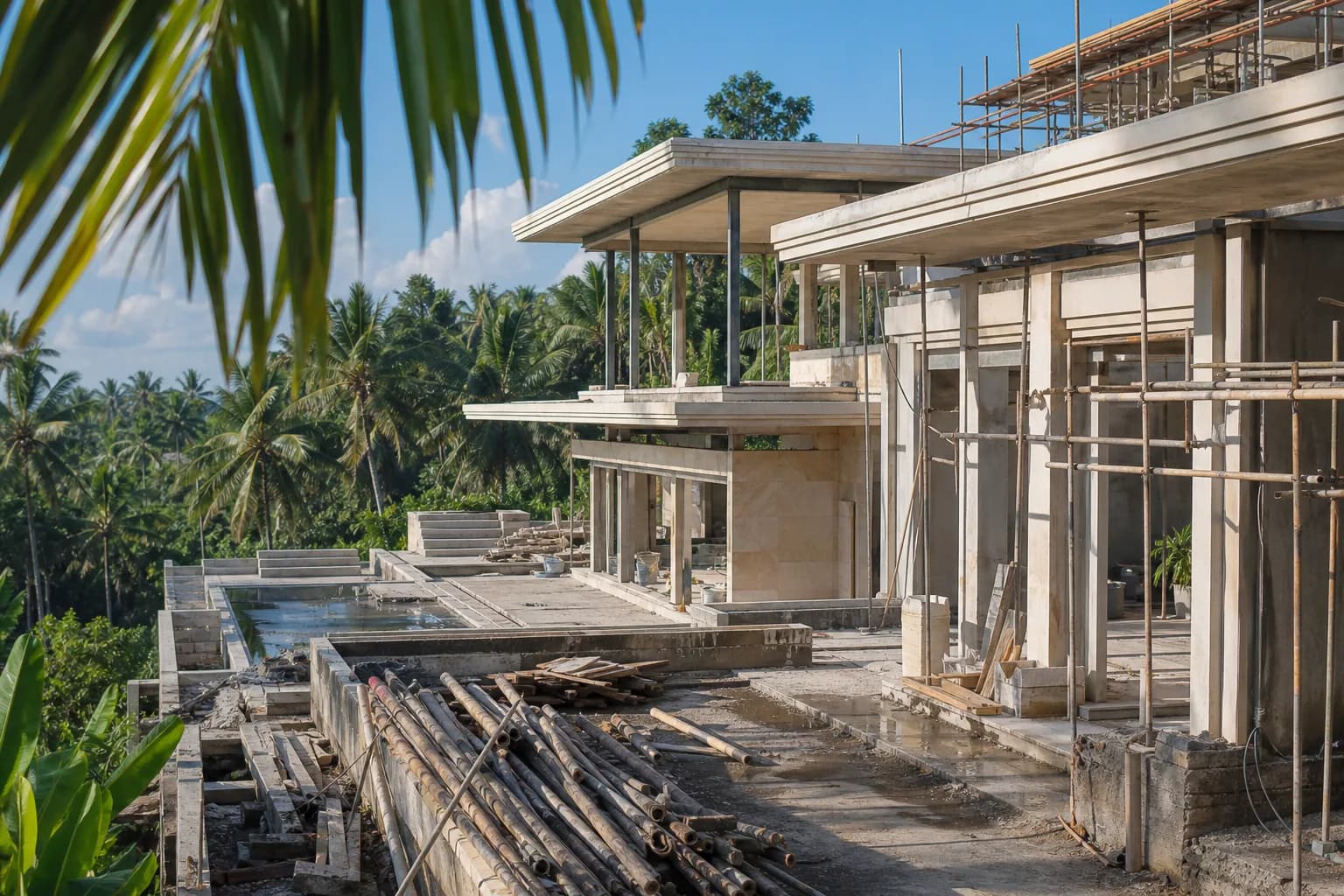
The Hidden Cost of Kerobokan’s IMB Forgery Problem: Why Cross-Verification Isn’t Optional
Kerobokan has emerged as Bali’s cautionary tale for construction permit fraud. Between 2022 and 2025, at least 17 documented cases of forged IMB (Izin Mendirikan Bangunan) permits surfaced in this densely developed area, with foreign buyers discovering mid-construction that their building permits were fabricated documents. The financial damage extends beyond the 45-85 million IDR typical cross-verification cost—buyers faced complete construction halts, demolition orders, and legal fees exceeding 400 million IDR. What makes Kerobokan particularly vulnerable is its patchwork of older land titles, rapid development pressure, and a sophisticated network of document forgers who exploit the gap between banjar-level approvals and official Dinas PUPR permits. For construction companies like Teville, this reality transforms IMB verification from administrative formality into critical risk mitigation that determines whether a villa project survives its first inspection.
Technical Architecture of IMB Forgery in Kerobokan: Understanding the Document Chain
The IMB forgery problem in Kerobokan operates at the intersection of legitimate bureaucratic complexity and deliberate fraud. Understanding the technical verification process requires mapping the complete permit authentication chain that forgers attempt to circumvent.
The Three-Layer IMB Authentication System
Legitimate IMB permits in Badung Regency (which governs Kerobokan) exist within a three-tier verification structure. First, the Dinas Penanaman Modal dan Pelayanan Terpadu Satu Pintu (DPMPTSP) issues the actual IMB through their digital SIMBG system, which generates unique QR codes and registration numbers linked to specific land certificates. Second, the Dinas Pekerjaan Umum dan Penataan Ruang (PUPR) maintains the master database of approved building plans, including structural calculations and site plan approvals. Third, the local banjar provides community-level endorsement, which is required but not sufficient for legal construction.
Forgers in Kerobokan typically exploit the third layer. They produce convincing banjar approval letters with authentic-looking stamps, then create fabricated IMB documents that reference real DPMPTSP formatting but contain invalid registration numbers. The sophistication has increased—recent forgeries include fake QR codes that redirect to cloned websites mimicking official government portals. When scanned with standard QR readers, these codes display permit information that appears legitimate to untrained eyes.
Why Kerobokan Became the Epicenter
Kerobokan’s vulnerability stems from specific geographic and administrative factors. The area contains numerous older land parcels with pre-digital era certificates (issued before 2015) that lack integrated database verification. Many properties sit in zones where RDTR (Rencana Detail Tata Ruang) regulations changed between 2019-2023, creating confusion about current building coefficients. This regulatory flux provides cover for forgers who claim “special approvals” or “transitional permits.”
The construction density compounds the problem. With building sites often separated by less than 3 meters, visual confirmation of neighboring permits becomes difficult. Forgers exploit this by showing buyers “similar projects nearby” that may themselves be operating on questionable permits, creating a false sense of normalcy.
The Engineering Implications of Forged IMB
From a construction engineering perspective, forged IMB permits create cascading technical risks beyond legal exposure. Legitimate IMB approval requires structural engineering review by certified Indonesian engineers (IABI members) who verify foundation calculations, seismic load factors, and tropical climate adaptations. Forged permits bypass this review, meaning the building design may contain fundamental engineering flaws.
Teville’s experience across completed villa projects demonstrates that proper IMB verification catches critical issues: inadequate foundation depth for Bali’s water table, missing expansion joints for concrete thermal movement, and non-compliant septic system designs. When construction proceeds on forged permits, these engineering deficiencies only surface during structural failure or when legitimate inspectors eventually arrive.
The soil conditions in Kerobokan—predominantly clay with high water retention—require specific foundation engineering that legitimate IMB review mandates. Forged permits often show generic foundation plans copied from other projects, ignoring site-specific soil bearing capacity tests. This creates long-term structural settlement risks that emerge 2-3 years post-construction, well after the forgery is discovered.
Hidden Risks Buyers Consistently Miss in Kerobokan IMB Verification
The most dangerous assumption buyers make is treating IMB verification as a simple document authentication task. The hidden risks operate at multiple levels that standard due diligence often misses.
The “Processed” vs “Approved” Language Trap
Forgers frequently present documents showing IMB applications “in process” or “under review,” accompanied by payment receipts to DPMPTSP. These receipts may be genuine—the application was indeed submitted—but the final IMB approval never materialized. Buyers see official payment documentation and assume completion. The critical verification step is confirming the final issuance certificate with embossed seals and director signatures, not just application receipts.
Banjar Letter Overreliance
Many buyers receive authentic banjar approval letters and mistakenly believe this constitutes sufficient building permission. While banjar endorsement is required, it represents only community acknowledgment, not legal construction authority. Kerobokan’s banjars have become more cautious after fraud cases, but their letters remain insufficient without corresponding DPMPTSP IMB approval. Some forgers even create fake banjar letters, knowing buyers won’t verify directly with banjar leadership.
The Notary Certification Illusion
Forged IMB documents often carry notary certifications (legalisasi) that authenticate the signature on the document—but not the document’s legitimacy. A notary confirms “this signature was made in my presence,” not “this permit is genuine.” Buyers see notary stamps and assume comprehensive verification occurred. This represents a fundamental misunderstanding of Indonesian notary scope, which is limited to signature witnessing, not permit validation.
Digital System Gaps
While Badung Regency implemented the SIMBG digital system in 2021, not all older IMB permits were retroactively entered. Forgers exploit this by claiming permits issued in 2019-2020 “predate the digital system” and therefore can’t be verified online. In reality, DPMPTSP maintains paper archives and can verify any permit issued since 2015 through direct office inquiry, but buyers often accept the “pre-digital” excuse without further investigation.
Step-by-Step IMB Cross-Verification Process for Kerobokan Properties
Comprehensive IMB verification in Kerobokan requires a systematic approach that addresses both document authentication and engineering validation. This process typically spans 3-4 weeks when conducted properly.
Step 1: Obtain Complete Document Package (Days 1-3)
Request from the seller: original IMB certificate, IMB application file with technical drawings, structural calculation reports, soil test results, environmental impact assessment (UKL-UPL or SPPL), and banjar recommendation letter. Insist on originals, not copies. Photograph the IMB certificate’s QR code, registration number, and issuance date. Note any discrepancies between the IMB-listed building specifications and actual site conditions.
Step 2: Direct DPMPTSP Verification (Days 4-8)
Visit the Badung DPMPTSP office in Mangupura with the IMB registration number. Request a Surat Keterangan IMB (IMB Confirmation Letter) that verifies the permit’s authenticity and current status. This costs approximately 50,000 IDR and takes 2-3 business days. Simultaneously, verify the permit through the SIMBG online portal using the QR code. Cross-reference that the online data matches the physical certificate exactly—any discrepancies indicate forgery.
Step 3: PUPR Technical File Review (Days 9-14)
Engage a licensed Indonesian structural engineer (IABI-certified) to review the approved building plans at Dinas PUPR. This costs 15-25 million IDR depending on building complexity. The engineer verifies that structural calculations meet SNI (Standar Nasional Indonesia) requirements for seismic zones, that foundation designs match soil conditions, and that the approved plans align with what was actually constructed. For Kerobokan properties, specific attention to groundwater management and septic system compliance is critical.
Step 4: Land Certificate Cross-Reference (Days 15-18)
Verify at BPN (Badan Pertanahan Nasional) that the land certificate number on the IMB matches the actual land title. Request a Surat Keterangan Pendaftaran Tanah (SKPT) that confirms no ownership disputes or encumbrances exist. This costs approximately 500,000 IDR. Forgers sometimes use legitimate IMB permits but attach them to different land parcels, creating a mismatch that only BPN cross-reference reveals.
Step 5: Banjar Physical Verification (Days 19-21)
Visit the local banjar office with the banjar recommendation letter. Confirm directly with banjar leadership that they issued the letter and that no community objections exist. Request a fresh confirmation letter (typically 1-2 million IDR in “administrative fees”). This step catches forged banjar letters and reveals any community disputes that could halt construction.
Step 6: Construction Compliance Audit (Days 22-28)
For existing structures, hire a construction auditor to verify that the built structure matches IMB-approved plans. This costs 20-35 million IDR for a typical villa. The audit identifies unpermitted additions, structural deviations, or building coefficient violations. Many Kerobokan properties have “creative” expansions beyond original IMB scope, creating legal vulnerabilities even when the base IMB is legitimate.
Companies like Teville integrate this verification process into pre-construction due diligence, treating it as non-negotiable risk mitigation rather than optional expense. The verification timeline can compress to 2-3 weeks when conducted by experienced teams with established government relationships, but rushing the process increases oversight risk.
Realistic Cost Breakdown: What IMB Cross-Verification Actually Costs in 2026
The total cost of comprehensive IMB cross-verification in Kerobokan ranges from 45-85 million IDR ($2,800-$5,300 USD) depending on property complexity and existing documentation quality. This breaks down across several service categories:
Legal Verification Services: 15-25 Million IDR
Indonesian property lawyers charge 15-25 million IDR for complete permit verification, including DPMPTSP confirmation, BPN cross-reference, and legal opinion letters. This includes multiple government office visits, document translation, and formal verification reports suitable for bank financing or insurance purposes.
Engineering Review: 15-30 Million IDR
IABI-certified structural engineers charge 15-20 million IDR for plan review and structural compliance verification for standard 2-3 bedroom villas. Complex multi-story structures or properties with swimming pools increase costs to 25-30 million IDR. This includes soil condition assessment, foundation adequacy review, and SNI compliance verification.
Construction Audit: 20-35 Million IDR
Physical construction audits for existing structures cost 20-25 million IDR for properties under 300 sqm, increasing to 30-35 million IDR for larger compounds. This includes detailed measurement verification, material quality assessment, and deviation documentation from approved plans.
Government Fees: 2-5 Million IDR
Direct government charges include DPMPTSP confirmation letters (50,000 IDR), BPN land certificate verification (500,000 IDR), banjar confirmation letters (1-2 million IDR), and various administrative stamps and copies (500,000-1 million IDR total).
Timeline Considerations
Standard verification requires 3-4 weeks. Expedited services (2-3 weeks) typically add 30-40% to costs. Properties with complications—ownership disputes, unpermitted additions, or missing documentation—can extend timelines to 6-8 weeks and increase costs by 50-100% as additional legal research and government liaison becomes necessary.
The cost must be weighed against the alternative: buyers who discovered forged IMB mid-construction faced average losses of 400-600 million IDR in legal fees, construction delays, permit re-application costs, and in worst cases, partial demolition expenses. The verification investment represents 7-12% of typical legal/remediation costs when forgery is discovered late.
Frequently Asked Questions: Kerobokan IMB Verification
Can I verify IMB authenticity online without visiting government offices?
Partial verification is possible through Badung’s SIMBG portal using the IMB QR code and registration number, but this only confirms digital record existence. Forgers create fake QR codes linking to cloned websites, so online verification must be supplemented with in-person DPMPTSP confirmation. The official portal is simbg.badungkab.go.id—any other domain is fraudulent. For properties with IMB issued before 2021, online records may be incomplete, requiring physical archive verification at DPMPTSP Mangupura. Budget 2-3 office visits for complete authentication, as initial inquiries often reveal documentation gaps requiring follow-up.
What happens if I discover my IMB is forged after construction has started?
Construction must halt immediately upon forgery discovery. Continuing builds criminal liability for the owner under Indonesian building code violations. The remediation path involves: (1) engaging a property lawyer to assess legal exposure, (2) filing a police report if fraud is suspected, (3) applying for legitimate IMB through proper chann
 172 m²8 month(s)from 120.000 USD
Keshava
 164 m²7 month(s)from 79.000 USD
TALA TWO
 4344 m²16 month(s)from 290.000 USD
Radha

Want to calculate?
 3104 m²11 month(s)from 99.000 USD
TALA 100
 3124 m²6 month(s)from 123.000 USD
TALA 8
 1from 198.000 USD
Private: Haridas Villas
 3180 m²7 month(s)from 142.000 USD
Vasudeva
 3173 m²6 month(s)from 125.000 USD
TALA FOUR
164 m²7 month(s)from 79.000 USDPrivate: Haridas Villas, Tegallalang
 3127 m²9 month(s)from 177.000 USD
Mukunda
 2144 m²11 month(s)from 104.000 USD
Narayana
Start With Real Numbers, Not Guesses
Before buying land or finalizing a design, check the realistic build cost range for your project in Bali.
Our team reviews your inputs and gives a grounded estimate.
Available lands
 3700 m²15 min$ 738177Bali, Tabanan
 585 m²8 min$ 165702Bali, Mengwi
 1158 m²12 min$ 291996Bali, Mengwi
 600 m²10 min$ 206897Bali, Canggu
 550 m²15 min$ 164594Bali, Mengwi
 1230 m²15 min$ 132543Bali, Tegallalang
 1950 m²7 min$ 150092Bali, Tabanan
 3800 m²15 min$ 100616Bali, Pererenan
 515 m²7 min$ 570813Bali, Canggu
 1000 m²5 min$ 350431Bali, Drupadi
 6000 m²10 min$ 1330049Bali, Kutuh South Bali
 700 m²8 min$ 165517Bali, Umalas
 2800 m²2 min$ 713793Bali, Kedungu
 2700 m²30 min$ 314224Bali, Sidemen
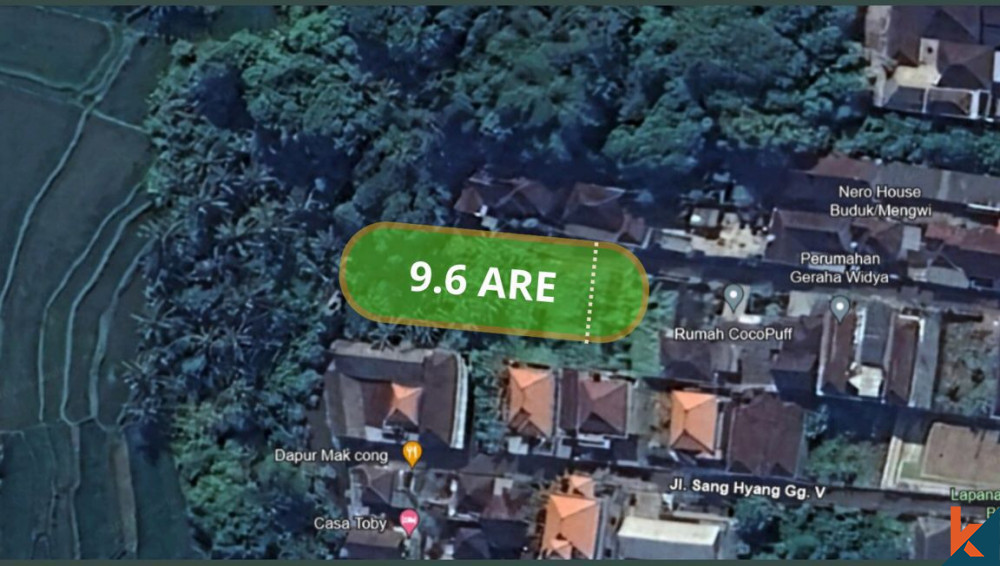 960 m²15 min$ 91034Bali, Mengwi
Essential Bali build & buy guides
- Bali villa construction cost per m² in 2026
- How much will your villa cost? Calculator
- Building a villa in Bali: the complete guide
- Buying land in Bali: step-by-step for foreigners
- Bali villa investment: yields, risks, returns
- Leasehold vs freehold: what foreigners can own
- Construction defect liability & 10-year warranty
- Bali building codes and construction standards
Related guides

Why a Cheap Bali Leasehold Is Cheap: Pricing Red Flags Every Buyer Should Decode
Suspiciously cheap Bali leaseholds are priced low for a reason: short remaining terms, forbidden zoning, missing road access, disputes or weak contracts. How to decode the discount before you pay for it.
8 min read
Fake Compliance and Licensing Agents in Bali: The 2026 Paperwork Scam and How to Verify Documents
Forged certificates, permit fixers and fake notaries: how Bali's paperwork scams work in 2026 and how to verify every property document at its government source.
7 min read
Buying a Bali Villa from Instagram: Phantom Listings, Render-Only Projects and How to Verify
Instagram is Bali's biggest property shop window and its least verified. How phantom listings, render-only projects and cloned developer accounts work — and the verification steps that expose them.
7 min read