Kerobokan Septic Tank Regulations Groundwater Liability Bali
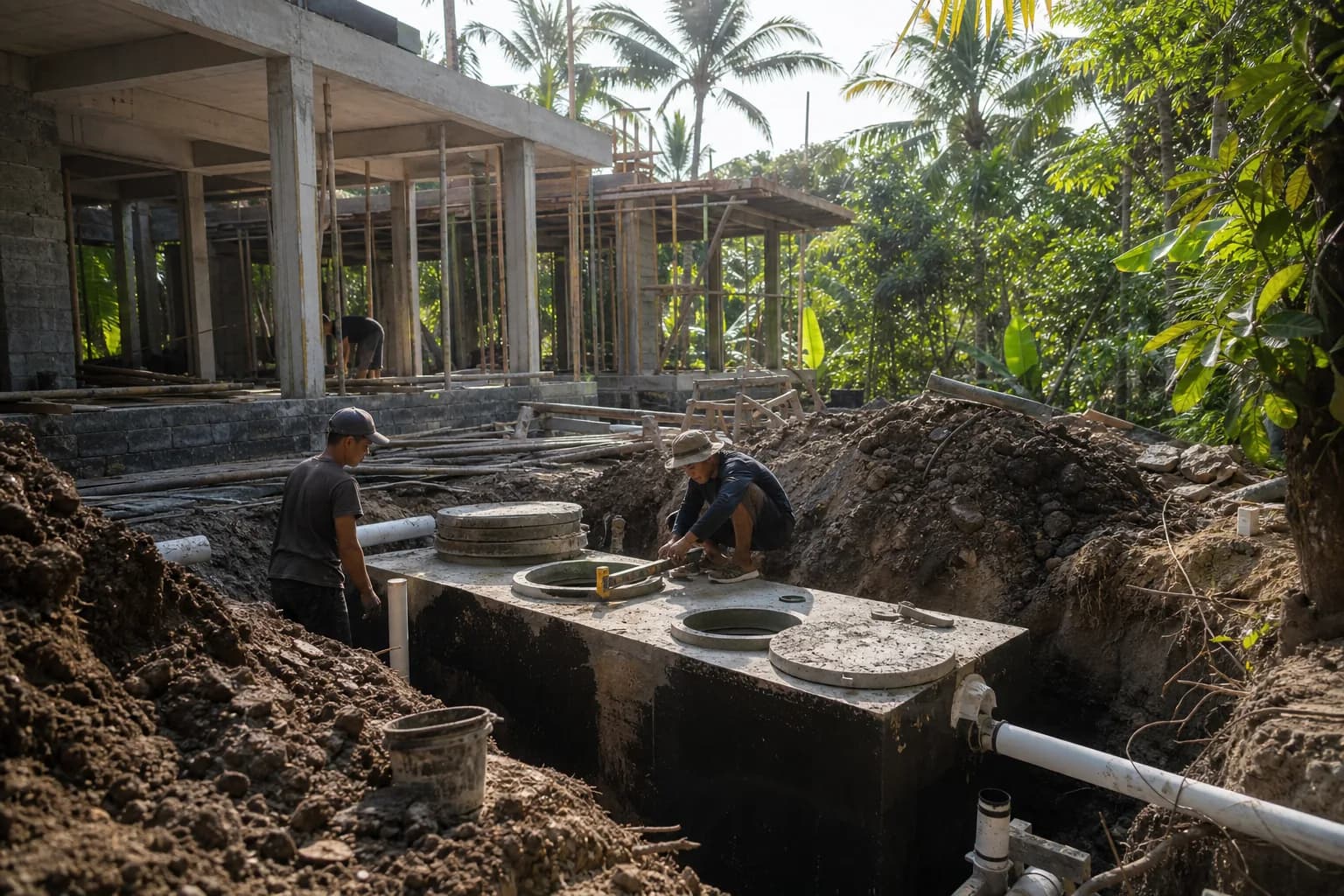
Kerobokan Septic Tank Regulations: Groundwater Contamination Liability Bali
Kerobokan’s rapid villa development has created a critical intersection between construction practices and environmental liability. Property owners face potential legal exposure when improperly designed septic systems contaminate neighboring groundwater sources—a risk amplified by Kerobokan’s high water table, dense construction patterns, and proximity to agricultural irrigation wells. Under Indonesia’s PerMenLH/BPLH No. 11/2025 wastewater standards and Bali’s provincial environmental regulations, villa owners can be held financially liable for groundwater pollution traced to their septic infrastructure. This liability extends beyond construction phase into long-term property ownership, making compliant septic design a legal necessity rather than optional upgrade.
Technical Framework: Septic Regulations and Contamination Pathways in Kerobokan
Kerobokan’s geological profile creates unique contamination risks that standard septic designs fail to address. The area’s shallow water table—often 2-4 meters below surface in wet season—means conventional septic tanks with bottom-discharge leach fields directly inject untreated effluent into groundwater aquifers. This becomes legally actionable when neighboring properties using shallow wells (sumur) for irrigation or domestic use detect bacterial contamination traceable to your property.
PerMenLH/BPLH No. 11/2025 establishes enforceable quality standards for domestic wastewater discharge: BOD (Biochemical Oxygen Demand) below 30 mg/L, TSS (Total Suspended Solids) below 30 mg/L, and total coliform below 3,000 MPN/100mL. Traditional single-chamber concrete septic tanks achieve only 30-40% BOD reduction—far below compliance thresholds. When this inadequately treated effluent reaches groundwater through permeable volcanic soils common in Kerobokan, contamination spreads laterally through aquifer systems, potentially affecting properties 50-100 meters away.
The legal liability framework operates on three levels. First, environmental damage claims under Law No. 32/2009 on Environmental Protection allow affected parties to seek compensation for groundwater contamination, with burden of proof shifting to the polluter once contamination is documented. Second, Bali’s Provincial Regulation (Perda) on Environmental Management requires property owners to prevent pollution that degrades neighboring land use—violation triggers administrative sanctions and mandatory remediation at owner expense. Third, civil liability under Indonesian tort law enables neighbors to claim damages for reduced property value, health impacts, or loss of water source functionality.
Kerobokan’s municipal infrastructure transition adds regulatory complexity. The government’s mains sewerage expansion program prioritizes high-density areas, but connection timelines remain uncertain—properties may wait 3-7 years for access. During this interim period, property owners must maintain compliant on-site treatment systems. The regulation doesn’t exempt properties awaiting connection; full compliance with discharge standards applies immediately upon occupancy permit issuance.
Engineering solutions for Kerobokan’s conditions require multi-stage treatment systems. Compliant designs typically incorporate: three-chamber septic tanks with minimum 3,000-liter capacity for standard villas, anaerobic baffled reactors for primary treatment, aerobic biofilter chambers using volcanic media for secondary treatment, and elevated subsurface infiltration systems positioned above seasonal high water table. The infiltration component must include 15-20cm gravel beds with perforated distribution pipes, wrapped in geotextile to prevent soil intrusion, with minimum 1.5-meter vertical separation from groundwater.
Soil percolation testing becomes legally critical in Kerobokan. The standard percolation test (perc test) measures infiltration rates to size leach fields appropriately—but Kerobokan’s variable soil composition (volcanic ash layers interspersed with clay lenses) creates localized impermeability. A perc test showing 25mm/hour infiltration in dry season may drop to 5mm/hour during monsoon when clay layers saturate. Undersized infiltration systems cause surface ponding and preferential flow paths directly to groundwater, creating the contamination pathway that triggers liability.
Hidden Risks: What Property Buyers Miss in Kerobokan Septic Compliance
Most villa purchase agreements in Kerobokan include septic systems as installed infrastructure, but rarely specify treatment capacity or discharge quality compliance. Buyers assume existing systems meet regulations—a dangerous presumption. Properties built 2015-2023 typically feature single-chamber tanks designed to pre-2025 standards, now legally inadequate. The liability transfers to new owners upon title transfer, meaning you inherit contamination risk from previous construction shortcuts.
Neighboring property density amplifies exposure. In Kerobokan’s villa clusters, properties often sit 3-5 meters apart with shared aquifer systems. A contaminated well on adjacent property can be forensically traced to your septic discharge through bacterial DNA analysis and hydrogeological modeling—testing methods increasingly used in environmental litigation. The financial exposure extends beyond remediation costs to include neighbor’s well replacement, alternative water supply during remediation (often 6-12 months), property value diminution claims, and legal fees.
Construction phase documentation gaps create liability uncertainty. Many contractors install septic systems without engineered drawings, soil testing reports, or discharge quality certifications. When contamination claims arise years later, absence of compliance documentation shifts legal presumption against the property owner. You cannot prove your system was properly designed for site conditions, making defense against liability claims nearly impossible.
The temporal dimension of contamination liability catches owners unprepared. Groundwater contamination may not manifest for 2-4 years post-construction as pollutants gradually accumulate in aquifer systems. By the time neighboring wells show contamination, you’ve already occupied the property, potentially hosted guests, and established operational patterns—all while unknowingly generating environmental damage that becomes legally actionable when detected.
Step-by-Step Compliance Process for Kerobokan Septic Systems
Achieving verifiable compliance begins during land due diligence, before construction contracts are signed. Commission a hydrogeological assessment documenting seasonal water table depth, soil percolation rates across wet and dry seasons, and proximity to neighboring water sources. This baseline data—costing $800-1,200 for Kerobokan properties—becomes your legal foundation proving site-specific design requirements were identified and addressed.
Phase 1: Engineering Design (Pre-Construction)
Engage a wastewater engineer licensed in Indonesia (not just a general contractor) to design a treatment system meeting PerMenLH/BPLH No. 11/2025 discharge standards for your specific soil conditions and water table depth. The design must include hydraulic calculations proving adequate retention time (minimum 48 hours in septic chambers), biofilter sizing based on projected daily wastewater volume (typically 150-200 liters per bedroom), and infiltration system capacity verified against worst-case percolation rates. Expect engineering fees of $1,500-2,500 for comprehensive designs including compliance calculations.
Phase 2: Permit Documentation
Submit the engineered septic design as part of your IMB (building permit) application. Bali’s DPMPTSP (investment and licensing agency) now requires wastewater management plans for new construction, though enforcement rigor varies by district. Include soil testing reports, water table documentation, and treatment system specifications. This documentation creates legal record that your system was designed for compliance—critical evidence if future contamination claims arise.
Phase 3: Construction Verification
Implement third-party inspection at three critical stages: foundation excavation (verify water table depth matches design assumptions), tank installation (confirm chamber volumes, baffle placement, and inlet/outlet elevations), and infiltration system construction (validate gravel specifications, pipe perforation patterns, and geotextile installation). Photographic documentation with GPS coordinates and timestamps provides verifiable proof of compliant construction. Budget $600-900 for independent inspection services across these milestones.
Phase 4: Performance Testing
Before occupancy, conduct effluent quality testing at the system discharge point. Collect samples after 30-day stabilization period (system operating with typical wastewater loads) and test for BOD, TSS, and coliform levels at accredited laboratories. Bali has three certified environmental testing labs; analysis costs $200-350 per sample set. Passing results—meeting PerMenLH standards—should be documented in your property compliance file.
Phase 5: Ongoing Monitoring
Establish annual maintenance protocol including septic pumping (every 18-24 months for residential villas), biofilter media inspection, and biennial effluent quality testing. Maintain service records and testing results as ongoing compliance documentation. If contamination claims arise, this maintenance history demonstrates responsible ownership and system operation within design parameters.
Realistic Cost Ranges for Compliant Kerobokan Septic Systems
Compliant multi-stage treatment systems cost significantly more than traditional single-chamber tanks, but represent essential liability protection. For a standard 3-bedroom villa in Kerobokan, expect these ranges:
- Basic compliant system (three-chamber septic + biofilter + elevated infiltration): $4,500-6,800 installed
- Advanced treatment system (ABR + aerobic biofilter + subsurface drip irrigation): $7,200-10,500 installed
- Premium zero-discharge system (membrane bioreactor + UV disinfection for irrigation reuse): $12,000-16,500 installed
These costs include engineering design, materials meeting Indonesian SNI standards, skilled installation labor, and initial performance testing. Compare this to traditional single-chamber tanks ($1,800-2,500) that create contamination liability exposure potentially exceeding $25,000-50,000 in remediation and legal costs if groundwater contamination is proven.
Retrofitting existing non-compliant systems on occupied properties costs 30-40% more than new construction installation due to access constraints, landscaping restoration, and operational disruption. For properties built 2015-2020 with inadequate septic systems, budget $6,500-9,500 for compliant system upgrades including temporary wastewater management during construction.
Connection to government mains sewerage, when available, involves $2,800-4,200 in connection fees, internal plumbing modifications, and pump station installation (required for properties below sewer main elevation). Monthly sewerage service fees add $15-25 to operational costs, but eliminate long-term contamination liability and maintenance requirements.
Frequently Asked Questions: Kerobokan Septic Compliance and Liability
Can I be held liable for groundwater contamination from a septic system installed by the previous owner?
Yes. Environmental liability in Indonesia follows the property, not the original polluter. Under Law No. 32/2009, current property owners are responsible for ongoing pollution from on-site infrastructure regardless of who installed it. When purchasing existing villas in Kerobokan, commission septic system inspections and effluent quality testing before closing. If the system fails compliance standards, negotiate remediation costs into the purchase price or require seller-funded upgrades as closing condition. Without this due diligence, you assume full liability for contamination that may have been occurring for years before your ownership.
How do authorities or neighbors prove my septic system caused their groundwater contamination?
Contamination tracing uses three methods increasingly common in Bali environmental cases. First, bacterial source tracking through DNA analysis identifies human-specific pathogens distinguishing septic contamination from agricultural runoff. Second, hydrogeological modeling maps groundwater flow directions from your property to affected wells, establishing contamination pathway. Third, chemical tracer studies using fluorescent dyes injected into your septic system demonstrate direct hydraulic connection to contaminated wells. These forensic methods provide legally admissible evidence. Defense requires documented proof your system meets discharge standards—why performance testing and maintenance records are critical.
What’s the actual enforcement risk in Kerobokan—do authorities actively pursue septic violations?
Enforcement occurs through two channels with different triggers. Government environmental agencies (BLH – Badan Lingkungan Hidup) conduct reactive investigations following contamination complaints from affected neighbors or community groups. These investigations can result in administrative sanctions, mandatory remediation orders, and operational suspensions until compliance is achieved. More commonly, enforcement comes through civil litigation when neighbors file contamination claims seeking damages. Kerobokan’s villa density and increasing property values make contamination disputes more frequent—legal precedents from 2023-2025 show courts awarding $15,000-40,000 in damages for proven groundwater contamination cases. The risk isn’t hypothetical; it’s actuarial.
If I’m planning to connect to mains sewerage eventually, do I still need a compliant septic system now?
Absolutely. Bali’s sewerage expansion timeline is uncertain—projected connection dates often extend 3-5 years beyond initial estimates due to funding constraints and construction delays. During this interim period, your property must maintain compliant on-site treatment. Operating a non-compliant system while awaiting connection doesn’t exempt you from liability if contamination occurs. Additionally, properties with documented environmental violations may face complications in sewerage connection approval. The prudent approach: ins
 4344 m²16 month(s)from 290.000 USD
Radha
 3127 m²9 month(s)from 177.000 USD
Mukunda
 2144 m²11 month(s)from 104.000 USD
Narayana

Want to calculate?
 164 m²7 month(s)from 79.000 USD
TALA TWO
 3104 m²11 month(s)from 99.000 USD
TALA 100
 3180 m²7 month(s)from 142.000 USD
Vasudeva
 3124 m²6 month(s)from 123.000 USD
TALA 8
 1from 198.000 USD
Private: Haridas Villas
 172 m²8 month(s)from 120.000 USD
Keshava
164 m²7 month(s)from 79.000 USDPrivate: Haridas Villas, Tegallalang
 3173 m²6 month(s)from 125.000 USD
TALA FOUR
Start With Real Numbers, Not Guesses
Before buying land or finalizing a design, check the realistic build cost range for your project in Bali.
Our team reviews your inputs and gives a grounded estimate.
Available lands
 1700 m²10 min$ 632257Bali, Kuta
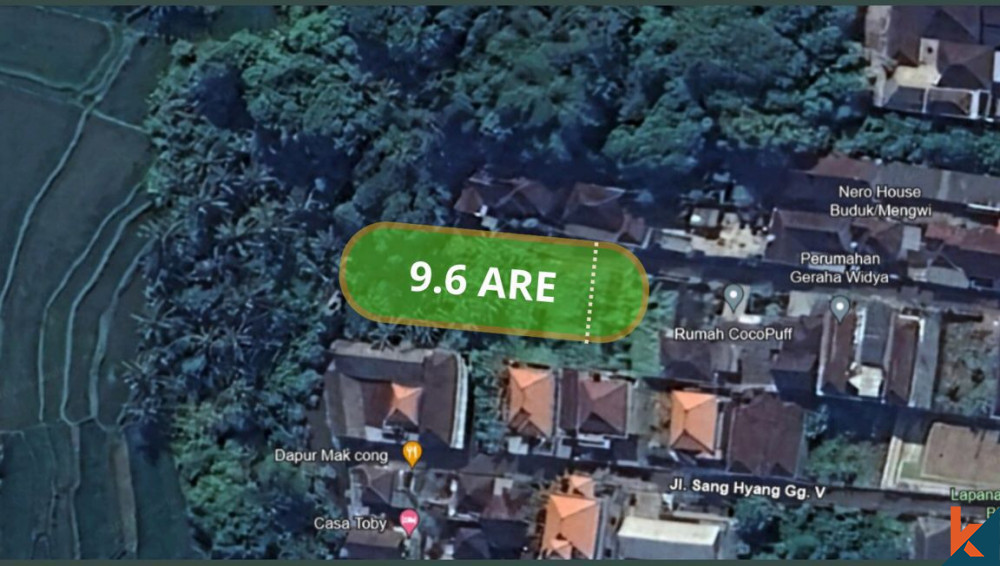 960 m²15 min$ 91034Bali, Mengwi
 2115 m²5 min$ 1139547Bali, Pererenan
 400 m²15 min$ 67192Bali, Tabanan
 1375 m²10 min$ 447044Bali, Canggu
 3800 m²15 min$ 100616Bali, Pererenan
 2500 m²5 min$ 609606Bali, Kedungu
 3100 m²15 min$ 257697Bali, Tegallalang
 750 m²15 min$ 187038Bali, Kerobokan
 800 m²5 min$ 295567Bali, Seseh
 1000 m²5 min$ 350431Bali, Drupadi
 615 m²15 min$ 113608Bali, Tabanan
 700 m²7 min$ 400000Bali, Canggu
 1533 m²5 min$ 165666Bali, Cepaka
 500 m²15 min$ 124692Bali, Kaba Kaba
Essential Bali build & buy guides
- Bali villa construction cost per m² in 2026
- How much will your villa cost? Calculator
- Building a villa in Bali: the complete guide
- Buying land in Bali: step-by-step for foreigners
- Bali villa investment: yields, risks, returns
- Leasehold vs freehold: what foreigners can own
- Construction defect liability & 10-year warranty
- Bali building codes and construction standards
Related guides

Why a Cheap Bali Leasehold Is Cheap: Pricing Red Flags Every Buyer Should Decode
Suspiciously cheap Bali leaseholds are priced low for a reason: short remaining terms, forbidden zoning, missing road access, disputes or weak contracts. How to decode the discount before you pay for it.
8 min read
Fake Compliance and Licensing Agents in Bali: The 2026 Paperwork Scam and How to Verify Documents
Forged certificates, permit fixers and fake notaries: how Bali's paperwork scams work in 2026 and how to verify every property document at its government source.
7 min read
Buying a Bali Villa from Instagram: Phantom Listings, Render-Only Projects and How to Verify
Instagram is Bali's biggest property shop window and its least verified. How phantom listings, render-only projects and cloned developer accounts work — and the verification steps that expose them.
7 min read