HVAC Condensate Drainage Failures in Bali Villas
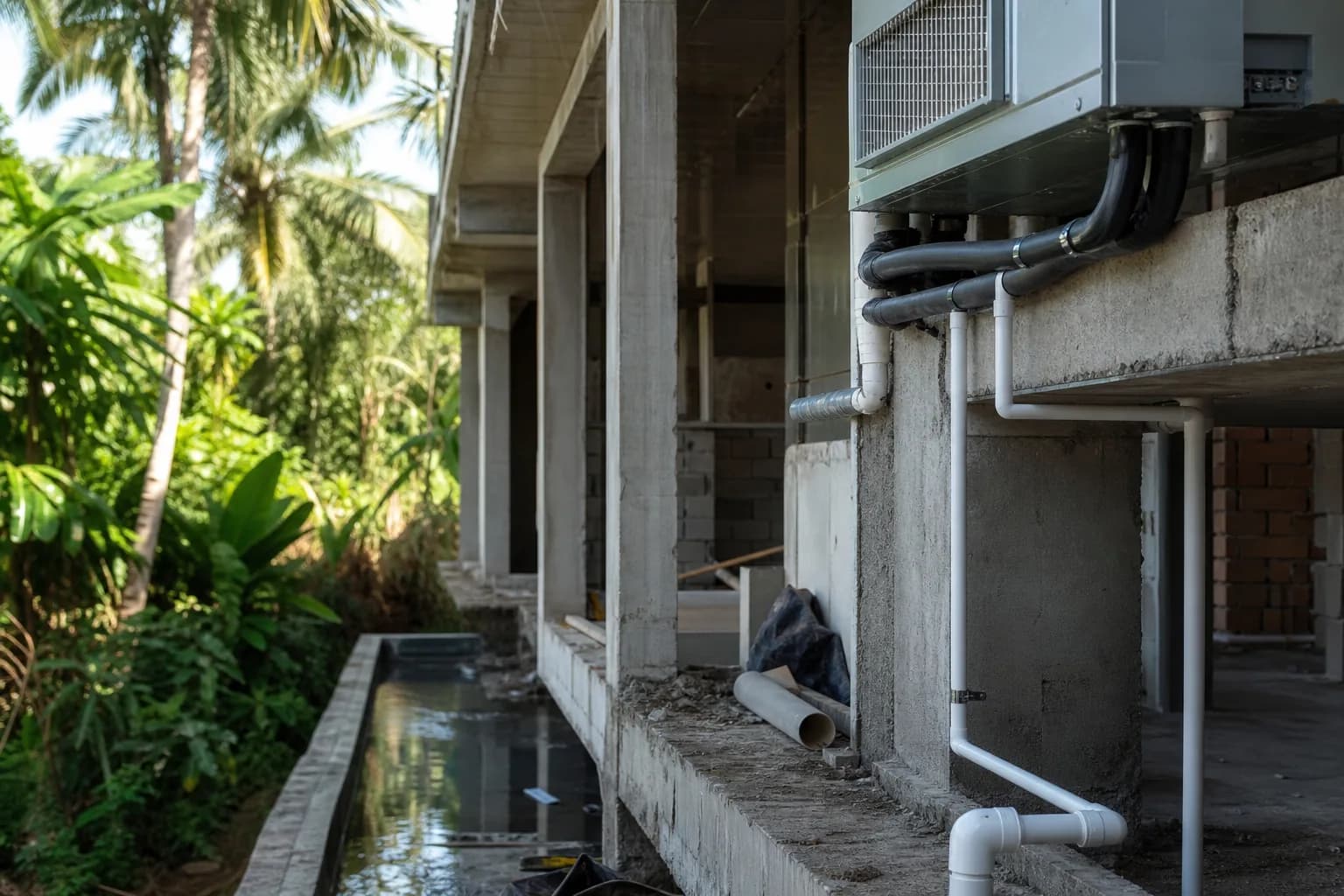
# HVAC Condensate Drainage Failures: Preventing Water Damage in Bali Villas
The Hidden Threat in Your Villa’s Climate Control System
In Bali’s tropical climate, air conditioning isn’t a luxury—it’s essential. Yet beneath every cooling unit lies a critical vulnerability that many villa owners overlook until disaster strikes: the condensate drainage system. When a modern split AC unit operates in Bali’s 80% humidity environment, it can generate 20-40 liters of condensate water daily. Without proper drainage installation and maintenance, this water doesn’t simply disappear—it infiltrates walls, damages ceiling finishes, destroys custom furniture, and creates the perfect breeding ground for toxic mold. For villa owners investing in premium interior finishing Bali projects, a failed condensate drain can undo months of meticulous renovation Bali work in a matter of weeks.
Technical Deep Dive: Understanding HVAC Condensate Systems in Tropical Construction
The condensate drainage system is a precisely engineered component of your villa’s utilities infrastructure, yet it’s frequently treated as an afterthought during Bali villa construction. When warm, humid air passes over the evaporator coils inside your AC unit, moisture condenses at rates far exceeding temperate climates. This continuous water production requires a comprehensive drainage solution that accounts for Bali’s unique environmental challenges.
Primary Drainage Components and Installation Requirements
A properly designed system begins with the primary drain pan, positioned directly beneath the evaporator coil assembly. This pan must be constructed from corrosion-resistant materials—typically galvanized steel or high-grade ABS plastic—with a minimum depth of 25mm and sloped at precisely 1:100 gradient toward the drain outlet. The outlet connection requires a P-trap configuration with a minimum 50mm water seal to prevent sewer gas backflow while maintaining positive drainage flow.
The drain line itself demands careful specification. In Bali’s climate, we specify minimum 20mm internal diameter PVC Schedule 40 piping for residential installations, increasing to 25mm for commercial-grade systems or multiple unit configurations. The critical error most contractors make is using undersized 13mm tubing—adequate in dry climates but catastrophically insufficient when handling Bali’s condensate volumes combined with algae growth and mineral deposits from our hard water.
Secondary Protection Systems
Professional villa utilities installation in Bali mandates a secondary drain pan system—a requirement often ignored in budget construction. This auxiliary pan sits beneath the entire air handler unit, extending 50mm beyond all edges. When the primary drain fails, this secondary pan captures overflow and routes it through a separate drain line that terminates in a highly visible location—typically above a window or doorway where water discharge immediately alerts occupants to the failure.
Advanced installations incorporate float switches within the secondary pan, wired directly to the AC control circuit. When water reaches a predetermined level (typically 15mm), the switch triggers system shutdown, preventing continued condensate production and catastrophic overflow. This single component, costing approximately 500,000 IDR installed, can prevent millions in water damage to your custom furniture installation and interior finishes.
Tropical Climate Considerations
Bali’s environment introduces complications absent in temperate construction. Our year-round humidity means AC units never experience the seasonal “dry periods” that naturally flush drainage systems elsewhere. Algae, biofilm, and mineral scale accumulate continuously, reducing effective pipe diameter by 30-40% within just six months without proper treatment.
The condensate itself becomes problematic. In high-humidity operation, the water pH drops to 5.5-6.0 (mildly acidic), accelerating corrosion of metal components and degrading certain plastic formulations. Drain lines must be UV-stabilized when exposed to sunlight—a common occurrence in Bali’s open-plan villa architecture—or they’ll become brittle and crack within 18-24 months.
Termination points require equal attention. Simply routing condensate to ground level near foundations—standard practice in many developments—creates moisture infiltration risks in our porous volcanic soils. Professional installations terminate into dedicated drainage systems, connected to the villa’s stormwater infrastructure with proper air gaps to prevent cross-contamination.
Materials and Standards for Bali Villa Applications
Material selection for condensate drainage systems directly impacts long-term reliability in Bali’s aggressive climate. The standards we apply at Teville reflect both international best practices and hard-won local experience across our villa projects portfolio.
Piping and Fittings Specifications
Primary drain lines utilize PVC Schedule 40 pressure-rated pipe, not the lighter DWV (drain-waste-vent) specification common in residential plumbing. The pressure rating ensures structural integrity when lines are embedded in walls or ceiling cavities—critical for renovation Bali projects where access for repairs is severely limited post-completion. All fittings must be solvent-welded, never threaded connections which inevitably leak as thermal cycling loosens joints.
For exposed installations in premium villas, we specify pre-insulated copper condensate lines with antimicrobial coating. While significantly more expensive (approximately 350,000 IDR per linear meter versus 45,000 IDR for PVC), copper eliminates algae growth, provides superior UV resistance, and delivers the aesthetic quality expected in luxury interior finishing Bali applications.
Drain Pan and Trap Materials
Secondary drain pans must be constructed from 22-gauge stainless steel (grade 304 minimum) or impact-resistant ABS plastic with minimum 5mm wall thickness. Galvanized steel, while initially cheaper, corrodes rapidly in constant moisture exposure—we’ve documented complete perforation failures in as little as 14 months in coastal Bali locations.
P-traps require transparent construction for inspection purposes. Clear PVC allows visual confirmation of proper water seal without disassembly, enabling maintenance teams to identify problems before they escalate. The trap must include a cleanout access point—a removable cap at the base—facilitating periodic flushing without line disconnection.
Compliance and Code Requirements
While Indonesia’s building codes provide general guidance, Bali villa construction benefits from adopting more stringent international standards. We reference Australian AS 3500.3 plumbing standards and US IRC (International Residential Code) Section M1411 for condensate disposal, adapted for tropical conditions. These standards mandate minimum slopes (1:100), maximum horizontal run lengths (15 meters without intermediate support), and specific termination requirements that prevent the common failures we observe in substandard installations.
Step-by-Step Professional Installation Process
Proper condensate drainage installation integrates with multiple construction phases, requiring coordination between HVAC contractors, plumbers, and finishing trades. This process outline reflects Teville’s methodology across our construction process.
Phase 1: Design and Rough-In Coordination (Pre-Installation)
Before any equipment arrives on site, we conduct a comprehensive drainage routing study. This involves mapping each AC unit location against structural elements, identifying optimal drain paths that maintain required slopes without compromising architectural features. For multi-story villas, vertical drain stacks are positioned within service chases, never routed through primary living spaces where future leaks would damage finished surfaces.
Critical measurements include: ceiling cavity depth (minimum 200mm required for proper pan installation and slope), wall cavity access for horizontal runs, and termination point elevation relative to unit locations. We create detailed shop drawings showing every fitting, support bracket, and penetration point—documentation that becomes invaluable during the renovation Bali phase when modifications are needed.
Phase 2: Primary System Installation
Installation begins with the secondary drain pan, positioned and leveled before the air handler unit is set. The pan receives a continuous bead of neutral-cure silicone sealant around its perimeter, creating a waterproof bond to the mounting surface. The secondary drain outlet is connected immediately, routed to its termination point, and tested with 10 liters of water to verify positive flow and proper trap seal.
The air handler unit is then positioned, with primary drain connection made using flexible PVC coupling—never rigid connections which transfer vibration and eventually crack. The primary drain line is installed with continuous slope verification using a digital level (accurate to 0.1 degrees), supported every 1.2 meters with appropriate hangers that don’t compress the pipe.
Phase 3: Testing and Commissioning
Before concealing any drainage components behind finished surfaces, we conduct a comprehensive three-stage test protocol. First, a static water test fills the entire system to verify leak-free connections. Second, a flow test introduces water at 150% of anticipated condensate volume to confirm adequate capacity and proper drainage velocity. Third, a 24-hour observation period with the AC unit operating confirms real-world performance under load.
Float switch functionality (when installed) is verified by manually raising water level in the secondary pan while monitoring system response. The switch must trigger shutdown within 3 seconds of activation—any delay indicates wiring issues requiring immediate correction.
Phase 4: Integration with Finishing Works
As interior finishing Bali work progresses, drain line locations are precisely documented with photographs and measurements from permanent reference points. This documentation proves essential when installing custom cabinetry, mounting artwork, or planning future furniture installation that might inadvertently penetrate concealed drainage lines.
Access panels are installed at all trap locations and at maximum 6-meter intervals along horizontal runs. These panels, finished to match surrounding surfaces, enable maintenance without demolishing finished walls—a critical consideration for long-term villa operation.
Phase 5: Maintenance System Establishment
Final commissioning includes establishing the maintenance protocol. We install permanent labels at each AC unit identifying drain line routing, trap locations, and maintenance requirements. A maintenance log is initiated, documenting the installation date, initial test results, and scheduled service intervals—typically quarterly inspection and annual comprehensive cleaning for Bali applications.
Costs and Timeline for Professional Installation
Understanding the investment required for proper condensate drainage systems helps villa owners make informed decisions during the planning phase. These figures reflect 2026 Bali market conditions for professional-grade installations.
Material and Labor Cost Breakdown
For a typical 3-bedroom villa with five AC units (three bedrooms, living area, and kitchen), expect the following investment for comprehensive condensate drainage:
- Basic PVC drainage system: 8,500,000 – 12,000,000 IDR including primary drains, secondary pans, P-traps, and termination connections
- Premium copper system with antimicrobial coating: 18,000,000 – 24,000,000 IDR for exposed installations in luxury villas
- Float switch protection (per unit): 500,000 – 750,000 IDR installed, including electrical integration
- Access panel fabrication and finishing: 1,200,000 – 2,000,000 IDR per panel for custom-matched finishes
These costs integrate with broader villa utilities installation budgets. For detailed project estimation specific to your requirements, Teville provides comprehensive assessment through our cost estimation service.
Installation Timeline
Condensate drainage installation follows the critical path of HVAC system deployment. For new construction, expect 3-4 days per villa for complete installation and testing. Renovation projects require additional time—typically 5-7 days—due to coordination with existing systems and the need to work around occupied spaces. This timeline assumes material availability and no structural complications requiring design modifications.
Long-Term Maintenance Investment
Budget 1,500,000 – 2,500,000 IDR annually for professional maintenance services including quarterly inspections, annual comprehensive cleaning with enzymatic treatments, and trap seal verification. This preventive investment is minimal compared to water damage remediation costs, which typically start at 25,000,000 IDR for even minor ceiling and wall repairs.
Frequently Asked Questions
How do I know if my existing villa has proper condensate drainage protection?
Conduct a visual inspection starting at each AC unit. Look for two separate drain connections—primary and secondary. The secondary should terminate in a visible location where water discharge would be immediately noticed. Check ceiling areas below AC units for water stains, discoloration, or soft spots indicating past or ongoing leaks. If you observe only a single drain line, or if drain lines are smaller than 20mm diameter, your system lacks adequate protection for Bali’s climate. Professional assessment through services like those offered in our completed projects can provide definitive evaluation.
Can condensate drainage be upgraded during renovation without major demolition?
Yes, though the extent of work depends on existing construction. Surface-mounted drainage upgrades using decorative conduit or architectural boxing can add secondary protection without opening walls. For concealed upgrades, strat
 3124 m²6 month(s)from 123.000 USD
TALA 8
 2144 m²11 month(s)from 104.000 USD
Narayana
 4344 m²16 month(s)from 290.000 USD
Radha
 164 m²7 month(s)from 79.000 USD
Private: Haridas Villas, Tegallalang
 3173 m²6 month(s)from 125.000 USD
TALA FOUR
 3104 m²11 month(s)from 99.000 USD
TALA 100
 3180 m²7 month(s)from 142.000 USD
Vasudeva

Want to calculate?
 1from 198.000 USD
Private: Haridas Villas
 3127 m²9 month(s)from 177.000 USD
Mukunda
 172 m²8 month(s)from 120.000 USD
Keshava
164 m²7 month(s)from 79.000 USDTALA TWO
Start With Real Numbers, Not Guesses
Before finalizing your finishing works plan, check realistic cost ranges for your Bali villa project.
Available lands
 3254 m²5 min$ 631800Bali, All
 6000 m²10 min$ 1330049Bali, Kutuh South Bali
 1000 m²10 min$ 123154Bali, Jimbaran
 2200 m²3 min$ 183842Bali, Berawa
 800 m²8 min$ 113300Bali, Ungasan
 700 m²15 min$ 162500Bali, Tabanan
 1100 m²8 min$ 280419Bali, Ungasan
 680 m²15 min$ 110751Bali, Pererenan
 1375 m²10 min$ 447044Bali, Canggu
 204 m²5 min$ 40899Bali, Kedungu
 1410 m²15 min$ 390702Bali, Tabanan
 515 m²7 min$ 570813Bali, Canggu
 3900 m²10 min$ 432266Bali, Tabanan
 550 m²5 min$ 217629Bali, Tabanan
 1950 m²7 min$ 150092Bali, Tabanan
Essential Bali build & buy guides
- Bali villa construction cost per m² in 2026
- How much will your villa cost? Calculator
- Building a villa in Bali: the complete guide
- Buying land in Bali: step-by-step for foreigners
- Bali villa investment: yields, risks, returns
- Leasehold vs freehold: what foreigners can own
- Construction defect liability & 10-year warranty
- Bali building codes and construction standards
Related guides

Why a Cheap Bali Leasehold Is Cheap: Pricing Red Flags Every Buyer Should Decode
Suspiciously cheap Bali leaseholds are priced low for a reason: short remaining terms, forbidden zoning, missing road access, disputes or weak contracts. How to decode the discount before you pay for it.
8 min read
Fake Compliance and Licensing Agents in Bali: The 2026 Paperwork Scam and How to Verify Documents
Forged certificates, permit fixers and fake notaries: how Bali's paperwork scams work in 2026 and how to verify every property document at its government source.
7 min read
Buying a Bali Villa from Instagram: Phantom Listings, Render-Only Projects and How to Verify
Instagram is Bali's biggest property shop window and its least verified. How phantom listings, render-only projects and cloned developer accounts work — and the verification steps that expose them.
7 min read