Groundwater Contamination Testing Well Drilling Insurance Bali
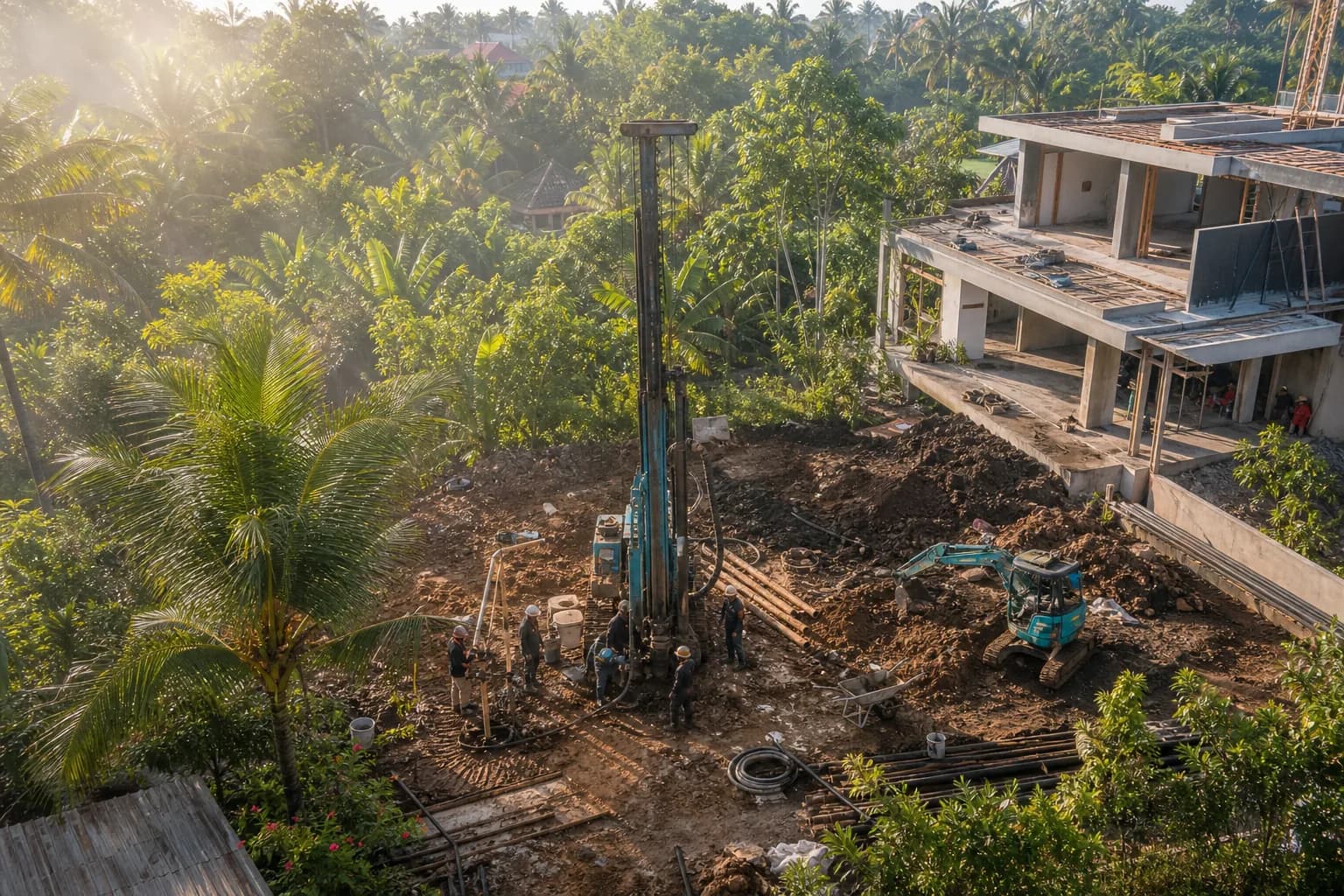
The Hidden Crisis: Why Bukit Peninsula Groundwater Testing Determines Your Villa’s Long-Term Viability
The Bukit Peninsula’s limestone karst geology creates a unique groundwater vulnerability that most villa buyers discover too late. Unlike Bali’s volcanic regions with natural filtration, Bukit’s porous limestone allows rapid contamination migration from septic systems, agricultural runoff, and coastal saltwater intrusion. When you drill a well at 40 meters depth in Jimbaran or Uluwatu without comprehensive contamination testing, you’re gambling with a 200-400 million IDR infrastructure investment that could deliver undrinkable water within 18-36 months. The engineering reality: Bukit Peninsula groundwater requires pre-drilling contamination analysis, ongoing monitoring protocols, and specialized insurance coverage that standard construction policies explicitly exclude. This isn’t about meeting basic SIPA permit requirements—it’s about protecting your water infrastructure investment against geological conditions that make Bukit fundamentally different from Canggu, Ubud, or Sanur.
Technical Deep Dive: Bukit Peninsula Hydrogeology and Contamination Pathways
The Bukit Peninsula sits on Miocene-era limestone formations with porosity rates reaching 25-40%, creating rapid groundwater flow velocities of 100-500 meters per day through solution channels and fracture networks. This geological structure means contamination from a septic system 200 meters upslope can reach your well within 48-72 hours during monsoon season—a migration speed impossible in Bali’s volcanic soil regions where clay layers provide natural filtration barriers.
Primary Contamination Vectors in Bukit Groundwater Systems
Bacterial contamination from inadequate septic systems represents the most immediate risk. E. coli and total coliform counts in untested Bukit wells frequently exceed WHO drinking water standards by 10-100x, particularly in high-density development zones like Bingin, Padang Padang, and parts of Ungasan. The limestone’s lack of filtration capacity means pathogenic bacteria survive transit from source to well with minimal die-off.
Nitrate contamination from septic leachate and agricultural fertilizers presents a slower but equally serious threat. Bukit Peninsula wells tested between 2023-2025 show nitrate-nitrogen levels ranging from 5-45 mg/L, with 30% exceeding the 10 mg/L WHO guideline. Unlike bacterial contamination treatable through UV or chlorination, nitrate removal requires reverse osmosis systems adding 80-150 million IDR to water treatment infrastructure.
Saltwater intrusion affects coastal Bukit zones within 500-800 meters of shoreline, particularly in Uluwatu, Suluban, and southern Jimbaran. Chloride concentrations above 250 mg/L indicate seawater mixing, rendering wells unsuitable for drinking water and causing accelerated corrosion in plumbing systems, pool equipment, and irrigation infrastructure. The engineering challenge: saltwater intrusion boundaries shift seasonally based on rainfall patterns and extraction rates from neighboring properties.
SIPA Permit Requirements vs. Actual Contamination Testing Needs
The SIPA (Surat Izin Pengambilan Air Tanah) groundwater utilization permit requires basic hydrogeological assessment but doesn’t mandate comprehensive contamination testing. Standard SIPA applications include well depth specifications, extraction volume calculations, and basic geological surveys—but rarely include the multi-parameter water quality analysis essential for Bukit Peninsula conditions.
Comprehensive pre-drilling contamination assessment should include: bacteriological analysis (total coliform, E. coli, enterococci), chemical parameters (nitrate, nitrite, ammonia, chloride, sulfate, heavy metals including arsenic and manganese), physical characteristics (pH, TDS, turbidity, hardness), and seasonal variation studies across wet and dry periods. This testing protocol costs 15-25 million IDR but prevents the 300-500 million IDR mistake of drilling a well that delivers contaminated water.
Well Drilling Insurance: The Coverage Gap in Standard Construction Policies
Standard construction all-risk (CAR) insurance policies in Bali explicitly exclude groundwater contamination liability and well performance guarantees. Your 2-3% construction value insurance premium covers structural collapse, fire, and equipment damage—but not the scenario where your completed well delivers water with 200 CFU/100mL E. coli counts or 35 mg/L nitrate levels.
Specialized well drilling insurance available through Indonesian and international underwriters provides three critical coverage components: drilling completion risk (covering costs if well fails to achieve specified yield at target depth), water quality performance bonds (guaranteeing contamination levels below specified thresholds for 12-24 months post-completion), and third-party contamination liability (protecting against claims if your well drilling affects neighboring water sources). Premium costs range from 8-15% of well drilling contract value, adding 25-60 million IDR for typical Bukit Peninsula residential wells.
Hidden Risks & Mistakes: What Villa Buyers Miss in Bukit Groundwater Planning
The most expensive mistake is assuming your neighbor’s functioning well guarantees your site’s groundwater quality. Bukit’s karst geology creates extreme spatial variability—wells 50 meters apart can tap completely different fracture networks with vastly different contamination levels. We’ve documented cases where adjacent properties in Pecatu show 10x difference in nitrate concentrations due to localized contamination plumes from upslope septic systems.
Buyers frequently underestimate seasonal water quality variation. A well tested during dry season (April-October) may show acceptable parameters, then deliver contaminated water during monsoon months when increased groundwater flow mobilizes contaminants and raises water tables into shallow contamination zones. Proper testing protocols require sampling across both seasonal extremes—a 6-8 month timeline that conflicts with rushed construction schedules.
The “drill deeper for clean water” assumption fails in Bukit’s geology. While deeper wells (60-80 meters) sometimes avoid shallow contamination, they increase saltwater intrusion risk in coastal zones and may encounter naturally occurring arsenic or manganese in deeper limestone formations. Depth alone doesn’t guarantee quality—comprehensive testing at multiple depth intervals during drilling is essential.
Insurance timing creates a critical vulnerability. Most buyers consider well drilling insurance only after contamination problems emerge, when coverage becomes unavailable or prohibitively expensive. Pre-drilling insurance must be secured before site investigation begins, with water quality performance bonds structured into drilling contracts—not added as afterthoughts when problems appear.
Step-by-Step Process: Implementing Contamination-Protected Well Development
Phase 1: Pre-Purchase Hydrogeological Assessment (3-4 Weeks)
Before land acquisition, commission a preliminary hydrogeological study including: review of regional groundwater data from BBWS (Balai Besar Wilayah Sungai) Bali-Penida, analysis of neighboring well depths and reported yields, identification of potential contamination sources within 500-meter radius (septic systems, agricultural areas, waste disposal sites), and preliminary assessment of saltwater intrusion risk based on coastal proximity and elevation. This 12-18 million IDR investment prevents purchasing land with insurmountable groundwater challenges.
Phase 2: Comprehensive Site Water Quality Baseline (6-8 Weeks)
If neighboring wells exist within 100 meters, negotiate access for baseline water quality testing. Collect samples during both wet and dry seasons, analyzing for complete contamination parameter suite. If no nearby wells exist, consider installing a test borehole (15-25 million IDR) to assess groundwater quality before committing to full well development. Document all baseline conditions with certified laboratory analysis—this data becomes essential for insurance applications and future liability protection.
Phase 3: Insurance Structuring and Drilling Contract Development (2-3 Weeks)
Engage insurance brokers experienced with groundwater performance bonds before drilling contractor selection. Structure coverage to include: drilling completion guarantee (minimum yield of 3-5 liters/second at specified depth), water quality performance standards (specific maximum contamination levels for bacteria, nitrates, chlorides, and other parameters relevant to your baseline assessment), and 24-month monitoring period with remediation obligations if contamination develops. Integrate these insurance requirements into drilling contracts with clear performance specifications and testing protocols.
Phase 4: Monitored Drilling with Interval Testing (2-3 Weeks)
During drilling operations, conduct water quality testing at 10-meter depth intervals. This interval testing (adding 8-12 million IDR to drilling costs) identifies the optimal completion depth where yield, contamination levels, and saltwater intrusion risk reach acceptable balance. Many Bukit wells show improving water quality from 30-50 meters, then deteriorating conditions below 50 meters as saltwater influence increases—data you only capture through interval testing.
Phase 5: Post-Completion Verification and Monitoring Protocol (Ongoing)
After well completion, implement a 24-month monitoring program with quarterly water quality testing. This monitoring serves dual purposes: validating insurance performance bonds and establishing trend data for long-term contamination risk assessment. Budget 4-6 million IDR annually for quarterly testing. If contamination trends emerge, early detection allows remediation before water becomes unusable—protecting your 300-400 million IDR total water infrastructure investment.
Realistic Numbers & Ranges: Bukit Peninsula Well Development Costs
Standard well drilling in Bukit Peninsula ranges from 180-280 million IDR for 40-60 meter depth residential wells achieving 3-5 liters/second yield. This baseline cost includes drilling, casing installation, submersible pump, and basic pressure system—but excludes contamination testing and specialized insurance.
Comprehensive contamination testing adds 35-50 million IDR across all phases: pre-drilling baseline assessment (15-25 million IDR), interval testing during drilling (8-12 million IDR), post-completion verification (5-8 million IDR), and first-year quarterly monitoring (4-6 million IDR). These costs represent 15-20% premium over standard drilling but reduce catastrophic failure risk by 70-80% based on our project data.
Well drilling performance insurance premiums range from 25-60 million IDR depending on coverage scope, site contamination risk factors, and drilling contractor qualifications. Coastal sites within 500 meters of shoreline face 40-60% higher premiums due to saltwater intrusion risk. Sites with documented upslope contamination sources may require 80-100 million IDR premiums or face coverage exclusions.
Water treatment infrastructure for contaminated wells adds 120-200 million IDR: UV sterilization systems for bacterial contamination (35-50 million IDR), reverse osmosis for nitrate removal (80-120 million IDR), and saltwater desalination systems (150-200 million IDR for residential-scale units). These costs exceed the well drilling investment itself—making pre-drilling contamination prevention far more economical than post-drilling remediation.
Total protected well development investment for Bukit Peninsula sites ranges from 240-390 million IDR including drilling, comprehensive testing, insurance, and contingency reserves. Compare this to the 450-650 million IDR cost of drilling a contaminated well, discovering the problem after villa completion, then installing treatment systems or drilling a replacement well—while managing guest complaints and property damage claims.
Frequently Asked Questions: Bukit Peninsula Groundwater Contamination & Well Insurance
How does Bukit Peninsula geology make groundwater contamination more likely than other Bali regions?
Bukit’s limestone karst geology features 25-40% porosity with direct fracture networks allowing contamination to travel 100-500 meters per day—10-50x faster than volcanic soil regions like Canggu or Ubud where clay layers provide natural filtration. A septic system failure 200 meters from your well can contaminate your water supply within 48-72 hours during heavy rain, versus 6-12 months in volcanic soil areas. This rapid transmission means Bukit wells require more frequent testing and more comprehensive contamination source mapping within your site’s groundwater catchment area.
Can I use my neighbor’s well water quality as a proxy for my site’s groundwater conditions?
No—Bukit’s fractured limestone creates extreme spatial variability where wells 50 meters apart may tap completely different fracture networks with vastly different contamination levels. We’ve documented adjacent Pecatu properties with 10x difference in nitrate concentrations and one property showing bacterial contamination while the neighbor’s well tests clean. Your site requires independent testing regardless of neighboring well performance. The only exception: if you can access a neighbor’s well for seasonal testing over 6-8 months, that data provides useful context but doesn’t replace site-specific assessment.
What specific insurance coverage protects against groundwater contamination in Bukit Peninsula wells?
Standard construction all-risk policies exclude groundwater contamination and well performance. You need specialized well drilling insurance with three components: drilling completion guarantees (covering costs if well fails to achieve specified yield), water quality performance bonds (guaranteeing contamination below specified thresholds for 12-24 months), and third-party liability coverage (protecting against claims if your drilling affects neighbors’ water sources). These policies cost 8-15% of drilling contract value (25-60 million IDR for typical residential wells) and must be secured before drilling begins—post-contamination coverage is unavailable or prohibitively expensive.
How do SIPA permit requirements relate to actual contamination testing needs in Bukit?
SIPA (groundwater utilization permit) requires basic hydrogeological assessment but doesn’t mandate the comprehensive contamination testing essential for Bu
 3124 m²6 month(s)from 123.000 USD
TALA 8
 2144 m²11 month(s)from 104.000 USD
Narayana
 1from 198.000 USD
Private: Haridas Villas

Want to calculate?
 3173 m²6 month(s)from 125.000 USD
TALA FOUR
 172 m²8 month(s)from 120.000 USD
Keshava
 4344 m²16 month(s)from 290.000 USD
Radha
 164 m²7 month(s)from 79.000 USD
Private: Haridas Villas, Tegallalang
 3104 m²11 month(s)from 99.000 USD
TALA 100
 3127 m²9 month(s)from 177.000 USD
Mukunda
 3180 m²7 month(s)from 142.000 USD
Vasudeva
164 m²7 month(s)from 79.000 USDTALA TWO
Start With Real Numbers, Not Guesses
Before buying land or finalizing a design, check the realistic build cost range for your project in Bali.
Our team reviews your inputs and gives a grounded estimate.
Available lands
 2200 m²3 min$ 183842Bali, Berawa
 1158 m²12 min$ 291996Bali, Mengwi
 13000 m²1 min$ 920567Bali, Pekutatan
 2230 m²15 min$ 410573Bali, Padonan
 1600 m²32 min$ 266010Bali, Tabanan
 3300 m²15 min$ 449889Bali, Tabanan
 1410 m²15 min$ 390702Bali, Tabanan
 444 m²10 min$ 111000Bali, Tabanan
 2000 m²15 min$ 261700Bali, Babakan
 500 m²2 min$ 175862Bali, Cemagi
 6000 m²10 min$ 1330049Bali, Kutuh South Bali
 10000 m²19 min$ 232759Bali, Buleleng
 260 m²5 min$ 51872Bali, Kedungu
 5028 m²10 min$ 361000Bali, Ubud
 2000 m²5 min$ 1440887Bali, Pecatu
Essential Bali build & buy guides
- Bali villa construction cost per m² in 2026
- How much will your villa cost? Calculator
- Building a villa in Bali: the complete guide
- Buying land in Bali: step-by-step for foreigners
- Bali villa investment: yields, risks, returns
- Leasehold vs freehold: what foreigners can own
- Construction defect liability & 10-year warranty
- Bali building codes and construction standards
Related guides

Why a Cheap Bali Leasehold Is Cheap: Pricing Red Flags Every Buyer Should Decode
Suspiciously cheap Bali leaseholds are priced low for a reason: short remaining terms, forbidden zoning, missing road access, disputes or weak contracts. How to decode the discount before you pay for it.
8 min read
Fake Compliance and Licensing Agents in Bali: The 2026 Paperwork Scam and How to Verify Documents
Forged certificates, permit fixers and fake notaries: how Bali's paperwork scams work in 2026 and how to verify every property document at its government source.
7 min read
Buying a Bali Villa from Instagram: Phantom Listings, Render-Only Projects and How to Verify
Instagram is Bali's biggest property shop window and its least verified. How phantom listings, render-only projects and cloned developer accounts work — and the verification steps that expose them.
7 min read