Contractor License Verification in Bali: IPTB vs SIUJK
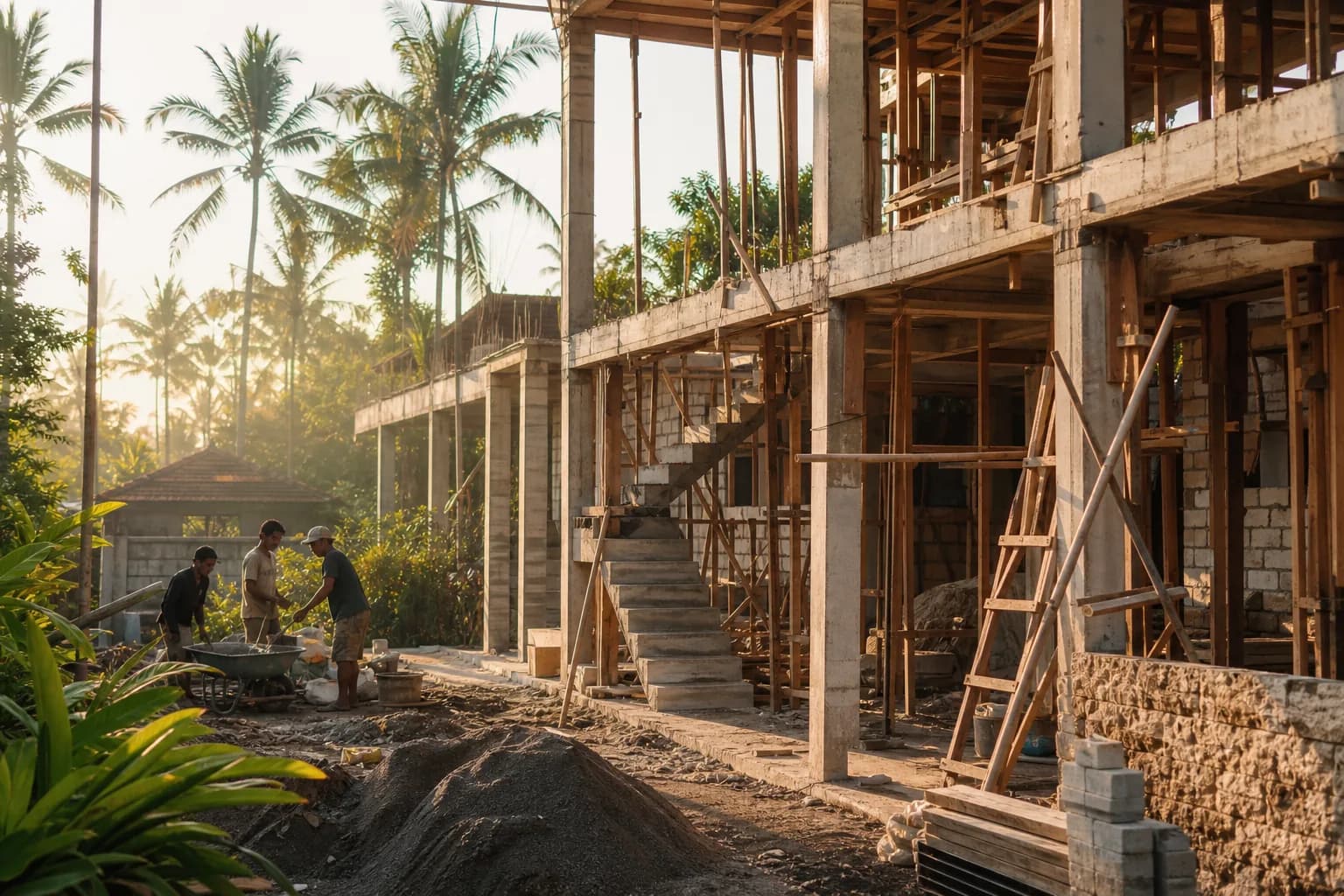
The License Verification Crisis: When Your Contractor’s SIUJK Doesn’t Match Their IPTB Registration
A foreign investor recently discovered their contractor’s SIUJK license listed “small-scale residential” classification, yet the contractor was building a four-story commercial villa complex requiring structural engineering certifications. The IPTB (Ikatan Perusahaan Teknisi Bangunan Indonesia) membership showed different qualification grades than the SIUJK documentation. This mismatch—common in Bali’s construction sector—represents a critical compliance gap that exposes property owners to liability, insurance voids, and potential demolition orders. Understanding the technical difference between IPTB association membership and SIUJK governmental licensing, and how to cross-verify both systems, is essential for anyone commissioning villa construction in Bali where regulatory enforcement has intensified significantly since 2024.
Technical Framework: IPTB Association Credentials vs SIUJK Government Licensing
The Indonesian construction licensing ecosystem operates on two parallel verification tracks that serve fundamentally different regulatory purposes. The SIUJK (Surat Ijin Usaha Jasa Konstruksi) is a government-issued business license administered through the OSS (Online Single Submission) system under Ministry of Public Works regulation PRT/M/2019. This license authorizes a legal entity to conduct construction business activities within specific classification parameters: small (K1), medium (K2), or large (K3) scale projects, with sub-classifications for planning, execution, or supervision services.
The IPTB, conversely, is a professional association membership—not a government license—that provides industry credentialing and technical competency validation. IPTB membership demonstrates that individual technicians and the company collectively meet certain professional standards, but it does not constitute legal authorization to operate a construction business. This distinction is critical: a contractor can hold valid IPTB membership while having an expired, suspended, or inappropriately classified SIUJK, rendering their construction activities legally non-compliant regardless of technical competency.
The SIUJK classification system directly determines project scope limitations. A K1 (small) classification typically covers projects up to IDR 1 billion in contract value with basic structural requirements—single or two-story residential buildings without complex engineering. K2 (medium) extends to IDR 10 billion and includes multi-story structures requiring certified structural calculations. K3 (large) covers unlimited project values with full engineering complexity. Each classification requires corresponding SBU (Sertifikat Badan Usaha) certificates that validate the company’s technical capacity, financial standing, and personnel qualifications.
The verification complexity intensifies because SIUJK validity depends on continuous compliance with multiple underlying requirements. The license references specific SKK (Sertifikat Kompetensi Kerja) certificates held by key personnel—project managers, site supervisors, and technical specialists. If these individual competency certificates expire or personnel leave the company, the SIUJK classification may no longer reflect actual operational capacity, even if the license document itself hasn’t reached its expiration date. This creates a temporal verification problem: a SIUJK that was valid at contract signing may be functionally invalid at construction commencement.
For tropical construction engineering in Bali, the classification requirements become particularly stringent when projects involve: reinforced concrete structures exceeding two stories, cantilever designs, swimming pools with structural integration, retaining walls over 1.5 meters, or any construction within 100 meters of coastline. These technical elements trigger requirements for K2 minimum classification with specific engineering sub-certifications. A contractor holding only K1 classification with general IPTB membership cannot legally execute such projects, regardless of their practical experience or technical capability.
The OSS system theoretically provides centralized verification, but practical implementation reveals significant gaps. The database updates occur with administrative delays, sometimes showing licenses as “active” for 30-60 days after suspension or revocation. The system also doesn’t cross-reference project-specific requirements—it confirms license existence but not classification appropriateness for your specific construction scope. This means due diligence requires manual verification of classification details against your project’s technical specifications, not simply confirming that a license number exists in the system.
Hidden Risks: The Compliance Gaps That Void Your Insurance and Building Permits
The most dangerous assumption in Bali villa construction is that a contractor’s presentation of license documents constitutes adequate verification. Sophisticated contractors operating beyond their classification often present authentic SIUJK documents while obscuring the classification limitations. They may hold valid K1 licensing but accept K2-level projects, gambling that enforcement won’t occur during construction. This creates a cascading liability structure where the property owner becomes primarily responsible for regulatory violations, not the contractor.
Insurance implications are particularly severe. Construction all-risk (CAR) policies and subsequent property insurance explicitly require that construction was performed by appropriately licensed contractors. If structural failure occurs and investigation reveals the contractor’s SIUJK classification was insufficient for the project complexity, insurers will deny claims based on material misrepresentation. This has occurred in multiple Bali cases involving pool structural failures and retaining wall collapses where contractors held valid licenses but wrong classifications.
The IPTB membership verification presents a subtler risk. Some contractors prominently display IPTB credentials while downplaying SIUJK details, leveraging foreign clients’ unfamiliarity with the regulatory distinction. IPTB membership provides professional credibility but zero legal authorization. A contractor can be an IPTB member in good standing while simultaneously having a suspended SIUJK due to previous project violations, financial irregularities, or personnel certification lapses. Verifying only IPTB status while neglecting SIUJK validation leaves you legally exposed.
Building permit (PBG) issuance creates a false sense of security. Permit authorities verify contractor licensing at application submission, but they don’t continuously monitor license validity throughout construction. If a contractor’s SIUJK is suspended mid-project due to violations on another site, your permit remains technically valid but your construction becomes non-compliant. This temporal gap means permit approval doesn’t guarantee ongoing contractor compliance—independent verification must continue throughout the construction timeline.
Step-by-Step Verification Protocol: Cross-Referencing IPTB and SIUJK Systems
Effective contractor verification requires a systematic four-stage protocol that cross-references multiple data sources and validates classification appropriateness for your specific project scope. This process should occur before contract signing and be repeated at construction commencement to catch any interim status changes.
Stage One: Document Collection and Initial Authentication
Request the contractor provide: original SIUJK certificate with OSS registration number, current SBU certificates for all relevant classifications, SKK certificates for all key personnel assigned to your project, IPTB membership certificate with grade designation, and NPWP (tax identification) matching the SIUJK business entity. Photograph or scan all documents with visible security features—watermarks, holograms, and official seals. Verify that the business name on SIUJK exactly matches the contracting entity; discrepancies often indicate shell company structures where licensing is borrowed from a separate legal entity.
Stage Two: OSS System Direct Verification
Access the OSS system at oss.go.id and use the SIUJK registration number (NIB – Nomor Induk Berusaha) to pull the official license record. The system displays current status, classification level, authorized business activities, and validity dates. Critical verification points: confirm the classification code matches your project requirements (K1/K2/K3 with appropriate sub-codes), check that “status” shows “Aktif” not “Dibekukan” (suspended) or “Dicabut” (revoked), and verify the registered address matches the contractor’s operational location. Download and save the official OSS verification report with timestamp—this becomes your compliance documentation.
Stage Three: Personnel Competency Cross-Check
The SIUJK classification depends on specific personnel holding valid SKK certificates. Request the contractor provide SKK details for: the designated project manager (must hold minimum SKK level 7 for K2 projects), site supervisor (minimum level 6), and any specialized roles like structural engineer or MEP coordinator. Cross-reference these SKK certificate numbers through the LPJK (Lembaga Pengembangan Jasa Konstruksi) database. Verify that certificate expiration dates extend beyond your project completion timeline. If key personnel certificates expire mid-project, the contractor’s effective classification drops, potentially rendering them non-compliant for your project scope.
Stage Four: IPTB Membership Validation and Grade Verification
Contact IPTB directly through their regional Bali office to confirm membership status and grade level. IPTB grades (Muda/Junior, Madya/Intermediate, Utama/Senior) should align with project complexity, though remember this is professional credibility, not legal authorization. Request confirmation that membership dues are current—lapsed memberships often indicate financial instability. Cross-reference the IPTB-listed company principals with SIUJK registered directors; discrepancies may indicate the contractor is using borrowed credentials or operating through complex corporate structures that obscure liability.
For land purchase and construction projects in Bali, implement a contractual clause requiring the contractor to notify you within 48 hours of any change in licensing status, personnel certifications, or IPTB membership standing. Include provisions allowing you to independently verify compliance at any point, with verification costs borne by the contractor if discrepancies are found. This contractual framework transforms verification from a one-time check into an ongoing compliance obligation.
Cost and Timeline Realities: Verification Investment vs Risk Exposure
Professional license verification services in Bali typically charge IDR 3,500,000-7,500,000 (approximately $220-$470 USD) for comprehensive contractor due diligence including SIUJK validation, SBU verification, personnel SKK checks, IPTB confirmation, and corporate structure analysis. This investment represents 0.1-0.3% of a typical villa construction budget but mitigates exposure to risks that can exceed 100% of project value when structural failures, permit revocations, or insurance voids occur.
The verification timeline requires 5-8 business days for thorough completion when using professional services, or 10-15 days if conducting independent verification due to government database access delays and IPTB response times. Rush verification is possible within 48-72 hours at premium rates (typically 150-200% of standard fees) but may sacrifice depth of personnel competency checks and corporate structure analysis.
For self-verification, budget approximately 12-18 hours of dedicated time across the four-stage protocol, assuming moderate familiarity with Indonesian regulatory systems and functional Bahasa Indonesia capability. Foreign investors without local language skills should expect 20-25 hours due to translation requirements and navigation of Indonesian-language government portals. The time investment becomes cost-effective for projects below IDR 2 billion where professional verification fees represent a larger percentage of total budget.
Re-verification at construction commencement adds IDR 1,500,000-2,500,000 for abbreviated status checks focusing on license currency and personnel certificate validity. This secondary verification is essential for projects with extended timelines between contract signing and construction start, particularly common in Bali villa construction where permit processing can extend 4-6 months. The re-verification investment protects against the temporal compliance gap where licenses valid at contracting become invalid before construction begins.
Frequently Asked Questions: IPTB vs SIUJK Verification Specifics
Can a contractor legally operate with IPTB membership but expired SIUJK?
No. IPTB membership is a professional association credential that demonstrates technical competency and industry standing, but it provides zero legal authorization to conduct construction business. The SIUJK is the mandatory government license that legally permits construction activities. A contractor with current IPTB membership but expired, suspended, or revoked SIUJK is operating illegally regardless of their technical qualifications. Any construction performed under these conditions exposes the property owner to regulatory penalties, permit revocation, and insurance voids. Always verify SIUJK status through the OSS system independently—never rely solely on IPTB credentials as proof of legal authorization.
How do I verify that my contractor’s SIUJK classification actually matches my villa project requirements?
Match your project’s technical specifications against SIUJK classification thresholds. K1 (small) classification covers projects up to IDR 1 billion with maximum two-story structures and basic engineering. If your villa includes three or more stories, structural cantilevers, integrated pool engineering, retaining walls over 1.5 meters, or complex MEP systems, you require minimum K2 (medium) classification. For coastal properties within 100 meters of shoreline or projects exceeding IDR 10 billion, K3 (large) classification becomes necessary. The OSS system displays classification codes—verify these against your architectural pla
 164 m²7 month(s)from 79.000 USD
TALA TWO
164 m²7 month(s)from 79.000 USDPrivate: Haridas Villas, Tegallalang
 3124 m²6 month(s)from 123.000 USD
TALA 8
 1from 198.000 USD
Private: Haridas Villas
 172 m²8 month(s)from 120.000 USD
Keshava
 3104 m²11 month(s)from 99.000 USD
TALA 100
 3127 m²9 month(s)from 177.000 USD
Mukunda
 3173 m²6 month(s)from 125.000 USD
TALA FOUR
 4344 m²16 month(s)from 290.000 USD
Radha

Want to calculate?
 2144 m²11 month(s)from 104.000 USD
Narayana
 3180 m²7 month(s)from 142.000 USD
Vasudeva
Start With Real Numbers, Not Guesses
Before buying land or finalizing a design, check the realistic build cost range for your project in Bali.
Our team reviews your inputs and gives a grounded estimate.
Available lands
 200 m²5 min$ 59113Bali, Bukit
 660 m²10 min$ 175567Bali, Mengwi
 1600 m²32 min$ 266010Bali, Tabanan
 3800 m²15 min$ 100616Bali, Pererenan
 5028 m²10 min$ 361000Bali, Ubud
 600 m²10 min$ 206897Bali, Canggu
 7500 m²5 min$ 206281Bali, Kedungu
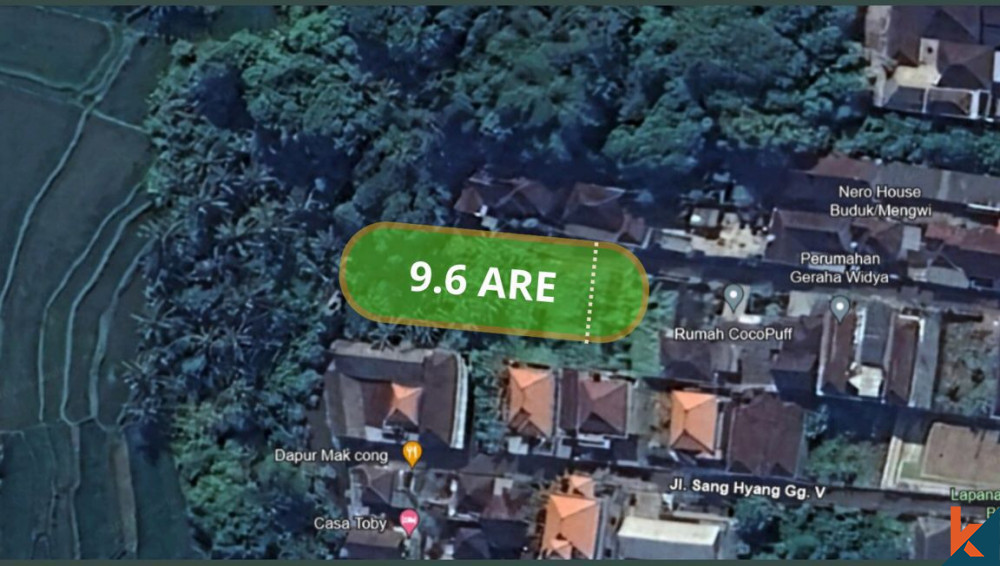 960 m²15 min$ 91034Bali, Mengwi
 1362 m²15 min$ 335468Bali, Tumbak
 1700 m²10 min$ 632257Bali, Kuta
 1000 m²8 min$ 134544Bali, Bukit
 911 m²15 min$ 248217Bali, Pererenan
 610 m²10 min$ 165271Bali, Seminyak
 3000 m²15 min$ 738916Bali, Cepaka
 3700 m²15 min$ 738177Bali, Tabanan
Essential Bali build & buy guides
- Bali villa construction cost per m² in 2026
- How much will your villa cost? Calculator
- Building a villa in Bali: the complete guide
- Buying land in Bali: step-by-step for foreigners
- Bali villa investment: yields, risks, returns
- Leasehold vs freehold: what foreigners can own
- Construction defect liability & 10-year warranty
- Bali building codes and construction standards
Related guides

Why a Cheap Bali Leasehold Is Cheap: Pricing Red Flags Every Buyer Should Decode
Suspiciously cheap Bali leaseholds are priced low for a reason: short remaining terms, forbidden zoning, missing road access, disputes or weak contracts. How to decode the discount before you pay for it.
8 min read
Fake Compliance and Licensing Agents in Bali: The 2026 Paperwork Scam and How to Verify Documents
Forged certificates, permit fixers and fake notaries: how Bali's paperwork scams work in 2026 and how to verify every property document at its government source.
7 min read
Buying a Bali Villa from Instagram: Phantom Listings, Render-Only Projects and How to Verify
Instagram is Bali's biggest property shop window and its least verified. How phantom listings, render-only projects and cloned developer accounts work — and the verification steps that expose them.
7 min read