Construction Risks in Bali: What Developers Need to Know
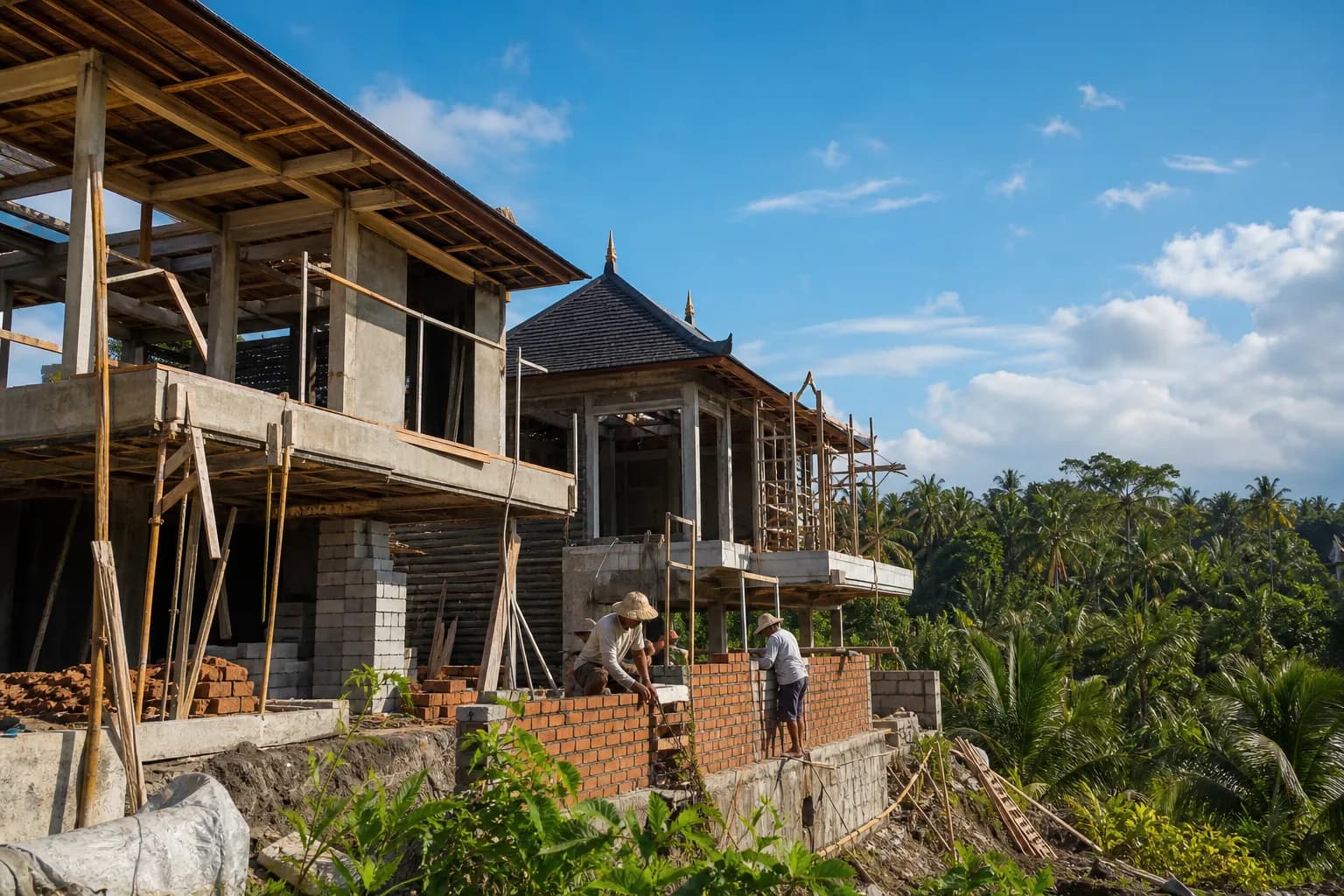
# Risk & Buyer Protection in Bali Construction: A Comprehensive Guide for 2026
Introduction: Navigating Construction Risks in Bali’s Evolving Regulatory Landscape
Building your dream property in Bali represents both an exciting opportunity and a complex undertaking that requires careful navigation of Indonesia’s unique regulatory environment. As of February 2026, the construction landscape in Bali has evolved significantly, with new digital land certificate requirements, enhanced financial verification protocols for foreign investors, and heightened awareness following the 2025 flood events that exposed vulnerabilities in certain development areas. Understanding construction risks in Bali is no longer optional—it’s essential for protecting your investment and ensuring project success.
At Teville, we’ve witnessed firsthand how proper risk management and buyer protection strategies can mean the difference between a successful build and a costly nightmare. This comprehensive guide examines the critical risk factors affecting construction projects in Bali, from legal complexities and land ownership structures to tropical engineering challenges and contractor reliability. Whether you’re planning a villa, commercial property, or residential development, understanding these risks empowers you to make informed decisions and implement protective measures that safeguard your investment throughout the construction journey.
The Problem: Why Construction Projects in Bali Face Unique Challenges
Bali’s construction sector operates within a framework that differs dramatically from Western markets, creating a perfect storm of potential pitfalls for unprepared investors. The island’s appeal as a tropical paradise masks underlying complexities that have caught countless developers off-guard, resulting in project delays, cost overruns, and in worst-case scenarios, complete financial losses.
The fundamental challenge stems from Indonesia’s foreign ownership restrictions, which require most international investors to utilize nominee arrangements, leasehold structures, or Indonesian PT companies. These legal frameworks, while legitimate, introduce layers of complexity and potential vulnerability. Without proper documentation and legal safeguards, investors may find themselves with limited recourse if disputes arise. The 2026 implementation of mandatory digital land certificates aims to improve transparency, but the transition period has created additional verification requirements that many buyers underestimate.
Beyond legal structures, Bali’s tropical environment presents engineering challenges that demand specialized knowledge. The 2025 floods highlighted how inadequate drainage systems, poor site selection, and substandard foundation work can lead to catastrophic failures. Properties built without proper consideration of monsoon patterns, soil composition, and water table levels face ongoing maintenance issues and potential structural compromise. These aren’t merely theoretical concerns—they represent real financial risks that can erode property values and create liability exposure.
The contractor landscape adds another dimension of risk. Bali’s construction industry ranges from highly professional firms with international standards to informal operators lacking proper licensing, insurance, or technical expertise. The absence of standardized contractor certification systems makes due diligence challenging, while language barriers and cultural differences can complicate contract enforcement. Payment disputes, quality issues, and project abandonment remain common problems that require proactive protection strategies.
Technical Analysis: Understanding Bali’s Construction Risk Environment
A thorough technical analysis of construction risks in Bali reveals multiple interconnected factors that demand careful evaluation and mitigation strategies. These risks span legal, environmental, technical, and operational domains, each requiring specialized expertise to navigate effectively.
Legal and Regulatory Risk Framework
Indonesia’s legal system for property ownership and construction operates under civil law principles that differ fundamentally from common law jurisdictions. Foreign nationals cannot directly own freehold land (Hak Milik) in Indonesia, necessitating alternative structures. The most common approaches include leasehold agreements (typically 25-30 years with extension options), Right to Use titles (Hak Pakai), and ownership through Indonesian PT PMA companies. Each structure carries distinct risk profiles and protection levels.
The 2026 digital land certificate initiative represents a significant regulatory shift aimed at reducing fraud and improving transparency. All land transactions now require verification through the National Land Agency’s (BPN) digital system, which cross-references ownership records, encumbrances, and legal disputes. While this enhances security, the implementation phase has created processing delays and additional documentation requirements. Buyers must ensure their land certificates are properly digitized and verified before commencing construction, as building permits now require digital certificate confirmation.
Building permit regulations (IMB – Izin Mendirikan Bangunan) involve multiple government agencies and can take 3-6 months to obtain. The process requires architectural plans approved by certified Indonesian architects, environmental impact assessments for larger projects, and compliance with local zoning regulations (RTRW). Failure to secure proper permits before construction can result in stop-work orders, fines, or demolition orders—risks that have materialized in several high-profile cases across Bali.
Environmental and Geological Risk Factors
Bali’s tropical climate and volcanic geology create unique engineering challenges that directly impact construction feasibility and long-term structural integrity. The island experiences distinct wet and dry seasons, with the monsoon period (November-March) bringing intense rainfall that can exceed 300mm monthly in some areas. The 2025 floods demonstrated how inadequate drainage infrastructure and poor site grading can lead to property damage, with several developments in Canggu and Sanur experiencing significant flooding.
Soil composition varies dramatically across Bali, from volcanic ash and clay in central regions to sandy coastal soils and limestone formations in the south. Proper geotechnical investigation is essential but frequently overlooked. Soil bearing capacity, water table depth, and subsurface conditions directly affect foundation design requirements. Building on unsuitable soil without proper engineering can lead to differential settlement, cracking, and structural failure. Professional soil testing costs approximately IDR 15-25 million but can prevent foundation problems costing tens of millions to remediate.
Seismic activity presents another consideration, as Bali sits within Indonesia’s earthquake-prone region. While major earthquakes are relatively infrequent, building codes require seismic-resistant design for structures over two stories. This necessitates proper structural engineering, reinforced concrete specifications, and construction techniques that many local contractors lack experience implementing. The risk isn’t catastrophic failure but rather cumulative damage from minor tremors that can compromise structural integrity over time.
Construction Quality and Material Risk
Material quality variability represents a persistent challenge in Bali’s construction sector. The market includes both imported materials meeting international standards and locally-produced alternatives of inconsistent quality. Cement, steel reinforcement, and concrete mix designs require careful specification and quality control. Substandard materials may meet visual inspection but fail to provide adequate structural performance, particularly under tropical conditions with high humidity and salt exposure in coastal areas.
The construction workforce in Bali ranges from skilled craftsmen to unskilled laborers, with significant variation in technical competency. Traditional Balinese building techniques excel at certain applications but may not align with modern engineering requirements. Concrete work, waterproofing, electrical systems, and plumbing installations require specific technical knowledge that not all contractors possess. Quality control systems, supervision protocols, and inspection regimes become critical risk mitigation tools.
Waterproofing deserves particular attention in Bali’s high-rainfall environment. Inadequate waterproofing of foundations, roofs, bathrooms, and external walls leads to water infiltration, mold growth, and structural deterioration. Proper waterproofing requires quality materials, correct application techniques, and adequate curing time—factors often compromised when contractors face schedule pressure or seek to reduce costs. The long-term cost of waterproofing failures far exceeds the initial investment in proper systems.
Contractor and Project Management Risks
Contractor selection represents perhaps the most critical risk factor in Bali construction projects. The market lacks standardized contractor licensing or certification systems, making qualification assessment challenging. Contractors range from established firms with proven track records to individuals operating informally without proper business structures, insurance, or financial stability. Due diligence must extend beyond portfolio reviews to include financial verification, reference checks, and assessment of technical capabilities.
Payment structures create vulnerability for both parties. Traditional approaches involve staged payments based on completion percentages, but disputes frequently arise over quality standards, completion definitions, and variation claims. Without proper contract frameworks and independent verification, buyers risk overpaying for incomplete or substandard work, while contractors face cash flow challenges if payments are withheld unreasonably. Escrow arrangements and independent quantity surveyor verification provide protection but add cost and complexity.
Specific Construction Risks in Bali: A Detailed Breakdown
Understanding specific risk categories enables targeted mitigation strategies that address the most significant threats to project success and investment protection.
Land Title and Ownership Risks
Land disputes remain common in Bali, often involving competing claims, unclear boundaries, or fraudulent documentation. The digital certificate system aims to reduce these risks, but historical claims and customary land rights (tanah adat) can complicate ownership verification. Properties with unclear title history or involving multiple family members require extensive due diligence. Title insurance, while available through specialized providers, remains uncommon and expensive in Indonesia.
Nominee arrangements, where Indonesian citizens hold legal title on behalf of foreign investors, carry inherent risks despite being widely practiced. Without proper legal agreements, loan structures, and security mechanisms, investors face potential loss if the nominee relationship deteriorates. Recent legal cases have highlighted these vulnerabilities, emphasizing the importance of robust legal documentation and alternative structures where possible.
Financial and Currency Risks
Construction projects in Bali involve Indonesian Rupiah transactions subject to currency fluctuation risks for foreign investors. The IDR can experience significant volatility, affecting project budgets denominated in foreign currencies. A 10% currency movement can substantially impact total project costs, particularly for materials or services priced in USD or other foreign currencies. Hedging strategies and contingency budgets help manage this exposure.
Contractor financial instability poses another risk dimension. Undercapitalized contractors may struggle to maintain cash flow, leading to payment disputes with subcontractors, material supply interruptions, or project abandonment. Verifying contractor financial stability and requiring performance bonds provides some protection, though enforcement can be challenging in Indonesia’s legal system.
Regulatory Compliance and Permit Risks
Operating without proper permits exposes projects to stop-work orders, fines, and potential demolition. Bali’s authorities have increased enforcement in recent years, particularly in environmentally sensitive areas and following complaints from neighbors. The permit process involves multiple agencies with overlapping jurisdictions, creating opportunities for delays and additional requirements. Working with experienced local consultants who understand the regulatory landscape is essential for navigating this complexity efficiently.
The Construction Process: Risk Management at Each Stage
Effective risk management requires stage-specific strategies that address vulnerabilities as they emerge throughout the construction lifecycle.
Pre-Construction Phase: Due Diligence and Planning
The pre-construction phase establishes the foundation for project success through comprehensive due diligence and planning. Land verification should include digital certificate confirmation, physical boundary surveys, zoning compliance checks, and title history review extending back at least 20 years. Engaging a reputable notary (PPAT) and legal advisor specializing in property transactions is essential. Budget IDR 50-100 million for comprehensive legal due diligence on significant properties.
Site investigation must include geotechnical surveys, topographic mapping, utility availability assessment, and environmental considerations. Professional engineers should evaluate drainage patterns, flood risk, soil bearing capacity, and any site-specific challenges. This investigation informs design decisions and construction methodology, preventing costly surprises during construction. The investment in proper site investigation—typically IDR 25-50 million—pays dividends through optimized design and reduced construction risks.
Design development should engage licensed Indonesian architects and engineers who understand local regulations, climate considerations, and construction practices. International design concepts often require adaptation to Bali’s conditions and regulatory requirements. Detailed construction drawings, specifications, and bills of quantities provide the basis for accurate contractor bidding and quality control during construction. Incomplete or ambiguous documentation
 2144 m²11 month(s)from 104.000 USD
Narayana
 1from 198.000 USD
Private: Haridas Villas
 3180 m²7 month(s)from 142.000 USD
Vasudeva

Want to calculate?
 164 m²7 month(s)from 79.000 USD
Private: Haridas Villas, Tegallalang
 3127 m²9 month(s)from 177.000 USD
Mukunda
 3124 m²6 month(s)from 123.000 USD
TALA 8
 3173 m²6 month(s)from 125.000 USD
TALA FOUR
 4344 m²16 month(s)from 290.000 USD
Radha
164 m²7 month(s)from 79.000 USDTALA TWO
 172 m²8 month(s)from 120.000 USD
Keshava
 3104 m²11 month(s)from 99.000 USD
TALA 100
Start With Real Numbers, Not Guesses
Before buying land or finalizing a design, check the realistic build cost range for your project in Bali.
Our team reviews your inputs and gives a grounded estimate.
Available lands
 1533 m²5 min$ 165666Bali, Cepaka
 260 m²5 min$ 51872Bali, Kedungu
 5815 m²5 min$ 815740Bali, Tabanan
 250 m²15 min$ 40025Bali, Munggu
 928 m²15 min$ 910123Bali, Pererenan
 7250 m²56 min$ 235714Bali, Tabanan
 500 m²10 min$ 107143Bali, Tabanan
 8313 m²15 min$ 716670Bali, Buduk
 1700 m²10 min$ 632257Bali, Kuta
 800 m²10 min$ 307882Bali, Tibubeneng
 2400 m²7 min$ 496552Bali, Canggu
 2000 m²15 min$ 523000Bali, Canggu
 1000 m²10 min$ 123154Bali, Jimbaran
 1300 m²10 min$ 348214Bali, Tabanan
 3300 m²15 min$ 449889Bali, Tabanan
Essential Bali build & buy guides
- Bali villa construction cost per m² in 2026
- How much will your villa cost? Calculator
- Building a villa in Bali: the complete guide
- Buying land in Bali: step-by-step for foreigners
- Bali villa investment: yields, risks, returns
- Leasehold vs freehold: what foreigners can own
- Construction defect liability & 10-year warranty
- Bali building codes and construction standards
Related guides

Why a Cheap Bali Leasehold Is Cheap: Pricing Red Flags Every Buyer Should Decode
Suspiciously cheap Bali leaseholds are priced low for a reason: short remaining terms, forbidden zoning, missing road access, disputes or weak contracts. How to decode the discount before you pay for it.
8 min read
Fake Compliance and Licensing Agents in Bali: The 2026 Paperwork Scam and How to Verify Documents
Forged certificates, permit fixers and fake notaries: how Bali's paperwork scams work in 2026 and how to verify every property document at its government source.
7 min read
Buying a Bali Villa from Instagram: Phantom Listings, Render-Only Projects and How to Verify
Instagram is Bali's biggest property shop window and its least verified. How phantom listings, render-only projects and cloned developer accounts work — and the verification steps that expose them.
7 min read