Construction Risks in Bali: Essential Guide for Builders and Inve
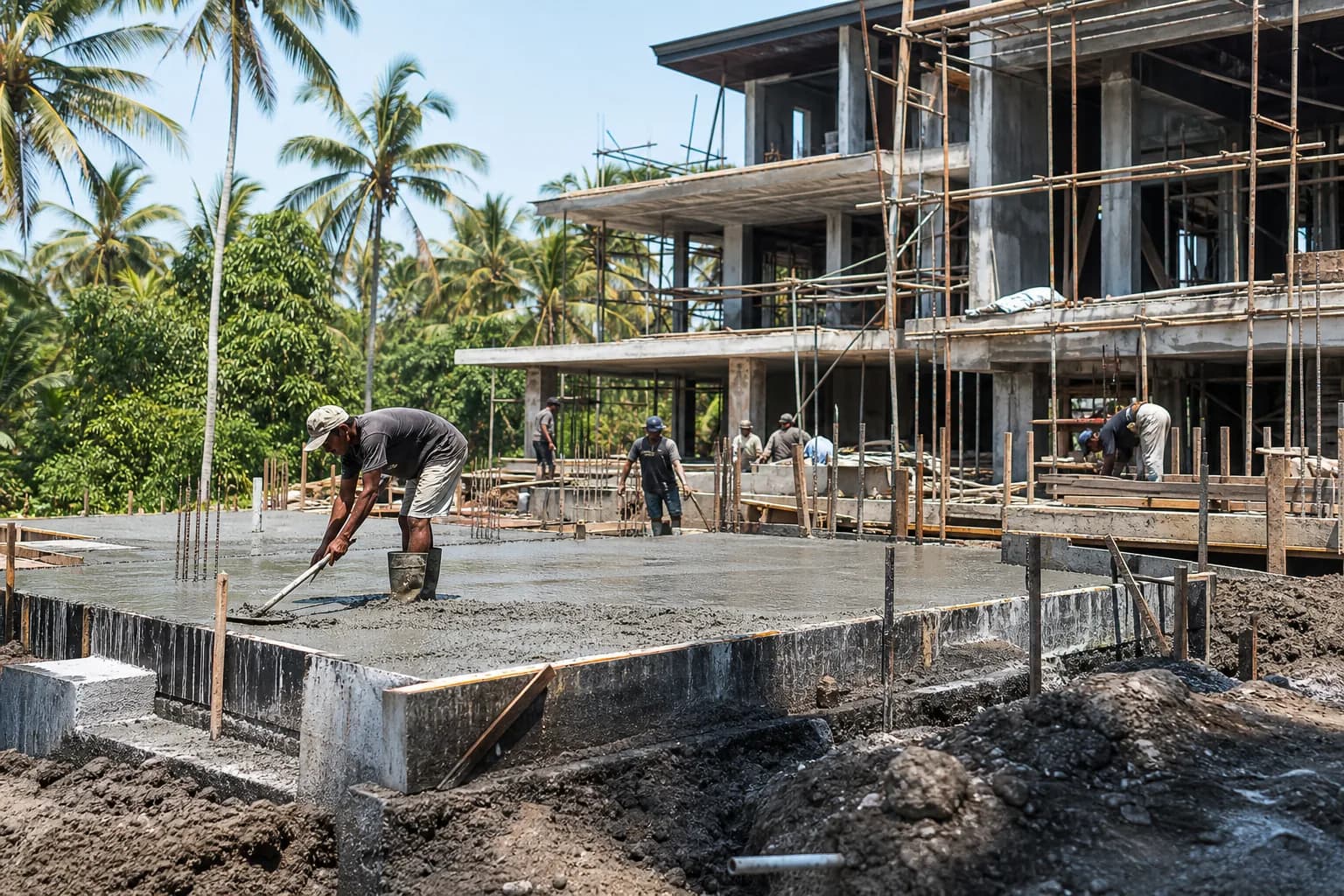
# Risk Management & Buyer Protection in Bali Construction Projects
Understanding Construction Risks in Bali’s Evolving Property Market
The Bali construction landscape has transformed dramatically as of 2026, with new regulations fundamentally reshaping how foreign investors and local buyers approach property development. While these changes have made purchasing property in Bali more complex, they represent a crucial step toward sustainable development and enhanced buyer protection. For those considering construction projects in Bali, understanding construction risks and implementing comprehensive protection strategies has never been more critical.
At Teville, we recognize that navigating construction risks in Bali requires more than just architectural expertise—it demands a thorough understanding of legal frameworks, tropical engineering challenges, and the unique vulnerabilities that foreign investors face in Indonesian property markets. The increased regulatory environment, while initially appearing restrictive, actually provides a framework for more secure, transparent transactions when properly leveraged with experienced construction partners.
The Problem: Why Construction Projects in Bali Carry Unique Risks
Construction risks in Bali extend far beyond typical project management challenges. The island’s unique combination of tropical climate, seismic activity, complex land ownership structures, and evolving regulatory frameworks creates a risk profile unlike anywhere else in Southeast Asia. Foreign investors, in particular, face significant vulnerabilities that can result in financial losses, legal complications, and abandoned projects.
The 2026 regulatory changes have introduced stricter oversight on foreign property ownership, land use designations, and construction permits. While these regulations aim to prevent speculation and overdevelopment, they’ve also created a more complex compliance landscape. Projects that fail to properly navigate these requirements face delays, fines, or complete prohibition. The challenge isn’t simply obtaining permits—it’s ensuring every aspect of your construction project aligns with current zoning laws, environmental protections, and ownership structures that comply with Indonesian property law.
Beyond regulatory complexity, the physical environment presents substantial engineering challenges. Bali’s tropical climate means constant exposure to high humidity, intense rainfall, and salt air in coastal areas. These conditions accelerate material degradation and require specialized construction techniques. The island’s location within the Pacific Ring of Fire adds seismic considerations that must be integrated into structural design. Projects that overlook these tropical engineering requirements often face premature deterioration, structural failures, or costly remediation within years of completion.
Technical Considerations for Bali Construction Projects
Tropical Climate Engineering Requirements
Successful construction in Bali’s tropical environment requires fundamental adaptations to standard building practices. The island experiences average humidity levels exceeding 75% year-round, with monsoon seasons bringing sustained heavy rainfall. These conditions create persistent moisture challenges that affect everything from foundation design to material selection and building envelope performance.
Proper moisture management begins with elevated foundation systems that prevent ground moisture from wicking into structures. Traditional Balinese architecture employed raised platforms for this reason—a principle that remains relevant in modern construction. Adequate ventilation systems must be integrated throughout the building design, not added as an afterthought. Cross-ventilation, high ceilings, and strategic window placement work together to promote air circulation that prevents mold growth and material degradation.
Material selection becomes critical in tropical environments. Standard materials that perform well in temperate climates often fail rapidly in Bali’s conditions. Timber requires treatment against termites and fungal decay. Metal components need corrosion-resistant coatings or materials like stainless steel or aluminum. Concrete mixes must be formulated to resist sulfate attack from soil conditions and chloride penetration in coastal areas. Paint and finishing materials must be specifically rated for high-humidity, high-UV environments.
Seismic Design and Structural Integrity
Bali’s location within an active seismic zone requires all construction to incorporate earthquake-resistant design principles. Indonesian building codes mandate specific seismic design categories based on location and soil conditions. These requirements affect foundation design, structural framing systems, and connection details throughout the building.
Proper seismic design begins with geotechnical investigation to understand soil bearing capacity and potential liquefaction risks. Foundation systems must be designed to transfer loads safely through potentially unstable soils to competent bearing strata. Structural frames require ductile detailing that allows controlled deformation during seismic events without catastrophic failure. This includes proper reinforcement detailing in concrete structures and appropriate connection design in steel or timber frames.
Many construction risks in Bali stem from inadequate structural engineering or failure to implement designs properly during construction. Visual inspections cannot verify that reinforcement is properly placed before concrete is poured, that connections are adequately fastened, or that specified materials are actually used. This makes professional construction oversight essential for ensuring seismic safety.
Legal and Regulatory Compliance Framework
The 2026 regulatory changes have created a more stringent compliance environment that affects every stage of construction. Understanding these requirements is essential for avoiding project delays, financial penalties, or legal complications that can derail development plans.
Land ownership structure forms the foundation of legal compliance. Foreign investors must work within permitted ownership frameworks—typically leasehold arrangements or Indonesian corporate structures (PT PMA). The construction project must align with the ownership structure, with all permits and approvals issued to the appropriate legal entity. Misalignment between ownership structure and construction permits creates legal vulnerabilities that can be exploited or may prevent property transfer or sale.
Zoning and land use regulations have become more strictly enforced. Properties must be used according to their designated classification, with construction projects requiring appropriate permits for the intended use. Tourist accommodation, residential use, and commercial operations each have specific requirements. The increased focus on preventing overdevelopment means authorities scrutinize projects more carefully, particularly in areas approaching development capacity limits.
Environmental compliance has gained prominence in the new regulatory framework. Projects may require environmental impact assessments (AMDAL or UKL-UPL depending on scale), particularly in sensitive areas or for larger developments. Waste management plans, water usage considerations, and protection of natural features may all factor into permit approval. Construction activities must comply with environmental protection requirements throughout the building process.
Identifying and Mitigating Construction Risks in Bali
Financial and Payment Structure Risks
Financial risks represent some of the most significant threats to construction projects in Bali. Unscrupulous contractors may demand large upfront payments and then fail to complete work, disappear entirely, or deliver substandard results. Without proper payment structures and oversight, buyers have limited recourse for recovering funds or compelling project completion.
Effective risk mitigation requires milestone-based payment structures tied to verified completion of specific work stages. Payments should never significantly exceed the value of work completed. Initial deposits should be minimized, with the bulk of payments distributed across foundation completion, structural frame completion, envelope closure, and finishing stages. Final payment retention (typically 5-10%) should be held until all defects are remedied and final inspections passed.
Independent verification of work completion before releasing payments provides essential protection. This requires qualified inspectors who understand both construction standards and local building practices. At Teville, we implement structured inspection protocols at each payment milestone, ensuring that work meets specifications before funds are released. This approach protects buyers while providing contractors with fair, predictable payment for completed work.
Quality Control and Construction Standards
Quality control failures represent another major category of construction risks in Bali. Without proper oversight, projects may suffer from substandard materials, poor workmanship, or failure to follow engineering specifications. These issues may not be immediately apparent but can lead to structural problems, premature deterioration, or safety hazards.
Comprehensive quality control requires regular site inspections by qualified professionals throughout the construction process. Critical stages—foundation excavation and reinforcement, structural frame installation, waterproofing application, and building systems installation—require particular attention. Inspections must verify not just that work appears complete, but that it meets specifications and follows proper construction sequences.
Material verification forms a crucial component of quality control. Specified materials must actually be used, not substituted with cheaper alternatives. This requires checking material deliveries, verifying certifications, and in some cases conducting testing. Concrete strength testing, reinforcement verification, and material certifications should be documented and retained as part of project records.
Timeline and Completion Risks
Construction delays are common in Bali, but extended delays can create significant financial and practical problems for buyers. Rental income may be lost, financing costs accumulate, and personal plans are disrupted. In extreme cases, contractors may abandon projects entirely, leaving buyers with incomplete structures and depleted budgets.
Realistic timeline expectations form the foundation of schedule risk management. Construction in Bali typically takes longer than in more developed markets due to material availability, labor practices, and permit processing times. Buyers should expect 12-18 months for villa construction, with larger projects requiring proportionally longer periods. Contractors who promise unrealistic timelines often fail to deliver or cut corners to meet impossible deadlines.
Contractual protections should include clear milestone schedules with consequences for delays. However, contracts alone don’t ensure timely completion—active project management and regular progress monitoring are essential. Early identification of delays allows corrective action before problems compound. Understanding the root causes of delays—permit issues, material shortages, labor problems, or contractor cash flow difficulties—enables appropriate responses.
The Teville Construction Process: Built-In Buyer Protection
Pre-Construction Due Diligence and Planning
Effective risk management begins long before construction starts. At Teville, our process starts with comprehensive due diligence that examines every aspect of project feasibility and risk exposure. This includes land title verification, zoning compliance review, geotechnical investigation, and regulatory requirement assessment.
Land title verification ensures clear ownership and identifies any encumbrances, disputes, or restrictions that could affect construction or future use. We examine ownership history, verify boundaries, and confirm that the land use designation permits the intended construction. For foreign buyers, we ensure the ownership structure complies with current regulations and provides maximum security within legal constraints.
Our technical due diligence includes site assessment for construction suitability. Geotechnical investigation reveals soil conditions that affect foundation design and construction costs. Topographic survey informs site planning and drainage design. Access, utility availability, and environmental features are all evaluated. This comprehensive assessment identifies potential issues before they become expensive problems during construction.
The planning phase translates project vision into detailed construction documents that serve as the foundation for accurate pricing and quality control. Our designs integrate tropical engineering principles, seismic requirements, and local building practices while meeting international quality standards. Detailed specifications remove ambiguity about materials and methods, reducing disputes and ensuring consistent quality expectations. Explore our available lands to begin your project with proper site selection.
Transparent Contracting and Legal Protection
Our construction contracts provide comprehensive legal protection while maintaining clarity and fairness. Contracts specify scope of work, quality standards, timeline expectations, payment terms, and dispute resolution procedures. All terms are clearly explained, with no hidden clauses or ambiguous language that could be exploited.
Payment structures are designed to protect buyer interests while ensuring contractor cash flow for legitimate project needs. We typically structure payments as: 10% deposit upon contract signing, 20% upon foundation completion, 25% upon structural frame completion, 25% upon building envelope closure, 15% upon substantial completion, and 5% retention upon final completion and defect remediation. This structure ensures buyers never pay significantly ahead of work completion.
Our contracts include specific quality standards and acceptance criteria for each construction phase. Work must pass inspection before payment is released. Defects must be remedied at contractor expense. Warranties cover both workmanship and materials, with clear procedures for addressing post-completion issues. These contractual protections are backed by our company’s commitment to stan
 172 m²8 month(s)from 120.000 USD
Keshava
 3173 m²6 month(s)from 125.000 USD
TALA FOUR
 1from 198.000 USD
Private: Haridas Villas
 4344 m²16 month(s)from 290.000 USD
Radha

Want to calculate?
 3104 m²11 month(s)from 99.000 USD
TALA 100
 164 m²7 month(s)from 79.000 USD
Private: Haridas Villas, Tegallalang
 3124 m²6 month(s)from 123.000 USD
TALA 8
 3127 m²9 month(s)from 177.000 USD
Mukunda
164 m²7 month(s)from 79.000 USDTALA TWO
 2144 m²11 month(s)from 104.000 USD
Narayana
 3180 m²7 month(s)from 142.000 USD
Vasudeva
Start With Real Numbers, Not Guesses
Before buying land or finalizing a design, check the realistic build cost range for your project in Bali.
Our team reviews your inputs and gives a grounded estimate.
Available lands
 1430 m²5 min$ 209862Bali, Klungkung
 1000 m²5 min$ 350431Bali, Drupadi
 1375 m²10 min$ 447044Bali, Canggu
 3000 m²15 min$ 1246921Bali, Tabanan
 3000 m²15 min$ 738916Bali, Cepaka
 1000 m²10 min$ 123154Bali, Jimbaran
 550 m²5 min$ 217629Bali, Tabanan
 585 m²8 min$ 165702Bali, Mengwi
 911 m²15 min$ 248217Bali, Pererenan
 2200 m²15 min$ 508005Bali, Canggu
 700 m²8 min$ 165517Bali, Umalas
 422 m²15 min$ 93547Bali, Kerobokan
 2230 m²15 min$ 410573Bali, Padonan
 7500 m²5 min$ 206281Bali, Kedungu
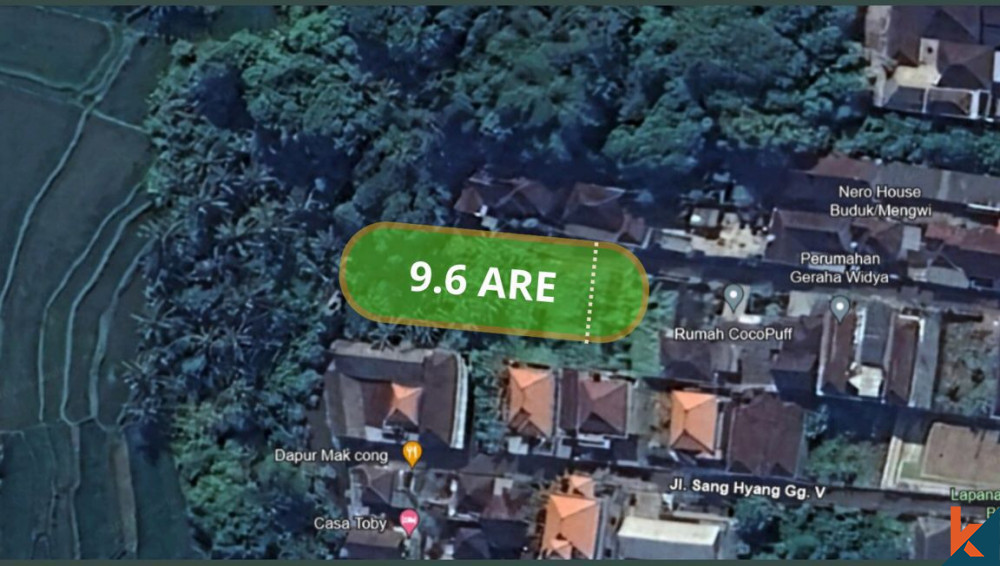 960 m²15 min$ 91034Bali, Mengwi
Essential Bali build & buy guides
- Bali villa construction cost per m² in 2026
- How much will your villa cost? Calculator
- Building a villa in Bali: the complete guide
- Buying land in Bali: step-by-step for foreigners
- Bali villa investment: yields, risks, returns
- Leasehold vs freehold: what foreigners can own
- Construction defect liability & 10-year warranty
- Bali building codes and construction standards
Related guides

Why a Cheap Bali Leasehold Is Cheap: Pricing Red Flags Every Buyer Should Decode
Suspiciously cheap Bali leaseholds are priced low for a reason: short remaining terms, forbidden zoning, missing road access, disputes or weak contracts. How to decode the discount before you pay for it.
8 min read
Fake Compliance and Licensing Agents in Bali: The 2026 Paperwork Scam and How to Verify Documents
Forged certificates, permit fixers and fake notaries: how Bali's paperwork scams work in 2026 and how to verify every property document at its government source.
7 min read
Buying a Bali Villa from Instagram: Phantom Listings, Render-Only Projects and How to Verify
Instagram is Bali's biggest property shop window and its least verified. How phantom listings, render-only projects and cloned developer accounts work — and the verification steps that expose them.
7 min read