Construction Risk Mitigation Buyer Protection in Bali Guide
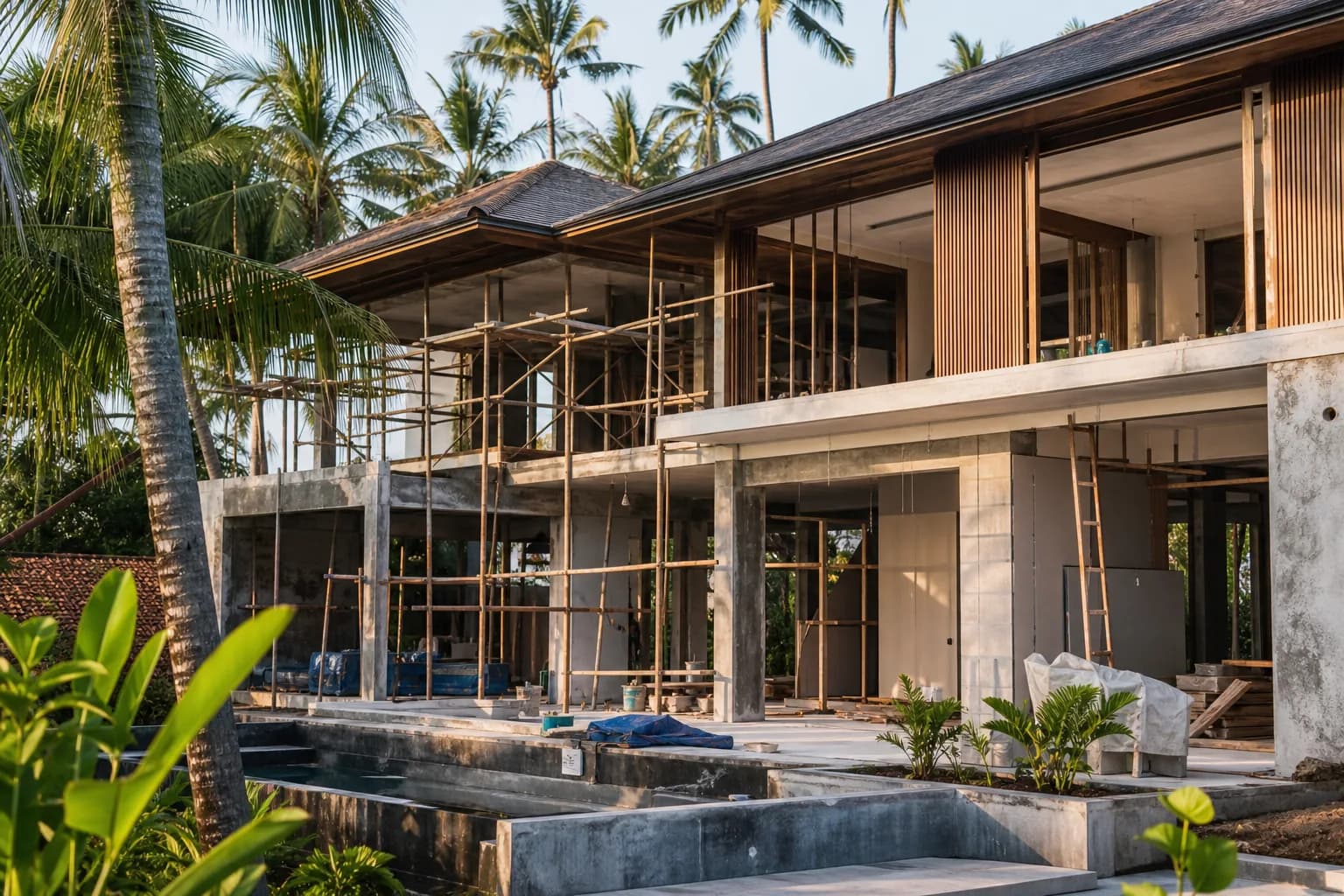
Construction Risk Mitigation and Buyer Protection in Bali: A Comprehensive Technical Guide
Building in Bali presents unique challenges that distinguish it from construction projects in temperate climates or more regulated markets. The intersection of tropical environmental conditions, evolving regulatory frameworks, and complex land tenure systems creates a risk landscape that demands sophisticated mitigation strategies. This guide examines the technical, legal, and procedural aspects of construction risk management in Bali, providing buyers and developers with the analytical framework necessary for informed decision-making.
Understanding Construction Risks in Bali’s Unique Context
The construction environment in Bali operates within parameters that differ substantially from international norms. These differences are not merely procedural variations but fundamental factors that influence project viability, timeline predictability, and long-term asset performance.
Environmental and Climatic Risk Factors
Bali’s tropical climate imposes specific engineering requirements that directly impact material selection, construction methodology, and lifecycle costs. The island experiences annual rainfall exceeding 2,000mm in many areas, with humidity levels consistently above 75%. These conditions accelerate material degradation through multiple mechanisms:
- Corrosion acceleration: Salt-laden air in coastal areas increases oxidation rates for ferrous materials by factors of 3-5 compared to temperate environments
- Biological degradation: Fungal growth, termite activity, and bacterial decomposition affect organic materials and certain composites within months rather than years
- Thermal cycling: Daily temperature variations combined with high moisture content create expansion-contraction cycles that stress building envelopes and waterproofing systems
- UV radiation intensity: Equatorial sun exposure degrades polymers, sealants, and surface treatments at accelerated rates
Current construction cost data for 2026 indicates that investment-grade villa construction ranges between $1,000 and $1,800 per square meter. This range reflects not arbitrary pricing but the material specifications necessary to achieve durability in tropical conditions. The lower end of this spectrum typically involves compromises that manifest as maintenance liabilities within 3-5 years.
Regulatory and Compliance Complexity
The regulatory framework governing construction in Bali operates across multiple jurisdictional layers, each with distinct requirements and enforcement mechanisms. Understanding this structure is essential for risk mitigation:
IMB (Izin Mendirikan Bangunan) – Building Permit: This foundational permit requires technical drawings prepared by certified Indonesian architects and engineers. The approval process involves review by multiple agencies including spatial planning (BAPPEDA), environmental assessment (BPLHD), and local building control offices. Processing timelines range from 2-6 months depending on project scale and location.
Environmental Compliance: Projects exceeding certain thresholds require AMDAL (environmental impact assessment) or UKL-UPL (environmental management and monitoring plans). These assessments examine water management, waste disposal, ecological impact, and community effects. Non-compliance creates legal exposure that can result in construction cessation orders.
Land Status Verification: Construction risk begins with land tenure clarity. The distinction between Hak Milik (freehold, Indonesian citizens only), Hak Pakai (right to use), and Hak Guna Bangunan (building rights) determines not only ownership structure but also permitting pathways and financing options. Leasehold arrangements (common for foreign involvement) require verification of the underlying title and lessor’s legal capacity.
Critical Risk Categories in Bali Construction Projects
Material Specification and Procurement Risks
The selection of construction materials in Bali requires technical analysis that accounts for environmental exposure, supply chain reliability, and long-term performance characteristics. Common risk scenarios include:
Inadequate corrosion protection: Standard mild steel reinforcement corrodes rapidly in Bali’s coastal environment. Investment-grade construction specifies epoxy-coated or stainless steel reinforcement for structural elements, particularly in foundations and exposed concrete. The cost differential is approximately 40-60% higher than standard rebar, but this prevents structural degradation that would require remediation costing multiples of the initial savings.
Waterproofing system failures: Tropical rainfall intensity and groundwater conditions demand multi-layer waterproofing approaches. Single-membrane systems fail with predictable frequency. Proper specification includes crystalline waterproofing additives in concrete, applied membrane systems with redundancy, and drainage planes that manage hydrostatic pressure. The failure mode is not gradual seepage but catastrophic water intrusion during monsoon periods.
Timber and organic material degradation: Untreated or inadequately treated timber fails within 18-24 months in Bali’s climate. Specification must address both termite resistance and fungal protection. Acceptable approaches include pressure-treated hardwoods, naturally durable species (ironwood, teak), or engineered alternatives. Cosmetic timber elements require maintenance protocols that many buyers underestimate.
Material specifications that appear adequate in temperate climates prove insufficient in tropical environments. The engineering principle is not to meet minimum standards but to exceed them by margins that account for accelerated degradation mechanisms.
Contractor and Execution Risks
The construction execution phase presents risks that stem from capability gaps, resource constraints, and quality control deficiencies. Bali’s construction industry includes operators ranging from sophisticated firms employing qualified engineers to informal contractors lacking technical training.
Technical capability assessment: Evaluating contractor capability requires examination of previous projects with similar technical requirements, verification of engineering staff qualifications, and assessment of quality control systems. The presence of a qualified site engineer (Pengawas Lapangan) with relevant certification is not optional but essential for complex projects.
Subcontractor management: Most construction in Bali involves extensive subcontracting for specialized trades. The primary contractor’s ability to coordinate, supervise, and quality-check subcontractor work directly determines outcome quality. Contractual structures should specify subcontractor approval rights and quality standards for specialized work including waterproofing, electrical systems, and structural elements.
Material substitution: Without rigorous oversight, material substitution represents a persistent risk. Specified materials may be replaced with inferior alternatives that appear similar but lack required performance characteristics. This occurs not necessarily through deliberate fraud but through supply chain expedience and cost pressure. Mitigation requires material verification protocols and independent inspection.
Timeline and Schedule Risks
Construction timelines in Bali extend beyond those in more developed markets due to factors including material procurement lead times, weather interruptions, and regulatory processing. Realistic timeline expectations for a quality villa construction project range from 12-18 months from permit acquisition to completion.
Weather-related delays are not incidental but structural. The monsoon season (November-March) reduces productive work days by approximately 30-40% due to rainfall interruptions, site access limitations, and activities that cannot proceed in wet conditions (concrete finishing, painting, waterproofing application). Projects that fail to account for seasonal impacts in scheduling create compressed timelines that incentivize quality compromises.
Legal and Contractual Risks
Construction contracts in Indonesia operate under the Civil Code framework, with specific provisions for construction agreements (perjanjian pemborongan). Recent legal trends emphasize the importance of comprehensive risk allocation and dispute resolution mechanisms.
Contract structure deficiencies: Many construction disputes arise from inadequate contract documentation. Essential elements include detailed scope definition, specification references, payment milestone criteria tied to verifiable completion stages, variation order procedures, and time extension provisions. Contracts should be drafted in Indonesian (the legally binding version) with English translations for foreign parties.
Payment structure risks: Payment schedules should align with actual project progress rather than arbitrary time intervals. Front-loaded payment structures create moral hazard and reduce contractor incentive for quality completion. A balanced approach ties payments to verified completion of defined stages, with retention amounts (typically 5-10%) held until defect rectification periods expire.
Insurance and liability gaps: Construction insurance in Bali often provides less comprehensive coverage than international standards. Contractors’ all-risk insurance should cover material damage, third-party liability, and worker accidents. Buyers should verify insurance adequacy and consider owner-controlled insurance programs for significant projects. The absence of adequate insurance transfers risk to the buyer in practical terms.
Buyer Protection Mechanisms and Due Diligence Protocols
Pre-Construction Due Diligence
Effective risk mitigation begins before construction commences. The due diligence phase establishes the foundation for project success through systematic verification of critical factors:
Land title verification: This process extends beyond reviewing the certificate to examining the chain of title, verifying the absence of encumbrances, confirming spatial plan compliance (RTRW), and validating that the seller has legal capacity to transact. For leasehold arrangements, verification includes examining the lessor’s underlying title, confirming lease registration, and assessing renewal provisions. This process typically requires 2-4 weeks and involves notary verification and land office (BPN) record examination.
Site condition assessment: Technical site evaluation should examine soil bearing capacity, groundwater levels, flood risk, access adequacy, and utility availability. Geotechnical investigation is not optional for quality construction—it determines foundation design requirements and identifies subsurface conditions that affect construction methodology and cost. Sites with poor soil conditions may require piling or ground improvement that adds $50-150 per square meter to foundation costs.
Regulatory feasibility analysis: Before committing to land acquisition, verify that the intended development is permissible under current zoning regulations. Bali’s spatial planning regulations (RTRW) designate areas for specific uses, with restrictions on building height, coverage ratios, and setbacks. Coastal areas face additional restrictions under coastal zone management regulations. Assumptions about development potential without regulatory verification create expensive surprises.
Design Phase Risk Mitigation
The design phase establishes technical specifications that determine construction quality and long-term performance. This phase warrants investment in qualified professionals:
Architect and engineer selection: Indonesian regulations require that construction drawings be prepared and stamped by licensed Indonesian architects (IAI certification) and engineers (PII certification for structural, MEP systems). The selection should prioritize demonstrated experience with tropical construction and familiarity with international quality standards. Design fees typically range from 5-8% of construction value for comprehensive services including construction administration.
Specification development: Detailed specifications should address material standards, installation methods, quality criteria, and testing requirements. Generic specifications create interpretation ambiguities that contractors resolve in their favor. Specifications should reference Indonesian National Standards (SNI) where applicable, with upgrades specified where SNI standards prove insufficient for tropical durability requirements.
Value engineering with caution: Cost reduction exercises during design should be approached analytically. Not all cost reductions create equal risk. Reducing finishes specifications may be acceptable; reducing structural capacity, waterproofing redundancy, or corrosion protection creates latent defects. The question is not whether cost can be reduced but whether the reduction compromises essential performance characteristics.
Construction Phase Oversight
Active oversight during construction represents the primary defense against quality deficiencies and specification deviations. The oversight structure should include:
Independent supervision consultant: Engaging a qualified supervision consultant (pengawas) independent of the contractor provides objective quality verification. The supervisor’s role includes reviewing shop drawings, verifying material compliance, monitoring construction methodology, documenting progress, and certifying payment milestones. Supervision fees typically range from 3-5% of construction value but provide risk mitigation value substantially exceeding this cost.
Staged inspection protocols: Critical construction stages require inspection before subsequent work conceals them. These stages include foundation excavation and reinforcement before concrete placement, structural reinforcement before concrete pour, waterproofing application before backfill or covering, and MEP rough-in before wall closure. Photographic documentation at each stage creates verification records.
Material testing and verification: Quality assurance requires testing of critical materials including concrete strength testing (cylinder tests at 7 and 28 days), soil compaction verification, waterproofing integrity testing, and electrical system commissioning. These tests should be conducted by independent laboratories with documented methodologies.
Completion and Handover Procedures
The project completion phase requires systematic verification that construction meets specifications and functions as intended:
Defect identification and rectification: A comprehensive punch list process identifies deficiencies requiring correction before final acceptance. This process should be systematic, documented with photographs, and include verification of rectification. Common deficiency categories include waterproofing details, finish quality, MEP system functionality, and hardware installation.
System commissioning: Mechanical and electrical systems require functional testing under load conditions. This includes water supply and drainage systems, electrical distribution, air conditioning performance, and pool equipment operation. Commissioning should include demonstration of operation and provision of maintenance documentation.
Documentation package: Final handover should include as-built drawings reflecting actual construction (which often varies from design drawings), equipment manuals and warranties, maintenance schedules, material specifications for future reference, and contractor warranties. This documentation proves essential for future maintenance and modifications.
Financial Protection Structures
Payment Milestone Frameworks
Payment structures should align financial exposure with actual project progress. A typical milestone structure for villa construction includes:
- Mobilization (10%): Upon contract execution and site mobilization, covering initial material procurement and site establishment
- Foundation completion (20%): Upon completion of foundation work including footings, grade beams, and ground floor slab, verified by supervision consultant
- Structure completion (25%): Upon completion of structural frame including columns, beams, and roof structure
- Envelope closure (20%): Upon completion of walls, windows, doors, and roofing, creating weather-tight enclosure
- MEP rough-in (10%): Upon completion of mechanical, electrical, and plumbing rough installation
- Finishes completion (10%): Upon substantial completion of interior and exterior finishes
- Final completion (5%): Upon final acceptance and handover, after punch list rectification
This structure maintains buyer leverage throughout the project while providing contractor cash flow for legitimate project expenses. Retention of 5-10% until defect rectification period expiration (typically 3-6 months) incentivizes quality and provides funds for defect correction if the contractor proves unresponsive.
Escrow and Trust Account Mechanisms
For significant projects, escrow arrangements provide additional protection by ensuring funds are released only upon verified milestone completion. The escrow agent (typically a notary or bank) holds funds and releases them based on certification from the independent supervisor. This structure prevents contractor access to funds before earning them through performance.
Performance Security Instruments
Bank guarantees or performance bonds provide financial recourse if contractors fail to perform. These instruments typically equal 10-20% of contract value and remain valid through the construction period plus defect liability period. While adding cost (typically 1-3% annually), they provide meaningful protection for projects exceeding $500,000 in value.
Technical Standards and Specification Benchmarks
Structural Engineering Standards
Structural design in Bali must account for seismic activity (the island lies in an active seismic zone) and wind loads from tropical storms. Indonesian standards (SNI 1726 for seismic design, SNI 1727 for loads) provide baseline requirements, but quality construction often exceeds these minimums:
Concrete specifications: Structural concrete should meet minimum compressive strength of 25 MPa (K-300) for residential construction, with higher strengths for critical elements. Concrete mix design should address workability in tropical heat, with admixtures controlling set time and reducing water content. Proper curing is essential—inadequate curing in tropical heat creates surface cracking and reduces strength by 20-30%.
Reinforcement detailing: Seismic design requires ductile detailing including confinement reinforcement in columns, adequate lap lengths, and proper anchorage. These details are not visible in finished construction but determine structural performance during seismic events. Inspection during construction is the only verification opportunity.
Building Envelope Performance
The building envelope must manage heat gain, moisture intrusion, and air infiltration while withstanding tropical weather exposure:
Roofing systems: Roof design should provide adequate drainage (minimum 2% slope), with waterproofing systems appropriate for the roof type. Flat or low-slope roofs require membrane waterproofing with heat-welded seams or liquid-applied systems. Tile roofs require proper underlayment and flashing details. Inadequate roof design creates water intrusion that damages interior finishes and promotes mold growth.
Wall systems: Exterior walls should include water-resistant barriers, proper flashing at openings, and drainage planes that manage water that penetrates the outer surface. Single-wythe masonry walls without cavity drainage or water-resistant barriers allow water penetration during wind-driven rain events. Proper wall systems add approximately $30-50 per square meter but prevent chronic moisture problems.
Window and door specifications: Openings represent primary water intrusion points. Proper installation includes sill pans, head flashing, and perimeter sealing. Window and door units should be specified for tropical exposure, with corrosion-resistant hardware and adequate weather-stripping. Aluminum frames should be powder-coated or anodized; steel frames require hot-dip galvanizing or stainless steel specification.
MEP Systems Design
Mechanical, electrical, and plumbing systems require design appropriate for tropical conditions and Indonesian electrical standards:
Electrical systems: Indonesia operates on 220V, 50Hz power. Electrical design should include adequate circuit capacity for air conditioning loads (typically 40-50% of total electrical load in tropical residences), proper grounding systems, and surge protection. Distribution panels should be located in ventilated areas to prevent heat buildup. Wiring should be copper (not aluminum) with insulation rated for tropical temperatures.
Plumbing systems: Water supply systems should include filtration (Bali’s water often contains sediment and biological contaminants), adequate pressure (many areas have low municipal pressure requiring booster pumps), and hot water systems sized for demand. Drainage systems require proper venting and trap seals that resist evaporation in tropical heat. Pool systems require proper filtration, chemical treatment systems, and overflow management.
Air conditioning: Cooling loads in Bali typically range from 80-120 watts per square meter depending on insulation, glazing, and orientation. System selection should consider efficiency, maintenance requirements, and noise levels. Split systems are common but require proper condensate drainage and outdoor unit placement that allows airflow and service access.
Common Risk Scenarios and Mitigation Strategies
Scenario 1: Contractor Insolvency or Abandonment
Contractor financial failure during construction creates significant complications. Mitigation approaches include:
- Financial due diligence on contractors before engagement, including review of financial statements and verification of bonding capacity
- Payment structures that prevent over-payment relative to work completed
- Performance bonds that provide funds to complete work if the original contractor defaults
- Contract provisions that allow buyer termination for cause with clearly defined triggers
- Documentation systems that allow a replacement contractor to understand work completed and specifications
Scenario 2: Concealed Defects Discovered Post-Completion
Defects in concealed work (foundations, waterproofing, structural elements) may not manifest until months or years after completion. Protection mechanisms include:
- Comprehensive photographic documentation during construction, particularly before work is concealed
- Material testing and verification during construction rather than rel
 172 m²8 month(s)from 120.000 USD
Keshava
 4344 m²16 month(s)from 290.000 USD
Radha
 2144 m²11 month(s)from 104.000 USD
Narayana

Want to calculate?
 3127 m²9 month(s)from 177.000 USD
Mukunda
 3180 m²7 month(s)from 142.000 USD
Vasudeva
 3124 m²6 month(s)from 123.000 USD
TALA 8
 3104 m²11 month(s)from 99.000 USD
TALA 100
 3173 m²6 month(s)from 125.000 USD
TALA FOUR
 164 m²7 month(s)from 79.000 USD
TALA TWO
 1from 198.000 USD
Private: Haridas Villas
164 m²7 month(s)from 79.000 USDPrivate: Haridas Villas, Tegallalang
Available lands
 680 m²15 min$ 110751Bali, Pererenan
 2700 m²30 min$ 314224Bali, Sidemen
 10000 m²19 min$ 232759Bali, Buleleng
 3700 m²15 min$ 738177Bali, Tabanan
 18900 m²2 min$ 6912931Bali, Pecatu
 1300 m²10 min$ 348214Bali, Tabanan
 3254 m²5 min$ 631800Bali, All
 515 m²7 min$ 570813Bali, Canggu
 1000 m²10 min$ 384852Bali, Canggu
 1300 m²10 min$ 312192Bali, Kutuh South Bali
 1000 m²10 min$ 280788Bali, Pecatu
 1410 m²15 min$ 390702Bali, Tabanan
 7500 m²5 min$ 206281Bali, Kedungu
 2230 m²15 min$ 410573Bali, Padonan
 750 m²15 min$ 187038Bali, Kerobokan
Essential Bali build & buy guides
- Bali villa construction cost per m² in 2026
- How much will your villa cost? Calculator
- Building a villa in Bali: the complete guide
- Buying land in Bali: step-by-step for foreigners
- Bali villa investment: yields, risks, returns
- Leasehold vs freehold: what foreigners can own
- Construction defect liability & 10-year warranty
- Bali building codes and construction standards
Related guides

Why a Cheap Bali Leasehold Is Cheap: Pricing Red Flags Every Buyer Should Decode
Suspiciously cheap Bali leaseholds are priced low for a reason: short remaining terms, forbidden zoning, missing road access, disputes or weak contracts. How to decode the discount before you pay for it.
8 min read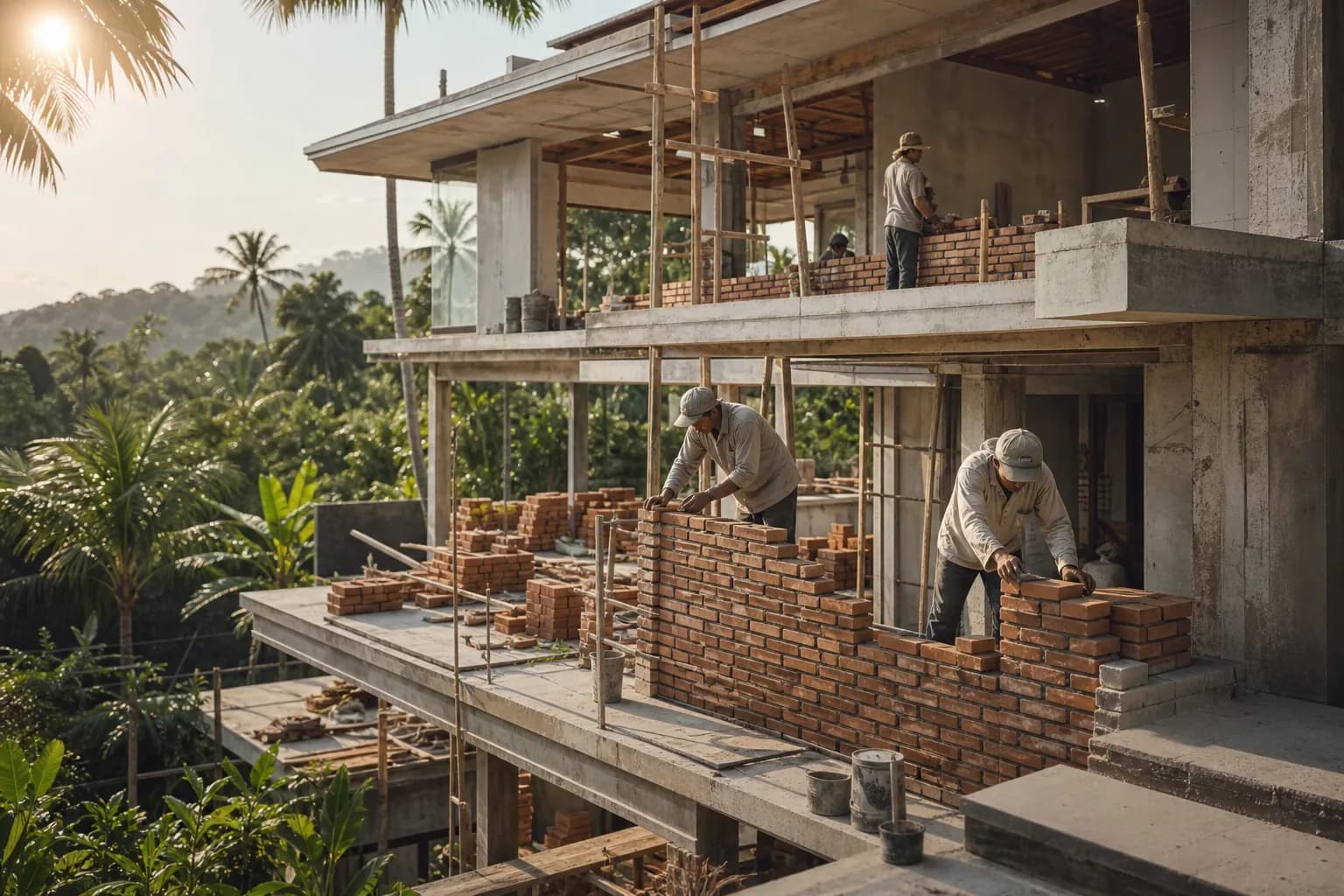
Fake Compliance and Licensing Agents in Bali: The 2026 Paperwork Scam and How to Verify Documents
Forged certificates, permit fixers and fake notaries: how Bali's paperwork scams work in 2026 and how to verify every property document at its government source.
7 min read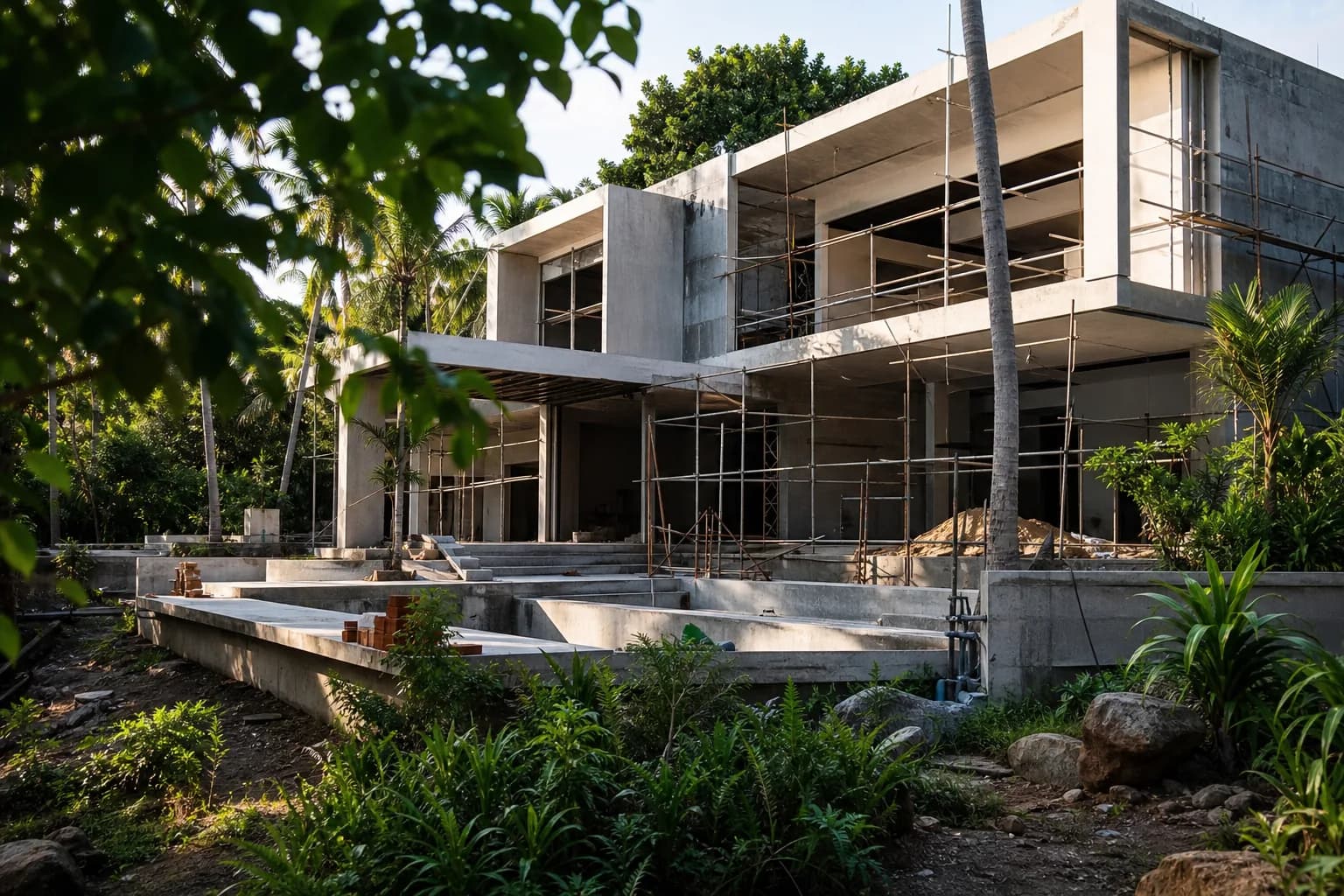
Buying a Bali Villa from Instagram: Phantom Listings, Render-Only Projects and How to Verify
Instagram is Bali's biggest property shop window and its least verified. How phantom listings, render-only projects and cloned developer accounts work — and the verification steps that expose them.
7 min read