Canggu Contractor License Verification: Avoid Builder Liability B
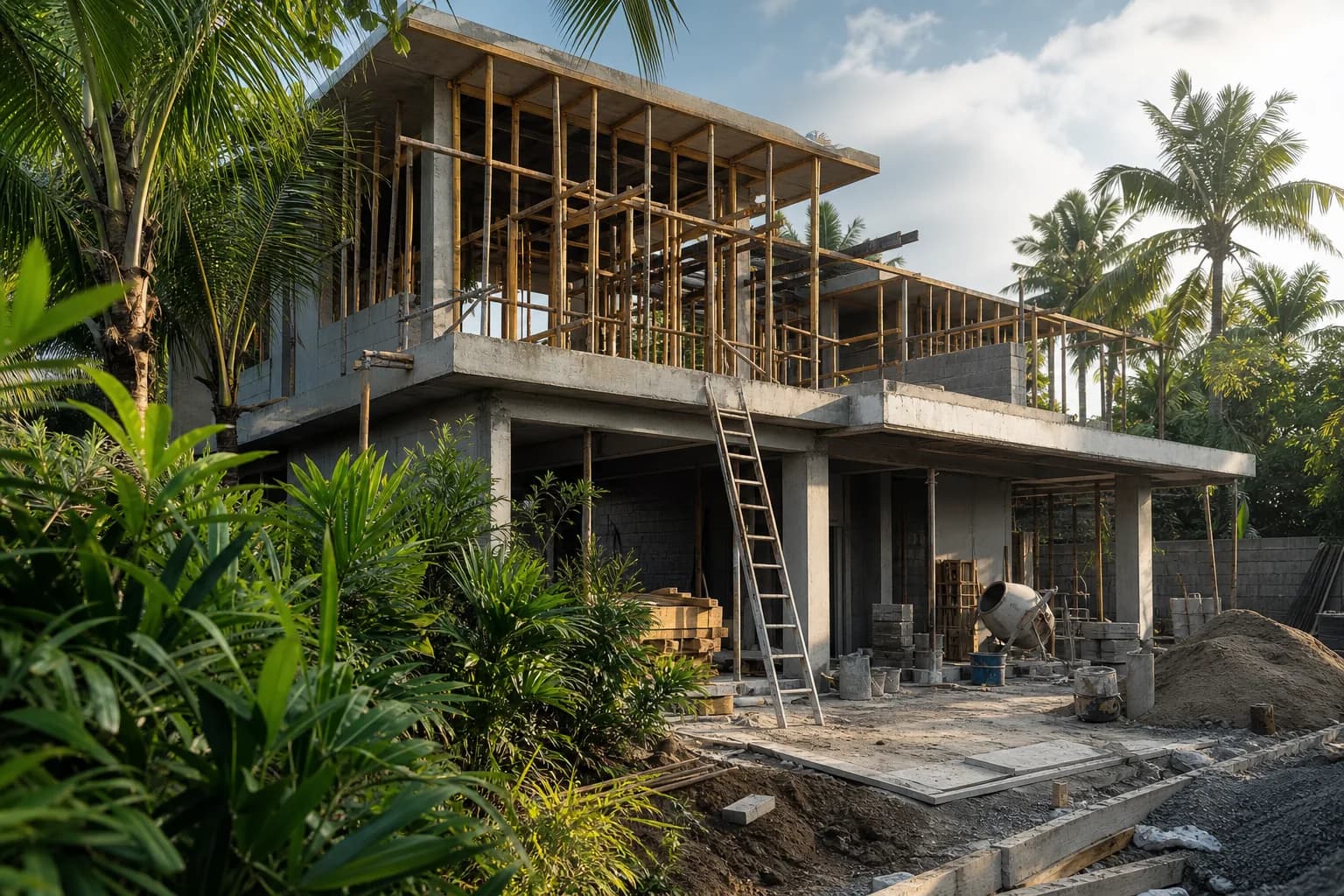
The Hidden Cost of Unlicensed Construction: Why Canggu Contractor Verification Matters
A foreign investor recently discovered their completed Canggu villa couldn’t obtain an SLF certificate because their contractor never secured proper PBG documentation during construction. The result: 380 million IDR in demolition costs, structural modifications, and re-permitting fees—plus 14 months of lost rental potential. This scenario repeats across Canggu monthly, where rapid development pressure and contractor abundance create perfect conditions for license verification failures. The fundamental problem isn’t finding builders in Canggu; it’s distinguishing properly licensed construction contractors from skilled tradespeople operating without mandatory Indonesian construction permits. When verification fails, liability doesn’t rest with the unlicensed builder—it transfers entirely to the property owner, creating cascading legal, financial, and structural risks that can exceed the original construction budget. Understanding contractor license verification in Canggu’s specific regulatory environment isn’t optional due diligence; it’s the primary defense against liability costs that routinely destroy villa project economics in Bali’s most competitive construction market.
Technical Framework: Indonesian Construction Licensing and Canggu Enforcement Reality
Indonesian construction licensing operates through a tiered certification system that many foreign buyers misunderstand. The critical distinction lies between individual trade skills and corporate construction authorization. A contractor may possess exceptional carpentry or masonry skills while completely lacking the legal framework to execute permitted construction projects in Bali.
Mandatory Licensing Components for Legal Construction
Legal construction contractors in Canggu must hold valid IUJK (Izin Usaha Jasa Konstruksi) certification—the Construction Services Business License issued by LPJK (Lembaga Pengembangan Jasa Konstruksi). This isn’t a simple business registration; it’s a technical qualification system that grades contractors by project scale capacity, from small residential (Grade 1) to major infrastructure (Grade 7). For typical Canggu villa construction valued between 2-8 billion IDR, contractors require minimum Grade 3 IUJK certification.
The IUJK system verifies three critical capacities: technical personnel qualifications (minimum one certified construction manager with SKA certification), financial capacity (audited statements proving project funding capability), and equipment resources. Contractors must renew IUJK certification every three years, with technical audits confirming ongoing compliance. This creates a verification challenge: a contractor may present expired IUJK documentation that appears legitimate but provides zero legal protection.
Beyond IUJK, legal construction requires project-specific PBG (Persetujuan Bangunan Gedung) permits before any ground disturbance. The PBG isn’t a contractor license—it’s a building permit—but only IUJK-certified contractors can legally apply for and execute PBG-permitted work. This creates the critical verification point: if your contractor cannot produce current IUJK certification matching your project scale, they cannot legally obtain PBG permits, making all construction technically illegal regardless of quality.
Canggu-Specific Enforcement Patterns
Canggu’s construction enforcement differs significantly from Ubud, Sanur, or Uluwatu due to rapid development density and increased neighbor complaints. Denpasar’s DPMPTSP (Investment and One-Stop Integrated Service Office) conducts quarterly sweeps in Canggu, specifically targeting unpermitted construction. Unlike rural areas where enforcement may be sporadic, Canggu’s visibility and property values make it a priority enforcement zone.
The enforcement mechanism focuses on SLF (Sertifikat Laik Fungsi) certificate applications—the Certificate of Feasibility for Use required before any building occupancy or utility connection. When owners apply for SLF, inspectors verify that construction matched approved PBG plans and that the executing contractor held valid IUJK throughout construction. This back-end verification catches unlicensed work that proceeded without detection during construction phases.
Unlicensed construction discovered during SLF inspection triggers mandatory remediation: structural engineering re-certification, potential demolition of non-compliant elements, and complete re-permitting. The property owner bears 100% of these costs—contractors face administrative fines but no liability for owner losses. This liability structure makes pre-construction license verification the only effective risk management strategy.
The PT PMA Requirement Layer
Foreign ownership structures add another verification dimension. Properties held through PT PMA (foreign investment companies) face stricter scrutiny because construction contracts become corporate transactions subject to BKPM (Investment Coordinating Board) oversight. PT PMA construction must use contractors with specific foreign project authorization—a subset of IUJK certification that many local Canggu contractors lack.
This creates a common failure point: a contractor may hold valid IUJK for domestic projects but lack PT PMA authorization, making their work technically illegal for foreign-owned properties despite appearing fully licensed. Verification must confirm not just IUJK validity but specific authorization for foreign investment project execution.
Hidden Risks: What License Verification Failures Actually Cost
The direct costs of unlicensed contractor liability are quantifiable, but hidden costs often exceed obvious expenses. Understanding the complete risk profile reveals why verification failures destroy project economics even when construction quality appears acceptable.
Structural Liability Without Engineering Certification
Licensed contractors must employ certified structural engineers (holding SKA certification) for all designs. Unlicensed contractors typically use experienced draftspeople who produce visually acceptable plans without proper load calculations, soil analysis, or seismic engineering. Canggu’s high water table and coastal soil conditions require specific foundation engineering that generic experience cannot replace.
When structural failures emerge—foundation settling, crack propagation, water intrusion—owners discover their insurance is void because construction lacked proper engineering certification. Repair costs become entirely self-funded, and property resale becomes impossible without expensive structural remediation and re-certification. A typical foundation repair in Canggu’s soil conditions: 180-340 million IDR, plus 6-9 months of construction disruption.
The SLF Impossibility Trap
Properties built by unlicensed contractors cannot obtain SLF certificates through standard processes. This creates a permanent legal defect: the building exists physically but lacks legal occupancy authorization. Consequences cascade: no legal utility connections (electricity, water remain temporary/illegal), no business licensing for commercial use, no legal rental agreements, and severely impaired resale value.
Some owners attempt SLF remediation by hiring licensed contractors post-construction to “certify” completed work. This rarely succeeds because inspectors require construction phase documentation—progress photos, material certifications, inspection records—that unlicensed contractors never produce. The only reliable solution: partial demolition and reconstruction under proper permits, typically affecting 30-50% of the structure at 40-60% of original construction cost.
Neighbor Complaint Vulnerability
Canggu’s density creates neighbor proximity that didn’t exist five years ago. Unlicensed construction provides neighbors with legal leverage during disputes over noise, views, or property boundaries. A single complaint triggers inspection, revealing permit deficiencies that force construction halts. Restart requires full permitting—a 4-7 month process—plus potential fines of 15-35 million IDR and mandatory structural re-inspection of completed work.
Step-by-Step Contractor License Verification Process for Canggu Projects
Step 1: Request Current IUJK Documentation (Week 1)
Demand the contractor’s current IUJK certificate, issued within the past three years. Verify the certificate includes: LPJK registration number, grade classification matching your project scale, expiration date, and company name exactly matching their business registration. Request the contractor’s LPJK online verification code—legitimate contractors can provide instant digital verification through the LPJK portal at lpjk.net.
Cross-reference the IUJK company name with their NPWP (tax identification) and business registration documents. Name discrepancies indicate potential document fraud or expired certifications being misrepresented. For PT PMA projects, specifically confirm “foreign project authorization” notation on the IUJK certificate—this isn’t standard and requires explicit verification.
Step 2: Verify Technical Personnel Certifications (Week 1-2)
Request SKA (Sertifikat Keahlian) certificates for the contractor’s construction manager and structural engineer assigned to your project. SKA certificates must be current (5-year validity) and match the personnel who will actually supervise your construction—not company owners who won’t be on-site.
Contact LPJK directly to verify SKA authenticity using certificate numbers. This step catches a common fraud: contractors presenting legitimate SKA certificates for personnel no longer employed or never assigned to your project. Insist on meeting the certified personnel during contract negotiation—if they’re unavailable or unfamiliar with your project details, verification has failed.
Step 3: Confirm PBG Application Authority (Week 2-3)
Before signing construction contracts, verify the contractor can legally apply for your project’s PBG permit. Request a pre-application consultation with Canggu’s DPMPTSP office, bringing the contractor’s IUJK documentation. Officials will confirm whether the contractor’s certification grade and authorization type permit PBG application for your specific project scale and ownership structure.
This step prevents a costly scenario: signing contracts and paying deposits to contractors who cannot legally obtain permits, forcing project abandonment or contractor substitution after significant time and cost investment. The consultation costs nothing but requires the contractor’s participation—refusal to attend indicates verification problems.
Step 4: Review Past Project SLF Completion Records (Week 3-4)
Request documentation of three recent projects where the contractor successfully obtained final SLF certificates. Contact those property owners directly to verify: permit process smoothness, inspection passage rates, and post-construction support quality. SLF completion is the ultimate license verification—contractors who cannot demonstrate successful SLF obtainment lack proven compliance capability.
Review the contractor’s portfolio at actual project sites, not just photos. Verify construction quality matches permit documentation and that properties have legal utility connections (indicating successful SLF). This physical verification catches contractors who present impressive portfolios of unpermitted work that appears high-quality but carries hidden legal defects.
Step 5: Structure Contractual License Maintenance Requirements (Week 4)
Include specific contract clauses requiring: continuous IUJK validity throughout construction (with immediate notification of any certification changes), mandatory progress documentation for SLF application, and contractor liability for permit-related delays or failures. Establish payment milestones tied to permit achievements—PBG approval, mid-construction inspection passage, final SLF obtainment.
Require the contractor to maintain professional liability insurance covering permit-related failures and structural defects. Licensed contractors can obtain this insurance; unlicensed operators cannot. Insurance verification provides independent confirmation of legitimate licensing status while creating financial protection against contractor failures.
Realistic Cost and Timeline Implications of License Verification
Verification Process Investment
Proper contractor license verification requires 4-6 weeks before construction contract signing and costs 8-15 million IDR in professional fees: legal review of contractor documentation (3-5 million IDR), independent LPJK verification services (2-3 million IDR), structural engineer consultation to review contractor’s technical personnel qualifications (3-5 million IDR), and DPMPTSP pre-application consultation facilitation (1-2 million IDR if using permit expeditor services).
These costs represent 0.3-0.5% of typical Canggu villa construction budgets (3-5 billion IDR range) but prevent liability costs averaging 15-25% of construction budgets when unlicensed contractor problems emerge. The verification investment pays for itself by eliminating a single permit remediation cycle.
Licensed vs. Unlicensed Contractor Cost Differences
Properly licensed contractors in Canggu typically quote 8-12% higher than unlicensed operators for identical scope. On a 4 billion IDR villa project, this represents 320-480 million IDR additional cost. However, licensed contractors include permit processing, engineering certification, and SLF obtainment in their scope—services that cost 180-280 million IDR when purchased separately for unlicensed contractor remediation.
The true cost difference: 140-200 million IDR (3.5-5% of project value) for dramatically reduced risk and guaranteed legal completion. Licensed contractors also complete projects 15-20% faster because they avoid permit delays, inspection failures, and remediation cycles that plague unlicensed work.
Liability Cost Ranges for Verification Failures
When unlicensed contractor problems emerge, typical liability costs in Canggu include: permit remediation and re-application (85-140 million IDR), structural engineering re-certification (45-75 million IDR), partial demolition and reconstruction for non-compliant elements (180-420 million IDR depending on scope), SLF application delays and expediting (25-45 million IDR), and legal fees for contractor disputes (30-60 million IDR). Total liability
 3104 m²11 month(s)from 99.000 USD
TALA 100
 164 m²7 month(s)from 79.000 USD
TALA TWO
 3180 m²7 month(s)from 142.000 USD
Vasudeva
 3127 m²9 month(s)from 177.000 USD
Mukunda
164 m²7 month(s)from 79.000 USDPrivate: Haridas Villas, Tegallalang
 3173 m²6 month(s)from 125.000 USD
TALA FOUR
 1from 198.000 USD
Private: Haridas Villas
 2144 m²11 month(s)from 104.000 USD
Narayana

Want to calculate?
 3124 m²6 month(s)from 123.000 USD
TALA 8
 172 m²8 month(s)from 120.000 USD
Keshava
 4344 m²16 month(s)from 290.000 USD
Radha
Start With Real Numbers, Not Guesses
Before buying land or finalizing a design, check the realistic build cost range for your project in Bali.
Our team reviews your inputs and gives a grounded estimate.
Available lands
 2700 m²30 min$ 314224Bali, Sidemen
 1000 m²10 min$ 123154Bali, Jimbaran
 18900 m²2 min$ 6912931Bali, Pecatu
 2000 m²5 min$ 1440887Bali, Pecatu
 6000 m²10 min$ 1330049Bali, Kutuh South Bali
 700 m²20 min$ 90517Bali, Cepaka
 911 m²15 min$ 248217Bali, Pererenan
 550 m²15 min$ 164594Bali, Mengwi
 200 m²11 min$ 89286Bali, Tabanan
 2000 m²15 min$ 261700Bali, Babakan
 1000 m²10 min$ 384852Bali, Canggu
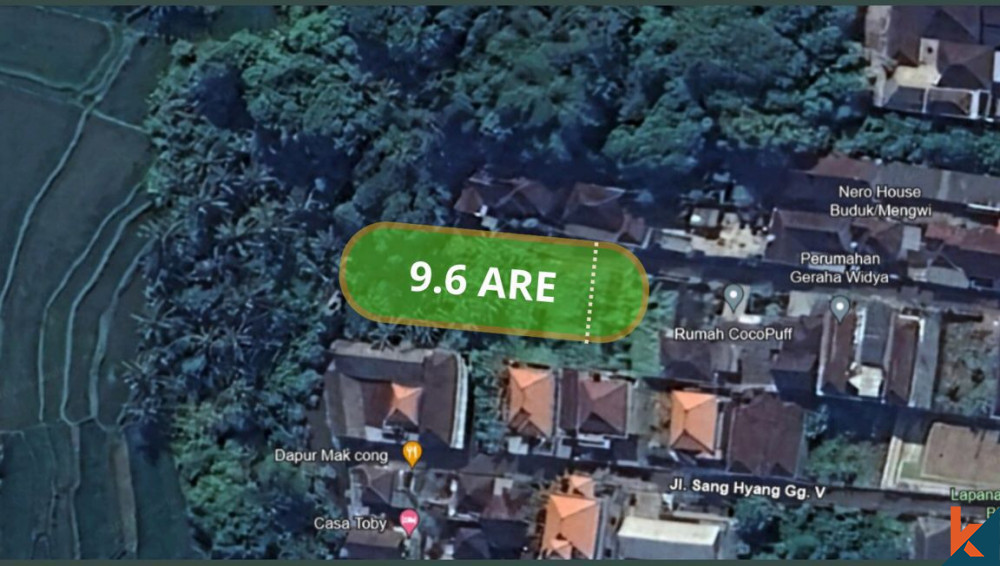 960 m²15 min$ 91034Bali, Mengwi
 2500 m²5 min$ 609606Bali, Kedungu
 800 m²10 min$ 307882Bali, Tibubeneng
 3700 m²15 min$ 738177Bali, Tabanan
Essential Bali build & buy guides
- Bali villa construction cost per m² in 2026
- How much will your villa cost? Calculator
- Building a villa in Bali: the complete guide
- Buying land in Bali: step-by-step for foreigners
- Bali villa investment: yields, risks, returns
- Leasehold vs freehold: what foreigners can own
- Construction defect liability & 10-year warranty
- Bali building codes and construction standards
Related guides

Why a Cheap Bali Leasehold Is Cheap: Pricing Red Flags Every Buyer Should Decode
Suspiciously cheap Bali leaseholds are priced low for a reason: short remaining terms, forbidden zoning, missing road access, disputes or weak contracts. How to decode the discount before you pay for it.
8 min read
Fake Compliance and Licensing Agents in Bali: The 2026 Paperwork Scam and How to Verify Documents
Forged certificates, permit fixers and fake notaries: how Bali's paperwork scams work in 2026 and how to verify every property document at its government source.
7 min read
Buying a Bali Villa from Instagram: Phantom Listings, Render-Only Projects and How to Verify
Instagram is Bali's biggest property shop window and its least verified. How phantom listings, render-only projects and cloned developer accounts work — and the verification steps that expose them.
7 min read