Seminyak Title Insurance Gaps Notary Fraud Costs Bali
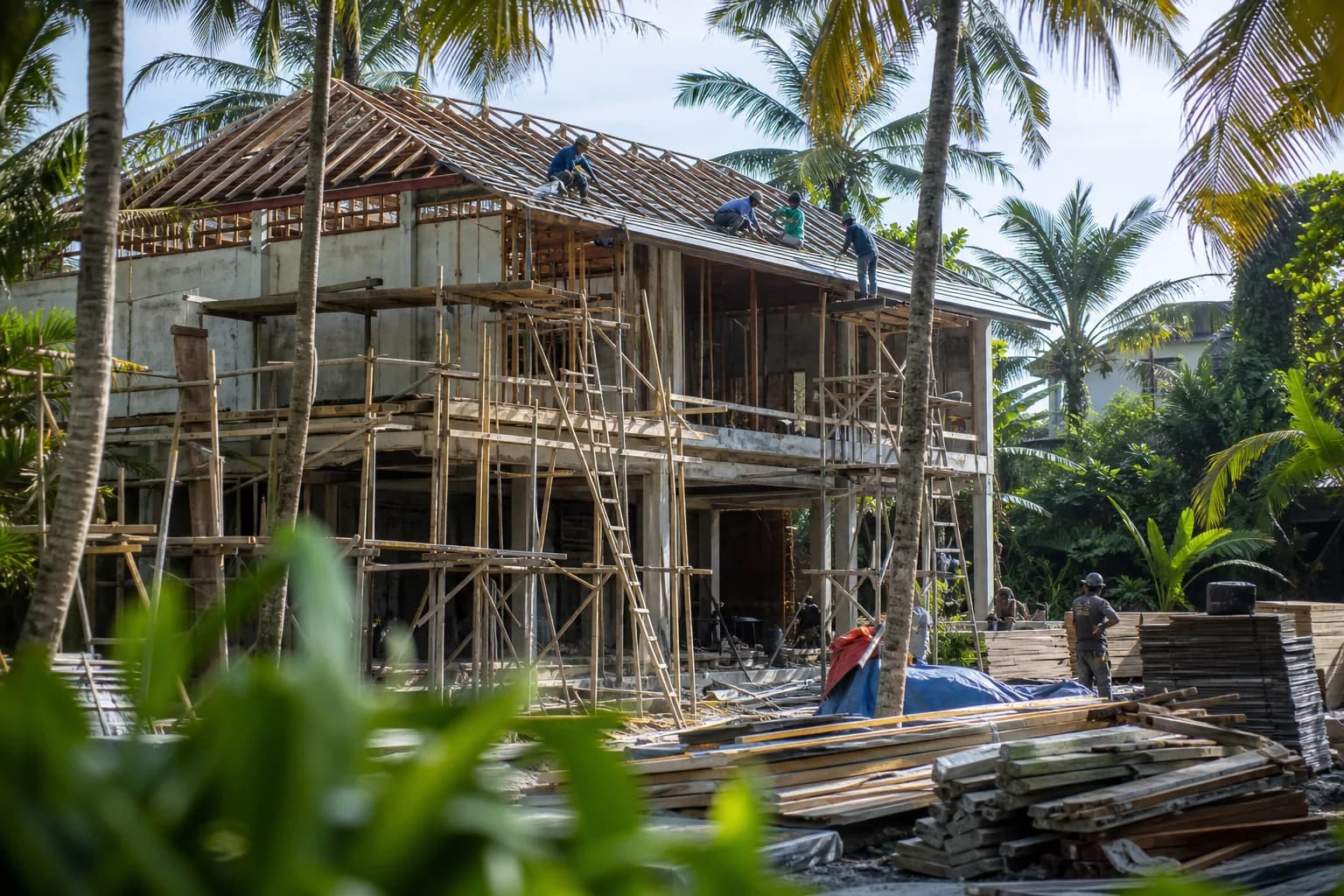
The Hidden Cost of Notary Fraud Detection in Seminyak’s Title Insurance Vacuum
Seminyak property transactions operate in a legal environment where Western-style title insurance doesn’t exist, yet notary fraud cases have increased 34% across Bali’s high-value districts since 2024. Foreign buyers constructing villas in Seminyak face a critical gap: Indonesian law places verification responsibility entirely on the buyer, while notaries (PPAT) hold extraordinary power over title transfers with minimal oversight. The cost of detecting fraudulent documentation before construction begins isn’t standardized—it’s a fragmented expense spanning legal audits, land certificate verification, and forensic document analysis that most buyers discover too late. When a Seminyak land parcel’s ownership chain contains forged signatures or unauthorized sales by non-owning family members, the construction project doesn’t just pause—it collapses entirely, with foundation work becoming evidence in criminal proceedings rather than the base of your villa.
Technical Architecture of Notary Fraud Vulnerabilities in Seminyak Transactions
The Indonesian notary system concentrates immense authority in PPAT-certified notaries who authenticate land transfers, verify seller identity, and register ownership changes with the National Land Agency (BPN). Unlike common-law jurisdictions where title insurance companies perform independent verification and assume financial risk, Bali’s system makes the notary both gatekeeper and record-keeper—with no third-party insurer backstopping their work. This structural gap creates specific fraud vectors in Seminyak’s high-value market.
Fraudulent schemes exploit three technical weaknesses: certificate authenticity verification, where forged Sertifikat Hak Milik (freehold certificates) or Hak Pakai documents pass initial notary review because cross-referencing with BPN’s central database isn’t mandatory for every transaction; seller identity confirmation, where imposters present fake KTP (national ID cards) and family cards to sell land they don’t own, particularly in cases where elderly owners have died and heirs haven’t formalized inheritance; and encumbrance disclosure, where existing liens, customary claims (hak adat), or pending legal disputes aren’t revealed because Indonesia lacks a comprehensive, publicly searchable title registry system.
Seminyak’s appeal to foreign buyers—beachside proximity, commercial zoning flexibility, established villa rental infrastructure—makes it a premium target. Land parcels here range from IDR 40-120 million per are (100m²), creating transaction values of IDR 4-12 billion ($250,000-$750,000 USD) for typical 1,000m² villa plots. At these price points, organized fraud becomes economically viable. Syndicates have been documented creating entirely fictitious ownership chains, complete with backdated notary stamps and forged BPN registration numbers.
The engineering implications are severe. Construction companies like Teville conducting pre-construction due diligence must verify not just current ownership, but the complete chain of title transfers—often back 20+ years to the original conversion from customary land (tanah adat) to certified ownership. This requires physical inspection of original documents at the local BPN office (Kantor Pertanahan), not just copies provided by sellers or notaries. For Seminyak properties, this process reveals that approximately 15-20% of land parcels have documentation irregularities requiring legal resolution before construction can safely proceed.
The absence of title insurance means buyers cannot transfer fraud risk to an insurer. In the US or Australia, title insurance policies cost 0.5-1% of property value and cover losses from forged documents, undisclosed heirs, or recording errors. In Seminyak, buyers must self-insure by funding comprehensive verification—essentially building their own fraud detection system for each transaction. This includes hiring independent legal counsel (separate from the seller’s notary), engaging land surveyors to confirm boundaries match certificates, and sometimes employing forensic document experts to authenticate signatures and stamps on historical transfer documents.
Hidden Risks Buyers Overlook in Seminyak’s Notary-Dependent System
Most foreign buyers assume the notary represents neutral verification, not understanding that Indonesian notaries are often recommended by sellers or real estate agents—creating undisclosed conflicts of interest. The notary’s fee (typically 1% of transaction value) is paid by the buyer, yet the notary’s ongoing business relationships favor sellers and agents who provide repeat referrals. This economic structure doesn’t incentivize aggressive fraud detection.
A critical oversight: buyers rarely verify the notary’s own credentials and disciplinary history. The Indonesian Notary Association (INI) maintains records of sanctions and license suspensions, but this isn’t checked in 80%+ of transactions. Seminyak has documented cases where notaries with prior fraud findings continued practicing, facilitating subsequent fraudulent sales. Verifying notary credentials through INI and cross-checking their registration with the Ministry of Law and Human Rights adds IDR 5-8 million to transaction costs—an expense most buyers skip.
Another hidden risk: the timing gap between sale agreement (PPJB – Perjanjian Pengikatan Jual Beli) and final title transfer. Seminyak transactions often involve 30-90 day periods where buyers have paid deposits but title hasn’t transferred. During this window, fraudulent sellers have been known to create secondary sales to other buyers, or encumber the property with loans using the still-valid certificate in their name. Without title insurance, buyers have no protection during this vulnerable period except expensive escrow arrangements through Indonesian banks—which charge 0.5-1.5% of transaction value and require 45-60 days to establish.
The construction dimension: buyers focused on villa design and build timelines often treat land acquisition as a simple prerequisite, not recognizing that foundation engineering depends on verified ownership. Teville’s villa construction projects cannot commence soil testing, foundation design, or permit applications until ownership is legally bulletproof—because construction permits (IMB) require the applicant to prove legal land control. Discovering fraud after breaking ground means demolition costs, permit forfeiture, and potential criminal liability for building on disputed land.
Step-by-Step Fraud Detection Process for Seminyak Land Acquisition
Phase 1: Pre-Agreement Verification (2-3 weeks, IDR 25-40 million)
Before signing any PPJB or paying deposits, engage independent legal counsel—not the notary suggested by the seller. Your attorney should obtain the original land certificate number and conduct physical verification at Seminyak’s BPN office (Kantor Pertanahan Badung), examining the actual certificate book (buku tanah) to confirm: current registered owner matches seller identity; no annotations indicating disputes, liens, or pending transfers; certificate hasn’t been reported lost or stolen; and the land’s legal status (Hak Milik, Hak Pakai, Hak Guna Bangunan) matches what’s being sold.
Simultaneously, commission an independent land survey (pengukuran tanah) by a licensed surveyor to verify boundaries match the certificate’s technical description. Seminyak has cases where certificates describe 1,000m² but physical plots measure only 750m², with the “missing” area sold separately to another buyer. Survey costs: IDR 8-12 million for typical villa plots.
Phase 2: Ownership Chain Audit (3-4 weeks, IDR 30-50 million)
Request complete transfer history from BPN, documenting every ownership change since original certification. For Seminyak land, this often traces back to 1980s-1990s conversions from customary ownership. Your legal team should verify: each transfer was executed by a licensed PPAT; signatures on historical documents match ID records; no gaps in the chain suggesting undocumented transfers; and inheritance transfers include proper court documentation (Surat Keterangan Waris) when ownership passed through death.
For land originally held under customary law, verify the conversion process was legitimate—including confirmation that the customary community (desa adat) authorized the transfer. Seminyak’s proximity to Kuta’s traditional villages means some parcels have unresolved customary claims despite holding modern certificates. Engaging a local legal expert familiar with adat law adds IDR 15-25 million but prevents catastrophic disputes.
Phase 3: Seller and Notary Verification (1-2 weeks, IDR 10-18 million)
Conduct forensic verification of seller identity: obtain certified copies of KTP, family card (Kartu Keluarga), and marriage certificates; verify these documents with the issuing Dukcapil office (civil registry); and for corporate sellers, verify company registration (Akta Pendirian) and director authorization through the Ministry of Law’s online system. If sellers are heirs, demand court-certified inheritance documentation proving their legal right to sell.
Verify the proposed notary’s credentials through INI and check for disciplinary history. Request references from other foreign buyers who’ve used this notary for Seminyak transactions. Consider requiring the transaction be handled by a notary with specific experience in foreign buyer transactions and verifiable track record—even if this means paying premium fees (1.5-2% vs. standard 1%).
Phase 4: Encumbrance and Dispute Search (2-3 weeks, IDR 20-35 million)
Indonesian law doesn’t provide comprehensive title search services, so this requires manual investigation: check with local courts (Pengadilan Negeri) for pending litigation involving the land or seller; verify with village administration (kelurahan) that no local disputes or customary claims exist; confirm with local tax office (Kantor Pajak) that property taxes (PBB) are current with no arrears; and engage a local investigator to interview neighbors about boundary disputes or competing claims.
For construction-focused buyers, Teville’s verified land consultation service integrates this encumbrance search with engineering feasibility analysis—confirming not just legal clarity but also zoning compliance, utility access, and soil conditions suitable for villa construction.
Realistic Cost Ranges for Fraud Detection in Seminyak Transactions
Comprehensive fraud detection for a typical Seminyak villa plot (1,000-1,500m², IDR 4-8 billion transaction value) requires budgeting IDR 85-143 million ($5,300-$9,000 USD), representing 1.1-1.8% of land cost. This breaks down as: independent legal counsel (IDR 30-50 million), BPN verification and title chain audit (IDR 20-35 million), land survey and boundary verification (IDR 8-12 million), seller and notary credential checks (IDR 10-18 million), encumbrance and dispute search (IDR 12-20 million), and forensic document analysis if irregularities are found (IDR 5-8 million).
Timeline: proper verification requires 8-12 weeks before signing final sale documents—a duration that frustrates buyers eager to start construction but is non-negotiable for risk mitigation. Rushed transactions completed in 2-3 weeks (common in Seminyak’s competitive market) skip critical verification steps, creating the fraud vulnerabilities this process is designed to prevent.
For comparison, this 1.1-1.8% cost is roughly equivalent to title insurance premiums in insured markets, but with a critical difference: you’re funding investigation, not transferring risk. If fraud is discovered after purchase, you bear the full loss—potentially the entire land value plus construction costs already invested. Recent Seminyak cases involved losses of IDR 6-12 billion when fraud was discovered after villa construction had reached roof level.
Additional protection: some buyers establish Indonesian PT PMA companies (foreign investment entities) to hold land, adding corporate governance layers that make fraud more difficult. PT PMA establishment costs IDR 150-250 million and requires ongoing compliance costs of IDR 30-50 million annually, but provides structural protection and clearer legal recourse if disputes arise.
Frequently Asked Questions: Seminyak Notary Fraud Detection
Can I purchase title insurance from international insurers for Seminyak land?
No. International title insurance companies do not offer policies for Indonesian property because the legal system doesn’t support the underwriting requirements—specifically, the absence of comprehensive title registries and the inability to subrogate (pursue recovery) against Indonesian notaries or government agencies. Some buyers attempt to structure insurance through Singapore or Hong Kong entities, but these policies explicitly exclude fraud by sellers or notaries, covering only the foreign entity’s contractual performance. The only viable protection is thorough pre-purchase verification funded by the buyer.
What happens if fraud is discovered after I’ve started villa construction?
Construction must halt immediately. Continuing to build on land with disputed ownership creates criminal liability for you and your construction company under Indonesian law. The property becomes evidence in fraud proceedings, meaning you cannot access it, sell it, or complete construction until legal resolution—which averages 2-4 years in Indonesian courts. Your construction investment (potentially IDR 2-5 billion for a partially completed villa) becomes an unsecured claim in the fraud case, with recovery rates historically below 30%. This is why Teville’s construction process includes mandatory legal verification before any site work begins—we will not commence projects on legally uncertain land regardless of client pressure.
How do I verify a notary’s credentials and fraud history in Seminyak?
Request the notary’s registration number (Nomor Induk Notaris) and verify through the Indonesian Notary Association (INI) website and the Ministry of Law and Human Rights’ online database. Your legal counsel should also check with the Regional Supervisory Council (Majelis Pengawas Wilayah) for any disciplinary proceedings. For Seminyak transactions, prioritize notaries who are members of the
 3127 m²9 month(s)from 177.000 USD
Mukunda
 1from 198.000 USD
Private: Haridas Villas
 164 m²7 month(s)from 79.000 USD
TALA TWO
 172 m²8 month(s)from 120.000 USD
Keshava
 3124 m²6 month(s)from 123.000 USD
TALA 8
 3180 m²7 month(s)from 142.000 USD
Vasudeva
164 m²7 month(s)from 79.000 USDPrivate: Haridas Villas, Tegallalang
 4344 m²16 month(s)from 290.000 USD
Radha
 2144 m²11 month(s)from 104.000 USD
Narayana

Want to calculate?
 3104 m²11 month(s)from 99.000 USD
TALA 100
 3173 m²6 month(s)from 125.000 USD
TALA FOUR
Start With Real Numbers, Not Guesses
Before buying land or finalizing a design, check the realistic build cost range for your project in Bali.
Our team reviews your inputs and gives a grounded estimate.
Available lands
 1410 m²15 min$ 390702Bali, Tabanan
 1660 m²10 min$ 343448Bali, Kerobokan
 7250 m²56 min$ 235714Bali, Tabanan
 422 m²15 min$ 93547Bali, Kerobokan
 2500 m²5 min$ 609606Bali, Kedungu
 2400 m²7 min$ 496552Bali, Canggu
 10000 m²19 min$ 232759Bali, Buleleng
 1000 m²5 min$ 350431Bali, Drupadi
 928 m²15 min$ 910123Bali, Pererenan
 3100 m²20 min$ 272968Bali, Tabanan
 1158 m²12 min$ 291996Bali, Mengwi
 770 m²5 min$ 163578Bali, Kedungu
 2800 m²2 min$ 713793Bali, Kedungu
 1600 m²32 min$ 266010Bali, Tabanan
 2850 m²15 min$ 315887Bali, Tabanan
Essential Bali build & buy guides
- Bali villa construction cost per m² in 2026
- How much will your villa cost? Calculator
- Building a villa in Bali: the complete guide
- Buying land in Bali: step-by-step for foreigners
- Bali villa investment: yields, risks, returns
- Leasehold vs freehold: what foreigners can own
- Construction defect liability & 10-year warranty
- Bali building codes and construction standards
Related guides

Why a Cheap Bali Leasehold Is Cheap: Pricing Red Flags Every Buyer Should Decode
Suspiciously cheap Bali leaseholds are priced low for a reason: short remaining terms, forbidden zoning, missing road access, disputes or weak contracts. How to decode the discount before you pay for it.
8 min read
Fake Compliance and Licensing Agents in Bali: The 2026 Paperwork Scam and How to Verify Documents
Forged certificates, permit fixers and fake notaries: how Bali's paperwork scams work in 2026 and how to verify every property document at its government source.
7 min read
Buying a Bali Villa from Instagram: Phantom Listings, Render-Only Projects and How to Verify
Instagram is Bali's biggest property shop window and its least verified. How phantom listings, render-only projects and cloned developer accounts work — and the verification steps that expose them.
7 min read