Bali Construction Defect Warranty Claims: Legal Process
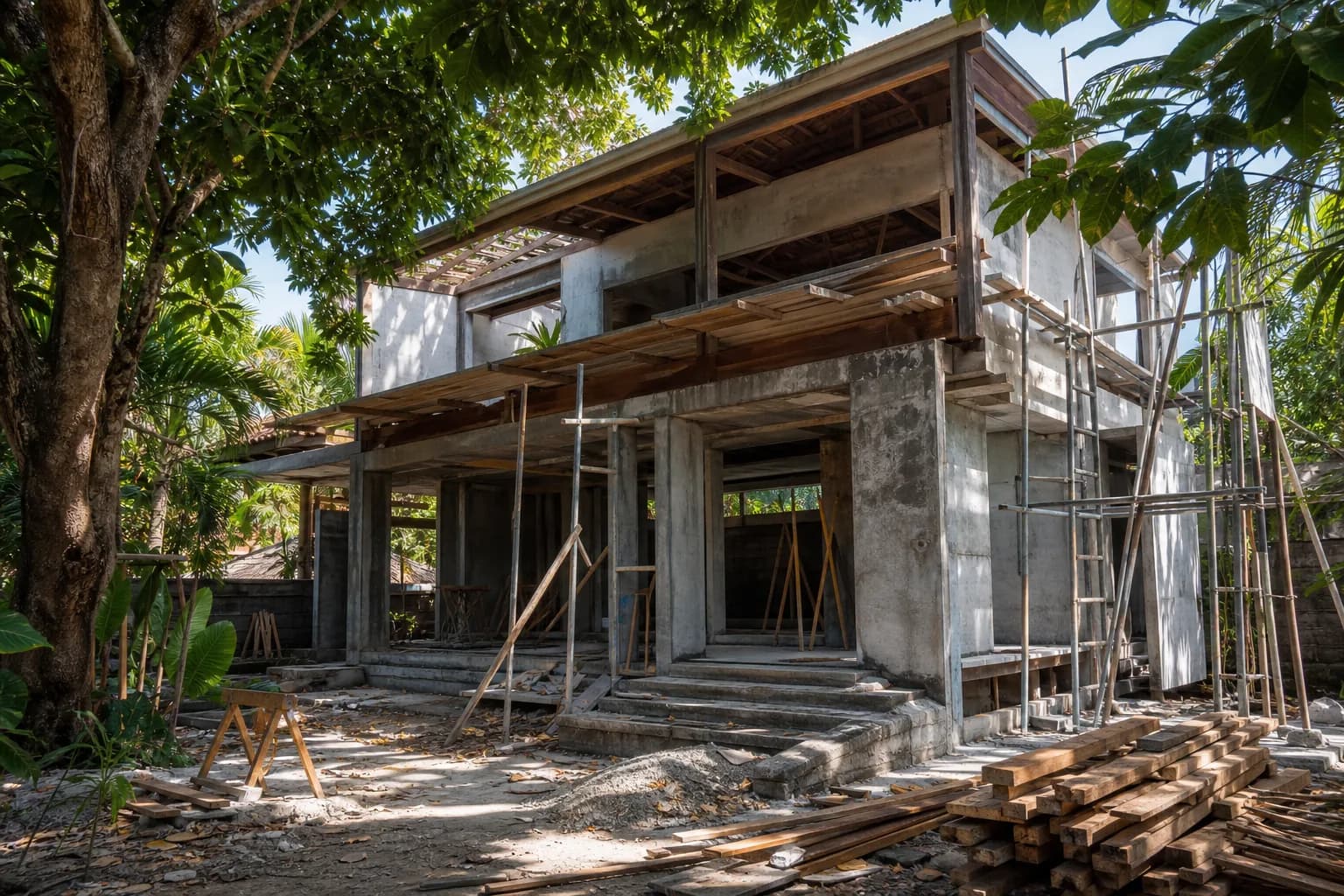
The Critical Gap: When Your Bali Villa Shows Structural Defects After Handover
You’ve completed construction on your Bali villa, received the final handover certificate, and moved past the initial inspection period. Six months later, you discover significant structural cracks in load-bearing walls, persistent water infiltration through the roof membrane, or foundation settlement causing floor level discrepancies. The contractor’s initial response is evasive. You need to understand the Indonesian legal framework for construction defect warranty claims—not just contractual promises, but the statutory rights, notification procedures, liability periods, and dispute resolution mechanisms that govern post-completion construction failures in Bali. This isn’t about minor cosmetic issues; it’s about understanding how Indonesian Construction Services Law protects building owners when serious defects emerge after project completion, and the specific legal process required to enforce those protections.
Indonesian Statutory Framework for Construction Defect Liability
The legal foundation for construction defect warranty claims in Indonesia centers on Law No. 2 of 2017 concerning Construction Services (Jasa Konstruksi), which establishes mandatory liability periods regardless of contractual warranty terms. Under Article 69, construction service providers bear responsibility for building failures up to a maximum of 10 years from final delivery (Berita Acara Serah Terima or BAST), with liability duration scaled to building classification and structural significance.
For permanent residential structures in Bali—the typical villa construction—the statutory framework distinguishes between structural defects (affecting load-bearing systems, foundations, primary framing) and non-structural defects (finishes, fixtures, secondary systems). Structural defects affecting building safety carry the full 10-year liability period, while non-structural defects typically fall under shorter warranty periods defined by Government Regulation No. 14 of 2021.
Recent amendments to Indonesian warranty law, effective from 2024 revisions to consumer protection regulations, introduce specific procedural requirements: a 60-day defect notice period from discovery, the owner’s right to demand free improvement (perbaikan tanpa biaya), and a five-year limitation period for initiating legal proceedings from the date of defect discovery. These timelines are critical—missing the 60-day notification window can compromise your legal standing, even when the defect falls within the statutory liability period.
The law distinguishes between “hidden defects” (cacat tersembunyi) that couldn’t reasonably be discovered during initial inspection and “apparent defects” that should have been identified before handover acceptance. For tropical construction in Bali, this distinction becomes technically complex: is water infiltration through improperly installed waterproofing membranes a hidden defect, or should it have been detected during initial rain testing? Indonesian courts examine whether the defect was discoverable through reasonable inspection methods appropriate to the building type and local construction standards.
Liability extends beyond the primary contractor. Under the Construction Services Law, the Penanggung Jawab Teknis Bangunan (PJTB)—the certified technical supervisor who signs off on structural compliance—shares joint liability for structural failures. This creates multiple potential defendants in defect claims: the construction company, the technical supervisor, and potentially the design consultant if the defect stems from design inadequacy rather than construction execution. For villa construction in Bali, identifying the correct liable party requires technical analysis to determine whether the defect originates from design error, material failure, construction workmanship, or inadequate supervision.
The statutory framework also addresses force majeure and environmental factors. Damage from earthquakes, volcanic activity, or extreme weather events may limit contractor liability if the structure was built to applicable seismic and wind load standards. In Bali’s tropical environment, this creates grey areas: is foundation movement due to inadequate soil investigation and foundation design, or due to unprecedented rainfall patterns? Indonesian courts require expert testimony to establish causation, making technical documentation from the construction phase critical to successful warranty claims.
Hidden Risks in Bali Construction Warranty Enforcement
The most dangerous assumption foreign villa owners make is that Indonesian construction warranty law operates like Western jurisdictions with established case law and predictable enforcement. In practice, several hidden risks complicate defect claims in Bali. First, the burden of proof rests heavily on the building owner. You must demonstrate not only that a defect exists, but that it results from construction inadequacy rather than improper maintenance, unauthorized modifications, or normal wear. For complex tropical engineering issues—like whether wall cracks stem from foundation settlement versus thermal expansion in Bali’s climate—this requires expensive independent engineering assessments.
Second, many construction contracts in Bali include arbitration clauses referencing the Indonesian National Board of Arbitration (BANI) or other dispute resolution bodies. While arbitration can be faster than litigation, it eliminates the right to appeal on technical grounds, and arbitrator selection becomes critical. Contractors often propose arbitrators with construction industry backgrounds who may be sympathetic to execution challenges in Bali’s environment. The contract language determining arbitrator selection procedures and technical expert appointment can predetermine case outcomes.
Third, the practical enforcement of judgments or arbitration awards against construction companies in Bali faces significant obstacles. Many villa construction firms operate through project-specific PT PMA entities with limited assets beyond the immediate project. By the time defects emerge 2-3 years post-completion, the legal entity may have minimal recoverable assets. This makes pre-construction due diligence on contractor financial stability and parent company guarantees essential—issues rarely considered during the initial contractor selection focused on portfolio and pricing.
Fourth, the interaction between leasehold land agreements and construction defect liability creates unique complications in Bali. If your villa is built on leasehold land with the construction company also serving as lease facilitator, defect disputes can trigger threats of lease complications or access restrictions. The legal separation between land rights and building ownership requires careful contract structuring to prevent construction disputes from affecting land tenure security.
Step-by-Step Legal Process for Construction Defect Claims
Step 1: Defect Documentation and Technical Assessment (Weeks 1-4)
Upon discovering potential defects, immediately engage an independent structural engineer or building surveyor licensed in Indonesia to conduct a comprehensive technical assessment. This assessment must document the defect’s nature, extent, probable cause, and whether it falls within statutory liability categories. Photographic evidence, measurement data, and comparison to approved construction drawings and specifications are essential. For tropical-specific issues like water infiltration or timber deterioration, the assessment should address whether the defect stems from design inadequacy for Bali’s climate, material selection errors, or construction execution failures. This independent report becomes the technical foundation for your legal claim and must be completed before formal notification to preserve the 60-day notice requirement.
Step 2: Formal Defect Notification (Week 4-5)
Prepare a formal written notification (Surat Pemberitahuan Cacat) to the contractor, technical supervisor (PJTB), and any other potentially liable parties identified in your construction contract. This notification must be delivered within 60 days of defect discovery via registered mail or courier with delivery confirmation. The notification should reference specific contract clauses, cite relevant articles of Law No. 2 of 2017, describe the defect with reference to the independent technical assessment, and demand free remediation within a reasonable timeframe (typically 30-60 days depending on defect severity). Include copies of the technical assessment, photographic evidence, and relevant contract documents. This formal notification is a legal prerequisite—failure to provide proper notice within the statutory period can invalidate subsequent legal claims.
Step 3: Negotiated Resolution Attempt (Weeks 6-14)
Indonesian legal procedure strongly favors pre-litigation negotiation (musyawarah). Following formal notification, engage in documented good-faith negotiations with the contractor. Many construction contracts require a formal meeting within 14 days of defect notification. During this phase, the contractor may conduct their own technical assessment, propose remediation plans, or dispute liability. Document all communications in writing, including meeting minutes signed by both parties. If the contractor acknowledges the defect and proposes remediation, establish a detailed remediation protocol with specific technical specifications, completion timeline, quality verification procedures, and consequences for inadequate repairs. If the contractor disputes liability or proposes inadequate remediation, this documented negotiation failure becomes necessary evidence for subsequent dispute resolution proceedings.
Step 4: Dispute Adjudication Board or Mediation (Weeks 15-26)
If negotiation fails, the next step depends on your contract’s dispute resolution provisions. Many construction contracts in Indonesia reference Dispute Adjudication Boards (DAB) as an intermediate mechanism before arbitration or litigation. The DAB, typically comprising three construction professionals, reviews technical evidence and issues a determination on defect liability and appropriate remediation. Alternatively, contracts may require mediation through the Indonesian Mediation Center or similar bodies. This phase involves formal submission of technical evidence, expert testimony, and legal arguments. The DAB or mediator’s determination may be binding or advisory depending on contract terms. Even if non-binding, these determinations carry significant weight in subsequent arbitration or litigation, making thorough technical presentation critical at this stage.
Step 5: Arbitration or Litigation (Months 7-18+)
If dispute adjudication or mediation fails to resolve the claim, proceed to binding arbitration (if contractually required) or litigation through Indonesian courts. Arbitration through BANI typically involves appointing a three-arbitrator panel, submitting detailed technical evidence and expert reports, conducting hearings, and receiving a binding award. The process typically takes 8-12 months. Litigation through the Indonesian court system involves filing a civil claim in the district court with jurisdiction over the construction site, presenting evidence through multiple hearings, and awaiting judgment—a process that can extend 18-36 months with appeals. Both processes require Indonesian legal representation and often involve significant expert witness costs for technical testimony on construction standards, defect causation, and appropriate remediation methods specific to tropical construction in Bali.
Realistic Cost and Timeline Expectations for Defect Claims
Understanding the financial and temporal investment required for construction defect warranty claims in Bali is essential for realistic decision-making. An independent technical assessment by a qualified structural engineer or building surveyor costs between IDR 15-35 million (USD 950-2,200) depending on building size and defect complexity. For villas in the 200-400 sqm range with multiple defect categories, expect costs toward the higher end. This initial assessment is unavoidable—proceeding without professional technical documentation severely weakens your legal position.
If the claim proceeds to formal dispute resolution, legal costs escalate significantly. Indonesian construction law attorney fees for defect claims typically range from IDR 50-150 million (USD 3,200-9,500) for representation through arbitration, with litigation costs potentially higher due to extended timelines. These fees usually cover case preparation, document drafting, and representation through the primary proceeding, but exclude expert witness fees, which can add another IDR 25-60 million (USD 1,600-3,800) for technical testimony from independent engineers or construction specialists.
Arbitration through BANI involves administrative fees based on claim value, typically 2-4% of the disputed amount with minimum fees around IDR 30 million (USD 1,900). For a defect claim valued at IDR 500 million (USD 32,000) in remediation costs, total arbitration fees might reach IDR 40-50 million. Court filing fees are lower, but the extended timeline and multiple hearing requirements often result in higher total legal costs.
Timeline expectations are equally important. From defect discovery to resolution through negotiation: 3-6 months. Through dispute adjudication or mediation: 6-9 months. Through arbitration: 10-15 months. Through litigation with potential appeals: 18-36 months. These timelines assume reasonably cooperative parties and no extraordinary procedural complications. During this period, the defect may worsen, requiring temporary protective measures at your expense, which may or may not be recoverable depending on final case outcome.
The economic calculus becomes critical: for defects with remediation costs below IDR 100 million (USD 6,400), the legal costs and timeline may exceed the defect value, making negotiated settlement or contractor goodwill your only practical recourse. This reality makes contractor selection and contract structuring during the initial construction phase far more important than legal remedies after defects emerge.
Frequently Asked Questions: Bali Construction Defect Warranty Claims
Does the 10-year statutory liability period apply even if my construction contract specifies a shorter warranty?
Yes, with important qualifications.
 172 m²8 month(s)from 120.000 USD
Keshava
 3173 m²6 month(s)from 125.000 USD
TALA FOUR
 3180 m²7 month(s)from 142.000 USD
Vasudeva

Want to calculate?
 164 m²7 month(s)from 79.000 USD
Private: Haridas Villas, Tegallalang
 2144 m²11 month(s)from 104.000 USD
Narayana
 1from 198.000 USD
Private: Haridas Villas
 3104 m²11 month(s)from 99.000 USD
TALA 100
 3124 m²6 month(s)from 123.000 USD
TALA 8
164 m²7 month(s)from 79.000 USDTALA TWO
 3127 m²9 month(s)from 177.000 USD
Mukunda
 4344 m²16 month(s)from 290.000 USD
Radha
Start With Real Numbers, Not Guesses
Before buying land or finalizing a design, check the realistic build cost range for your project in Bali.
Our team reviews your inputs and gives a grounded estimate.
Available lands
 1350 m²5 min$ 283467Bali, Pecatu
 420 m²15 min$ 41897Bali, Tabanan
 600 m²12 min$ 101970Bali, Mengwi
 2000 m²15 min$ 523000Bali, Canggu
 1000 m²10 min$ 184729Bali, Kutuh South Bali
 6000 m²10 min$ 1330049Bali, Kutuh South Bali
 5028 m²10 min$ 361000Bali, Ubud
 2000 m²5 min$ 738916Bali, Ungasan
 608 m²15 min$ 310377Bali, Seminyak
 2800 m²15 min$ 310345Bali, Tabanan
 1300 m²10 min$ 348214Bali, Tabanan
 500 m²15 min$ 124692Bali, Kaba Kaba
 400 m²15 min$ 67192Bali, Tabanan
 1000 m²10 min$ 123154Bali, Jimbaran
 422 m²15 min$ 93547Bali, Kerobokan
Essential Bali build & buy guides
- Bali villa construction cost per m² in 2026
- How much will your villa cost? Calculator
- Building a villa in Bali: the complete guide
- Buying land in Bali: step-by-step for foreigners
- Bali villa investment: yields, risks, returns
- Leasehold vs freehold: what foreigners can own
- Construction defect liability & 10-year warranty
- Bali building codes and construction standards
Related guides

Why a Cheap Bali Leasehold Is Cheap: Pricing Red Flags Every Buyer Should Decode
Suspiciously cheap Bali leaseholds are priced low for a reason: short remaining terms, forbidden zoning, missing road access, disputes or weak contracts. How to decode the discount before you pay for it.
8 min read
Fake Compliance and Licensing Agents in Bali: The 2026 Paperwork Scam and How to Verify Documents
Forged certificates, permit fixers and fake notaries: how Bali's paperwork scams work in 2026 and how to verify every property document at its government source.
7 min read
Buying a Bali Villa from Instagram: Phantom Listings, Render-Only Projects and How to Verify
Instagram is Bali's biggest property shop window and its least verified. How phantom listings, render-only projects and cloned developer accounts work — and the verification steps that expose them.
7 min read